Fülszöveg
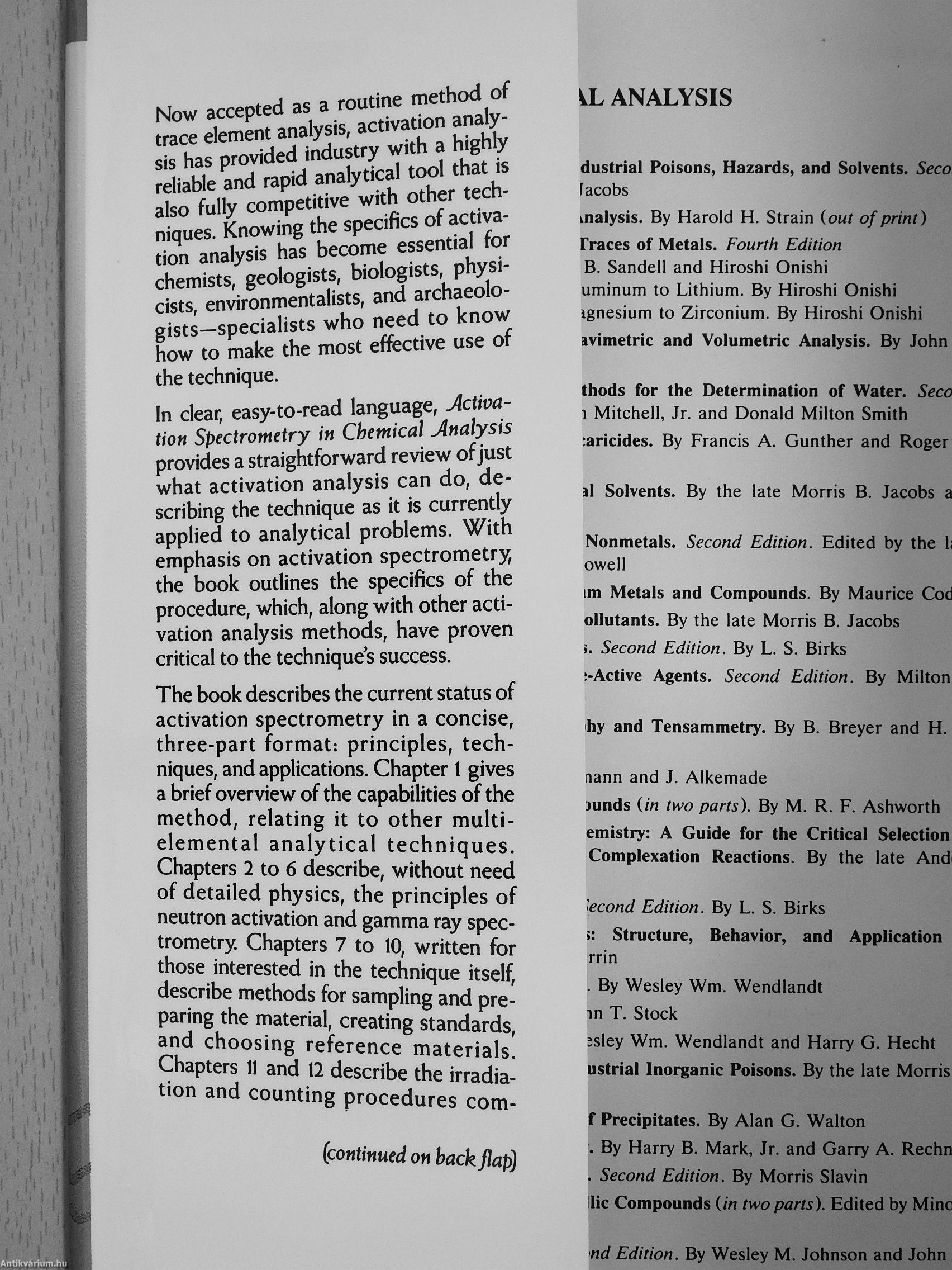
Now accepted as a routine method of trace element analysis, activation analysis has provided industry with a highly reliable and rapid analytical tool that is also fully competitive with other techniques, Knowing the specifics of activation analysis has become essential for chemists, geologists, biologists, physicists, environmentalists, and archaeologists—specialists who need to know how to make the most effective use of the technique.
In clear, easy-to-read language, Jctiva-tion Spectrometry in Chemical Analysis provides a straightforward review of just what activation analysis can do, describing the technique as it is currently applied to analytical problems. With emphasis on activation spectrometry, the book oudines the specifics of the procedure, which, along with other activation analysis methods, have proven critical to the technique's success.
The book describes the current status of activation spectrometry in a concise, three-part format: principles, techniques, and...
Tovább
Fülszöveg
Now accepted as a routine method of trace element analysis, activation analysis has provided industry with a highly reliable and rapid analytical tool that is also fully competitive with other techniques, Knowing the specifics of activation analysis has become essential for chemists, geologists, biologists, physicists, environmentalists, and archaeologists—specialists who need to know how to make the most effective use of the technique.
In clear, easy-to-read language, Jctiva-tion Spectrometry in Chemical Analysis provides a straightforward review of just what activation analysis can do, describing the technique as it is currently applied to analytical problems. With emphasis on activation spectrometry, the book oudines the specifics of the procedure, which, along with other activation analysis methods, have proven critical to the technique's success.
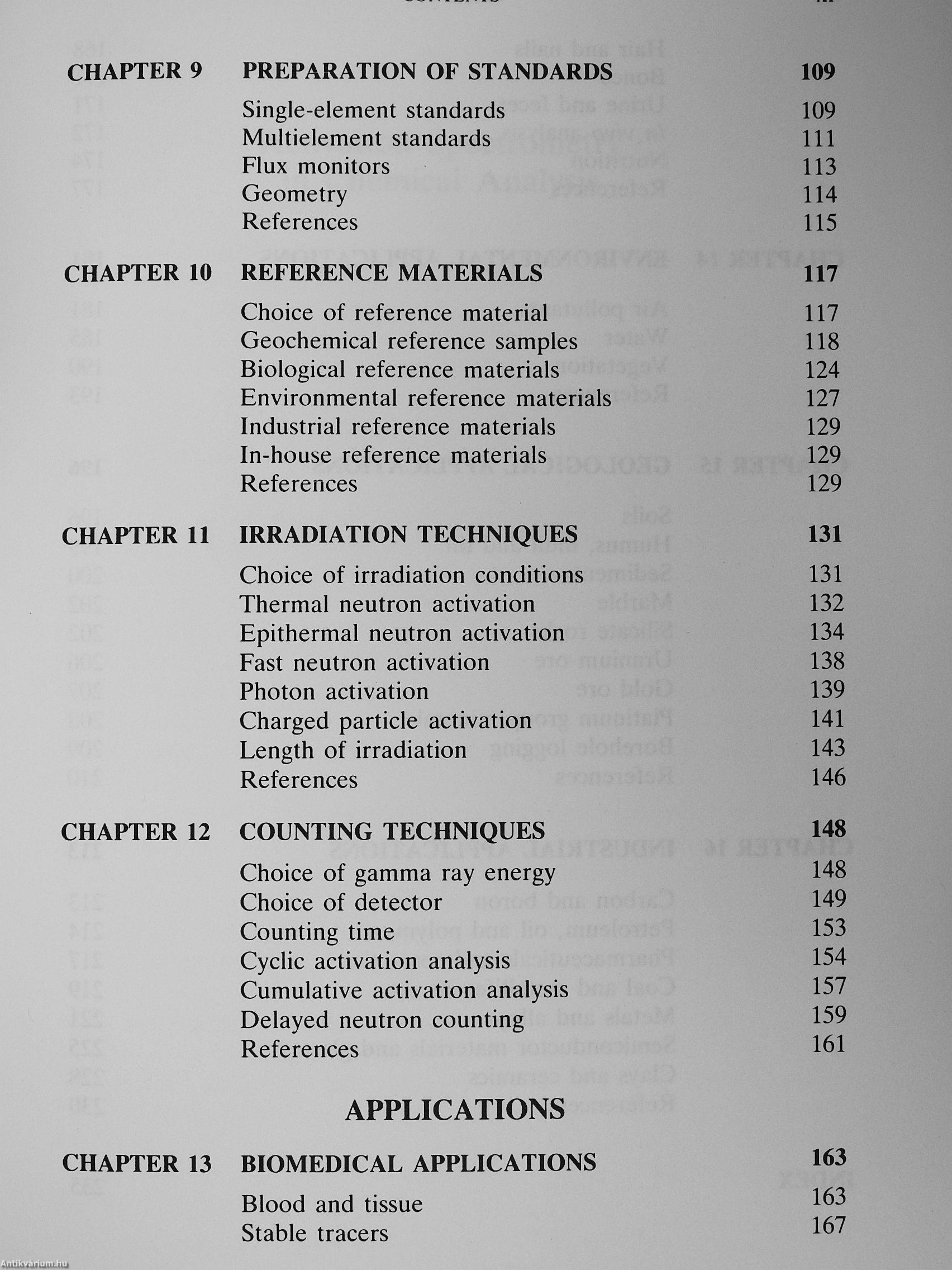
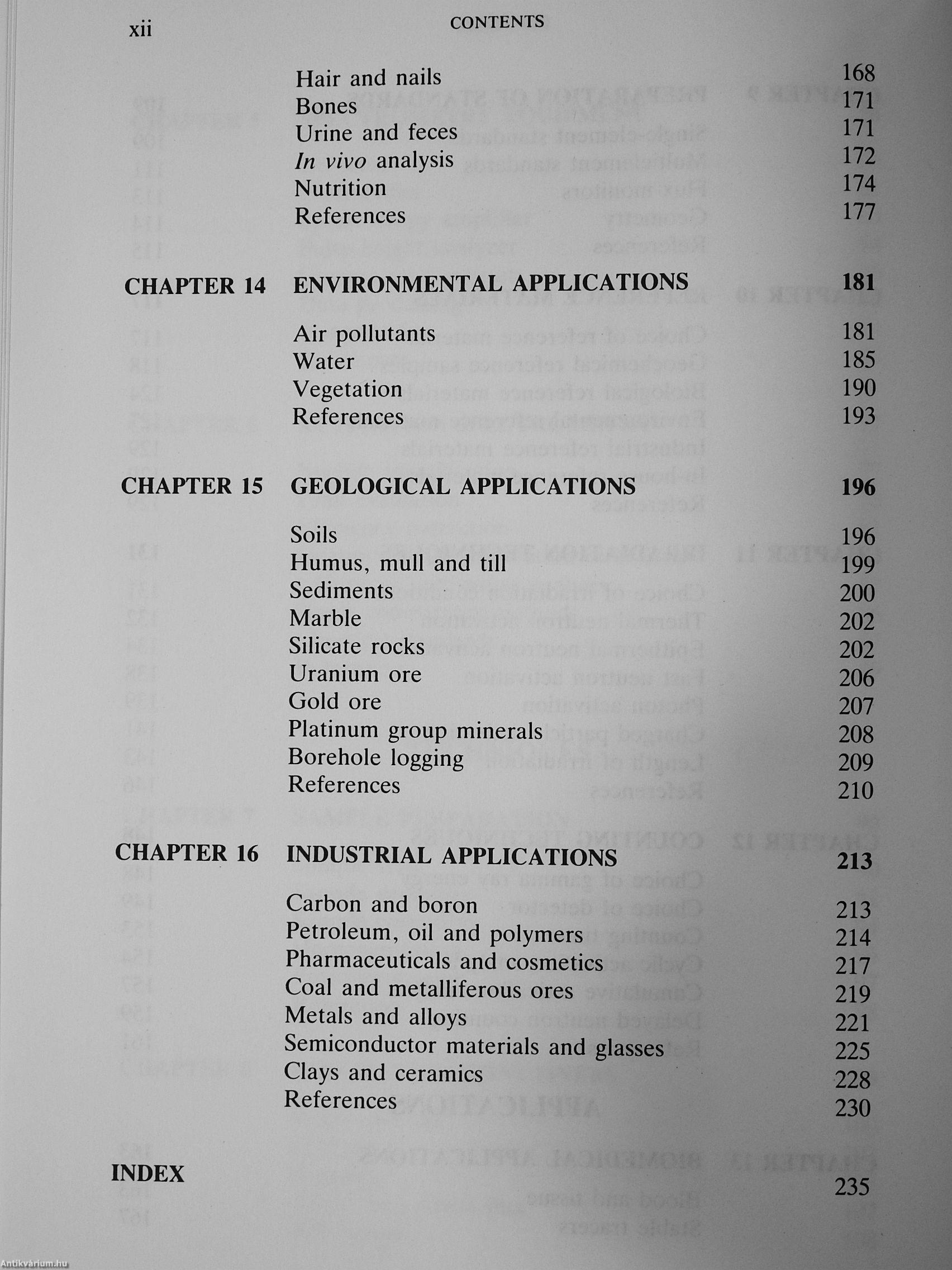
The book describes the current status of activation spectrometry in a concise, three-part format: principles, techniques, and applications. Chapter 1 gives a brief overview of the capabilities of the method, relating it to other multi-elemental analytical techniques. Chapters 2 to 6 describe, without need of detailed physics, the principles of neutron activation and gamma ray spectrometry Chapters 7 to 10, written for those interested in the technique itself, describe methods for sampling and preparing the material, creating standards, and choosing reference materials. Chapters tl and 12 describe the irradiation and counting procedures com-
(continued on back flap]
^ ANALYSIS
dustrial Poisons, Hazards, and Solvents. Seco iacobs
malysis. By Harold H. Strain {out of print) Traces of Metals. Fourth Edition B. Sandell and Hiroshi Onishi uminum to Lithium. By Hiroshi Onishi ignesium to Zirconium. By Hiroshi Onishi avimetric and Volumetric Analysis. By John
thods for the Determination of Water. Seco 1 Mitchell, Jr. and Donald Milton Smith :ancides. By Francis A. Gunther and Roger
)1 Solvents. By the late Morris B. Jacobs a
Nonmetals. Second Edition. Edited by the 1; owe 11
im Metals and Compounds. By Maurice Coc ollutants. By the late Morris B. Jacobs i. Second Edition. By L. S. Birks !-Active Agents. Second Edition. By Milton
hy and Tensammetry. By B. Breyer and H.
nann and J. Alkemade junds {in two parts). By M. R. F. Ashworth emistry: A Guide for the Critical Selection Complexation Reactions. By the late And
Second Edition. By L. S. Birks
»: Structure, Behavior, and Application rrin
. By Wesley Wm. Wendlandt in T. Stock
;sley Wm. Wendlandt and Harry G. Hecht ustrial Inorganic Poisons. By the late Morris
f Precipitates. By Alan G. Walton . By Harry B. Mark, Jr. and Garry A. Rechn . Second Edition. By Morris Slavin llic Compounds {in two parts). Edited by Mine
>nd Edition. By Wesley M. Johnson and John
X-Ray Absorption: Principles, A| and XANES. Edited by D. C. Koi (Quantitative Structure-Chromati ¦iaiiszan
^aser Remote Chemical Analysis, norganic Mass Spectrometry. B jrieken
Cinetic Aspects of Analytical Chei rwo-Dimensional NMR Spectrosc ligh Performance Liquid Chrom Richard A. Hartwick C-Ray Fluorescence Spectrometry, analytical Aspects of Drug Testing Chemical Analysis of Polycyclic Ai ^uadrupole Storage Mass Spectra lughes
)etermination of Molecular Weigl electivity and Detectability Optin ,aser Microanalysis. By LieseletK Clinical Chemistry. Edited by E. I lultielement Detection Systems fi lusch and Marianne A. Busch lanar Chromatography in the Li luorometric Analysis in Biomc ncluding HPLC Applications. B lichael Schnepel, and Kyoko Adc n Introduction to Laboratory A (amis
:as Chromatography: Biochemie ;dited by Ray E. Clement he Analytical Chemistry of Silicoi lodern Methods of Polymer Chan immy W. Mays
nalytical Raman Spectroscopy. E( lulkin
race and Ultratrace Analysis by I iadiochemistry and Nuclear Meth )iane E. Vance
ipplications of Fluorescence in Im 'rinciples and Practice of Spectros LCtivation Spectrometry in Chemie
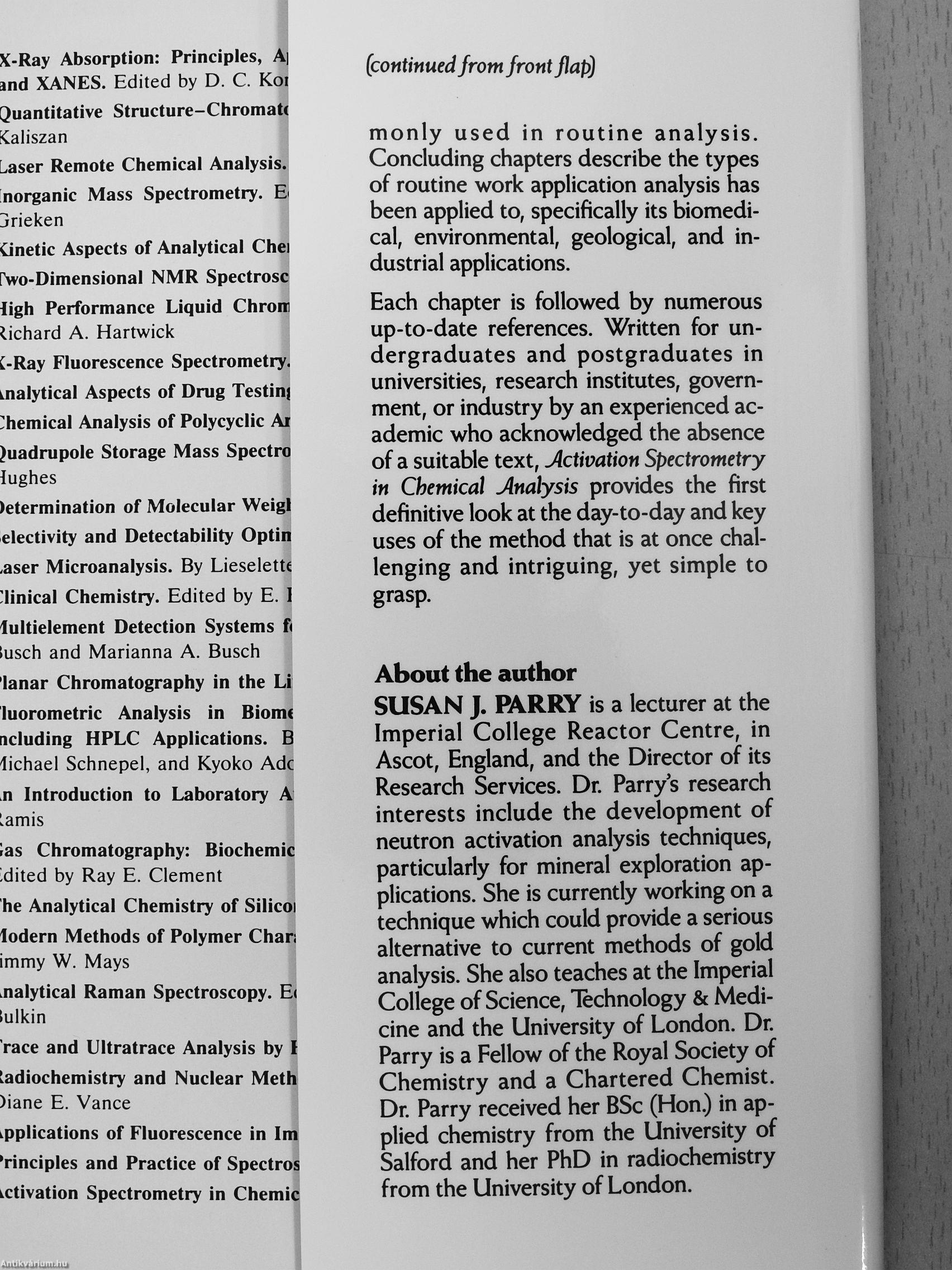
(continued from front flap)
monly used in routine analysis. Concluding chapters describe the types of routine work application analysis has been applied to, specifically its biomedical, environmental, geological, and industrial applications.
Each chapter is followed by numerous up-to-date references. Written for undergraduates and postgraduates in universities, research institutes, government, or industry by an experienced academic who acknowledged the absence of a suitable text, Activation Spectrometry in Chemical Jlnalysis provides the first definitive look at the day-to-day and key uses of the method that is at once challenging and intriguing, yet simple to grasp.
About the author SUSAN J. PARRY is a lecturer at the Imperial College Reactor Centre, in Ascot, England, and the Director of its Research Services. Dr. Parry's research interests include the development of neutron activation analysis techniques, particularly for mineral exploration ap-plicadons. She is currently working on a technique which could provide a serious alternative to current methods of gold analysis. She also teaches at the Imperial College of Science, Technology & Medicine and the University of London. Dr. Parry is a Fellow of the Royal Society of Chemistry and a Chartered Chemist. Dr. Parry received her BSc (Hon.) in applied chemistry from the University of Salford and her PhD in radiochemistry from the University of London.
1
Vissza 


 Folytatás Microsoft-tal