
1.136.047
kiadvánnyal nyújtjuk Magyarország legnagyobb antikvár könyv-kínálatát

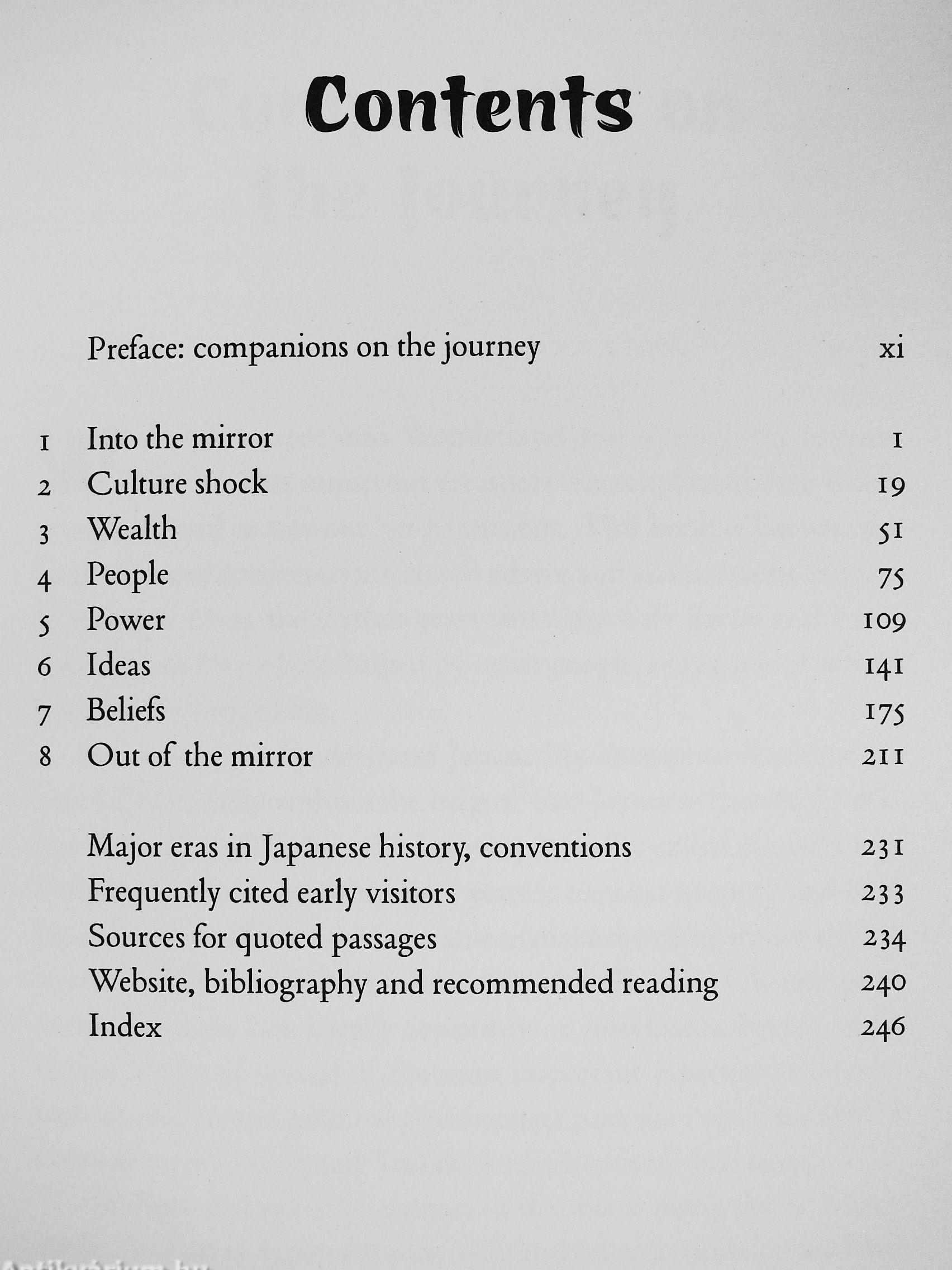
Japan Through the Looking Glass

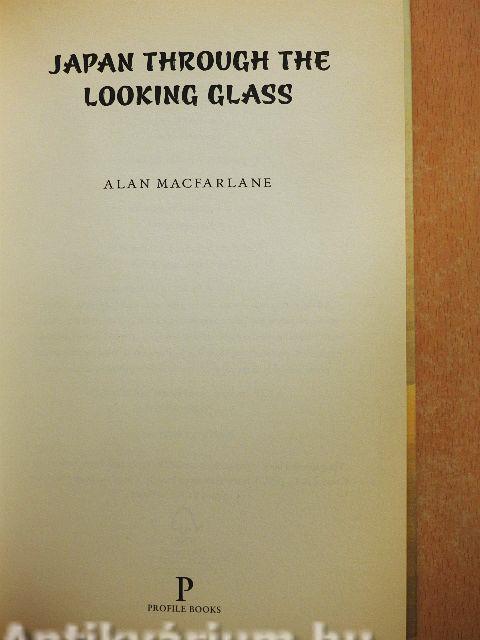
London
| Kiadó: | Profile Books |
|---|---|
| Kiadás helye: | London |
| Kiadás éve: | |
| Kötés típusa: | Ragasztott kemény kötés |
| Oldalszám: | 256 oldal |
| Sorozatcím: | |
| Kötetszám: | |
| Nyelv: | Angol |
| Méret: | 22 cm x 14 cm |
| ISBN: | 978-1-86197-952-0 |
Értesítőt kérek a kiadóról
A beállítást mentettük,
naponta értesítjük a beérkező friss
kiadványokról
naponta értesítjük a beérkező friss
kiadványokról
A beállítást mentettük,
naponta értesítjük a beérkező friss
kiadványokról
naponta értesítjük a beérkező friss
kiadványokról
Előszó
Tovább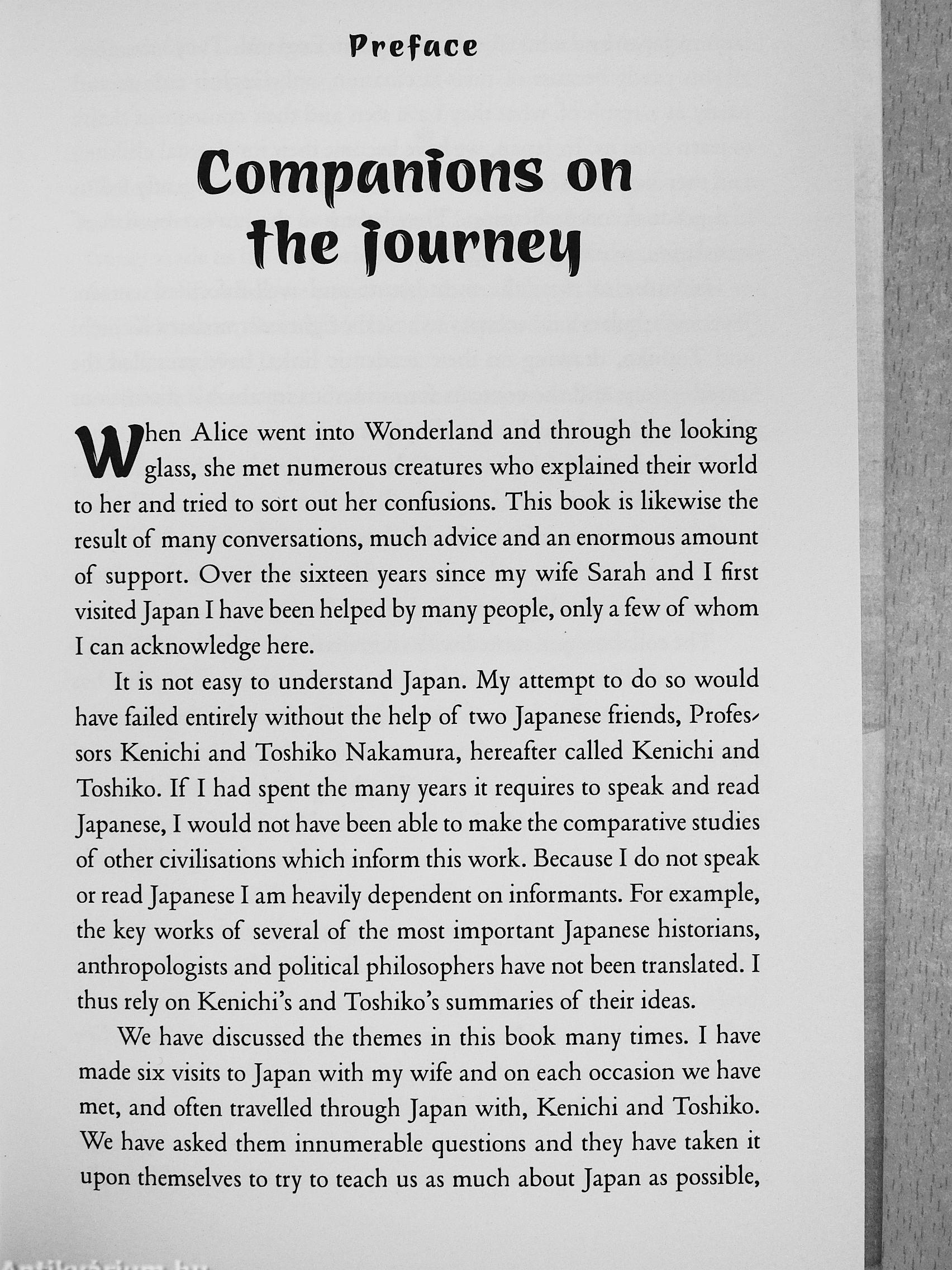
Fülszöveg
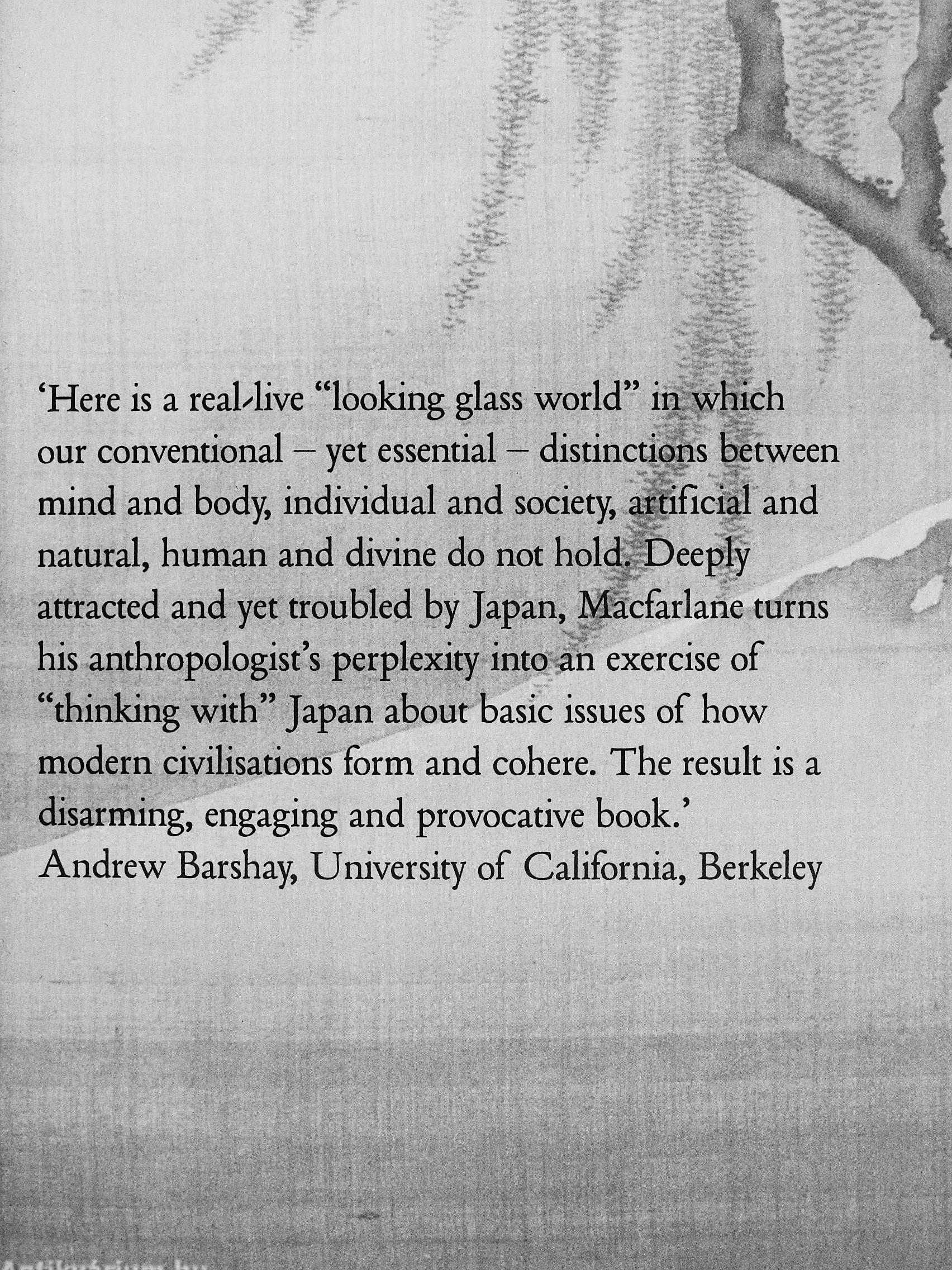
'Here is a real/live "looking glass world" in which our conventional - yet essential — distinctions between mind and body, individual and society, artificial and natural, human and divine do not hold. Deeply attracted and yet troubled by Japan, Macfarlane turns his anthropologist's perplexity into an exercise of "thinking with" Japan about basic issues of how modern civilisations form and cohere. The result is a disarming, engaging and provocative book.' Andrew Barshay, University of California, Berkeley
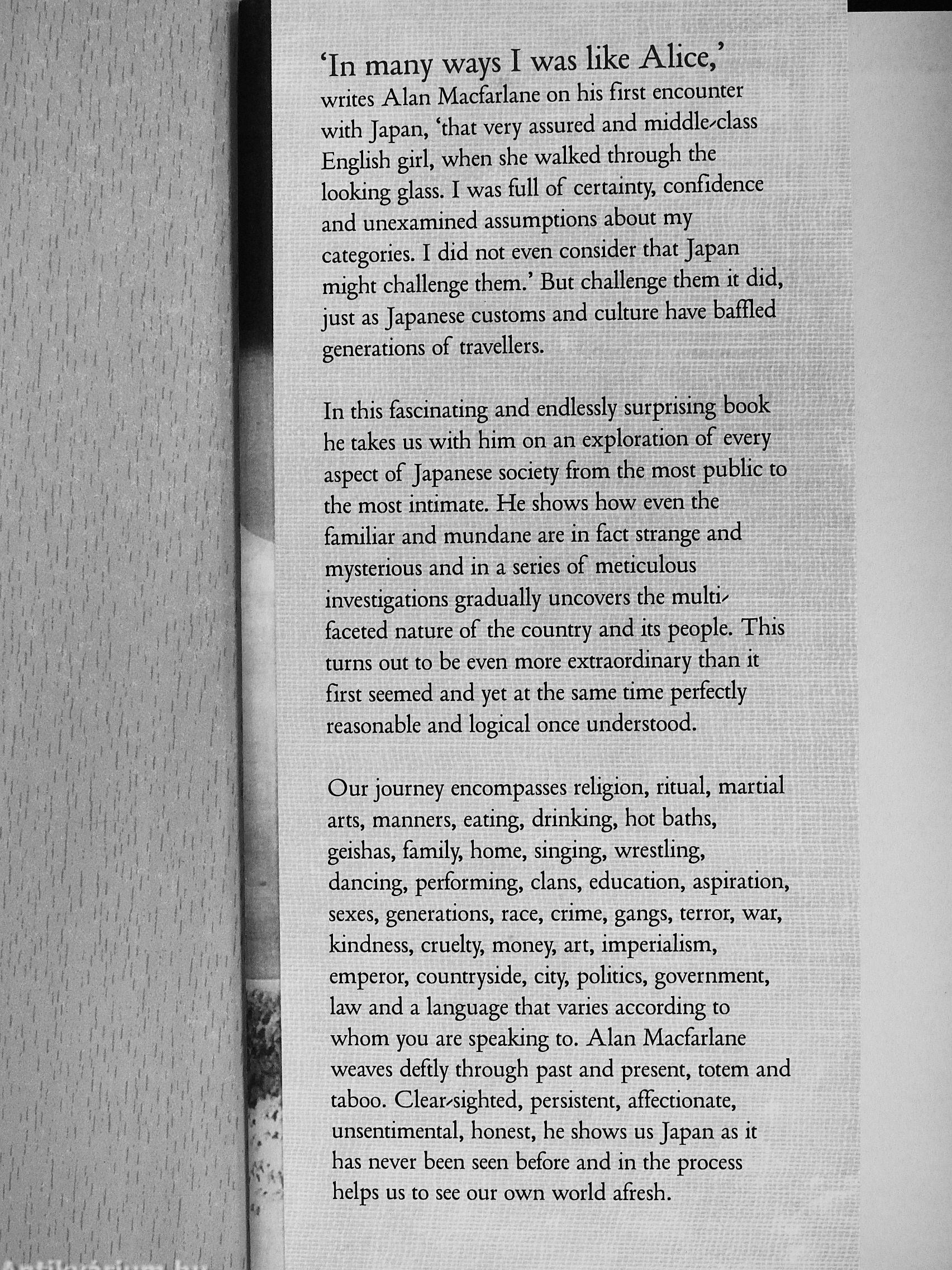
'In many ways I was like Alice/
writes Alan Macfarlane on his first encounter with Japan, 'that very assured and middle/class English girl, when she walked through the looking glass. I was full of certainty, confidence and unexamined assumptions about my categories. I did not even consider that Japan might challenge them.' But challenge them it did, just as Japanese customs and culture have baffled generations of travellers.
In this fascinating and endlessly surprising book... Tovább
Fülszöveg
'Here is a real/live "looking glass world" in which our conventional - yet essential — distinctions between mind and body, individual and society, artificial and natural, human and divine do not hold. Deeply attracted and yet troubled by Japan, Macfarlane turns his anthropologist's perplexity into an exercise of "thinking with" Japan about basic issues of how modern civilisations form and cohere. The result is a disarming, engaging and provocative book.' Andrew Barshay, University of California, Berkeley
'In many ways I was like Alice/
writes Alan Macfarlane on his first encounter with Japan, 'that very assured and middle/class English girl, when she walked through the looking glass. I was full of certainty, confidence and unexamined assumptions about my categories. I did not even consider that Japan might challenge them.' But challenge them it did, just as Japanese customs and culture have baffled generations of travellers.
In this fascinating and endlessly surprising book he takes us with him on an exploration of every aspect of Japanese society from the most public to the most intimate. He shows how even the familiar and mundane are in fact strange and mysterious and in a series of meticulous investigations gradually uncovers the multi^ faceted nature of the country and its people. This turns out to be even more extraordinary than it first seemed and yet at the same time perfectly reasonable and logical once understood.
Our journey encompasses religion, ritual, martial arts, manners, eating, drinking, hot baths, geishas, family, home, singing, wrestling, dancing, performing, clans, education, aspiration, sexes, generations, race, crime, gangs, terror, war, kindness, cruelty, money, art, imperialism, emperor, countryside, city, politics, government, law and a language that varies according to whom you are speaking to. Alan Macfarlane weaves defdy through past and present, totem and taboo. Clear-sighted, persistent, affectionate, unsentimental, honest, he shows us Japan as it has never been seen before and in the process helps us to see our own world afresh. Vissza
Témakörök
- Idegennyelv > Idegennyelvű könyvek > Angol > Útikönyvek
- Idegennyelv > Idegennyelvű könyvek > Angol > Művelődéstörténet
- Művelődéstörténet > Civilizációtörténet > Keleti
- Művelődéstörténet > Kultúra > Története
- Művelődéstörténet > Kultúra > Kultúrantropológia
- Útikönyvek > Ázsia
- Útikönyvek > Idegennyelvű útikönyvek > Angol
- Útikönyvek > Utazás, turizmus
- Útikönyvek > Természetjárás, túrák > Egyéb
- Szociológia > Egyéb
- Szociológia > Társadalmi csoportok > Egyéb
- Szociológia > Tanulmányok, esszék
- Idegennyelv > Idegennyelvű könyvek > Angol > Szociológia > Egyéb
- Idegennyelv > Idegennyelvű könyvek > Angol > Szociológia > Tanulmányok, esszék
- Idegennyelv > Idegennyelvű könyvek > Angol > Szociológia > Társadalmi csoportok > Egyéb

Alan Macfarlane
Alan Macfarlane műveinek az Antikvarium.hu-n kapható vagy előjegyezhető listáját itt tekintheti meg: Alan Macfarlane könyvek, művekMegvásárolható példányok
Állapotfotók
Szép állapotú példány.
Állapot:
Jó
3.980 ,-Ft
20
pont kapható
Kosárba
 Folytatás Microsoft-tal