
1.119.716
kiadvánnyal nyújtjuk Magyarország legnagyobb antikvár könyv-kínálatát

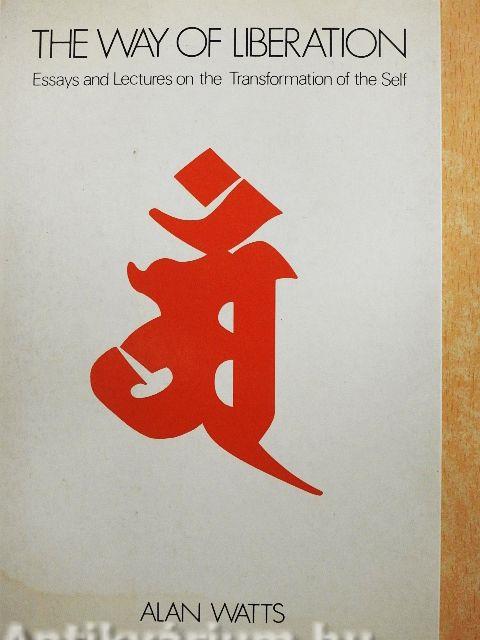
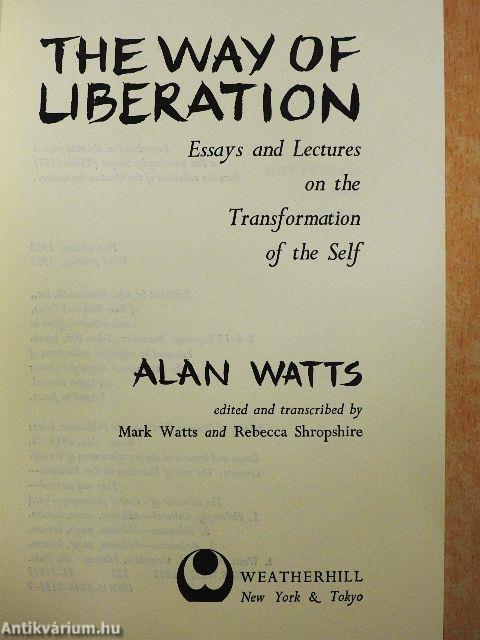
The Way of Liberation
Essays and Lectures on the Transformation of the Self
New York-Tokió
| Kiadó: | Weatherhill |
|---|---|
| Kiadás helye: | New York-Tokió |
| Kiadás éve: | |
| Kötés típusa: | Varrott papírkötés |
| Oldalszám: | 98 oldal |
| Sorozatcím: | |
| Kötetszám: | |
| Nyelv: | Angol |
| Méret: | 21 cm x 14 cm |
| ISBN: | 0-8348-0181-7 |
Értesítőt kérek a kiadóról
A beállítást mentettük,
naponta értesítjük a beérkező friss
kiadványokról
naponta értesítjük a beérkező friss
kiadványokról
A beállítást mentettük,
naponta értesítjük a beérkező friss
kiadványokról
naponta értesítjük a beérkező friss
kiadványokról
Előszó
Tovább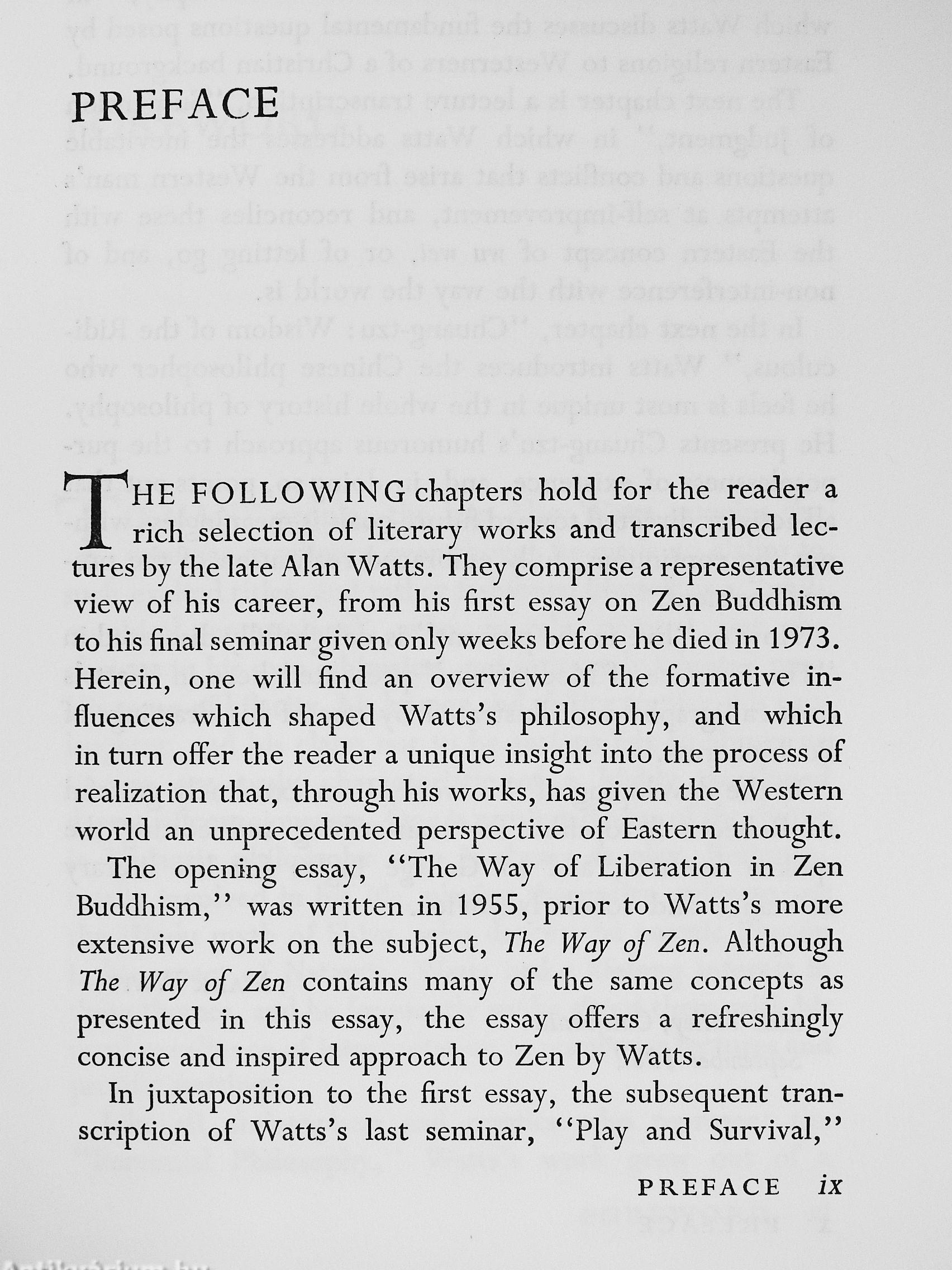
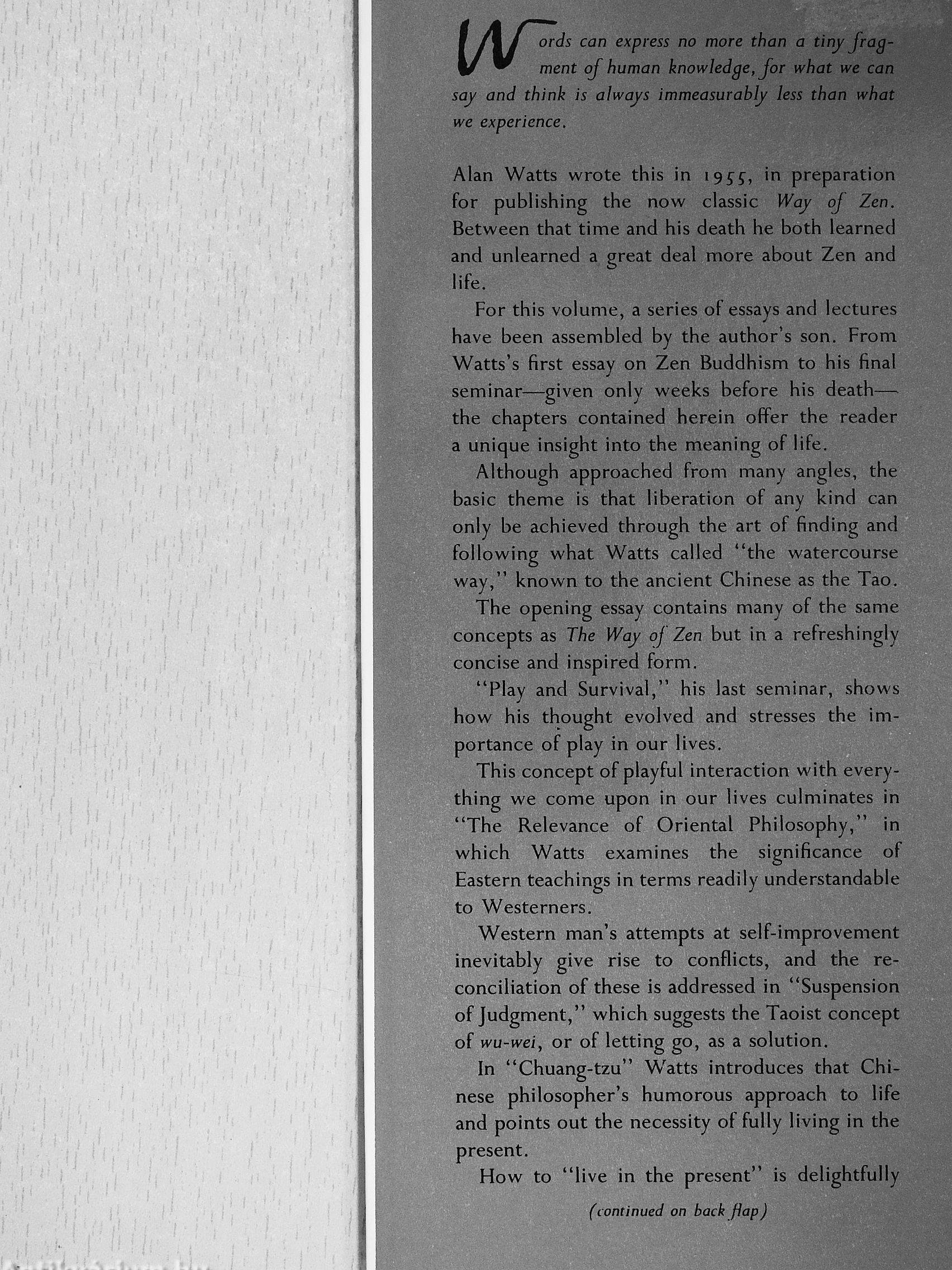
Fülszöveg
1 /I y ords can express no more than a tiny Jrag-\f " ment of human knowledge, Jor what we can say and think is always immeasurably less than what we experience.
Alan Watts wrote this in 19J5, in preparation for publishing the now classic Way of Zen. Between that time and his death he both learned and unlearned a great deal more about Zen and life.
For this volume, a series of essays and lectures have been assembled by the author's son. From Watts's first essay on Zen Buddhism to his final seminar—given only weeks before his death— the chapters contained herein offer the reader a unique insight into the meaning of life.
Although approached from many angles, the basic theme is that liberation of any kind can only be achieved through the art of finding and following what Watts called "the watercourse way," known to the ancient Chinese as the Tao.
The opening essay contains many of the same concepts as The Way of Zen but in a refreshingly concise and inspired form.
"Play and... Tovább
Fülszöveg
1 /I y ords can express no more than a tiny Jrag-\f " ment of human knowledge, Jor what we can say and think is always immeasurably less than what we experience.
Alan Watts wrote this in 19J5, in preparation for publishing the now classic Way of Zen. Between that time and his death he both learned and unlearned a great deal more about Zen and life.
For this volume, a series of essays and lectures have been assembled by the author's son. From Watts's first essay on Zen Buddhism to his final seminar—given only weeks before his death— the chapters contained herein offer the reader a unique insight into the meaning of life.
Although approached from many angles, the basic theme is that liberation of any kind can only be achieved through the art of finding and following what Watts called "the watercourse way," known to the ancient Chinese as the Tao.
The opening essay contains many of the same concepts as The Way of Zen but in a refreshingly concise and inspired form.
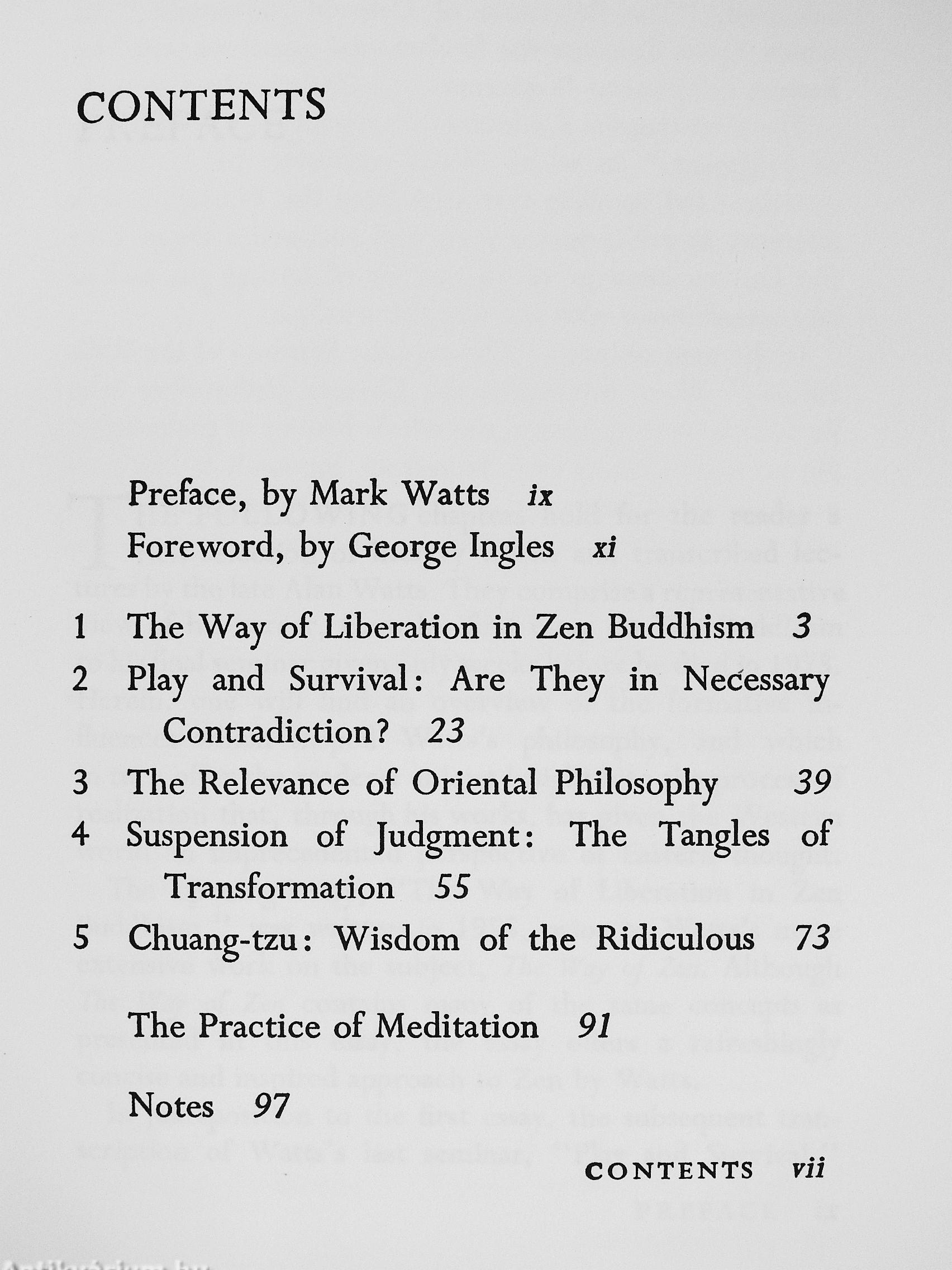
"Play and Survival," his last seminar, shows how his thought evolved and stresses the importance of play in our lives.
This concept of playful interaction with everything we come upon in our lives culminates in "The Relevance of Oriental Philosophy," in which Watts examines the significance of Eastern teachings in terms readily understandable to Westerners.
Western man's attempts at self-improvement inevitably give rise to conflicts, and the reconciliation of these is addressed in "Suspension of Judgment," which suggests the Taoist concept of wu-wei, or of letting go, as a solution.
In "Chuang-tzu" Watts introduces that Chinese philosopher's humorous approach to life and points out the necessity of fully living in the present.
How to "live in the present" is delightfully (Lontinued on back fiap)
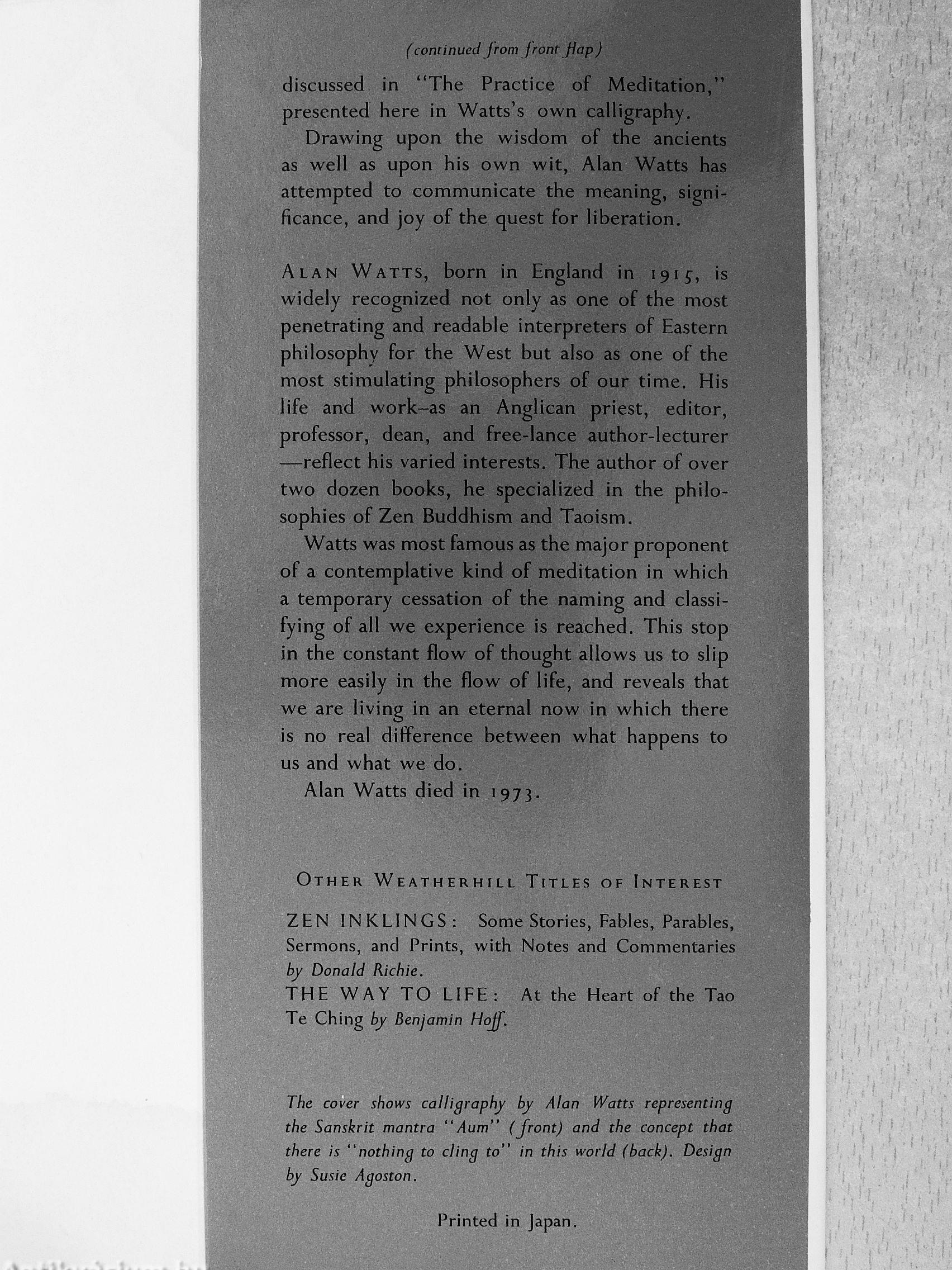
(continued from front flap)
discussed in "The Practice of Meditation," presented here in Watts's own calligraphy.
Drawing upon the wisdom of the ancients as well as upon his own wit, Alan Watts has attempted to communicate the meaning, significance, and joy of the quest for liberation.
Alan Watts, born in England in 1915, is widely recognized not only as one of the most penetrating and readable interpreters of Eastern philosophy for the West but also as one of the most stimulating philosophers of our time. His life and work-as an Anglican priest, editor, professor, dean, and free-lance author-lecturer —reflect his varied interests. The author of over two dozen books, he specialized in the philosophies of Zen Buddhism and Taoism.
Watts was most famous as the major proponent of a contemplative kind of meditation in which a temporary cessation of the naming and classifying of all we experience is reached. This stop in the constant flow of thought allows us to slip more easily in the flow of life, and reveals that we are living in an eternal now in which there is no real dilTerence between what happens to us and what we do.
Alan Watts died in 1973.
Other Weatherhill Titles of Interest
ZEN INKLINGS: Some Stories, Fables, Parables, Sermons, and Prints, with Notes and Commentaries by Donald Richie.
THE WAY TO LIFE : At the Heart of the Tao Te Ching hy Benjamin Hojf.
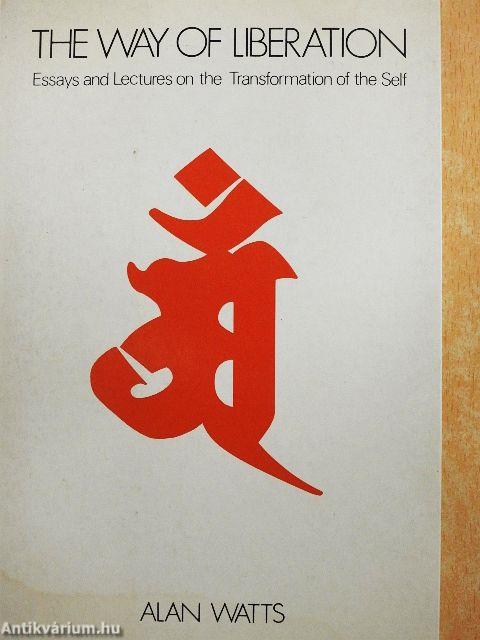
The cover shows calligraphy by Alan Watts representing the Sanskrit mantra " Aum" (front) and the concept that there is "nothing to cling to" in this world (back). Design by Susie Agoston.
Printed in Japan. Vissza
Témakörök
- Filozófia > Témaköre szerint > Ontológia (Lételmélet) > Metafizika
- Idegennyelv > Idegennyelvű könyvek > Angol > Filozófia > Nemzetisége szerint > Angol
- Idegennyelv > Idegennyelvű könyvek > Angol > Filozófia > Témaköre szerint > Ontológia (Lételmélet) > Metafizika
- Paratudományok > Spiritizmus > Misztika
- Vallás > Határtudományok > Filozófia
- Filozófia > Témaköre szerint > Tanulmányok, esszék
- Idegennyelv > Idegennyelvű könyvek > Angol > Filozófia > Témaköre szerint > Tanulmányok, esszék
- Idegennyelv > Idegennyelvű könyvek > Angol > Paratudományok > Egyéb
- Idegennyelv > Idegennyelvű könyvek > Angol > Vallás
- Vallás
Alan Watts
Alan Watts műveinek az Antikvarium.hu-n kapható vagy előjegyezhető listáját itt tekintheti meg: Alan Watts könyvek, művekMegvásárolható példányok
Nincs megvásárolható példány
A könyv összes megrendelhető példánya elfogyott. Ha kívánja, előjegyezheti a könyvet, és amint a könyv egy újabb példánya elérhető lesz, értesítjük.
 Folytatás Microsoft-tal