
1.150.760
kiadvánnyal nyújtjuk Magyarország legnagyobb antikvár könyv-kínálatát

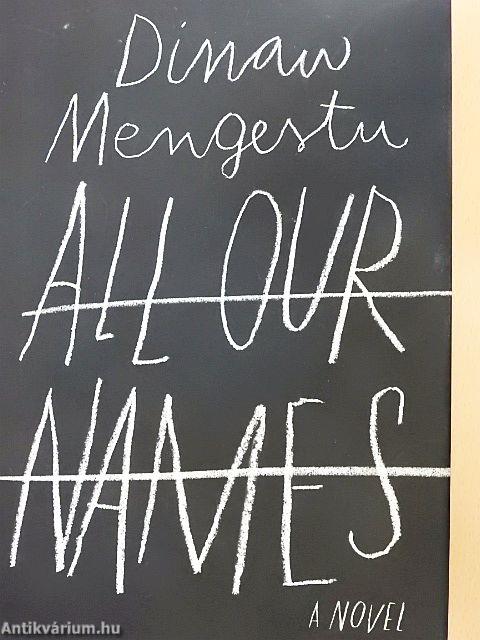
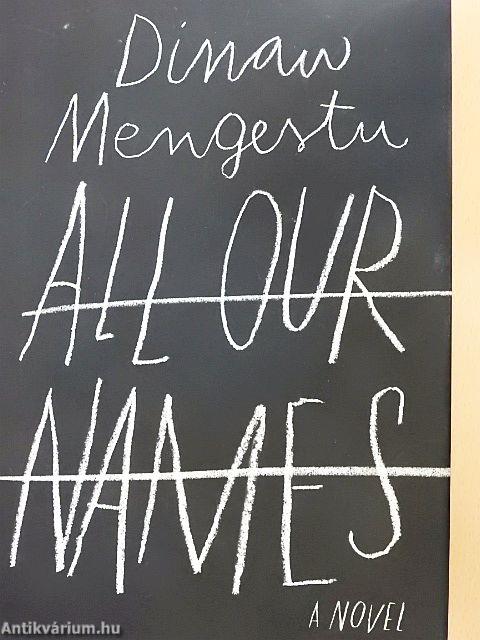
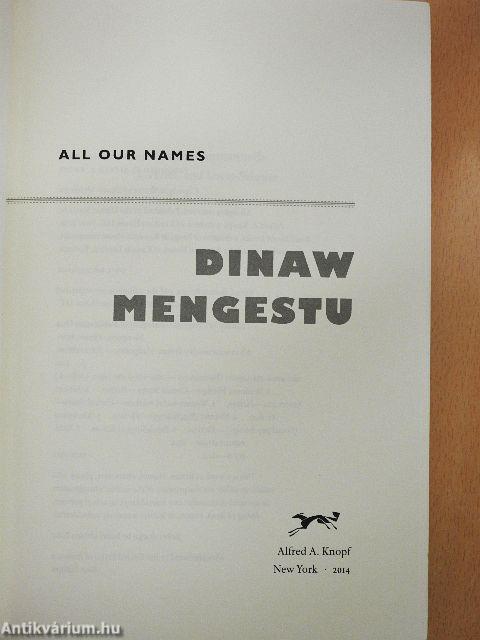
All Our Names
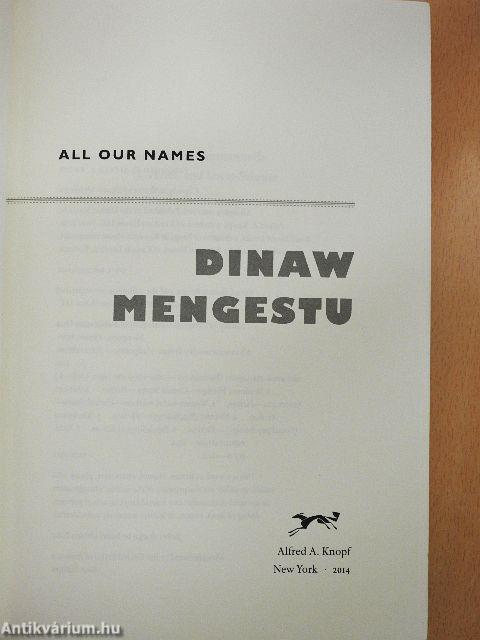
New York
| Kiadó: | Alfred A. Knopf |
|---|---|
| Kiadás helye: | New York |
| Kiadás éve: | |
| Kötés típusa: | Fűzött keménykötés |
| Oldalszám: | 256 oldal |
| Sorozatcím: | |
| Kötetszám: | |
| Nyelv: | Angol |
| Méret: | 24 cm x 17 cm |
| ISBN: | 978-0-385-34998-7 |
Értesítőt kérek a kiadóról
A beállítást mentettük,
naponta értesítjük a beérkező friss
kiadványokról
naponta értesítjük a beérkező friss
kiadványokról
A beállítást mentettük,
naponta értesítjük a beérkező friss
kiadványokról
naponta értesítjük a beérkező friss
kiadványokról
Előszó
Tovább
Fülszöveg
!Umc hil Ul/K m/IlD
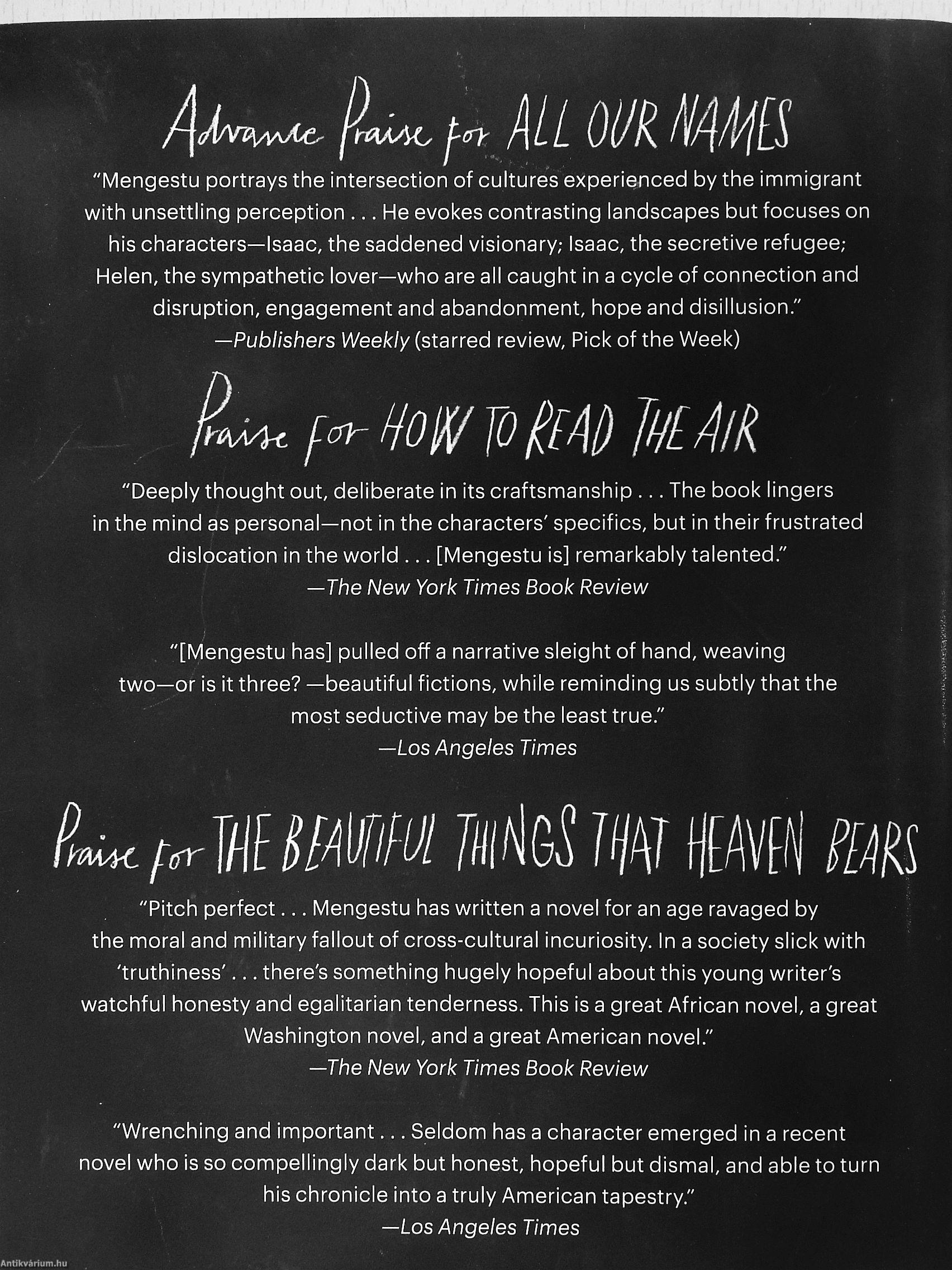
"Mengestu portrays the intersection of cultures experienced by the innmigrant with unsettling perception He evokes contrasting landscapes but focuses on his characters—Isaac, the saddened visionary; Isaac, the secretive refugee; Helen, the sympathetic lover—who are all caught in a cycle of connection and disruption, engagennent and abandonment, hope and disillusion." —Publishers l/VeeW/(starred review, Pick of the Week)
l^cry-
"Deeply thought out, deliberate in its craftsmanship The book lingers in the mind as personal—not in the characters' specifics, but in their frustrated dislocation In the world [Mengestu Is] remarkably talented." —The New York Times Book Review
"[Mengestu has] pulled off a narrative sleight of hand, weaving two—or is It three? —beautiful fictions, while reminding us subtly that the most seductive may be the least true." —Los Angeles Times
"Pitch perfect Mengestu has written a novel for an age ravaged by the moral and... Tovább
Fülszöveg
!Umc hil Ul/K m/IlD
"Mengestu portrays the intersection of cultures experienced by the innmigrant with unsettling perception He evokes contrasting landscapes but focuses on his characters—Isaac, the saddened visionary; Isaac, the secretive refugee; Helen, the sympathetic lover—who are all caught in a cycle of connection and disruption, engagennent and abandonment, hope and disillusion." —Publishers l/VeeW/(starred review, Pick of the Week)
l^cry-
"Deeply thought out, deliberate in its craftsmanship The book lingers in the mind as personal—not in the characters' specifics, but in their frustrated dislocation In the world [Mengestu Is] remarkably talented." —The New York Times Book Review
"[Mengestu has] pulled off a narrative sleight of hand, weaving two—or is It three? —beautiful fictions, while reminding us subtly that the most seductive may be the least true." —Los Angeles Times
"Pitch perfect Mengestu has written a novel for an age ravaged by the moral and military fallout of cross-cultural incuriosity. In a society slick with
'truthiness' there's something hugely hopeful about this young writer's watchful honesty and egalitarian tenderness. This is a great African novel, a great Washington novel, and a great American novel." —The New York Times Book Review
"Wrenching and Important Seldom has a character emerged in a recent novel who Is so compellingly dark but honest, hopeful but dismal, and able to turn his chronicle Into a truly American tapestry." —Los Angeles Times
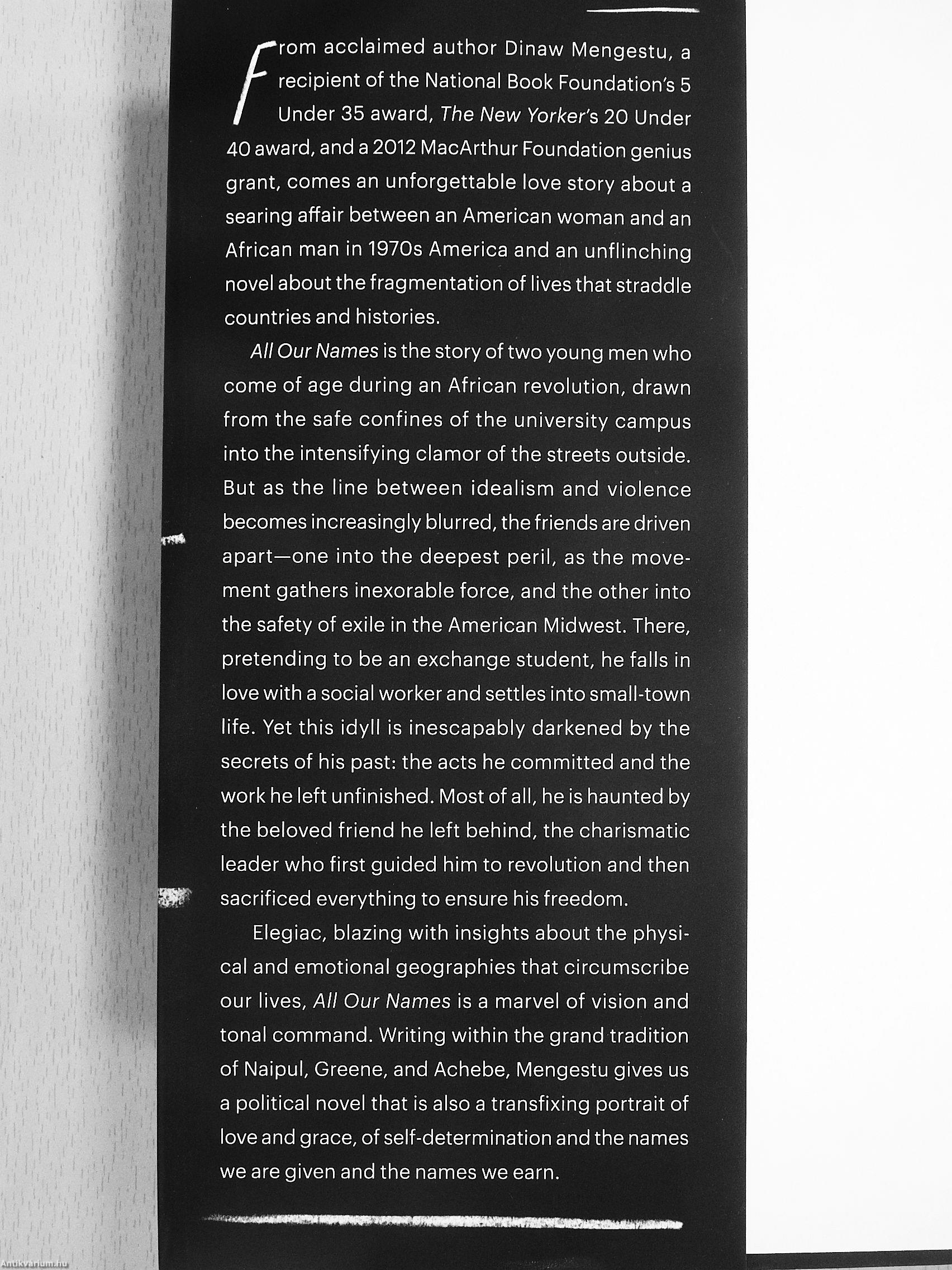
i^rom acclaimed autiior Dinaw Mengestu, a ^ recipient of the National Book Foundation's 5 / Under 35 award, The New Vor/cer's 20 Under 40 award, and a 2012 MacArthur Foundation genius grant, comes an unforgettable love story about a \ searing affair between an American woman and an African man in 1970s America and an unflinching sSi novel about the fragmentation of lives that straddle i countries and histories.
i AW Our Names is the story of two young men who
; come of age during an African revolution, drawn
from the safe confines of the university campus
^ into the intensifying clamor of the streets outside.
I But as the line between idealism and violence i
becomes increasingly blurred, the friends are driven apart—one into the deepest peril, as the move-ment gathers inexorable force, and the other into the safety of exile in the American Midwest. There, pretending to be an exchange student, he falls in love with a social worker and settles into small-town life. Yet this idyll is inescapably darkened by the secrets of his past: the acts he committed and the work he left unfinished. Most of all, he is haunted by the beloved friend he left behind, the charismatic leader who first guided him to revolution and then sacrificed everything to ensure his freedom.
Elegiac, blazing with insights about the physical and emotional geographies that circumscribe our lives. All Our Names is a marvel of vision and tonal command. Writing within the grand tradition of Naipul, Greene, and Achebe, Mengestu gives us a political novel that is also a transfixing portrait of love and grace, of self-determination and the names we are given and the names we earn. Vissza
Témakörök
- Idegennyelv > Idegennyelvű könyvek > Angol > Szépirodalom > Regény, novella, elbeszélés
- Szépirodalom > Regény, novella, elbeszélés > Az író származása szerint > Amerika > Amerikai Egyesült Államok
- Szépirodalom > Regény, novella, elbeszélés > Tartalom szerint > Földrajzi besorolások > Afrika
- Szépirodalom > Regény, novella, elbeszélés > Tartalom szerint > Politikai regények
Dinaw Mengestu
Dinaw Mengestu műveinek az Antikvarium.hu-n kapható vagy előjegyezhető listáját itt tekintheti meg: Dinaw Mengestu könyvek, művekMegvásárolható példányok
Állapotfotók
Állapot:
Jó
2.440 ,-Ft
12
pont kapható
Kosárba
 Folytatás Microsoft-tal