
1.145.153
kiadvánnyal nyújtjuk Magyarország legnagyobb antikvár könyv-kínálatát

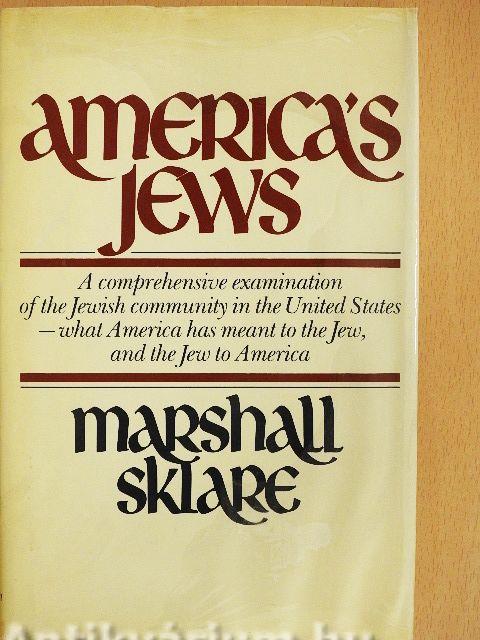
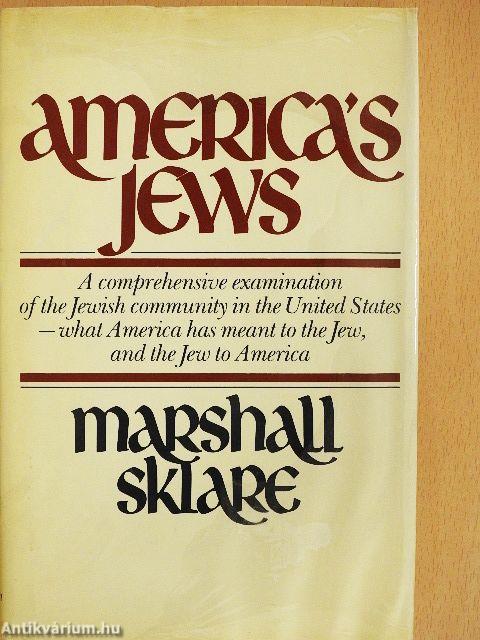
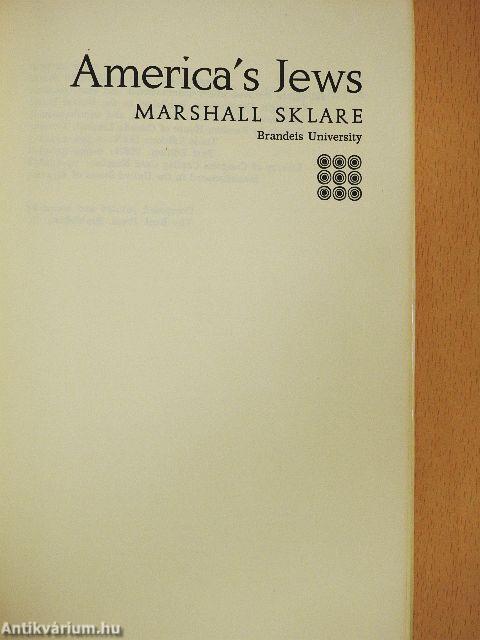
America's Jews
A comprehensive examination of the Jewish community in the United States - what America has meant to the Jew, and the Jew to America
New York
| Kiadó: | Random House, Inc |
|---|---|
| Kiadás helye: | New York |
| Kiadás éve: | |
| Kötés típusa: | Vászon |
| Oldalszám: | 233 oldal |
| Sorozatcím: | |
| Kötetszám: | |
| Nyelv: | Angol |
| Méret: | 21 cm x 14 cm |
| ISBN: | |
Értesítőt kérek a kiadóról
A beállítást mentettük,
naponta értesítjük a beérkező friss
kiadványokról
naponta értesítjük a beérkező friss
kiadványokról
A beállítást mentettük,
naponta értesítjük a beérkező friss
kiadványokról
naponta értesítjük a beérkező friss
kiadványokról
Előszó
Tovább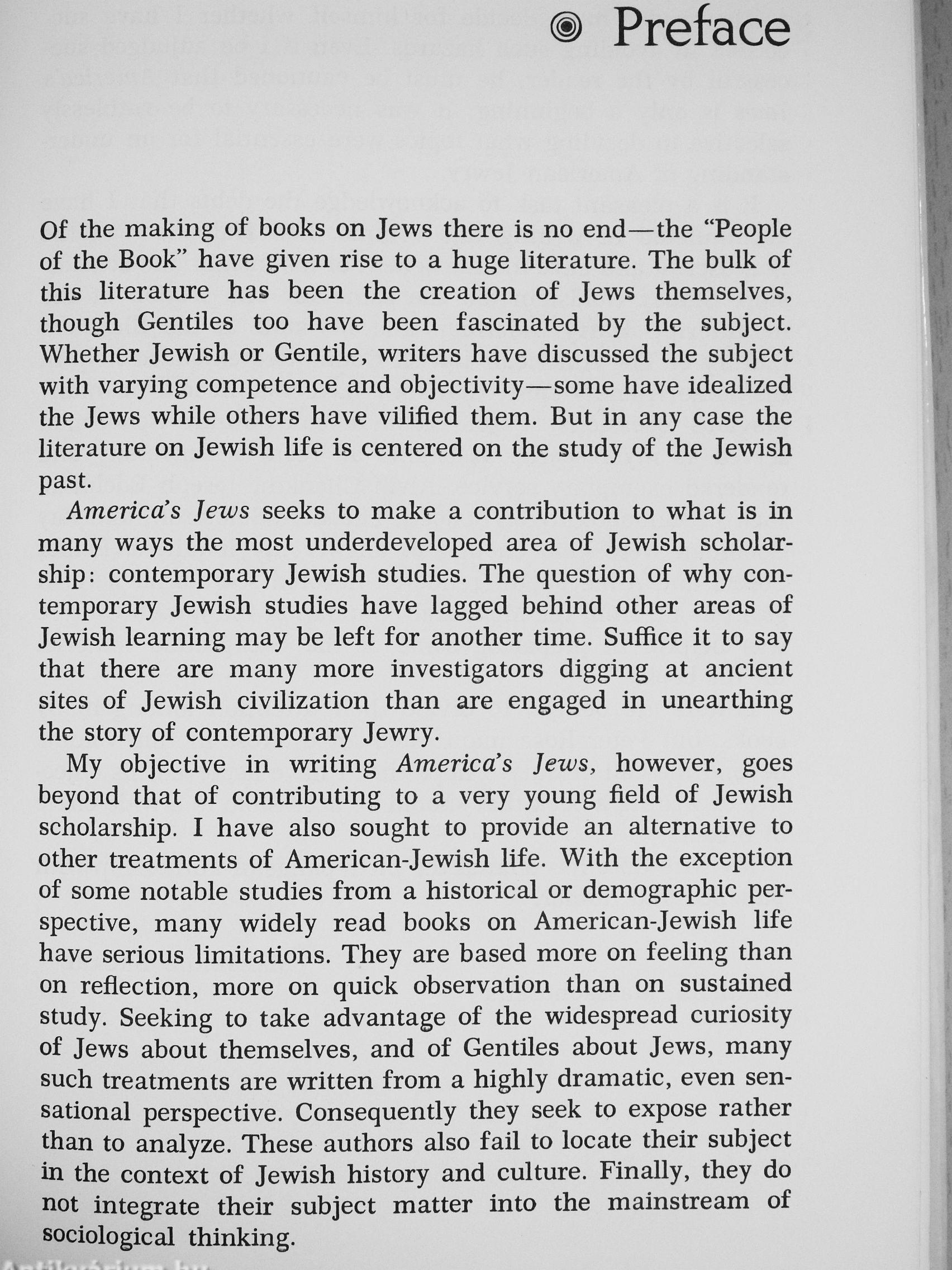
Fülszöveg
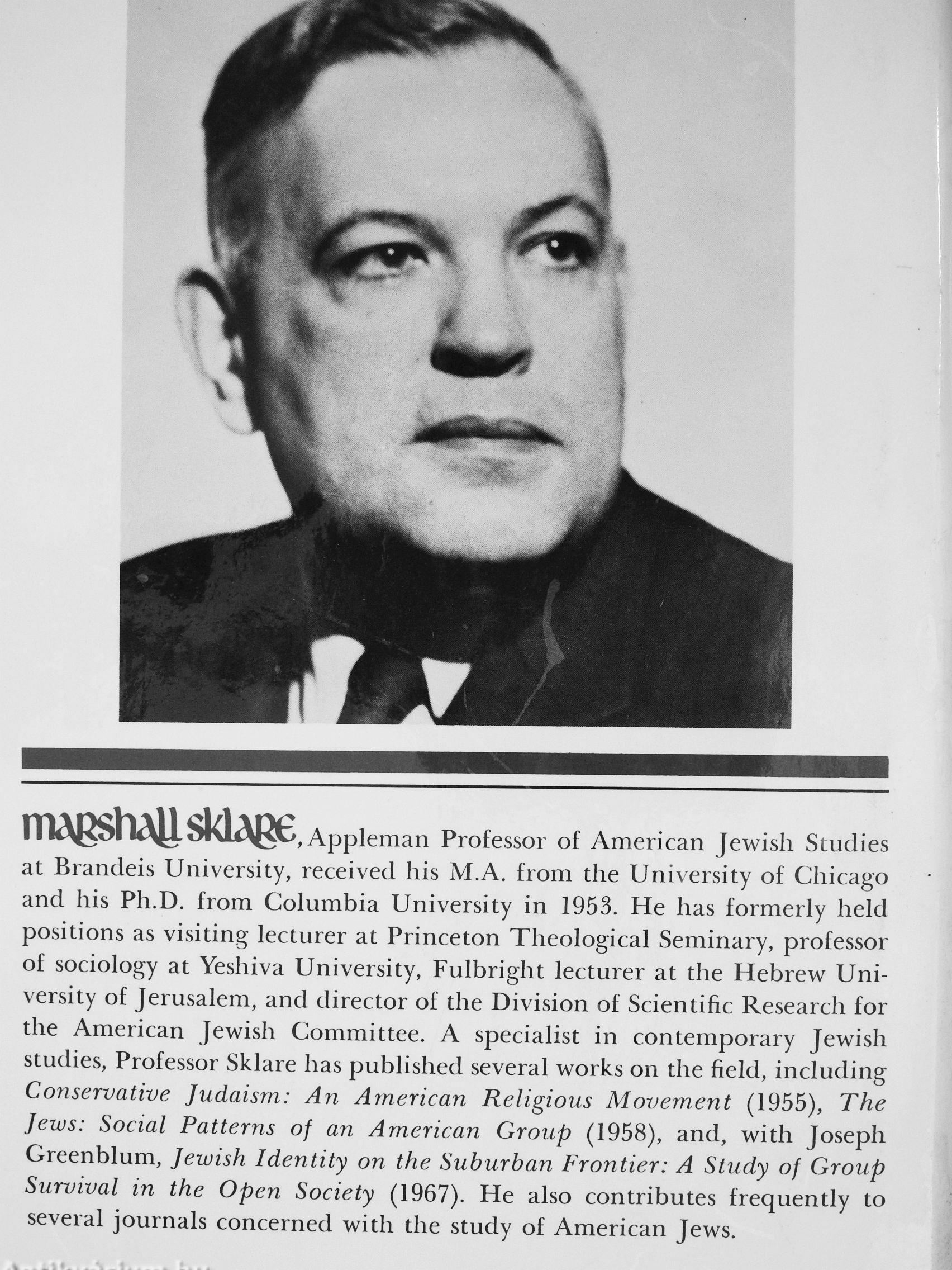
mAßshAUsklABe .Appleman Professor of American Jewish Studies at Brandeis University, received Iiis M.A. from the University of Cliicago and Iiis PIi.D. from Cohimbia University in 1953. He has formerly held positions as visiting lecturer at Princeton Theological Seminary, professor of sociology at Yeshiva University, Fulbright lecturer at the Hebrew University of Jerusalem, and director of the Division of Scientific Research for the American Jewish Committee. A specialist in contemporary Jewish studies, Professor Sklare has published several works on the field, including Conservative Judaism: Aji American Religious Movement (1955), The Jews: Social Patterns of an American Group (1958), and, with Joseph Greenblum, Jewish Identity on the Suburban Frontier: A Study of Group Survival in the Open Society (1967). He also contributes frequently to several journals concerned with the study of American Jews.
iihi i/t i^» ! I , i - ' i t i ' ' ¦ ¦
!1,
r I ^ ¦ I : I,' : '! ' i M l' ^ .1... Tovább
Fülszöveg
mAßshAUsklABe .Appleman Professor of American Jewish Studies at Brandeis University, received Iiis M.A. from the University of Cliicago and Iiis PIi.D. from Cohimbia University in 1953. He has formerly held positions as visiting lecturer at Princeton Theological Seminary, professor of sociology at Yeshiva University, Fulbright lecturer at the Hebrew University of Jerusalem, and director of the Division of Scientific Research for the American Jewish Committee. A specialist in contemporary Jewish studies, Professor Sklare has published several works on the field, including Conservative Judaism: Aji American Religious Movement (1955), The Jews: Social Patterns of an American Group (1958), and, with Joseph Greenblum, Jewish Identity on the Suburban Frontier: A Study of Group Survival in the Open Society (1967). He also contributes frequently to several journals concerned with the study of American Jews.
iihi i/t i^» ! I , i - ' i t i ' ' ¦ ¦
!1,
r I ^ ¦ I : I,' : '! ' i M l' ^ .1
1 j
i'i'i
I : i
f 1 • i,i :
! 1 h f il i:^ :.!:! ! i
i !! I-
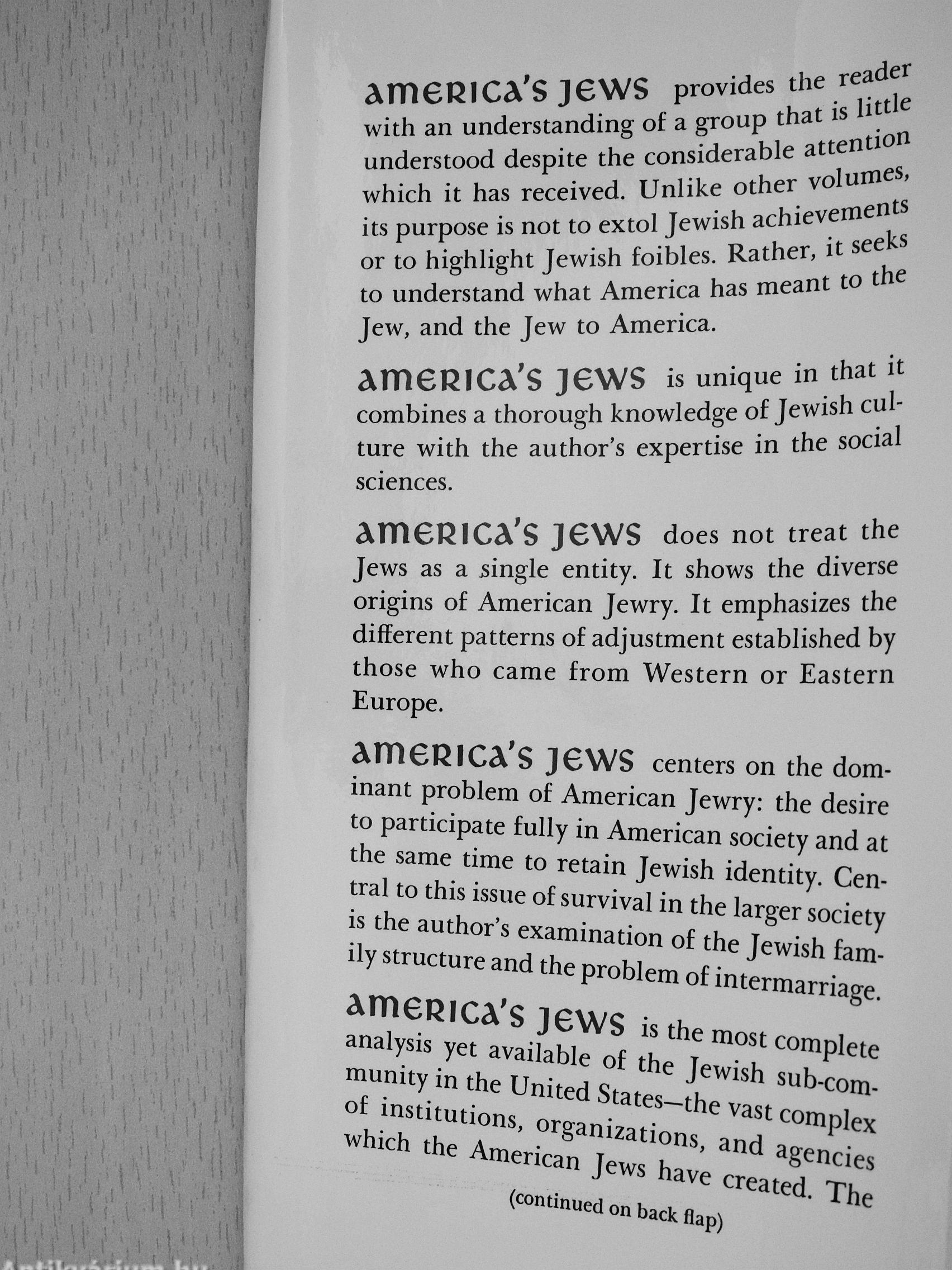
AmeRICA'S jews provides Uie reader with an understanding of a group that is little understood despite the considerable attention which it has received. Unlike other volumes, its purpose is not to extol Jewish achievements or to highlight Jewish foibles. Rather, it seeks to understand what America has meant to the Jew, and the Jew to America.
ameRlCA'S jews is unique in that it combines a thorough knowledge of Jewish culture with the author's expertise in the social sciences.
ameRICA'S jews does not treat the Jews as a single entity. It shows the diverse origins of American Jewry. It emphasizes the different patterns of adjustment established by those who came from Western or Eastern Europe.
ameRICA'S jews centers on the dominant problem of American Jewry: the desire to participate fully in American society and at the same time to retain Jewish identity. Central to this issue of survival in the larger society is the author's examination of the Jewish family structure and the problem of intermarriage.
ameRicai s jews is the most complete analysis yet available of the Jewish sub-com-munity in the United States—the vast complex of institutions, organizations, and agencies which the American Jews have created. The
(continued on back flap) Vissza
Témakörök
- Történelem > Társadalomelmélet
- Idegennyelv > Idegennyelvű könyvek > Angol > Művelődéstörténet
- Idegennyelv > Idegennyelvű könyvek > Angol > Történelem > USA története
- Művelődéstörténet > Civilizációtörténet > Amerikai
- Művelődéstörténet > Kultúra > Története
- Szociológia > Módszertan > Kutatások
- Szociológia > Története > Összefoglalók
- Szociológia > Szakszociológiák
- Szociológia > Tanulmányok, esszék
- Idegennyelv > Idegennyelvű könyvek > Angol > Szociológia > Szakszociológiák
- Idegennyelv > Idegennyelvű könyvek > Angol > Szociológia > Tanulmányok, esszék
- Idegennyelv > Idegennyelvű könyvek > Angol > Szociológia > Módszertan > Kutatások
- Idegennyelv > Idegennyelvű könyvek > Angol > Szociológia > Története > Összefoglalók
- Történelem > Idegennyelvű > Angol
- Történelem > Politika > Belpolitika > Kisebbségi kérdés
- Idegennyelv > Idegennyelvű könyvek > Angol > Szociológia > Társadalmi csoportok > Kisebbségek > Zsidóság
- Szociológia > Társadalmi csoportok > Kisebbségek > Zsidóság > Egyéb
- Történelem > Kontinensek szerint > Amerika, amerikai országok története > Észak-Amerika
Marshall Sklare
Marshall Sklare műveinek az Antikvarium.hu-n kapható vagy előjegyezhető listáját itt tekintheti meg: Marshall Sklare könyvek, művekMegvásárolható példányok
Nincs megvásárolható példány
A könyv összes megrendelhető példánya elfogyott. Ha kívánja, előjegyezheti a könyvet, és amint a könyv egy újabb példánya elérhető lesz, értesítjük.
 Folytatás Microsoft-tal