
1.155.932
kiadvánnyal nyújtjuk Magyarország legnagyobb antikvár könyv-kínálatát

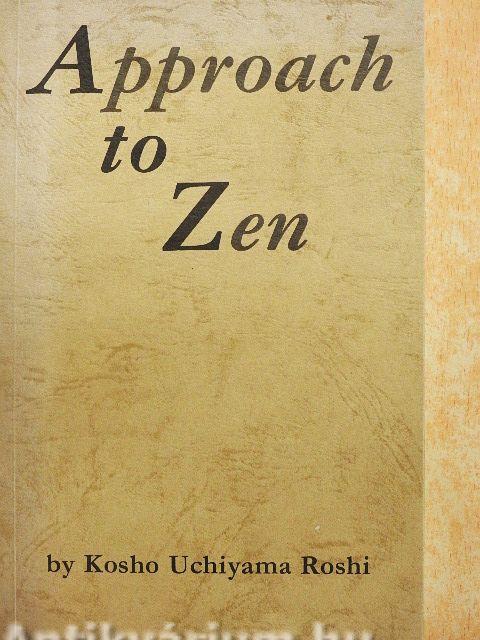
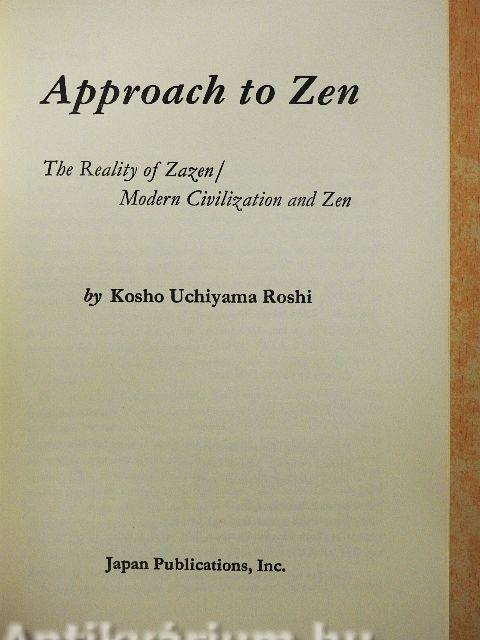
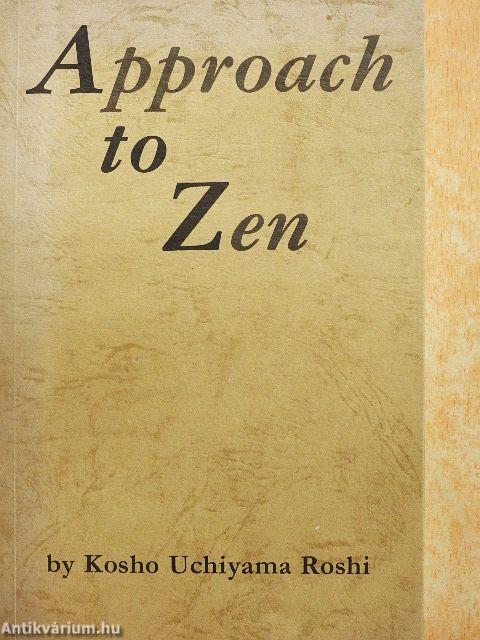
Approach to Zen
The Reality of Zazen/Modern Civilization and Zen
Tokió
| Kiadó: | Japan Publications, Inc. |
|---|---|
| Kiadás helye: | Tokió |
| Kiadás éve: | |
| Kötés típusa: | Varrott papírkötés |
| Oldalszám: | 122 oldal |
| Sorozatcím: | |
| Kötetszám: | |
| Nyelv: | Angol |
| Méret: | 21 cm x 13 cm |
| ISBN: | 0-87040-252-8 |
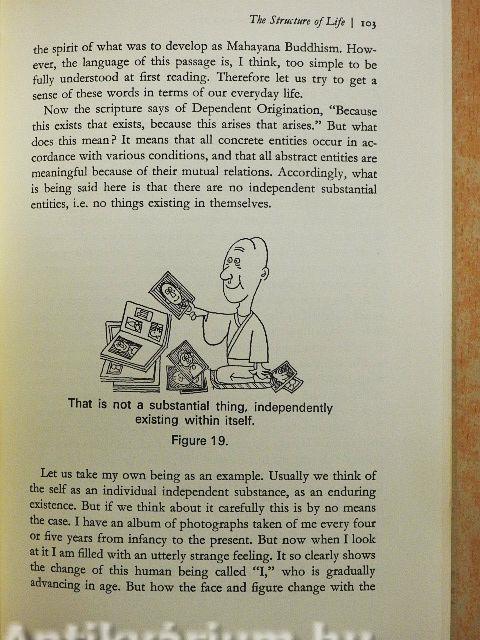
| Megjegyzés: | Fekete-fehér illusztrációkkal. |
Értesítőt kérek a kiadóról
A beállítást mentettük,
naponta értesítjük a beérkező friss
kiadványokról
naponta értesítjük a beérkező friss
kiadványokról
A beállítást mentettük,
naponta értesítjük a beérkező friss
kiadványokról
naponta értesítjük a beérkező friss
kiadványokról
Előszó
Tovább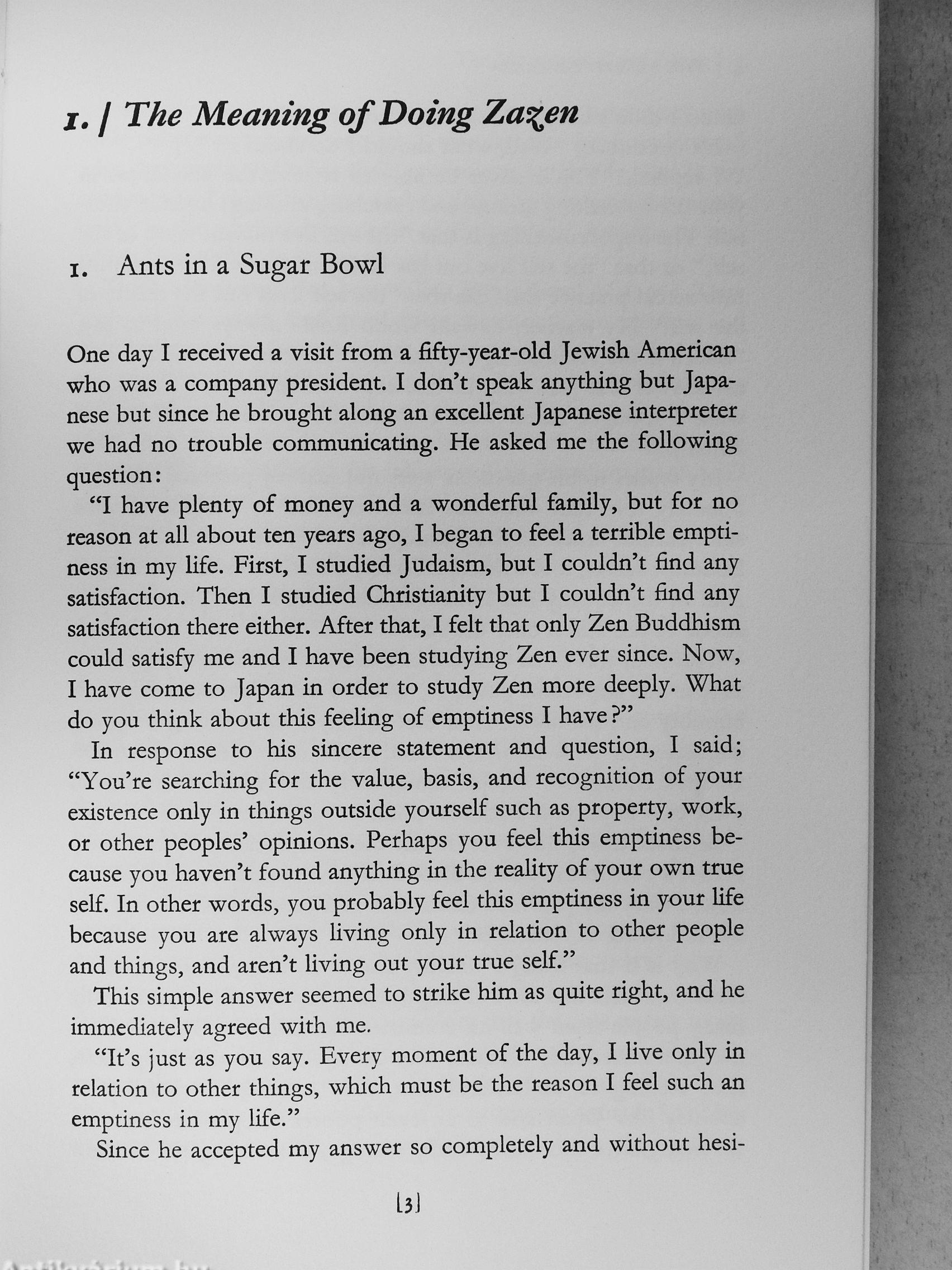
Fülszöveg
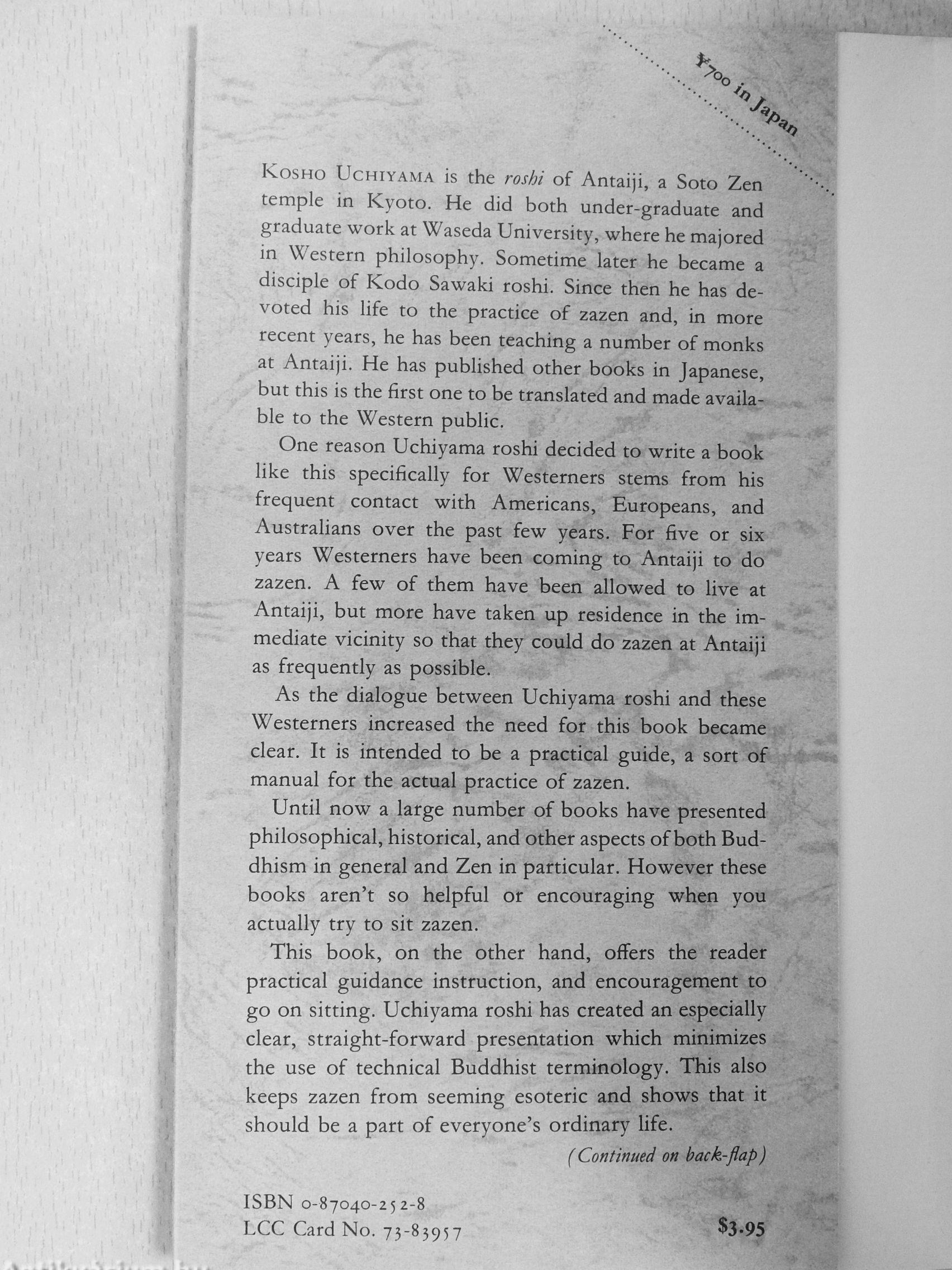
Kosho Uchiyama is the roshi of Antaiji, a Soto Zen temple in Kyoto. He did both under-graduate and graduate work at Waseda University, where he majored in Western philosophy. Sometime later he became a disciple of Kodo Sawaki roshi. Since then he has devoted his life to the practice of zazen and, in more recent years, he has been teaching a number of monks at Antaiji. He has published other books in Japanese, but this is the first one to be translated and made available to the Western public.
One reason Uchiyama roshi decided to write a book like this specifically for Westerners stems from his frequent contact with Americans, Europeans, and Austrahans over the past few years. For five or six years Westerners have been coming to Antaiji to do zazen. A few of them have been allowed to live at Antaiji, but more have taken up residence in the immediate vicinity so that they could do zazen at Antaiji as frequently as possible.
As the dialogue between Uchiyama roshi and these... Tovább
Fülszöveg
Kosho Uchiyama is the roshi of Antaiji, a Soto Zen temple in Kyoto. He did both under-graduate and graduate work at Waseda University, where he majored in Western philosophy. Sometime later he became a disciple of Kodo Sawaki roshi. Since then he has devoted his life to the practice of zazen and, in more recent years, he has been teaching a number of monks at Antaiji. He has published other books in Japanese, but this is the first one to be translated and made available to the Western public.
One reason Uchiyama roshi decided to write a book like this specifically for Westerners stems from his frequent contact with Americans, Europeans, and Austrahans over the past few years. For five or six years Westerners have been coming to Antaiji to do zazen. A few of them have been allowed to live at Antaiji, but more have taken up residence in the immediate vicinity so that they could do zazen at Antaiji as frequently as possible.
As the dialogue between Uchiyama roshi and these Westerners increased the need for this book became clear. It is intended to be a practical guide, a sort of manual for the actual practice of zazen.
Until now a large number of books have presented philosophical, historical, and other aspects of both Buddhism in general and Zen in particular. However these books aren't so helpful or encouraging when you actually try to sit zazen.
This book, on the other hand, offers the reader practical guidance instruction, and encouragement to go on sitting. Uchiyama roshi has created an especially clear, straight-forward presentation which minimizes the use of technical Buddhist terminology. This also keeps zazen from seeming esoteric and shows that it should be a part of everyone's ordinary life.
( Continued on back-flap)
ISBN 0-87040-252-8
LCC Card No. 73-85957 $3-95
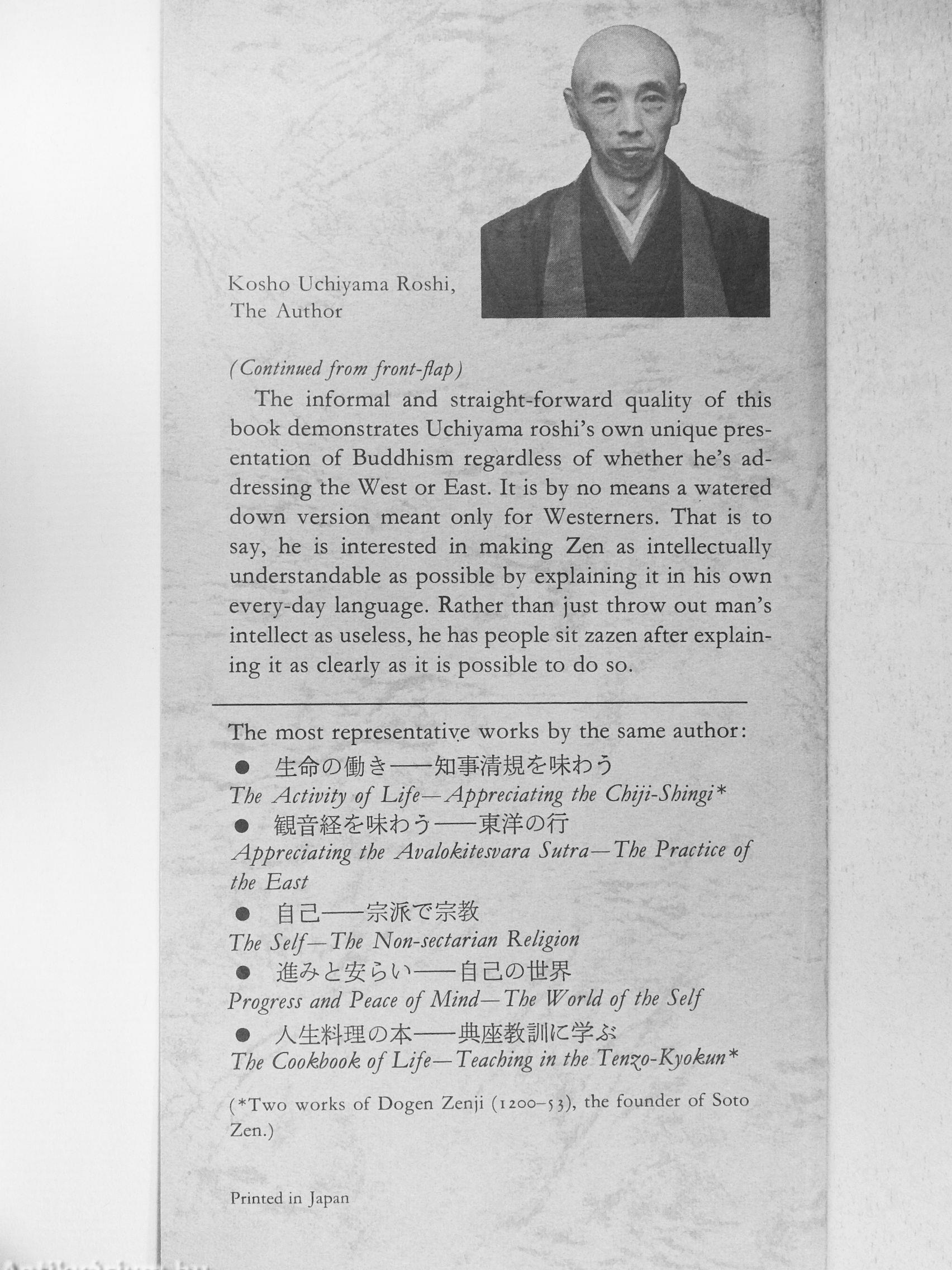
Kosho Uchiyama Roshi, The Author
( Continued from front-flap )
The informal and straight-forward quality of this book demonstrates Uchiyama roshi's own unique presentation of Buddhism regardless of whether he's addressing the West or East. It is by no means a watered down version meant only for Westerners. That is to say, he is interested in making Zen as intellectually understandable as possible by explaining it in his own every-day language. Rather than just throw out man's intellect as useless, he has people sit zazen after explaining it as clearly as it is possible to do so.
The most representative works by the same author:
The Activity of hife—Appreciating the Chiji-Shingi* )7—
Appreciating the Avalokitesvara Sutra—The Practice of the East
• @B—mm-^-mm
The Self—The Non-sectarian Religion
Progress and Peace of Mind—The World of the Self
• —mmmwK^^i
The Cookbook of Life—Teaching in the Ten^o-Kjokun*
(*Two works of Dogen Zenji (1200-53), the founder of Soto Zen.)
Printed in Japan Vissza
Témakörök
Kosho Uchiyama Roshi
Kosho Uchiyama Roshi műveinek az Antikvarium.hu-n kapható vagy előjegyezhető listáját itt tekintheti meg: Kosho Uchiyama Roshi könyvek, művekMegvásárolható példányok
Állapotfotók
Jó állapotú példány.
Állapot:
Jó
12.000 ,-Ft
60
pont kapható
Kosárba
 Folytatás Microsoft-tal