Fülszöveg
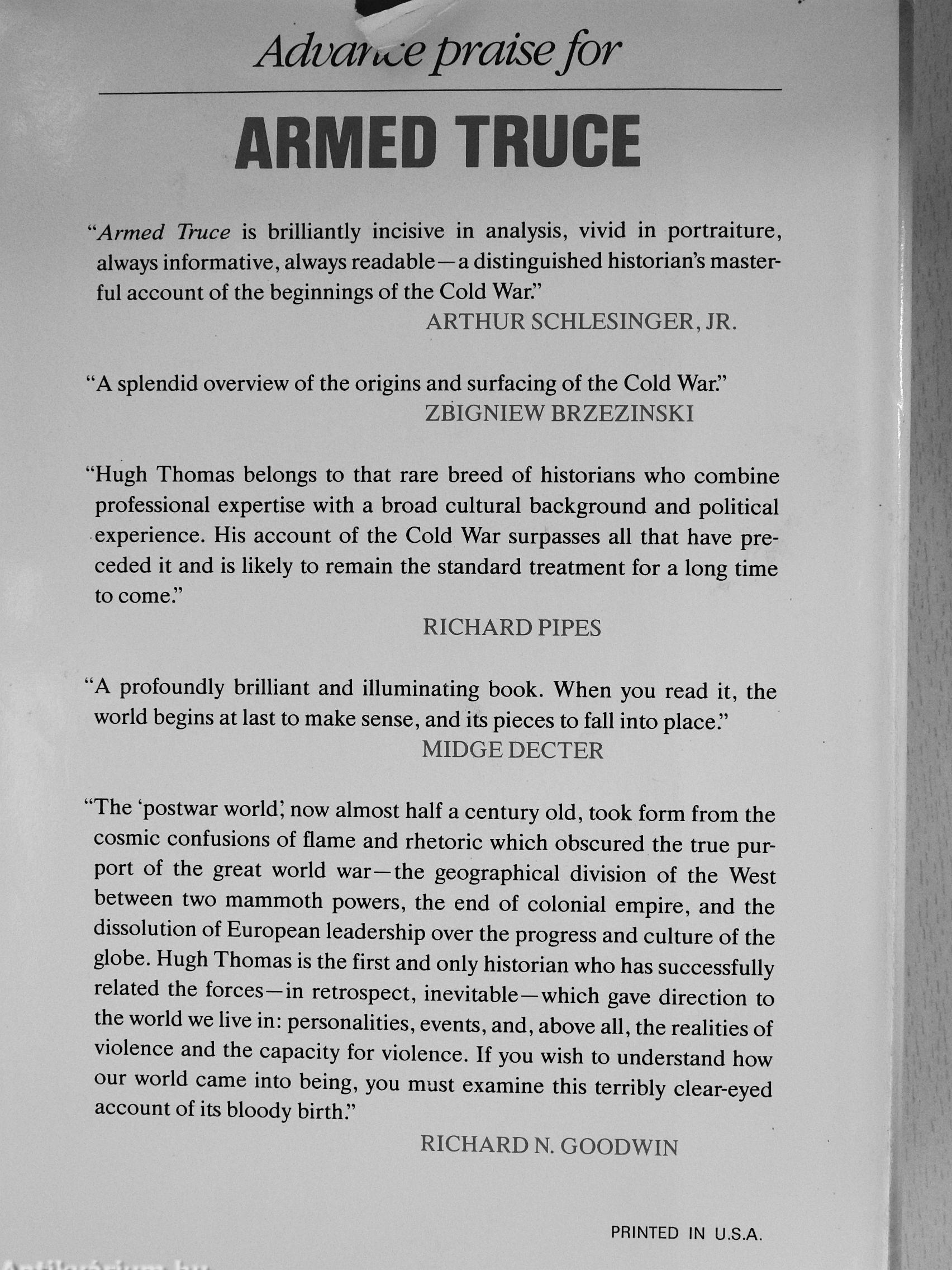
AdvaftAse praise for
ARMED TRUCE
''Armed Truce is brilliantly incisive in analysis, vivid in portraiture, always informative, always readable—a distinguished historian's masterful account of the beginnings of the Cold War."
ARTHUR SCHLESINGER, JR.
"A splendid overview of the origins and surfacing of the Cold War."
ZBIGNIEW BRZEZINSKI
"Hugh Thomas belongs to that rare breed of historians who combine professional expertise with a broad cultural background and political experience. His account of the Cold War surpasses all that have preceded it and is likely to remain the standard treatment for a long time to come."
RICHARD PIPES
"A profoundly brilliant and illuminating book. When you read it, the world begins at last to make sense, and its pieces to fall into place."
MIDGE DECTER
"The 'postwar world; now almost half a century old, took form from the cosmic confusions of flame and rhetoric which obscured the true purport of the great world war—the geographical division of...
Tovább
Fülszöveg
AdvaftAse praise for
ARMED TRUCE
''Armed Truce is brilliantly incisive in analysis, vivid in portraiture, always informative, always readable—a distinguished historian's masterful account of the beginnings of the Cold War."
ARTHUR SCHLESINGER, JR.
"A splendid overview of the origins and surfacing of the Cold War."
ZBIGNIEW BRZEZINSKI
"Hugh Thomas belongs to that rare breed of historians who combine professional expertise with a broad cultural background and political experience. His account of the Cold War surpasses all that have preceded it and is likely to remain the standard treatment for a long time to come."
RICHARD PIPES
"A profoundly brilliant and illuminating book. When you read it, the world begins at last to make sense, and its pieces to fall into place."
MIDGE DECTER
"The 'postwar world; now almost half a century old, took form from the cosmic confusions of flame and rhetoric which obscured the true purport of the great world war—the geographical division of the West between two mammoth powers, the end of colonial empire, and the dissolution of European leadership over the progress and culture of the globe. Hugh Thomas is the first and only historian who has successfully related the forces—in retrospect, inevitable—which gave direction to the world we live in: personalities, events, and, above all, the realities of violence and the capacity for violence. If you wish to understand how our world came into being, you must examine this terribly clear-eyed account of its bloody birth."
RICHARD N. GOODWIN
PRINTED IN U.S.A.
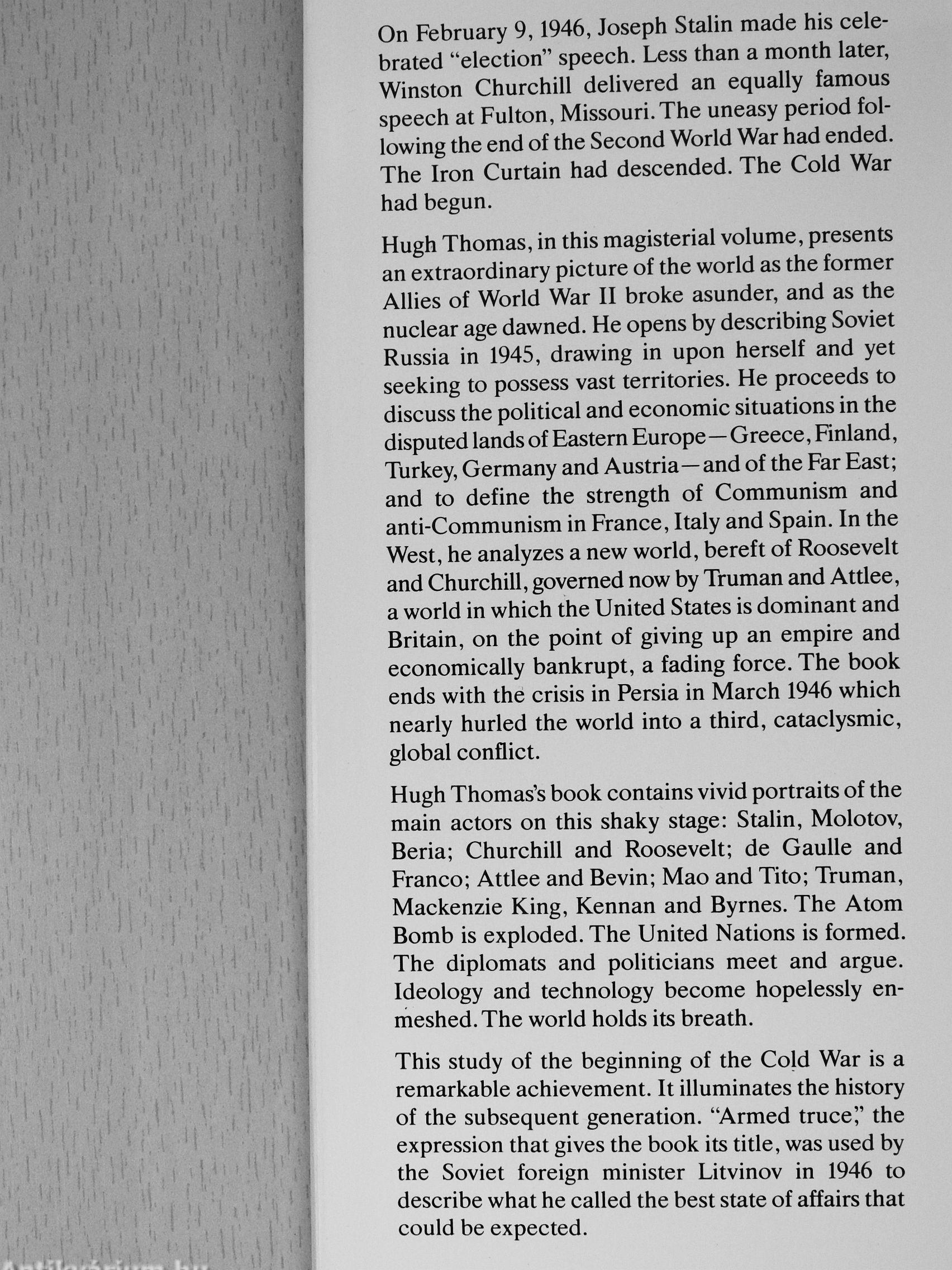
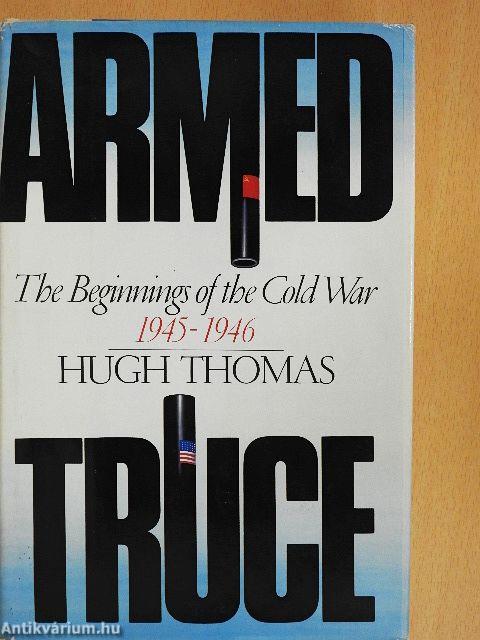
On February 9, 1946, Joseph Stalin made his celebrated "election" speech. Less than a month later, Winston Churchill delivered an equally famous speech at Fulton, Missouri.The uneasy period following the end of the Second World War had ended. The Iron Curtain had descended. The Cold War had begun.
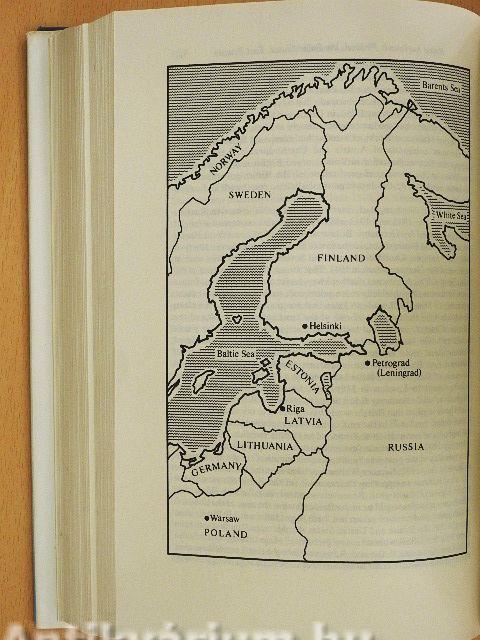
Hugh Thomas, in this magisterial volume, presents an extraordinary picture of the world as the former Allies of World War 11 broke asunder, and as the nuclear age dawned. He opens by describing Soviet Russia in 1945, drawing in upon herself and yet seeking to possess vast territories. He proceeds to discuss the political and economic situations in the disputed lands of Eastern Europe—Greece, Hnland, Turkey, Germany and Austria—and of the Far East; and to define the strength of Communism and anti-Communism in France, Italy and Spain. In the West, he analyzes a new world, bereft of Roosevelt and Churchill, governed now by Truman and Atdee, a world in which the United States is dominant and Britain, on the point of giving up an empire and economically bankrupt, a fading force. The book ends with the crisis in Persia in March 1946 which nearly hurled the world into a third, cataclysmic, global conflict.
Hugh Thomas's book contains vivid portraits of the main actors on this shaky stage: Stalin, Molotov, Beria; Churchill and Roosevelt; de Gaulle and Franco; Attlee and Bevin; Mao and Tito; Truman, Mackenzie King, Kennan and Byrnes. The Atom Bomb is exploded. The United Nations is formed. The diplomats and politicians meet and argue. Ideology and technology become hopelessly enmeshed. The world holds its breath.
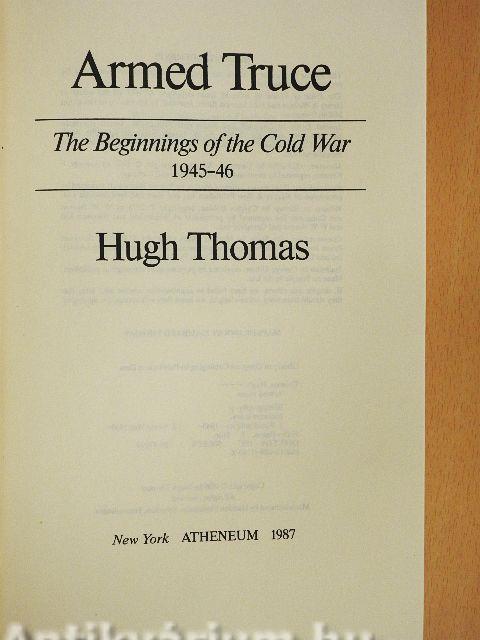
This study of the beginning of the Cold War is a remarkable achievement. It illuminates the history of the subsequent generation. "Armed trucel' the expression that gives the book its title, was used by the Soviet foreign minister Litvinov in 1946 to describe what he called the best state of affairs that could be expected.
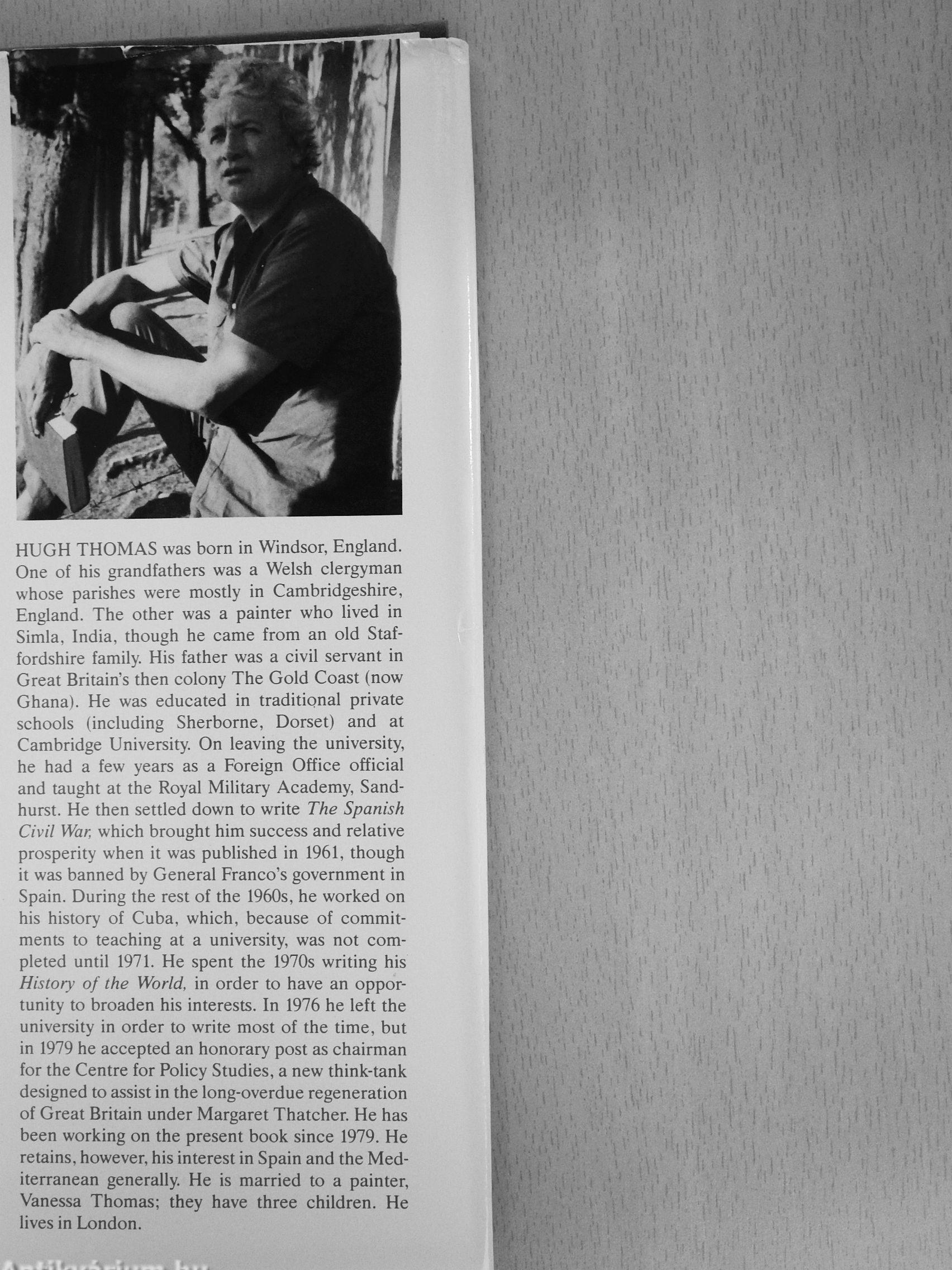
HUGH THOMAS was born in Windsor, England. One of his grandfathers was a Welsh clergyman whose parishes were mostly in Cambridgeshire, England. The other was a painter who lived in Simla, India, though he came from an old Staffordshire family. His father was a civil servant in Great Britain's then colony The Gold Coast (now Ghana). He was educated in traditional private schools (including Sherborne, Dorset) and at Cambridge University On leaving the university, he had a few years as a Foreign Office official and taught at the Royal Military Academy, Sandhurst. He then settled down to write The Spanish Civil War, which brought him success and relative prosperity when it was published in 1961, though it was banned by General Franco's government in Spain. During the rest of the 1960s, he worked on his history of Cuba, which, because of commitments to teaching at a university, was not completed until 1971. He spent the 1970s writing his History of the World, in order to have an opportunity to broaden his interests. In 1976 he left the university in order to write most of the time, but in 1979 he accepted an honorary post as chairman for the Centre for Policy Studies, a new think-tank designed to assist in the long-overdue regeneration of Great Britain under Margaret Thatcher. He has been working on the present book since 1979. He retains, however, his interest in Spain and the Mediterranean generally He is married to a painter, Vanessa Thomas; they have three children. He lives in London.
;
Vissza 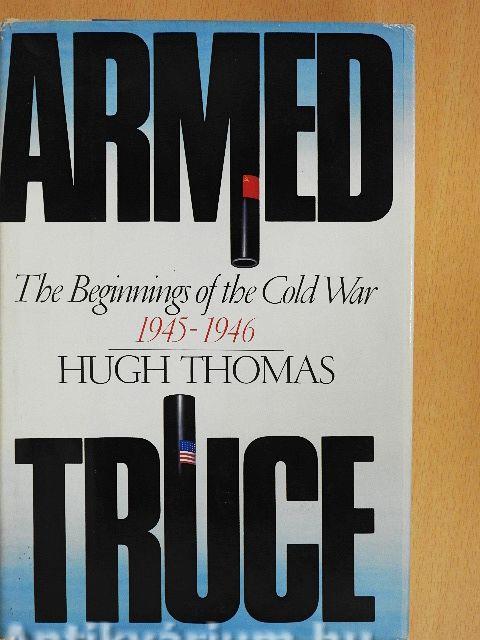


 Folytatás Microsoft-tal