Fülszöveg
Stockholm International Peace Research Institute
SIPRI is an independent institute for research into problems of peace and conflict, especially those of arms control and disarmament. It was established in 1966 to commemorate Sweden's 150 years of unbroken peace.
The Institute is financed by the Swedish Parliament. The staff, the Governing Board and the Scientific Council are international.
Recent and forthcoming SIPRI books published by Taylor Francis
World Armaments and Disarmament,
SIPRI Yearbook 1985
ISBN 0 85066 297 4. 666 pp. 1985.
World Armaments and Disarmament, SIPRI Yearbooks 1978-84
Arms in the '80s By John Turner
ISBN 0 85066 298 2. 11 8 pp. 1 985.
Verification: How Much is Enough? By Allan S. Krass
ISBN 0 85066 305 9. c. 300 pp. 1985.
Non-Proliferation: The Why and the Wherefore
Edited by Jozef Goldblat
ISBN 0 85066 304 0. 346 pp. 1985.
Safeguarding the Atom -A Critical Appraisal
By David Fischer and Paul Szasz, edited by Jozef Goldblat
ISBN 0 85066...
Tovább
Fülszöveg
Stockholm International Peace Research Institute
SIPRI is an independent institute for research into problems of peace and conflict, especially those of arms control and disarmament. It was established in 1966 to commemorate Sweden's 150 years of unbroken peace.
The Institute is financed by the Swedish Parliament. The staff, the Governing Board and the Scientific Council are international.
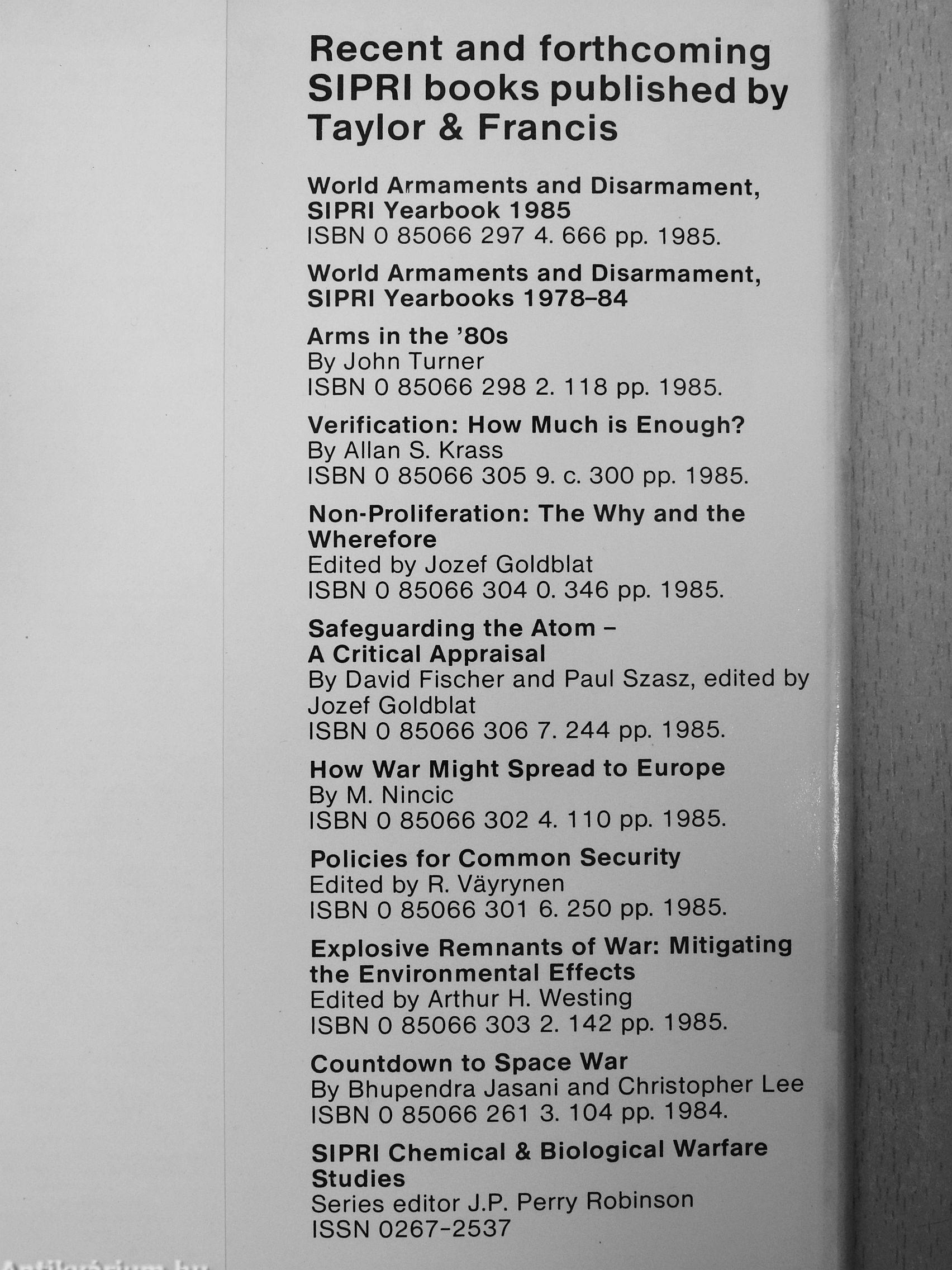
Recent and forthcoming SIPRI books published by Taylor Francis
World Armaments and Disarmament,
SIPRI Yearbook 1985
ISBN 0 85066 297 4. 666 pp. 1985.
World Armaments and Disarmament, SIPRI Yearbooks 1978-84
Arms in the '80s By John Turner
ISBN 0 85066 298 2. 11 8 pp. 1 985.
Verification: How Much is Enough? By Allan S. Krass
ISBN 0 85066 305 9. c. 300 pp. 1985.
Non-Proliferation: The Why and the Wherefore
Edited by Jozef Goldblat
ISBN 0 85066 304 0. 346 pp. 1985.
Safeguarding the Atom -A Critical Appraisal
By David Fischer and Paul Szasz, edited by Jozef Goldblat
ISBN 0 85066 306 7. 244 pp. 1985.
How War Might Spread to Europe By M. Nincic
ISBN 0 85066 302 4. 11 0 pp. 1985.
Policies for Common Security " j
Edited by R. Väyrynen íV;
ISBN 0 85066 301 6. 250 pp. 1985.
Explosive Remnants of War: Mitigating the Environmental Effects Edited by Arthur H. Westing ISBN 0 85066 303 2. 142 pp. 1985.
Countdown to Space War By Bhupendra Jasani and Christopher Lee ISBN 0 85066 261 3. 104 pp. 1984.
SIPRI Chemical & Biological Warfare Studies
Series editor J.P. Perry Robinson ISSN 0267-2537
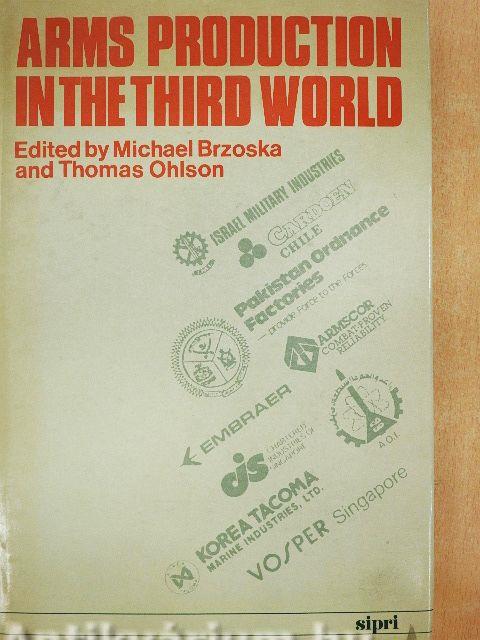
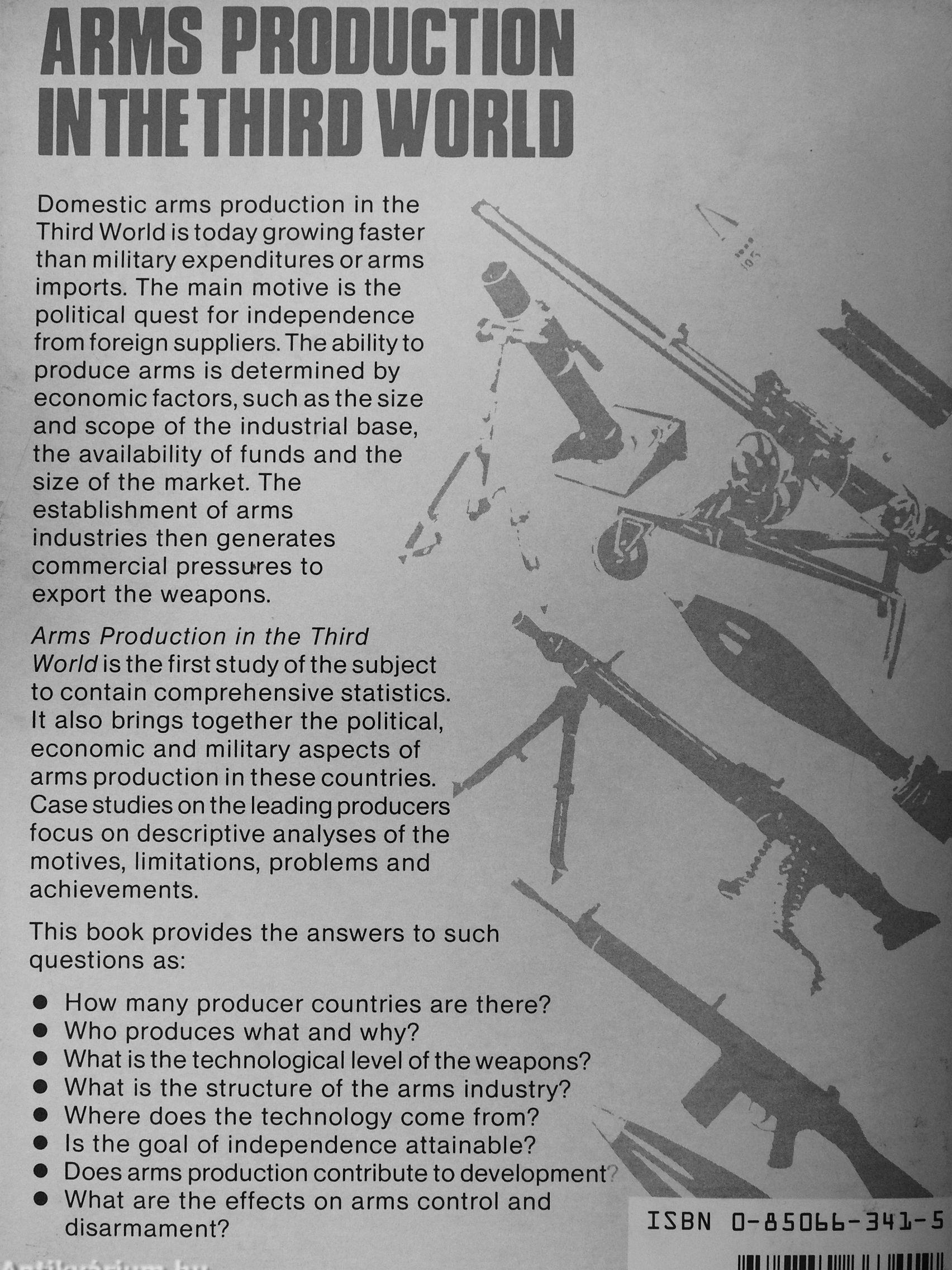
ARMS PRODUCTION INTHETHIRD WORLD
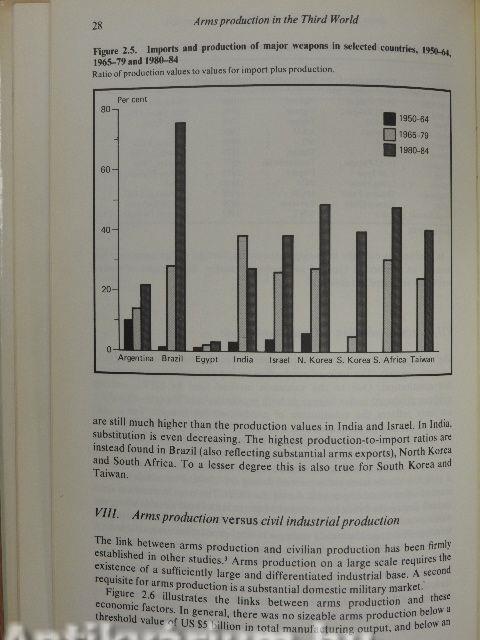
Domestic arms production in the Third World is today growing faster than military expenditures orarms imports. The main motive is the political quest for independence from foreign suppliers. The ability to produce arms is determined by economic factors, such as the size and scope of the industrial base, the availability of funds and the size of the market. The establishment of arms industries then generates commercial pressu'res to export the weapons.
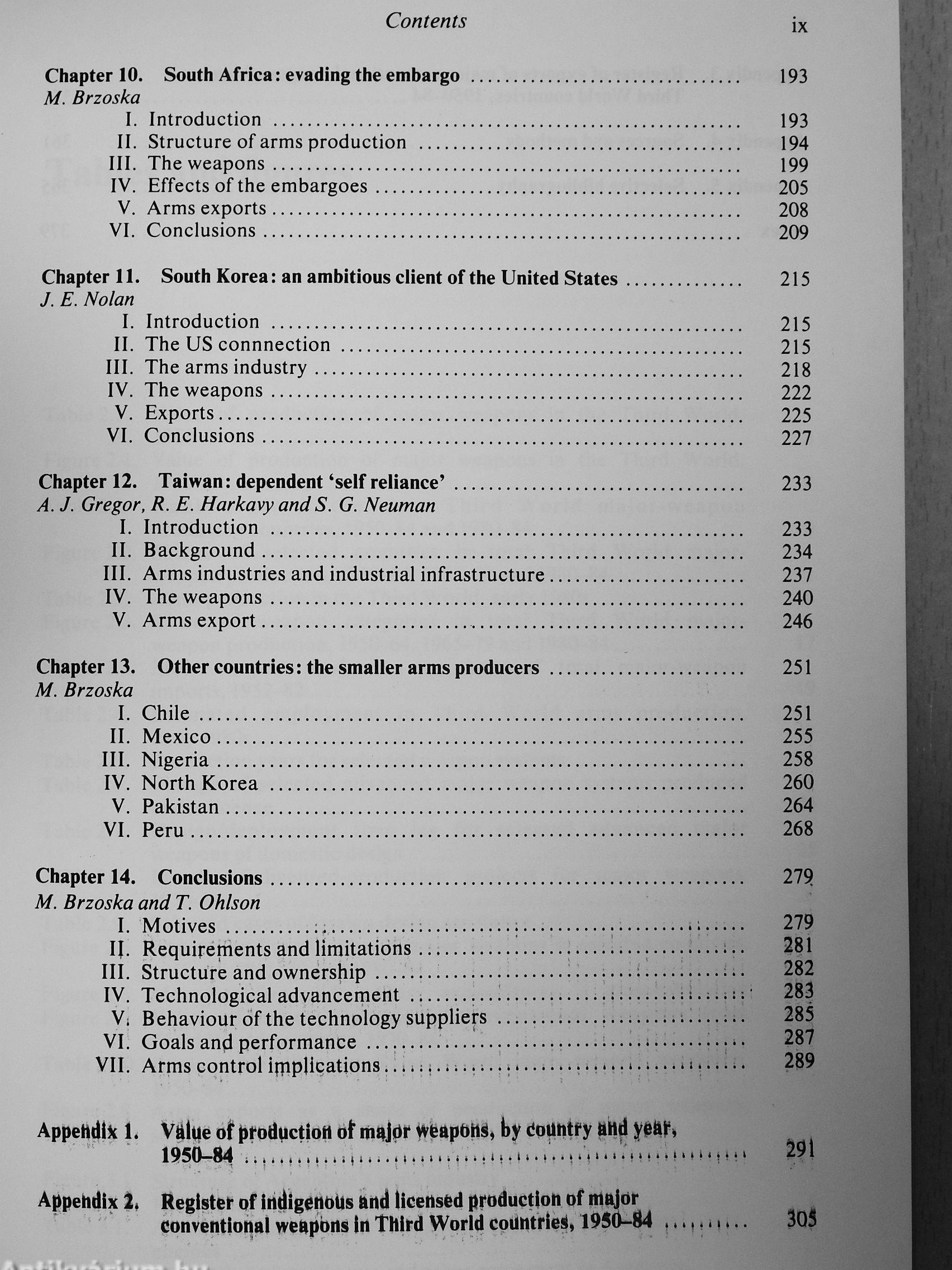
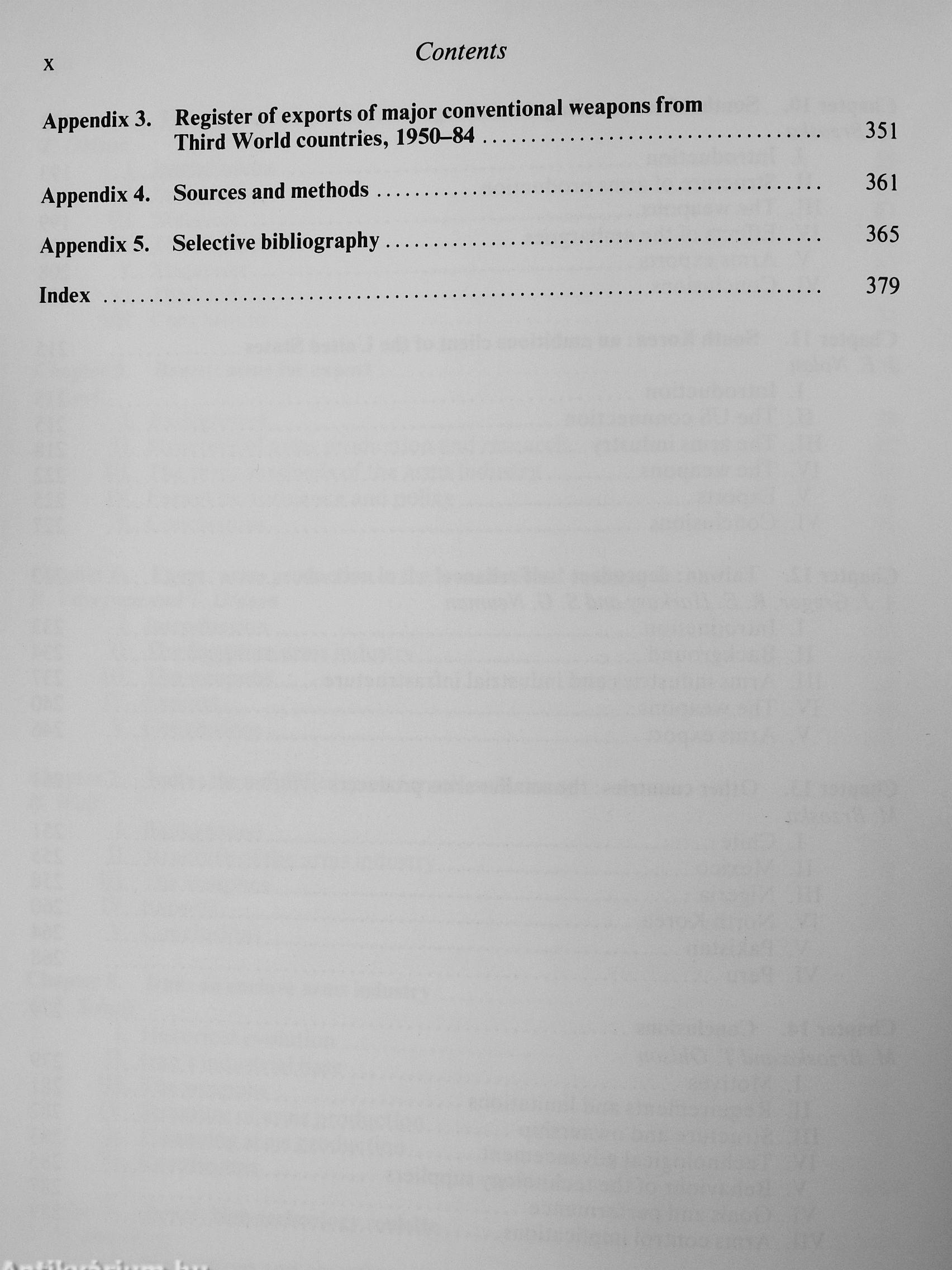
Arms Production in the Third World is the first study of the subject to contain comprehensive statistics. It also brings together the political, economic and military aspects of arms production in these countries. Case studies on the leading producers focus on descriptive analyses of the motives, limitations, problems and achievements.
This book provides the answers to such questions as:
• How many producer countries are there?
• Who produces what and why?
• What is the technological level of the weapons?
• What is the structure of the arms industry?
• Where does the technology come from?
• Is the goal of independence attainable?
• Does arms production contribute to development?
• What are the effects on arms control and disarmament?
ISBN D-flSObb-Bm-S llllllilllllllllllilllllllfii
Vissza



 Folytatás Microsoft-tal