
1.137.123
kiadvánnyal nyújtjuk Magyarország legnagyobb antikvár könyv-kínálatát

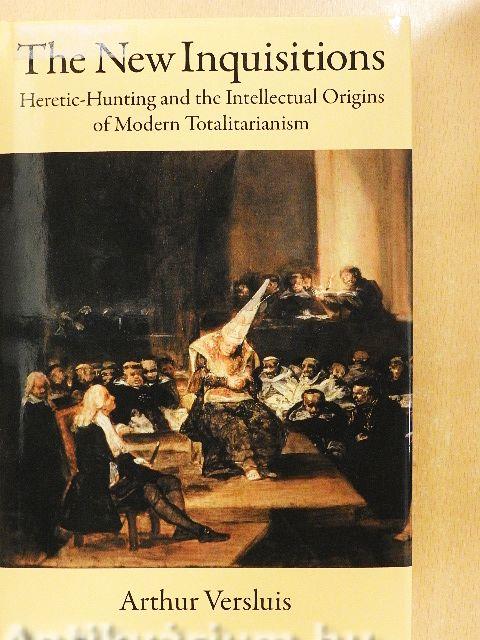
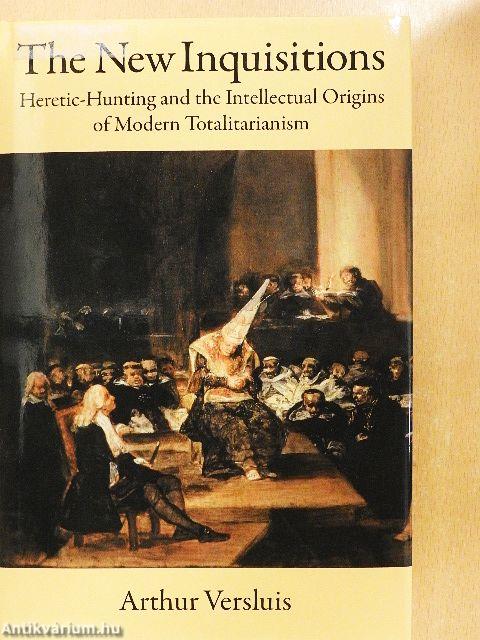
The New Inquisitions
Heretic-Hunting and the Intellectual Origins of Modern Totalitarianism
Oxford
| Kiadó: | Oxford University Press |
|---|---|
| Kiadás helye: | Oxford |
| Kiadás éve: | |
| Kötés típusa: | Fűzött kemény papírkötés |
| Oldalszám: | 190 oldal |
| Sorozatcím: | |
| Kötetszám: | |
| Nyelv: | Angol |
| Méret: | 24 cm x 16 cm |
| ISBN: | |
Értesítőt kérek a kiadóról
A beállítást mentettük,
naponta értesítjük a beérkező friss
kiadványokról
naponta értesítjük a beérkező friss
kiadványokról
A beállítást mentettük,
naponta értesítjük a beérkező friss
kiadványokról
naponta értesítjük a beérkező friss
kiadványokról
Előszó
Tovább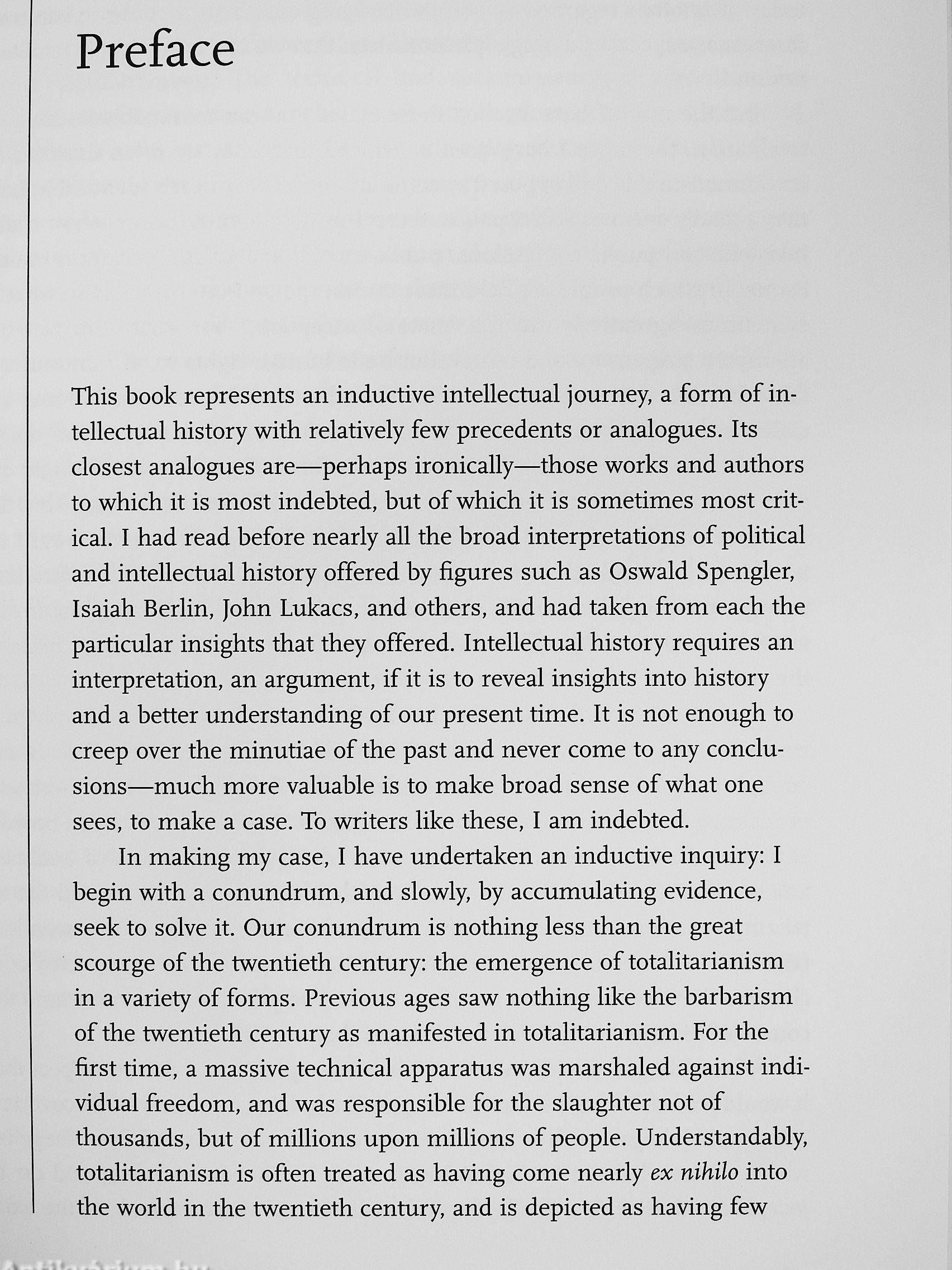
Fülszöveg
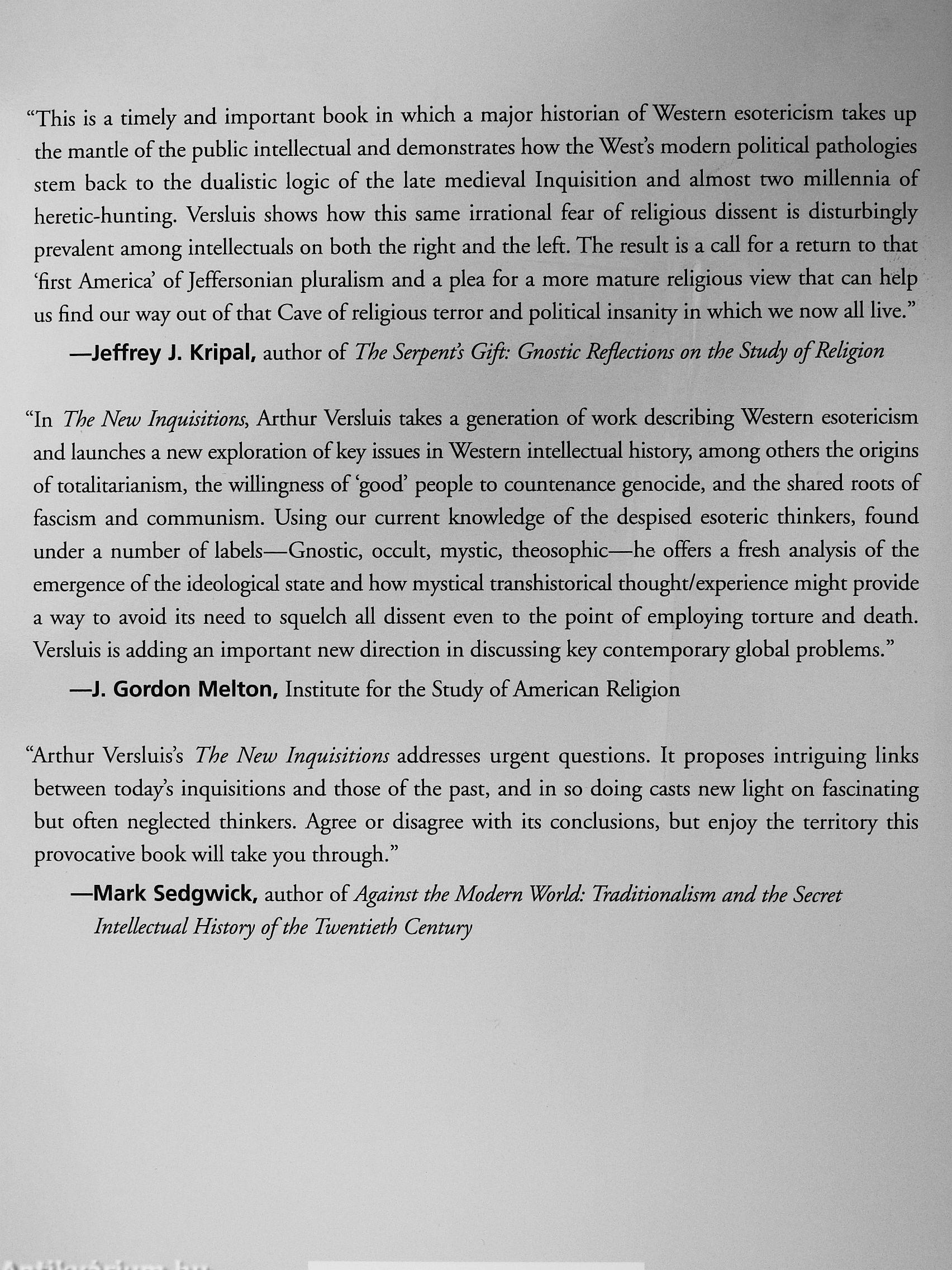
"This is a timely and important book in which a major historian of Western esotericism takes up the mantle of the public intellectual and demonstrates how the Wests modern political pathologies stem back to the dualistic logic of the late medieval Inquisition and almost two millennia of hereric-hunting. Versluis shows how this same irrational fear of religious dissent is disturbingly prevalent among intellectuals on both the right and the left. The result is a call for a return to that 'first America of JefFersonian pluralism and a plea for a more mature religious view that can help us find our way out of that Cave of religious terror and political insanity in which we now all live."
—Jeffrey J. Kripal, author of The Serpent's Gift: Gnostic Reflections on the Study of Religion
"In The New Inquisitions, Arthur Versluis takes a generation of work describing Western esotericism and launches a new exploration of key issues in Western intellectual history, among others the origins of... Tovább
Fülszöveg
"This is a timely and important book in which a major historian of Western esotericism takes up the mantle of the public intellectual and demonstrates how the Wests modern political pathologies stem back to the dualistic logic of the late medieval Inquisition and almost two millennia of hereric-hunting. Versluis shows how this same irrational fear of religious dissent is disturbingly prevalent among intellectuals on both the right and the left. The result is a call for a return to that 'first America of JefFersonian pluralism and a plea for a more mature religious view that can help us find our way out of that Cave of religious terror and political insanity in which we now all live."
—Jeffrey J. Kripal, author of The Serpent's Gift: Gnostic Reflections on the Study of Religion
"In The New Inquisitions, Arthur Versluis takes a generation of work describing Western esotericism and launches a new exploration of key issues in Western intellectual history, among others the origins of totalitarianism, the willingness of 'good' people to countenance genocide, and the shared roots of fascism and communism. Using our current knowledge of the despised esoteric thinkers, found under a number of labels—Gnostic, occult, mystic, theosophic—he offers a fresh analysis of the emergence of the ideological state and how mysdcal transhistorical thought/experience might provide a way to avoid its need to squelch all dissent even to the point of employing torture and death. Versluis is adding an important new direction in discussing key contemporary global problems."
—J. Gordon Melton, Institute for the Study of American Religion
"Arthur Versluiss The New Inquisitions addresses urgent questions. It proposes intriguing links between todays inquisitions and those of the past, and in so doing casts new light on fascinating but often neglected thinkers. Agree or disagree with its conclusions, but enjoy the territory this provocative book will take you through."
—Mark Sedgwick, author of Against the Modem World: Traditionalism and the Secret Intellectual History of the Twentieth Century
Hi ' 'r M I
iV
i'l i I' I
fV.
i.''fl'l
' li'i'fii
k'\ iv
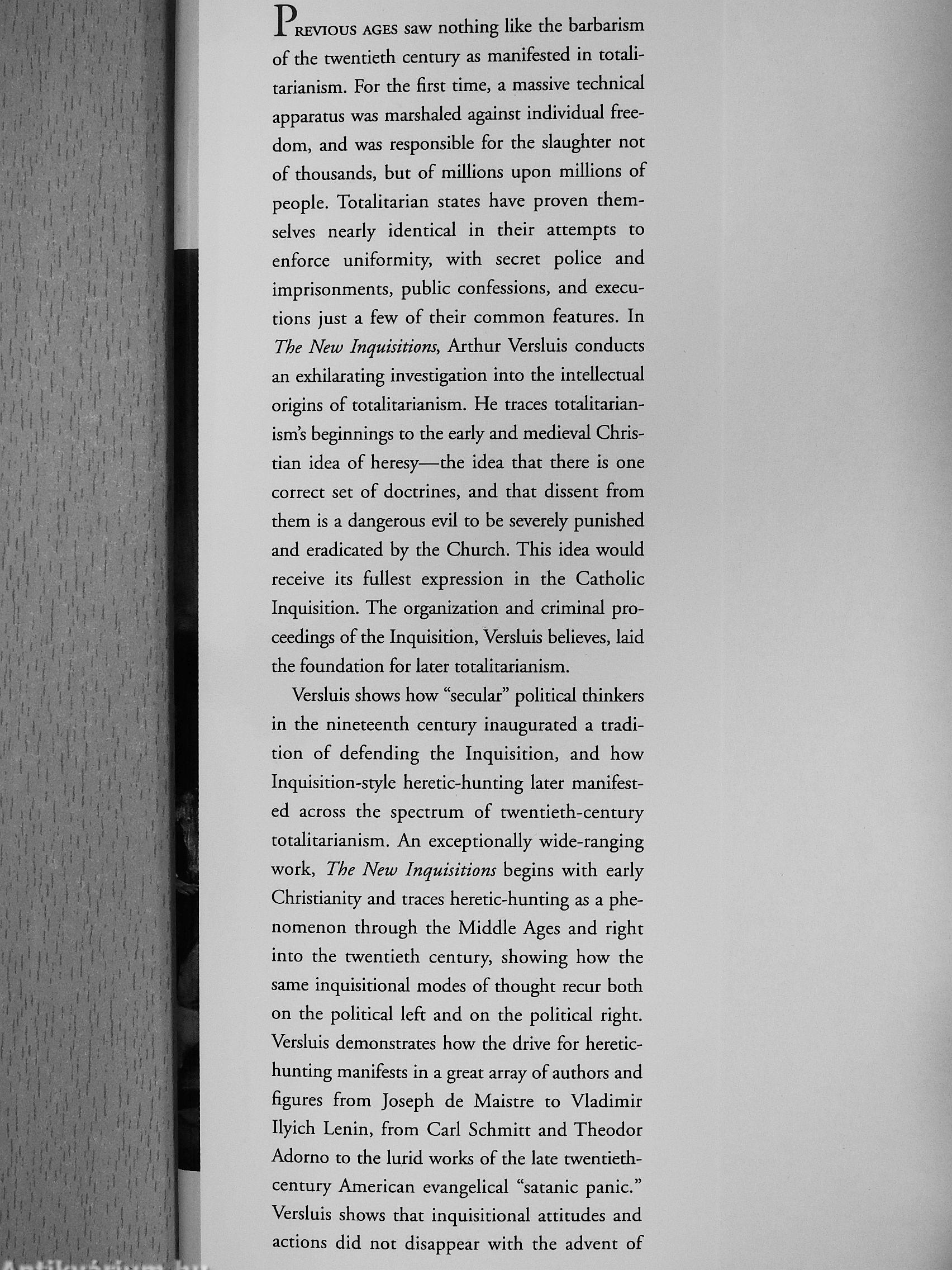
1 REVious AGES saw nothing like the barbarism of the twentieth century as manifested in totalitarianism. For the first time, a massive technical apparatus was marshaled against individual freedom, and was responsible for the slaughter not of thousands, but of millions upon millions of people. Totalitarian states have proven themselves nearly identical in their attempts to enforce uniformity, with secret police and imprisonments, public confessions, and executions just a few of their common features. In The New Inquisitions, Arthur Versluis conducts an exhilarating investigation into the intellectual origins of totalitarianism. He traces totalitarianism's beginnings to the early and medieval Christian idea of heresy—the idea that there is one correct set of doctrines, and that dissent from them is a dangerous evil to be severely punished and eradicated by the Church. This idea would receive its fullest expression in the Catholic Inquisition. The organization and criminal proceedings of the Inquisition, Versluis believes, laid the foundation for later totalitarianism.
Versluis shows how "secular" pohtical thinkers in the nineteenth century inaugurated a tradition of defending the Inquisition, and how Inquisition-style heretic-hunting later manifested across the spectrum of rwentieth-century totalitarianism. An exceptionally wide-ranging work, The New Inquisitions begins with early Christianity and traces heretic-hunting as a phenomenon through the Middle Ages and right into the twentieth century, showing how the same inquisitional modes of thought recur both on the political left and on the political right. Versluis demonstrates how the drive for heretic-hunting manifests in a great array of authors and figures from Joseph de Maistre to Vladimir Ilyich Lenin, from Carl Schmitt and Theodor Adorno to the lurid works of the late twentieth-century American evangelical "satanic panic." Versluis shows that inquisitional attitudes and actions did not disappear with the advent of
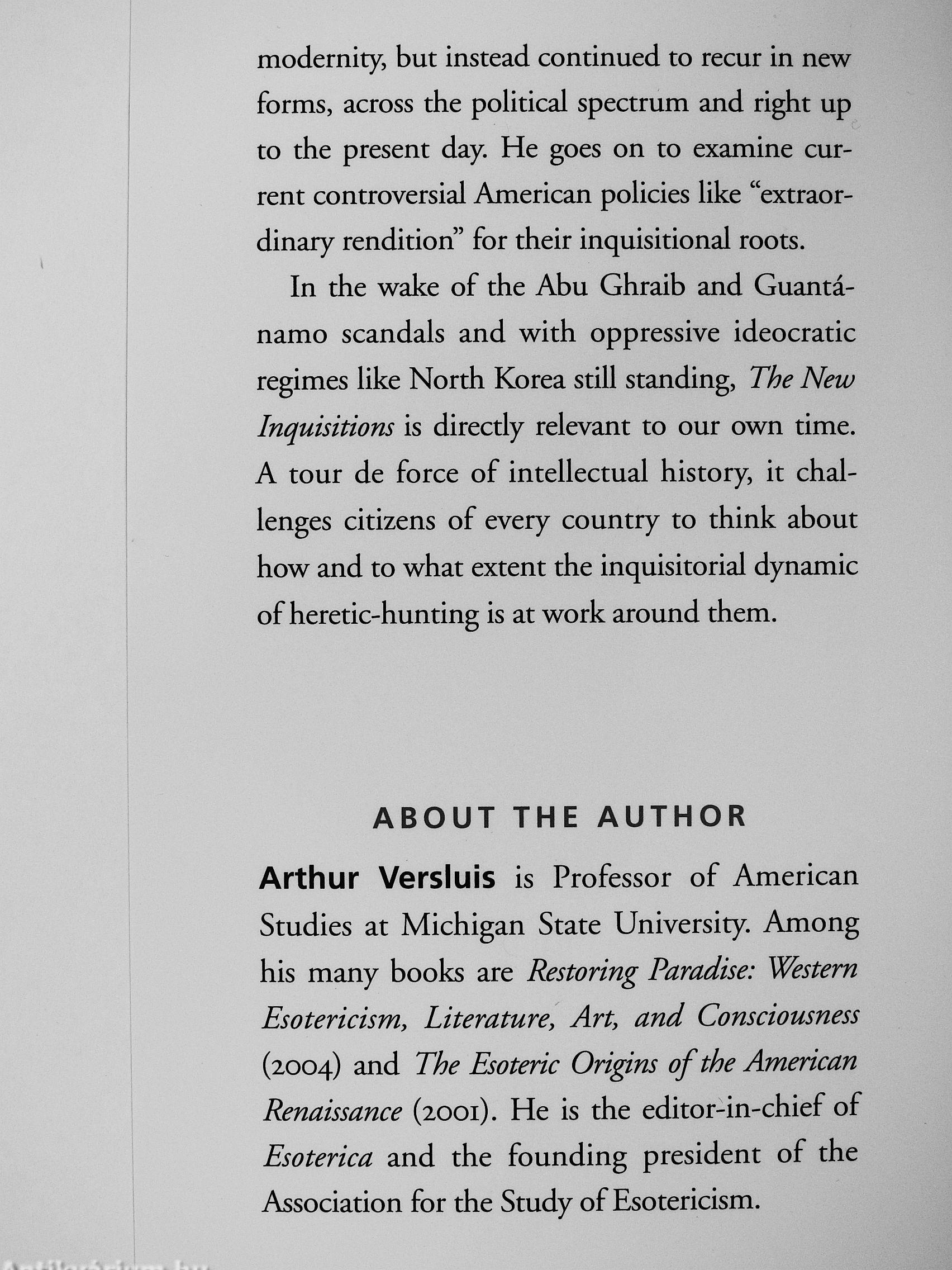
modernity, but instead continued to recur in new forms, across the political spectrum and right up to the present day. He goes on to examine current controversial American policies like "extraordinary rendition" for their inquisitional roots.
In the wake of the Abu Ghraib and Guantá-namo scandals and with oppressive ideocratic regimes like North Korea still standing, The New Inquisitions is directly relevant to our own time. A tour de force of intellectual history, it challenges citizens of every country to think about how and to what extent the inquisitorial dynamic of heretic-hunting is at work around them.
ABOUT THE AUTHOR
Arthur Versluis is Professor of American Studies at Michigan State University. Among his many books are Restoring Paradise: Western Esotericism, Literature, Art, and Consciousness (2004) and The Esoteric Origins of the American Renaissance (2001). He is the editor-in-chief of Esotérica and the founding president of the Association for the Study of Esotericism. Vissza
Témakörök
- Idegennyelv > Idegennyelvű könyvek > Angol > Vallás > Kereszténység
- Idegennyelv > Idegennyelvű könyvek > Angol > Történelem > Egyéb
- Paratudományok > Spiritizmus > Egyéb
- Vallás > Kereszténység > Története
- Filozófia > Témaköre szerint > Szakfilozófiák
- Idegennyelv > Idegennyelvű könyvek > Angol > Filozófia > Témaköre szerint > Szakfilozófiák
- Történelem > Idegennyelvű > Angol
- Idegennyelv > Idegennyelvű könyvek > Angol > Paratudományok > Egyéb
- Történelem > Politika > Pártok, szervezetek
- Történelem > Politika > Ideológiák > Egyéb
- Vallás
- Vallás > Kereszténység
Arthur Versluis
Arthur Versluis műveinek az Antikvarium.hu-n kapható vagy előjegyezhető listáját itt tekintheti meg: Arthur Versluis könyvek, művekMegvásárolható példányok
Nincs megvásárolható példány
A könyv összes megrendelhető példánya elfogyott. Ha kívánja, előjegyezheti a könyvet, és amint a könyv egy újabb példánya elérhető lesz, értesítjük.
 Folytatás Microsoft-tal