Fülszöveg
!
'l
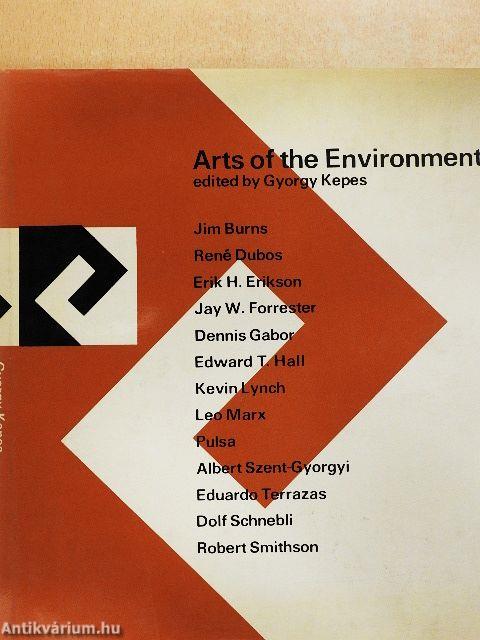
ARTS OF THE ENVIRONMENT edited by György Kepes
.11
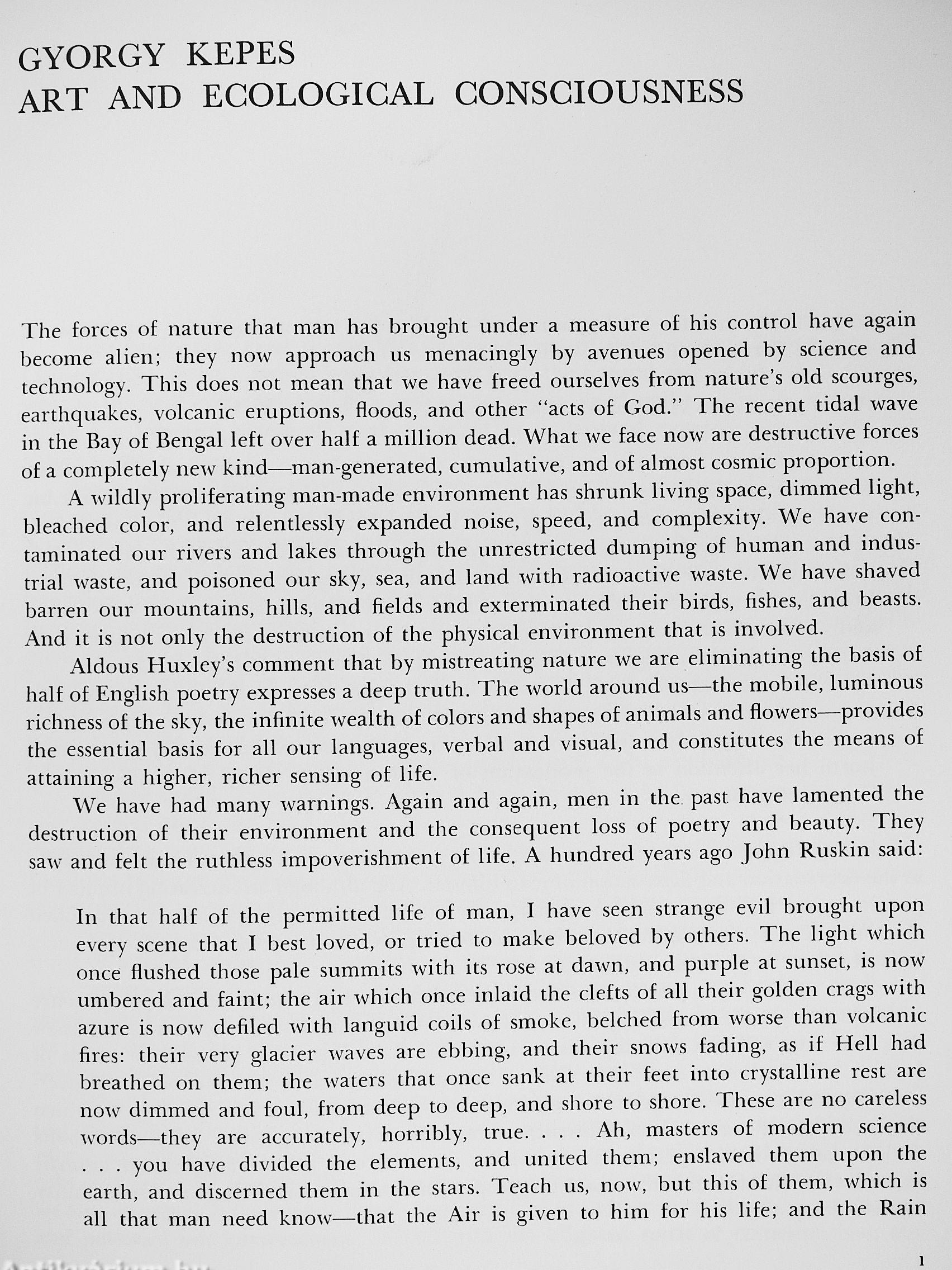
"Aldous Huxley's comment that by mistreating nature we are eliminating the basis of half of English poetry expresses a deep truth. The world around us—the mobile, luminous richness of the sky, the infinite wealth of colors and shapes of animals and flowers—provides the essential basis for all our languages, verbal and visual, and constitutes the means of attaining a higher and richer sensing of life "
György Kepes makes the above statement in preparation for his suggestion that the artist is one of the few members of our present society capable of making "the link between art and life, between man and man, and between man and environment, which provided the vital source of all the great art of the past."
Professor Kepes sees the current crisis in the cultural and scientific fields as one of communication, resulting from the fragmentation of experience and the dispersion of knowledge into many self-contained...
Tovább
Fülszöveg
!
'l
ARTS OF THE ENVIRONMENT edited by György Kepes
.11
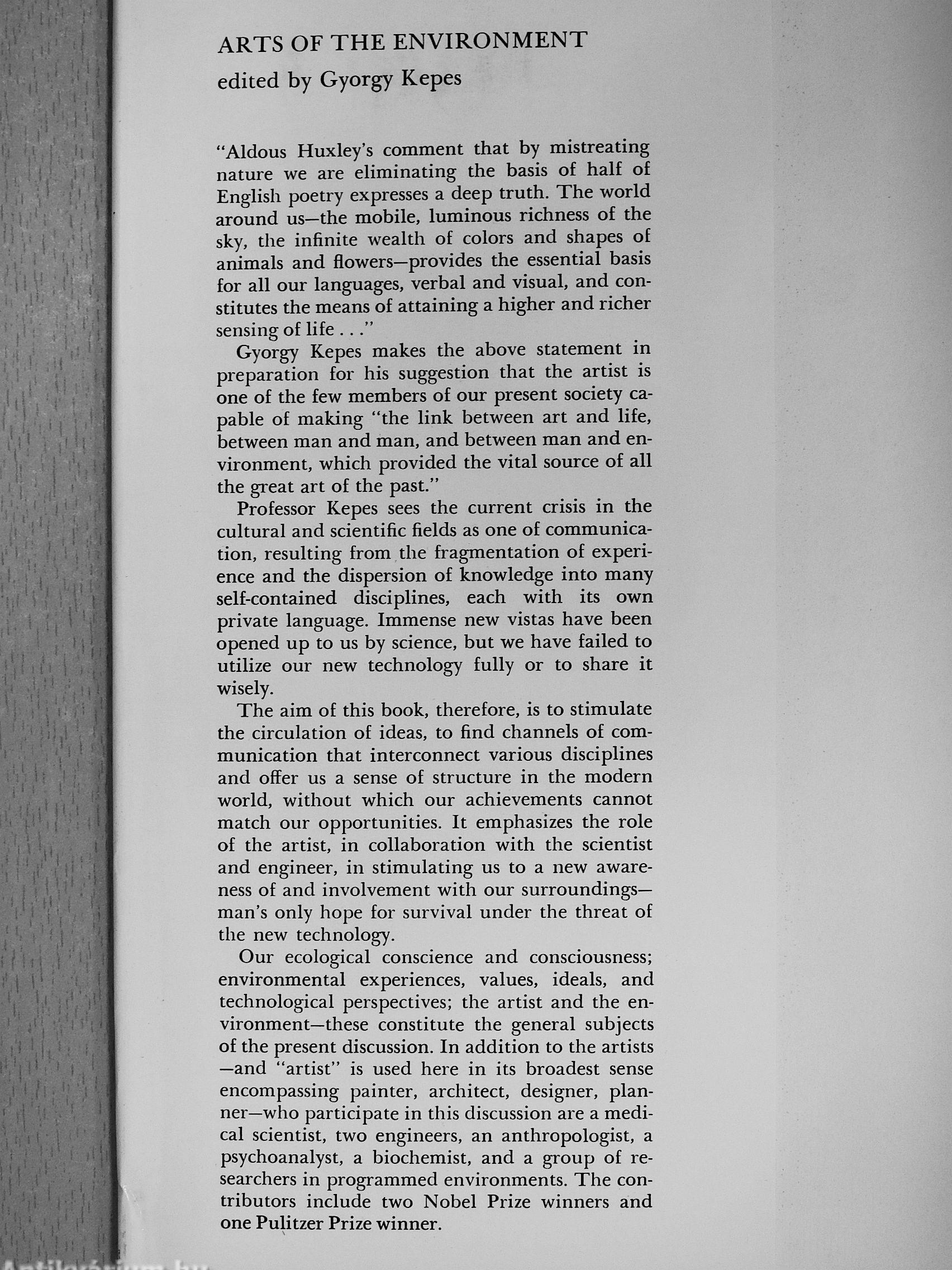
"Aldous Huxley's comment that by mistreating nature we are eliminating the basis of half of English poetry expresses a deep truth. The world around us—the mobile, luminous richness of the sky, the infinite wealth of colors and shapes of animals and flowers—provides the essential basis for all our languages, verbal and visual, and constitutes the means of attaining a higher and richer sensing of life "
György Kepes makes the above statement in preparation for his suggestion that the artist is one of the few members of our present society capable of making "the link between art and life, between man and man, and between man and environment, which provided the vital source of all the great art of the past."
Professor Kepes sees the current crisis in the cultural and scientific fields as one of communication, resulting from the fragmentation of experience and the dispersion of knowledge into many self-contained disciplines, each with its own private language. Immense new vistas have been opened up to us by science, but we have failed to utilize our new technology fully or to share it wisely.
The aim of this book, therefore, is to stimulate the circulation of ideas, to find channels of communication that interconnect various disciplines and offer us a sense of structure in the modern world, without which our achievements cannot match our opportunities. It emphasizes the role of the artist, in collaboration with the scientist and engineer, in stimulating us to a new awareness of and involvement with our surroundings-man's only hope for survival under the threat of the new technology.
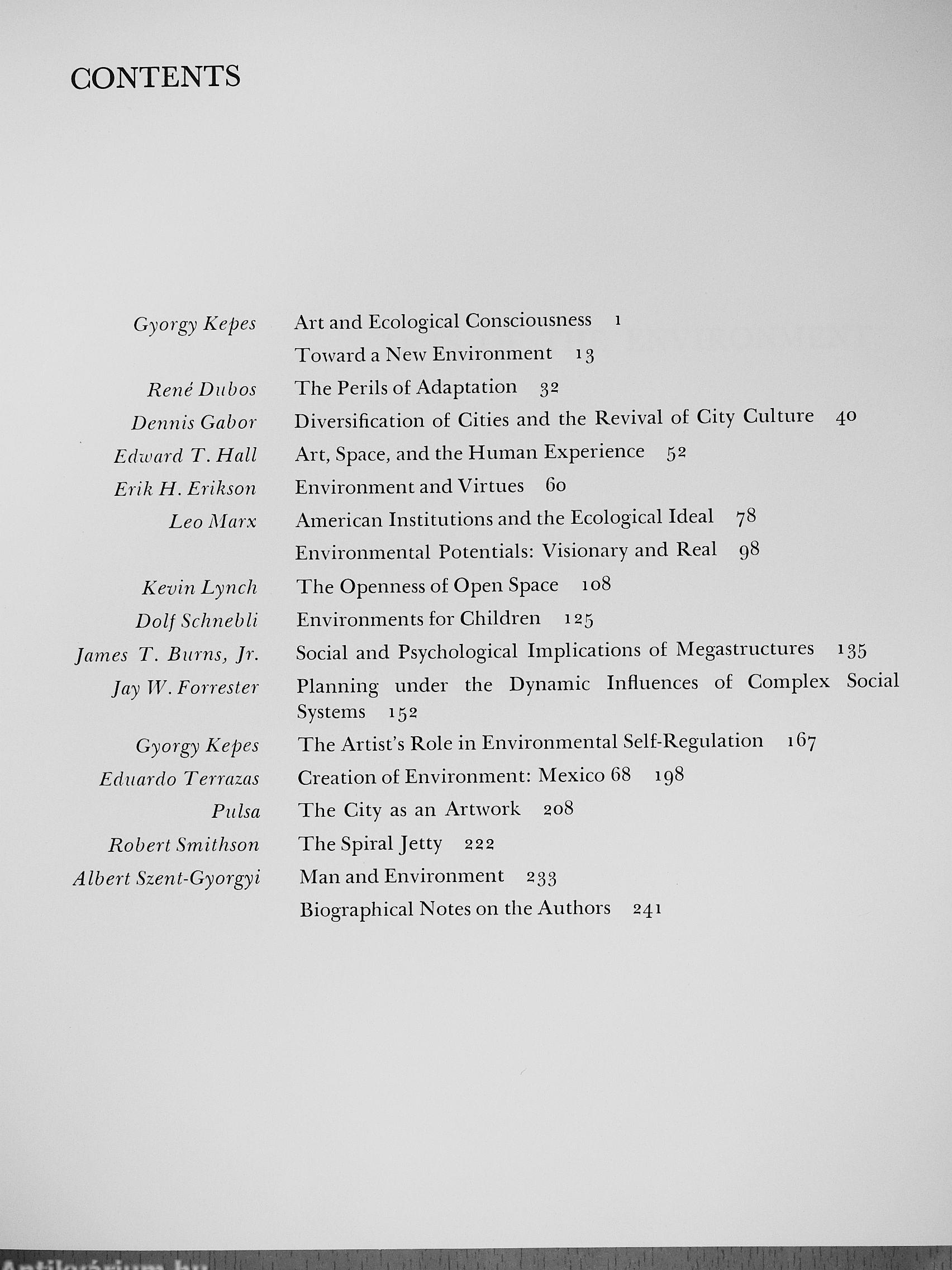
Our ecological conscience and consciousness; environmental experiences, values, ideals, and technological perspectives; the artist and the environment—these constitute the general subjects of the present discussion. In addition to the artists —and "artist" is used here in its broadest sense encompassing painter, architect, designer, planner—who participate in this discussion are a medical scientist, two engineers, an anthropologist, a psychoanalyst, a biochemist, and a group of researchers in programmed environments. The contributors include two Nobel Prize winners and one Pulitzer Prize winner.
Vissza 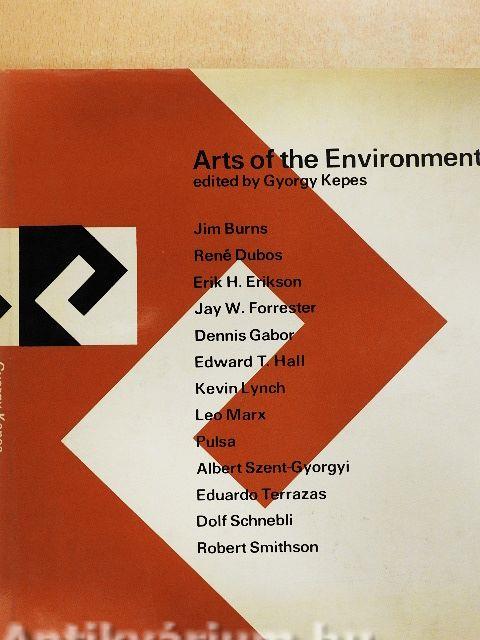


 Folytatás Microsoft-tal