Fülszöveg
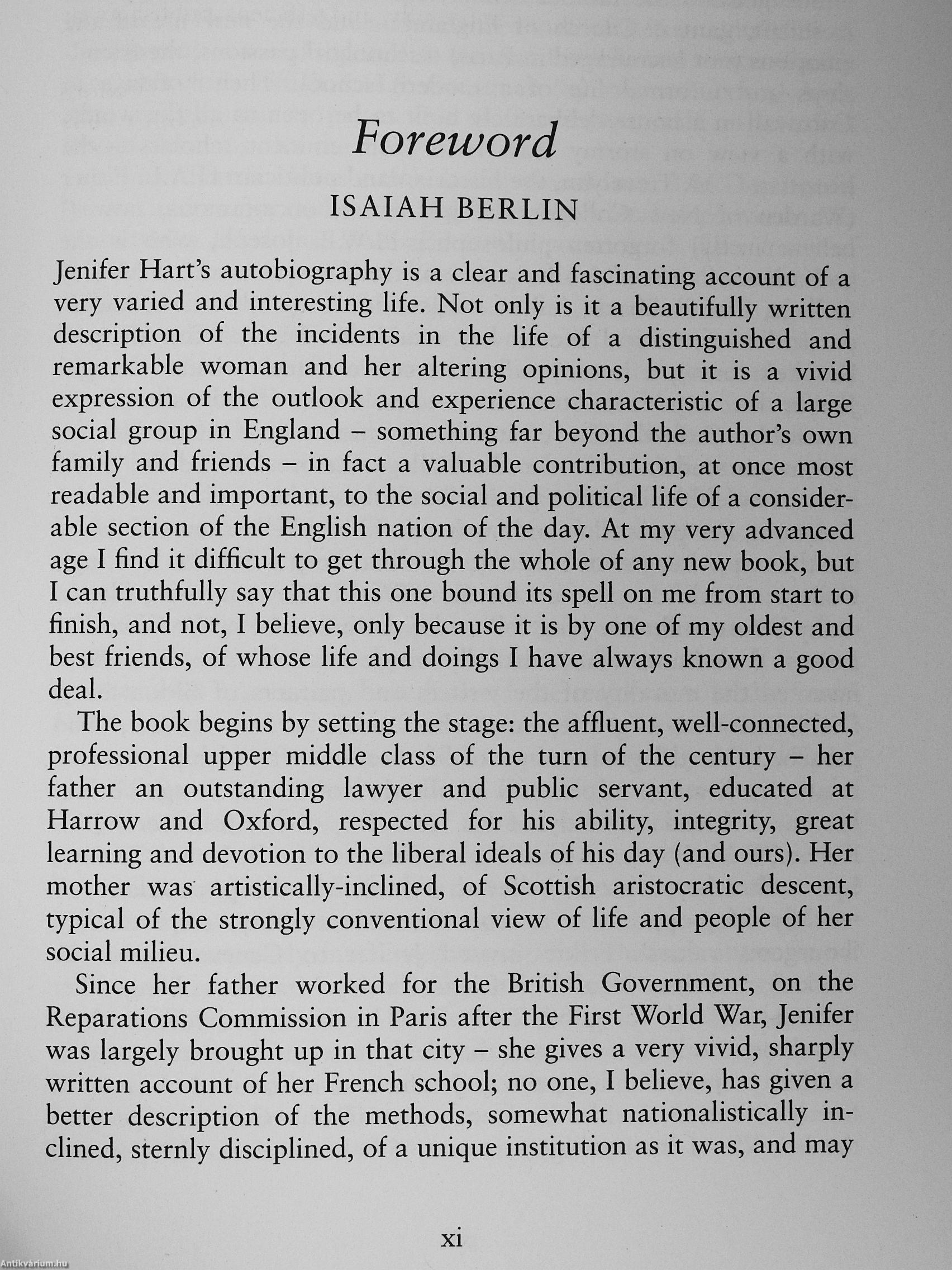
Jenifer Hart's autobiography is a clear and fascinating account of a very varied and interesting life. Not only is it a beautifully written description of the incidents in the life of a distinguished and remarkable woman and her altering opinions, but it is a vivid expression of the outlook and experience characteristic of a large social group in England - something far beyond the author's own family and friends - in fact a valuable contribution, at once most readable and important, to the social and political life of a considerable section of the English nation of the day.
from the Foreword by Isaiah Berlin
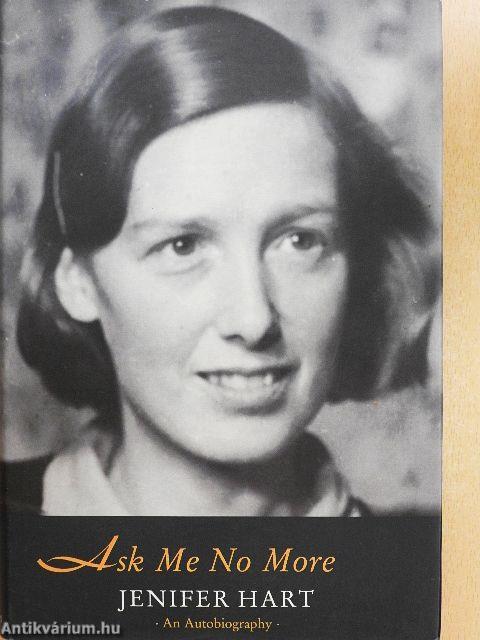
TJ Born in 1914 into a family of upper-middle class public servants, Jenifer Hart has spent a lifetime shunning conventional morality and pursuing her love of justice and the rational.
Having spent her childhood in Paris, where her father worked on the Repara-dons Commission, she was later educated at Downe House and Oxford. Many of her friends worked at the League of...
Tovább
Fülszöveg
Jenifer Hart's autobiography is a clear and fascinating account of a very varied and interesting life. Not only is it a beautifully written description of the incidents in the life of a distinguished and remarkable woman and her altering opinions, but it is a vivid expression of the outlook and experience characteristic of a large social group in England - something far beyond the author's own family and friends - in fact a valuable contribution, at once most readable and important, to the social and political life of a considerable section of the English nation of the day.
from the Foreword by Isaiah Berlin
TJ Born in 1914 into a family of upper-middle class public servants, Jenifer Hart has spent a lifetime shunning conventional morality and pursuing her love of justice and the rational.
Having spent her childhood in Paris, where her father worked on the Repara-dons Commission, she was later educated at Downe House and Oxford. Many of her friends worked at the League of Nations and Jenifer found herself immersed in the optimism that characterised those early days of the League. Throughout her adolescence she had been breaking away from her bourgeois background, later becoming a socialist and eventually, having witnessed the hardships of the 1930s, a communist.
Jenifer Hart passed the Civil Service exam with spectacular success in 1936 and joined the Home Office. Her descriptions of life in the Civil Service make one realise how much society has changed since then. Her war experiences were particularly rewarding, mainly because of the people she was friendly with, and we see in her descriptions life at its intellectual and bohemian best.
In 1947 Jenifer moved to Oxford to join her husband Herbert Hart (who was to become Professor of Jurisprudence and Principal of Brasenose College) and became a Fellow of St Anne's College teaching Modern History and Politics. Family life forms the backdrop to her academic career and we follow her emotional development from her aspirations as a young woman to being a mother of four, with her last child born brain-damaged and requiring more love than had ever been asked of Jenifer before. This is a very moving part of her life and completes the story of a woman whose life has spanned the twentieth cenmry and whose concerns have been the main political and social ones of this century.
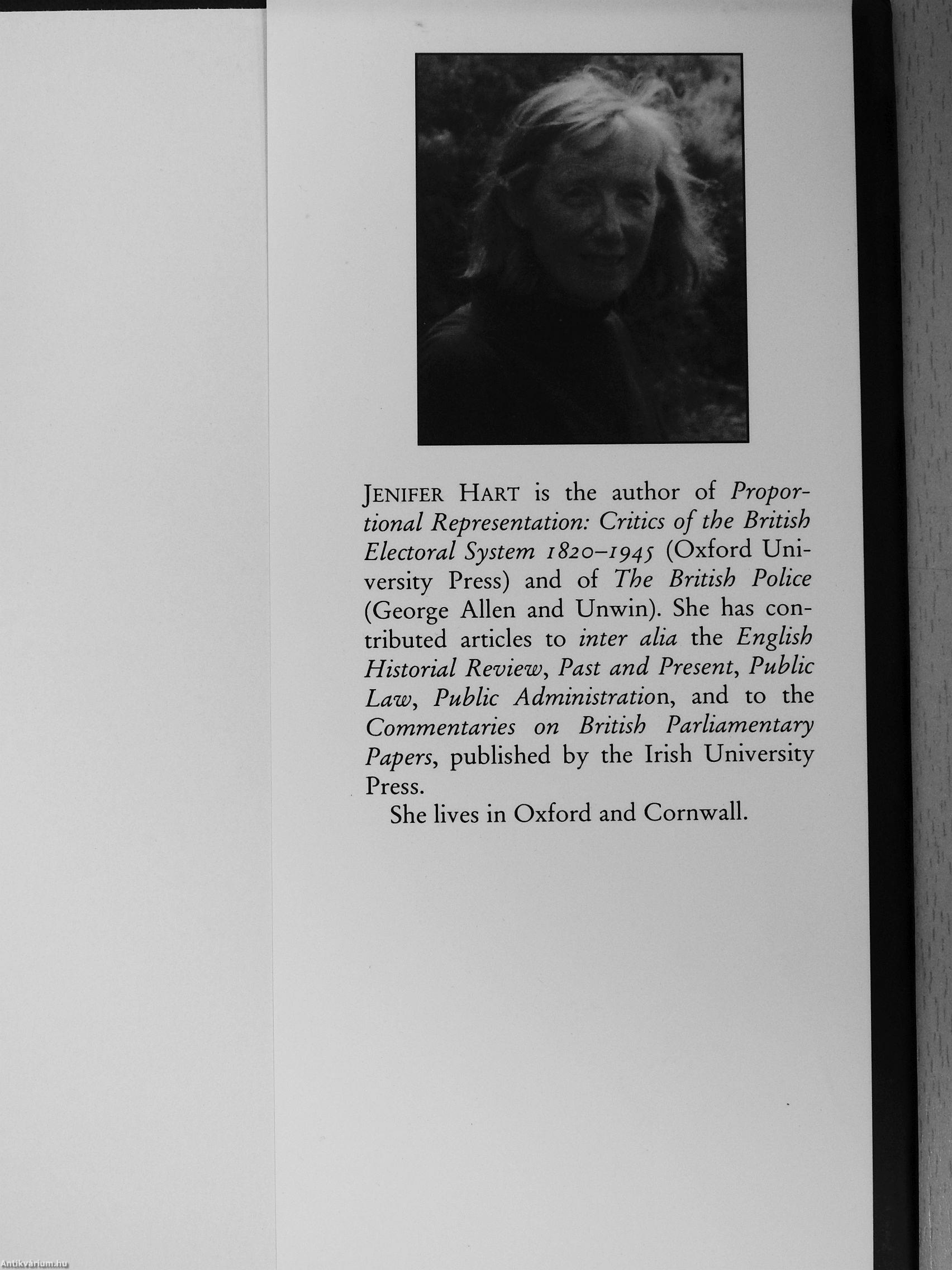
Jenifer Hart is the author of Proportional Representation: Critics of the British Eleaoral System 1820-194^ (Oxford University Press) and of The British Police (George Allen and Unwin). She has contributed articles to inter alia the English Historial Review, Past and Present, Public Law, Public Administration, and to the Commentaries on British Parliamentary Papers, published by the Irish University Press.
She lives in Oxford and Cornwall.
Vissza 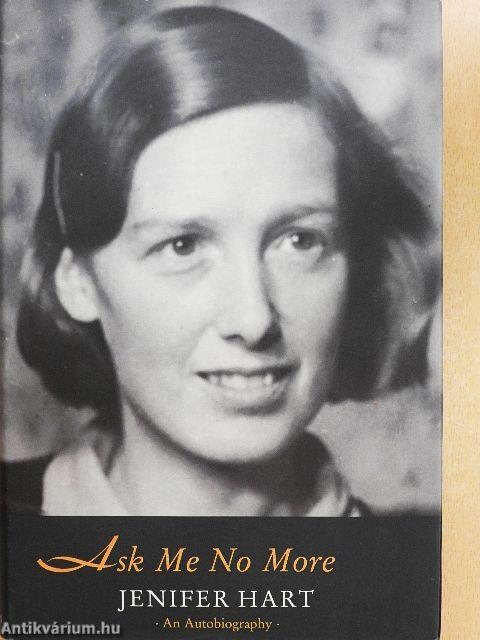



 Folytatás Microsoft-tal