
1.150.175
kiadvánnyal nyújtjuk Magyarország legnagyobb antikvár könyv-kínálatát

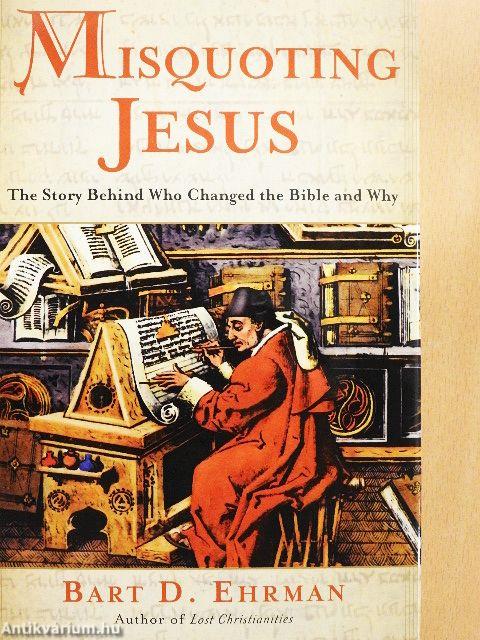
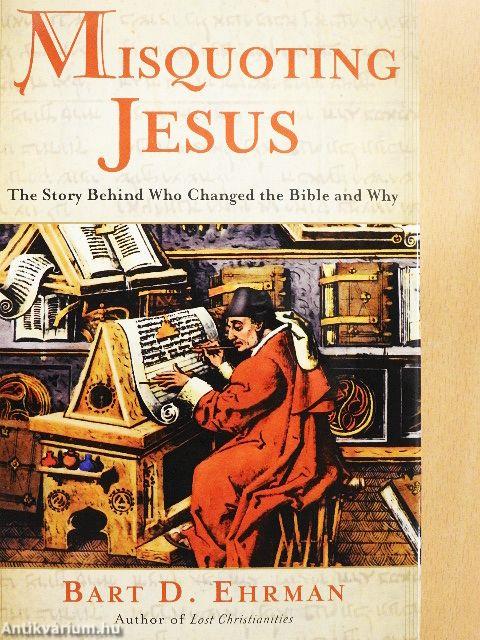
Misquoting Jesus
The Story Behind Who Changed the Bible and Why
San Francisco
| Kiadó: | HarperSanFrancisco |
|---|---|
| Kiadás helye: | San Francisco |
| Kiadás éve: | |
| Kötés típusa: | Fűzött keménykötés |
| Oldalszám: | 242 oldal |
| Sorozatcím: | |
| Kötetszám: | |
| Nyelv: | Angol |
| Méret: | 24 cm x 16 cm |
| ISBN: | 978-0-06073817-4 |
| Megjegyzés: | Fekete-fehér illusztrációkkal. |
Értesítőt kérek a kiadóról
A beállítást mentettük,
naponta értesítjük a beérkező friss
kiadványokról
naponta értesítjük a beérkező friss
kiadványokról
A beállítást mentettük,
naponta értesítjük a beérkező friss
kiadványokról
naponta értesítjük a beérkező friss
kiadványokról
Előszó
Tovább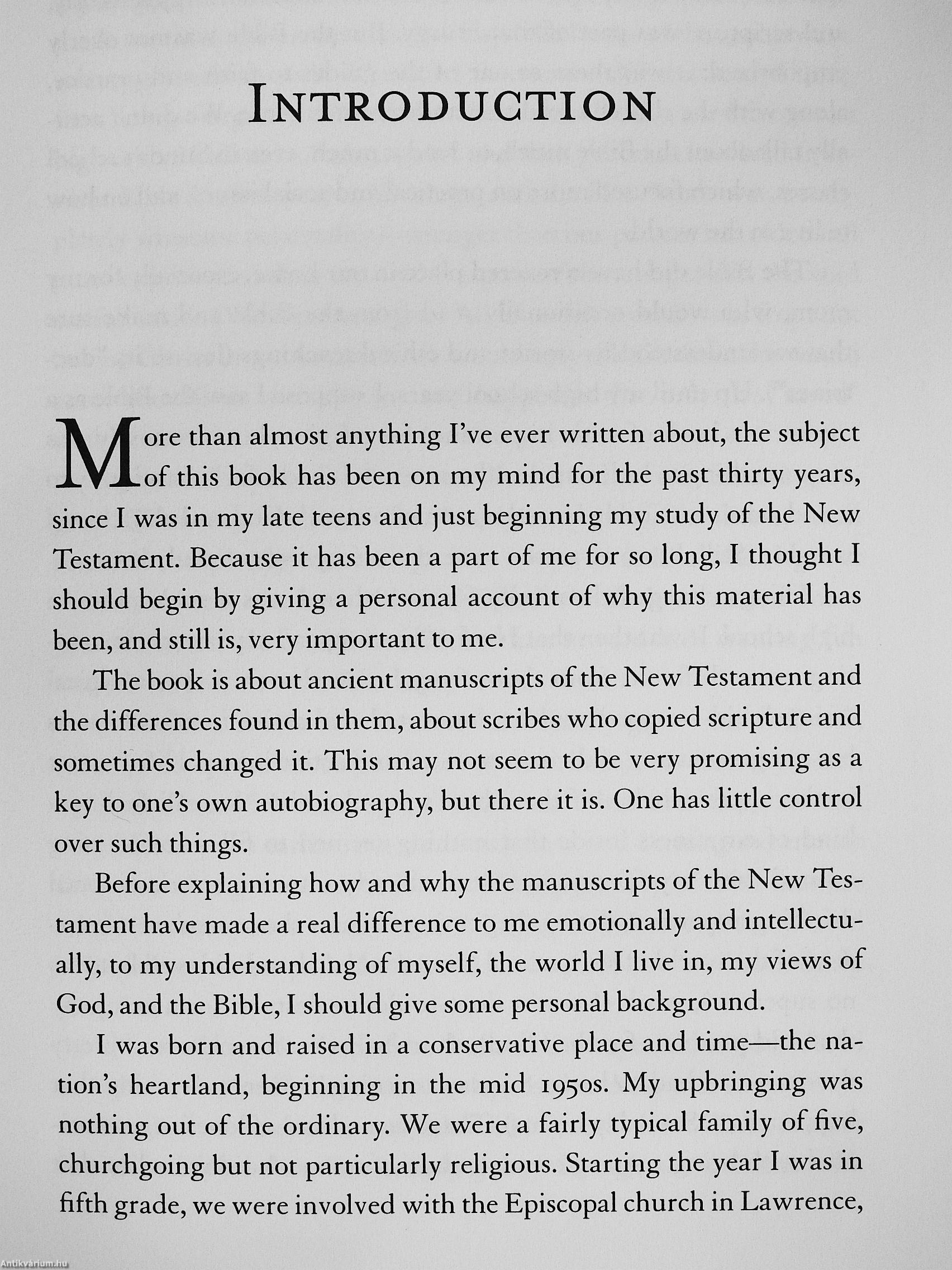
Fülszöveg
i
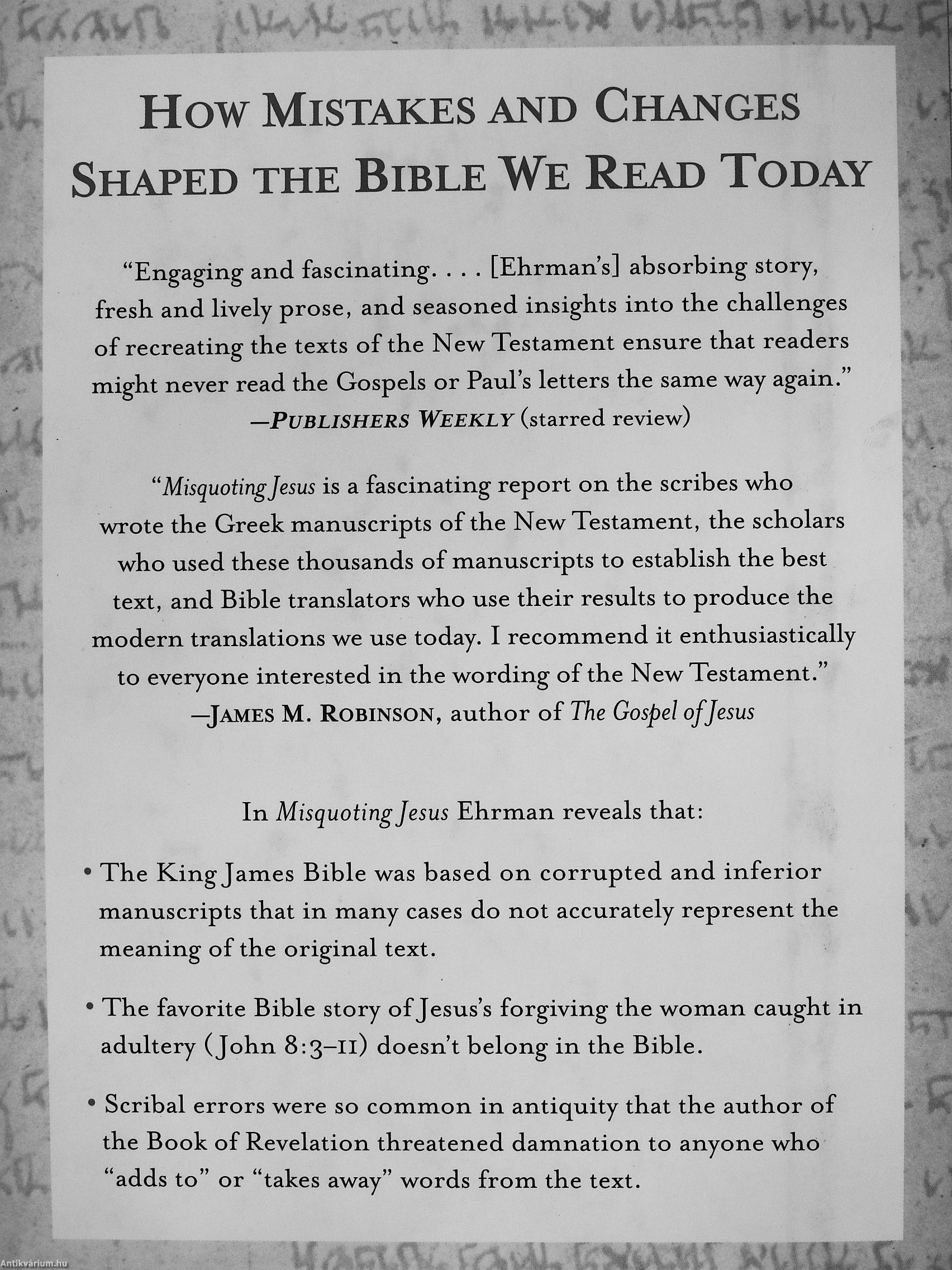
How Mistakes and Changes Shaped the Bible We Read Today ^
"Engaging and fascinating. . . . [Ehrman's] absorbing story, fresh and lively prose, and seasoned insights into the challenges of recreating the texts of the New Testament ensure that readers might never read the Gospels or Paul's letters the same way again." —Publishers Weekly (starred revlev/)
¦
"MisquotingJesus is a fascinating report on the scribes who wrote the Greek manuscripts of the New Testament, the scholars who used these thousands of manuscripts to establish the best text, and Bible translators who use their results to produce the modern translations we use today. I recommend it enthusiastically to everyone interested in the wording of the New Testament." —James M. Robinson, author of The Gospel of Jesus
In Misquoting Jesus Ehrman reveals that:
• The Kingjames Bible was based on corrupted and inferior manuscripts that in many cases do not accurately represent the meaning of the original text.
• The... Tovább
Fülszöveg
i
How Mistakes and Changes Shaped the Bible We Read Today ^
"Engaging and fascinating. . . . [Ehrman's] absorbing story, fresh and lively prose, and seasoned insights into the challenges of recreating the texts of the New Testament ensure that readers might never read the Gospels or Paul's letters the same way again." —Publishers Weekly (starred revlev/)
¦
"MisquotingJesus is a fascinating report on the scribes who wrote the Greek manuscripts of the New Testament, the scholars who used these thousands of manuscripts to establish the best text, and Bible translators who use their results to produce the modern translations we use today. I recommend it enthusiastically to everyone interested in the wording of the New Testament." —James M. Robinson, author of The Gospel of Jesus
In Misquoting Jesus Ehrman reveals that:
• The Kingjames Bible was based on corrupted and inferior manuscripts that in many cases do not accurately represent the meaning of the original text.
• The favorite Bible story of Jesus's forgiving the woman caught in ^ adultery (John 8:3-11) doesn't belong in the Bible.
• Scribal errors were so common in antiquity that the author of • the Book of Revelation threatened damnation to anyone who
"adds to" or "takes away" words from the text. j
>
V '^«vVM': WliilL SLu
H
J I
« f
m
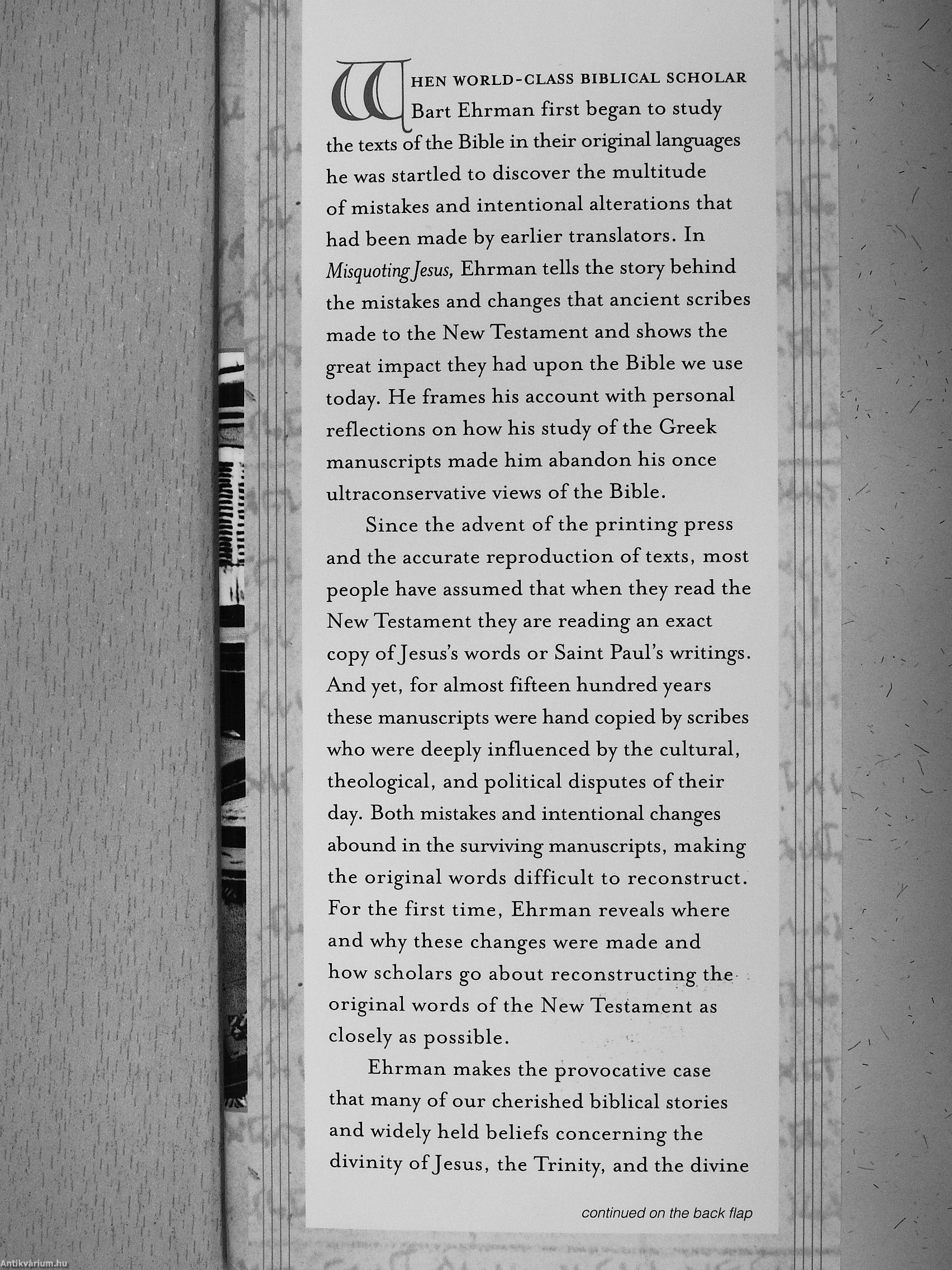
HEN WORLD-CIJ^SS BIBLICAL SCHOLAR Bart Ehrman first began to study the texts of the Bible in their original languages he was startled to discover the multitude of mistakes and intentional alterations that had been made by earlier translators. In Misquotingjesus, Ehrman tells the story behind the mistakes and changes that ancient scribes made to the New Testament and shows the great impact they had upon the Bible we use today. He frames his account with personal reflections on how his study of the Greek manuscripts made him abandon his once ultraconservative views of the Bible.
Since the advent of the printing press and the accurate reproduction of texts, most people have assumed that when they read the New Testament they are reading an exact copy of Jesus's words or Saint Paul's writings. And yet, for almost fifteen hundred years these manuscripts were hand copied by scribes who were deeply influenced by the cultural, theological, and political disputes of their day. Both mistakes and intentional changes abound in the surviving manuscripts, making the original words difficult to reconstruct. For the first time, Ehrman reveals where and why these changes were made and how scholars go about reconstructing the original words of the New Testament as closely as possible.
Ehrman makes the provocative case that many of our cherished biblical stories and widely held beliefs concerning the divinity of Jesus, the Trinity, and the divine
continued on the back flap
continued from the front flap
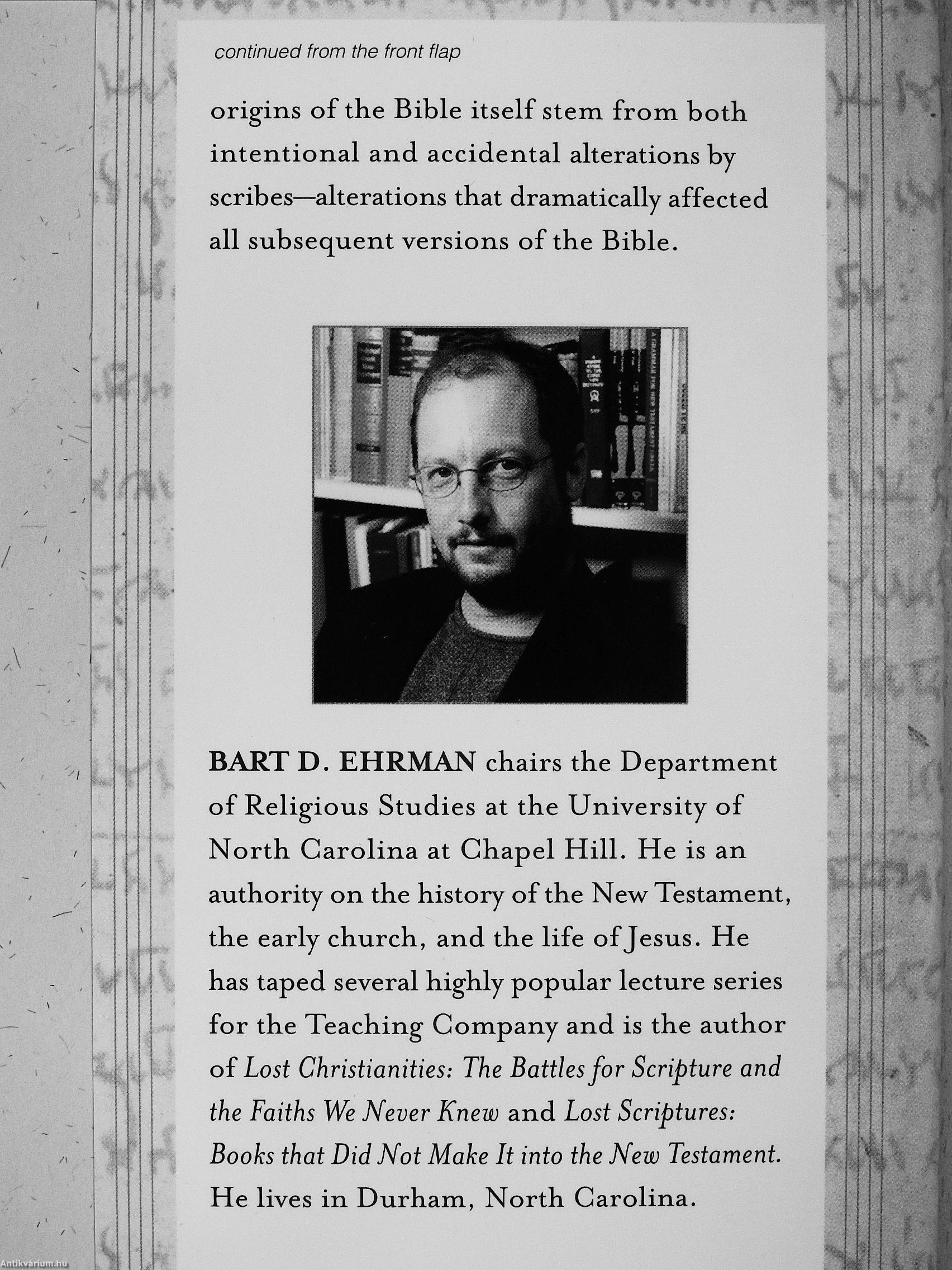
origins of the Bible itself stem from both intentional and accidental alterations by scribes—alterations that dramatically affected all subsequent versions of the Bible.
BART D. EHRMAN chairs the Department of Religious Studies at the University of North Carolina at Chapel Hill. He is an authority on the history of the New Testament, the early church, and the life of Jesus. He has taped several highly popular lecture series for the Teaching Company and is the author of Lost Christianities: The Battles for Scripture and the Faiths We Never Knew and Lost Scriptures: Books that Did Not Make It into the New Testament. He lives in Durham, North Carolina. Vissza
Témakörök
Bart D. Ehrman
Bart D. Ehrman műveinek az Antikvarium.hu-n kapható vagy előjegyezhető listáját itt tekintheti meg: Bart D. Ehrman könyvek, művekMegvásárolható példányok
Nincs megvásárolható példány
A könyv összes megrendelhető példánya elfogyott. Ha kívánja, előjegyezheti a könyvet, és amint a könyv egy újabb példánya elérhető lesz, értesítjük.
 Folytatás Microsoft-tal