
1.153.030
kiadvánnyal nyújtjuk Magyarország legnagyobb antikvár könyv-kínálatát

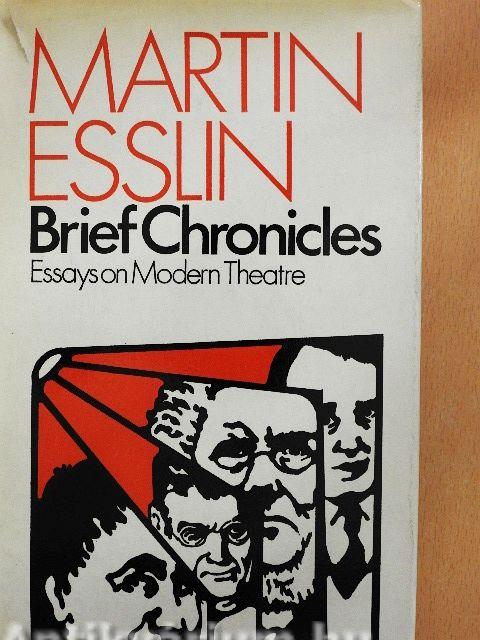
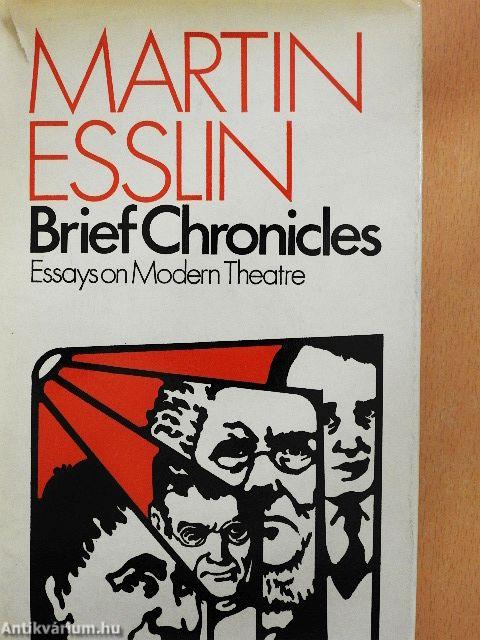
Brief Chronicles
Essays on Modern Theatre
London
| Kiadó: | Temple Smith |
|---|---|
| Kiadás helye: | London |
| Kiadás éve: | |
| Kötés típusa: | Varrott keménykötés |
| Oldalszám: | 303 oldal |
| Sorozatcím: | |
| Kötetszám: | |
| Nyelv: | Angol |
| Méret: | 23 cm x 15 cm |
| ISBN: | 0-8511-7000-5 |
Értesítőt kérek a kiadóról
A beállítást mentettük,
naponta értesítjük a beérkező friss
kiadványokról
naponta értesítjük a beérkező friss
kiadványokról
A beállítást mentettük,
naponta értesítjük a beérkező friss
kiadványokról
naponta értesítjük a beérkező friss
kiadványokról
Előszó
Tovább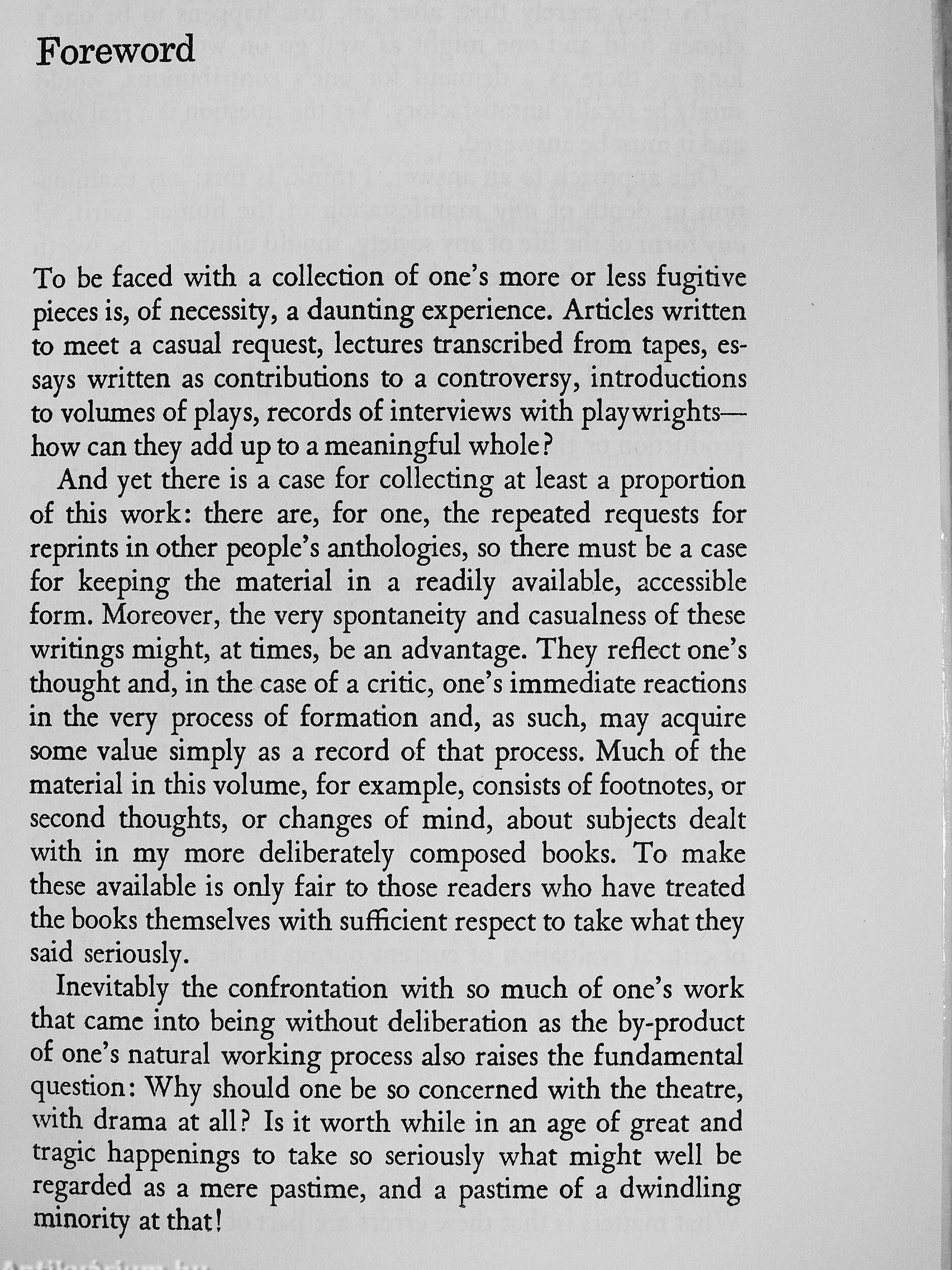
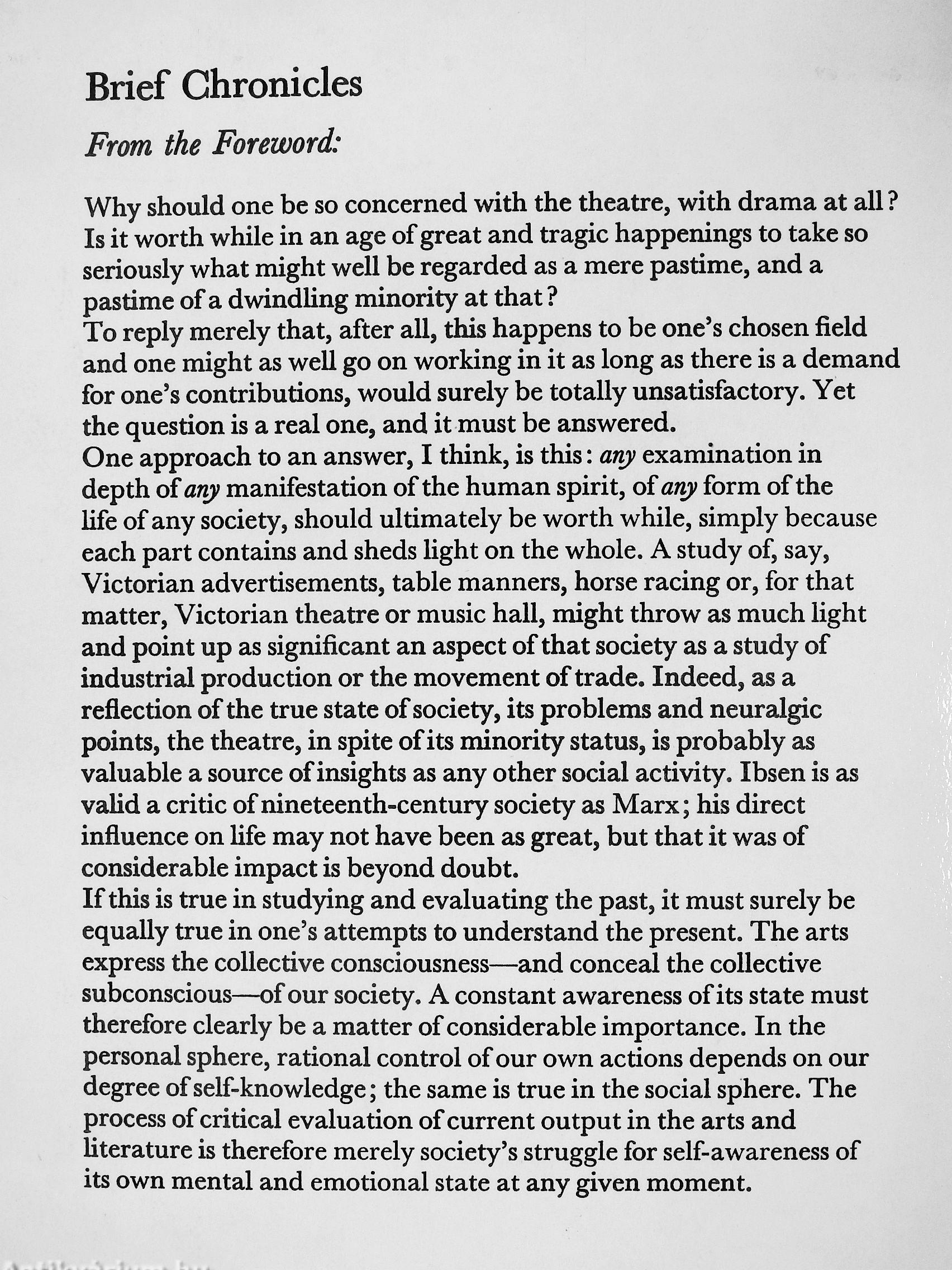
Fülszöveg
Brief Chronicles
From the Foreword:
Why should one be so concerned with the theatre, with drama at all ? Is it worth while in an age of great and tragic happenings to take so seriously what might well be regarded as a mere pastime, and a pastime of a dwindling minority at that ?
To reply merely that, after all, this happens to be one's chosen field and one might as well go on working in it as long as there is a demand for one's contributions, would surely be totally unsatisfactory. Yet the question is a real one, and it must be answered. One approach to an answer, I think, is this: any examination in depth of manifestation of the human spirit, oi any form of the life of any society, should ultimately be worth while, simply because each part contains and sheds light on the whole. A study of, say, Victorian advertisements, table manners, horse racing or, for that matter, Victorian theatre or music hall, might throw as much light and point up as significant an aspect of that... Tovább
Fülszöveg
Brief Chronicles
From the Foreword:
Why should one be so concerned with the theatre, with drama at all ? Is it worth while in an age of great and tragic happenings to take so seriously what might well be regarded as a mere pastime, and a pastime of a dwindling minority at that ?
To reply merely that, after all, this happens to be one's chosen field and one might as well go on working in it as long as there is a demand for one's contributions, would surely be totally unsatisfactory. Yet the question is a real one, and it must be answered. One approach to an answer, I think, is this: any examination in depth of manifestation of the human spirit, oi any form of the life of any society, should ultimately be worth while, simply because each part contains and sheds light on the whole. A study of, say, Victorian advertisements, table manners, horse racing or, for that matter, Victorian theatre or music hall, might throw as much light and point up as significant an aspect of that society as a study of industrial production or the movement of trade. Indeed, as a reflection of the true state of society, its problems and neuralgic points, the theatre, in spite of its minority status, is probably as valuable a source of insights as any other social activity. Ibsen is as valid a critic of nineteenth-century society as Marx; his direct influence on life may not have been as great, but that it was of considerable impact is beyond doubt.
If this is true in studying and evaluating the past, it must surely be equally true in one's attempts to understand the present. The arts express the collective consciousness—and conceal the collective subconscious—of our society. A constant awareness of its state must therefore clearly be a matter of considerable importance. In the personal sphere, rational control of our own actions depends on our degree of self-knowledge; the same is true in the social sphere. The process of critical evaluation of current output in the arts and literature is therefore merely society's struggle for self-awareness of its own mental and emotional state at any given moment.
' ¦ ¦' ! I ' ¦ I ' .
I 'i' .'III' !)
r, 11 I/.I.,, i;.l !.; . ij
I);
i ri
I ,1 , I •
lifii'ifl
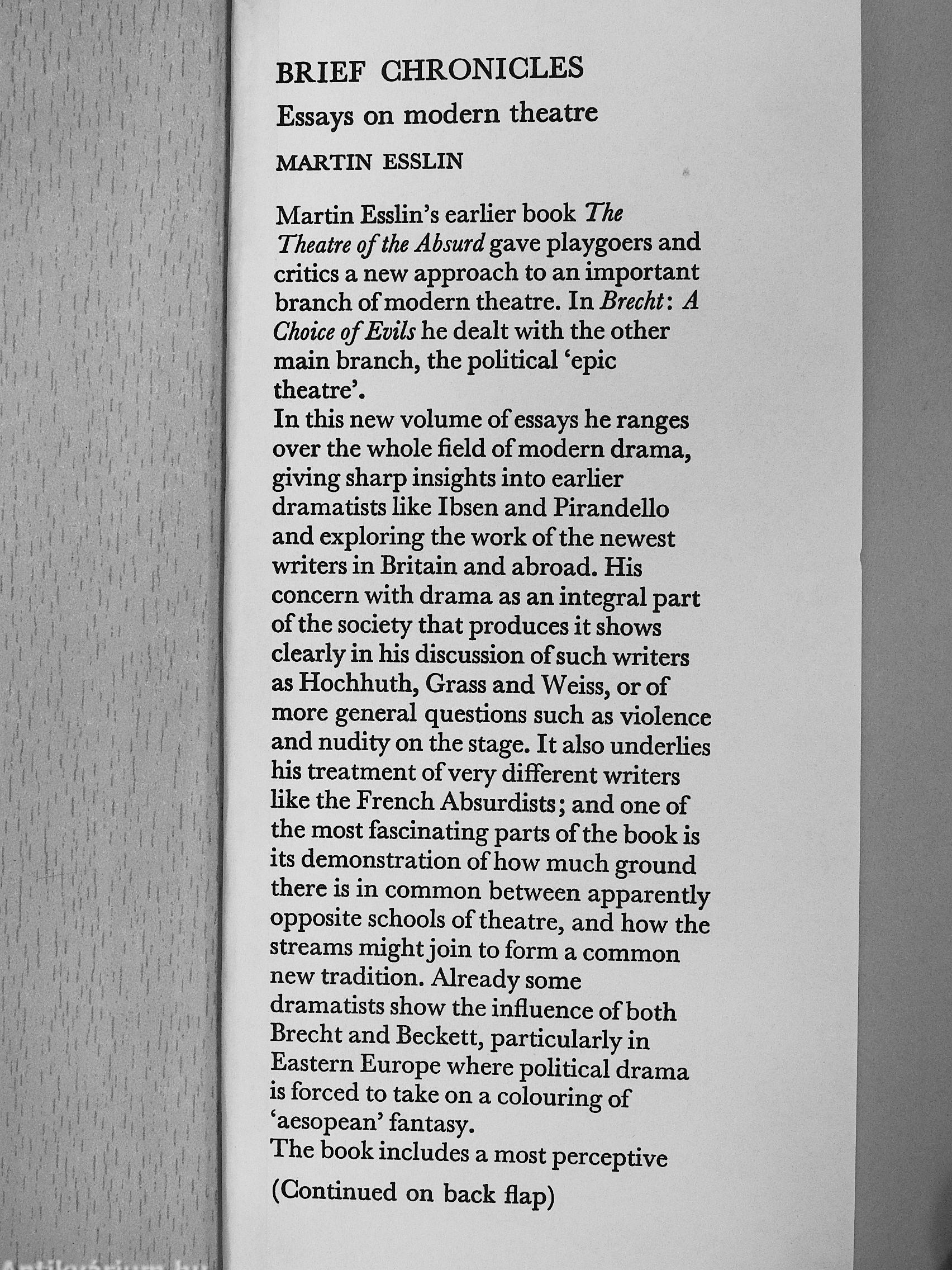
BRIEF CHRONICLES Essays on modern theatre MARTIN ESSLIN
Martin Esslin's earlier book The Theatre of the Absurd gave playgoers and critics a new approach to an important branch of modern theatre. In Brecht'. A Choice of Evils he dealt with the other main branch, the political 'epic theatre'.
In this new volume of essays he ranges over the whole field of modern drama, giving sharp insights into earlier dramatists like Ibsen and Pirandello and exploring the work of the newest writers in Britain and abroad. His concern with drama as an integral part of the society that produces it shows clearly in his discussion of such writers as Hochhuth, Grass and Weiss, or of more general questions such as violence and nudity on the stage. It also underlies his treatment of very different writers like the French Absurdists; and one of the most fascinating parts of the book is its demonstration of how much ground there is in common between apparentiy opposite schools of theatre, and how the streams might join to form a common new tradition. Already some dramatists show the influence of both Brecht and Beckett, particularly in Eastern Europe where political drama is forced to take on a colouring of 'aesopean' fantasy. The book includes a most perceptive
(Continued on back flap)
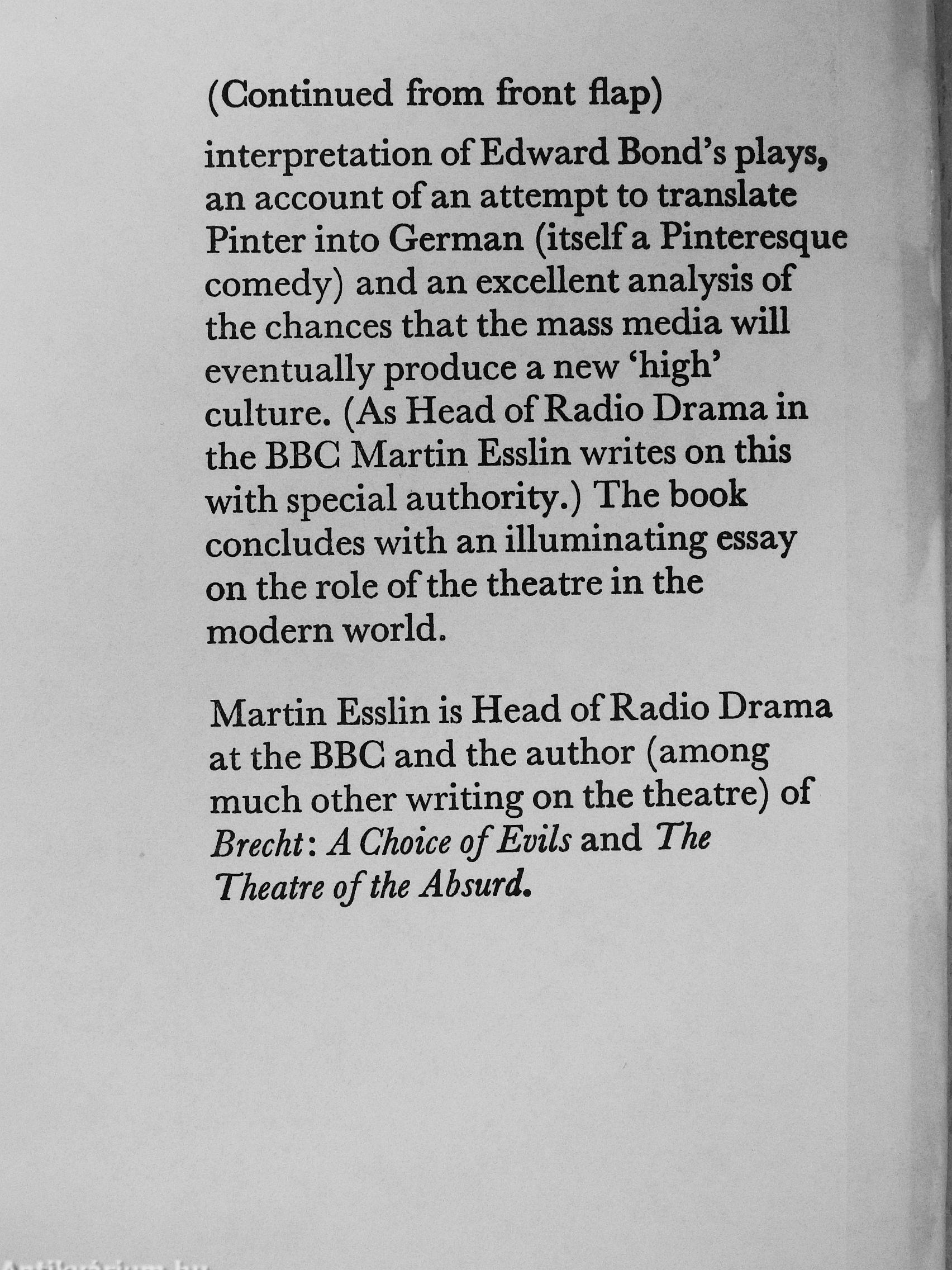
(Continued from front flap)
interpretation of Edward Bond's plays, an account of an attempt to translate Pinter into German (itself a Pinteresque comedy) and an excellent analysis of the chances that the mass media will eventually produce a new 'high' culture. (As Head of Radio Drama in the BBC Martin Esslin writes on this with special authority.) The book concludes with an illuminating essay on the role of the theatre in the modern world.
Martin Esslin is Head of Radio Drama at the BBC and the author (among much other writing on the theatre) of Brecht: A Choice of Evils and The Theatre of the Absurd, Vissza
Témakörök
- Idegennyelv > Idegennyelvű könyvek > Angol > Művészetek > Színház
- Idegennyelv > Idegennyelvű könyvek > Angol > Irodalomtörténet
- Irodalomtörténet > Irodalomtudomány > Tanulmány, tanulmánykötet
- Irodalomtörténet > Irodalomtudomány > Korszakok > 20. századi
- Irodalomtörténet > Irodalomtudomány > Műnemek > Dráma > Egyéb
- Irodalomtörténet > Irodalomelmélet > Irodalomesztétika
- Művészetek > Színház > Színháztörténet > Külföldi
- Művészetek > Színház > Esztétika
- Művészetek > Színház > Színházi műfajok > Dráma
- Művészetek > Színház > Idegen nyelv > Angol
- Művészetek > Színház > Tanulmányok, esszék
Martin Esslin
Martin Esslin műveinek az Antikvarium.hu-n kapható vagy előjegyezhető listáját itt tekintheti meg: Martin Esslin könyvek, művekMegvásárolható példányok
Állapotfotók
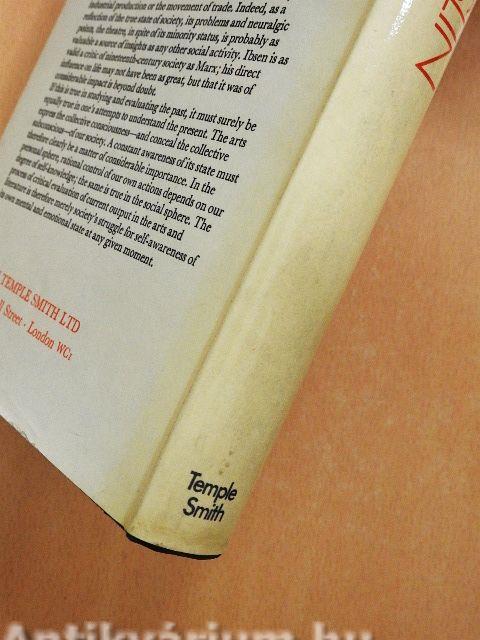
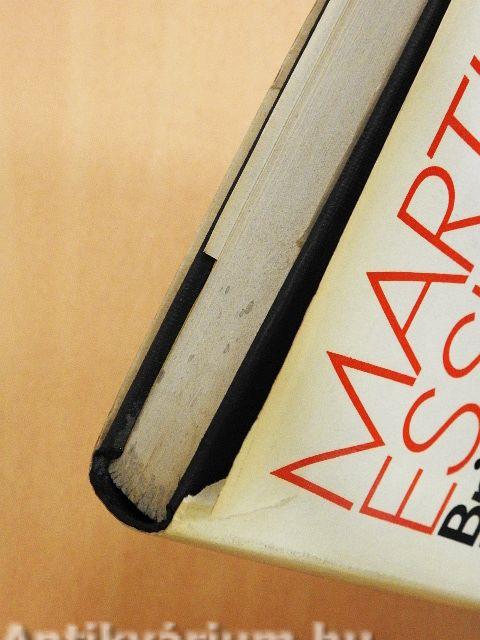

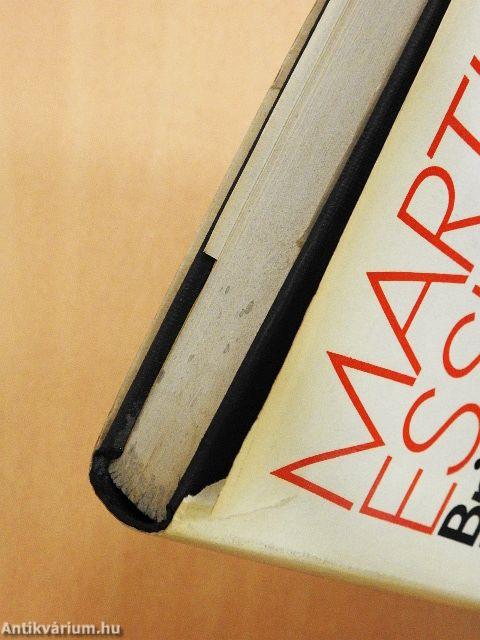
A védőborító elszíneződött, szakadozott, a lapélek foltosak.
Állapot:
Jó
4.940 ,-Ft
25
pont kapható
Kosárba
 Folytatás Microsoft-tal