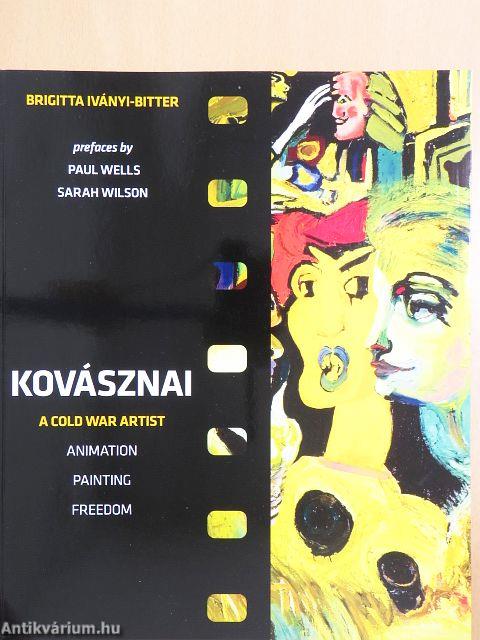
Fülszöveg
I',' It l]
'h 'p li-'. ¦ I
What felt very familiar was kind of the impetus and the essentlalness and theiemergency of making. That it felt like an emergency. That work has to be made non-stop. Seeing his work my immediate thought was I want to be back in the studio making something. There was kind of a collegia! fury of creation which is a main thing that I kind of got, from him.
[William Kentridge artist]
I think Kovásznál will appeal to a lot of British people, because we have a long tradition of humour and frivolity and very serious meaning hiding within frivolous images going right back to Alice in Wonderland and going right through to the Monty Python tradition. When I saw some of Kovásznai's films In the Hungarian National Gallery, I thought immediately of some Monty Python films and how actually he is going to be perceived in all his fun, as well as his seriousness, because those were quite sharp critiques of society when those Monty Python films came out. I never...
Tovább
Fülszöveg
I',' It l]
'h 'p li-'. ¦ I
What felt very familiar was kind of the impetus and the essentlalness and theiemergency of making. That it felt like an emergency. That work has to be made non-stop. Seeing his work my immediate thought was I want to be back in the studio making something. There was kind of a collegia! fury of creation which is a main thing that I kind of got, from him.
[William Kentridge artist]
I think Kovásznál will appeal to a lot of British people, because we have a long tradition of humour and frivolity and very serious meaning hiding within frivolous images going right back to Alice in Wonderland and going right through to the Monty Python tradition. When I saw some of Kovásznai's films In the Hungarian National Gallery, I thought immediately of some Monty Python films and how actually he is going to be perceived in all his fun, as well as his seriousness, because those were quite sharp critiques of society when those Monty Python films came out. I never anticipated the comparison to be made with William Kentridge, but of course when you see those animated films and you are a contemporary art buff, and you know Kentridge's work, the correspondences are quite astonishing. The British art scene has its own expressionist tradition, going back to people like Auerbach, where indeed there is a lot of red and yellow and things getting very sqooshy, as you would say in English, which is a feature of Kovásznai's work and a tradition that continues people like Ron Kitaj come to mind, and the poppy, the pop aspects of Ron Kitaj linkup very nicely with Kovasznai. There is a kind of Kitaj-Kovásznai conversation we might imagine, as well as many other conversations.
[Sarah Wilson art historian]
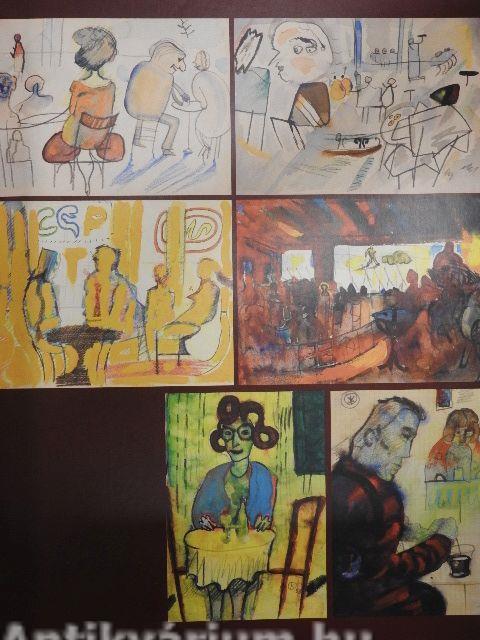
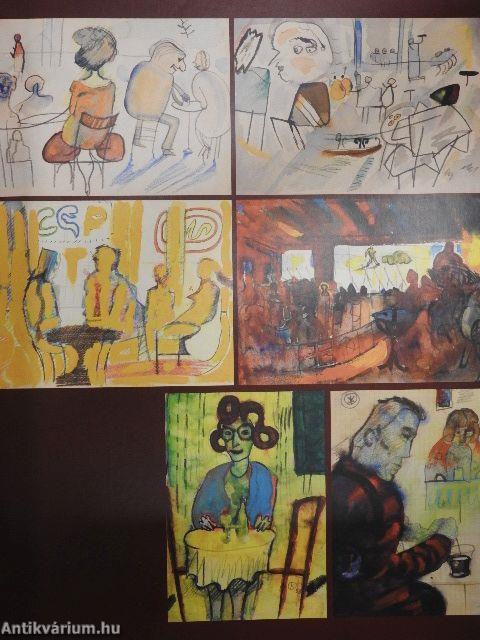
György Kovásznál was clearly a gifted animator-artist; his paintings like his films imbued with mutability, motion and iiminai images. Animation merely facilitated and extended the mobility of his figures and forms in his drawings and canvasses, placing the world in both impressionist and abstract expressionist flux.
Kovásznál was obsessively compelled to create; to remain endlessly curious; to remain unresolved in his deep enquiry about existence in anything but the attempt to find the means of expression to best exemplify his perception of the world, and its reception of him.
[Paul Wells art historian]
Well, Kovásznál is really a painter. Even when he is animating, he is a painter, and he is able to do amazing things with paint. He can bring it to life. It becomes a sort of living, organic material, and that's the way we distinguish him. He really understood the liquidity of paint, and somehow he brought that to life when he made his films.
[David Crowley art historian]
I think why it's so interesting what Kovásznál took for us today is the freedom that he had, not only in a society that otherwise was unfree, but also the freedom that he had aesthetically to move between disciplines. Freely movingfrom two-dimensional paint of the work to animation or animation proven moving image works which are so interesting for us today, but which were virtually unknown at that time.
[András Szántó consultant in the fields of art] kovasznai.org
Vissza 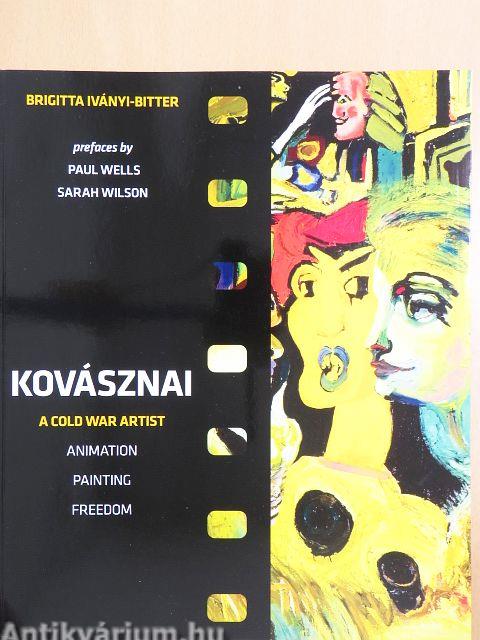


 Folytatás Microsoft-tal