
1.119.716
kiadvánnyal nyújtjuk Magyarország legnagyobb antikvár könyv-kínálatát

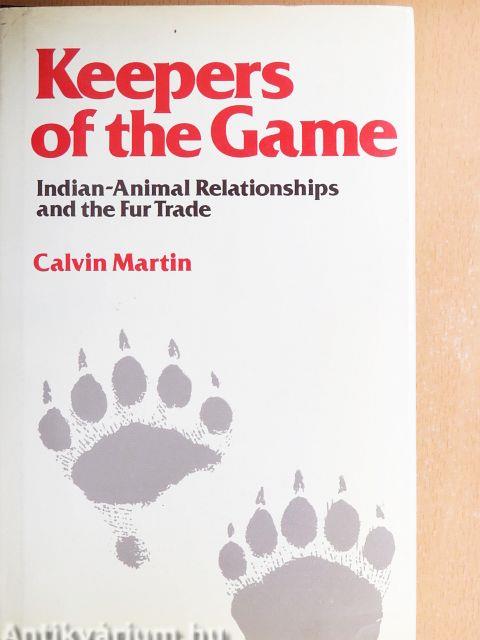
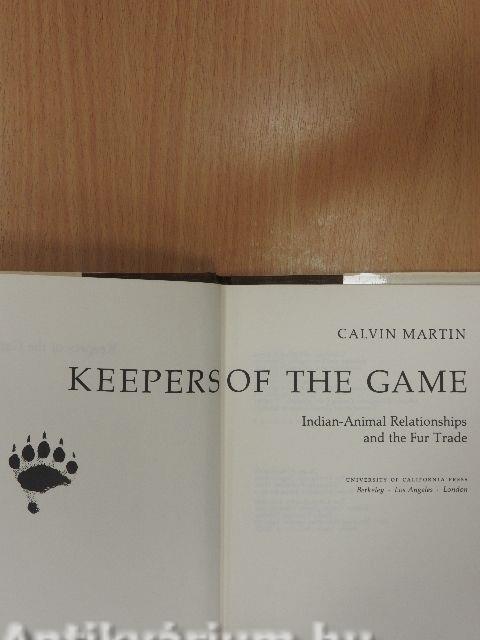
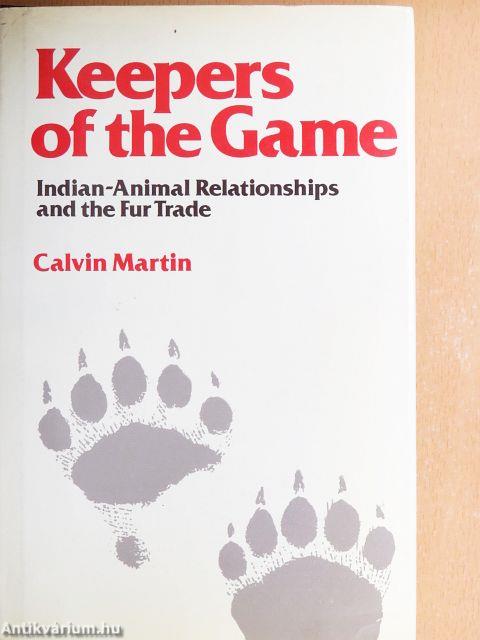
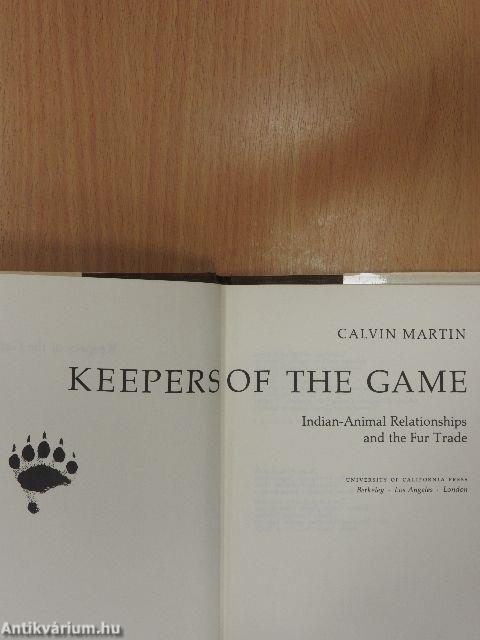
Keepers of the Game
Indian-Animal Relationships and the Fur Trade
Berkeley
| Kiadó: | University of California Press |
|---|---|
| Kiadás helye: | Berkeley |
| Kiadás éve: | |
| Kötés típusa: | Vászon |
| Oldalszám: | 226 oldal |
| Sorozatcím: | |
| Kötetszám: | |
| Nyelv: | Angol |
| Méret: | 22 cm x 15 cm |
| ISBN: | 0-520-03519-4 |
Értesítőt kérek a kiadóról
A beállítást mentettük,
naponta értesítjük a beérkező friss
kiadványokról
naponta értesítjük a beérkező friss
kiadványokról
A beállítást mentettük,
naponta értesítjük a beérkező friss
kiadványokról
naponta értesítjük a beérkező friss
kiadványokról
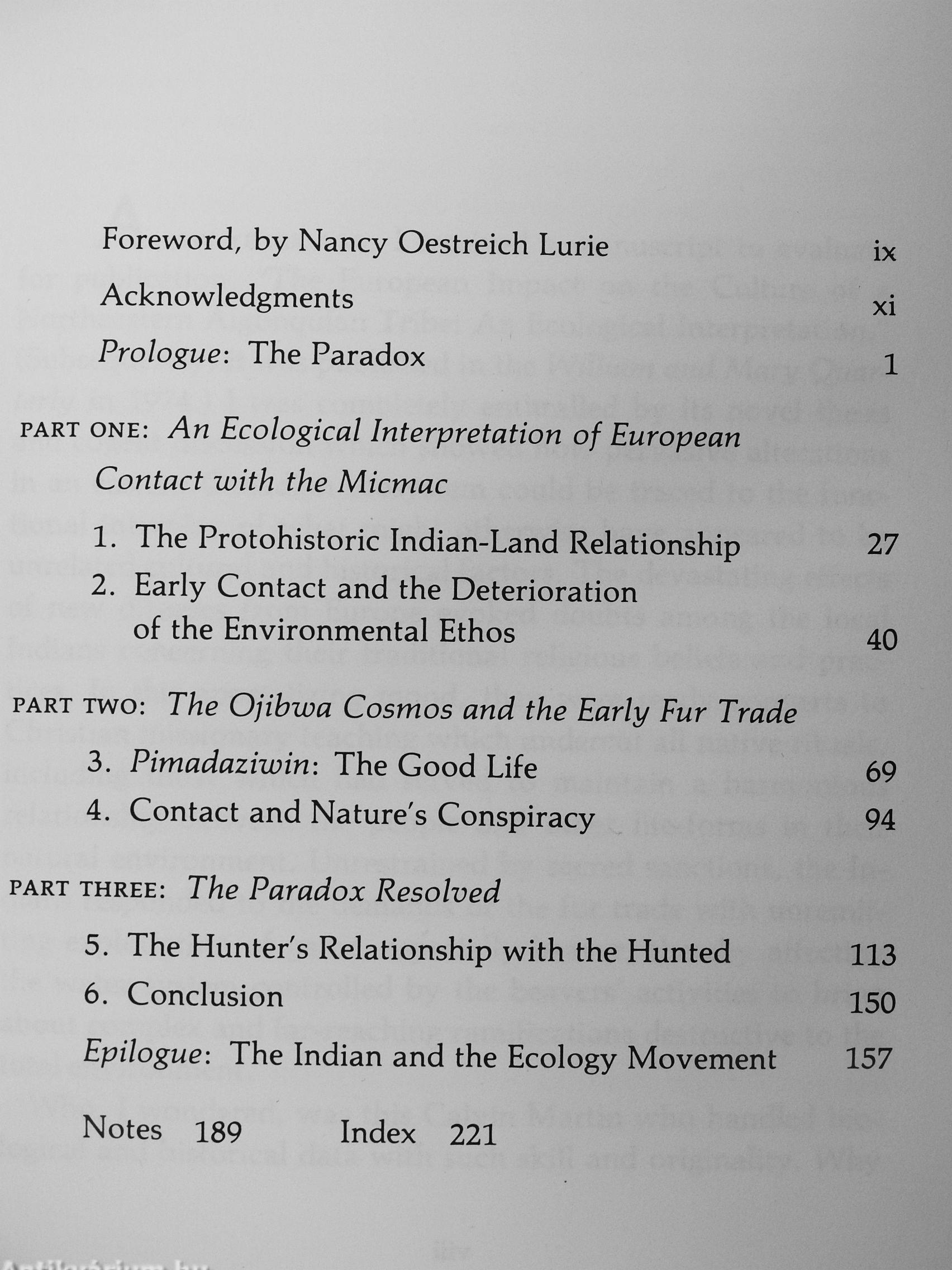
Előszó
Tovább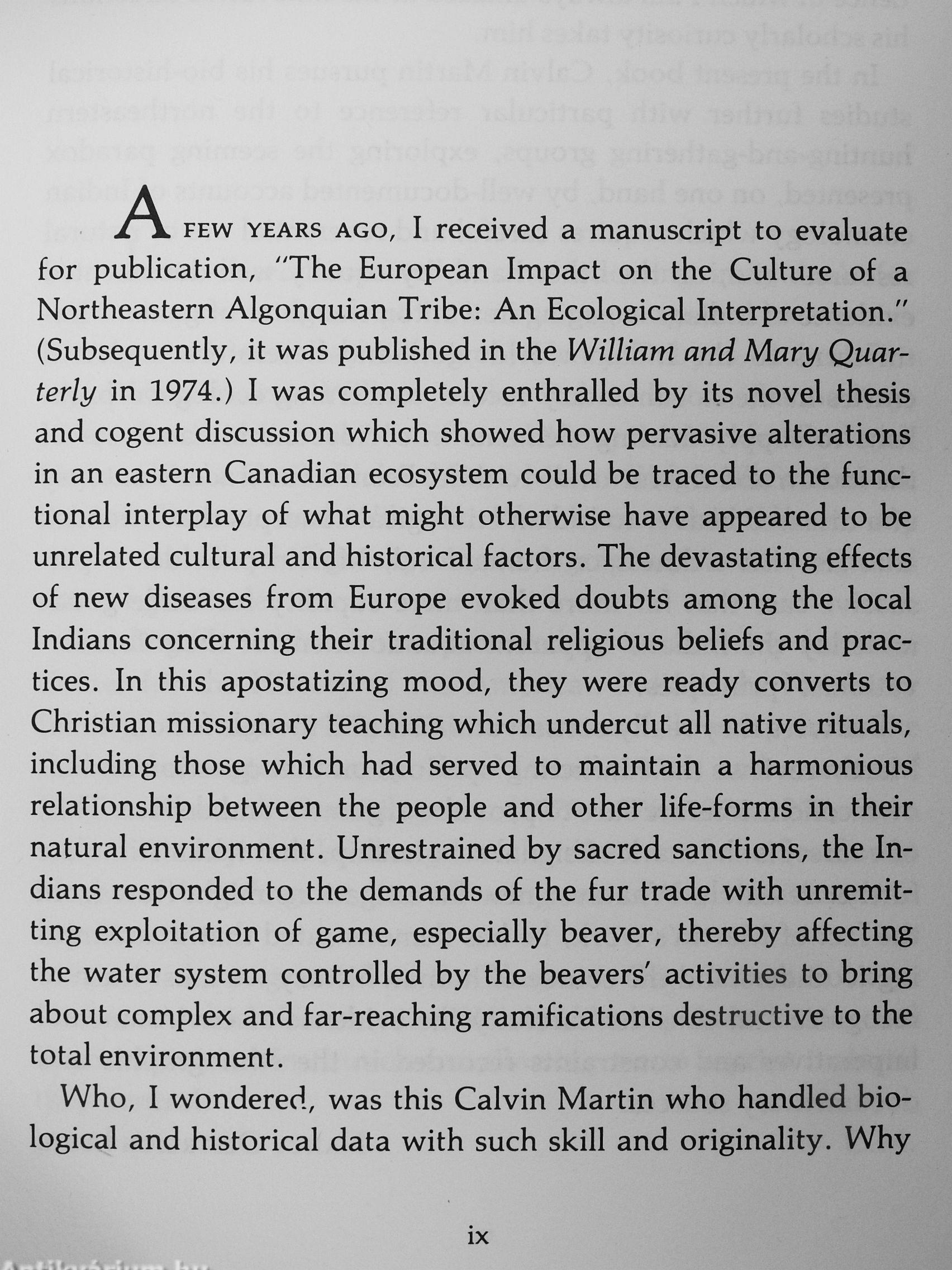
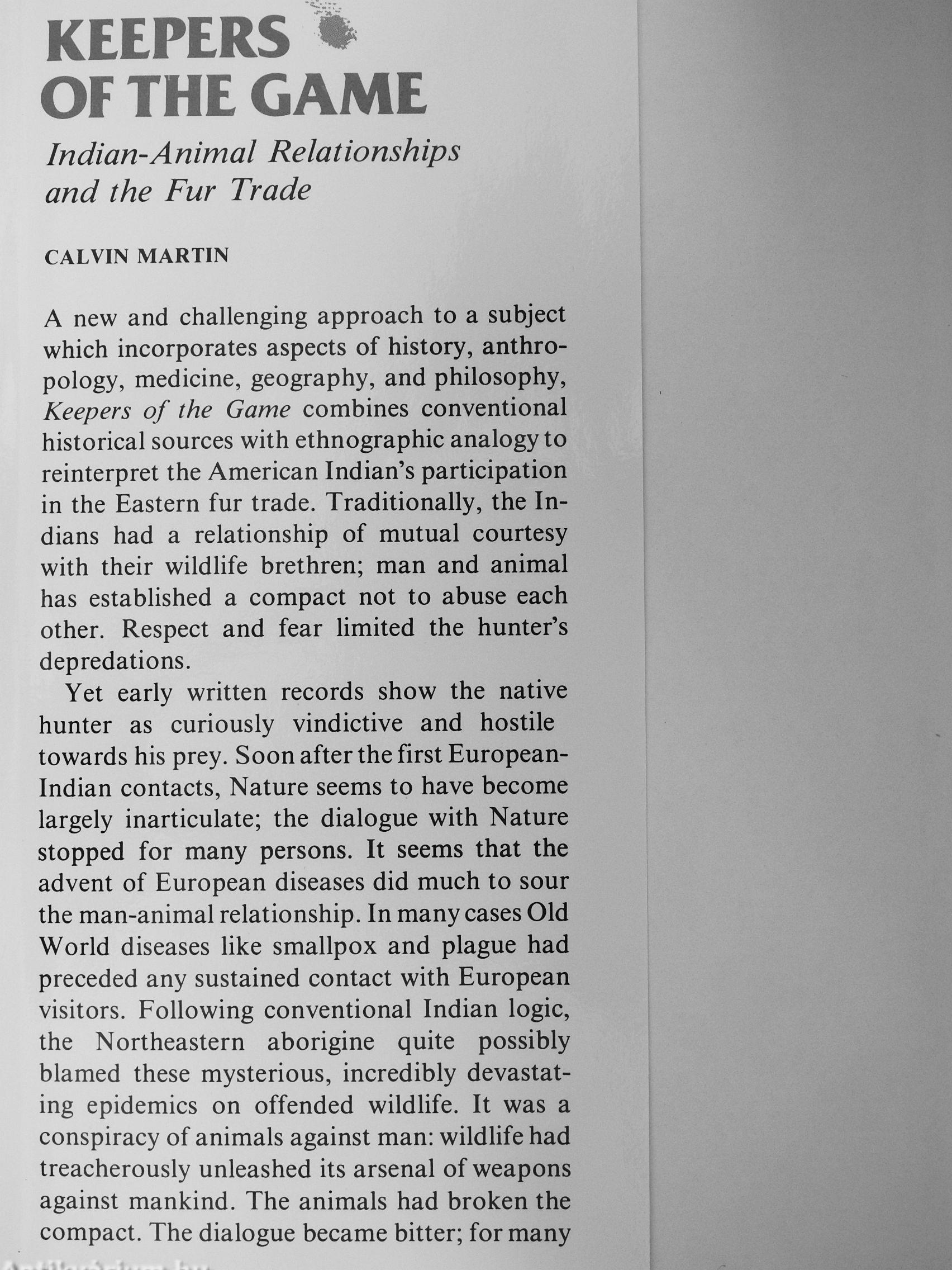
Fülszöveg
KEEPERS OF THE GAME
Indian-Animal Relationships and the Fur Trade
CALVIN MARTIN
A new and challenging approach to a subject which incorporates aspects of history, anthropology, medicine, geography, and philosophy, Keepers of the Game combines conventional historical sources with ethnographic analogy to reinterpret the American Indian's participation in the Eastern fur trade. Traditionally, the Indians had a relationship of mutual courtesy with their wildlife brethren; man and animal has established a compact not to abuse each other. Respect and fear limited the hunter's depredations.
Yet early written records show the native hunter as curiously vindictive and hostile towards his prey. Soon after the first European-Indian contacts, Nature seems to have become largely inarticulate; the dialogue with Nature stopped for many persons. It seems that the advent of European diseases did much to sour the man-animal relationship. In many cases Old World diseases like smallpox and plague... Tovább
Fülszöveg
KEEPERS OF THE GAME
Indian-Animal Relationships and the Fur Trade
CALVIN MARTIN
A new and challenging approach to a subject which incorporates aspects of history, anthropology, medicine, geography, and philosophy, Keepers of the Game combines conventional historical sources with ethnographic analogy to reinterpret the American Indian's participation in the Eastern fur trade. Traditionally, the Indians had a relationship of mutual courtesy with their wildlife brethren; man and animal has established a compact not to abuse each other. Respect and fear limited the hunter's depredations.
Yet early written records show the native hunter as curiously vindictive and hostile towards his prey. Soon after the first European-Indian contacts, Nature seems to have become largely inarticulate; the dialogue with Nature stopped for many persons. It seems that the advent of European diseases did much to sour the man-animal relationship. In many cases Old World diseases like smallpox and plague had preceded any sustained contact with European visitors. Following conventional Indian logic, the Northeastern aborigine quite possibly blamed these mysterious, incredibly devastating epidemics on offended wildlife. It was a conspiracy of animals against man: wildlife had treacherously unleashed its arsenal of weapons against mankind. The animals had broken the compact. The dialogue became bitter; for many
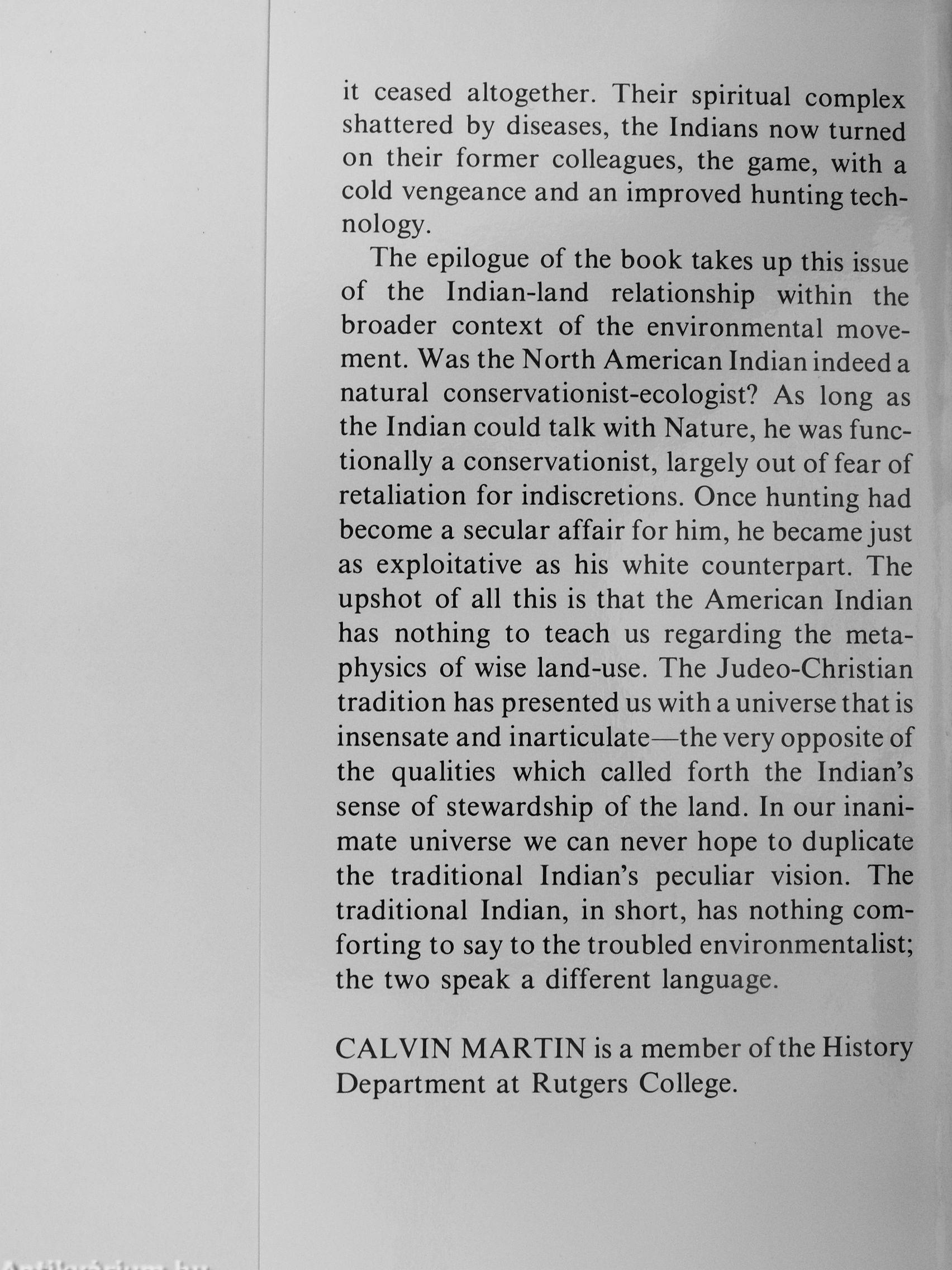
it ceased altogether. Their spiritual complex shattered by diseases, the Indians now turned on their former colleagues, the game, with a cold vengeance and an improved hunting technology.
The epilogue of the book takes up this issue of the Indian-land relationship within the broader context of the environmental movement. Was the North American Indian indeed a natural conservationist-ecologist? As long as the Indian could talk with Nature, he was functionally a conservationist, largely out of fear of retaliation for indiscretions. Once hunting had become a secular affair for him, he became just as exploitative as his white counterpart. The upshot of all this is that the American Indian has nothing to teach us regarding the metaphysics of wise land-use. The Judeo-Christian tradition has presented us with a universe that is insensate and inarticulate—the very opposite of the qualities which called forth the Indian's sense of stewardship of the land. In our inanimate universe we can never hope to duplicate the traditional Indian's peculiar vision. The traditional Indian, in short, has nothing comforting to say to the troubled environmentalist; the two speak a different language.
CALVIN MARTIN is a member of the History Department at Rutgers College. Vissza
Témakörök
- Idegennyelv > Idegennyelvű könyvek > Angol > Természettudományok > Biológia
- Idegennyelv > Idegennyelvű könyvek > Angol > Néprajz
- Néprajz > Átfogó művek, tanulmányok
- Néprajz > Folklór (szellemi néprajz) > Népi kultúrák > Amerika
- Néprajz > Tárgyi néprajz > Életmód > Egyéb
- Néprajz > Tárgyi néprajz > Társadalom > Egyéb
- Természettudomány > Biológia > Ökológia, környezetvédelem > Környezetvédelem > Természetvédelem
- Természettudomány > Biológia > Ökológia, környezetvédelem > Idegennyelvű
Calvin Martin
Calvin Martin műveinek az Antikvarium.hu-n kapható vagy előjegyezhető listáját itt tekintheti meg: Calvin Martin könyvek, művekMegvásárolható példányok
Állapotfotók
Állapot:
Jó
8.400 ,-Ft
42
pont kapható
Kosárba
 Folytatás Microsoft-tal