
1.150.760
kiadvánnyal nyújtjuk Magyarország legnagyobb antikvár könyv-kínálatát

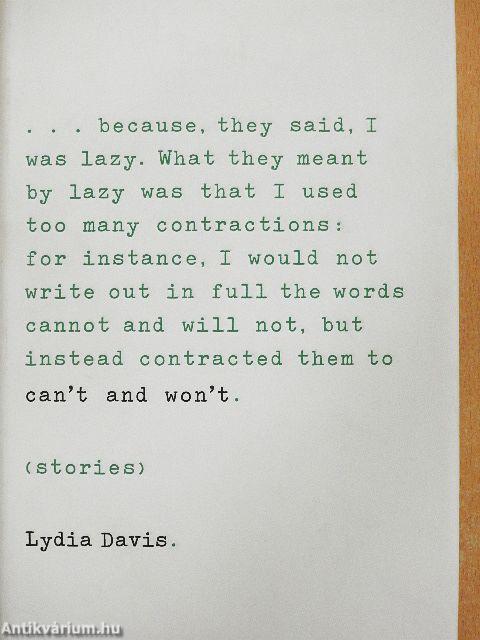
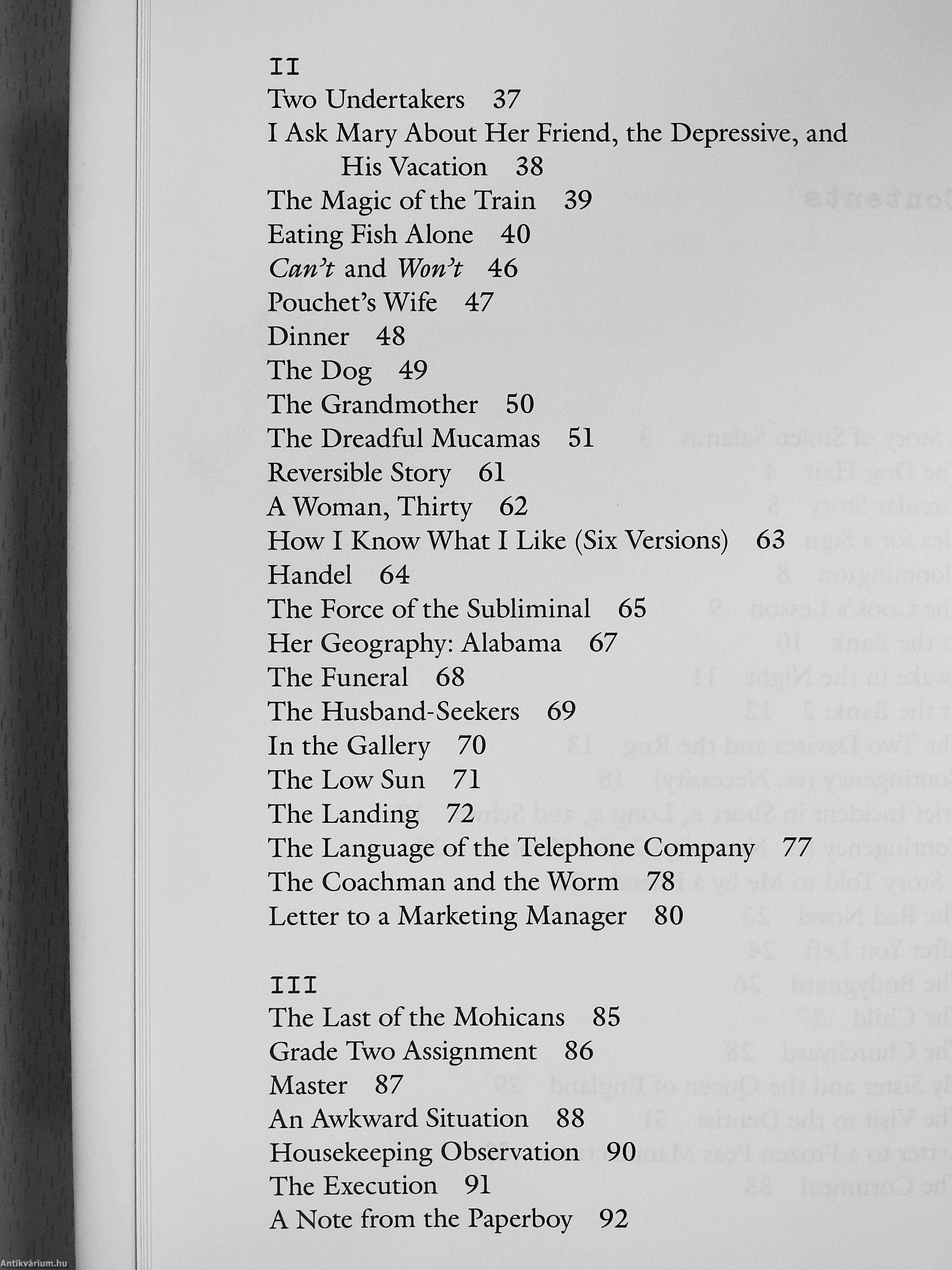
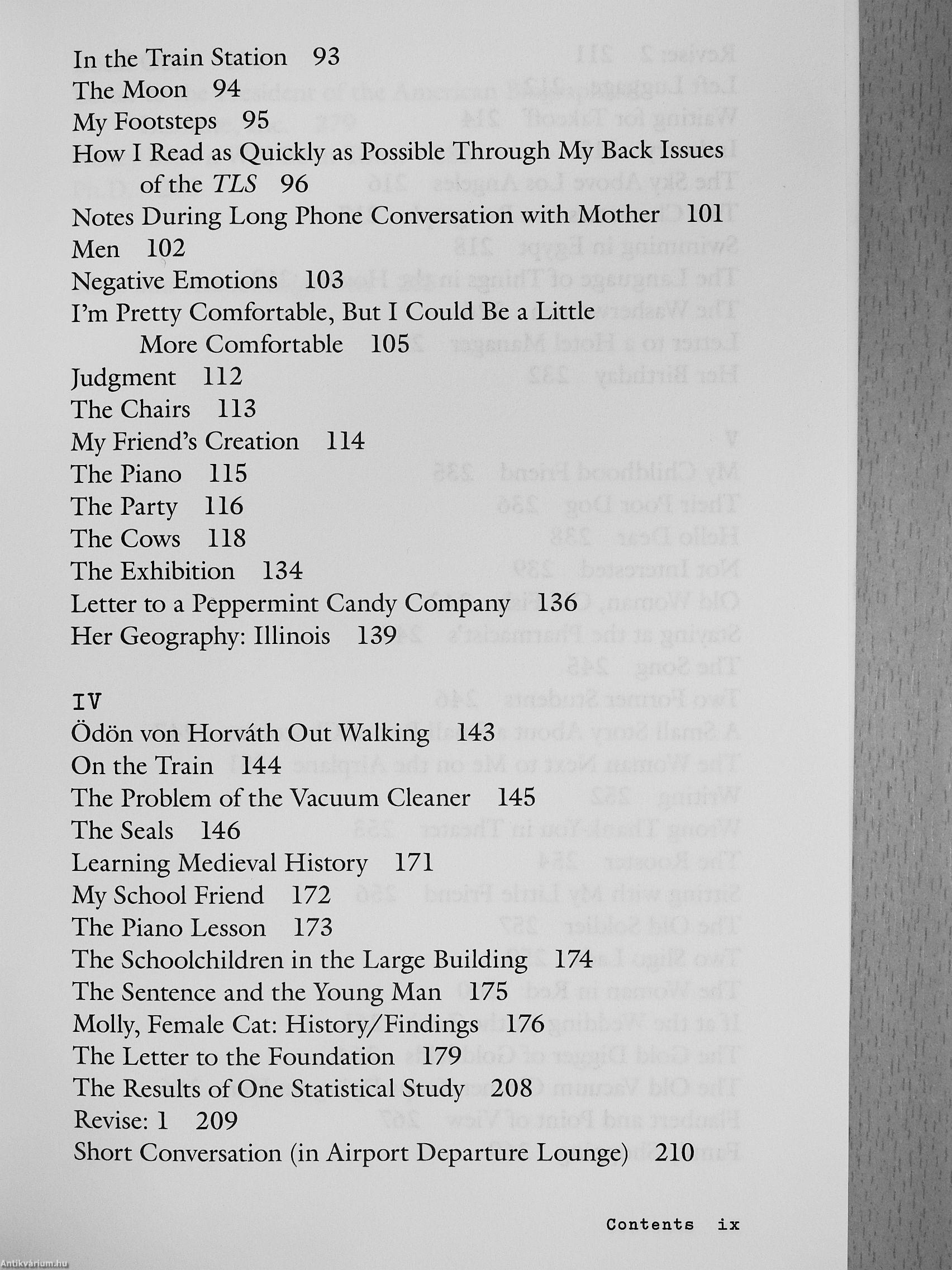
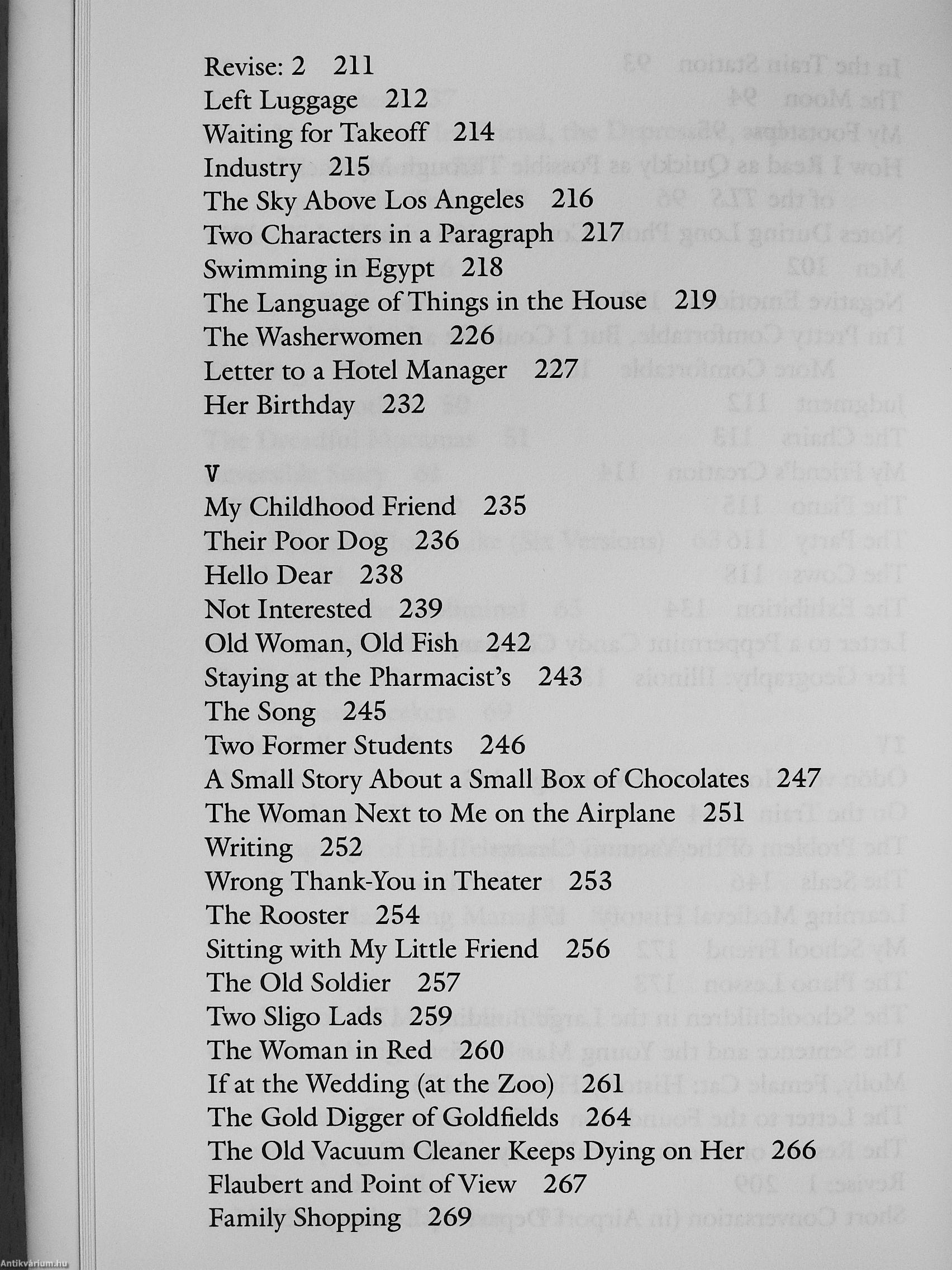
Can't and Won't
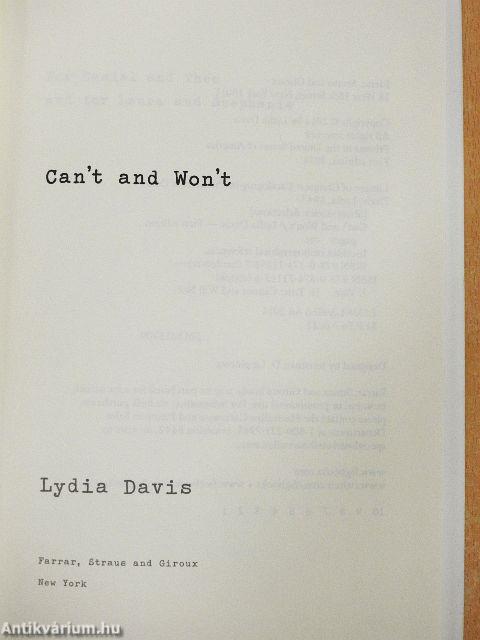
New York
| Kiadó: | Farrar, Straus and Giroux |
|---|---|
| Kiadás helye: | New York |
| Kiadás éve: | |
| Kötés típusa: | Fűzött kemény papírkötés |
| Oldalszám: | 289 oldal |
| Sorozatcím: | |
| Kötetszám: | |
| Nyelv: | Angol |
| Méret: | 22 cm x 15 cm |
| ISBN: | 978-0-374-11858-7 |
Értesítőt kérek a kiadóról
A beállítást mentettük,
naponta értesítjük a beérkező friss
kiadványokról
naponta értesítjük a beérkező friss
kiadványokról
A beállítást mentettük,
naponta értesítjük a beérkező friss
kiadványokról
naponta értesítjük a beérkező friss
kiadványokról
Előszó
Tovább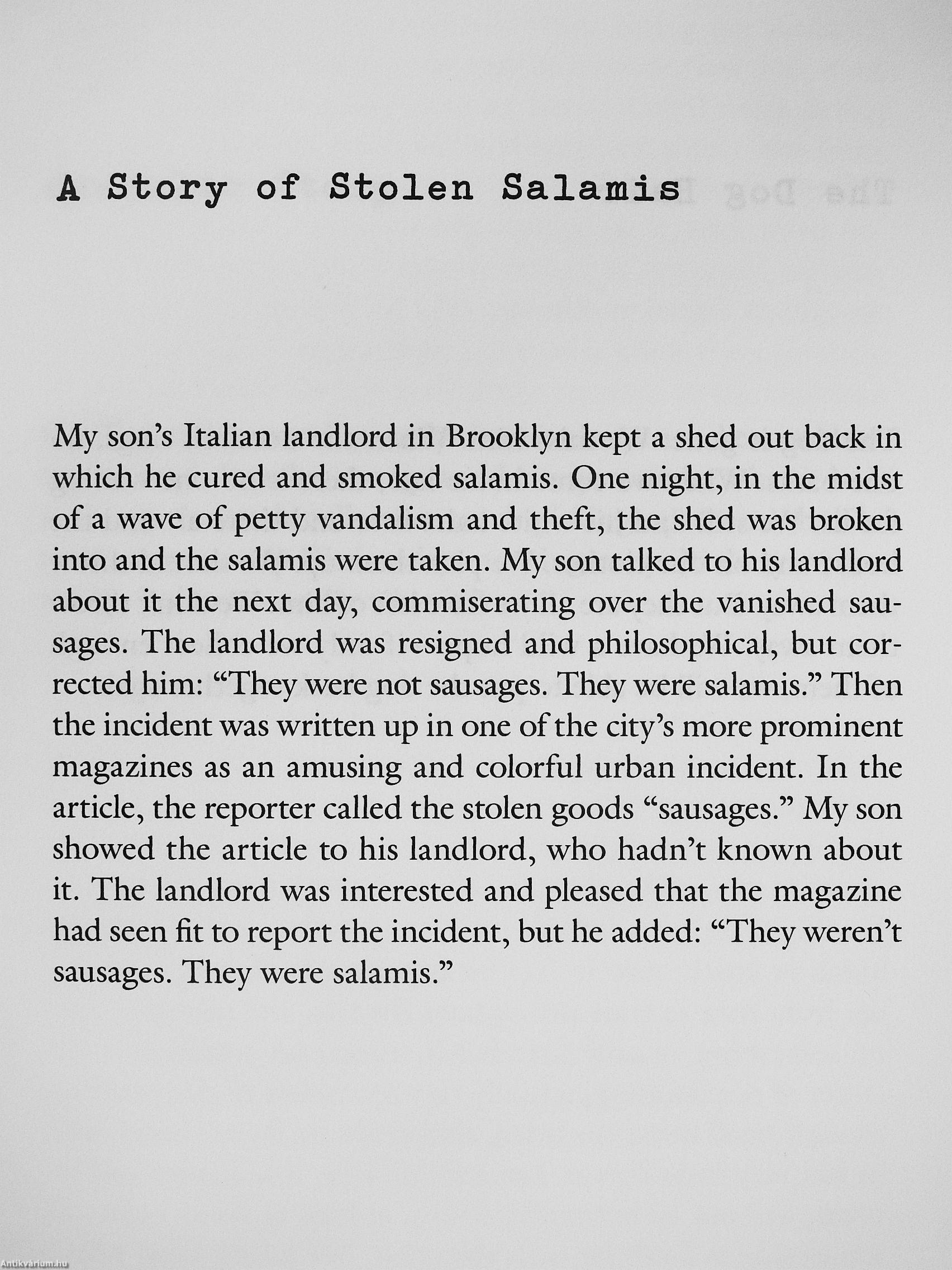
Fülszöveg
Praise for Lydia Davis
"[Lydia Davis's] body of work [is] probably unique in American writing, in its combination of lucidity, aphoristic brevity, formal originality, sly comedy, metaphysical bleakness, philosophical pressure, and human wisdom." -James Wood, the n e v^ yorker
"As mighty as Kafka, as subtle as Flaubert and as epoch-making, in her own way, as Proust A two-liner from Davis, or a seemingly throwaway paragraph, will haunt . . . What looks like a game will open to deep seriousness; what looks like philosophy will reveal playfulness, tragicomedy, ordinariness; what looks like ordinariness will ask you to look again at Davis's writing . . . She's a joy. There's no writer quite like her." -All Smith, THE GUARDIAN
"What makes [Davis's stories] exciting, at times thrilling . . . is her skill as a phrasemaker, her ability to write with fierce and electrifying precision. She captures words as a hunter might and uses punctuation like a trap A most original and daring... Tovább
Fülszöveg
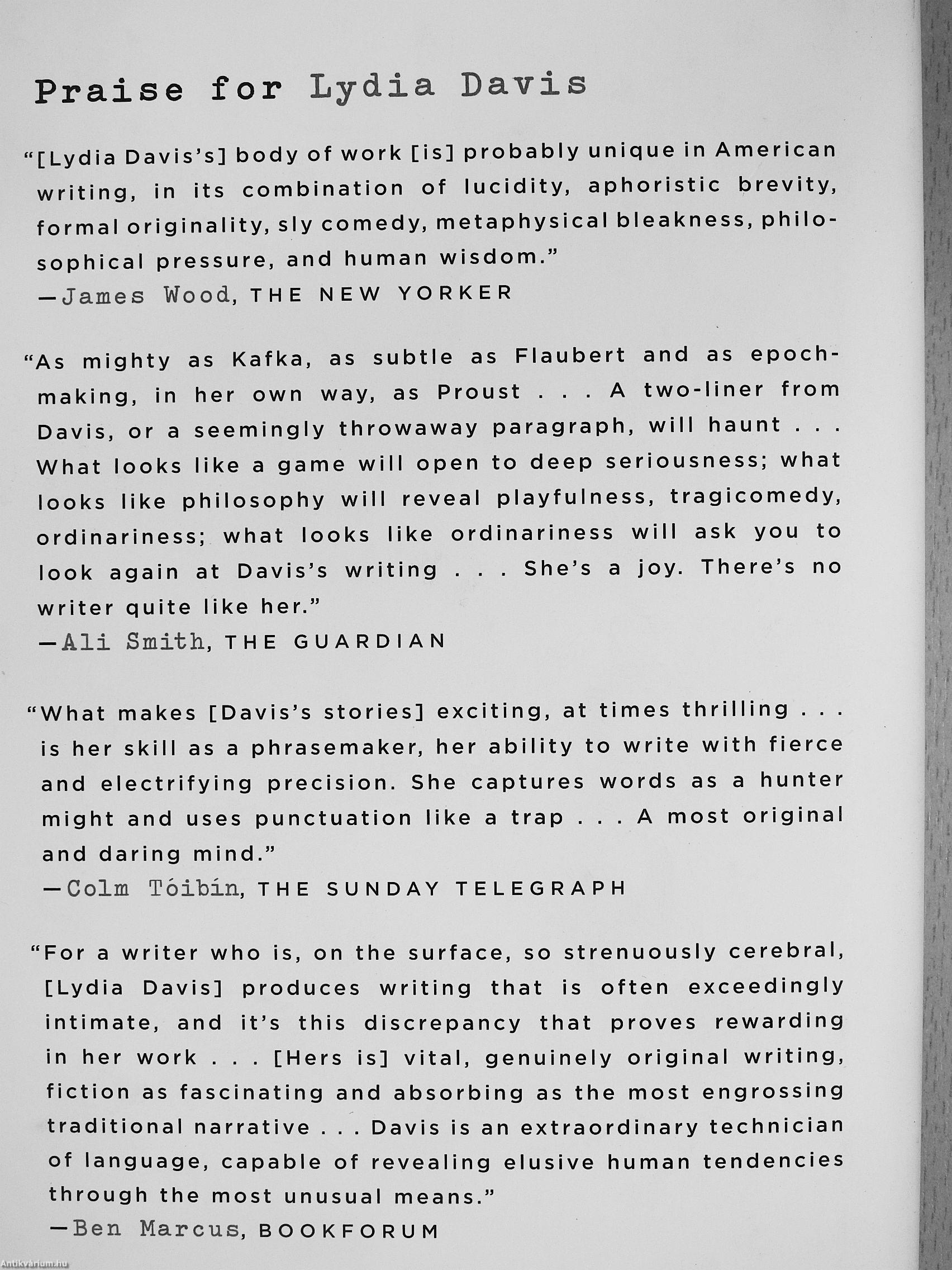
Praise for Lydia Davis
"[Lydia Davis's] body of work [is] probably unique in American writing, in its combination of lucidity, aphoristic brevity, formal originality, sly comedy, metaphysical bleakness, philosophical pressure, and human wisdom." -James Wood, the n e v^ yorker
"As mighty as Kafka, as subtle as Flaubert and as epoch-making, in her own way, as Proust A two-liner from Davis, or a seemingly throwaway paragraph, will haunt . . . What looks like a game will open to deep seriousness; what looks like philosophy will reveal playfulness, tragicomedy, ordinariness; what looks like ordinariness will ask you to look again at Davis's writing . . . She's a joy. There's no writer quite like her." -All Smith, THE GUARDIAN
"What makes [Davis's stories] exciting, at times thrilling . . . is her skill as a phrasemaker, her ability to write with fierce and electrifying precision. She captures words as a hunter might and uses punctuation like a trap A most original and daring mind."
— Colm Toibin, THE SUNDAY TELEGRAPH
"For a writer who Is, on the surface, so strenuously cerebral, [Lydia Davis] produces writing that is often exceedingly intimate, and it's this discrepancy that proves rewarding in her work . . . [Hers is] vital, genuinely original writing, fiction as fascinating and absorbing as the most engrossing traditional narrative . . . Davis Is an extraordinary technician of language, capable of revealing elusive human tendencies through the most unusual means."
— Ben Marcus, bookforum
m
:li I
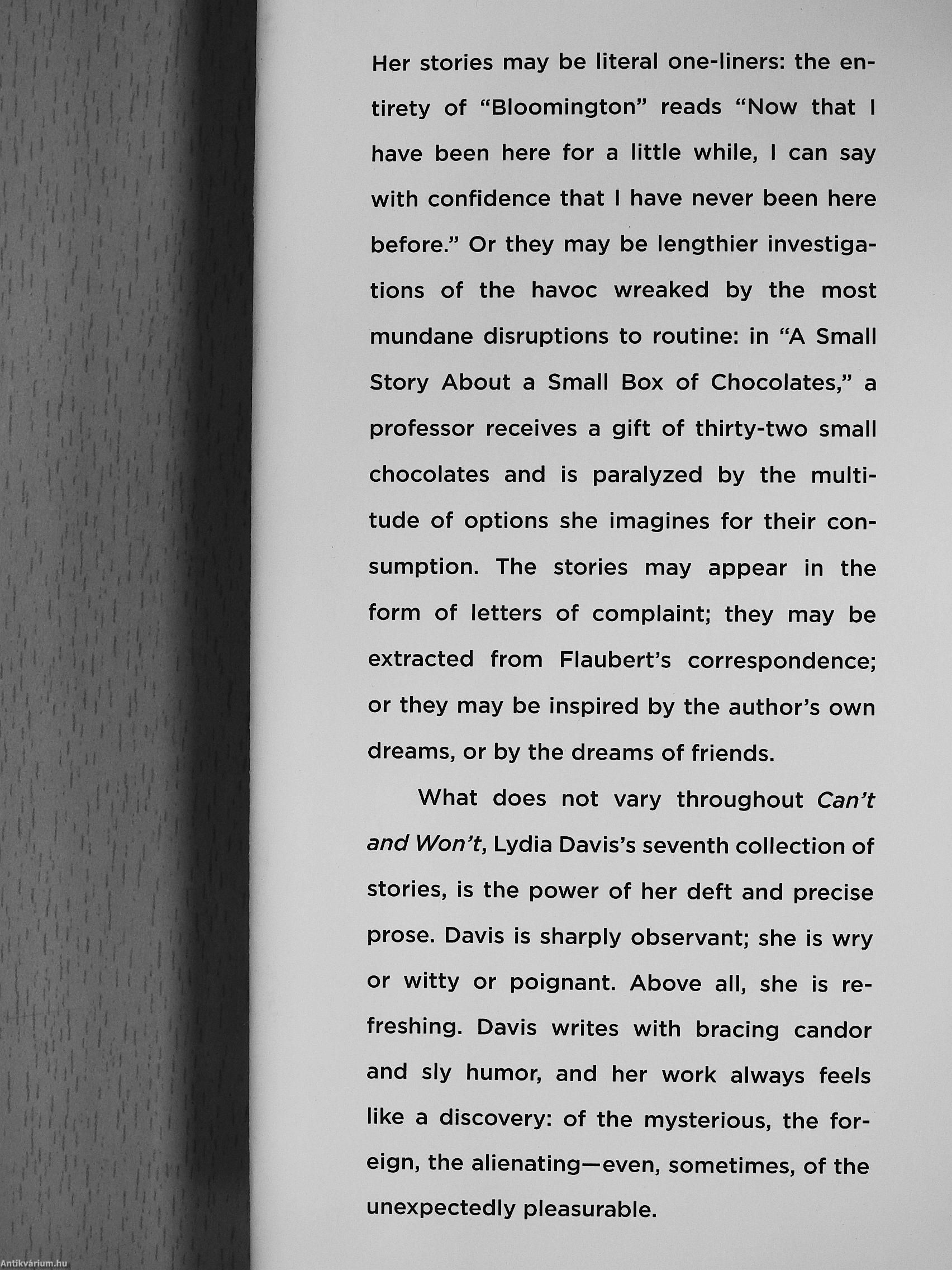
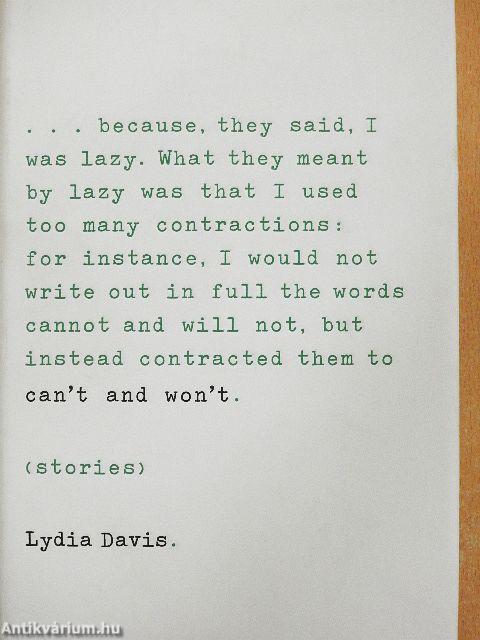
Her stories may be literal one-liners: the entirety of "Bloomington" reads "Now that I have been here for a little while, I can say with confidence that I have never been here before." Or they may be lengthier investigations of the havoc wreaked by the most mundane disruptions to routine: in "A Small Story About a Small Box of Chocolates," a professor receives a gift of thirty-two small chocolates and is paralyzed by the multitude of options she imagines for their consumption. The stories may appear in the form of letters of complaint; they may be extracted from Flaubert's correspondence; or they may be inspired by the author's own dreams, or by the dreams of friends.
What does not vary throughout Can't and Won't, Lydia Davis's seventh collection of stories, is the power of her deft and precise prose. Davis is sharply observant; she is wry or witty or poignant. Above all, she is refreshing. Davis writes with bracing candor and sly humor, and her work always feels like a discovery: of the mysterious, the foreign, the alienating—even, sometimes, of the unexpectedly pleasurable. Vissza

Lydia Davis
Lydia Davis műveinek az Antikvarium.hu-n kapható vagy előjegyezhető listáját itt tekintheti meg: Lydia Davis könyvek, művekMegvásárolható példányok
Nincs megvásárolható példány
A könyv összes megrendelhető példánya elfogyott. Ha kívánja, előjegyezheti a könyvet, és amint a könyv egy újabb példánya elérhető lesz, értesítjük.
 Folytatás Microsoft-tal