Fülszöveg
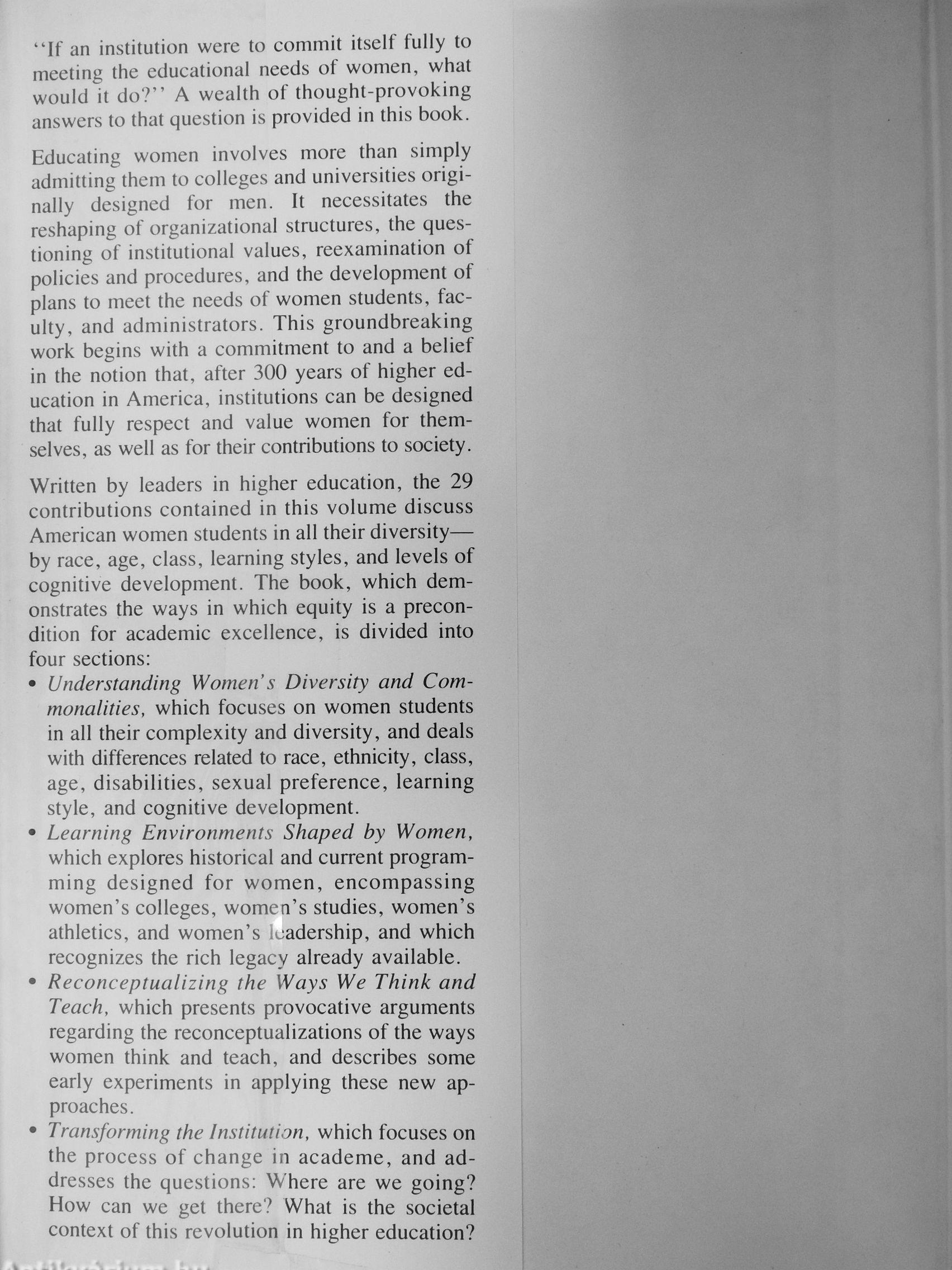
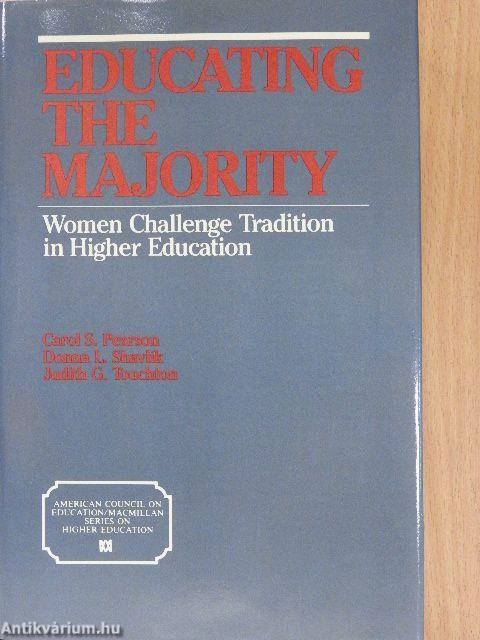
"If an institution were to commit itself fully to meeting the educational needs of women, what would it do?" A wealth of thought-provoking answers to that question is provided in this book.
Educating women involves more than simply admitting them to colleges and universities originally designed for men. It necessitates the reshaping oF organizational structures, the questioning of institutional values, reexamination of policies and procedures, and the development of plans to meet the needs of women students, faculty, and administrators. This groundbreaking work begins with a commitment to and a belief in the notion that, after 300 years of higher education in America, institutions can be designed that fully respect and value women for themselves, as well as for their contributions to society.
Written by leaders in higher education, the 29 contributions contained in this volume discuss American women students in all their diversity— by race, age, class, learning styles, and...
Tovább
Fülszöveg
"If an institution were to commit itself fully to meeting the educational needs of women, what would it do?" A wealth of thought-provoking answers to that question is provided in this book.
Educating women involves more than simply admitting them to colleges and universities originally designed for men. It necessitates the reshaping oF organizational structures, the questioning of institutional values, reexamination of policies and procedures, and the development of plans to meet the needs of women students, faculty, and administrators. This groundbreaking work begins with a commitment to and a belief in the notion that, after 300 years of higher education in America, institutions can be designed that fully respect and value women for themselves, as well as for their contributions to society.
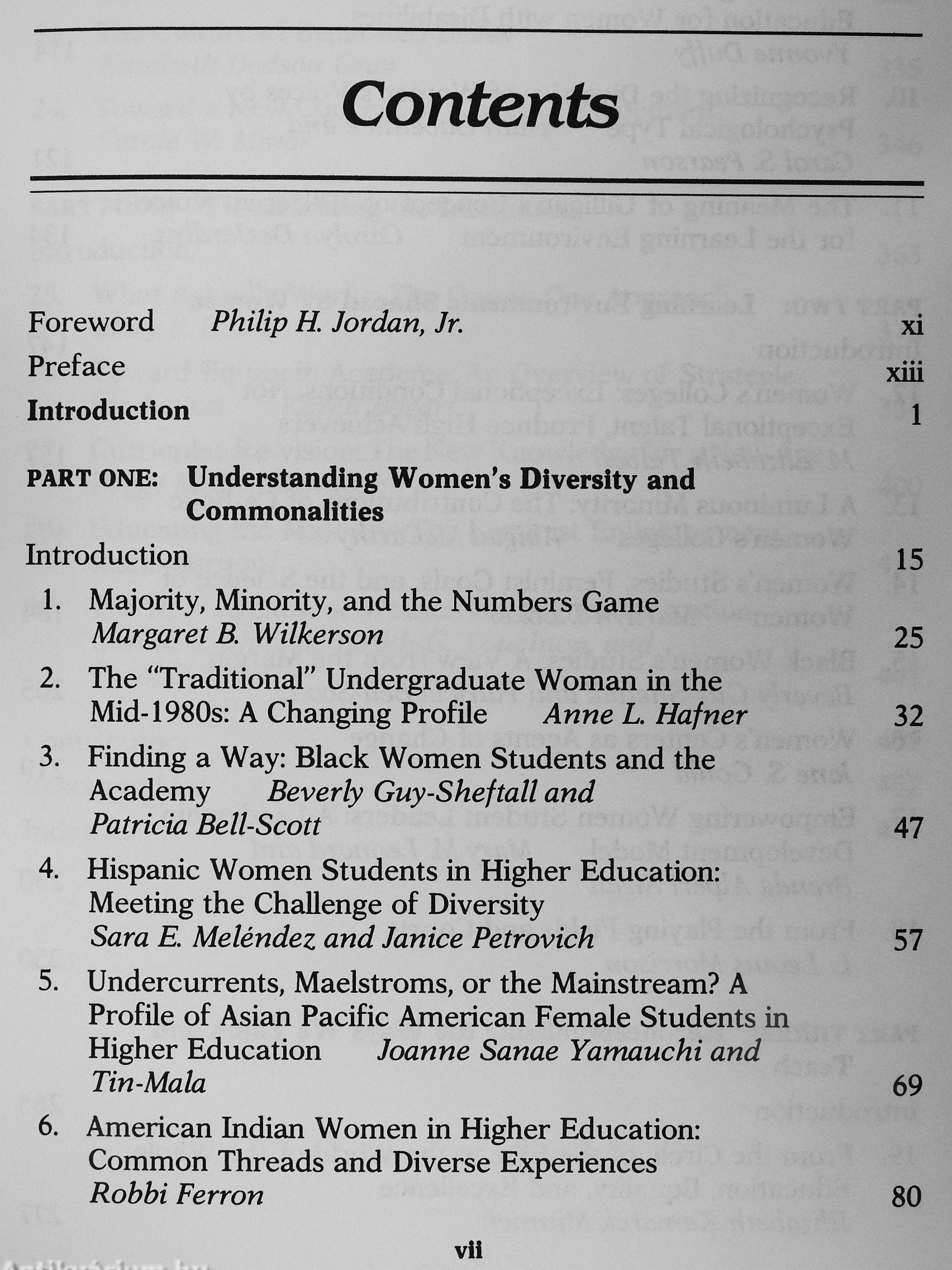
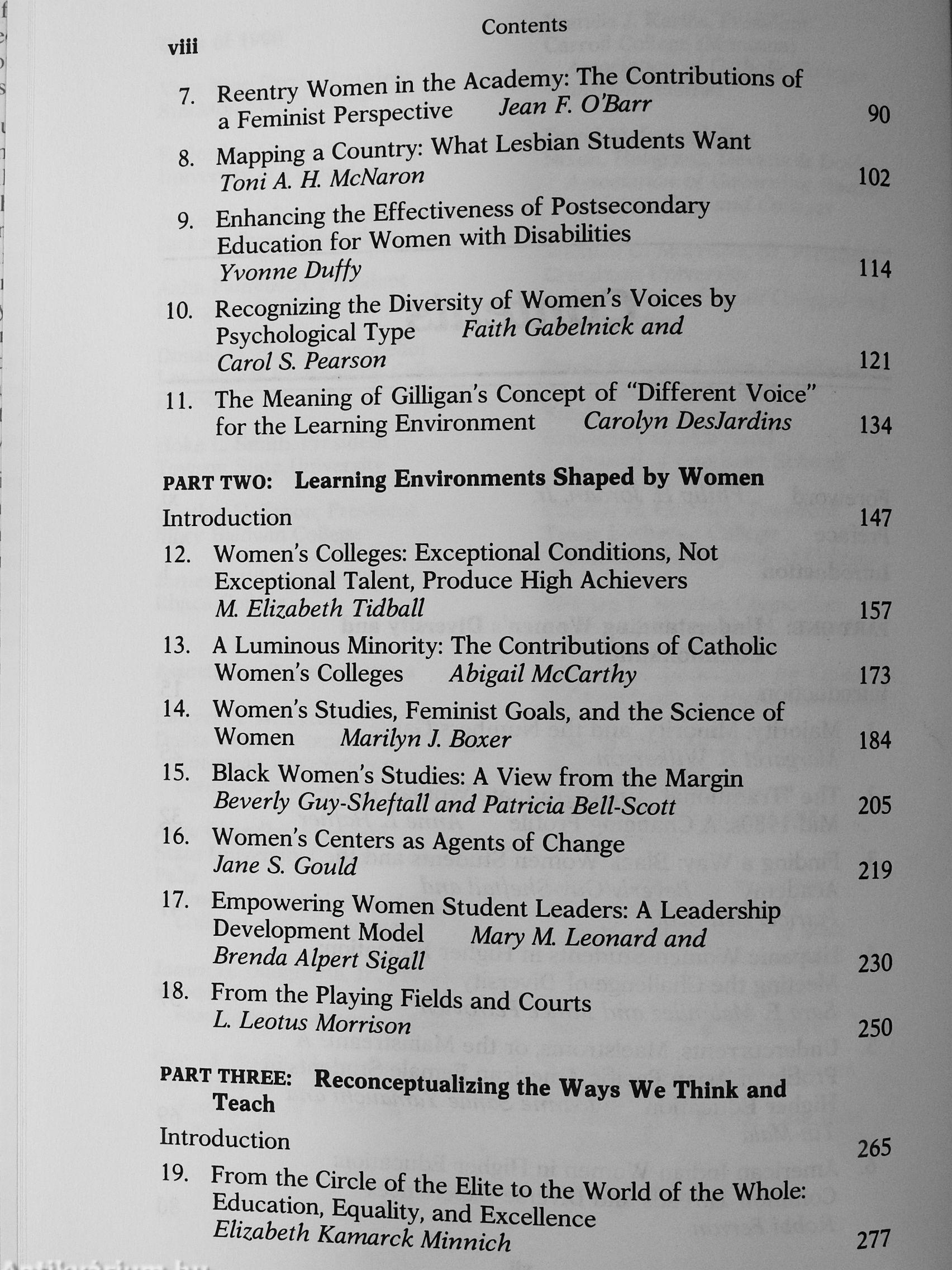
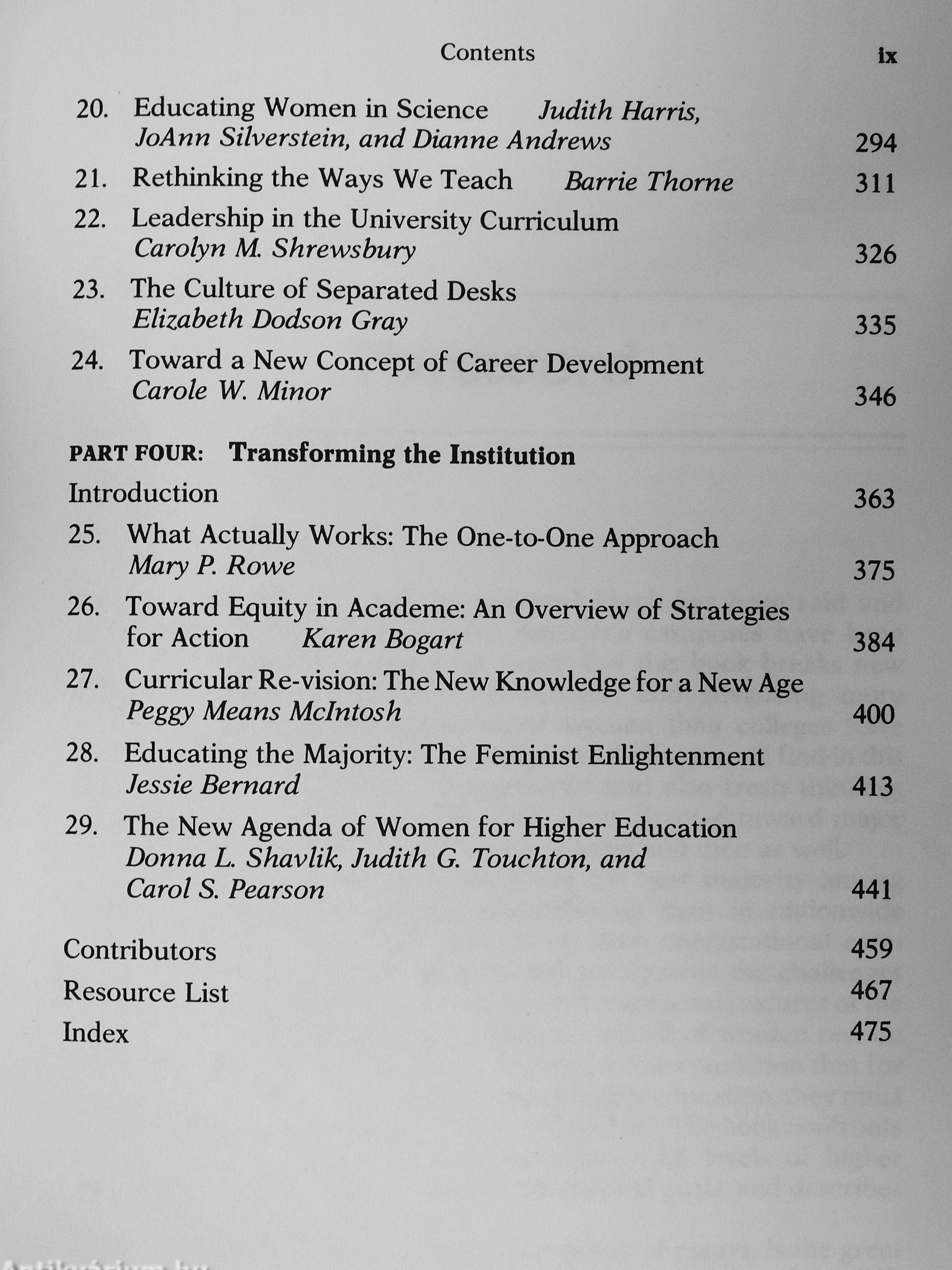
Written by leaders in higher education, the 29 contributions contained in this volume discuss American women students in all their diversity— by race, age, class, learning styles, and levels of cognitive development. The book, which demonstrates the ways in which equity is a precondition for academic excellence, is divided into four sections:
• Understanding Women's Diversity and Commonalities, which focuses on women students in all their complexity and diversity, and deals with differences related to race, ethnicity, class, age, disabilities, sexual preference, learning style, and cognitive development.
• Learning Environments Shaped by Women, which explores historical and current programming designed for women, encompassing women's colleges, women's studies, women's athletics, and women's leadership, and which recognizes the rich legacy already available.
• Reconceptualizing the Ways We Think and Teach, which presents provocative arguments regarding the reconceptualizations of the ways women think and teach, and describes some eariy experiments in applying these new approaches.
• Transforming the Institution, which focuses on the process of change in academe, and addresses the questions: Where are we going? How can we get there? What is the societal context of this revolution in higher education?
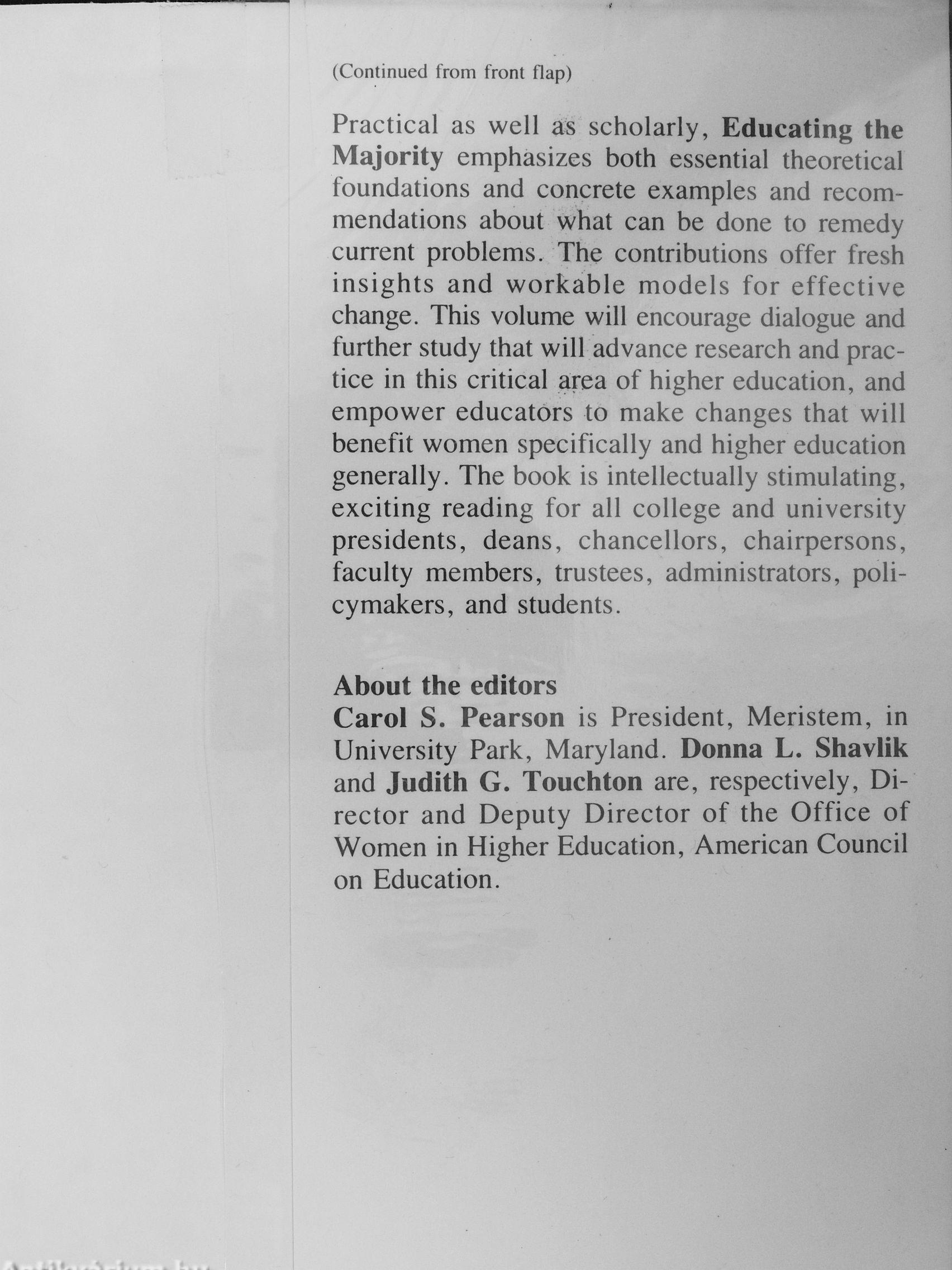
(Continued from front flap)
Practical as well as scholarly, Educating the Majority emphasizes both essential theoretical foundations and concrete examples and recommendations about what can be done to remedy current problems. The contributions offer fresh insights and workable models for effective change. This volume will encourage dialogue and further study that will advance research and practice in this critical area of higher education, and empower educators to make changes that will benefit women specifically and higher education generally. The book is intellectually stimulating, exciting reading for all college and university presidents, deans, chancellors, chairpersons, faculty members, trustees, administrators, policymakers, and students.
About the editors
Carol S. Pearson is President, Meristem, in University Park, Maryland. Donna L. Shavlik and Judith G. Touchton are, respectively. Director and Deputy Director of the Office of Women in Higher Education, American Council on Education.
Vissza 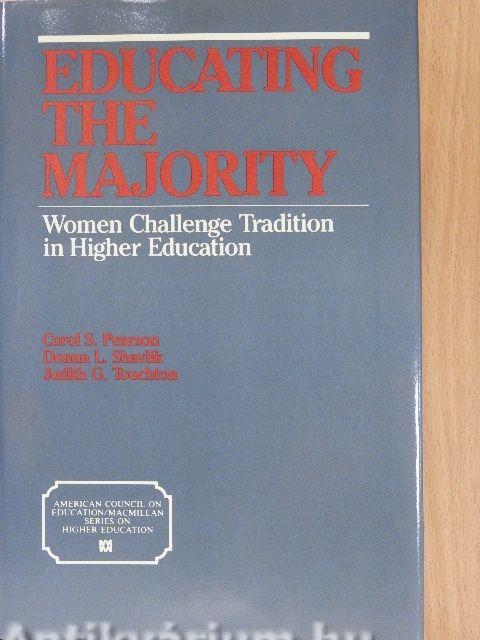




 Folytatás Microsoft-tal