
1.160.541
kiadvánnyal nyújtjuk Magyarország legnagyobb antikvár könyv-kínálatát

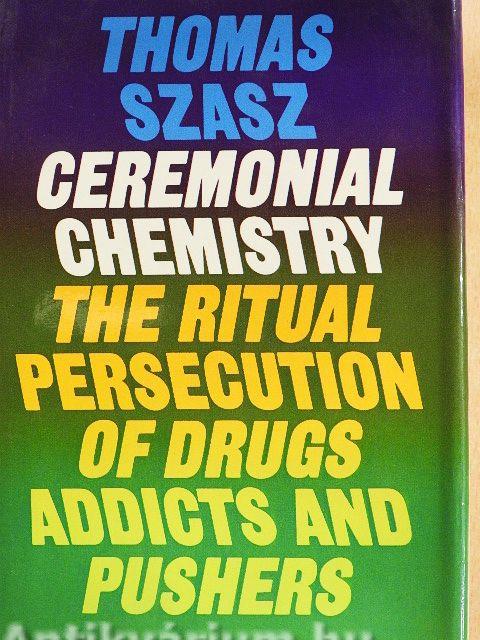
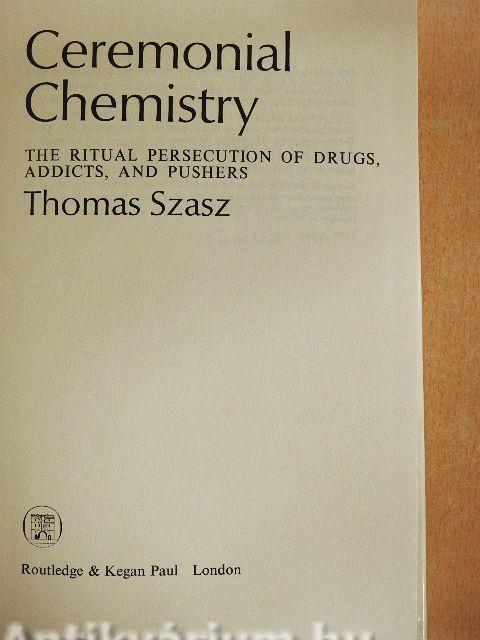
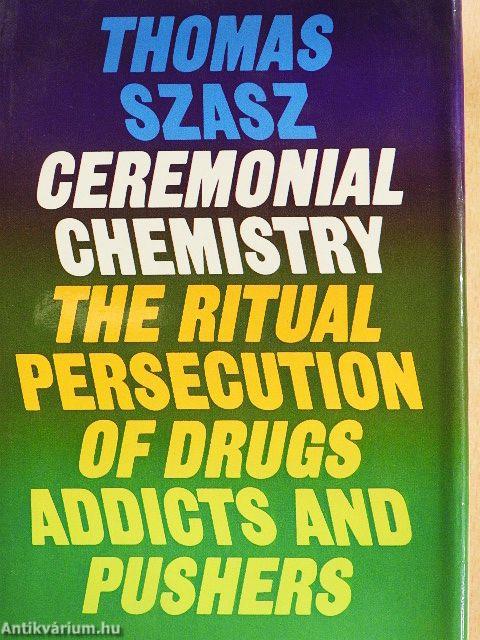
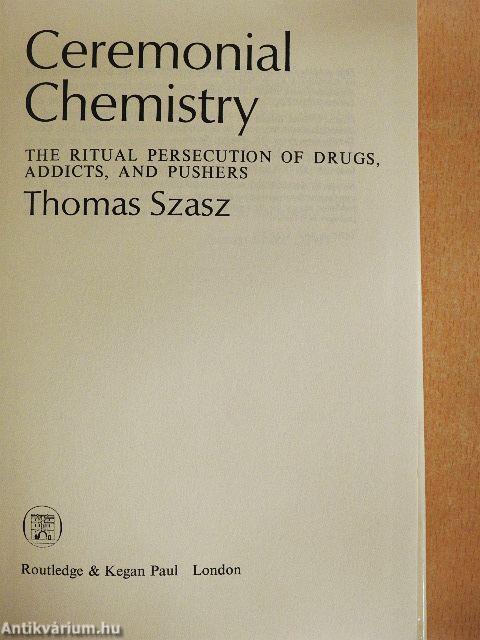
Ceremonial Chemistry
The Ritual Persecution of Drugs, Addicts, and Pushers
London
| Kiadó: | Routledge & Kegan Paul |
|---|---|
| Kiadás helye: | London |
| Kiadás éve: | |
| Kötés típusa: | Vászon |
| Oldalszám: | 243 oldal |
| Sorozatcím: | |
| Kötetszám: | |
| Nyelv: | Angol |
| Méret: | 22 cm x 15 cm |
| ISBN: | 0-7100-8122-7 |
Értesítőt kérek a kiadóról
A beállítást mentettük,
naponta értesítjük a beérkező friss
kiadványokról
naponta értesítjük a beérkező friss
kiadványokról
A beállítást mentettük,
naponta értesítjük a beérkező friss
kiadványokról
naponta értesítjük a beérkező friss
kiadványokról
Előszó
Tovább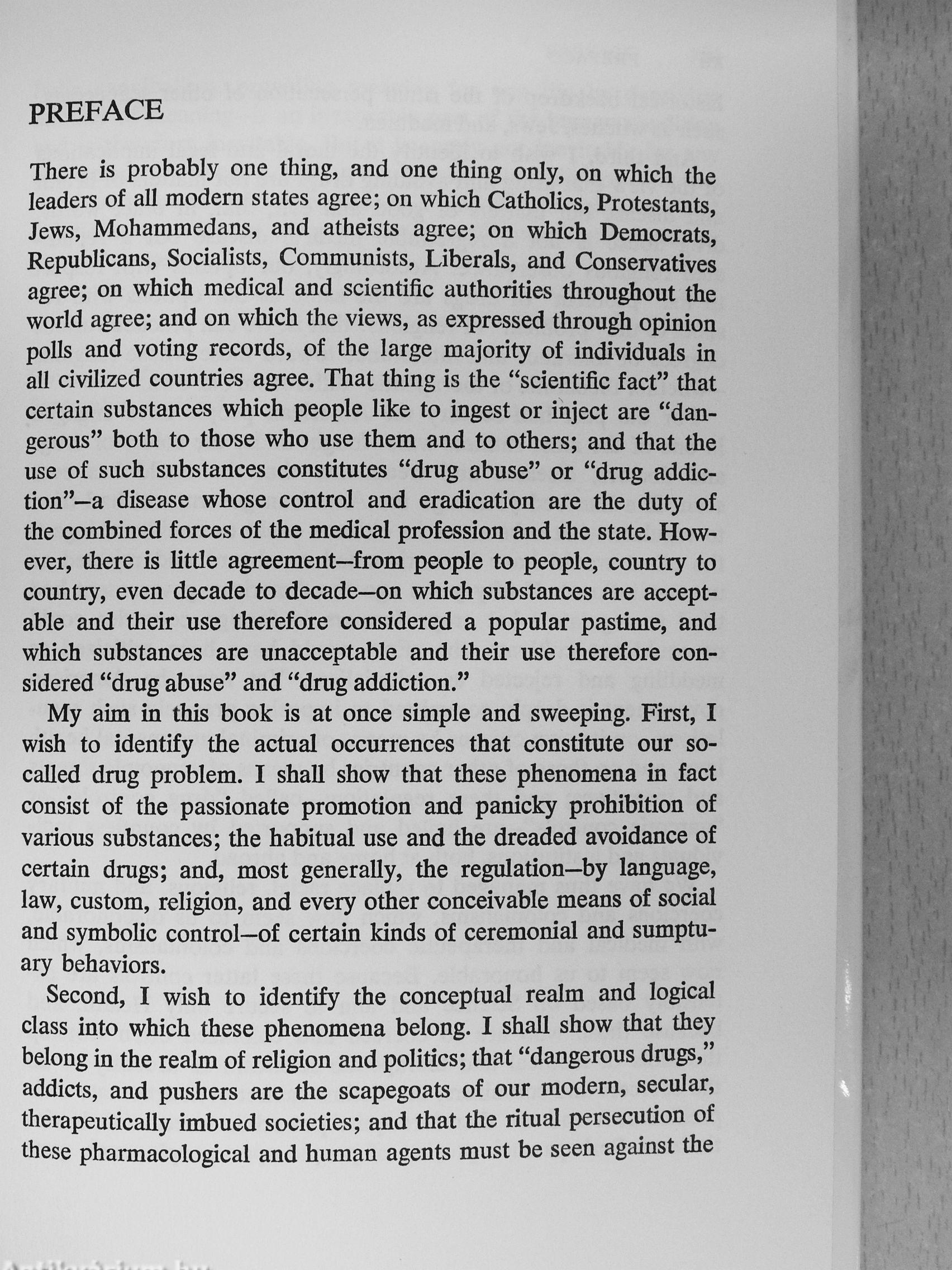
Fülszöveg
CEREMONIAL CHEMISTRY
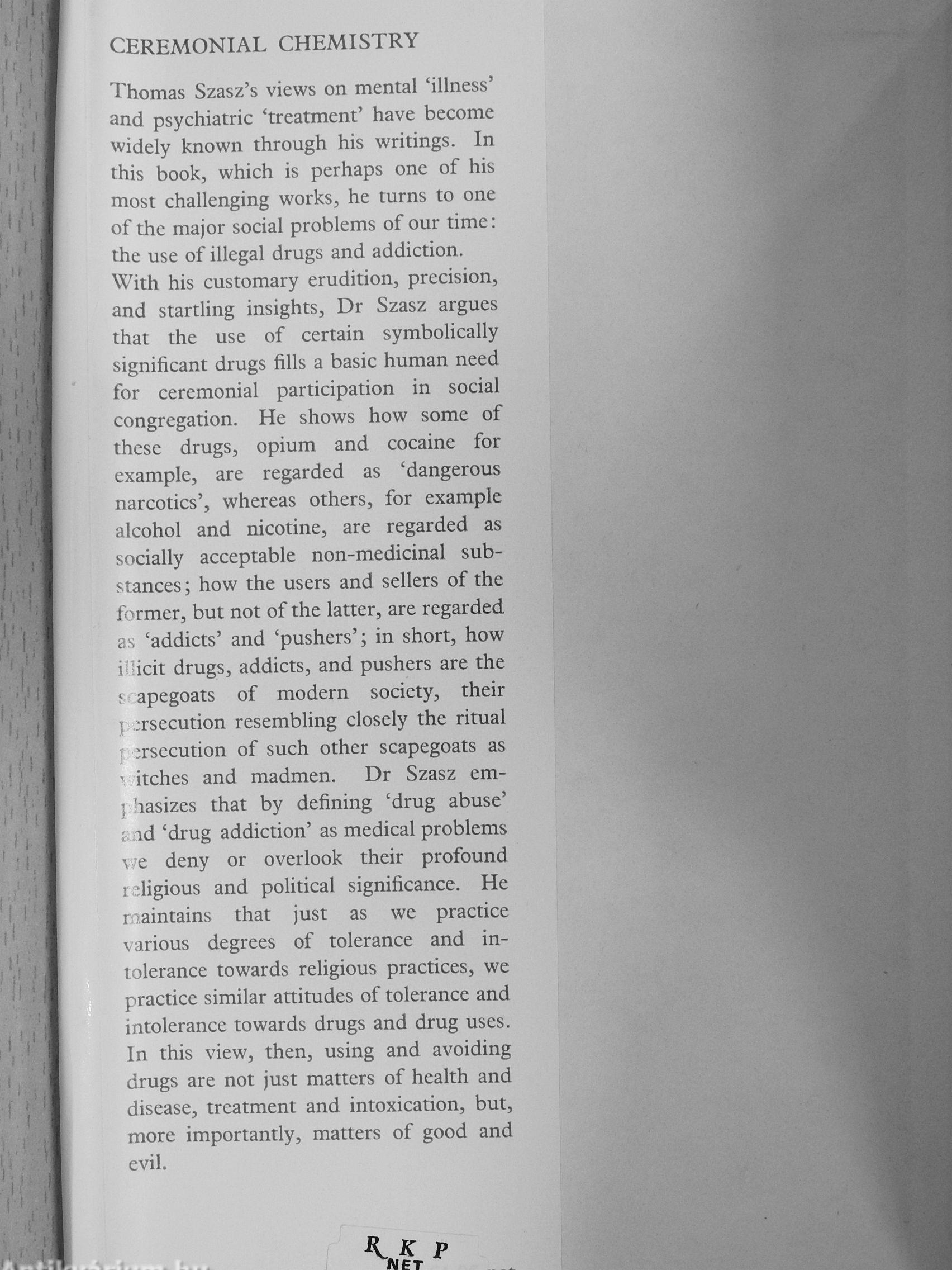
Thomas Szasz's views on mental 'illness' and psychiatric 'treatment' have become widely known through his writings. In this book, which is perhaps one of his most challenging works, he turns to one of the major social problems of our time: the use of illegal drugs and addiction. With his customary erudition, precision, and startling insights, Dr Szasz argues that the use of certain symbolically significant drugs fills a basic human need for ceremonial participation in social congregation. He shows how some of these drugs, opium and cocaine for example, are regarded as 'dangerous narcotics', whereas others, for example alcohol and nicotine, are regarded as socially acceptable non-medicinal substances; how the users and sellers of the former, but not of the latter, are regarded as 'addicts' and 'pushers'; in short, how i^icit drugs, addicts, and pushers are the ; apegoats of modern society, their J ,;rsecution resembling closely the ritual ; ;rsccution of such... Tovább
Fülszöveg
CEREMONIAL CHEMISTRY
Thomas Szasz's views on mental 'illness' and psychiatric 'treatment' have become widely known through his writings. In this book, which is perhaps one of his most challenging works, he turns to one of the major social problems of our time: the use of illegal drugs and addiction. With his customary erudition, precision, and startling insights, Dr Szasz argues that the use of certain symbolically significant drugs fills a basic human need for ceremonial participation in social congregation. He shows how some of these drugs, opium and cocaine for example, are regarded as 'dangerous narcotics', whereas others, for example alcohol and nicotine, are regarded as socially acceptable non-medicinal substances; how the users and sellers of the former, but not of the latter, are regarded as 'addicts' and 'pushers'; in short, how i^icit drugs, addicts, and pushers are the ; apegoats of modern society, their J ,;rsecution resembling closely the ritual ; ;rsccution of such other scapegoats as • itches and madmen. Dr Szasz em-! lasizes that by defining 'drug abuse' id 'drug addiction' as medical problems \ e deny or overlook their profound I 'digious and political significance. He maintains that just as we practice various degrees of tolerance and intolerance towards religious practices, we practice similar attitudes of tolerance and intolerance towards drugs and drug uses. In this view, then, using and avoiding drugs are not just matters of health and disease, treatment and intoxication, but, more importantly, matters of good and evil.
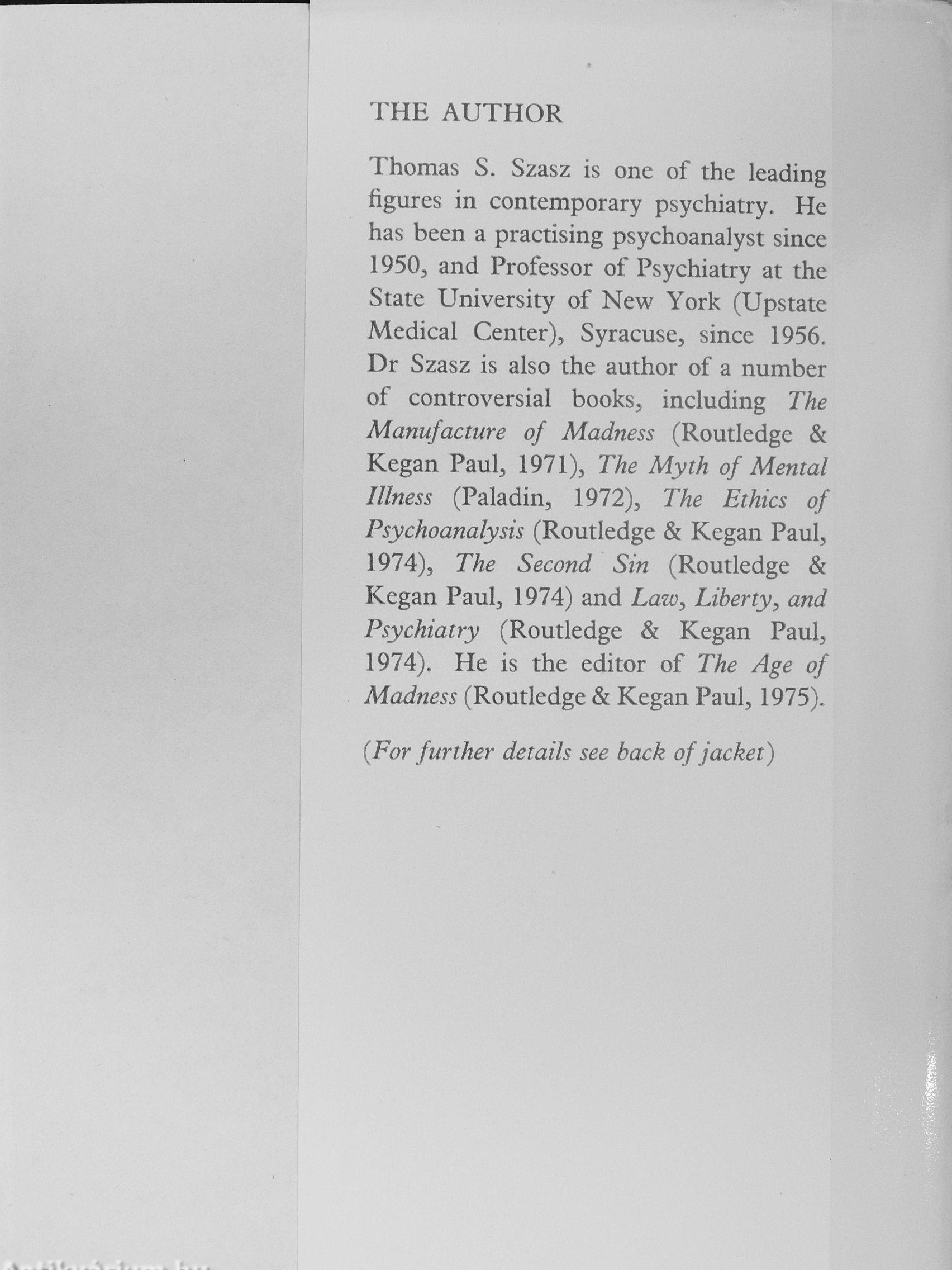
THE AUTHOR
Thomas S. Szasz is one of the leading figures in contemporary psychiatry. He has been a practising psychoanalyst since 1950, and Professor of Psychiatry at the State University of New York (Upstate Medical Center), Syracuse, since 1956. Dr Szasz is also the author of a number of controversial books, including The Manufacture of Madness (Routledge & Kegan Paul, 1971), The Myth of Mental Illness (Paladin, 1972), The Ethics of Psychoanalysis (Routledge & Kegan Paul, 1974), The Second Sin (Routledge & Kegan Paul, 1974) and Law, Liberty, and Psychiatry (Routledge & Kegan Paul, 1974). He is the editor of The Age of Madness (Routledge & Kegan Paul, 1975).
{For further details see back of jacket)
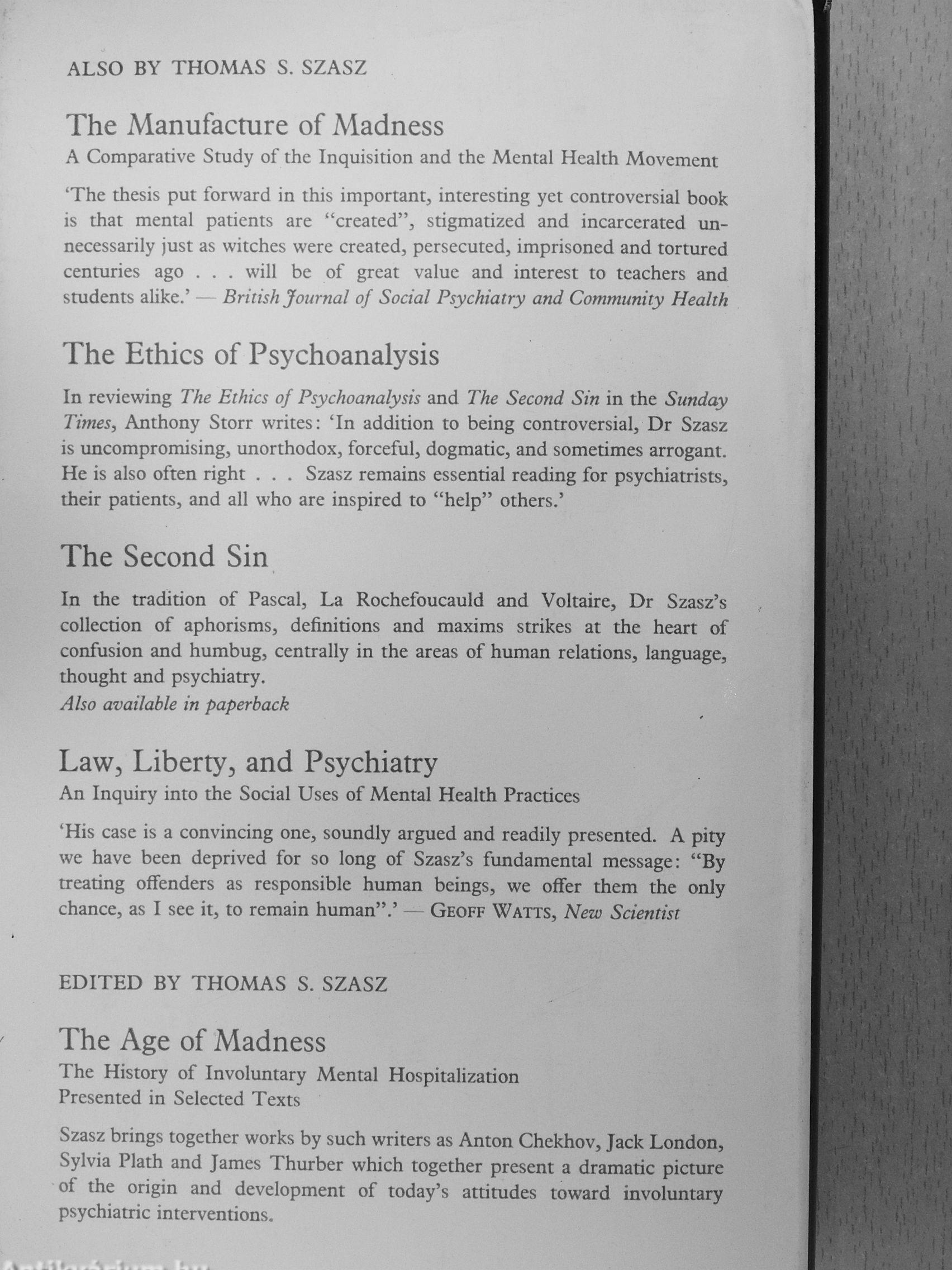
ALSO BY THOMAS S. SZASZ
The Manufacture of Madness
A Comparative Study of the Inquisition and the Mental Health Movement
'The thesis put forward in this important, interesting yet controversial book is that mental patients are "created", stigmatized and incarcerated unnecessarily just as witches were created, persecuted, imprisoned and tortured centuries ago . . . will be of great value and interest to teachers and students alike.' British Journal of Social Psychiatry and Community Health
The Ethics of Psychoanalysis
In reviewing The Ethics of Psychoanalysis and The Second Sin in the Sunday Times, Anthony Storr writes: 'In addition to being controversial, Dr Szasz is uncompromising, unorthodox, forceful, dogmatic, and sometimes arrogant. He is also often right . . . Szasz remains essential reading for psychiatrists, their patients, and all who are inspired to "help" others.'
The Second Sin
In the tradition of Pascal, La Rochefoucauld and Voltaire, Dr Szasz's collection of aphorisms, definitions and maxims strikes at the heart of confusion and humbug, centrally in the areas of human relations, language, thought and psychiatry. Also available in paperback
Law, Liberty, and Psychiatry
An Inquiry into the Social Uses of Mental Health Practices
'His case is a convincing one, soundly argued and readily presented. A pity we have been deprived for so long of Szasz's fundamental message: "By treating offenders as responsible human beings, we offer them the only chance, as I see it, to remain human".' - Geoff Watts, New Scientist
EDITED BY THOMAS S. SZASZ
The Age of Madness
The History of Involuntary Mental Hospitalization Presented in Selected Texts
Szasz brings together works by such writers as Anton Chekhov, Jack London, Sylvia Plath and James Thurber which together present a dramatic picture of the origin and development of today's attitudes toward involuntary psychiatric interventions. Vissza
Témakörök
- Orvostudomány > Ideg, elme > Pszichiátria
- Szociológia > Beilleszkedési zavarok > Kábítószer, drog
- Filozófia > Témaköre szerint > Etika
- Idegennyelv > Idegennyelvű könyvek > Angol > Orvostudomány
- Idegennyelv > Idegennyelvű könyvek > Angol > Szociológia > Beilleszkedési zavarok > Kábítószer, drog
- Idegennyelv > Idegennyelvű könyvek > Angol > Filozófia > Témaköre szerint > Etika
- Pszichológia > Pszichiátria
- Pszichológia > Idegennyelvű > Angol
- Orvostudomány > Gyógyszertan > Gyógyszerkészítmények > Egyéb
- Orvostudomány > Gyógyszertan > Idegennyelvű
- Orvostudomány > Gyógyszertan > Története
- Orvostudomány > Ideg, elme > Idegennyelvű
- Orvostudomány > Orvosi idegennyelvű könyvek > Gyógyszertan
- Orvostudomány > Orvosi idegennyelvű könyvek > Ideg, elme
- Orvostudomány > Orvosi idegennyelvű könyvek > Szenvedélybetegségek
- Orvostudomány > Szenvedélybetegségek > Drog
- Orvostudomány > Szenvedélybetegségek > Idegennyelvű
- Idegennyelv > Idegennyelvű könyvek > Angol > Pszichológia
Thomas Szasz
Thomas Szasz műveinek az Antikvarium.hu-n kapható vagy előjegyezhető listáját itt tekintheti meg: Thomas Szasz könyvek, művekMegvásárolható példányok
Állapotfotók
Szép állapotú példány.
Állapot:
Jó
8.800
,-Ft
44
pont kapható
Kosárba
 Folytatás Microsoft-tal