Fülszöveg
There is no excuse and we cannot explain "what happened, but we can acknowledge and recount" (Sándor Márai)
? vATAS tOOoftCA ?-EAiTtiAUS
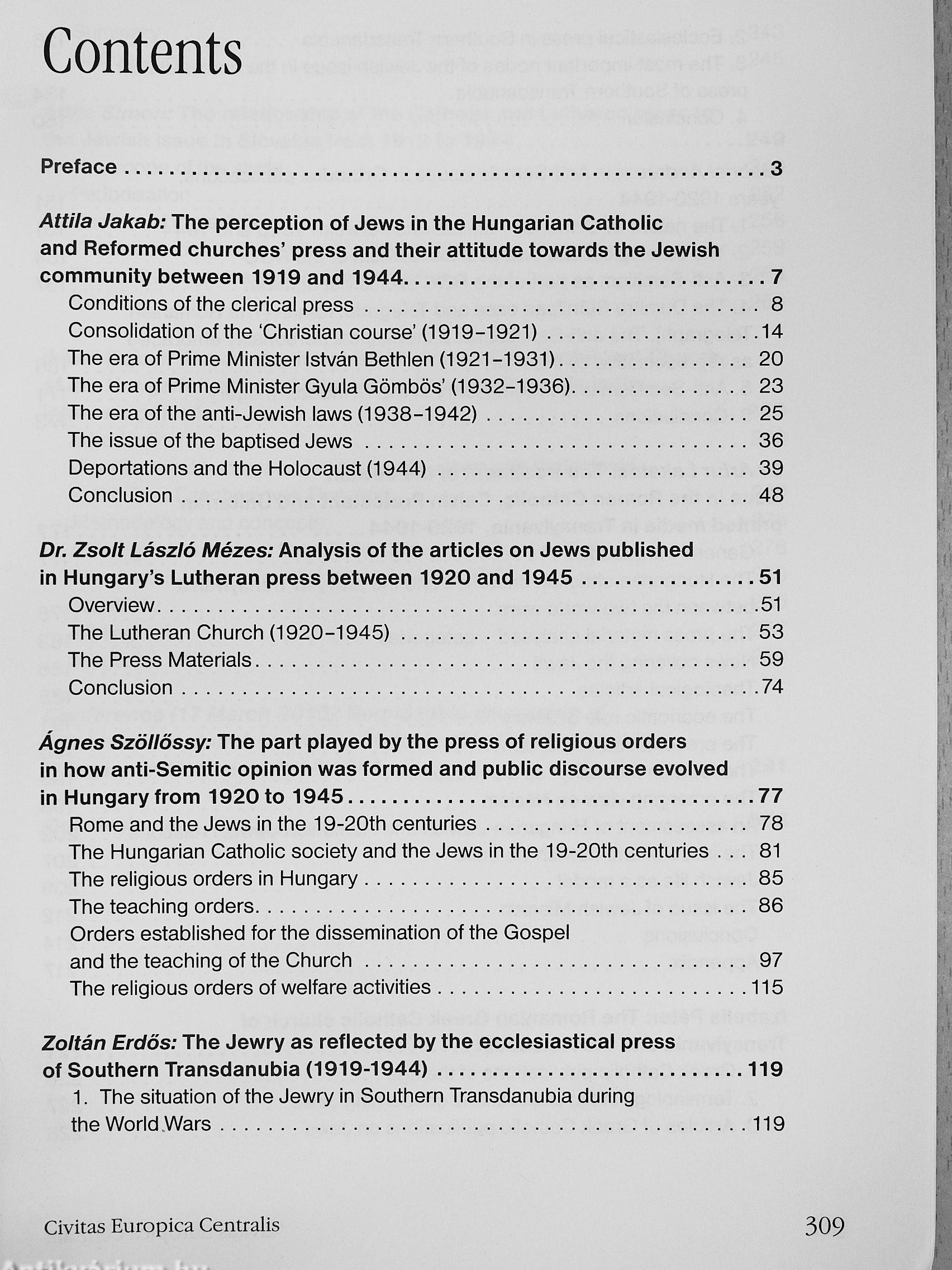
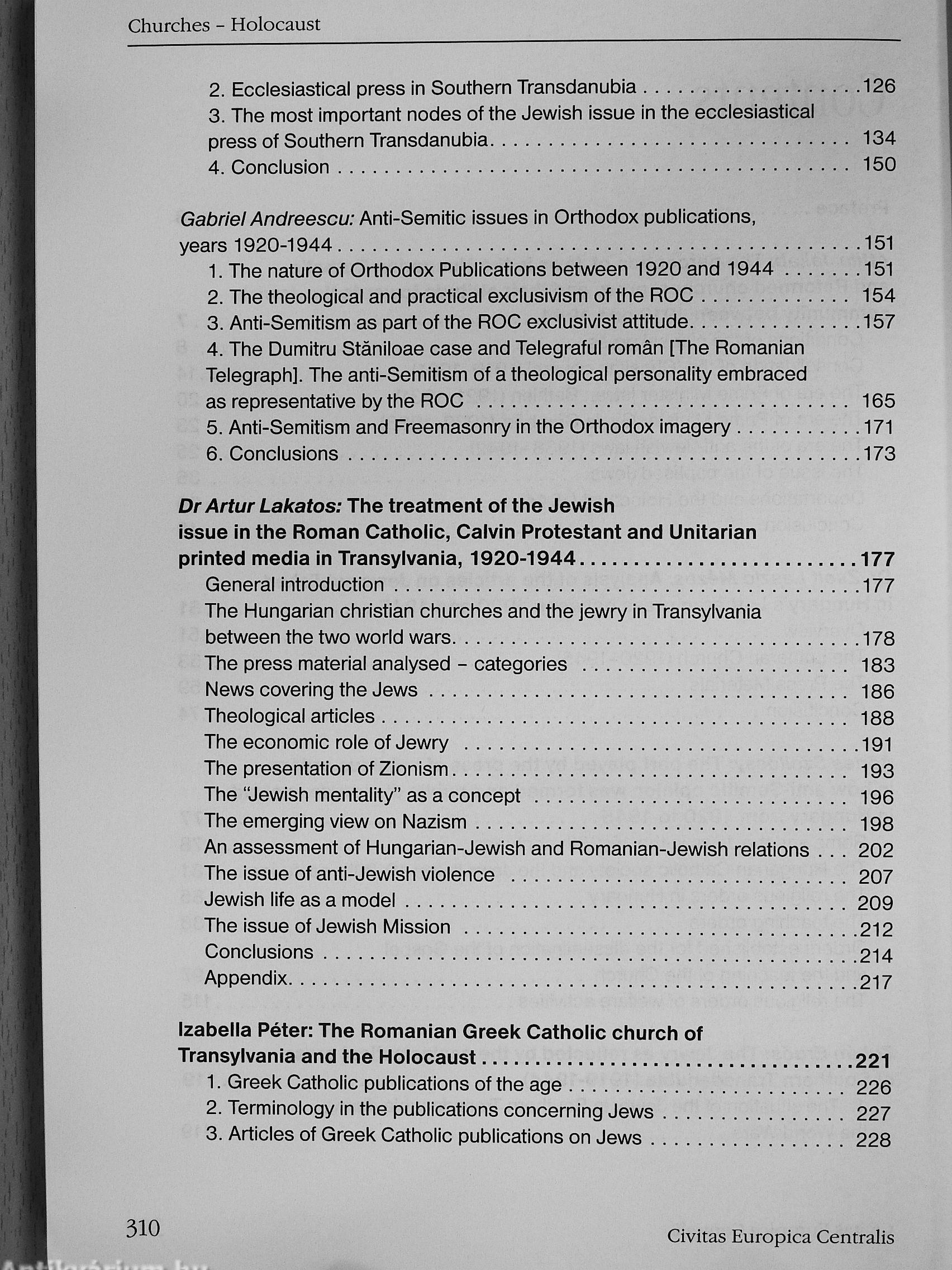
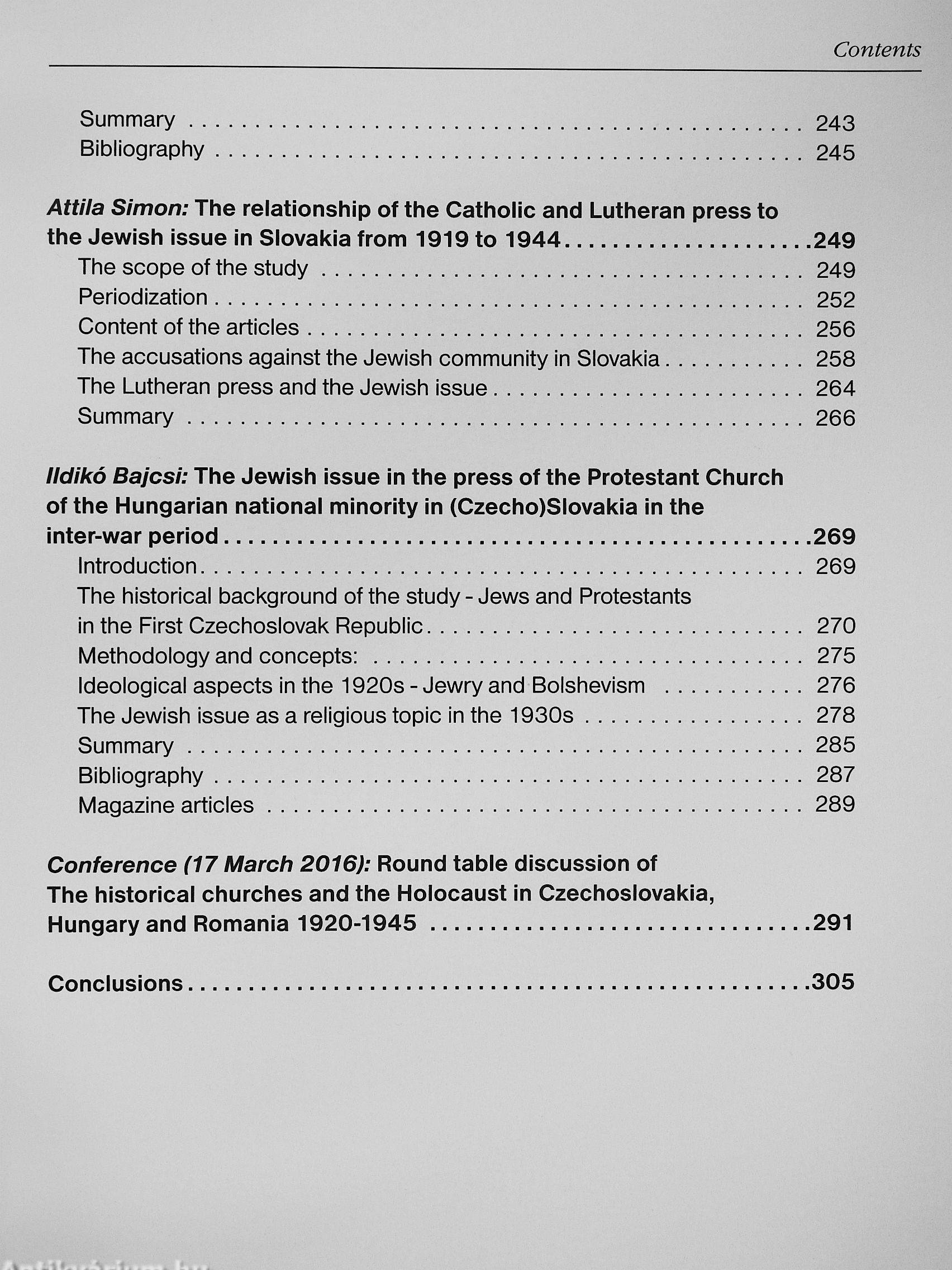
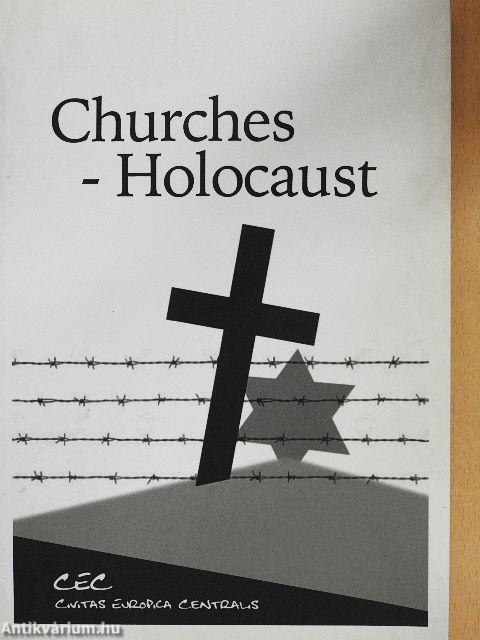
The CEC has been engaged in an international comparative research since 2013 on the role played by the historical churches in the anti-Semitism of the intervs^ar period and the Holocaust with particular attention to the increase of nationaUsm and the revival of the denial of the Holocaust in the region.
Analysing the clerical press and the archive documents in the interwar period you can get a clear view of the state of the societies in the different countries (Hungary, Slovakia and Romania) in the given age, the position of and the part played by different religions and - as country borders kept shifting - the response given by the clergy to the processes and political changes of the era.
The results of the research indicate to us, people living today, that 'terrible mistakes can be committed and the consequences can be abysmal when morals...
Tovább
Fülszöveg
There is no excuse and we cannot explain "what happened, but we can acknowledge and recount" (Sándor Márai)
? vATAS tOOoftCA ?-EAiTtiAUS
The CEC has been engaged in an international comparative research since 2013 on the role played by the historical churches in the anti-Semitism of the intervs^ar period and the Holocaust with particular attention to the increase of nationaUsm and the revival of the denial of the Holocaust in the region.
Analysing the clerical press and the archive documents in the interwar period you can get a clear view of the state of the societies in the different countries (Hungary, Slovakia and Romania) in the given age, the position of and the part played by different religions and - as country borders kept shifting - the response given by the clergy to the processes and political changes of the era.
The results of the research indicate to us, people living today, that 'terrible mistakes can be committed and the consequences can be abysmal when morals want to meet the alleged requirements of real politics' (1. Bibó). History, unfortunately, can repeat itself. Because the societies of Central-Eastern Europe have failed to acknowledge their past, the consequences are grave indeed. The actors of today have started to behave eerily like those in the interwar period. The churches in our region are silent in the best of cases. Pope Francis's words arrive here in a much dampened form.
So we believe our research is more and more topical wiüi every day. Looking into the eye of the phenomena revealed may help to provide a humane answer to the challenges of the present time.
Erika Törzsök
¦ ¦ Claims Conference niv>3Tin m>iii
N^ The Confcrencc on ItwUh Malcrial Claims Against Germany
„Menteni, magyarázni nem tudjuk, ami történt; de bevallani, elmondani igen" (Márai Sándor)
A CEC 2013- óta nemzetközi összehasonlító kutatást folytat a történelmi egyházak szerepének vizsgálatára a két világháború közötti antiszemitizmusban, valamint a holokausztban - különös tekintettel a térségben erősödő etnicizmusra, nacionalizmusokra, a holocaust-tagadás feléledő jelenségére.
Visszatekintve, a két világháború közötti egyházi sajtó és levéltári anyagok alapján világosan kirajzolódik, hogy az egyes országokban/Magyarország, Szlovákia, Románia/ milyen az adott kor társadalmi állapota, milyen az egyes vallások helyzete, szerepe, ill. az államalakulatok változásával az adott korszakokban az egyházi szereplők milyen módon reagáltak a folyamtokra, a politikai változásokra.
A kutatási eredmények azt mutatják nekünk, ma élő embereknek, hogy „amikor a morál vélt reálpolitikai feltételeknek akar megfelelni, szörnyű tévedések következnek be, s hatásuk beláthatatlan következményekkel jár"(BibóI.). A történelem sajnos ismétli magát S mivel Közép-Kelet-Európa társadalmai nem néztek szembe múltjukkal, ennek következményei súlyosan visszaköszönnekA szereplők kísértetiesen hasonlóan kezdenek viselkedni, mint a két világháború között. Az egyházak ebben a térségben jobb esetben hallgatnak, Ferenc pápa szavai ide nagyon szürten érkeznek el.
Úgy gondoljuk tehát, hogy a kutatás aktualitása napról-napra indokoltabb, a feltárt jelenségekkel való szembesülés talán segíthet a jelen kihívásainak emberséges megválaszolásában.
Törzsök Erika
Vissza 



 Folytatás Microsoft-tal