Fülszöveg
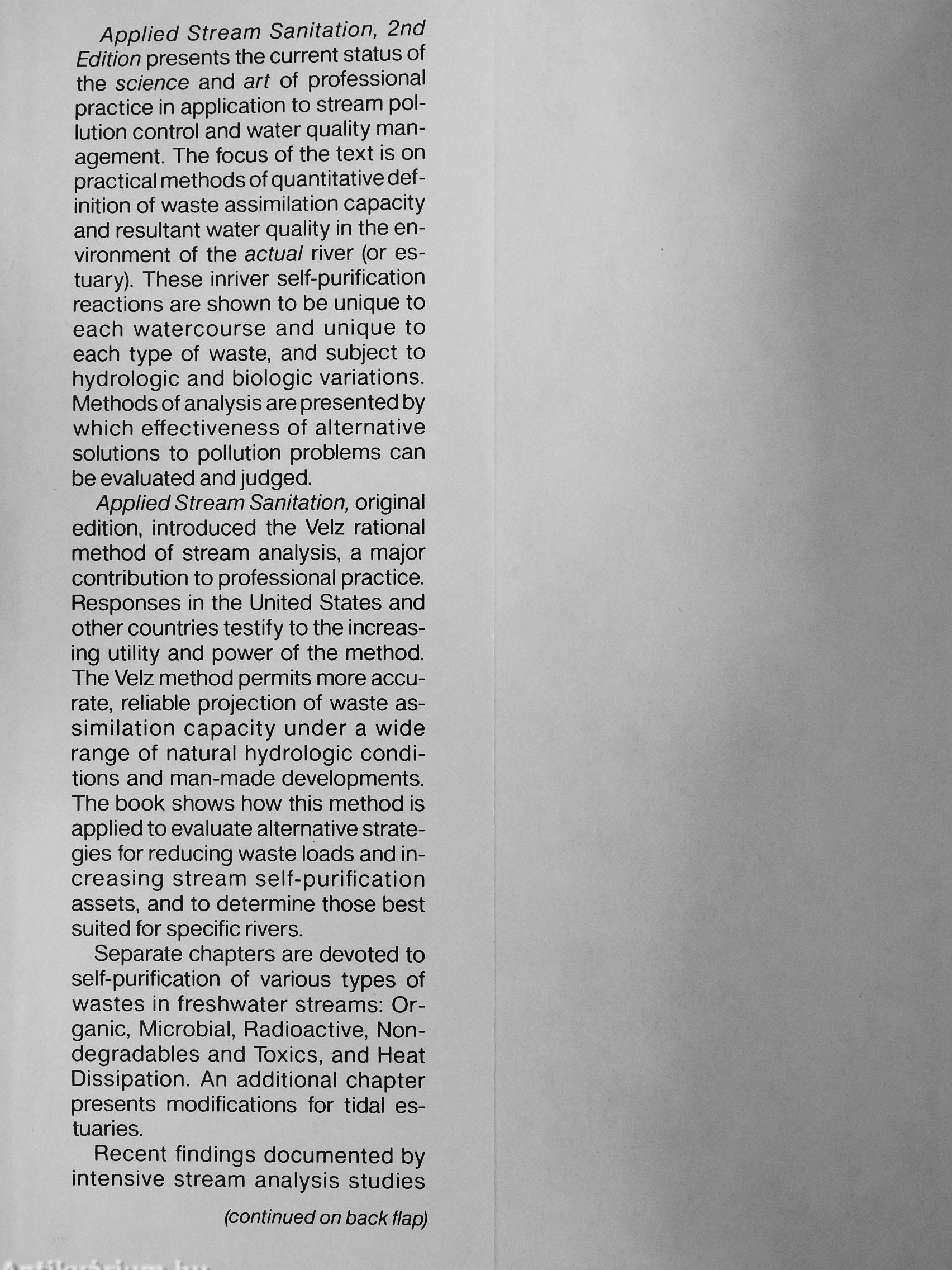
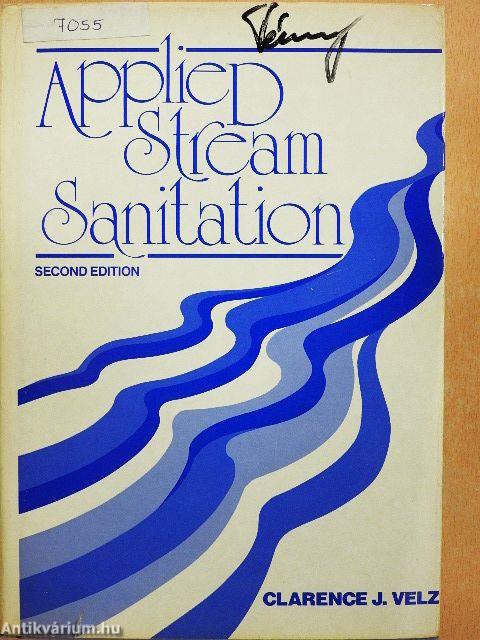
Applied Stream Sanitation, 2nd Edition presents the current status of the science and art of professional practice in application to stream pollution control and water quality management. The focus of the text Is on practical methods of quantitative definition of waste assimilation capacity and resultant water quality in the environment of the actual river (or estuary). These inriver self-purification reactions are shown to be unique to each watercourse and unique to each type of waste, and subject to hydrologic and biologic variations. Methods of analysis are presented by which effectiveness of alternative solutions to pollution problems can be evaluated and judged.
Applied Streanri Sanitation, original edition, introduced the Velz rational method of stream analysis, a major contribution to professional practice. Responses in the United States and other countries testify to the increasing utility and power of the method. The Velz method permits more accurate, reliable projection...
Tovább
Fülszöveg
Applied Stream Sanitation, 2nd Edition presents the current status of the science and art of professional practice in application to stream pollution control and water quality management. The focus of the text Is on practical methods of quantitative definition of waste assimilation capacity and resultant water quality in the environment of the actual river (or estuary). These inriver self-purification reactions are shown to be unique to each watercourse and unique to each type of waste, and subject to hydrologic and biologic variations. Methods of analysis are presented by which effectiveness of alternative solutions to pollution problems can be evaluated and judged.
Applied Streanri Sanitation, original edition, introduced the Velz rational method of stream analysis, a major contribution to professional practice. Responses in the United States and other countries testify to the increasing utility and power of the method. The Velz method permits more accurate, reliable projection of waste assimilation capacity under a wide range of natural hydrologic conditions and man-made developments. The book shows how this method is applied to evaluate alternative strategies for reducing waste loads and increasing stream self-purification assets, and to determine those best suited for specific rivers.
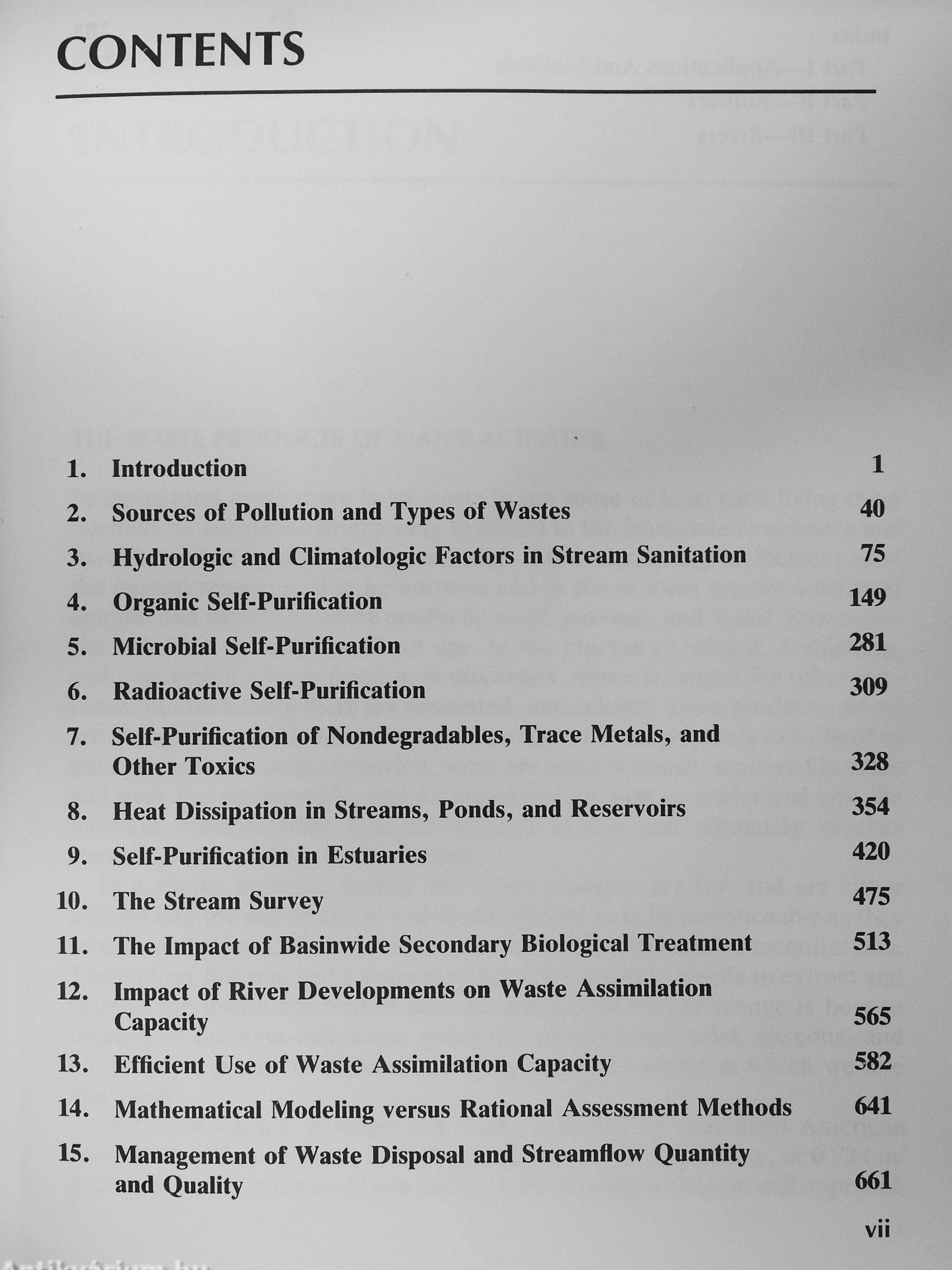
Separate chapters are devoted to self-purification of various types of wastes in freshwater streams: Organic, Microbial, Radioactive, Nondegradables and Toxics, and Heat Dissipation. An additional chapter presents modifications for tidal estuaries.
Recent findings documented by intensive stream analysis studies
(continued on back flap)
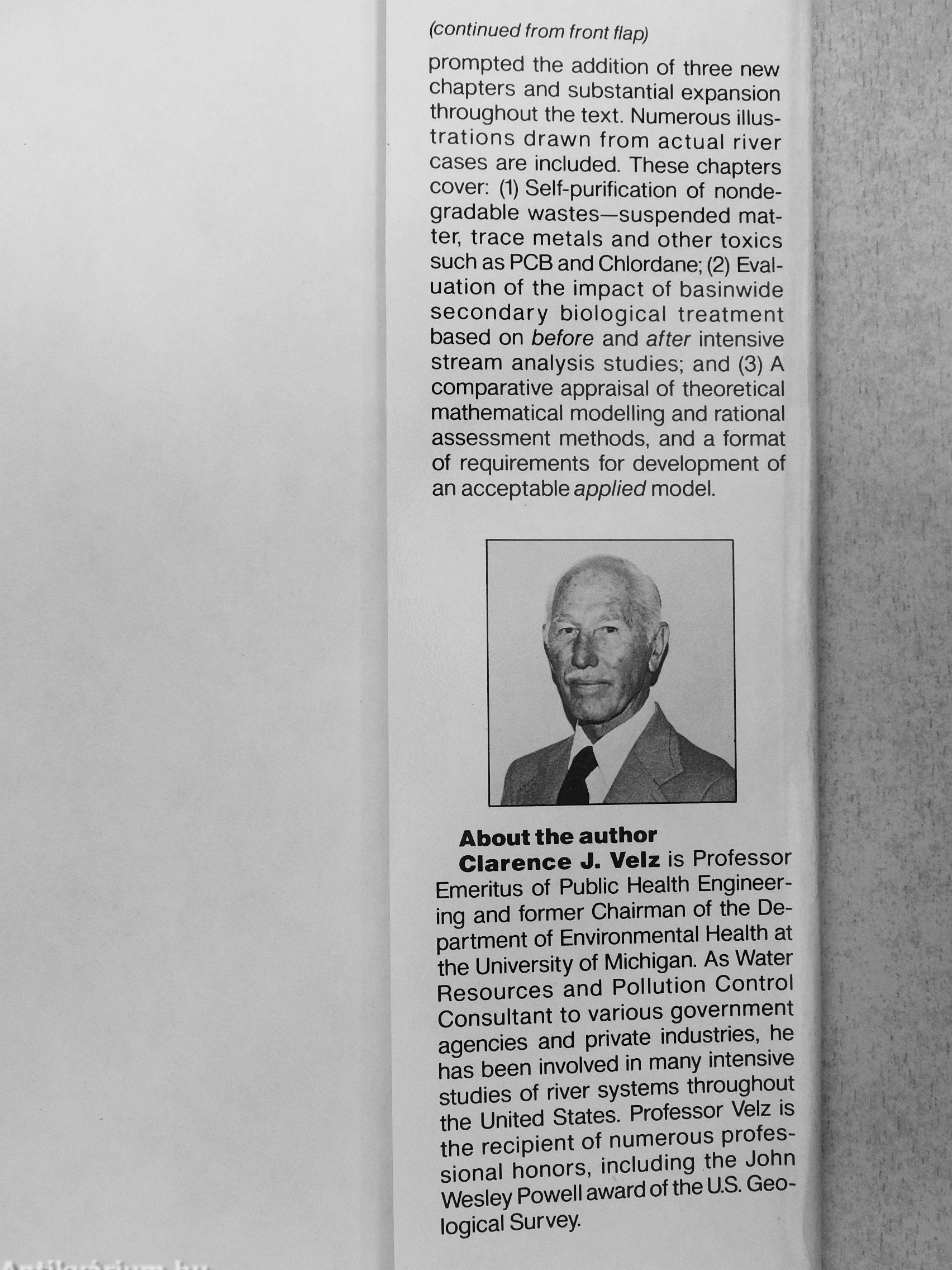
(continued from front flap)
prompted the addition of three new chapters and substantial expansion throughout the text. Numerous illustrations drawn from actual river cases are Included. These chapters cover: (1) Self-purification of nonde-gradable wastes-suspended matter, trace metals and other toxics such as PCB and Chlordane; (2) Evaluation of the impact of basinwide secondary biological treatment based on before and after intensive stream analysis studies; and (3) A comparative appraisal of theoretical mathematical modelling and rational assessment methods, and a format of requirements for development of an acceptable applied model.
About the author Clarence J. Velz is Professor Emeritus of Public Health Engineering and former Chairman of the Department of Environmental Health at the University of Michigan. As Water Resources and Pollution Control Consultant to various government agencies and private industries, he has been involved in many intensive studies of river systems throughout the United States. Professor Velz is the recipient of numerous professional honors, including the John Wesley Powell award ofthe U.S. Geological Survey
t ft-
k. r
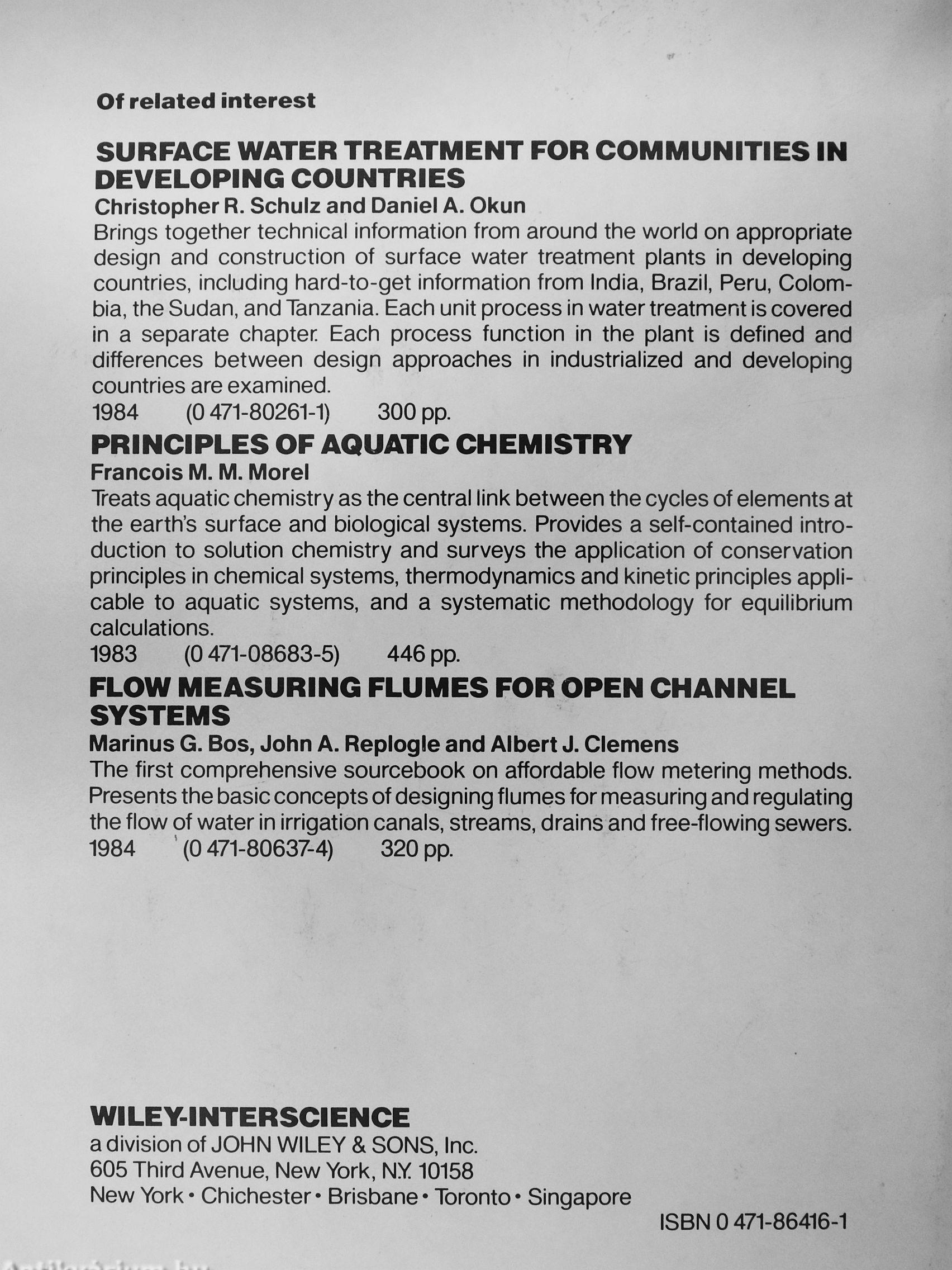
Of related interest
SURFACE WATER TREATMENT FOR COMMUNITIES IN DEVELOPING COUNTRIES Christopher R. Schuiz and Daniel A. Okun
Brings together technical information from around the world on appropriate design and construction of surface water treatment plants in developing countries, including hard-to-get information from India, Brazil, Peru, Colombia, the Sudan, and Tanzania. Each unit process in w/ater treatment is covered in a separate chapter Each process function in the plant is defined and differences between design approaches in industrialized and developing countries are examined. 1984 (0471-80261-1) 300 pp.
PRINCIPLES OF AQUATIC CHEMISTRY Francois iVI. M. Morel
Treats aquatic chemistry as the central link between the cycles of elements at the earth's surface and biological systems. Provides a self-contained introduction to solution chemistry and surveys the application of conservation principles in chemical systems, thermodynamics and kinetic principles applicable to aquatic systems, and a systematic methodology for equilibrium calculations.
1983 (0 471-08683-5) 446 pp.
FLOW MEASURING FLUMES FOR OPEN CHANNEL SYSTEMS
Marinus G. Bos, John A. Replogle and Albert J. Clemens The first comprehensive sourcebook on affordable flow metering methods. Presents the basic concepts of designing flumes for measuring and regulating the flow of water in irrigation canals, streams, drains and free-flowing sewers.
1984 ' (0 471-80637-4) 320 pp.
WILEY-INTERSCIENCE
a division of JOHN WILEY & SONS, Inc.
605 Third Avenue, New York, NY 10158
New York * Chichester • Brisbane • Toronto • Singapore
ISBN 0471-86416-1
Vissza 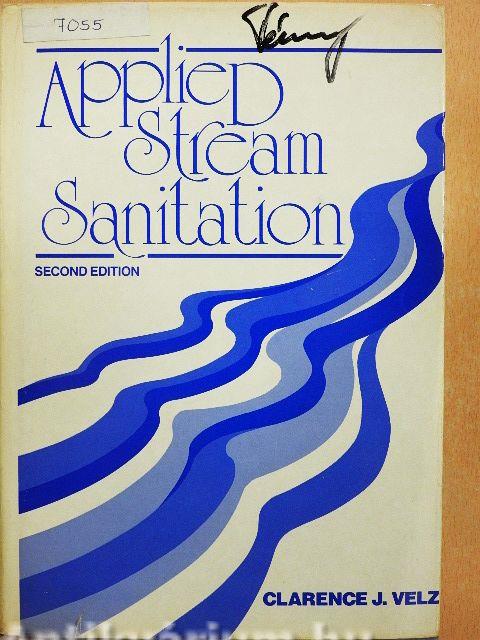



 Folytatás Microsoft-tal