Fülszöveg
OTHER VAN NOSTRAND REINHOLD BOOKS IN THE COMPUTER SCIENCE SERIES
ADVANCED PROGRAMMING: Programming and Operating Systems By Harry Katzan, Jr., Pratt Institute, Brooklyn, New York 285 pages, 6" x 9"
For programmers, analysts, and managers who seek career advancement and who have a basic knowledge of at least one programming language such as FORTRAN or COBOL, this book provides a practical treatment of Important concepts in programming and systems design. It presents a unified treatment of such advanced topics as assemblers, compilers, and syntactical methods; string manipulation and list processing; computer languages; and operating systems. Hot topics like time-sharing systems philosophy are given special, timely coverage.
APL PROGRAMMING AND COMPUTER TECHNIQUES By Harry Katzan, Jr., Pratt Institute, Brooklyn, New York 336 pages, 6" x 9"
APL has come into its own as an ideal language for scientific and engineering applications, thus creating a major need for this book....
Tovább
Fülszöveg
OTHER VAN NOSTRAND REINHOLD BOOKS IN THE COMPUTER SCIENCE SERIES
ADVANCED PROGRAMMING: Programming and Operating Systems By Harry Katzan, Jr., Pratt Institute, Brooklyn, New York 285 pages, 6" x 9"
For programmers, analysts, and managers who seek career advancement and who have a basic knowledge of at least one programming language such as FORTRAN or COBOL, this book provides a practical treatment of Important concepts in programming and systems design. It presents a unified treatment of such advanced topics as assemblers, compilers, and syntactical methods; string manipulation and list processing; computer languages; and operating systems. Hot topics like time-sharing systems philosophy are given special, timely coverage.
APL PROGRAMMING AND COMPUTER TECHNIQUES By Harry Katzan, Jr., Pratt Institute, Brooklyn, New York 336 pages, 6" x 9"
APL has come into its own as an ideal language for scientific and engineering applications, thus creating a major need for this book. Substantiated by reviewers as the clearest, most comprehensive treatment on the subject available, the book gives you a complte introduction to computer techniques using APL as the vehicle. Includes actual computer printouts.
THE ANATOMY OF A COMPILER
By John A. N. Lee, Computer Science Program, University of Massachusetts 288 pages, 6" x 9"
An upper-level computer science book describing the techniques for analyzing the nonnatural languages, followed by translations of the input sentences into some other target language. Emphasis is given to the practical implementation of the required compiler analyzers, recognizers, and generators. FORTRAN is used as the basis for discussion and demonstration. A few of the topics discussed include: the formal definition of language; the reason for a grammar; the symbol table and associated routines; control statements; the ASCAN generator; and much more.
NUMERICAL ANALYSIS FOR COMPUTERS
By John A. N. Lee, Computer Science Program, University of Massachusetts 304 pages, 6" x 9"
Designed for use by those working in the areas of applied mathematics, computer sciences, physical sciences, and engineering, this book details the various methods of solution that can be applied to digital computers instead of stressing the actual mechanics of routine programming. Descriptions of processes used to solve problems using numerical analytical techniques are organized so that you can easily prepare flow diagrams and program them for a digital computer.
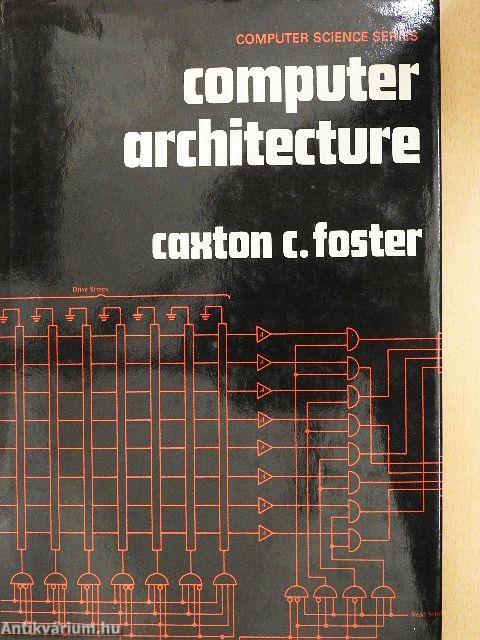
Computer Architecture
By Caxton C. Foster
Professor of Computer Science University of Massachusetts Amherst, IVIassachusetts
Computer Architecture, the art of designing a machine that will be a pleasure to work with, can best be appreciated and understood by gaining a solid, working knowledge of the essential topics discussed in this book.
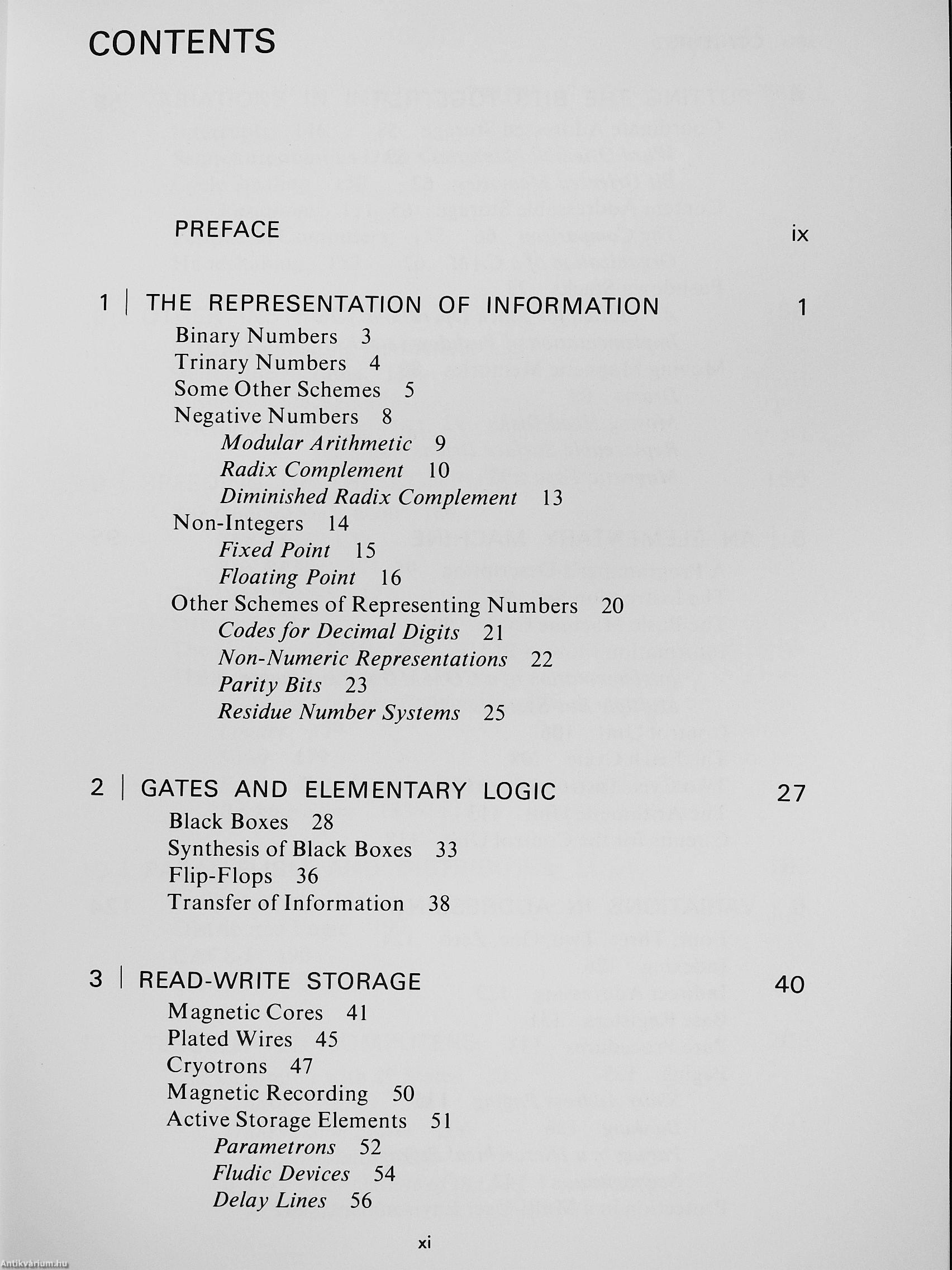
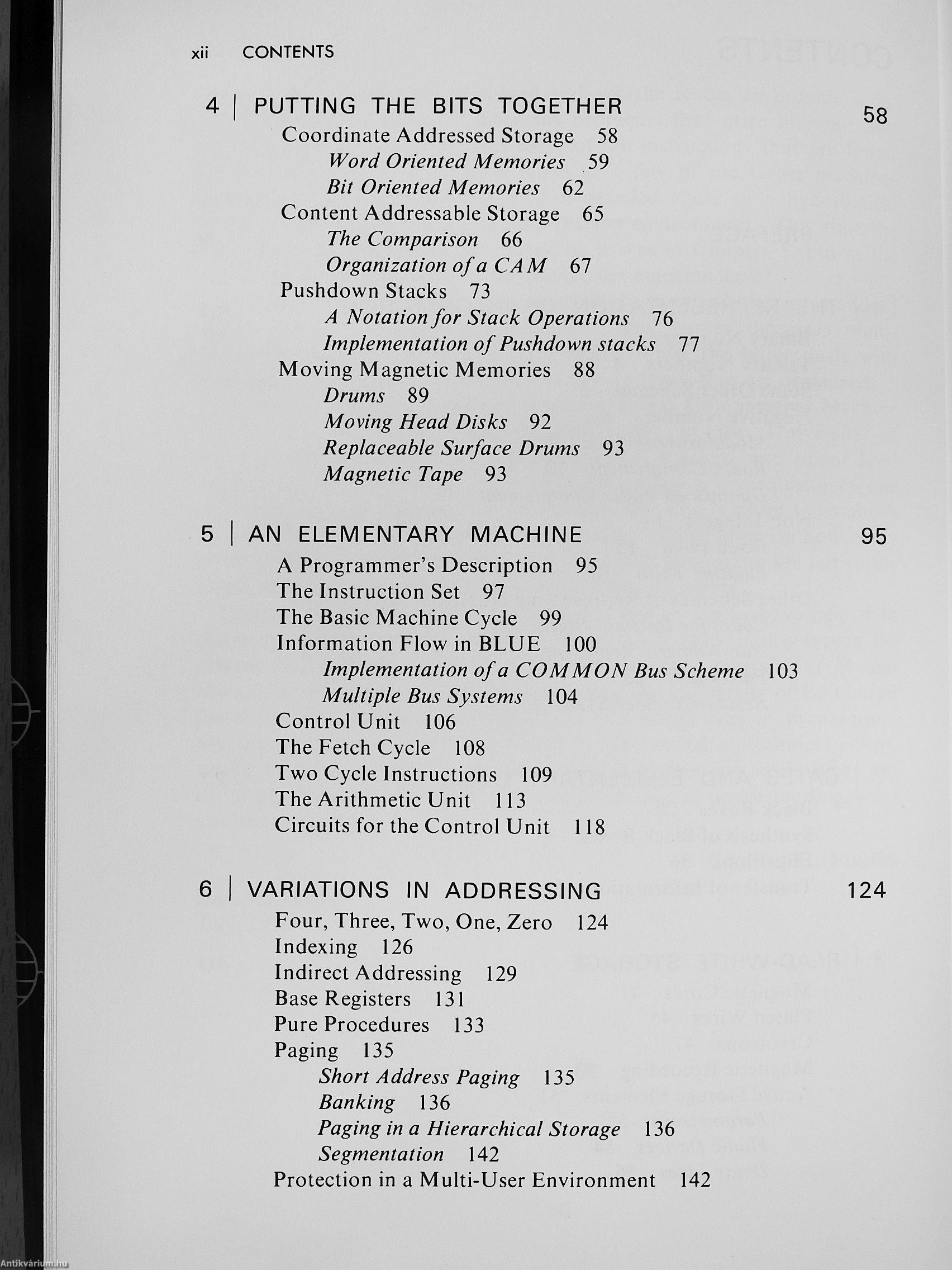
Here you will become familiar with number systems, storage mechanisms, logical circuitry, and other tools and concepts which serve as a foundation for more advanced considerations. The author provides an in-depth treatment of the design of a general-purpose computer followed by detailed treatment of major design considerations.
Emphasizing the fact that computer architecture is an art rather than a science, the author pinpoints the problems you will encounter, suggests practical solutions, and then encourages original and creative thinking through exercises to be worked by the reader.
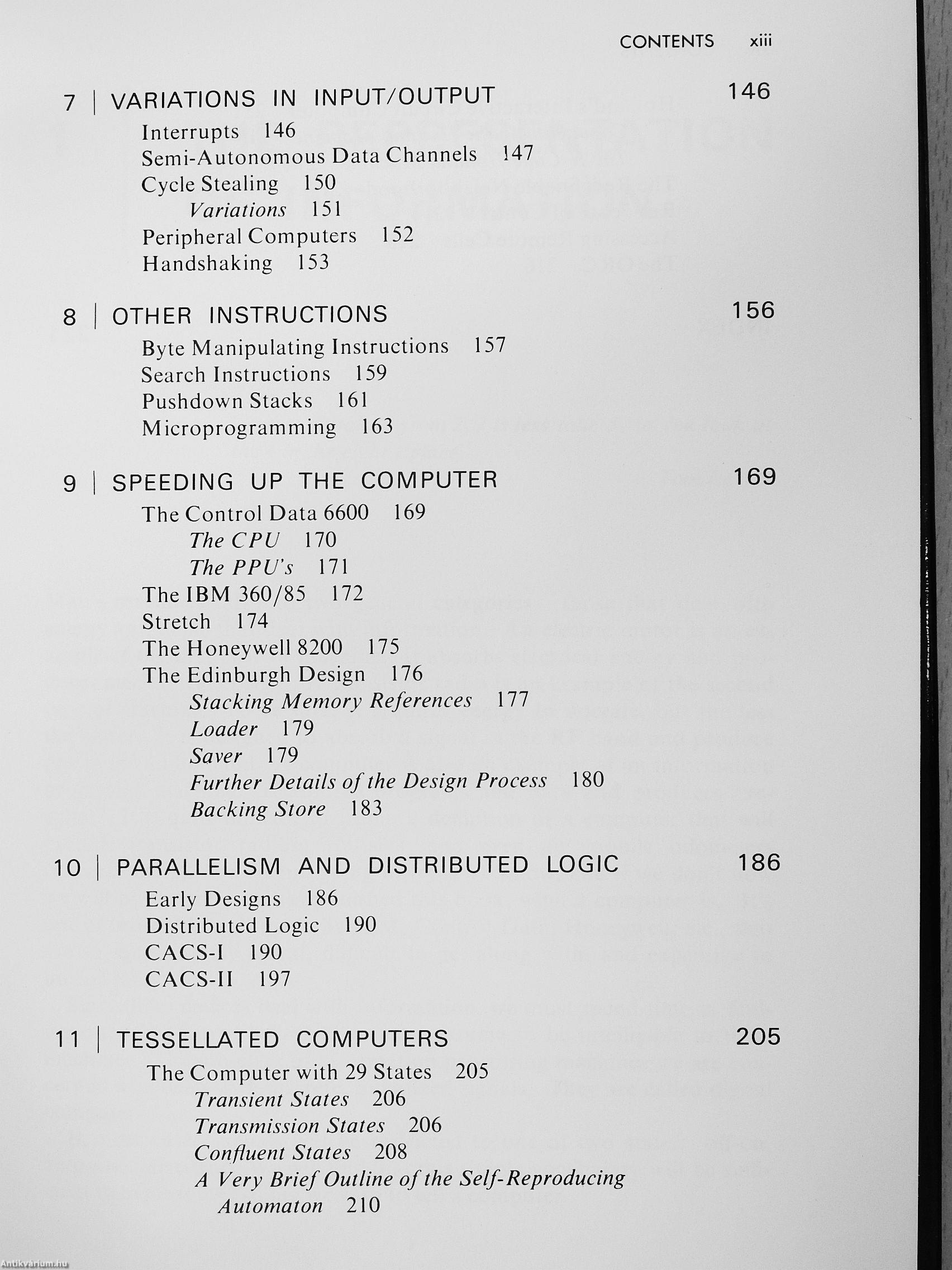
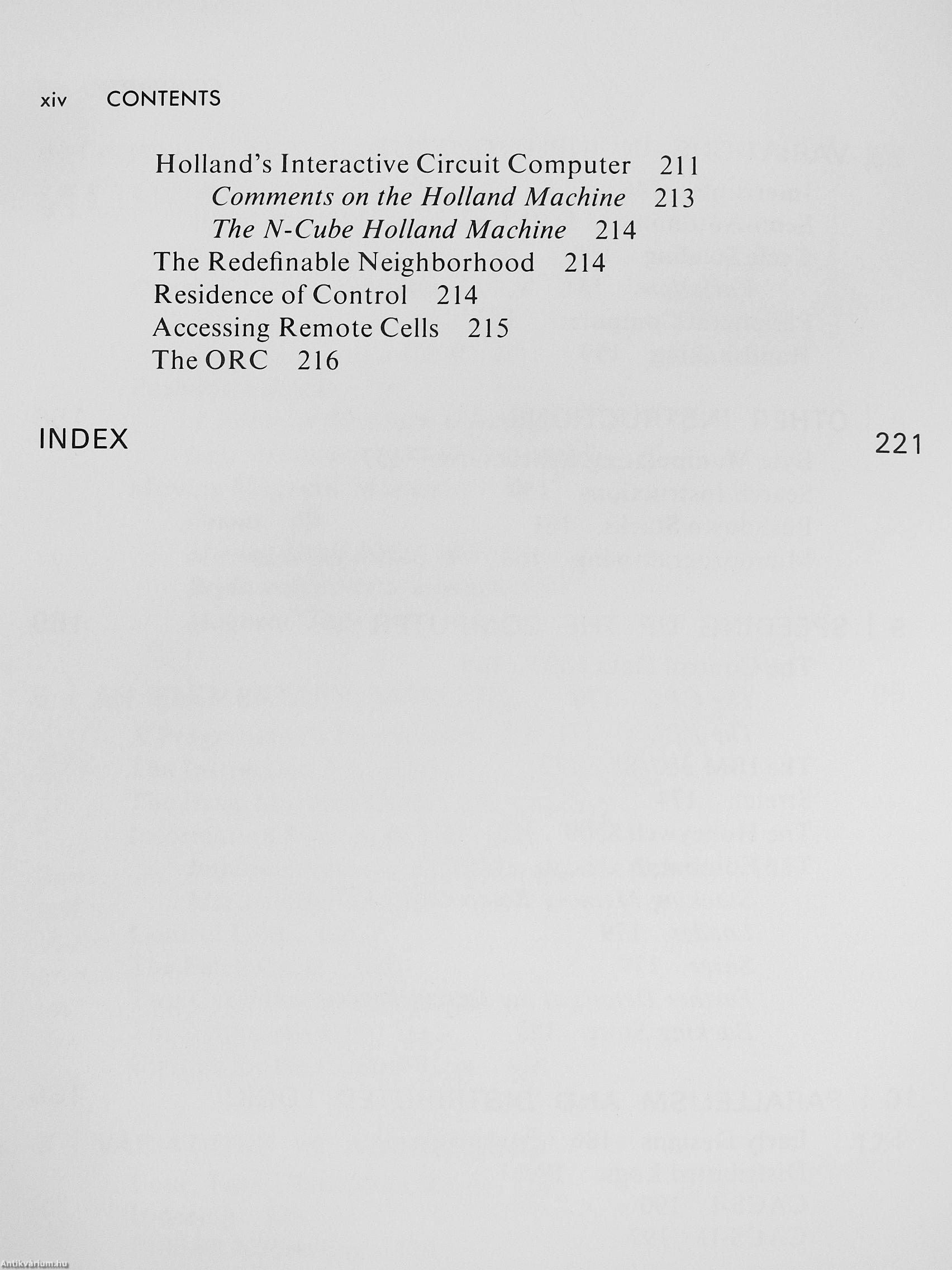
In addition, you will find enlightening analyses of some of the larger machines currently available, as well as of a hypothetical machine designed for a time-sharing environment. Special attention is given to ideal machine capabilities. Final chapters consider a variety of fascinating, atypical concepts in computer architecture. The discussion covers such topics as multiprocessors and distributed logic computers, Holland-type machines—their capabilities and organization.
Here in this single reference are virtually all of the fundamentals of computer machine design. Covering both conventional
(Continued on back flap)
(Continued from front flap)
methods and fascinating alternatives, the book's thorough introduction to information representation, elementary sw/itching circuits, moving magnetic memories, paging, virtual memory, microprogramming, and advanced computer architecture makes it valuable to a broad spectrum of readers. In particular, it satisfies an important need in the literature for nonelectrical engineers with a background in programming.
About the author
Caxton C. Foster is Professor of Computer Science at the University of Massachusetts in Amherst, Massachusetts.
After completing his undergraduate work in physics at Massachusetts Institute of Technology, Dr. Foster obtained an M.S.E. in instrumentation engineering from the University of Michigan in 1957. He completed his Ph.D. in electrical engineering at the University of Michigan where he specialized in computer design.
Prior to his current position. Dr. Foster was Director of the Research Computing Center at the University of Massachusetts. There he designed the UMASS (Unlimited Machine Access from. Scattered Sites) time-sharing system for the CDC-3600. From 1967-68 Dr. Foster was Lecturer in Computer Science at the University of Edinburgh.
Among his other positions were Mathematician, Programmer, and Chief Engineer at the Mental Health Research Institute, University of Michigan; and from 1964-65 he was associated with Goodyear Aerospace Corporation in Akron, Ohio. In this latter position he was project leader on the design and initial construction of the Associative List Selector.
Dr. Foster has published numerous papers, several in the computing field.
Vissza 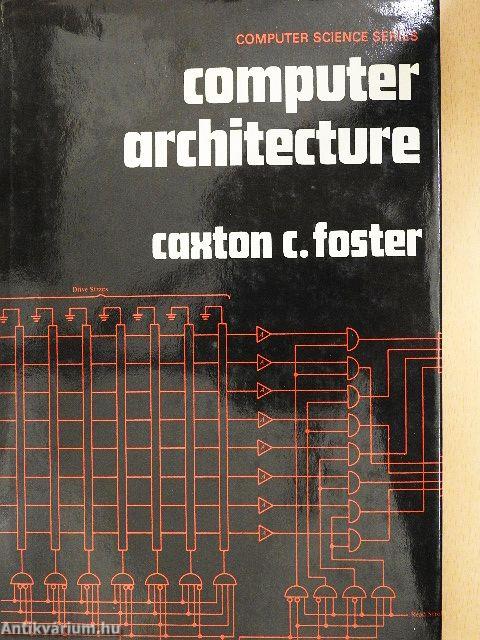






 Folytatás Microsoft-tal