
1.162.082
kiadvánnyal nyújtjuk Magyarország legnagyobb antikvár könyv-kínálatát

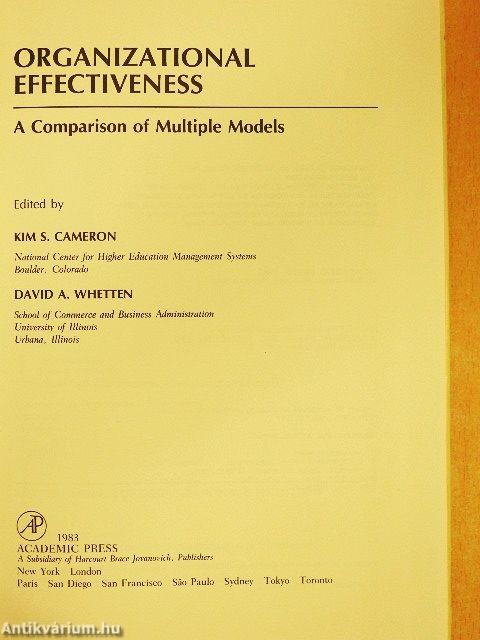
Organizational Effectiveness
A Comparison of Multiple Models
New York
| Kiadó: | Academic Press Limited |
|---|---|
| Kiadás helye: | New York |
| Kiadás éve: | |
| Kötés típusa: | Fűzött keménykötés |
| Oldalszám: | 292 oldal |
| Sorozatcím: | Organizational and Occupational Psychology |
| Kötetszám: | |
| Nyelv: | Angol |
| Méret: | 23 cm x 16 cm |
| ISBN: | |
Értesítőt kérek a kiadóról
Értesítőt kérek a sorozatról
A beállítást mentettük,
naponta értesítjük a beérkező friss
kiadványokról
A beállítást mentettük,
naponta értesítjük a beérkező friss
kiadványokról
Előszó
Tovább
Fülszöveg
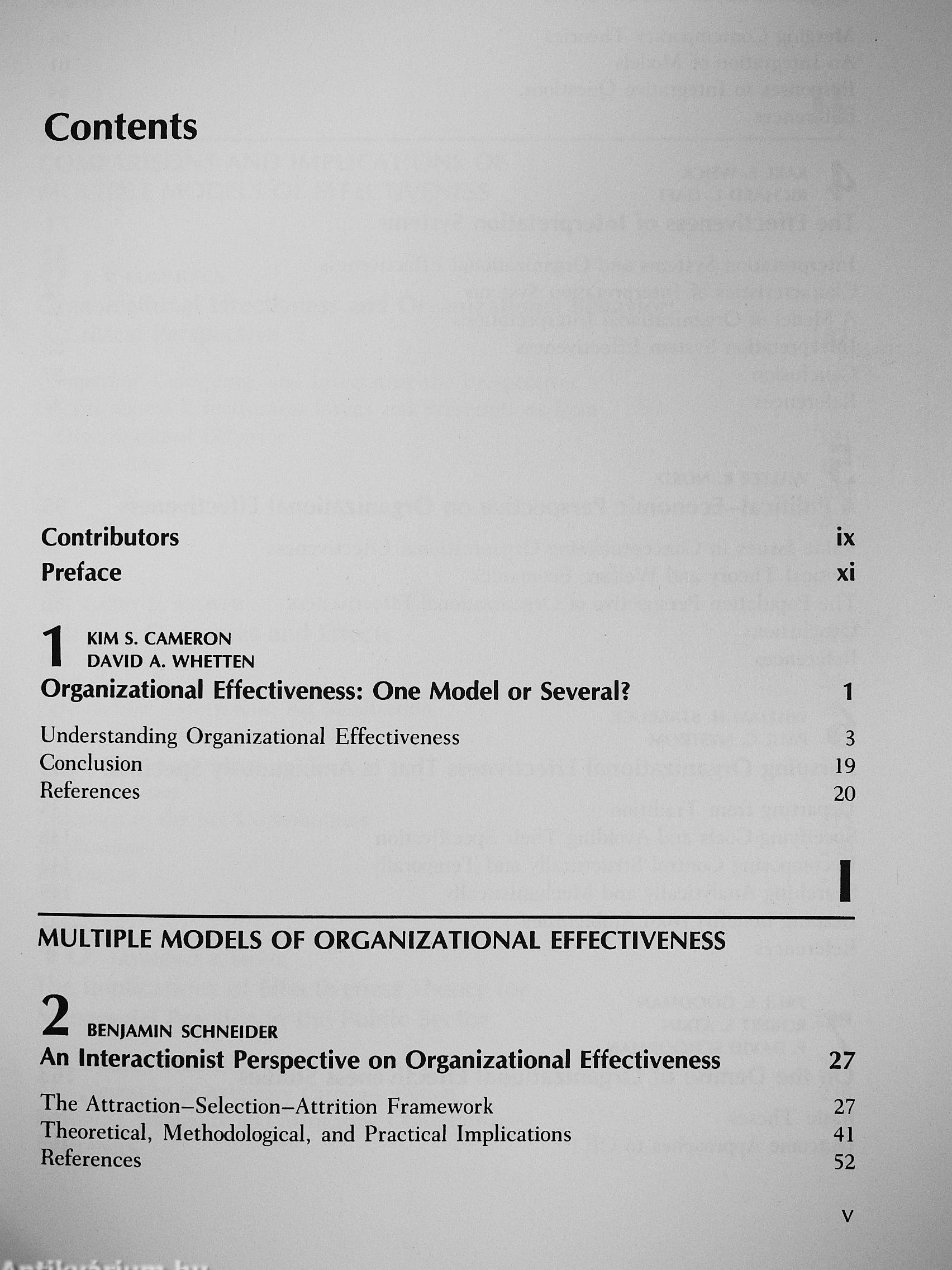
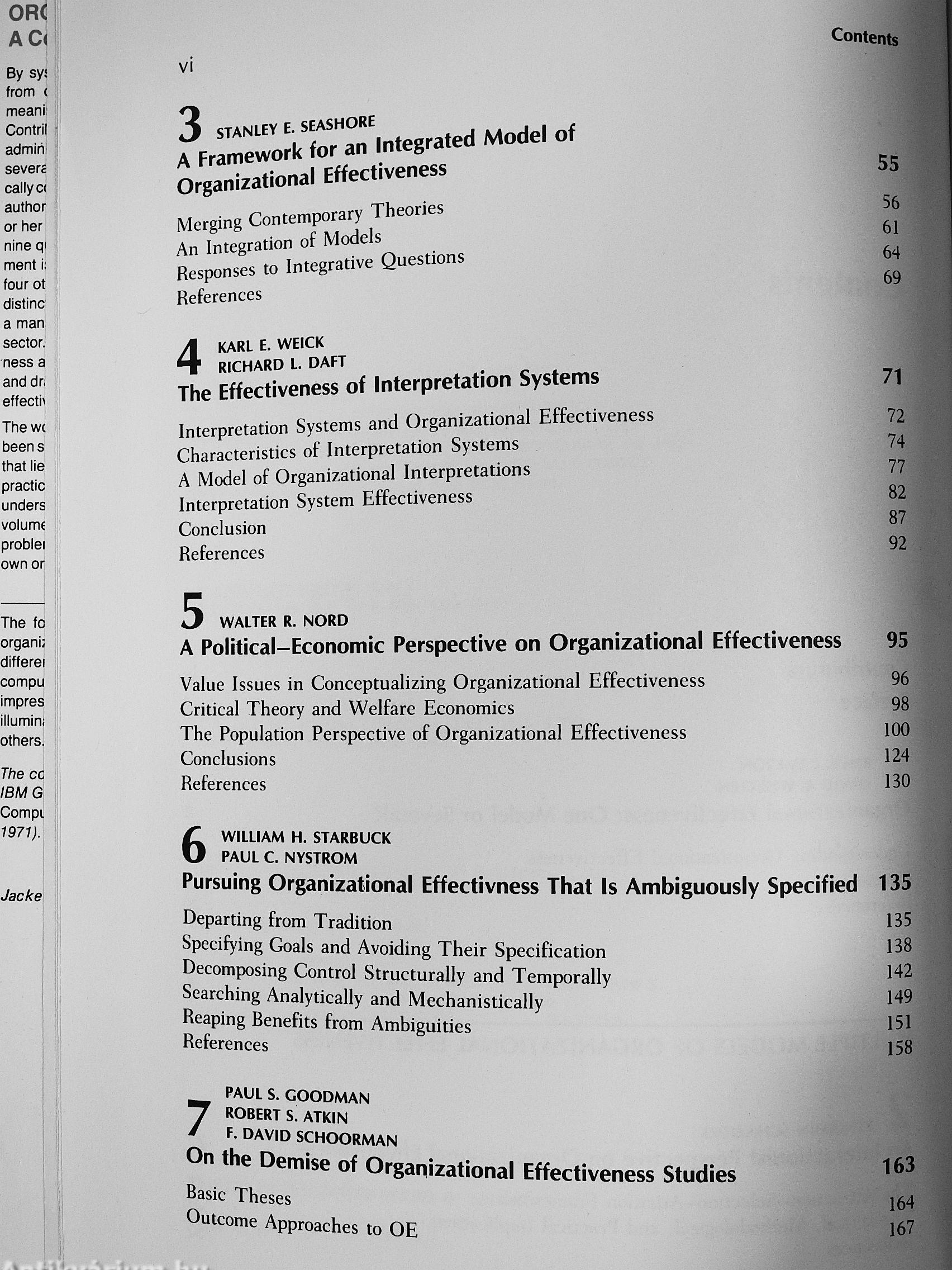
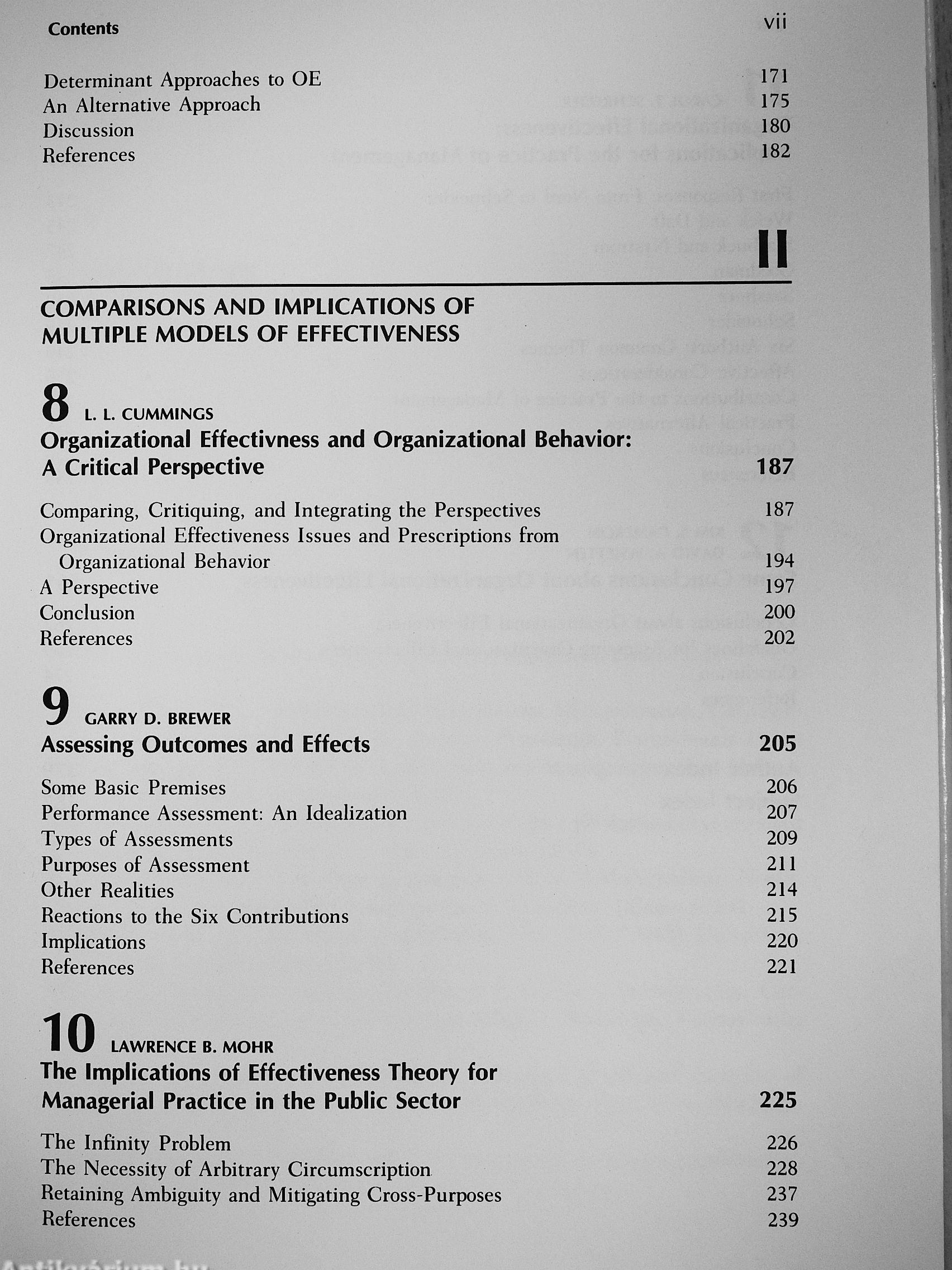
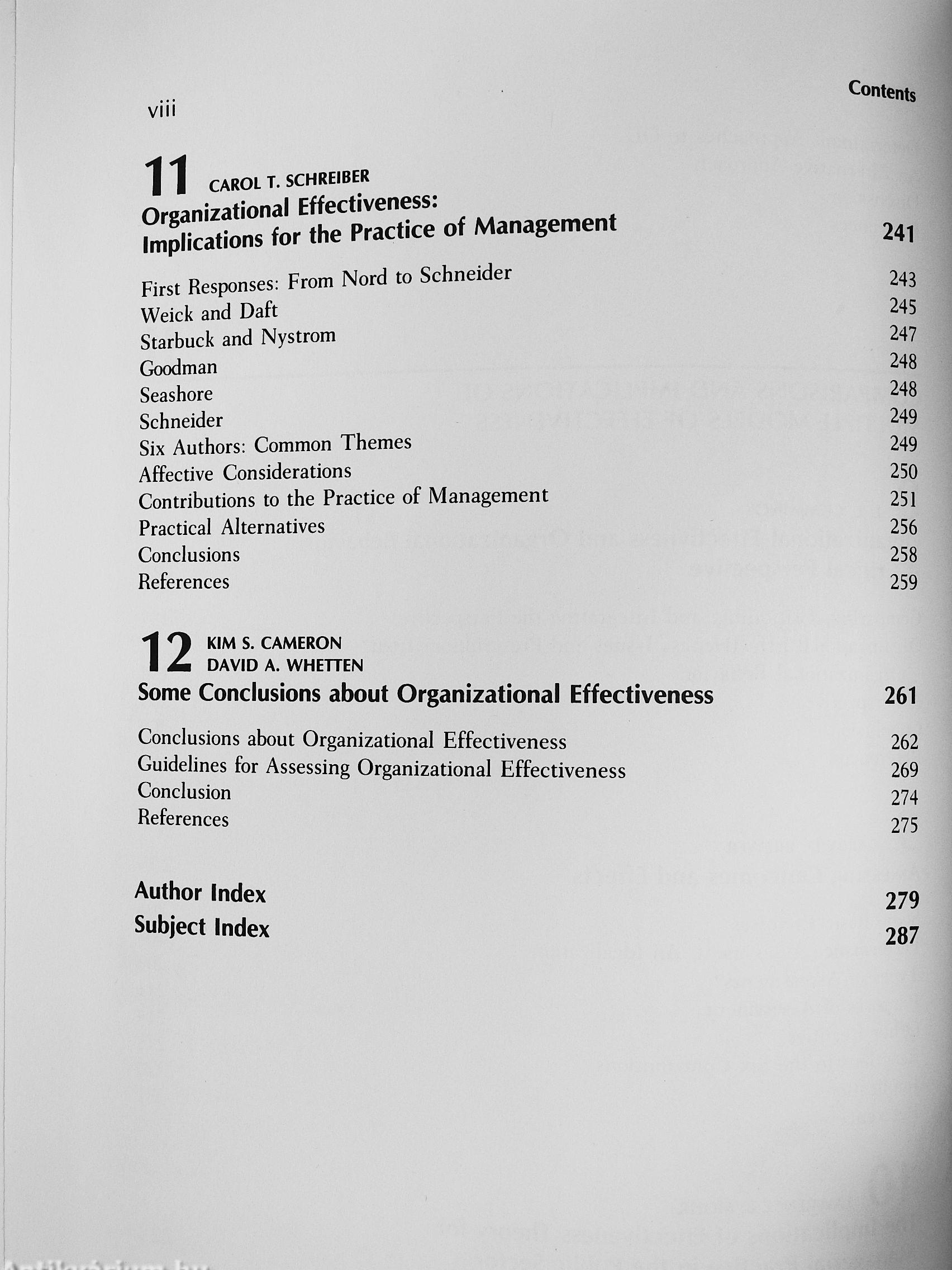
ORGANIZATIONAL EFFECTIVENESS A Comparison of Multiple Models
By systematically comparing and integrating models derived from different academic disciplines, this work clarifies tfie meaning and measurement of organizational effectiveness. Contributions by senior scholars in various organizational and administrative sciences elucidate models of effectiveness from several disciplinary perspectives. The models are systematically compared and integrated by three mechanisms: First, each author explores the philosophical roots and assumptions of his or her own approach. Second, each author addresses a set of nine questions related to theoretical considerations, measurement issues, and individual management prescriptions. Third, four other scholars criticize and integrate the models from the distinct vantage points of a theorist, an organizational evaluator, a manager in the private sector, and a manager in the public sector The editors then summarize the literature on effectiveness and... Tovább
Fülszöveg
ORGANIZATIONAL EFFECTIVENESS A Comparison of Multiple Models
By systematically comparing and integrating models derived from different academic disciplines, this work clarifies tfie meaning and measurement of organizational effectiveness. Contributions by senior scholars in various organizational and administrative sciences elucidate models of effectiveness from several disciplinary perspectives. The models are systematically compared and integrated by three mechanisms: First, each author explores the philosophical roots and assumptions of his or her own approach. Second, each author addresses a set of nine questions related to theoretical considerations, measurement issues, and individual management prescriptions. Third, four other scholars criticize and integrate the models from the distinct vantage points of a theorist, an organizational evaluator, a manager in the private sector, and a manager in the public sector The editors then summarize the literature on effectiveness and the organizational issues surrounding each concept, and draw conclusions about the definition and measurement of effectiveness in organizations.
The work brings together much Information that has heretofore been scattered throughout the literature and addresses an issue that lies at the heart of organizational theory and management practice. Thus, scholars, students, and researchers seeking lo understand and assess organizational effectiveness will find this volume invaluable. It is also essential for practitioners who face problems in managing and improving the effectiveness of their own organizations.
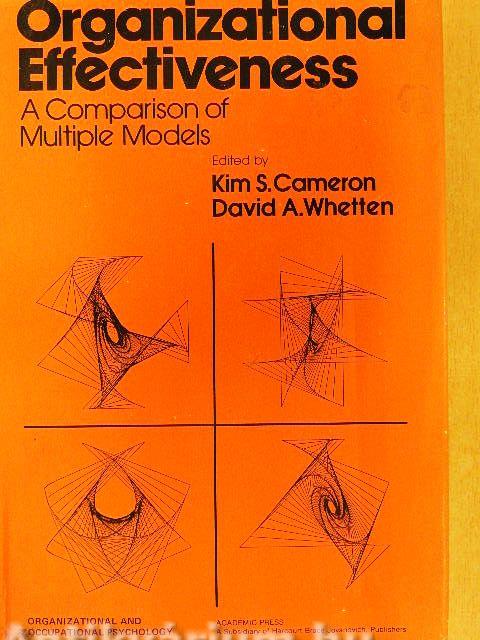
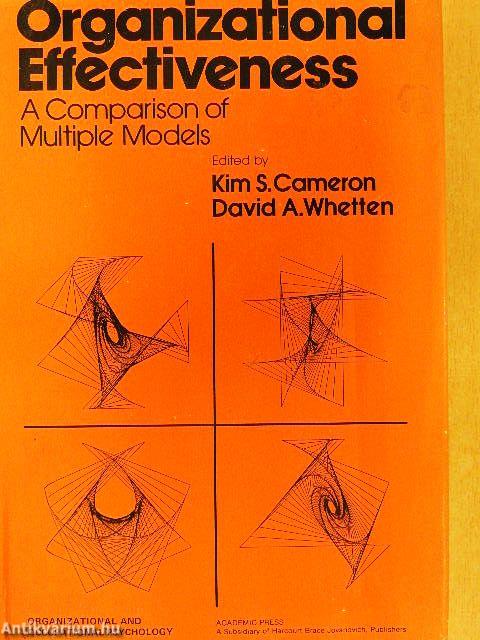
The four figures on the jacket illustrate the perspective on organizational effectiveness advocated in this book. Each is a different view of the same figure that has been rotated by a computer. Depending on which perspective is adopted, different impressions and interpretations result and hidden lines become illuminated, but no one perspective is inherently superior to the others.
The computer program was developed by Klaus Thomas for IBM Germany, and the figures first appeared in H. W. Franke, Computer Graphics-Computer Art (London: Phaidon Press, 1971).
Jacket design by Alma Orenstein
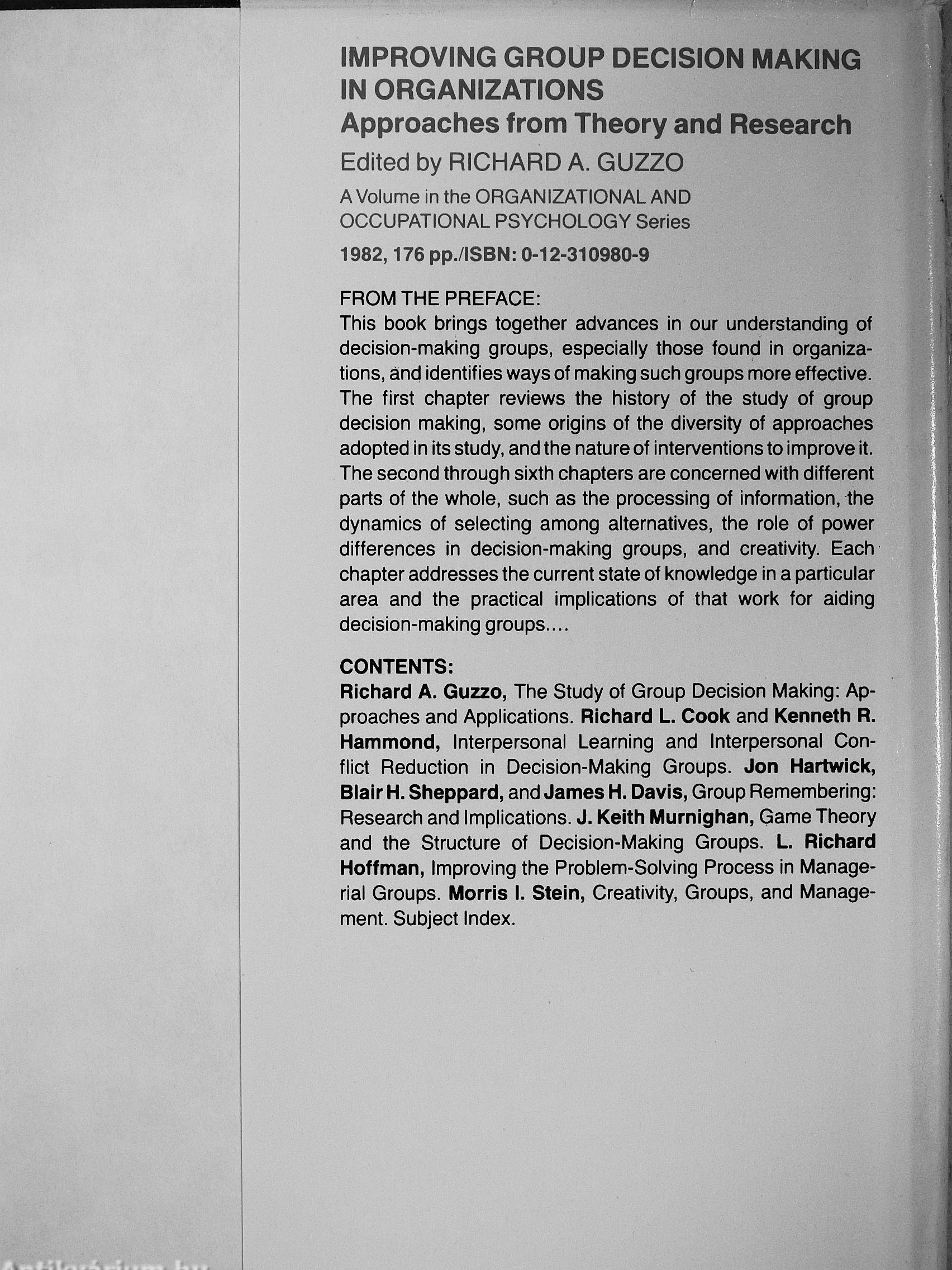
IMPROVING GROUP DECISION MAKING
IN ORGANIZATIONS
Approaches from Theory and Research
Edited by RICHARD A. GUZZO
A Volume in the ORGANIZATIONAL AND OCCUPATIONAL PSYCHOLOGY Series
1982,176 pp./ISBN: 0-12-310980-9
FROM THE PREFACE:
This book brings together advances in our understanding of decision-making groups, especially those found in organizations, and identifies ways of making such groups more effective. The first chapter reviews the history of the study of group decision making, some origins of the diversity of approaches adopted in its study, and the nature of Interventions to improve it. The second through sixth chapters are concerned with different parts of the whole, such as the processing of information, the dynamics of selecting among alternatives, the role of power differences in decision-making groups, and creativity. Each chapter addresses the current state of knowledge in a particular area and the practical implications of that work for aiding decision-making groups
CONTENTS:
Richard A. Guzzo, The Study of Group Decision Making: Approaches and Applications. Richard L. Cook and Kenneth R. Hammond, Interpersonal Learning and Interpersonal Conflict Reduction in Decision-Making Groups. Jon Hartwick, Blair H. Sheppard, and James H. Davis, Group Remembering: Research and Implications. J. Keith Murnighan, Game Theory and the Structure of Decision-Making Groups. L. Richard Hoffman, Improving the Problem-Solving Process in Managerial Groups. IMorris I. Stein, Creativity, Groups, and Management. Subject Index.
I
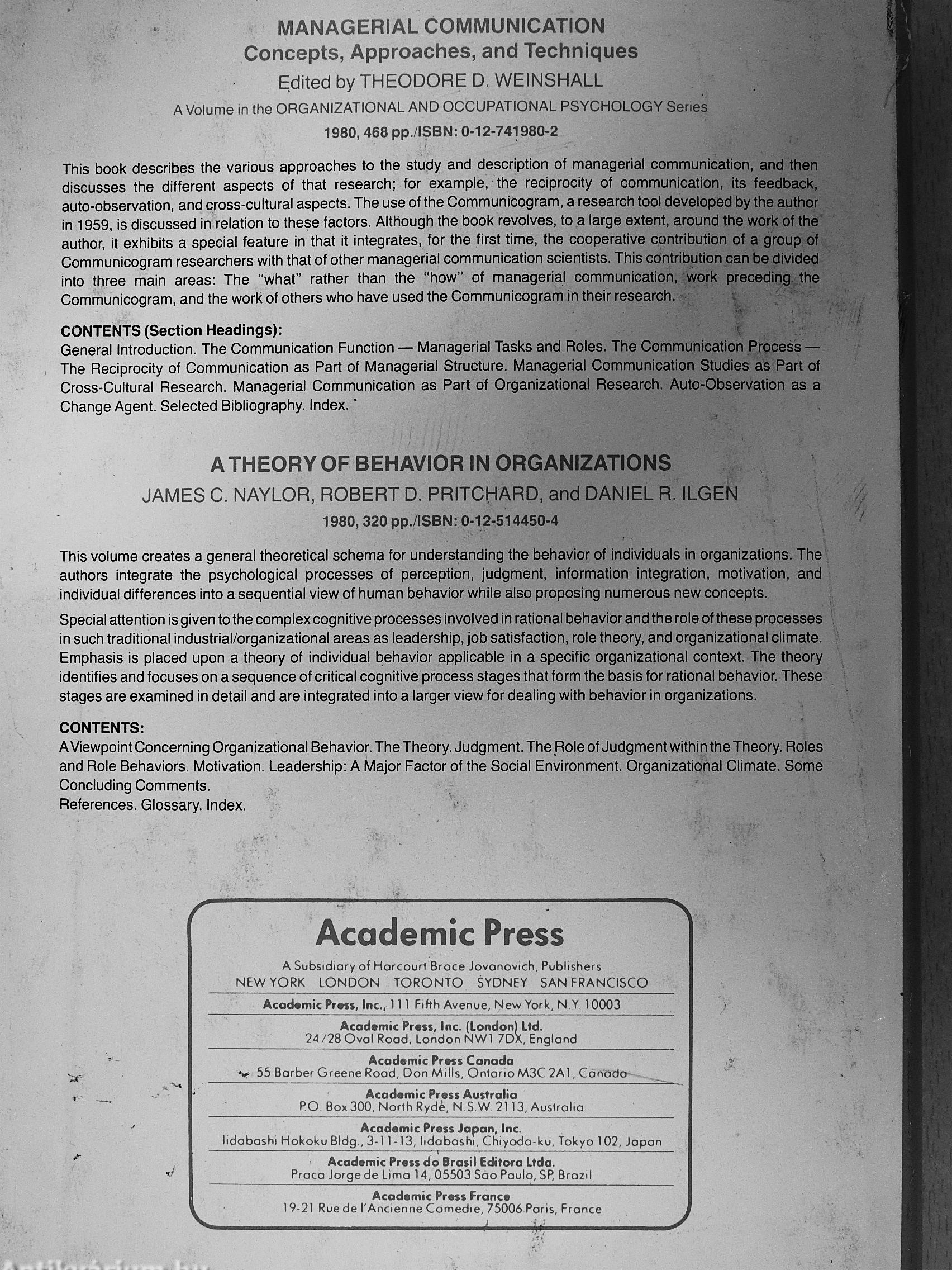
MANAGERIAL COMMUNICATION Concepts, Approaches, and Techniques
Edited by THEODORE D. WEINSHALL A Volume in the ORGANIZATIONAL AND OCCUPATIONAL PSYCHOLOGY Series 1980, 468 pp./ISBN: 0-12-741980-2
This book describes the various approaches to the study and description of managerial communication, and then discusses the different aspects of that research; for example, the reciprocity of communication, Its feedback, auto-observation, and cross-cultural aspects. The use of the Communlcogram, a research tool developed by the author in 1959, Is discussed in relation to these factors. Although the book revolves, to a large extent, around the work of the author, it exhibits a special feature in that It integrates, for the first time, the cooperative contribution of a group of Communlcogram researchers with that of other managerial communication scientists. This contribution can be divided Into three main areas: The "what" rather than the "how" of managerial communication, work preceding the Communlcogram, and the work of others who have used the Communlcogram in their research.
CONTENTS (Section Headings):
General Introduction. The Communication Function — Managerial Tasks and Roles. The Communication Process — The Reciprocity of Communication as Part of Managerial Structure. Managerial Communication Studies as Part of Cross-Cultural Research. Managerial Communication as Part of Organizational Research. Auto-Observation as a Change Agent. Selected Bibliography. Index. '
A THEORY OF BEHAVIOR IN ORGANIZATIONS
JAIVIES C. NAYLOR, ROBERT D. PRITCHARD, and DANIEL R. ILGEN
1980, 320 pp,/ISBN: 0-12-514450-4
This volume creates a general theoretical schema for understanding the behavior of individuals in organizations. The authors integrate the psychological processes of perception, judgment, information integration, motivation, and individual differences into a sequential view of human behavior while also proposing numerous new concepts. Special attention is given to the complex cognitive processes involved in rational behavior and the role of these processes in such traditional industrial/organizational areas as leadership, job satisfaction, role theory, and organizational climate. Emphasis is placed upon a theory of individual behavior applicable in a specific organizational context. The theory identifies and focuses on a sequence of critical cognitive process stages that form the basis for rational behavior. These stages are examined in detail and are integrated into a larger view for dealing with behavior in organizations.
CONTENTS:
A Viewpoint Concerning Organizational Behavior. The Theory. Judgment. The Role of Judgment within the Theory. Roles and Role Behaviors. Motivation. Leadership: A Major Factor of the Social Environment. Organizational Climate. Some Concluding Comments. References. Glossary. Index.
Academic Press
A Subsidiory of Harcourt Brace Jovonovich, Publishers
NEW YORK LONDON TORONTO SYDNEY SAN FRANCISCO Acod»mic Prt$, Inc., 111 Fifth Avenue, Nev^York, N Y 10003
Acgdvmic Pr«ss, Inc. (London) Ltd.
__ 24/28 0vqI Rood, London NWl 7DX, England
Academic Pr*ss Canado
' 55 Barber Greene Road, Don Mills, Ontario M3C 2A1, Canado
Acodemic Prass Australio
PO Box 300, North Ryde, N S W 2113, Australia
Academic Press Japan, Inc.
Iidaboshi Hokoku BIdg , 3-11-13, hdobashi, Chiyoda-ku, Tokyo 102, Japan
Academic Press do Brasil Editora Ltda.
___Praca Jorge de Lima 14, 05503 Sóo Paulo, SR Brazil
Academic Press France
19-21 Ruede l'Ancienne Comedie, 75006 Pons, France Vissza
Témakörök
- Közgazdaságtan > Menedzserképzés, marketing
- Idegennyelv > Idegennyelvű könyvek > Angol > Egyéb
- Idegennyelv > Idegennyelvű könyvek > Angol > Közgazdaságtan > Menedzserképzés, marketing
- Pszichológia > Alkalmazott lélektan > Munkalélektan
- Pszichológia > Alkalmazott lélektan > Csoportpszichológia > Egyéb
- Pszichológia > Idegennyelvű > Angol
- Pszichológia > Tankönyvek, jegyzetek > Egyetem
- Idegennyelv > Idegennyelvű könyvek > Angol > Pszichológia
- Tankönyvek, jegyzetek, szöveggyűjtemények > Pszichológia > Egyetem, főiskola
Megvásárolható példányok
Nincs megvásárolható példány
A könyv összes megrendelhető példánya elfogyott. Ha kívánja, előjegyezheti a könyvet, és amint a könyv egy újabb példánya elérhető lesz, értesítjük.
 Folytatás Microsoft-tal