
1.155.940
kiadvánnyal nyújtjuk Magyarország legnagyobb antikvár könyv-kínálatát

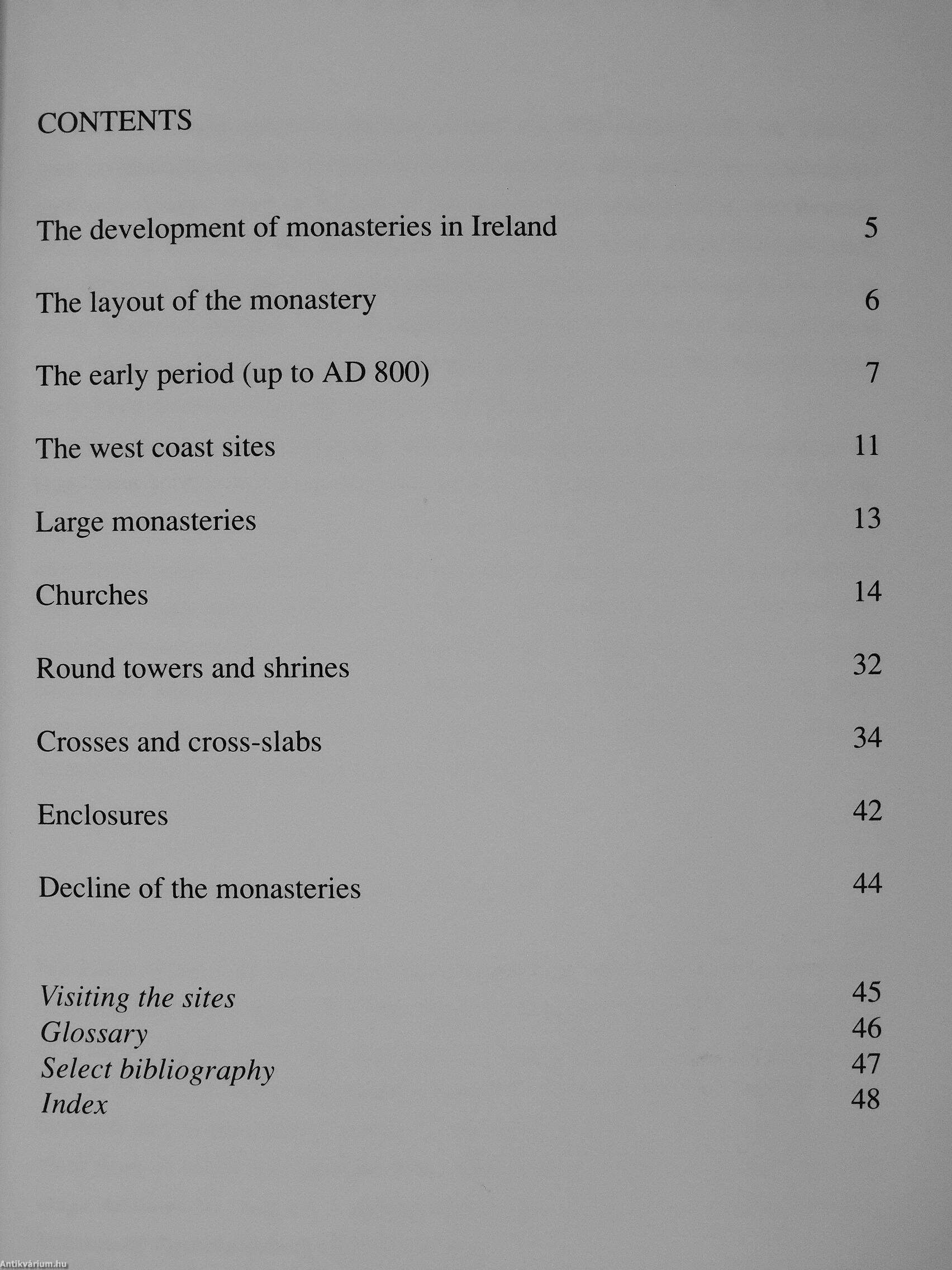
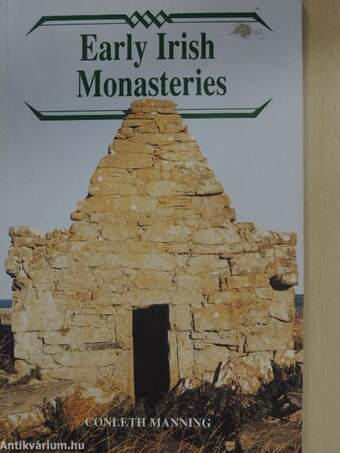
Early Irish Monasteries
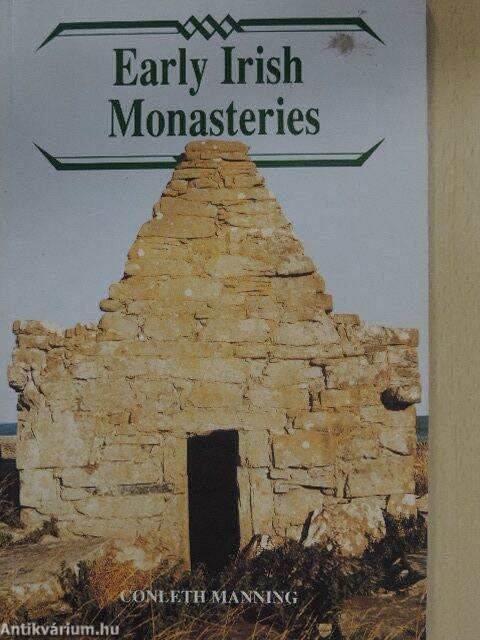
Dublin
| Kiadó: | Country House |
|---|---|
| Kiadás helye: | Dublin |
| Kiadás éve: | |
| Kötés típusa: | Ragasztott papírkötés |
| Oldalszám: | 48 oldal |
| Sorozatcím: | |
| Kötetszám: | |
| Nyelv: | Angol |
| Méret: | 24 cm x 16 cm |
| ISBN: | 0-946172-48-X |
| Megjegyzés: | Színes és fekete-fehér fotókkal. |
Értesítőt kérek a kiadóról
A beállítást mentettük,
naponta értesítjük a beérkező friss
kiadványokról
naponta értesítjük a beérkező friss
kiadványokról
A beállítást mentettük,
naponta értesítjük a beérkező friss
kiadványokról
naponta értesítjük a beérkező friss
kiadványokról
Fülszöveg
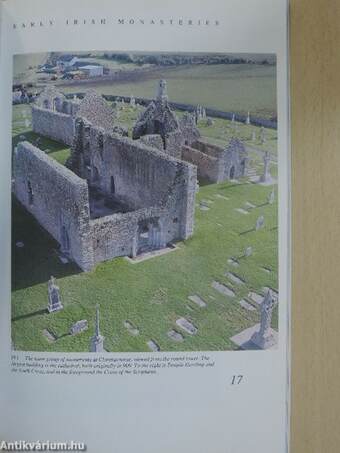
Most of Ireland's early monasteries were founded in the sixth and seventh centuries. They and the 'saints' who founded them were so much a part of the Irish identity that the most typical features of their sites, the high crosses and round towers, were adopted as symbols of Ireland in the nineteenth century. Somé were founded in out-of-the-way places or on small islands, while others were located on good land or near important routeways. The large monasteries in time became important centres of population, learning, trade and craftsmanship, as well as of religion. By the tenth and eleventh centuries somé were large enough to be classed as towns. Today, remnants of these monasteries survive throughout the country, ranging from tiny hermitages on islands off the west coast to major settlements such as Clonmacnoise and Glendalough. Visitors are attracted by their religious and historical associations, but particularly by the remarkable carvings on their cross-slabs and crosses and the... TovábbFülszöveg
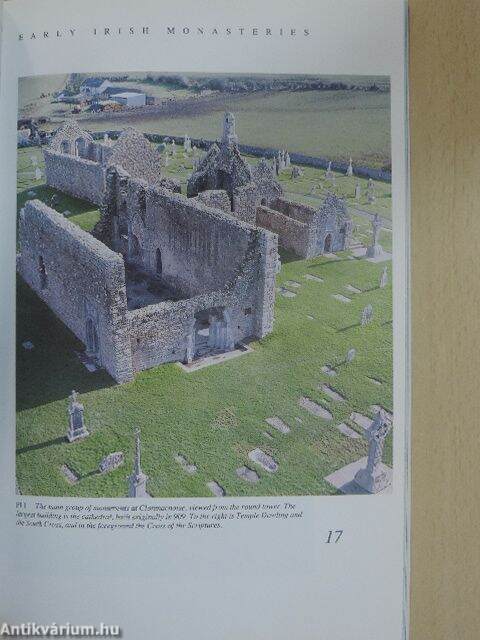
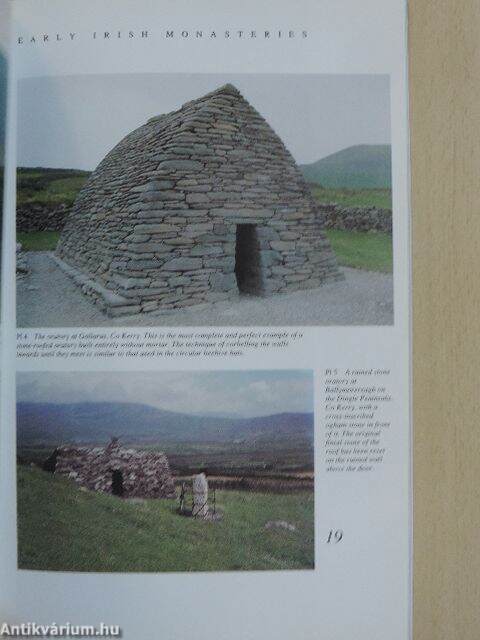
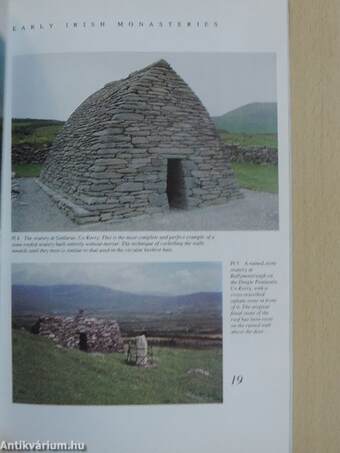
Most of Ireland's early monasteries were founded in the sixth and seventh centuries. They and the 'saints' who founded them were so much a part of the Irish identity that the most typical features of their sites, the high crosses and round towers, were adopted as symbols of Ireland in the nineteenth century. Somé were founded in out-of-the-way places or on small islands, while others were located on good land or near important routeways. The large monasteries in time became important centres of population, learning, trade and craftsmanship, as well as of religion. By the tenth and eleventh centuries somé were large enough to be classed as towns. Today, remnants of these monasteries survive throughout the country, ranging from tiny hermitages on islands off the west coast to major settlements such as Clonmacnoise and Glendalough. Visitors are attracted by their religious and historical associations, but particularly by the remarkable carvings on their cross-slabs and crosses and the stark beauty of their buildings. Early Irish Monasteries is a succinct and vibrant description of how the monasteries were developed and organised. It looks at surviving monastic monuments throughout Ireland, from simple cross-inscribed stones to elaborately carved high crosses, from tiny drystone oratories and slab shrines to larger churches and round towers, all subjects to marvei at and enjoy. The text is beautifully illustrated with colour and black and white photographs of monasteries and monastic monuments in Kerry, Sligo, Tipperary, Galway, Wicklow, Kilkenny, Louth, Meath, Kildare, Donegal, Kilkenny, Laois, Clare, Cork, Offaly, Fermanagh, Valencia and the Aran Islands. Conleth Manning ma is a senior archaeologist in the National Monuments and Historic Properties Service of the Office of Public Works in Dublin. He has directed excavations at a number of Early Medieval sites in Ireland, including Clonmacnoise, and has written and lectured on many aspects of Ireland's national monuments. Vissza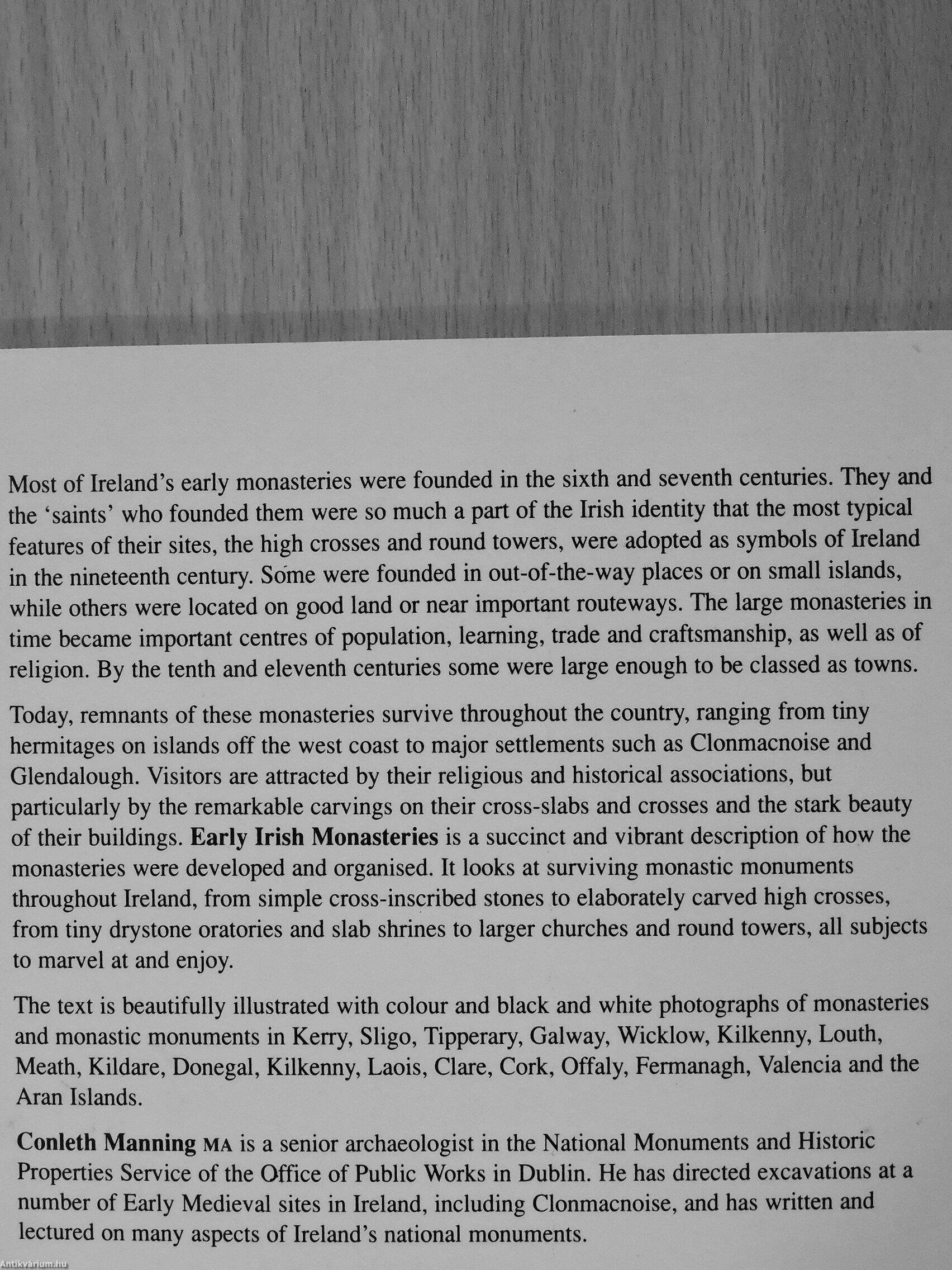
Témakörök
- Idegennyelv > Idegennyelvű könyvek > Angol > Művészetek > Építészet
- Idegennyelv > Idegennyelvű könyvek > Angol > Vallás > Kereszténység
- Idegennyelv > Idegennyelvű könyvek > Angol > Helytörténet
- Helytörténet > Külföldi > Egyéb
- Helytörténet > Helyismeret > Várak, építmények
- Művészetek > Építészet > Kontinensek szerint > Európa > Egyéb
- Művészetek > Építészet > Idegen nyelv > Angol
- Művészetek > Építészet > Műemlékek > Vallási
- Vallás > Kereszténység > Szerzetesrendek
- Vallás
- Vallás > Kereszténység > Templomok
Conleth Manning
Conleth Manning műveinek az Antikvarium.hu-n kapható vagy előjegyezhető listáját itt tekintheti meg: Conleth Manning könyvek, művekMegvásárolható példányok
Nincs megvásárolható példány
A könyv összes megrendelhető példánya elfogyott. Ha kívánja, előjegyezheti a könyvet, és amint a könyv egy újabb példánya elérhető lesz, értesítjük.
 Folytatás Microsoft-tal