
1.151.607
kiadvánnyal nyújtjuk Magyarország legnagyobb antikvár könyv-kínálatát

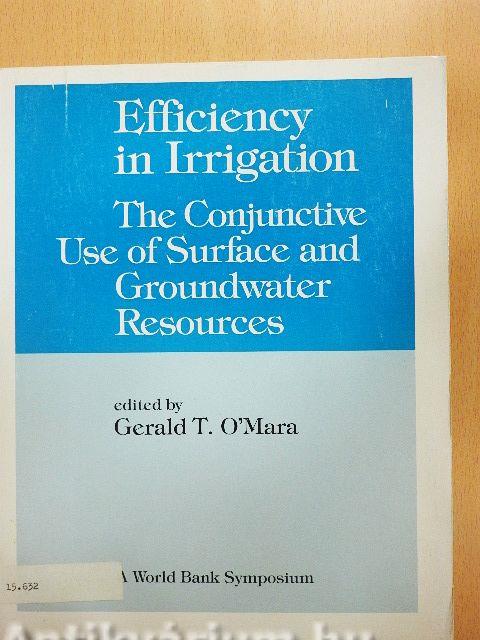
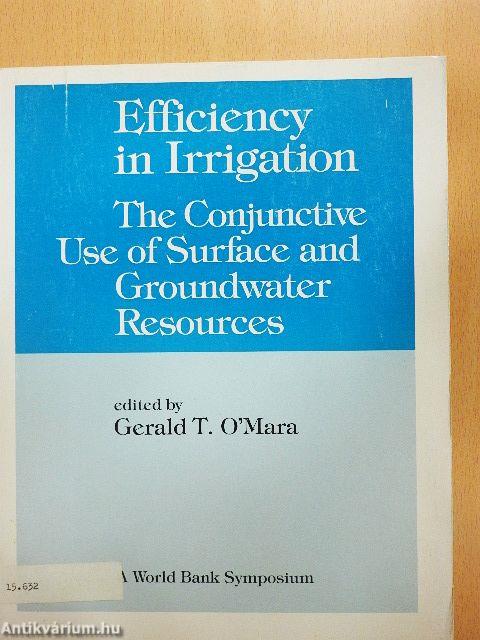
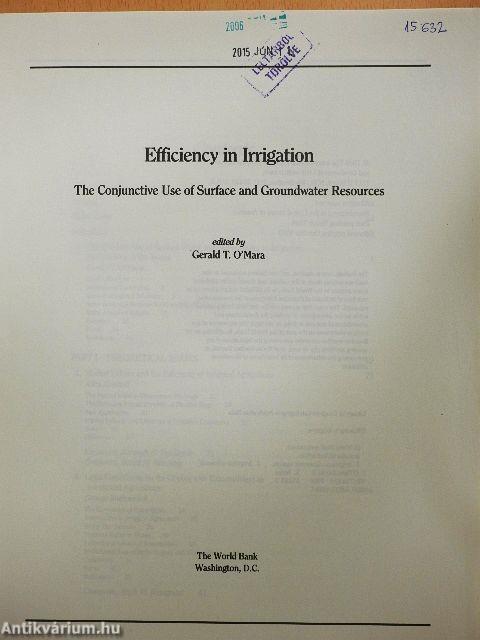
Efficiency in Irrigation
The Conjunctive Use of Surface and Groundwater Resources
Washington
| Kiadó: | The World Bank |
|---|---|
| Kiadás helye: | Washington |
| Kiadás éve: | |
| Kötés típusa: | Ragasztott papírkötés |
| Oldalszám: | 196 oldal |
| Sorozatcím: | A World Bank Symposium |
| Kötetszám: | |
| Nyelv: | Angol |
| Méret: | 27 cm x 21 cm |
| ISBN: | 0-8213-1030-5 |
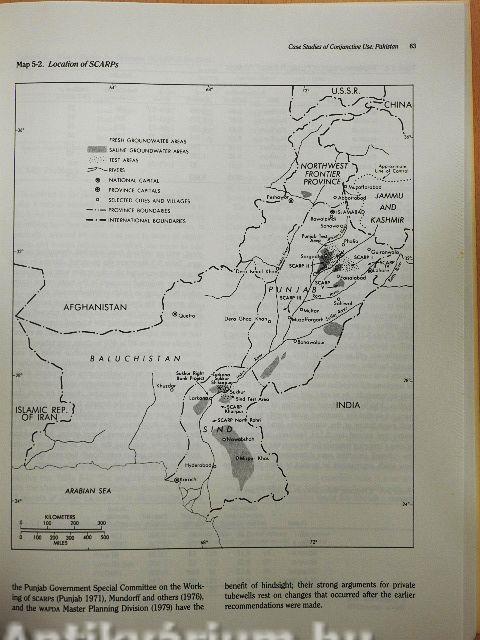
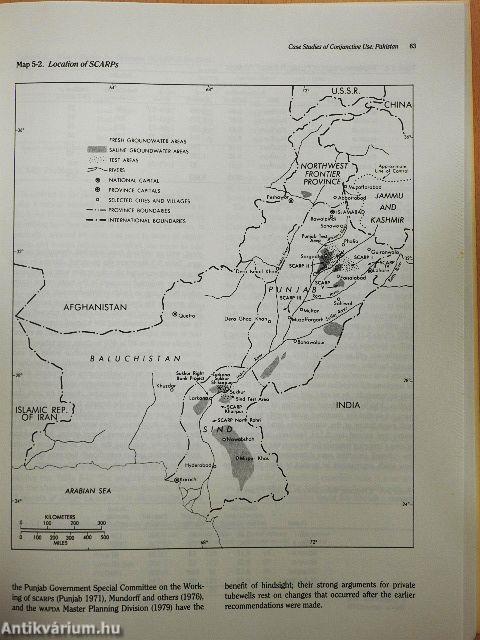
| Megjegyzés: | További kapcsolódó személyek a könyvben. Fekete-fehér térképekkel. |
Értesítőt kérek a kiadóról
Értesítőt kérek a sorozatról
A beállítást mentettük,
naponta értesítjük a beérkező friss
kiadványokról
naponta értesítjük a beérkező friss
kiadványokról
A beállítást mentettük,
naponta értesítjük a beérkező friss
kiadványokról
naponta értesítjük a beérkező friss
kiadványokról
Előszó
Tovább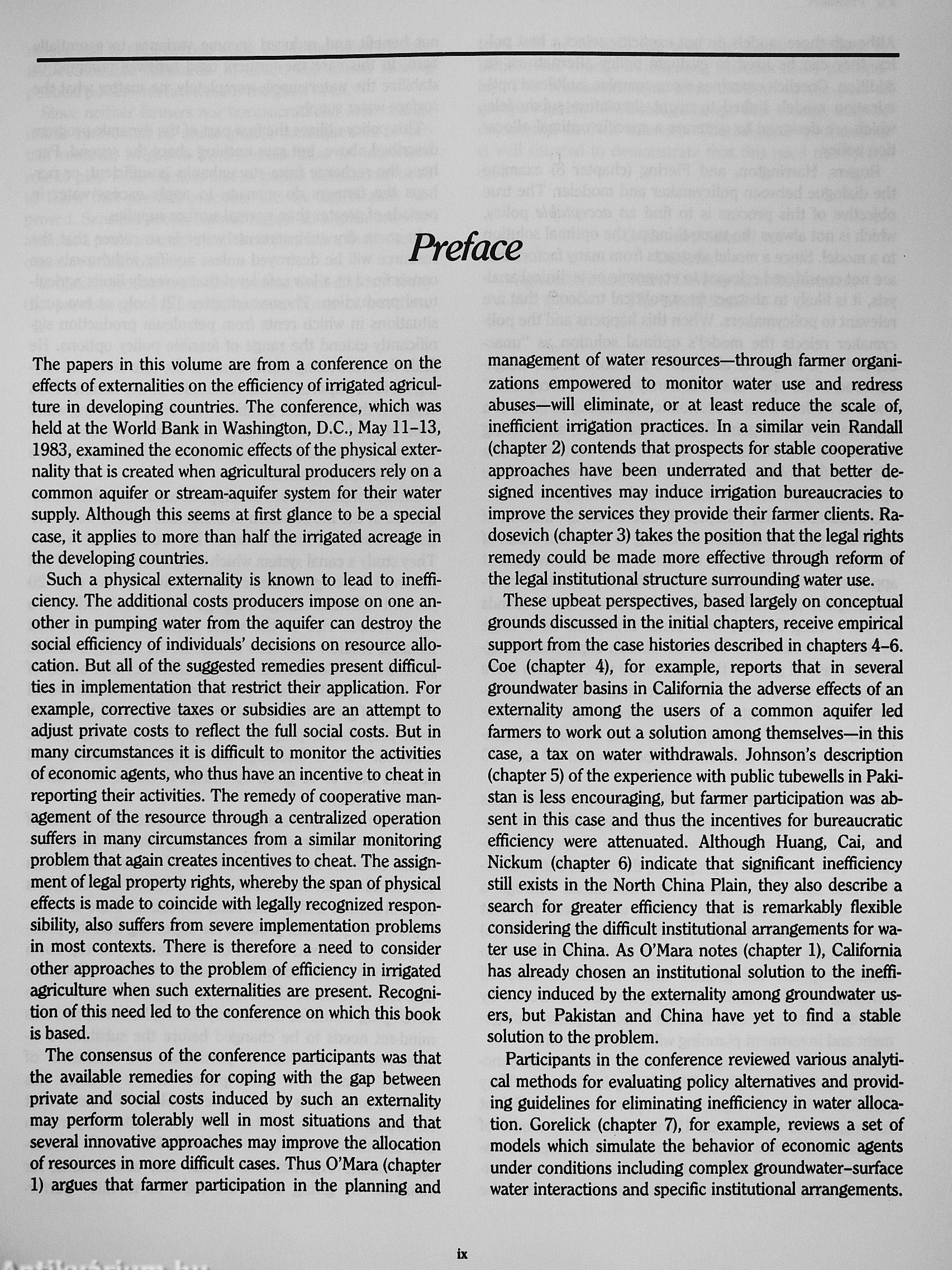
Fülszöveg
The world Bank
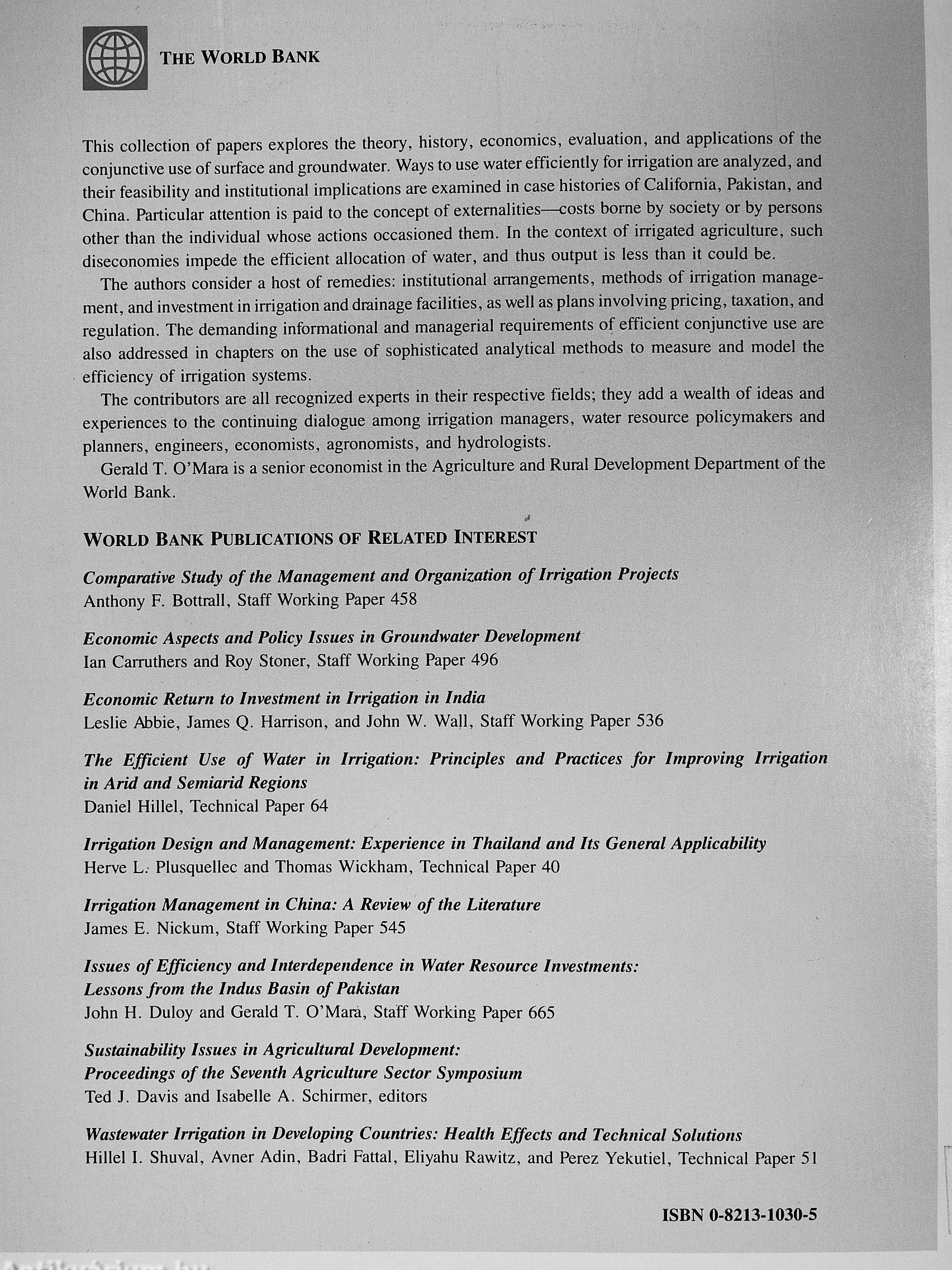
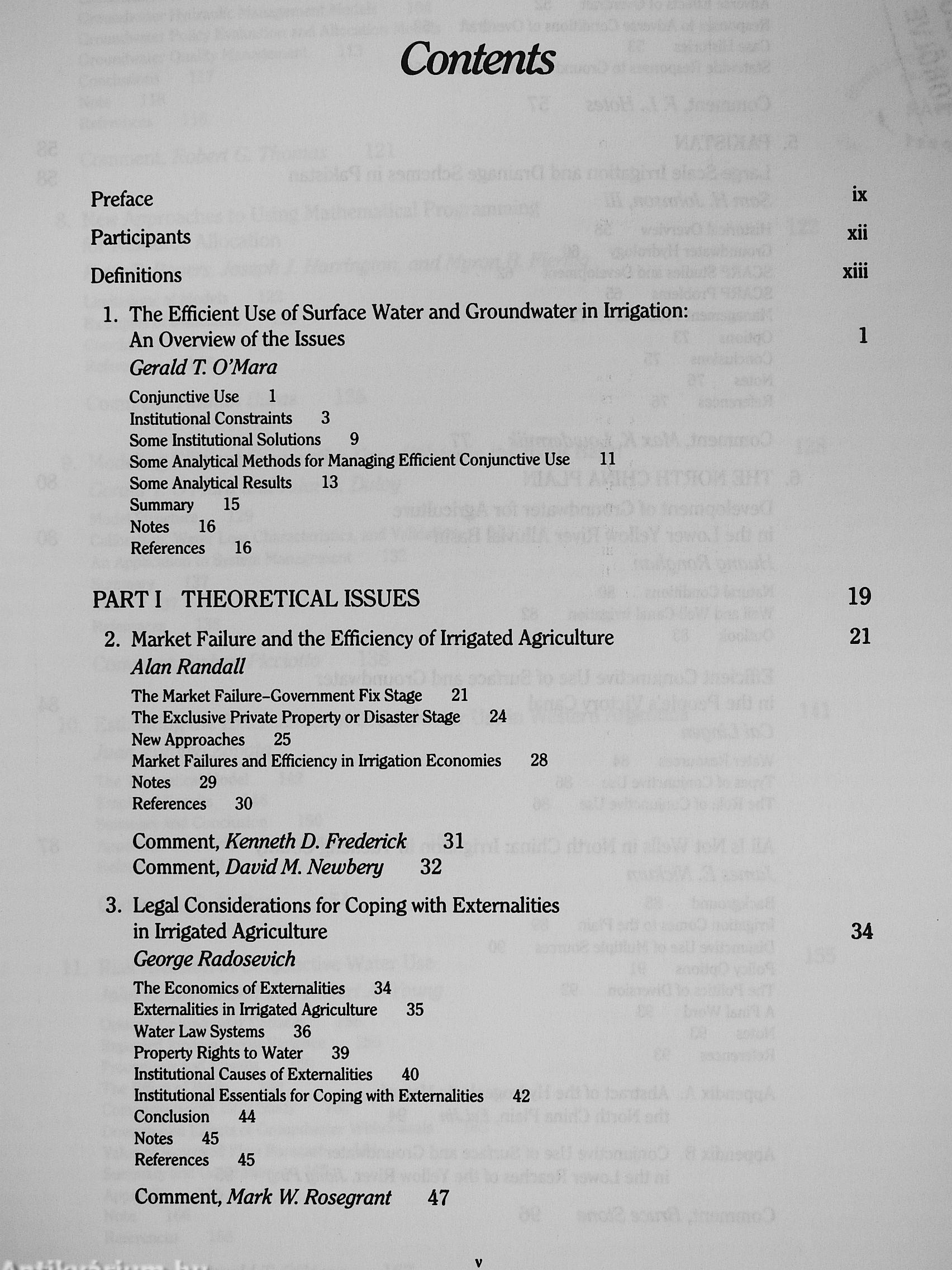
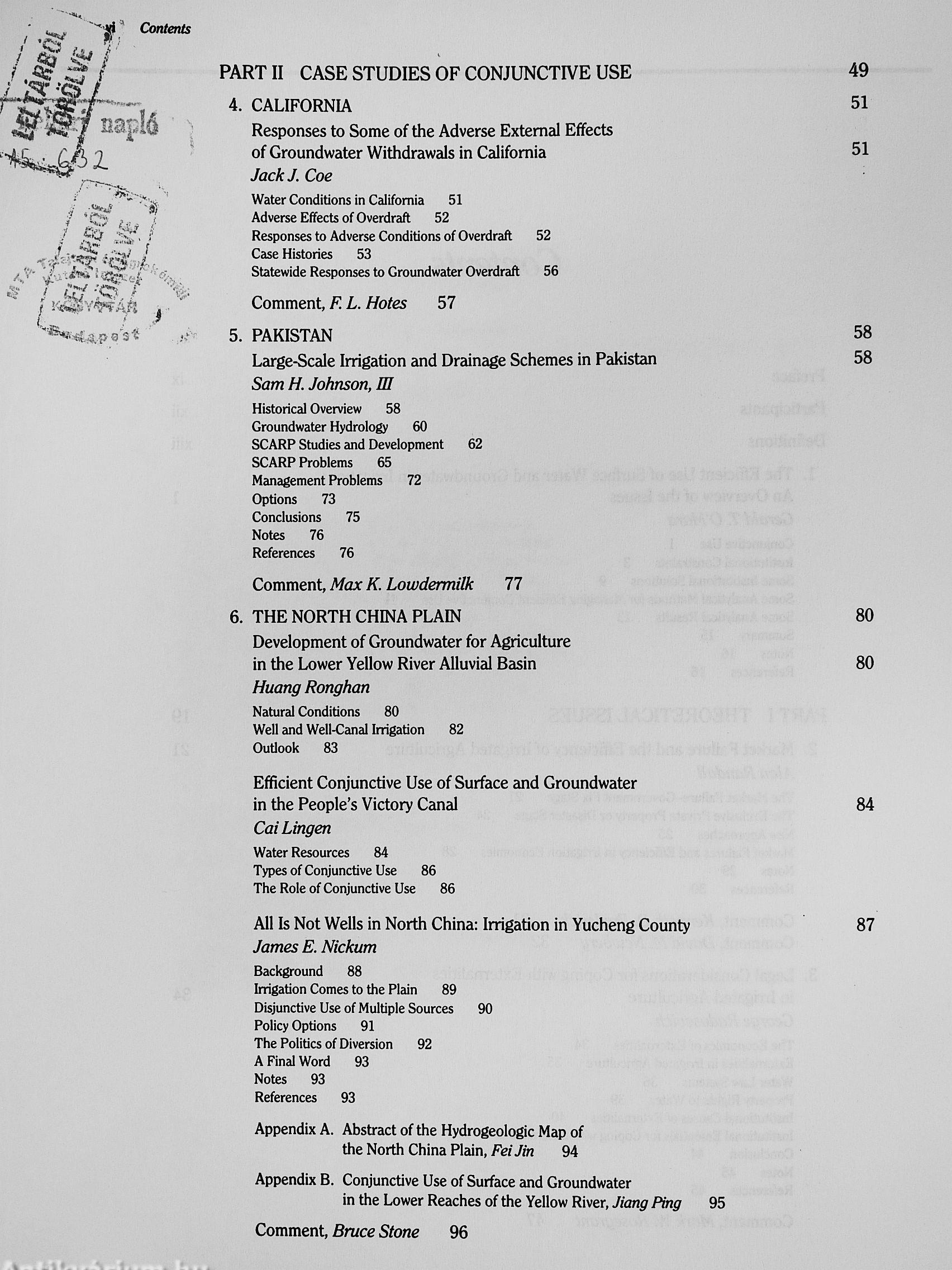
This collection of papers explores the theory, history, economics, evaluation, and applications of the conjunctive use of surface and groundwater. Ways to use water efficiently for irrigation are analyzed, and their feasibility and institutional implications are examined in case histories of California, Pakistan, and China. Particular attention is paid to the concept of extemalities—costs borne by society or by persons other than the individual whose actions occasioned them. In the context of irrigated agriculture, such diseconomies impede the efficient allocation of water, and thus output is less than it could be.
The authors consider a host of remedies: institutional arrangements, methods of irrigation management, and investment in irrigation and drainage facilities, as well as plans involving pricing, taxation, and regulation. The demanding informational and managerial requirements of efficient conjunctive use are also addressed in chapters on the use of... Tovább
Fülszöveg
The world Bank
This collection of papers explores the theory, history, economics, evaluation, and applications of the conjunctive use of surface and groundwater. Ways to use water efficiently for irrigation are analyzed, and their feasibility and institutional implications are examined in case histories of California, Pakistan, and China. Particular attention is paid to the concept of extemalities—costs borne by society or by persons other than the individual whose actions occasioned them. In the context of irrigated agriculture, such diseconomies impede the efficient allocation of water, and thus output is less than it could be.
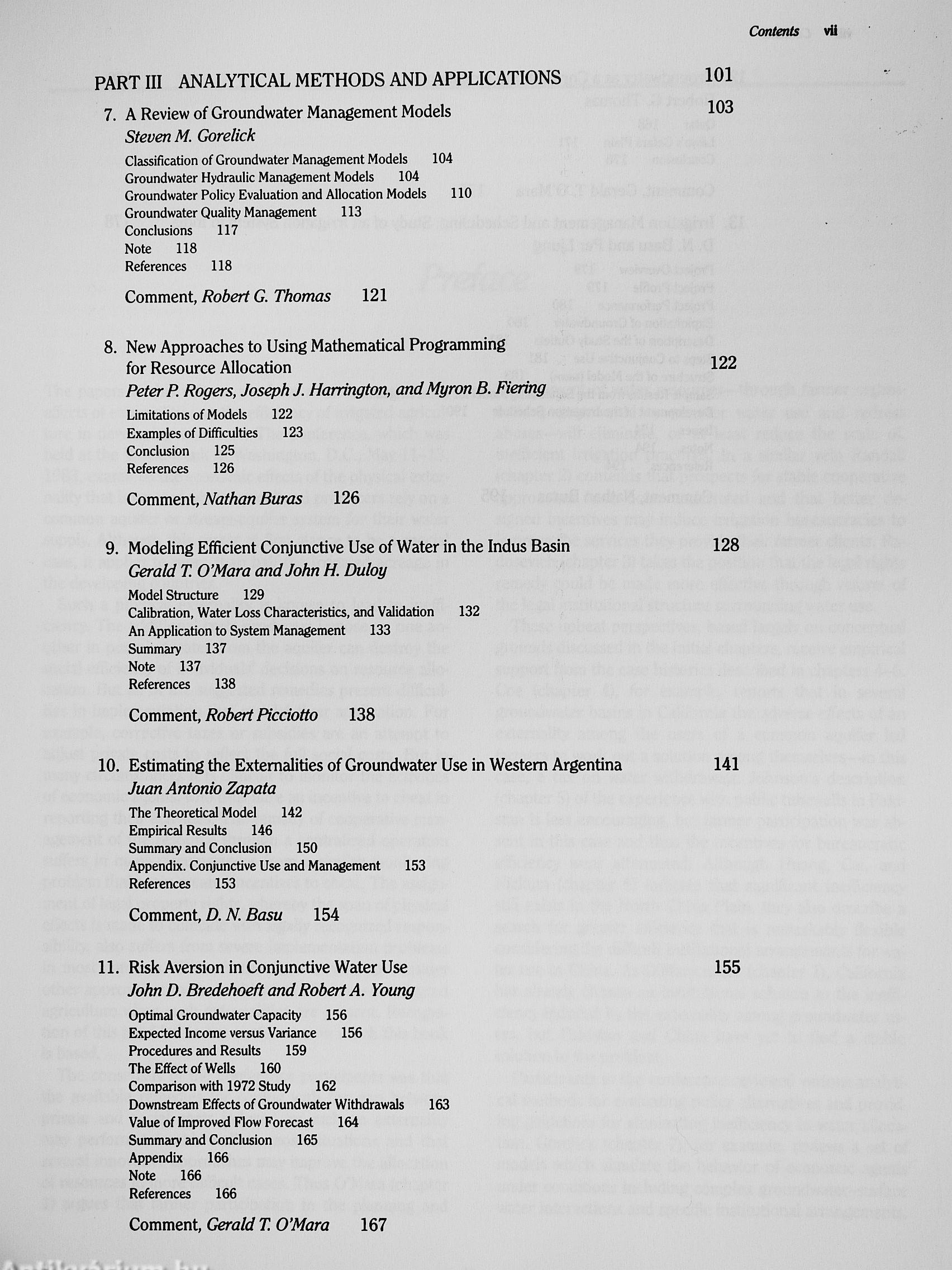
The authors consider a host of remedies: institutional arrangements, methods of irrigation management, and investment in irrigation and drainage facilities, as well as plans involving pricing, taxation, and regulation. The demanding informational and managerial requirements of efficient conjunctive use are also addressed in chapters on the use of sophisticated analytical methods to measure and model the efficiency of irrigation systems.
The contributors are all recognized experts in their respective fields; they add a wealth of ideas and experiences to the continuing dialogue among irrigation managers, water resource policymakers and planners, engineers, economists, agronomists, and hydrologists.
Gerald T. O'Mara is a senior economist in the Agriculture and Rural Development Department of the World Bank.
*
World Bank Publications of Related Interest
Comparative Study of the Management and Organization of Irrigation Projects Anthony F. Bottrall, Staff Working Paper 458
Economic Aspects and Policy Issues in Groundwater Development Ian Camithers and Roy Stoner, Staff Working Paper 496
Economic Return to Investment in Irrigation in India
Leslie Abbie, James Q. Harrison, and John W. Wall, Staff Working Paper 536
The Efficient Use of Water in Irrigation: Principles and Practices for Improving Irrigation in Arid and Semiarid Regions Daniel Hillel, Technical Paper 64
Irrigation Design and Management: Experience in Thailand and Its General Applicability
Herve L. Plusquellec and Thomas Wickham, Technical Paper 40
Irrigation Management in China: A Review of the Litemture James E. Nickum, Staff Working Paper 545
Issues of Efficiency and Interdependence in Water Resource Investments:
Lessons from the Indus Basin of Pakistan
John H. Duloy and Gerald T. O'Mara, Staff Working Paper 665
Sustainability Issues in Agricultural Development: Proceedings of the Seventh Agriculture Sector Symposium Ted J. Davis and Isabelle A. Schirmer, editors
Wastewater Irrigation in Developing Countries: Health Effects and Technical Solutions Hillel I. Shuval, Avner Adin. Badri Fattal, Eliyahu Rawitz, and Perez Yekutiel, Technical Paper 51
ISBN 0-8213-1030-5 Vissza
Témakörök
- Közgazdaságtan > Egyéb
- Idegennyelv > Idegennyelvű könyvek > Angol > Műszaki
- Idegennyelv > Idegennyelvű könyvek > Angol > Egyéb
- Idegennyelv > Idegennyelvű könyvek > Angol > Természettudományok > Biológia
- Idegennyelv > Idegennyelvű könyvek > Angol > Természettudományok > Földrajz
- Mezőgazdaság > Mezőgazdaság általában > Agrárgazdaság
- Mezőgazdaság > Vízgazdálkodás > Öntözés
- Természettudomány > Földrajz > Általános természeti földrajz > Vizek földrajza > Szárazföldi vizek
- Természettudomány > Földrajz > Kontinensek földrajza > Téma szerint > Vízrajz
- Természettudomány > Földrajz > Idegen nyelv > Angol
- Természettudomány > Biológia > Ökológia, környezetvédelem > Környezetvédelem > Környezetgazdálkodás
- Természettudomány > Biológia > Ökológia, környezetvédelem > Idegennyelvű
- Műszaki > Üzemgazdaság, üzemszervezés > Általában
- Idegennyelv > Idegennyelvű könyvek > Angol > Közgazdaságtan > Egyéb
- Műszaki > Idegennyelv > Angol
- Műszaki > Vízgazdálkodás
Megvásárolható példányok
Állapotfotók
Könyvtári könyv volt.
Állapot:
Közepes
4.540 Ft
3.630 ,-Ft 20
18
pont kapható
Kosárba
 Folytatás Microsoft-tal