1.114.986

kiadvánnyal nyújtjuk Magyarország legnagyobb antikvár könyv-kínálatát

A kosaram
0
MÉG
5000 Ft
a(z) 5000Ft-os
szállítási
értékhatárig
Ginop popup ablak bezárása

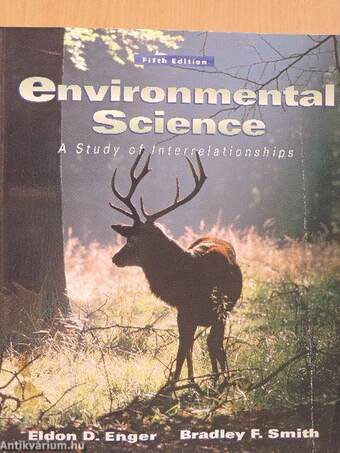
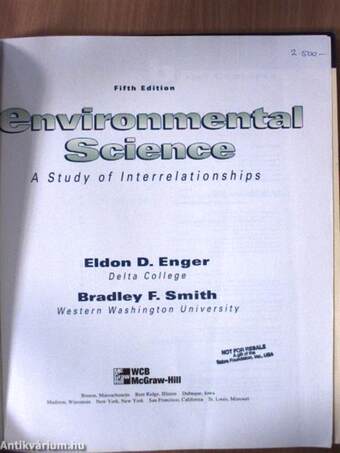
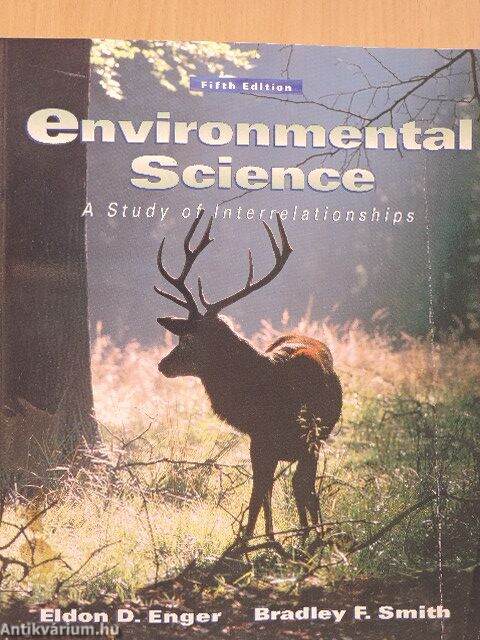
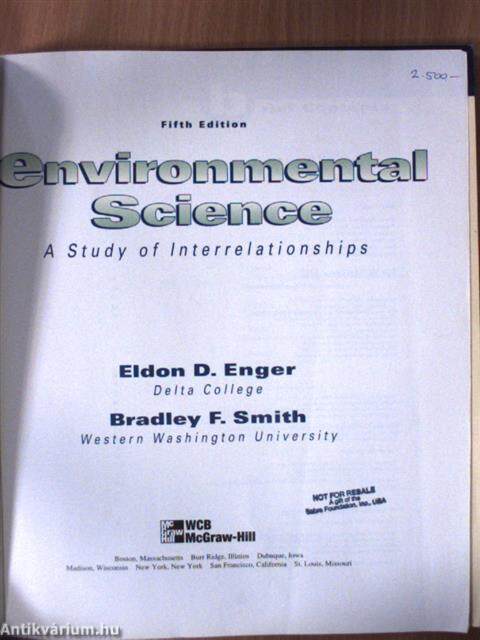
Environmental Science

Környezettudomány - A Study of Interrelationships/Összefüggések tanulmánya

Szerző
Szerkesztő
Boston
Kiadó: WBC-McGraw-Hill
Kiadás helye: Boston
Kiadás éve:
Kötés típusa: Ragasztott papírkötés
Oldalszám: 431 oldal
Sorozatcím:
Kötetszám:
Nyelv: Angol  
Méret: 27 cm x 23 cm
ISBN: 0-697-15906-X
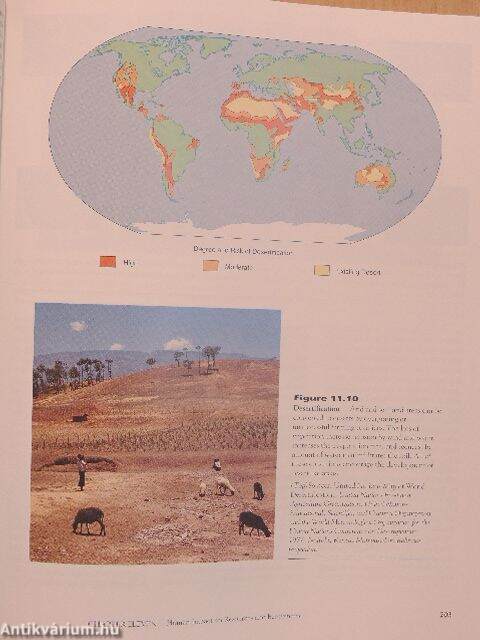
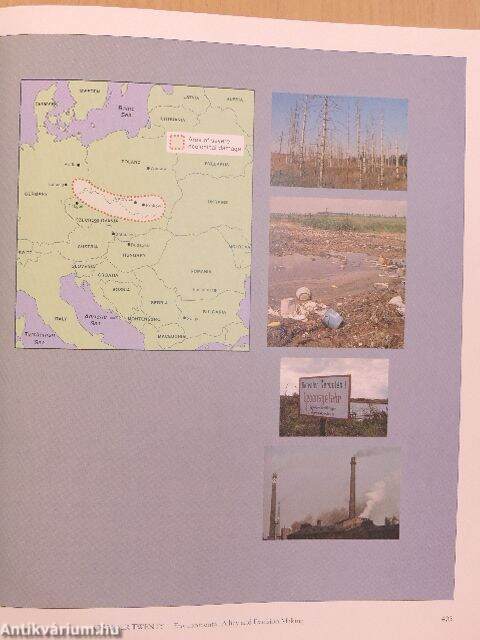
Megjegyzés: Színes fotókkal és ábrákkal.
Értesítőt kérek a kiadóról

A beállítást mentettük,
naponta értesítjük a beérkező friss
kiadványokról
A beállítást mentettük,
naponta értesítjük a beérkező friss
kiadványokról

Fülszöveg

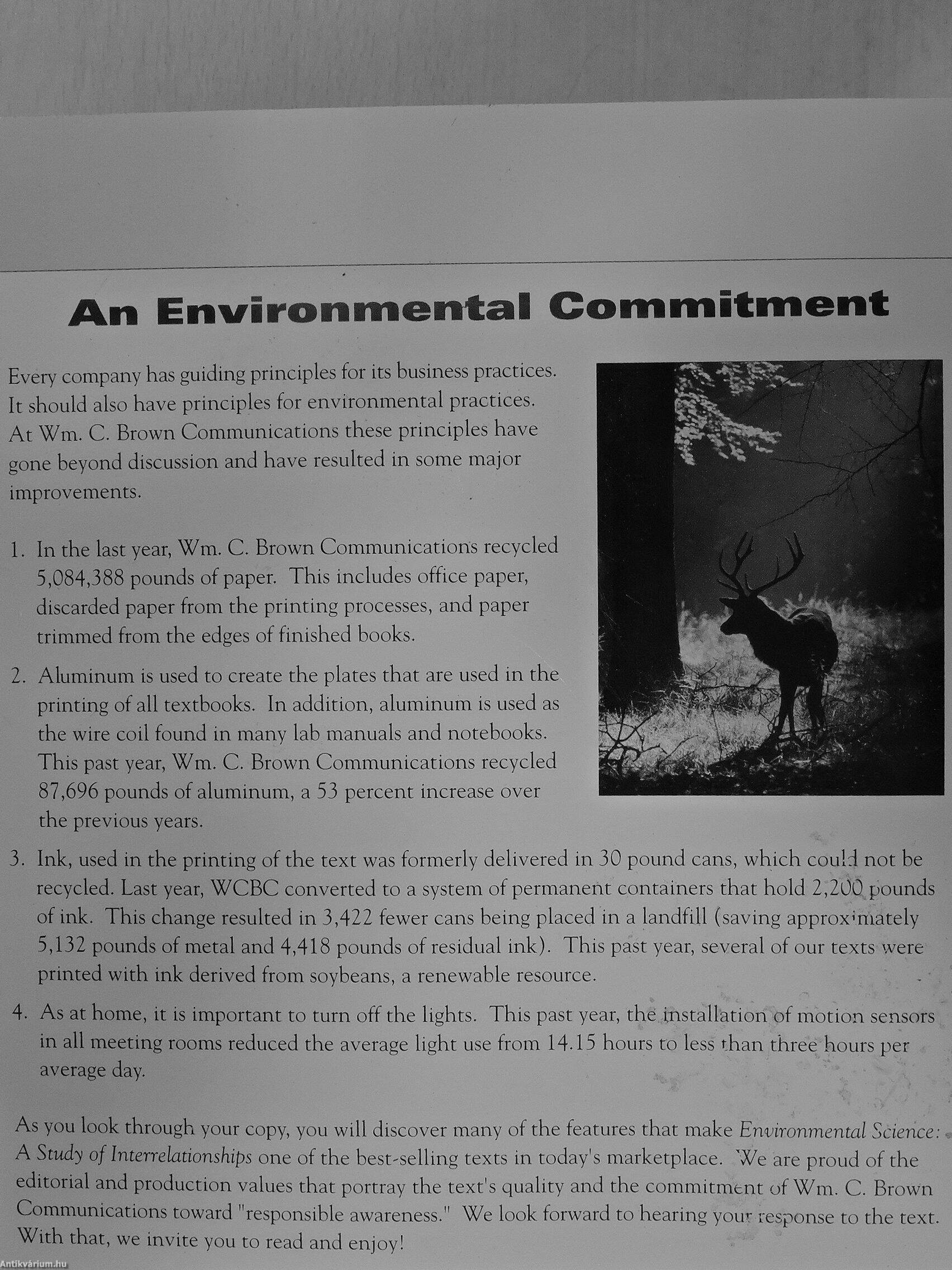
An Environmental Commitment Every company has guiding principles for its business practices. It should alsó have principles for environmental practices. At Wm. C. Brown Communications these principles have gone beyond discussion and have resulted in somé major improvements. 1. In the last year, Wm. C. Brown Communications recycled 5,084,388 pounds of paper. This includes office paper, discarded paper from the printing processes, and paper trimmed from the edges of finished books. 2. Aluminum is used to create the plates that are used in the printing of all textbooks. In addition, aluminum is used as the wire coil found in many lab manuals and notebooks. This past year, Wm. C. Brown Communications recycled 87,696 pounds of aluminum, a 53 percent increase over the previous years. 3. Ink, used in the printing of the text was formerly delivered in 30 pound cans, which could not be recycled. Last year, WCBC converted to a system of permanent containers that hold 2,200 pounds of ink. This... Tovább

Fülszöveg

An Environmental Commitment Every company has guiding principles for its business practices. It should alsó have principles for environmental practices. At Wm. C. Brown Communications these principles have gone beyond discussion and have resulted in somé major improvements. 1. In the last year, Wm. C. Brown Communications recycled 5,084,388 pounds of paper. This includes office paper, discarded paper from the printing processes, and paper trimmed from the edges of finished books. 2. Aluminum is used to create the plates that are used in the printing of all textbooks. In addition, aluminum is used as the wire coil found in many lab manuals and notebooks. This past year, Wm. C. Brown Communications recycled 87,696 pounds of aluminum, a 53 percent increase over the previous years. 3. Ink, used in the printing of the text was formerly delivered in 30 pound cans, which could not be recycled. Last year, WCBC converted to a system of permanent containers that hold 2,200 pounds of ink. This change resulted in 3,422 fewer cans being placed in a landfill (saving approx'mately 5,132 pounds of metál and 4,418 pounds of residual ink). This past year, several of our texts were printed with ink derived from soybeans, a renewable resource. 4. As at home, it is important to turn off the lights. This past year, the installation of motion sensors in all meeting rooms reduced the average light use from 14.15 hours to less than three hours per average day. As you look through your copy, you will discover many of the features that make Environmental Science: A Study of Interrelationships one of the best-selling texts in today's marketplace. We are proud of the editorial and production values that portray the text's quality and the commitment of Wm. C. Brown Communications toward "responsible awareness." We look forward to hearing your response to the text. With that, we invite you to read and enjoy! Vissza

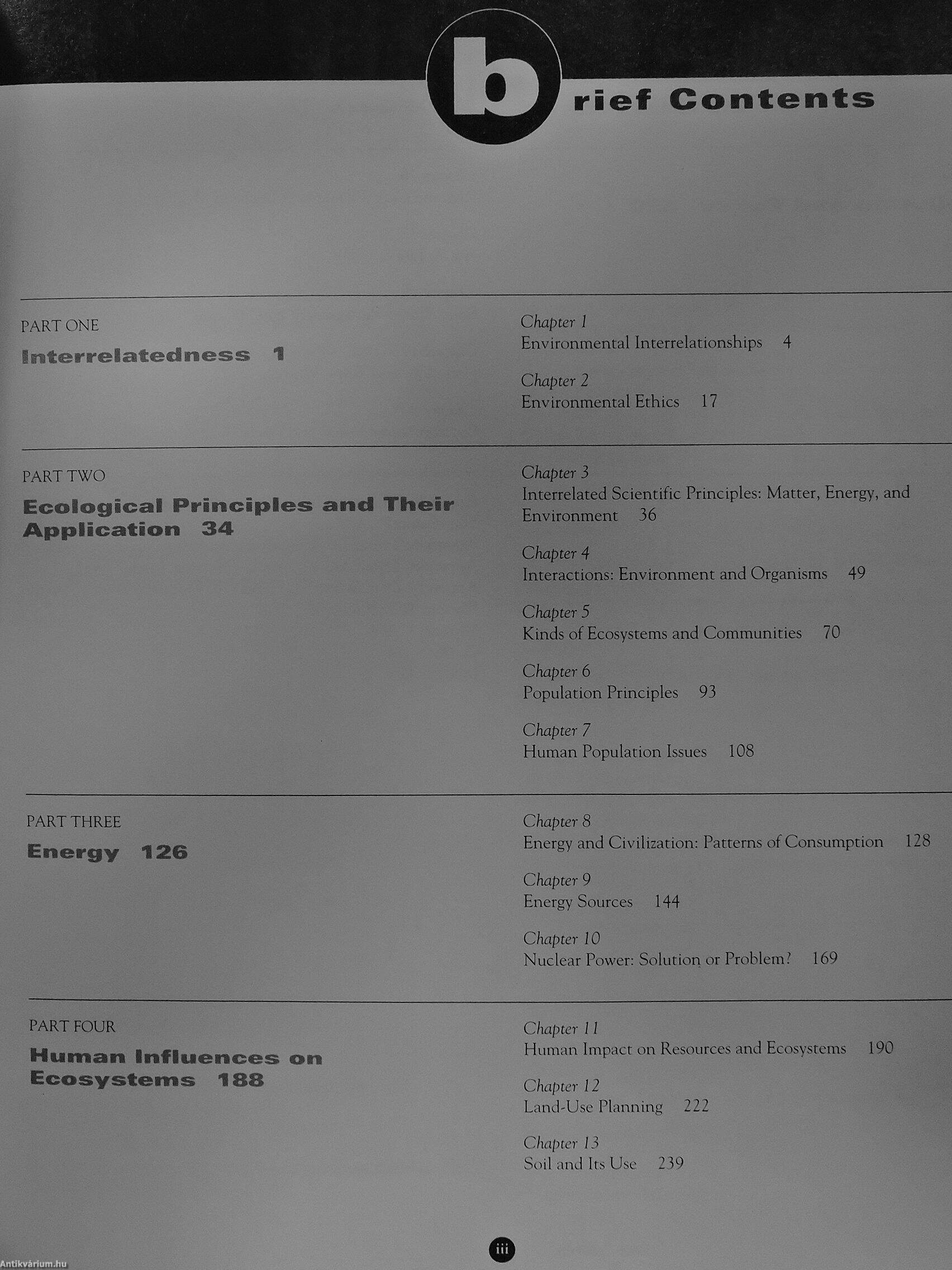
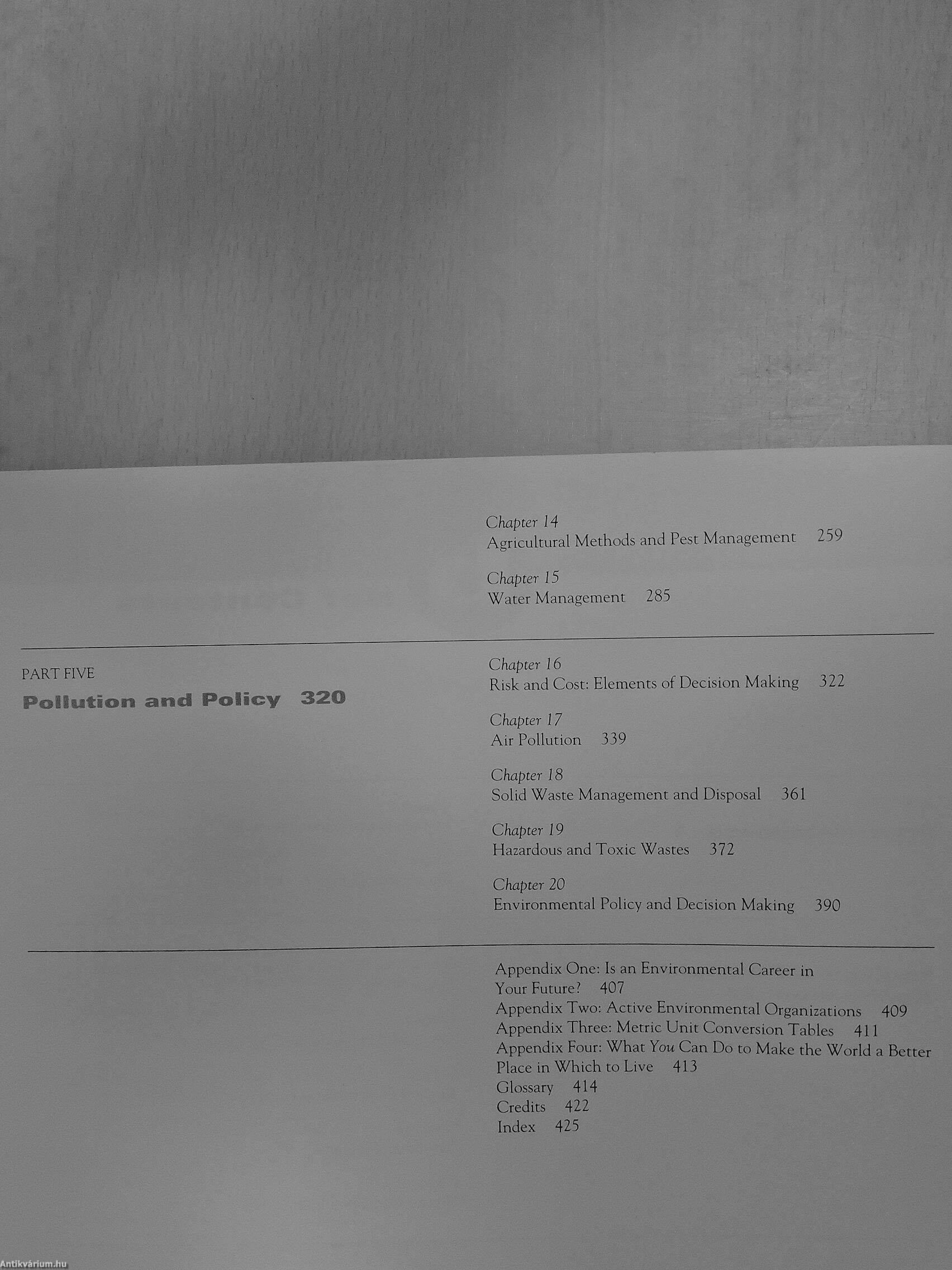
Tartalom


Vissza
Megvásárolható példányok

Nincs megvásárolható példány
A könyv összes megrendelhető példánya elfogyott. Ha kívánja, előjegyezheti a könyvet, és amint a könyv egy újabb példánya elérhető lesz, értesítjük.

Előjegyzem