Fülszöveg
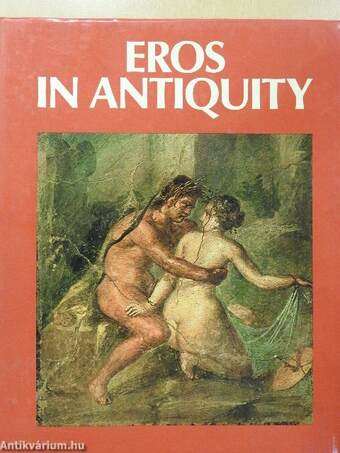
This book contains the finest erotic art
created by Western man. It is drawn from
two eras: The Golden Ages of Greece and
Pompeii.
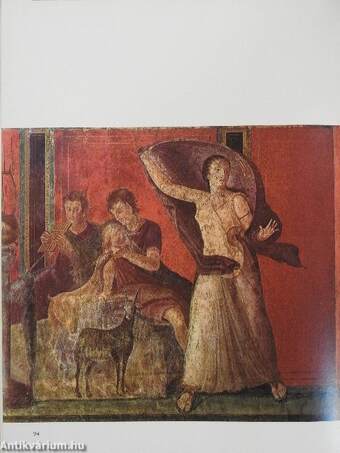
Pompeii's art was preserved for us by
a calamity of nature. The eruption of Ve-
suvius in 79 A.D. buried ancient Pompeii
beneath a layer of volcanic ash, thus pre-
serving a singular record of the life and
customs of that ancient city. Among its
treasures that came to light during excava-
tions of the 18th century were the master-
pieces of erotic art reproduced in this
book, now at the National Museum of
Naples. It forms a special collection, ac-
cess to which is still restricted today.
The wall paintings, statues, mosaics
and household objects contained in this
collection provide a fascinating insight in-
to the life of the average Pompeian, his
religion and his basic philosophy. Living
beneath the shadow of Vesuvius, the in-
habitants of this doomed city were con-
stantly aware of the proximity of death.
Inscriptions and...
Tovább
Fülszöveg
This book contains the finest erotic art
created by Western man. It is drawn from
two eras: The Golden Ages of Greece and
Pompeii.
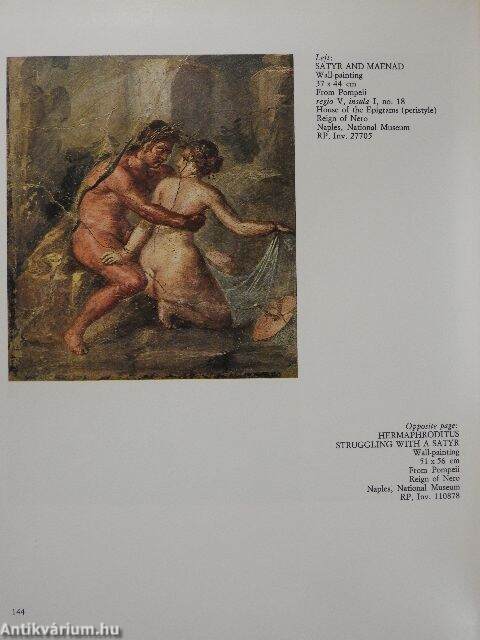
Pompeii's art was preserved for us by
a calamity of nature. The eruption of Ve-
suvius in 79 A.D. buried ancient Pompeii
beneath a layer of volcanic ash, thus pre-
serving a singular record of the life and
customs of that ancient city. Among its
treasures that came to light during excava-
tions of the 18th century were the master-
pieces of erotic art reproduced in this
book, now at the National Museum of
Naples. It forms a special collection, ac-
cess to which is still restricted today.
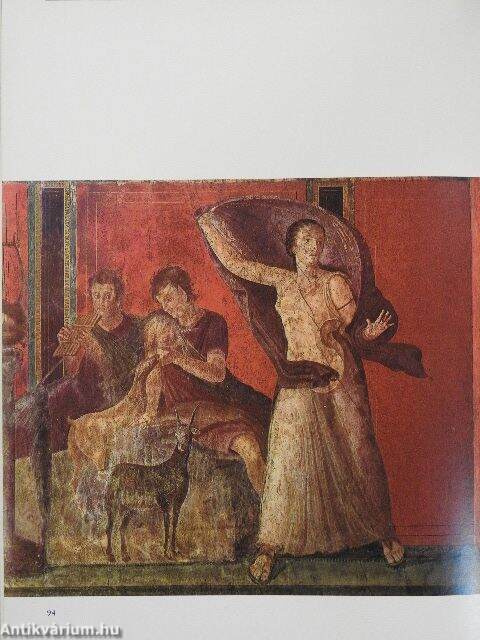
The wall paintings, statues, mosaics
and household objects contained in this
collection provide a fascinating insight in-
to the life of the average Pompeian, his
religion and his basic philosophy. Living
beneath the shadow of Vesuvius, the in-
habitants of this doomed city were con-
stantly aware of the proximity of death.
Inscriptions and graffiti that have been
preserved express their belief that life was
short and to be enjoyed to the utmost
while it lasted.
At the same time, ancient religion and
sexual symbolism were closely related:
Pompeii's patron deities were Venus and
Dionysus, and many everyday household
objects in the collection reflect the popular
belief in the power of sexual symbols as
protection against evil and misfortune,
and promoters of fertility.
As to Greece, the concept of Love was
many-sided and it changed from period to
period. In the person of Eros, it signified
the primitive desire for fertility of crops
and man, as well as the quest for ecstasy
in the boudoir. Devotion to Eros could be
religious, intellectual or downright physi-
cal. The art and artifacts reproduced in
this book depict Eros against the back-
ground of Greek myths and religion.
All in all, the works in Eros in Antiq-
uity come across with such immense visual
impact as to make these two dead civiliza-
tions live.
Vissza 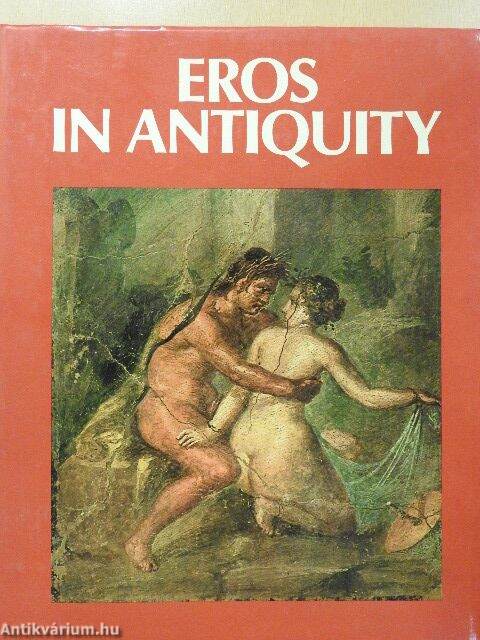


 Folytatás Microsoft-tal