
1.151.011
kiadvánnyal nyújtjuk Magyarország legnagyobb antikvár könyv-kínálatát

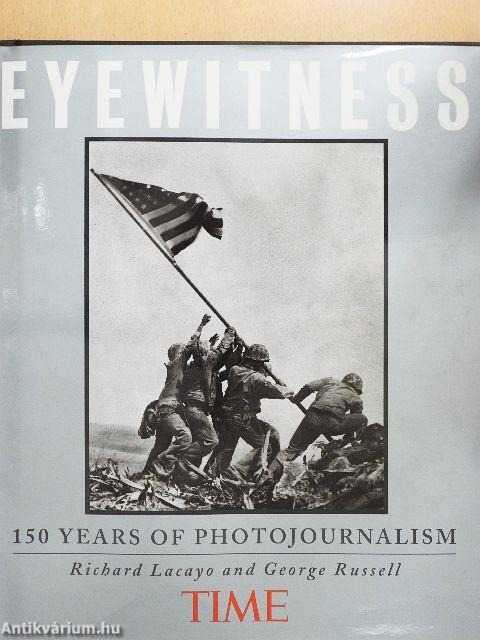
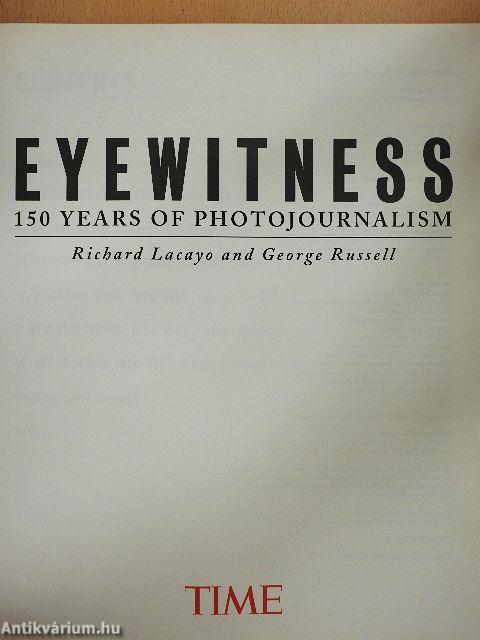
Eyewitness
150 Years of Photojournalism


New York
| Kiadó: | Time Books |
|---|---|
| Kiadás helye: | New York |
| Kiadás éve: | |
| Kötés típusa: | Fűzött keménykötés |
| Oldalszám: | 192 oldal |
| Sorozatcím: | |
| Kötetszám: | |
| Nyelv: | Angol |
| Méret: | 28 cm x 24 cm |
| ISBN: | |
| Megjegyzés: | Színes és fekete-fehér fotókkal. |
Értesítőt kérek a kiadóról
A beállítást mentettük,
naponta értesítjük a beérkező friss
kiadványokról
naponta értesítjük a beérkező friss
kiadványokról
A beállítást mentettük,
naponta értesítjük a beérkező friss
kiadványokról
naponta értesítjük a beérkező friss
kiadványokról
Előszó
Tovább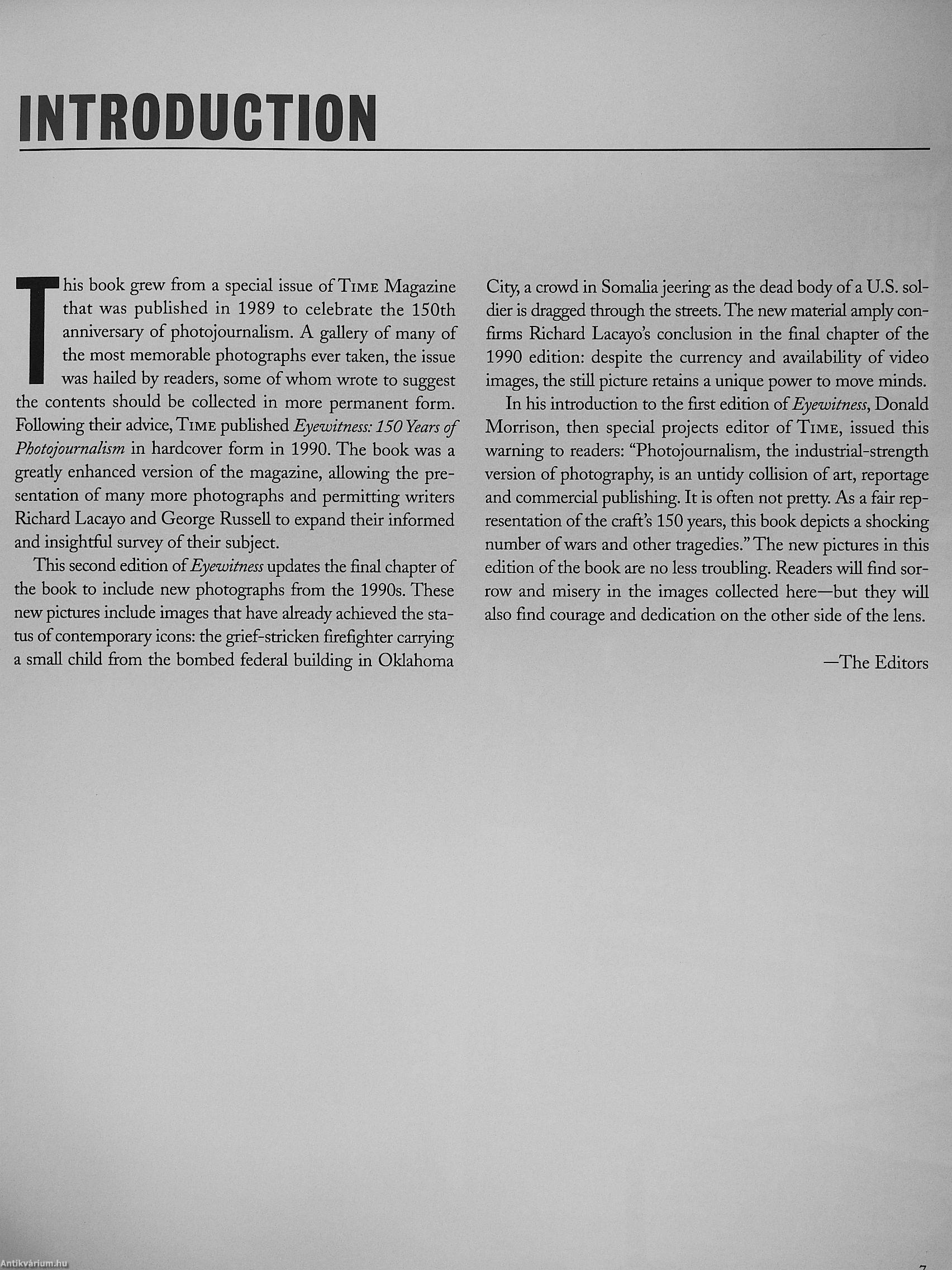
Fülszöveg
¦¦ . Al ^
. I,
i ' í
, ' i'
M ¦
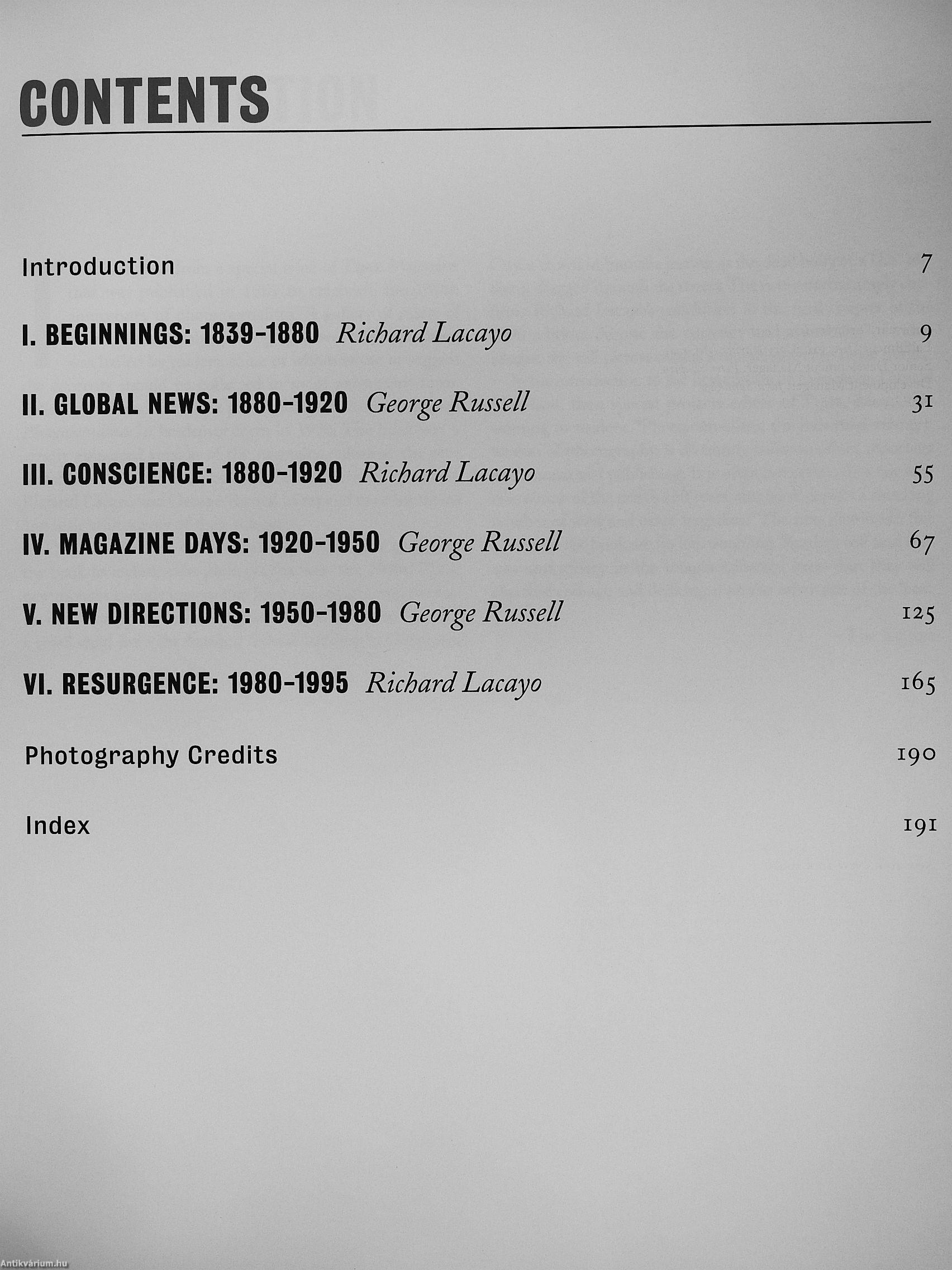
Since the invention of photography, the camera's eye has reported, chronicled and even influenced history. A new kind of journalism—photojournalism—reinvented reality, allowing the public for the first time to witness events just as they happened. Time, the pre-eminent newsmagazine for more than 70 years, has helped shape that process. Eyewitness celebrates some of the most important and memorable images of photojournalism from the insider's perspective of the editors ofTiME.
Beginnings: 1839-1880
From the first knovra photograph of a human being—the blurred figure of a Frenchman having his boots polished on a Paris boulevard— to the vast grandeur of America's West, these grainy, static images are the forerunners of photojournalism and the promise of wonders
Giobal News: 1880-1920
Technical advances and world events set the stage for a picture press, but photojournalism in its infancy is a haphazard mix of local nevi^, exotic places... Tovább
Fülszöveg
¦¦ . Al ^
. I,
i ' í
, ' i'
M ¦
Since the invention of photography, the camera's eye has reported, chronicled and even influenced history. A new kind of journalism—photojournalism—reinvented reality, allowing the public for the first time to witness events just as they happened. Time, the pre-eminent newsmagazine for more than 70 years, has helped shape that process. Eyewitness celebrates some of the most important and memorable images of photojournalism from the insider's perspective of the editors ofTiME.
Beginnings: 1839-1880
From the first knovra photograph of a human being—the blurred figure of a Frenchman having his boots polished on a Paris boulevard— to the vast grandeur of America's West, these grainy, static images are the forerunners of photojournalism and the promise of wonders
Giobal News: 1880-1920
Technical advances and world events set the stage for a picture press, but photojournalism in its infancy is a haphazard mix of local nevi^, exotic places and war coverage. By the time the first world war is over, nearly every major newspaper has staff photographers.
Conscience: 1880-1920
The popular press feawres lurid headlines and scandalized exposés, but in its pages "concerned photography" makes its debut. The plight of the poor and the disenfranchised galvanizes dedicated reformers who see photojournalism as an instrument for social change.
Magazine Days: 1920-1950
The golden age of photojournalism is enriched by legendary photographers like Henri Cartier-Bresson, Margaret Bourke-White, André Kertész, W. Eugene Smith, Robert Capa, Weegee, Erich Salomon, Dorothea Lange and David Douglas Duncan; by visionary photo editors; and by the classic magazines of the illustrated press—S7Z, MIP, the Picture Post, Fortune and Life.
(Continued on back flap)
Vissza

Témakörök
- Művészetek > Rádió-TV-újságírás
- Idegennyelv > Idegennyelvű könyvek > Angol > Művészetek > Fotóművészet
- Idegennyelv > Idegennyelvű könyvek > Angol > Művészetek > Egyéb
- Idegennyelv > Idegennyelvű könyvek > Angol > Művelődéstörténet
- Művelődéstörténet > Kultúra > Története
- Művészetek > Fotóművészet > Fotográfia története > Külföldi
- Művészetek > Fotóművészet > Idegen nyelv > Angol
- Művészetek > Fotóművészet > Története > Külföldi



Megvásárolható példányok
Nincs megvásárolható példány
A könyv összes megrendelhető példánya elfogyott. Ha kívánja, előjegyezheti a könyvet, és amint a könyv egy újabb példánya elérhető lesz, értesítjük.
 Folytatás Microsoft-tal