
1.125.351
kiadvánnyal nyújtjuk Magyarország legnagyobb antikvár könyv-kínálatát

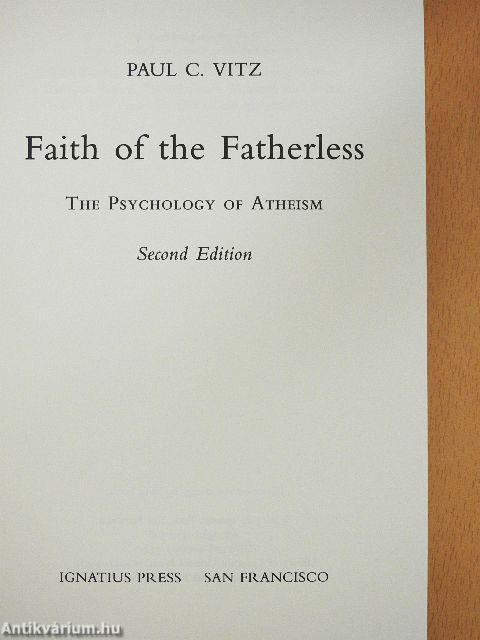
Faith of the Fatherless
The Psychology of Atheism

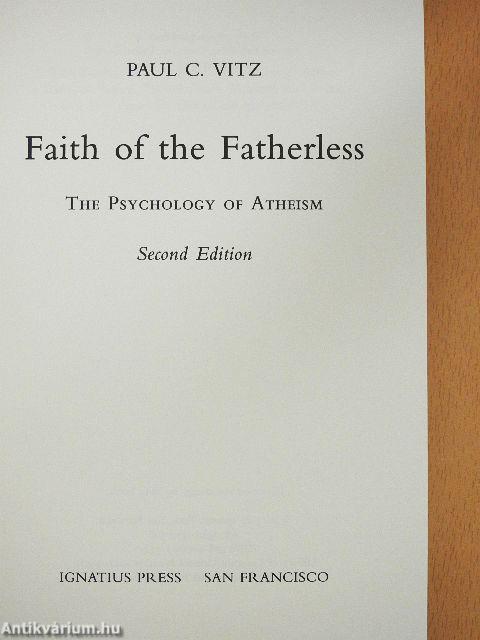
San Francisco
| Kiadó: | Ignatius Press |
|---|---|
| Kiadás helye: | San Francisco |
| Kiadás éve: | |
| Kötés típusa: | Varrott papírkötés |
| Oldalszám: | 214 oldal |
| Sorozatcím: | |
| Kötetszám: | |
| Nyelv: | Angol |
| Méret: | 20 cm x 13 cm |
| ISBN: | 978-1-58617-687-7 |
| Megjegyzés: | 2. kiadás. |
Értesítőt kérek a kiadóról
A beállítást mentettük,
naponta értesítjük a beérkező friss
kiadványokról
naponta értesítjük a beérkező friss
kiadványokról
A beállítást mentettük,
naponta értesítjük a beérkező friss
kiadványokról
naponta értesítjük a beérkező friss
kiadványokról
Előszó
Tovább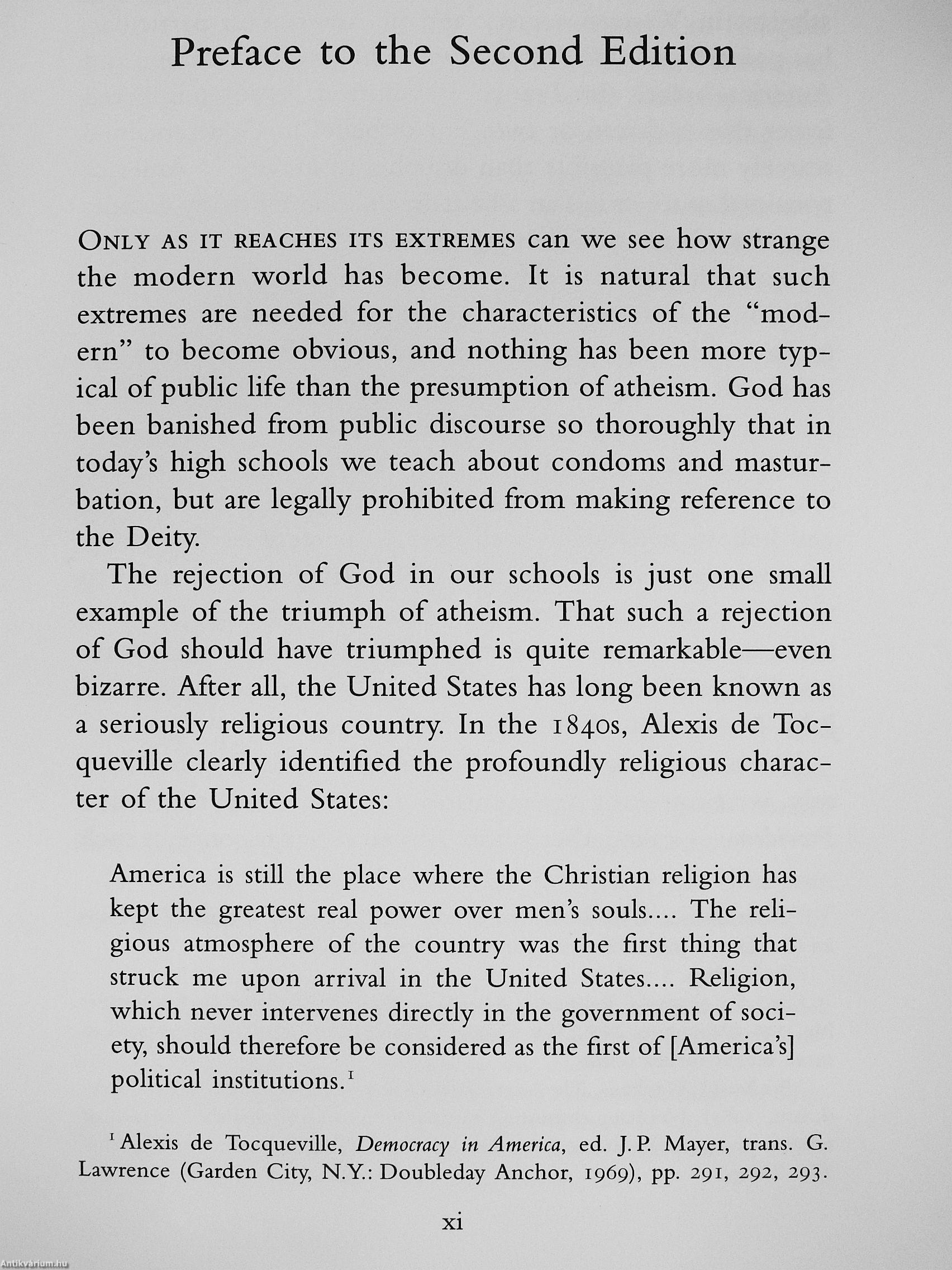
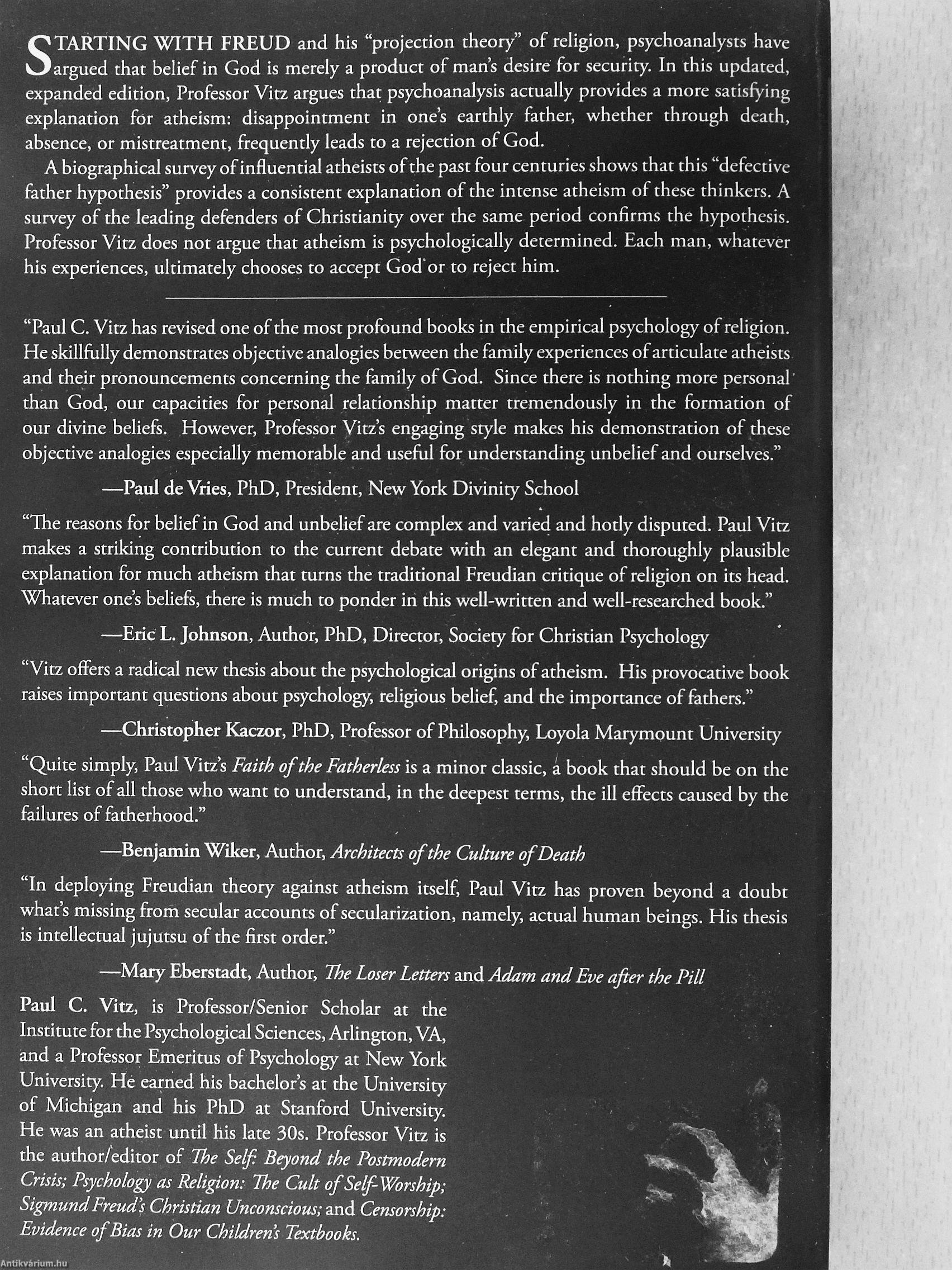
Fülszöveg
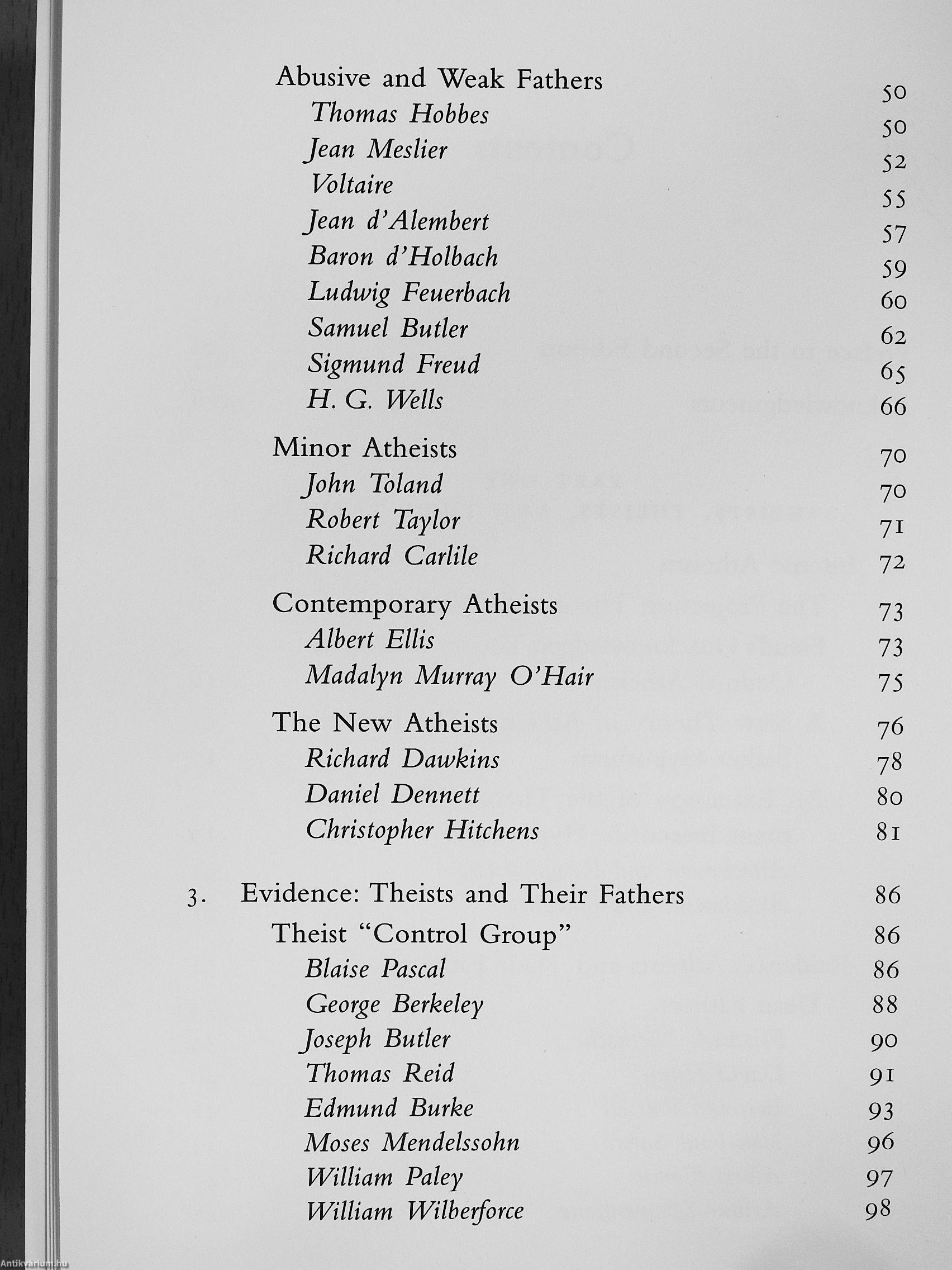
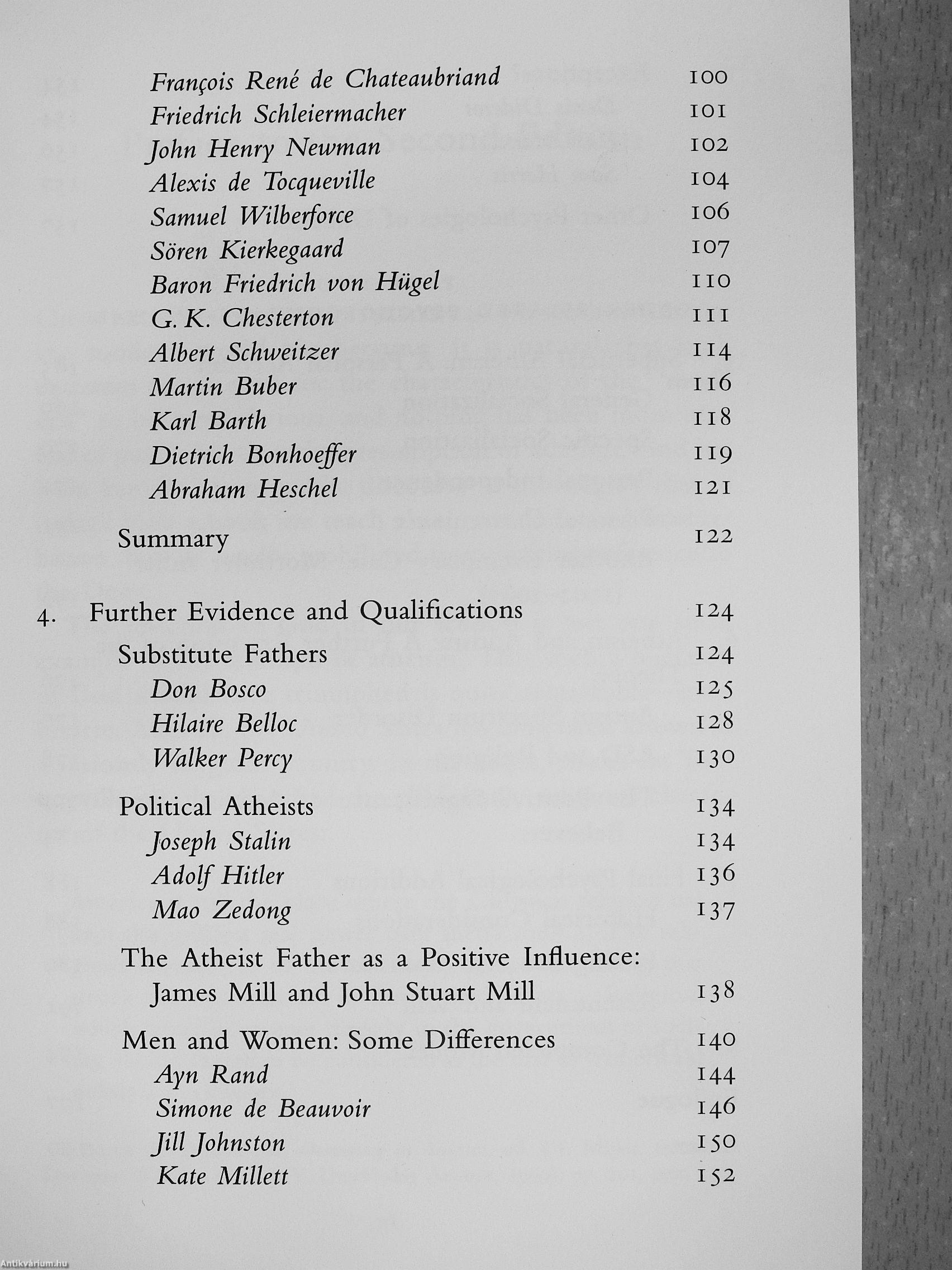
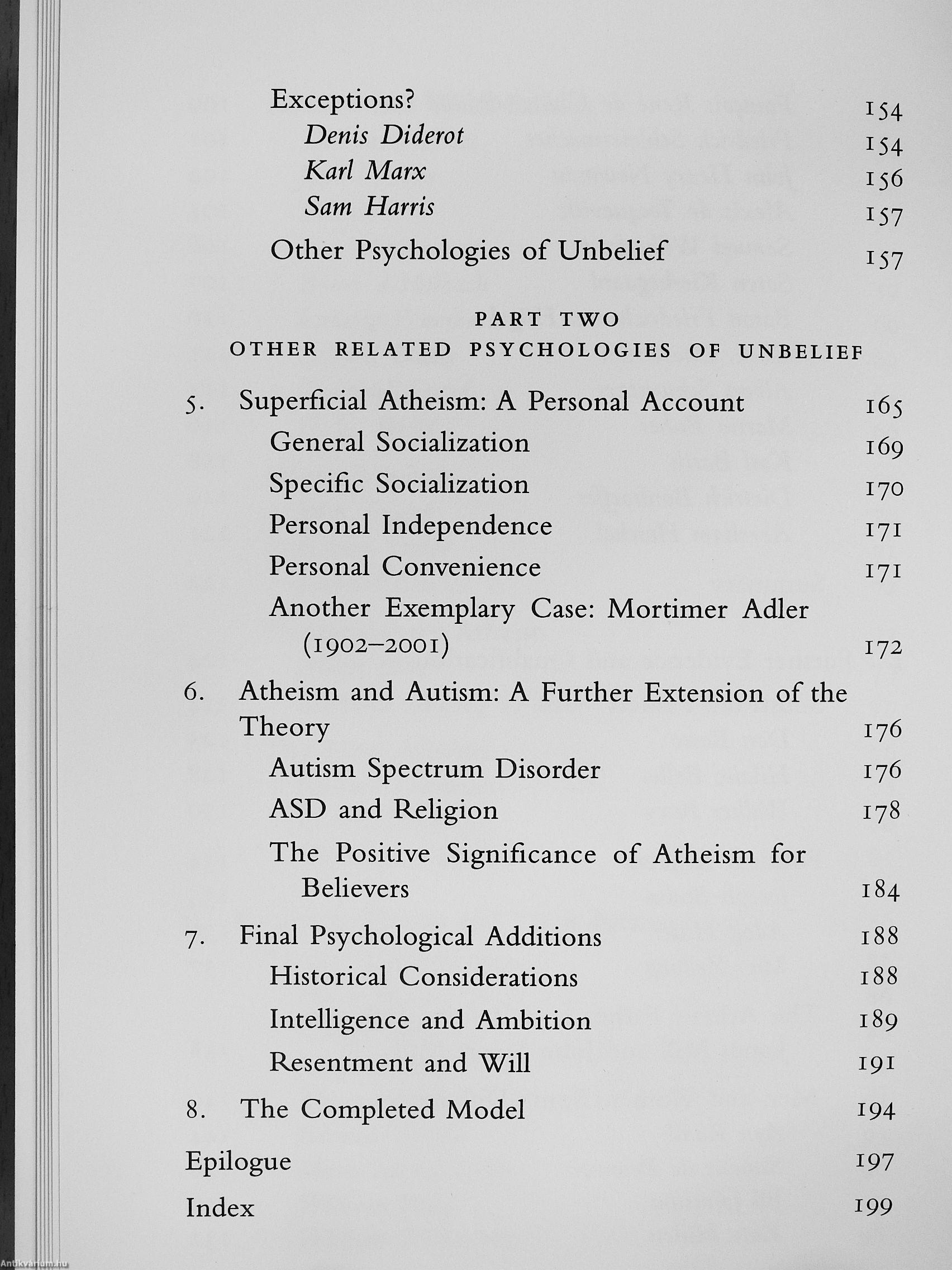
STARTING WITH FREUD and his "projection theory" of religion, psychoanalysts have argued that belief in God is merely a product of man's desire for security. In this updated, expanded edition. Professor Vitz argues that psychoanalysis actually provides a more satisfying explanation for atheism: disappointment in one's earthly father, whether through death, absence, or mistreatment, frequently leads to a rejection of God.
A biographical survey of influential atheists of the past four centuries shows that this "defective father hypothesis" provides a consistent explanation of the intense atheism of these thinkers. A survey of the leading defenders of Christianity over the same period confirms the hypothesis. Professor Vitz does not argue that atheism is psychologically determined. Each man, whatever his experiences, ultimately chooses to accept God'or to reject him.
"Paul C. Vitz has revised one of the most profound books in the empirical psychology of religion. He skillMy... Tovább
Fülszöveg
STARTING WITH FREUD and his "projection theory" of religion, psychoanalysts have argued that belief in God is merely a product of man's desire for security. In this updated, expanded edition. Professor Vitz argues that psychoanalysis actually provides a more satisfying explanation for atheism: disappointment in one's earthly father, whether through death, absence, or mistreatment, frequently leads to a rejection of God.
A biographical survey of influential atheists of the past four centuries shows that this "defective father hypothesis" provides a consistent explanation of the intense atheism of these thinkers. A survey of the leading defenders of Christianity over the same period confirms the hypothesis. Professor Vitz does not argue that atheism is psychologically determined. Each man, whatever his experiences, ultimately chooses to accept God'or to reject him.
"Paul C. Vitz has revised one of the most profound books in the empirical psychology of religion. He skillMy demonstrates objective analogies between the family experiences of articulate atheists and their pronouncements concerning the family of God. Since there is nothing more personal' dian God, our capacities for personal relationship matter tremendously in the formation of our divine beliefs. However, Professor Vitz's engaging style makes his demonstration of these objective analogies especially memorable and useful for understanding unbelief and ourselves."
—Paul de Vries, PhD, President, New York Divinity School
"The reasons for belief in God and unbelief are complex and varied and hotly disputed. Paul Vitz makes a striking contribution to the current debate with an elegant and thoroughly plausible explanation for much atheism that turns the traditional Freudian critique of religion on its head. Whatever one's beliefs, there is much to ponder in this well-written and well-researched book."
—Eric L. Johnson, Author, PhD, Director, Society for Christian Psychology
"Vitz offers a radical new thesis about the psychological origins of atheism. His provocative book raises important questions about psychology, religiotu belief, and the importance of fathers."
—Christopher Kaczor, PhD, Professor of Philosophy, Loyola Marymount University
"Quite simply, Paul Vitz's Faith of the Fatherless is a minor classic, a book that should be on the short list of all those who want to understand, in the deepest terms, the ill eflFects caused by the failures of fatherhood."
—Benjamin Wiker, Author, Architects of the Culture of Death
"In deploying Freudian theory against atheism itself, Paul Vitz has proven beyond a doubt what's missing from secular accounts of sectdarization, namely, actual human beings. His thesis is intellectual jujutsu of the first order."
—Mary Eberstadt, Author, The Loser Letters and Adam and Eve afie
Paul C. Vitz, is Professor/Senior Scholar at the Institute for the Psychological Sciences, Arlington, VA, and a Professor Emeritus of Psychology at New York University. He earned his bachelor's at the University of Michigan and his PhD at Stanford University. He was an atheist until his late 30s. Professor Vitz is the author/editor of The Self Beyond the Postmodern Crisis; Psychology as Religion: The Cult of Self-Worship; SigmundFreud's Christian Unconscious; and Censorship: Evidence of Bias in Our Children's Textbooks.
¦the Pill Vissza

Paul C. Vitz
Paul C. Vitz műveinek az Antikvarium.hu-n kapható vagy előjegyezhető listáját itt tekintheti meg: Paul C. Vitz könyvek, művekMegvásárolható példányok
Nincs megvásárolható példány
A könyv összes megrendelhető példánya elfogyott. Ha kívánja, előjegyezheti a könyvet, és amint a könyv egy újabb példánya elérhető lesz, értesítjük.
 Folytatás Microsoft-tal