
1.153.930
kiadvánnyal nyújtjuk Magyarország legnagyobb antikvár könyv-kínálatát

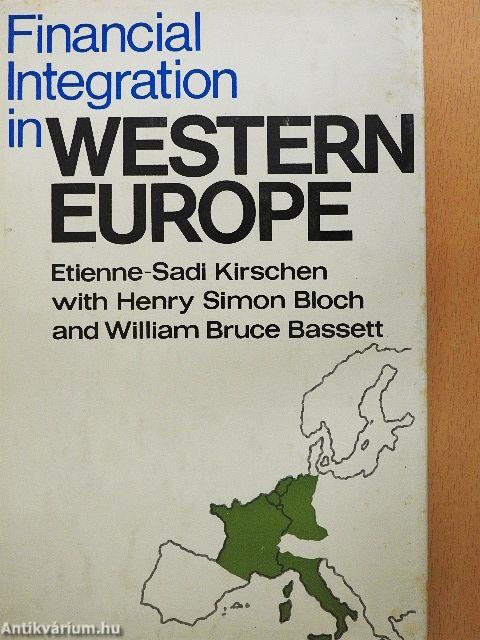
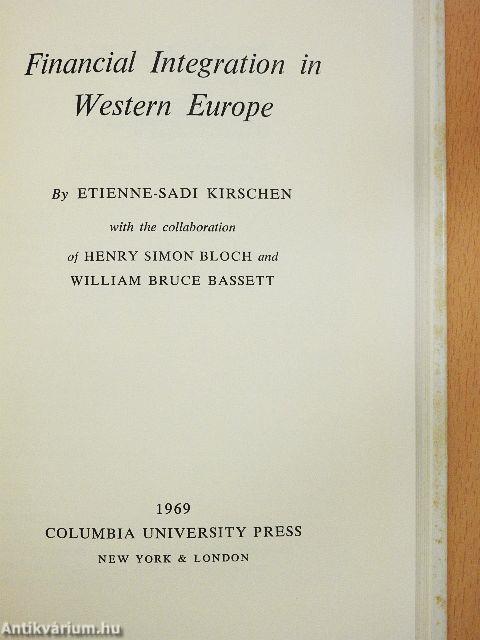
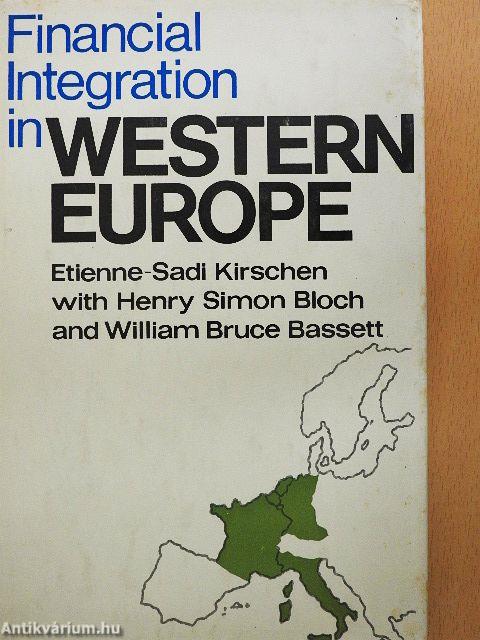
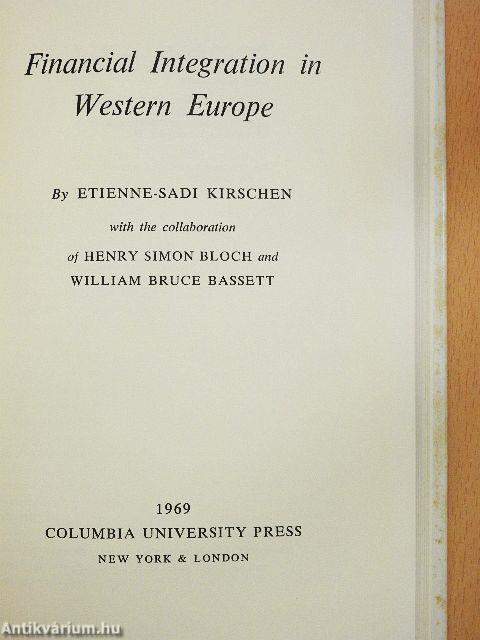
Financial Integration in Western Europe
New York-London
| Kiadó: | Columbia University Press |
|---|---|
| Kiadás helye: | New York-London |
| Kiadás éve: | |
| Kötés típusa: | Vászon |
| Oldalszám: | 144 oldal |
| Sorozatcím: | |
| Kötetszám: | |
| Nyelv: | Angol |
| Méret: | 22 cm x 15 cm |
| ISBN: | |
Értesítőt kérek a kiadóról
A beállítást mentettük,
naponta értesítjük a beérkező friss
kiadványokról
naponta értesítjük a beérkező friss
kiadványokról
A beállítást mentettük,
naponta értesítjük a beérkező friss
kiadványokról
naponta értesítjük a beérkező friss
kiadványokról
Előszó
Tovább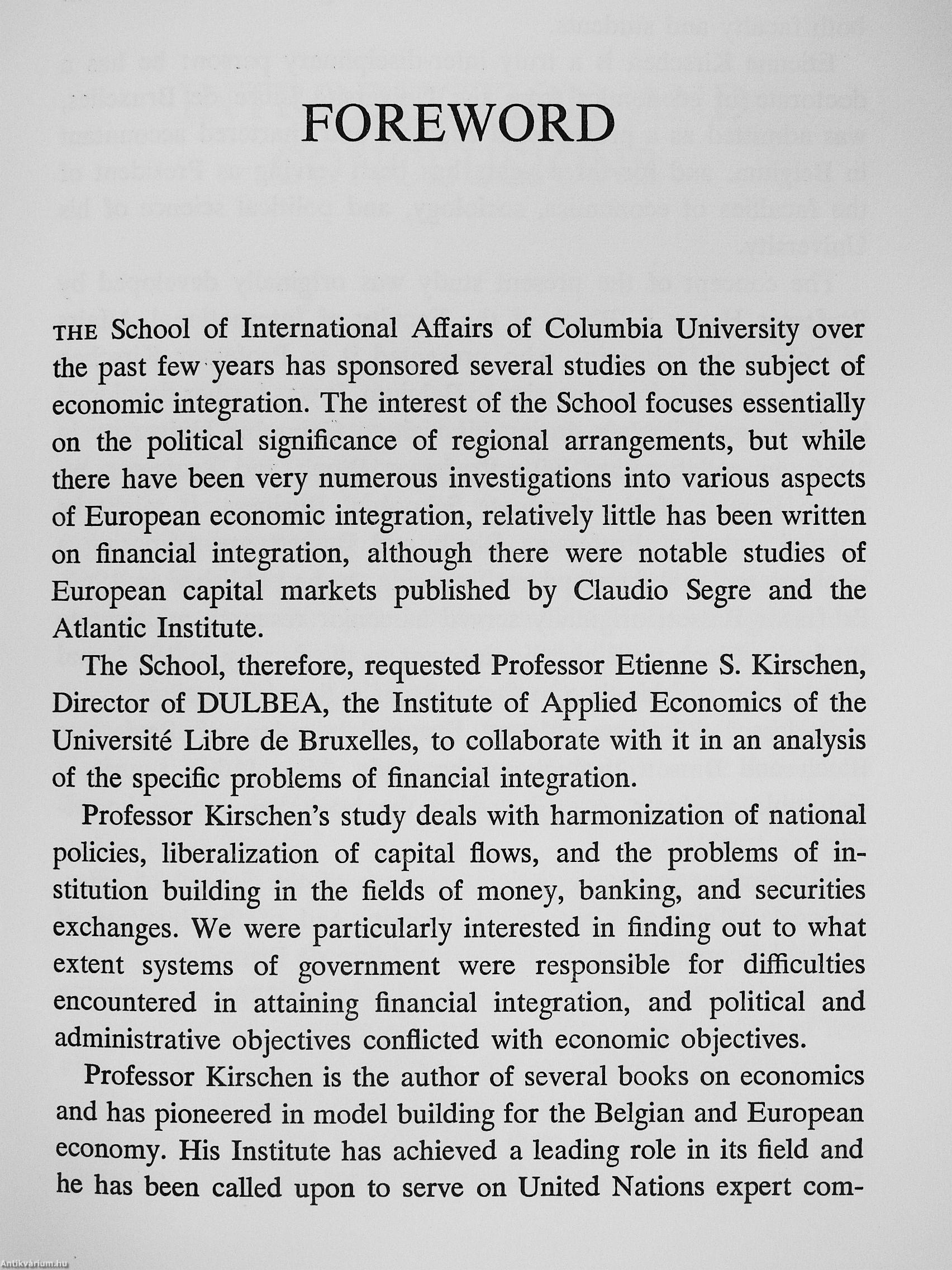
Fülszöveg
FINANCIAL INTEGRATION WESTERN EUROPE
Etienne-Sadi Kirschen with Henry Simon Bloch and William Bruce Bassett
The monetary and financial system of Europe is a matter of world concern. How can the fragmented financial structure of the European Economic Community be integrated? What are the objectives? What are the existing and available instruments, what are the present and potential institutions? These questions form the focus of this presentation and analysis of the financial aspects of European integration. Since all important investment and exchange transactions in market economies require the intermediation of money, a true common market in Western Europe necessitates liberalized financial vehicles with attributes harmonized throughout the Community.
Central to the discussion is the history and text of the Rome Treaty, which established the Common Market. The overall philosophy of the Rome Treaty calls for the removal of all obstacles to international trade and investment... Tovább
Fülszöveg
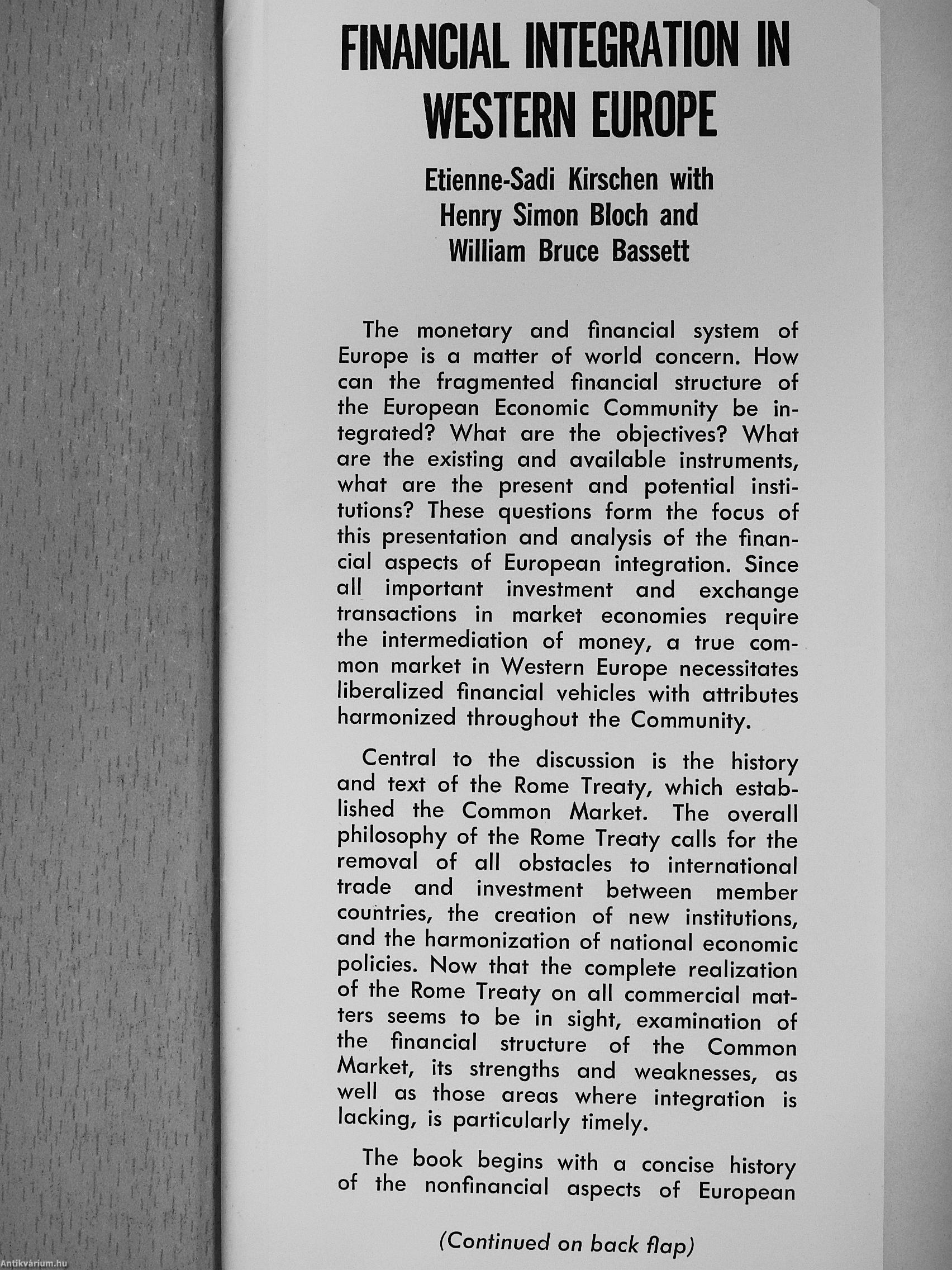
FINANCIAL INTEGRATION WESTERN EUROPE
Etienne-Sadi Kirschen with Henry Simon Bloch and William Bruce Bassett
The monetary and financial system of Europe is a matter of world concern. How can the fragmented financial structure of the European Economic Community be integrated? What are the objectives? What are the existing and available instruments, what are the present and potential institutions? These questions form the focus of this presentation and analysis of the financial aspects of European integration. Since all important investment and exchange transactions in market economies require the intermediation of money, a true common market in Western Europe necessitates liberalized financial vehicles with attributes harmonized throughout the Community.
Central to the discussion is the history and text of the Rome Treaty, which established the Common Market. The overall philosophy of the Rome Treaty calls for the removal of all obstacles to international trade and investment between member countries, the creation of new institutions, and the harmonization of national economic policies. Now that the complete realization of the Rome Treaty on all commercial matters seems to be in sight, examination of the financial structure of the Common Market, its strengths and weaknesses, as well as those areas where integration is lacking, is particularly timely.
The book begins with a concise history of the nonflnancial aspects of European
(Continued on back flap)
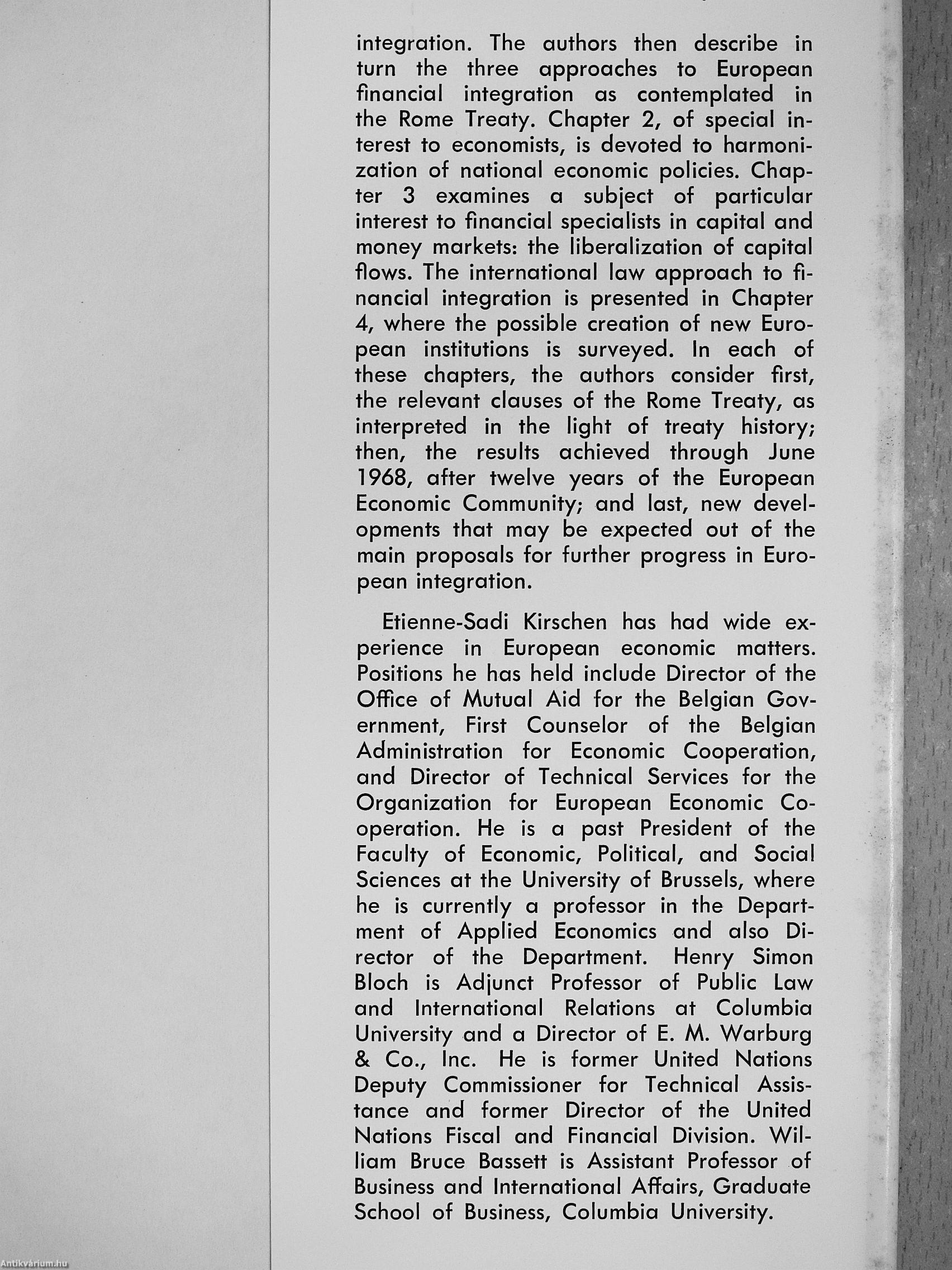
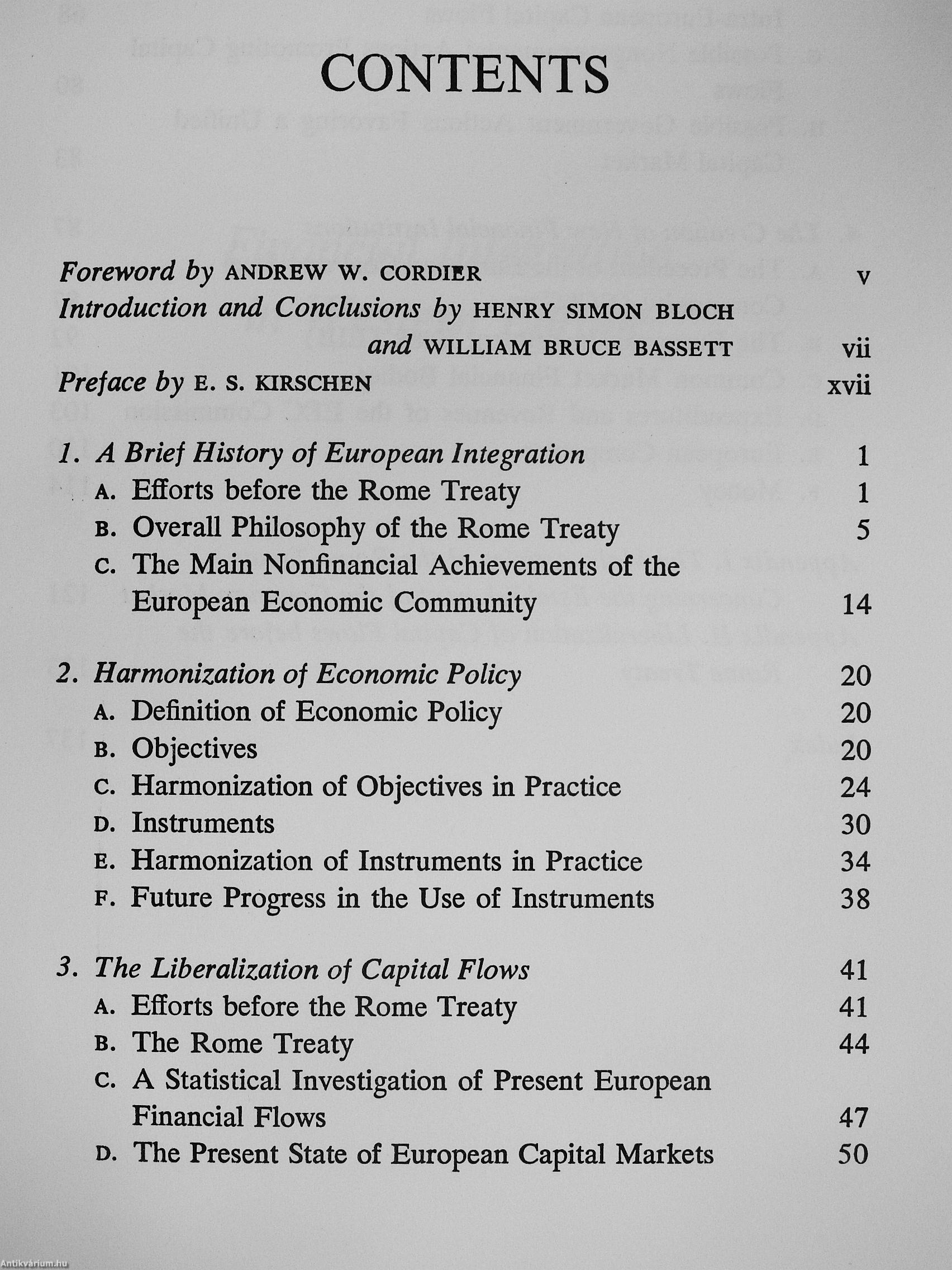
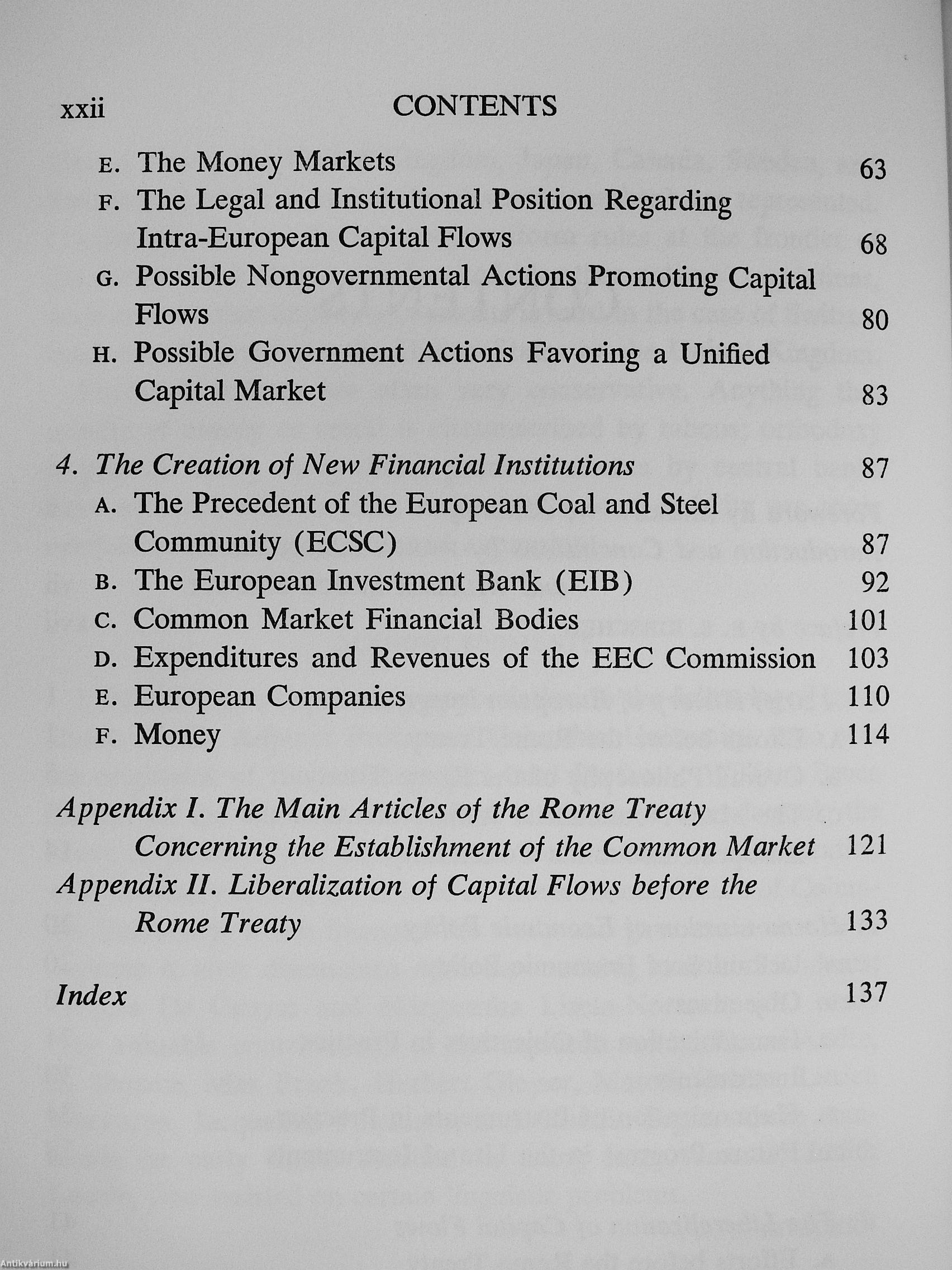
integration. The authors then describe in turn the three approaches to European financial integration as contemplated in the Rome Treaty. Chapter 2, of special interest to economists, is devoted to harmonization of national economic policies. Chapter 3 examines a subject of particular interest to financial specialists in capital and money markets: the liberalization of capital flows. The international law approach to financial integration is presented in Chapter 4, where the possible creation of new European institutions is surveyed. In each of these chapters, the authors consider first, the relevant clauses of the Rome Treaty, as interpreted in the light of treaty history; then, the results achieved through June 1968, after twelve years of the European Economic Community; and last, new developments that may be expected out of the main proposals for further progress in European integration.
Etienne-Sadi Kirschen has had wide experience in European economic matters. Positions he has held include Director of the Office of Mutual Aid for the Belgian Government, First Counselor of the Belgian Administration for Economic Cooperation, and Director of Technical Services for the Organization for European Economic Cooperation. He is a past President of the Faculty of Economic, Political, and Social Sciences at the University of Brussels, where he is currently a professor in the Department of Applied Economics and also Director of the Department. Henry Simon Bloch is Adjunct Professor of Public Law and International Relations at Columbia University and a Director of E. M. Warburg & Co., Inc. He is former United Nations Deputy Commissioner for Technical Assistance and former Director of the United Nations Fiscal and Financial Division. William Bruce Bassett is Assistant Professor of Business and International Affairs, Graduate School of Business, Columbia University. Vissza
Témakörök
- Közgazdaságtan > Gazdaságpolitika
- Közgazdaságtan > Pénzügy > Egyéb
- Idegennyelv > Idegennyelvű könyvek > Angol > Közgazdaságtan > Gazdaságpolitika
- Közgazdaságtan > Közgazdasági elméletek > Európai Unió
- Idegennyelv > Idegennyelvű könyvek > Angol > Közgazdaságtan > Közgazdasági elméletek > Európai Unió
- Idegennyelv > Idegennyelvű könyvek > Angol > Közgazdaságtan > Pénzügy > Egyéb
Megvásárolható példányok
Állapotfotók




A védőborító és a lapélek foltosak.
Állapot:
Jó
2.980 ,-Ft
15
pont kapható
Kosárba
 Folytatás Microsoft-tal