
1.155.932
kiadvánnyal nyújtjuk Magyarország legnagyobb antikvár könyv-kínálatát

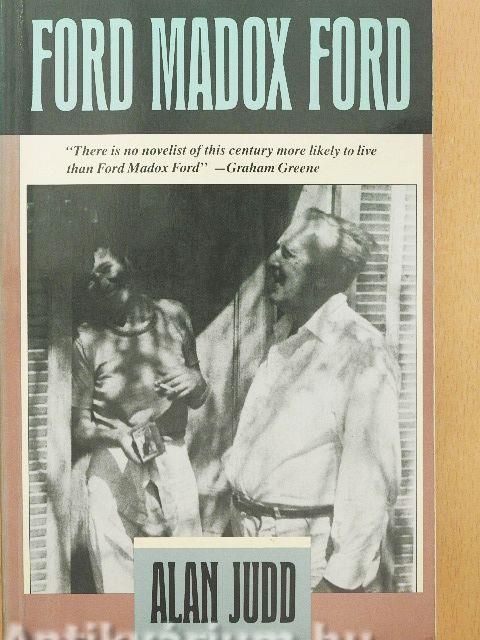
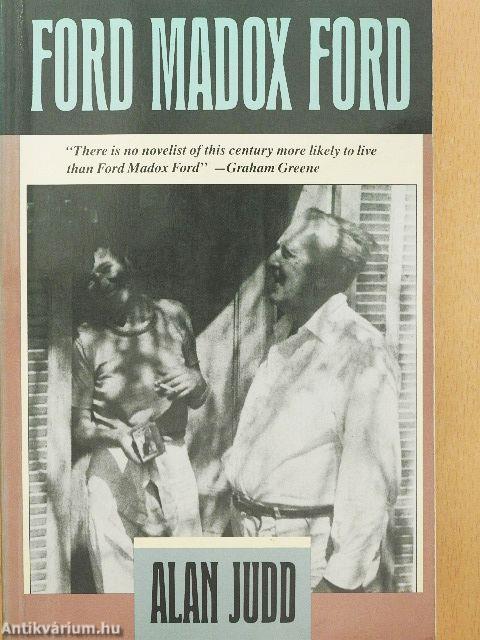
Ford Madox Ford
Cambridge
| Kiadó: | Harvard University Press |
|---|---|
| Kiadás helye: | Cambridge |
| Kiadás éve: | |
| Kötés típusa: | Varrott papírkötés |
| Oldalszám: | 476 oldal |
| Sorozatcím: | |
| Kötetszám: | |
| Nyelv: | Angol |
| Méret: | 23 cm x 15 cm |
| ISBN: | 0-674-30816-6 |
| Megjegyzés: | Fekete-fehér fotókkal. |
Értesítőt kérek a kiadóról
A beállítást mentettük,
naponta értesítjük a beérkező friss
kiadványokról
naponta értesítjük a beérkező friss
kiadványokról
A beállítást mentettük,
naponta értesítjük a beérkező friss
kiadványokról
naponta értesítjük a beérkező friss
kiadványokról
Előszó
Tovább
Fülszöveg
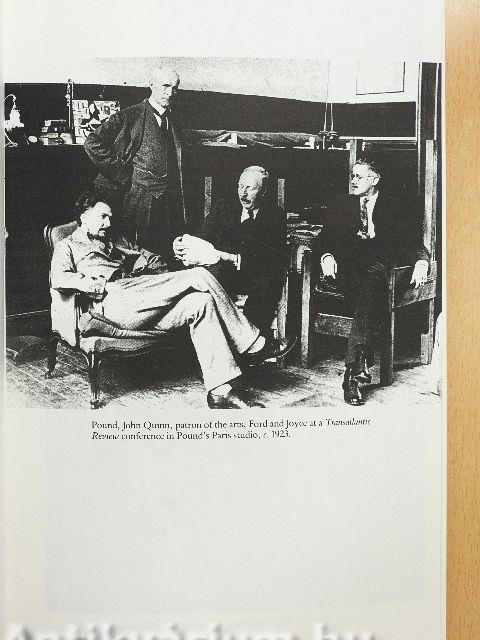
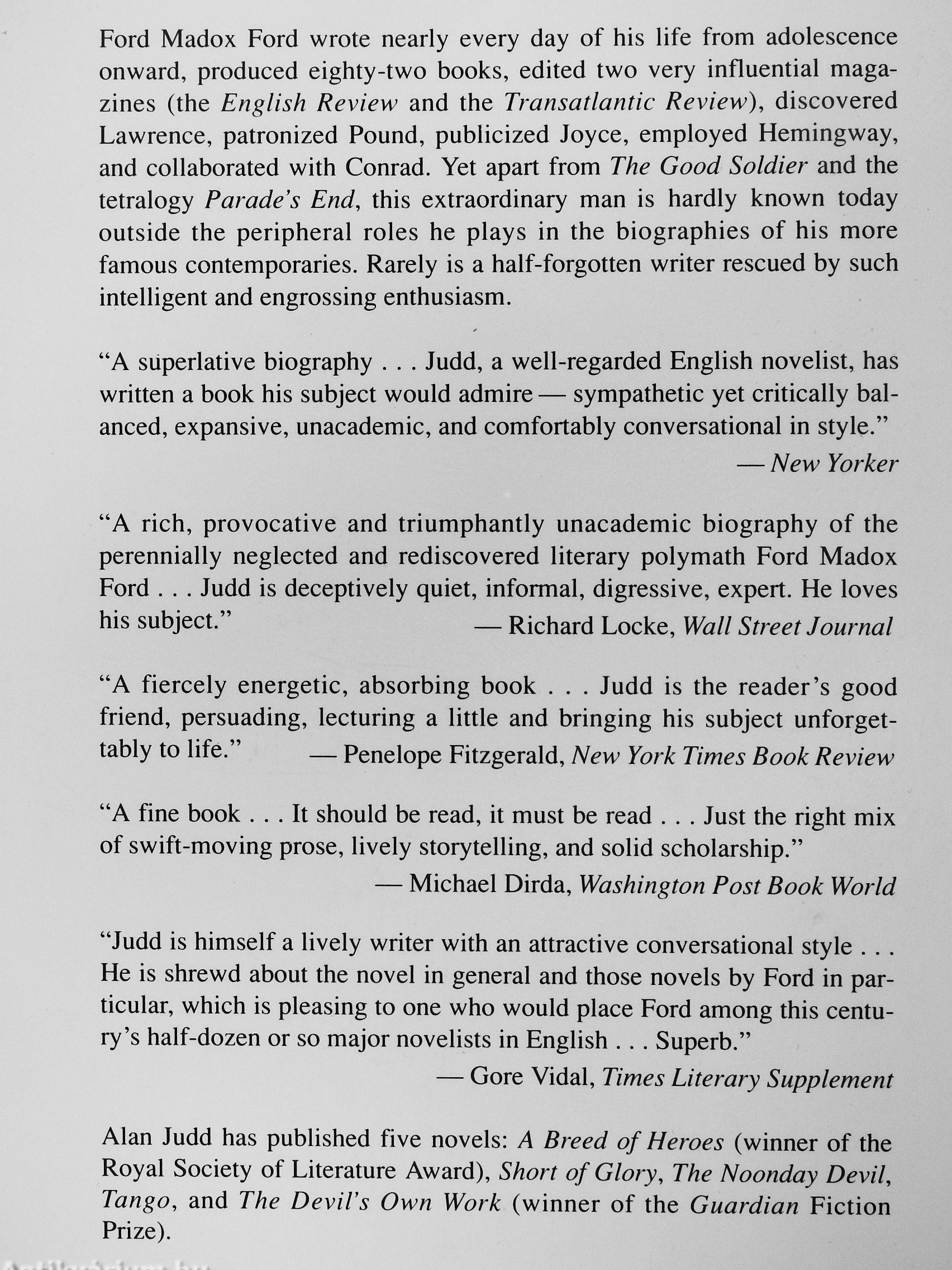
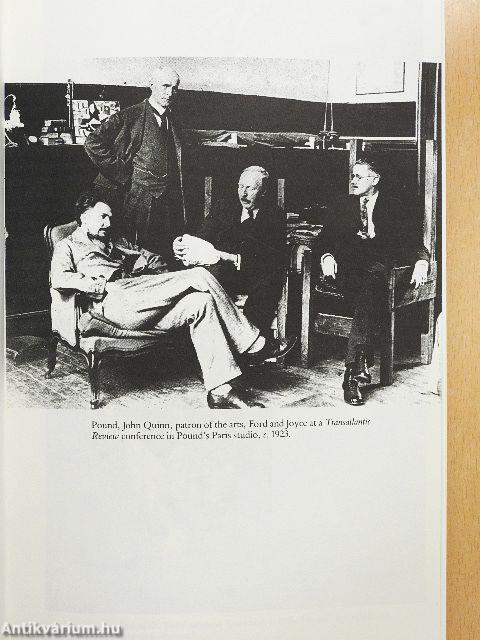
Ford Madox Ford wrote nearly every day of his hfe from adolescence onward, produced eighty-two books, edited two very influential magazines (the English Review and the Transatlantic Review), discovered Lawrence, patronized Pound, publicized Joyce, employed Hemingway, and collaborated with Conrad. Yet apart from The Good Soldier and the tetralogy Parade's End, this extraordinary man is hardly known today outside the peripheral roles he plays in the biographies of his more famous contemporaries. Rarely is a half-forgotten writer rescued by such intelligent and engrossing enthusiasm.
"A superlative biography . . . Judd, a well-regarded English novelist, has written a book his subject would admire — sympathetic yet critically balanced, expansive, unacademic, and comfortably conversational in style."
— New Yorker
"A rich, provocative and triumphantly unacademic biography of the perennially neglected and rediscovered literary polymath Ford Madox Ford . . . Judd is deceptively quiet,... Tovább
Fülszöveg
Ford Madox Ford wrote nearly every day of his hfe from adolescence onward, produced eighty-two books, edited two very influential magazines (the English Review and the Transatlantic Review), discovered Lawrence, patronized Pound, publicized Joyce, employed Hemingway, and collaborated with Conrad. Yet apart from The Good Soldier and the tetralogy Parade's End, this extraordinary man is hardly known today outside the peripheral roles he plays in the biographies of his more famous contemporaries. Rarely is a half-forgotten writer rescued by such intelligent and engrossing enthusiasm.
"A superlative biography . . . Judd, a well-regarded English novelist, has written a book his subject would admire — sympathetic yet critically balanced, expansive, unacademic, and comfortably conversational in style."
— New Yorker
"A rich, provocative and triumphantly unacademic biography of the perennially neglected and rediscovered literary polymath Ford Madox Ford . . . Judd is deceptively quiet, informal, digressive, expert. He loves his subject." _ Richard Locke, Wall Street Journal
"A fiercely energetic, absorbing book . . . Judd is the reader's good friend, persuading, lecturing a little and bringing his subject unforgettably to life." — Penelope Fitzgerald, New York Times Book Review
"A fine book It should be read, it must be read . . . Just the right mix of swift-moving prose, lively storytelling, and solid scholarship."
— Michael Dirda, Washington Post Book World
"Judd is himself a lively writer with an attractive conversational style . . . He is shrewd about the novel in general and those novels by Ford in particular, which is pleasing to one who would place Ford among this century's half-dozen or so major novelists in English . . . Superb."
— Gore Vidal, Times Literary Supplement
Alan Judd has published five novels: A Breed of Heroes (winner of the Royal Society of Literature Award), Short of Glory, The Noonday Devil, Tango, and The Devil's Own Work (winner of the Guardian Fiction Prize). Vissza
Témakörök
- Irodalomtörténet > Írókról, költőkről
- Életrajz > Művészet > Irodalom > Írók
- Idegennyelv > Idegennyelvű könyvek > Angol > Irodalomtörténet
- Idegennyelv > Idegennyelvű könyvek > Angol > Életrajz > Művészet > Irodalom > Írók
- Irodalomtörténet > Monográfia, életrajz
- Irodalomtörténet > Világirodalom > Európai irodalom > Angol
- Irodalomtörténet > Irodalomtudomány > Korszakok > 19. századi
- Irodalomtörténet > Irodalomtudomány > Korszakok > 20. századi
Alan Judd
Alan Judd műveinek az Antikvarium.hu-n kapható vagy előjegyezhető listáját itt tekintheti meg: Alan Judd könyvek, művekMegvásárolható példányok
Állapotfotók
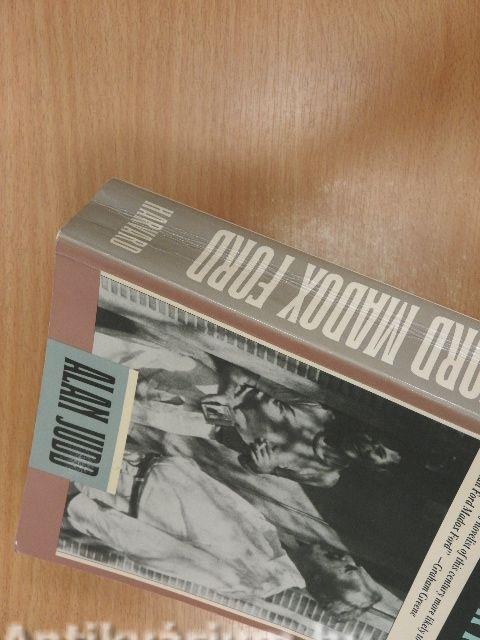
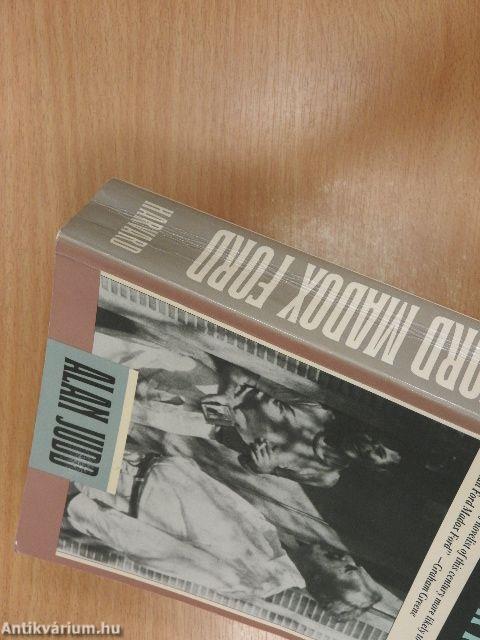
Átlagos állapotú példány.
Állapot:
Jó
4.980 ,-Ft
25
pont kapható
Kosárba
 Folytatás Microsoft-tal