Fülszöveg
,1 : i i'y^m
< i
This major work by one of the great figures of ZOth-century science represents a fundamental challenge to established thinking on the origins and nature of the Universe. Fred Hoyle has entered the "creation and evolution" debate with a work of extraordinary, and possibly far-reaching, importance. In a remarkable sweep across the sciences, he assembles the cunent theories, examines them according to the evidence, and gives judgment. In the course of this sweep, a number of cows sacred to the scientific establishment are comprehensively lassoed:
Did life start by random processes? No.
"Imagine a blindfolded person trying to solve the Rubik cube. The chance against achievingpeifect colour matching is about 50,000,000,000,000,000,000 to 1. These odds are roughly the same as those against just one of our body's 200,000proteinshavingevolvedrandondy, by chance."
Could chance operatie on such a large scale? No.
"The Universe, as observed by astronomers, would not be...
Tovább
Fülszöveg
,1 : i i'y^m
< i
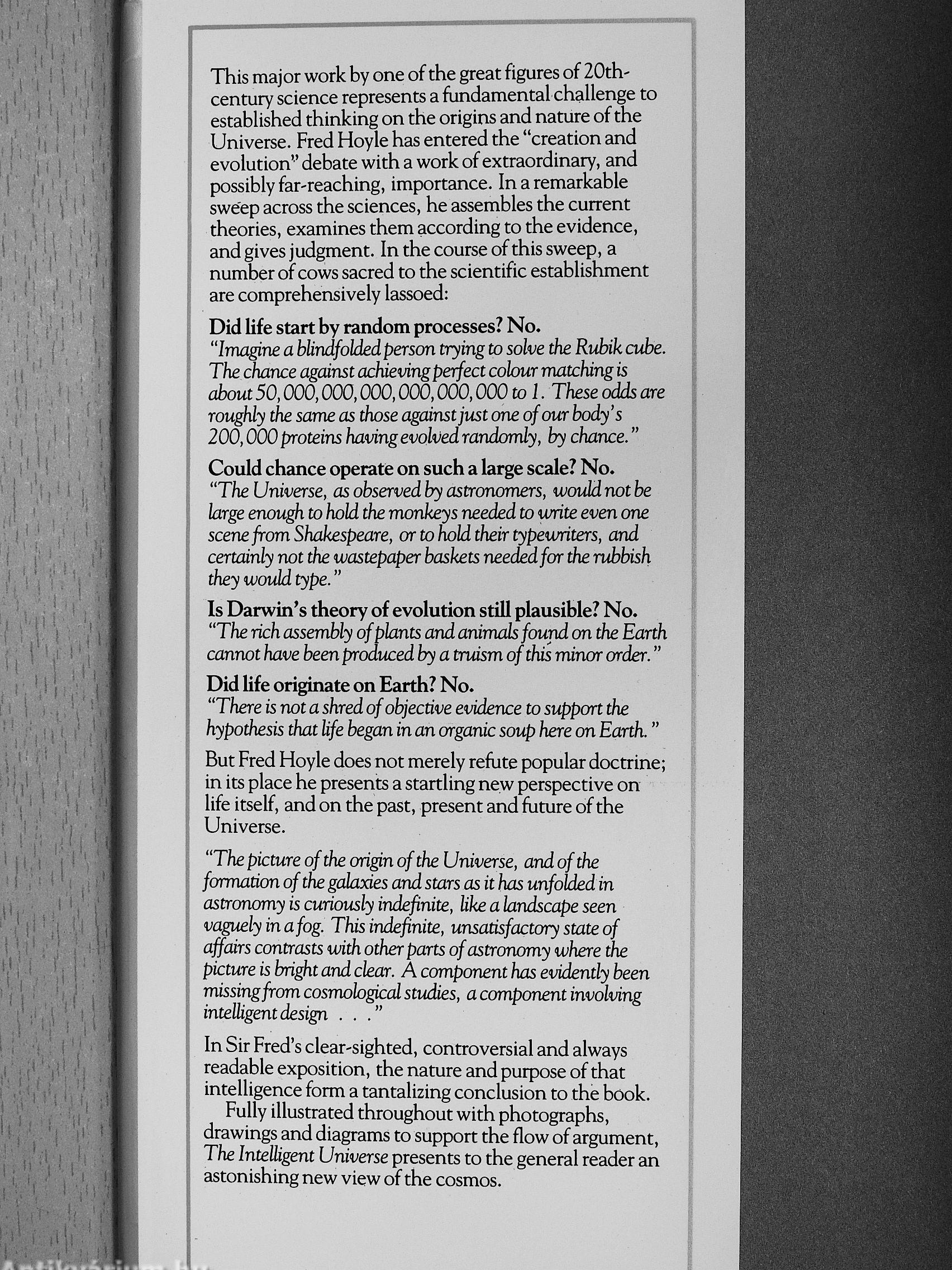
This major work by one of the great figures of ZOth-century science represents a fundamental challenge to established thinking on the origins and nature of the Universe. Fred Hoyle has entered the "creation and evolution" debate with a work of extraordinary, and possibly far-reaching, importance. In a remarkable sweep across the sciences, he assembles the cunent theories, examines them according to the evidence, and gives judgment. In the course of this sweep, a number of cows sacred to the scientific establishment are comprehensively lassoed:
Did life start by random processes? No.
"Imagine a blindfolded person trying to solve the Rubik cube. The chance against achievingpeifect colour matching is about 50,000,000,000,000,000,000 to 1. These odds are roughly the same as those against just one of our body's 200,000proteinshavingevolvedrandondy, by chance."
Could chance operatie on such a large scale? No.
"The Universe, as observed by astronomers, would not be large enougfi to hold the monkeys needed to write even one scene from Shakespeare, or to hold their typewriters, and certainly not the wastepaper baskets needed for the rubbish they would type."
Is Darwin's theory of evolution still plausible? No.
"The rich assembly of plants and animals found on the Earth canrwt have been produced by a truism of this minor order."
Did life originate on Earth? No.
"There is not a shred of objective evidence to support the hypothesis that life began in an organic soup here on Earth."
But Fred Hoyle does not merely refute popular doctrine; in its place he presents a startling new perspective on life itself, and on the past, present and fiiture of the Universe.
"The picture of the oripn of the Universe, and of the formation of the gcdaxies and stars as it has unfolded in astronomy is curiously indefinite, like a landscape seen vaguely in a fog. This indefinite, unsatisfactory state of affairs contrasts with other parts of astronomy where the picture is bright and clear. A component has evidently been missing from cosmobgical studies, a component involving intelligent design "
In Sir Fred's clear-sighted, controversial and always readable exposition, the nature and purpose of that intelligence form a tantalizing conclusion to the book.
Fully illustrated throughout with photographs, drawings and diagrams to support the flow of argument. The Intelligent Universe presents to the general reader an astonishing new view of the cosmos.
Vissza 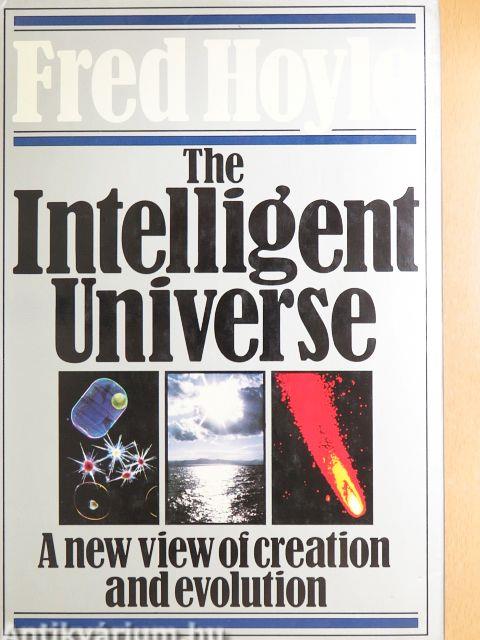





 Folytatás Microsoft-tal