Fülszöveg
ADVANCE PRAISE FOR
"Jacques Barzun's summa is the work of a very great historian and of a seer. The phrase from the Bible is apposite: 'The hearing ear, and the seeing eye' is his great gift—and a gift to his readers."
—^JOHN LuKACS, author of Five Days in London, May 1940
"This astonishing and monumental work may fairly take its place alongside Gibbon, and for much the same array of qualities: a majestic view of five hundred years of history, done in great style, with vast erudition and a continuously entertaining idiosyncrasy of judgment."
—Alistair Cooke
"A conversational tour de force. To every one of these pages Barzun brings a quiet good sense, a more than encyclopedic knowledge, and an unfailing indignation at opportunities lost and ideals betrayed. On almost every page he makes sure that other voices are heard, from Martin Luther, Erasmus, and Montaigne to Marcel Duchamp, James Joyce, and Andy Warhol. . . . This book is what used to be called a 'liberal education,'...
Tovább
Fülszöveg
ADVANCE PRAISE FOR
"Jacques Barzun's summa is the work of a very great historian and of a seer. The phrase from the Bible is apposite: 'The hearing ear, and the seeing eye' is his great gift—and a gift to his readers."
—^JOHN LuKACS, author of Five Days in London, May 1940
"This astonishing and monumental work may fairly take its place alongside Gibbon, and for much the same array of qualities: a majestic view of five hundred years of history, done in great style, with vast erudition and a continuously entertaining idiosyncrasy of judgment."
—Alistair Cooke
"A conversational tour de force. To every one of these pages Barzun brings a quiet good sense, a more than encyclopedic knowledge, and an unfailing indignation at opportunities lost and ideals betrayed. On almost every page he makes sure that other voices are heard, from Martin Luther, Erasmus, and Montaigne to Marcel Duchamp, James Joyce, and Andy Warhol. . . . This book is what used to be called a 'liberal education,' and it should bring that phrase back into fevor."
—^john Russell, author of Matisse: Father & Son and London
"To define Western culture is the most delicate and difficult of all operations. Jacques Barzun is one of the most cultivated exemplars of Western civilization and his book contains the experience and the reflection of a lifetime. He tells us not to judge past centuries by our standards and to recognize that, however different, those centuries have made us what we are."
—Noel Annan, author of Our A^e
"From Dawn to Decadence is a personal, witty, learned, bold, and above all wise retrospect of the past half . . . millennium. One will read it through with moimting interest, and then go back again and again to savor favorite parts of it."
—Gertrude Himmelfarb, author of One Nation, Two Cultures
"This masterfiil, provocative, and highly readable assessment of the last half-millenniimi of Western culture is the perfect antidote to the dumbed-down consumerism of our times. It is hard to imagine anyone other than Jacques Barzim as the writer of this engaging history. Reading it is akin to participating in a fast-paced seminar with one of the liveliest and best informed minds of the day."
—Diane RaVITCH, New York University
"[A] stunning five-century study of civilizations cultural retreat." —William Safire, New York Times
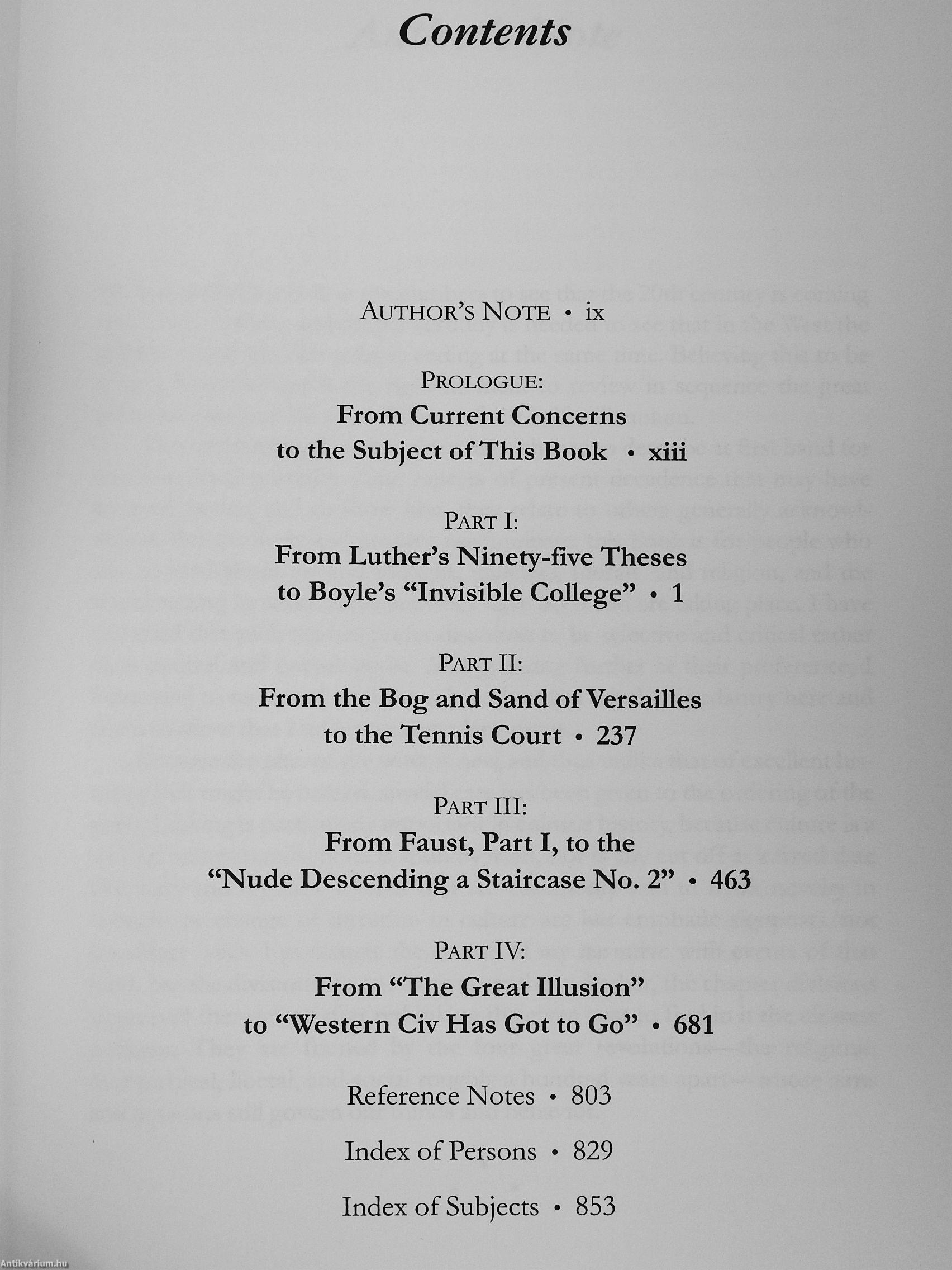
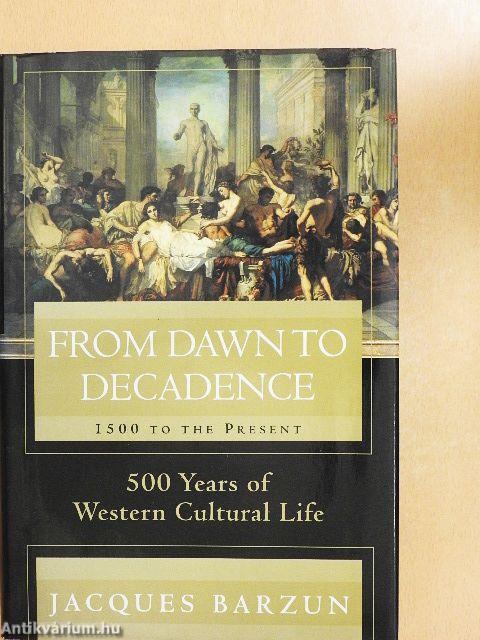
Highly regarded here and abroad for some thirty works of cultural history and criticism, master historian Jacques Barzun has now set down in one continuous narrative the sum of his discoveries and conclusions about the whole of Western culture since 1500.
In this account, Barzun describes what Western Man wrought from the Renaissance and Reformation down to the present in the double light of its own time and our pressing concerns. He introduces characters and incidents with his usual literary style and grace, bringing to the fore those that have been forgotten or obscured. His compelling chapters—such as "Puritans as Democrats," "The Monarchs' Revolution," "The Artist Prophet and Jester"—show the recurrent role of great themes throughout the eras.
The triumphs and defeats of five hundred years form an inspiring saga that modifies the current impression of one long tale of oppression by white European males. Women and their deeds are prominent, and freedom (even in sexual matters) is not an invention of the last decades. And when Barzun rates the present not as a culmination but a decline, he is in no way a prophet of doom. Instead, he shows decadence as the normal close of great periods and a necessary condition of the creative novelty that will burst forth—tomorrow or the next day.
Only after a lifetime of separate studies covering a broad territory could a writer create with such ease the synthesis displayed in this magnificent volume.
"Jacques Barzun was born to write this book, but he could not possibly have written it when he was fifty. It is a masterwork that required a master: a man whose entire life has been spent acquiring the perspective that only wisdom, and not mere knowledge, can grant. Thank heaven he has lived long enough to complete a book no one else could even have begun." —Anne FaDIMAN, editor of The American Scholar
"What has been the value, to the world, of the American Revolution of the 1770s? And of the French Revolution that began in 1789? Jacques Barzun has addressed these questions, and the questions which these questions raised, repeatedly—in an extraordinary series of books (not to mention his lectures, informal talks, and conversations) over the course of half a century and more. . . . No one else could put together such a rich and diverse summing-up of everything as From Dawn to Decadence"
—Eric BeNTLEY, author of The Playwright as Thinker
"This is an extraordinary book. Jacques Barzun's erudition is imrivaled in its comprehensiveness and penetration. No one else could have deployed such erudition over a half-millennium of history with such clarity, grace, narrative drive, and constant and illuminating insight- More than ever it is clear that Jacques Barzun is one of the greatest cultural treasures of our time."
—^John SilBER, chancellor, Boston University
"Jacques Barzun has not just studied European culture; he has lived it, with rare intensity. This book is the summa of his historical teaching, for everyman. Four great eras since the Renaissance provide its frame. Within it, sustaining the themes of social and intellectual concerns that link the eras with each other, there throng the myriad creative individuals—artists and intellectuals—who have struggled to give shape and meaning to our restless, dynamic culture. Drawing on his personal encounters with them all in his life of learning, Barzun has created a vast number of miniature portraits which serve him as their many-hued stones served the mosaic artists of Byzantium: to give vital substance and color to their grand designs. An extraordinary work."
—Carl E. SchORSKE, Princeton University Emeritus
Born in France in 1907, jacques Barzun came to the United States in 1920. After graduating from Columbia College, he joined the faculty of the university, becoming Seth Low Professor of Fiistory and, for a decade, Dean of Faculties and Provost. The author of some thirty books, he received the Gold Medal for Criticism from the American Academy of Arts and Letters, of which he was twice president.
Jacket design © 2000 by Marc Cohen Jacket photograph by Erich Lessing/Art Resource Author photograph courtesy of Jactjues Barzun
H^rperCoWinsPHblishers
www.harpercoilins.com
Vissza 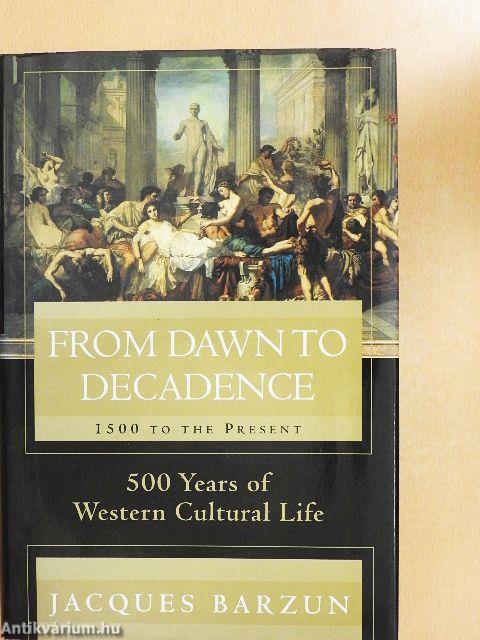




 Folytatás Microsoft-tal