
1.137.213
kiadvánnyal nyújtjuk Magyarország legnagyobb antikvár könyv-kínálatát

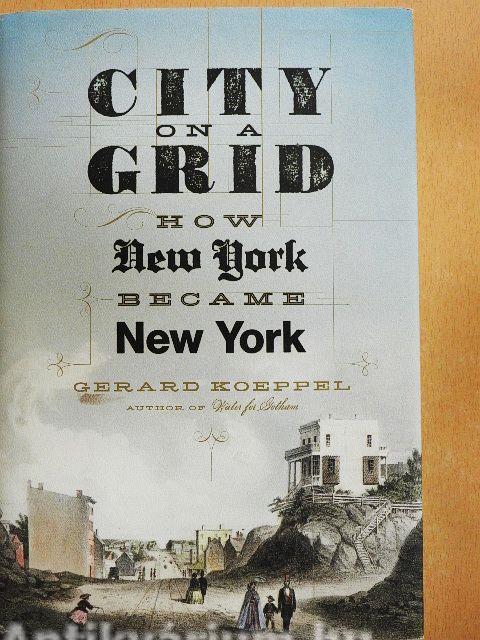
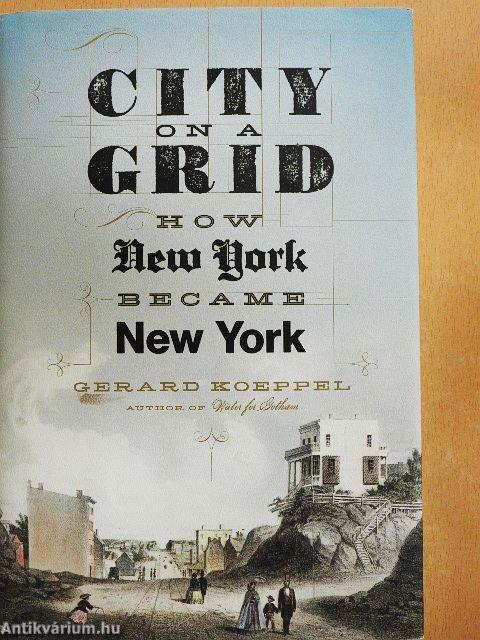
City on a Grid
How New York became New York
Philadelphia
| Kiadó: | Da Capo Press |
|---|---|
| Kiadás helye: | Philadelphia |
| Kiadás éve: | |
| Kötés típusa: | Fűzött keménykötés |
| Oldalszám: | 296 oldal |
| Sorozatcím: | |
| Kötetszám: | |
| Nyelv: | Angol |
| Méret: | 24 cm x 17 cm |
| ISBN: | 978-0-306-82284-1 |
| Megjegyzés: | Fekete-fehér illusztrációkkal. |
Értesítőt kérek a kiadóról
A beállítást mentettük,
naponta értesítjük a beérkező friss
kiadványokról
naponta értesítjük a beérkező friss
kiadványokról
A beállítást mentettük,
naponta értesítjük a beérkező friss
kiadványokról
naponta értesítjük a beérkező friss
kiadványokról
Előszó
Tovább
Fülszöveg
it,
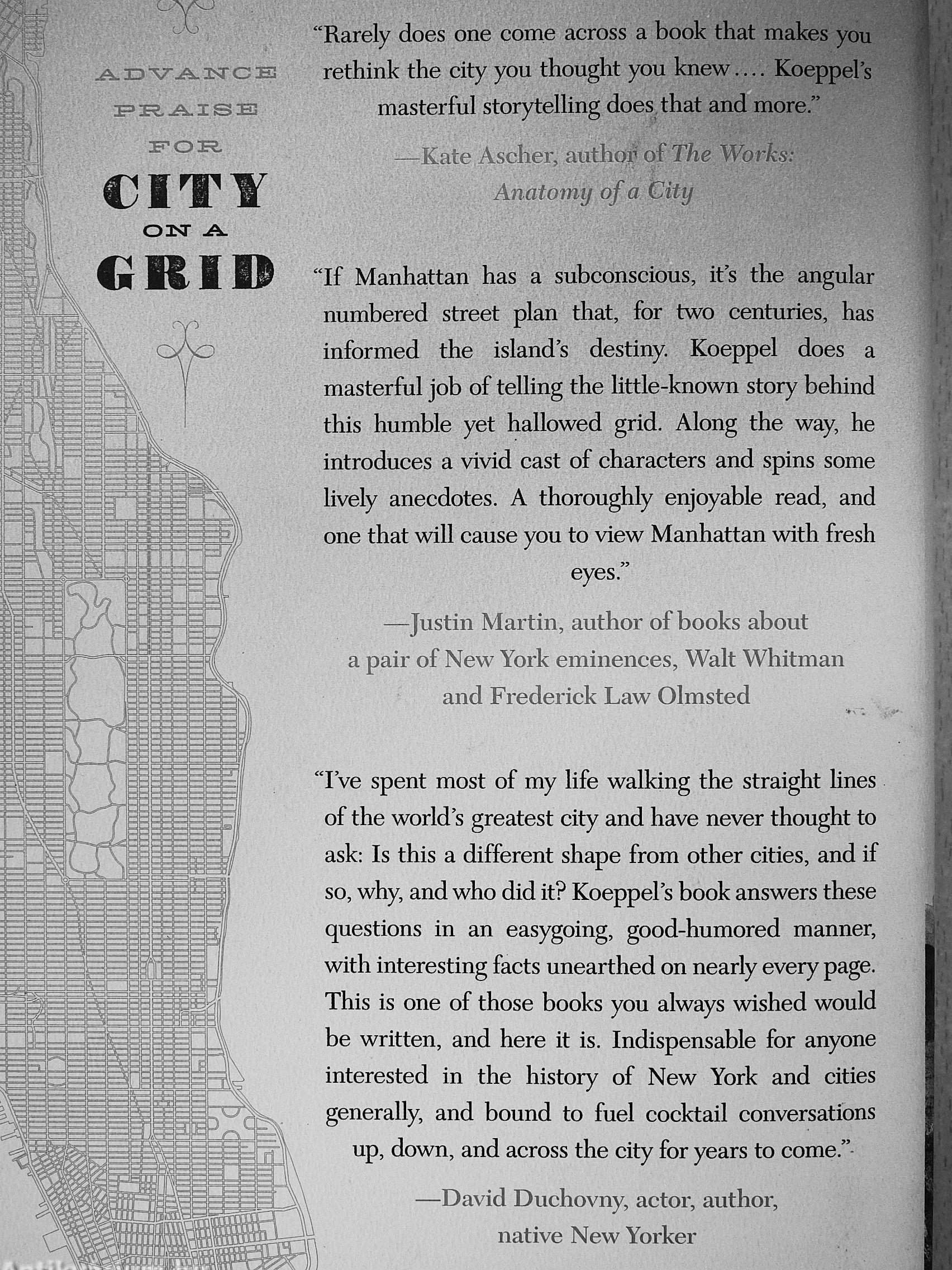
Rarely does one come across a book that makes you rethink the city you thought you knew Koeppel's masterful storytelling does that and more."
—Kate Ascher, author« of The Works: Anatomy of a Gity
If Manhattan has a subconscious, its the angular numbered street plan that, for two centuries, has informed the island's destiny. Koeppel does a masterful job of teUing the little-known story behind this humble yet hallowed grid. Along the way, he introduces a vivid cast of characters and spins some lively anecdotes. A thoroughly enjoyable read, and one that will cause you to view Manhattan with fresh eyes."
—Justin Martin, author of books about a pair of New York eminences, Walt Whitman and Frederick Law Olmsted
I've spent most of my life walking the straight lines of the world's greatest city and have never thought to ask: Is this a different shape from other cities, and if so, why, and who did it? Koeppel's book answers these questions in an easygoing, good-humored manner,... Tovább
Fülszöveg
it,
Rarely does one come across a book that makes you rethink the city you thought you knew Koeppel's masterful storytelling does that and more."
—Kate Ascher, author« of The Works: Anatomy of a Gity
If Manhattan has a subconscious, its the angular numbered street plan that, for two centuries, has informed the island's destiny. Koeppel does a masterful job of teUing the little-known story behind this humble yet hallowed grid. Along the way, he introduces a vivid cast of characters and spins some lively anecdotes. A thoroughly enjoyable read, and one that will cause you to view Manhattan with fresh eyes."
—Justin Martin, author of books about a pair of New York eminences, Walt Whitman and Frederick Law Olmsted
I've spent most of my life walking the straight lines of the world's greatest city and have never thought to ask: Is this a different shape from other cities, and if so, why, and who did it? Koeppel's book answers these questions in an easygoing, good-humored manner, with interesting facts unearthed on nearly every page. This is one of those books you always wished would be written, and here it is. Indispensable for anyone interested in the history of New York and cities generally, and bound to fuel cocktail conversations up, down, and across the city for years to come."-
—David Duchovny, actor, author, native New Yorker
P'W'mp'iM: 'I ' ; 1
^ i 'I .|i i 'iHii
, . . i , . 1 1 M .' I I li'/-' :
I, '''li'! .-
y,
\ ¦ I.
11 I l' I I I ' fflf
' ' l' (• I i"''' I • , V
¦i'l UiH
ll i '
m\
Mmi
liB
The never-before-told ||j story of the grid that ate Manhattan
You EITHER LOVE IT OR HATE IT, but nothing says New York like the street grid of Manhattan. Created in i8ii by a three-man commission featuring headstrong Founding Father Gouverneur Morris, the plan called for a dozen parallel avenues crossing at right angles with many dozens of parallel streets in an unbroken grid. Hills and valleys, streams and ponds, forests and swamps were invisible to the grid; so too were country villages, roads, farms, and estates and generations of property lines. All would disappear as the crosshatch fabric of the grid overspread the island: a heavy greatcoat on the land, the dense undergarment of the future city.
No other grid in Western civilization was so large and uniform as the one ordained in i8ii. Not without reason. When the grid plan was announced, New York was just under two hundred years old, an overgrown town at the southern tip of Manhattan, a notorious jumble of streets laid at the whim of landowners. To bring order beyond the chaos—and good real estate to market—the street planning commission came up with a monolithic grid for the rest of the island. Mannahatta—the native "island of hills"— became a place of rectangles, in thousands of blocks on the flattened landscape, and many more thousands of right-angled buildings rising in vertical mimicry.
The Manhattan grid has been called "a disaster" of urban planning and "the most courageous act of prediction in Western civiUzation." However one feels about it, the most famous urban design of a living city defines its daily life. This is its story Vissza
Témakörök
- Idegennyelv > Idegennyelvű könyvek > Angol > Művelődéstörténet
- Idegennyelv > Idegennyelvű könyvek > Angol > Helytörténet
- Művelődéstörténet > Civilizációtörténet > Amerikai
- Művelődéstörténet > Kultúra > Története
- Művelődéstörténet > Életmód > Városi életmód
- Helytörténet > Külföldi > Városok
- Helytörténet > Honismeret > Települési > Városi
- Helytörténet > Helyismeret > Egyéb
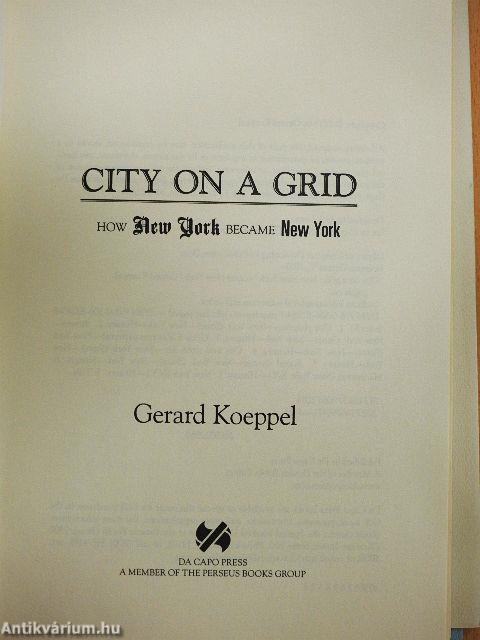
Gerard Koeppel
Gerard Koeppel műveinek az Antikvarium.hu-n kapható vagy előjegyezhető listáját itt tekintheti meg: Gerard Koeppel könyvek, művekMegvásárolható példányok
Állapotfotók
Állapot:
Jó
3.840 ,-Ft
19
pont kapható
Kosárba
 Folytatás Microsoft-tal