Fülszöveg
Ii'J
T
III.
i s'Il
^ijimrn
Îv^'i'l
mk
hj-ii.
M
NICOLAS DE STAËL
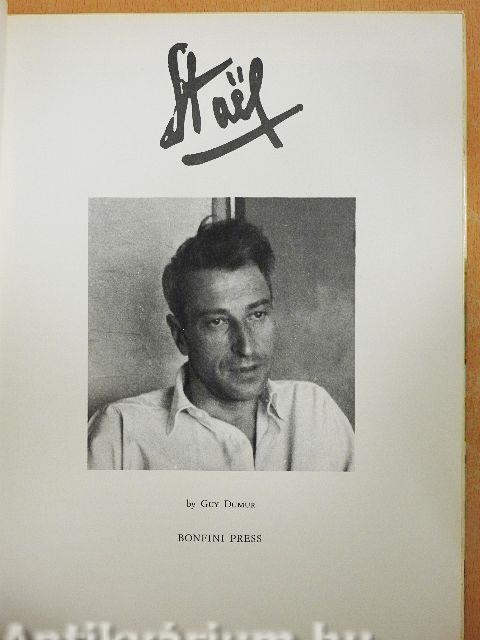
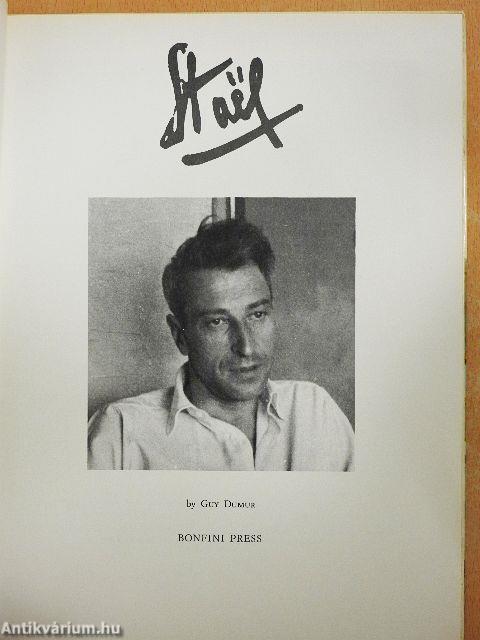
by Guy Dumur
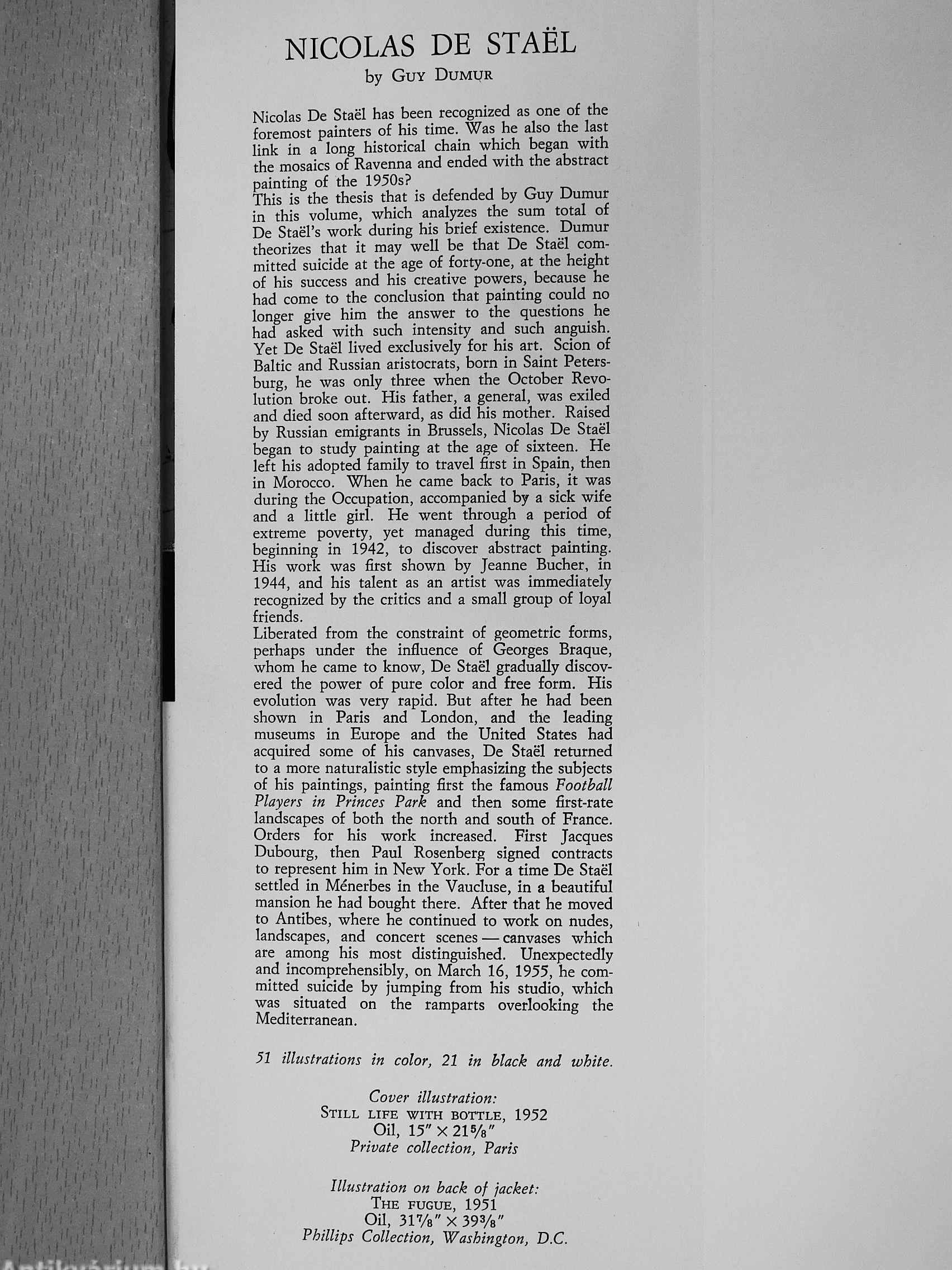
Nicolas De Staël has been recognized as one of the foremost painters of his time. Was he also the last linlt in a long historical chain which began with the mosaics of Ravenna and ended with the abstract painting of the 1950s?
This is the thesis that is defended by Guy Dumur in this volume, which analyzes the sum total of De Staël's work during his brief existence. Dumur theorizes that it may well be that De Staël committed suicide at the age of forty-one, at the height of his success and his creative powers, because he had come to the conclusion that painting could no longer give him the answer to the questions he had asked with such intensity and such anguish. Yet De Staël lived exclusively for his art. Scion of Baltic and Russian aristocrats, born in Saint Petersburg, he was only three when the October Revolution broke out. His father, a general, was exiled and died soon...
Tovább
Fülszöveg
Ii'J
T
III.
i s'Il
^ijimrn
Îv^'i'l
mk
hj-ii.
M
NICOLAS DE STAËL
by Guy Dumur
Nicolas De Staël has been recognized as one of the foremost painters of his time. Was he also the last linlt in a long historical chain which began with the mosaics of Ravenna and ended with the abstract painting of the 1950s?
This is the thesis that is defended by Guy Dumur in this volume, which analyzes the sum total of De Staël's work during his brief existence. Dumur theorizes that it may well be that De Staël committed suicide at the age of forty-one, at the height of his success and his creative powers, because he had come to the conclusion that painting could no longer give him the answer to the questions he had asked with such intensity and such anguish. Yet De Staël lived exclusively for his art. Scion of Baltic and Russian aristocrats, born in Saint Petersburg, he was only three when the October Revolution broke out. His father, a general, was exiled and died soon afterward, as did his mother. Raised by Russian emigrants in Brussels, Nicolas De Staël began to study painting at the age of sbîteen. He left his adopted family to travel first in Spain, then in Morocco. When he came back to Paris, it was during the Occupation, accompanied by a sick wife and a little girl. He went through a period of extreme poverty, yet managed during this time, beginning in 1942, to discover abstract painting. His work was first shown by Jeanne Bucher, in 1944, and his talent as an artist was immediately recognized by the critics and a small group of loyal friends.
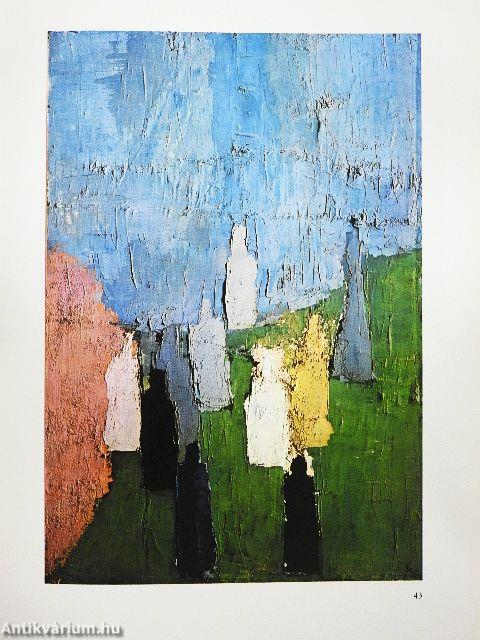
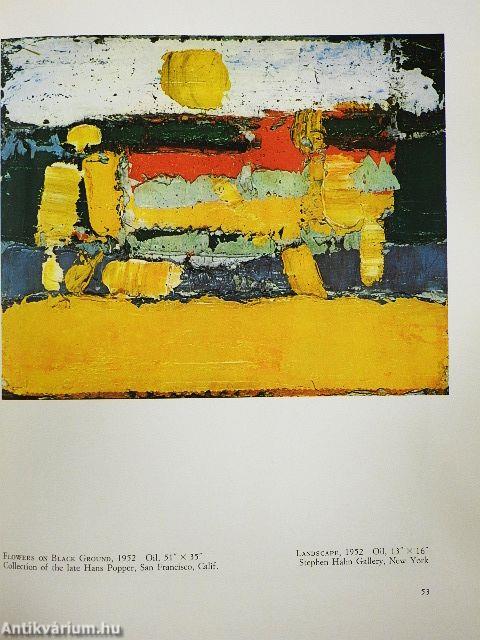
Liberated from the constraint of geometric forms, perhaps under the influence of Georges Braque, whom he came to know, De Staël gradually discovered the power of pure color and free form. His evolution was very rapid. But after he had been shown in Paris and London, and the leading museums in Europe and the United States had acquired some of his canvases, De Staël returned to a more naturalistic style emphasizing the subjects of his paintings, painting first the famous Football Players in Princes Park and then some first-rate landscapes of both the north and south of France. Orders for his work increased. First Jacques Dubourg, then Paul Rosenberg signed contracts to represent him in New York. For a time De Staël settled in Menerbes in the Vaucluse, in a beautiful mansion he had bought there. After that he moved to Antibes, where he continued to work on nudes, landscapes, and concert scenes — canvases which are among his most distinguished. Unexpectedly and incomprehensibly, on March 16, 1955, he committed suicide by jumping from his studio, which was situated on the ramparts overlooking the Mediterranean.
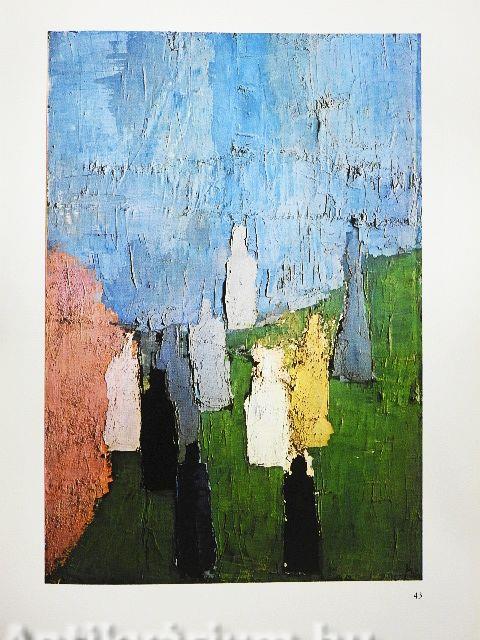
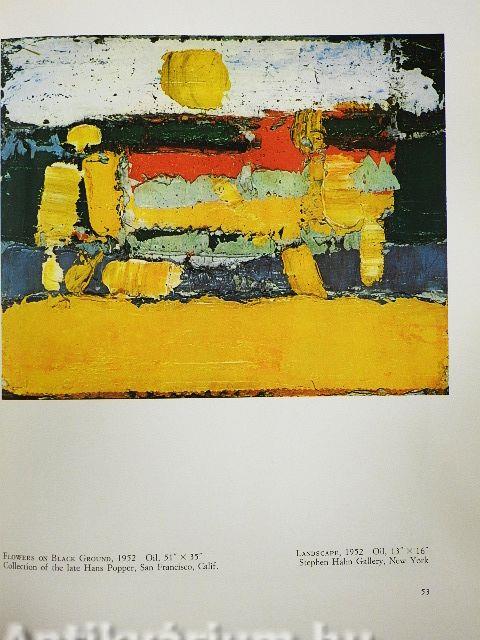
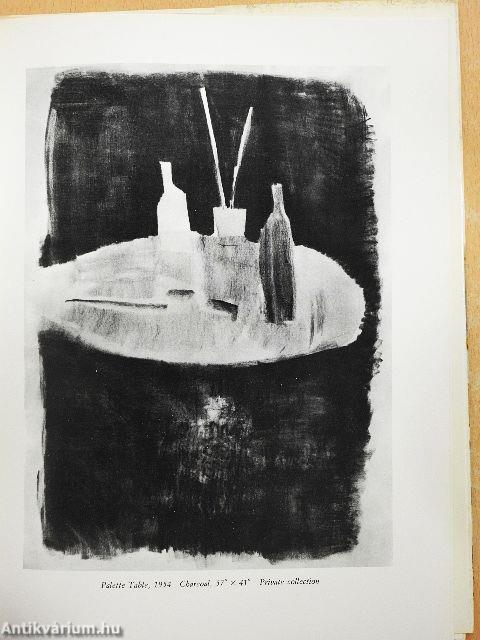
53 illustrations in color, 21 in black and white.
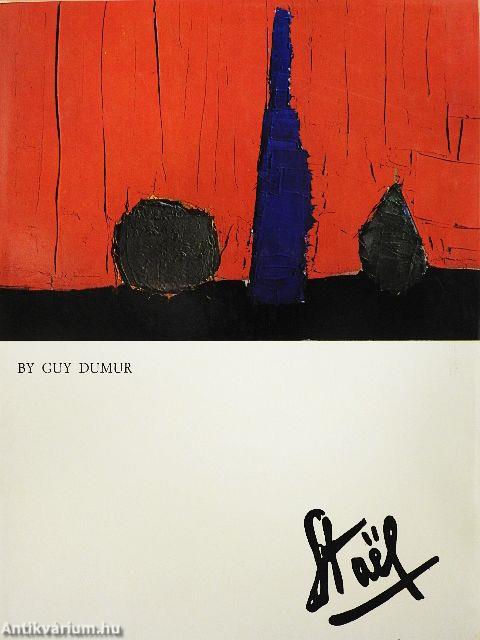
Cover illustration: Still life with bottle 1952 Oil, 15" X 216/e" Private collection, Paris
Illustration on back of jacket: The fugue, 1951 Oil, 31V8" X 393/8" Phdlips Collection, Washington, B.C.
Vissza 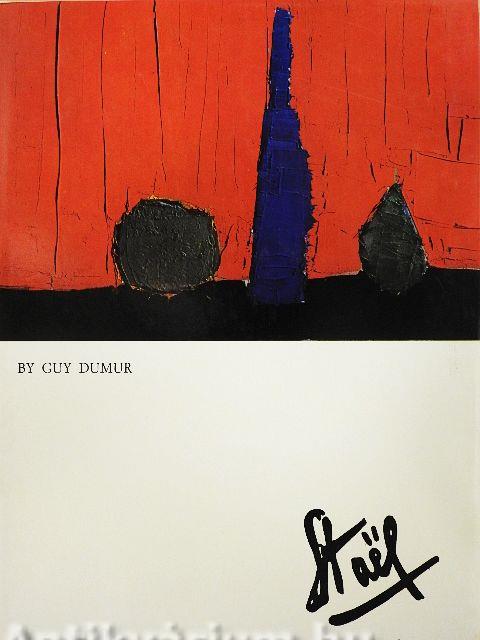


 Folytatás Microsoft-tal