
1.119.492
kiadvánnyal nyújtjuk Magyarország legnagyobb antikvár könyv-kínálatát

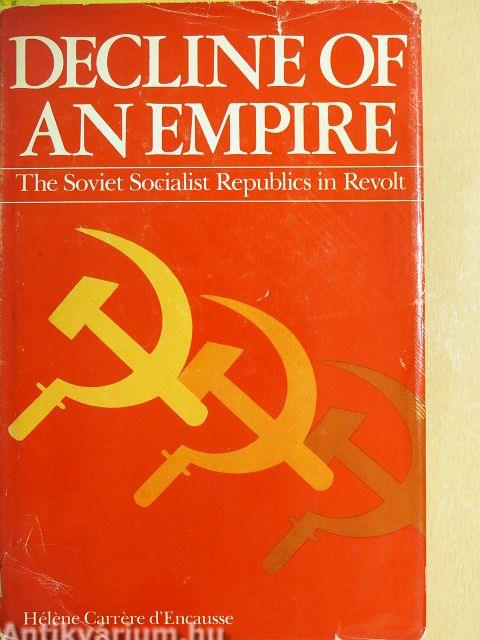
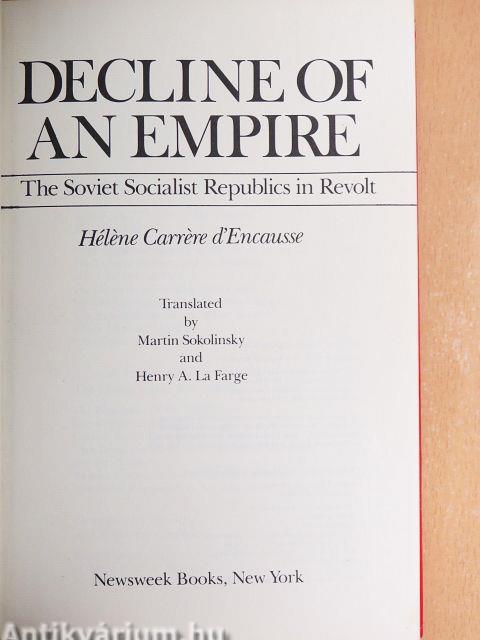
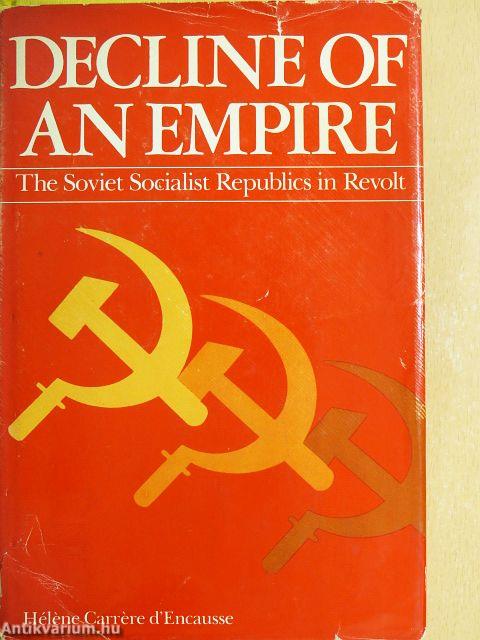
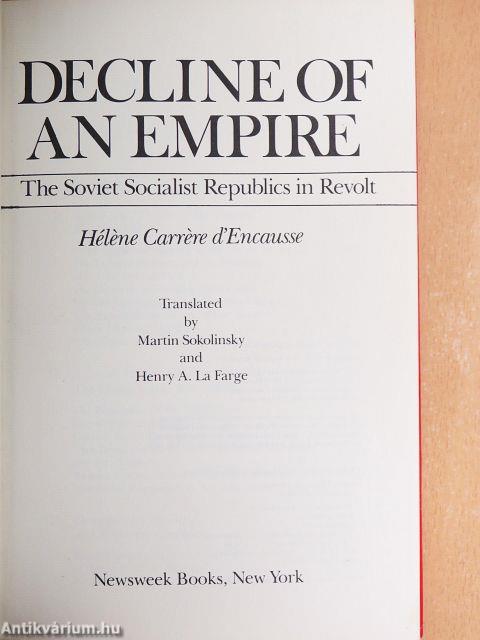
Decline of an Empire
The Soviet Socialist Republics in Revolt
New York
| Kiadó: | Newsweek Books |
|---|---|
| Kiadás helye: | New York |
| Kiadás éve: | |
| Kötés típusa: | Vászon |
| Oldalszám: | 304 oldal |
| Sorozatcím: | |
| Kötetszám: | |
| Nyelv: | Angol |
| Méret: | 23 cm x 16 cm |
| ISBN: | 0-88225-280-1 |
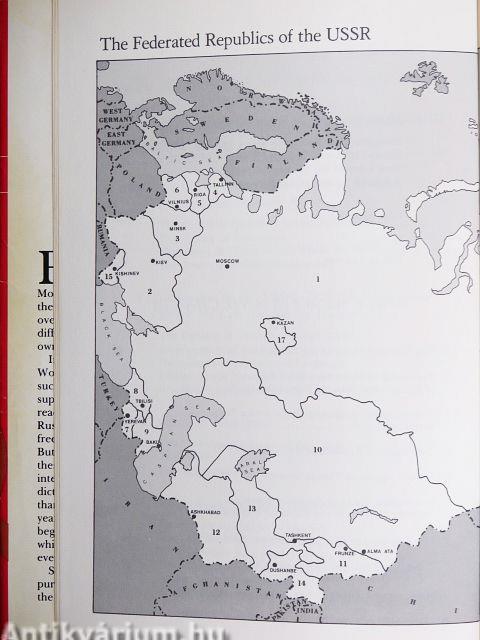
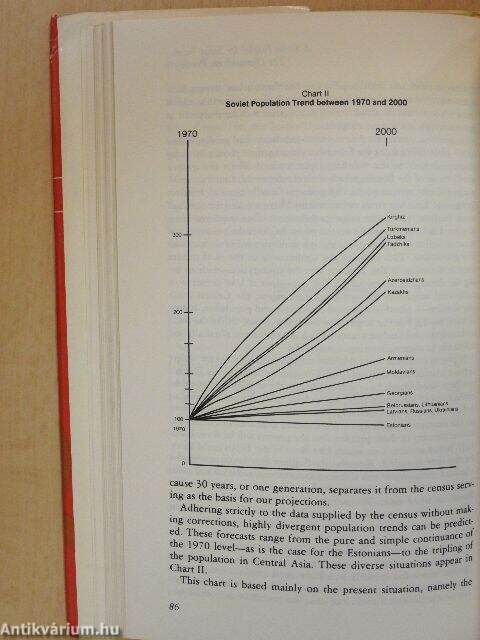
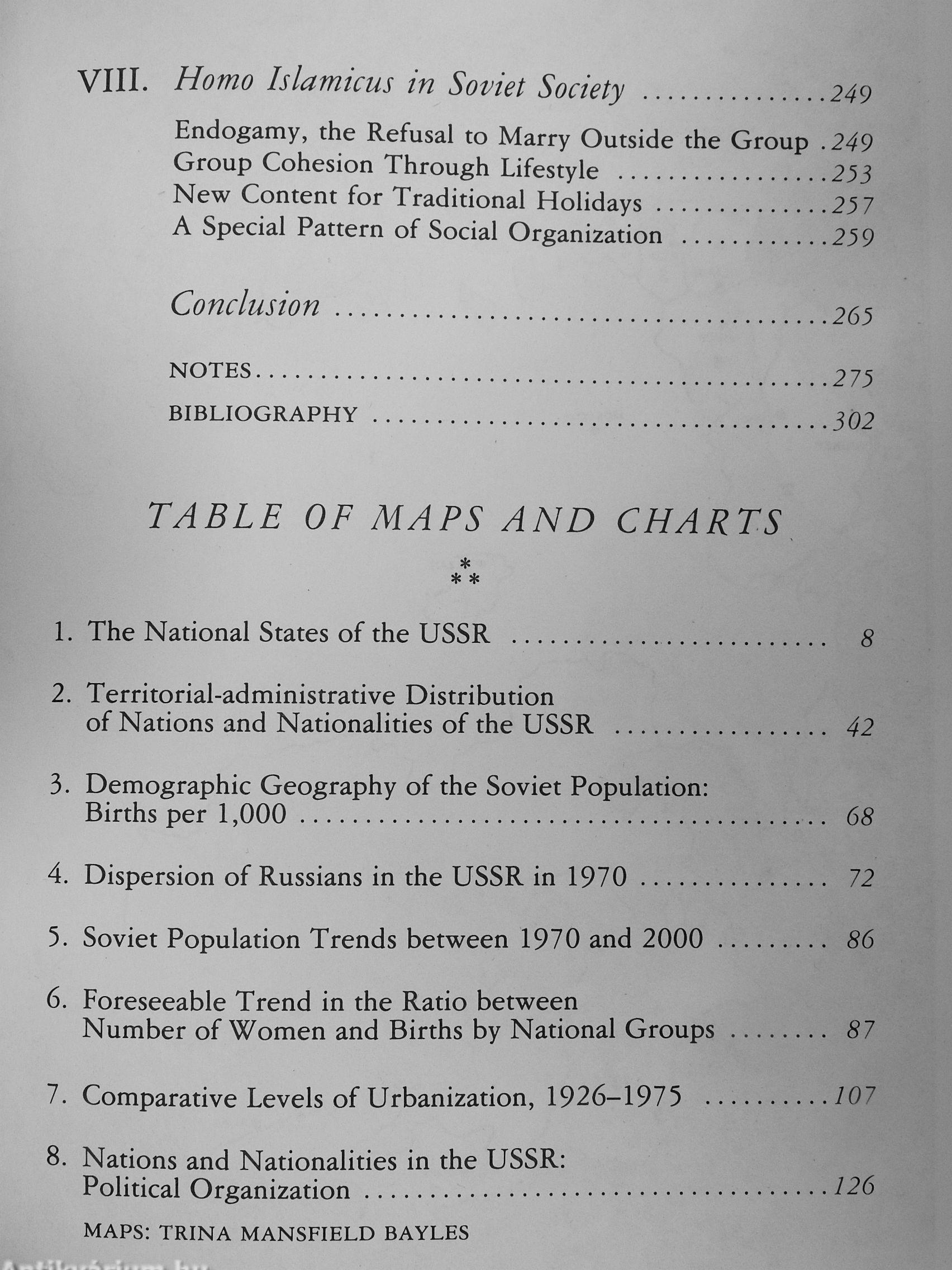
| Megjegyzés: | Fekete-fehér ábrákkal, térképekkel. |
Értesítőt kérek a kiadóról
A beállítást mentettük,
naponta értesítjük a beérkező friss
kiadványokról
naponta értesítjük a beérkező friss
kiadványokról
A beállítást mentettük,
naponta értesítjük a beérkező friss
kiadványokról
naponta értesítjük a beérkező friss
kiadványokról
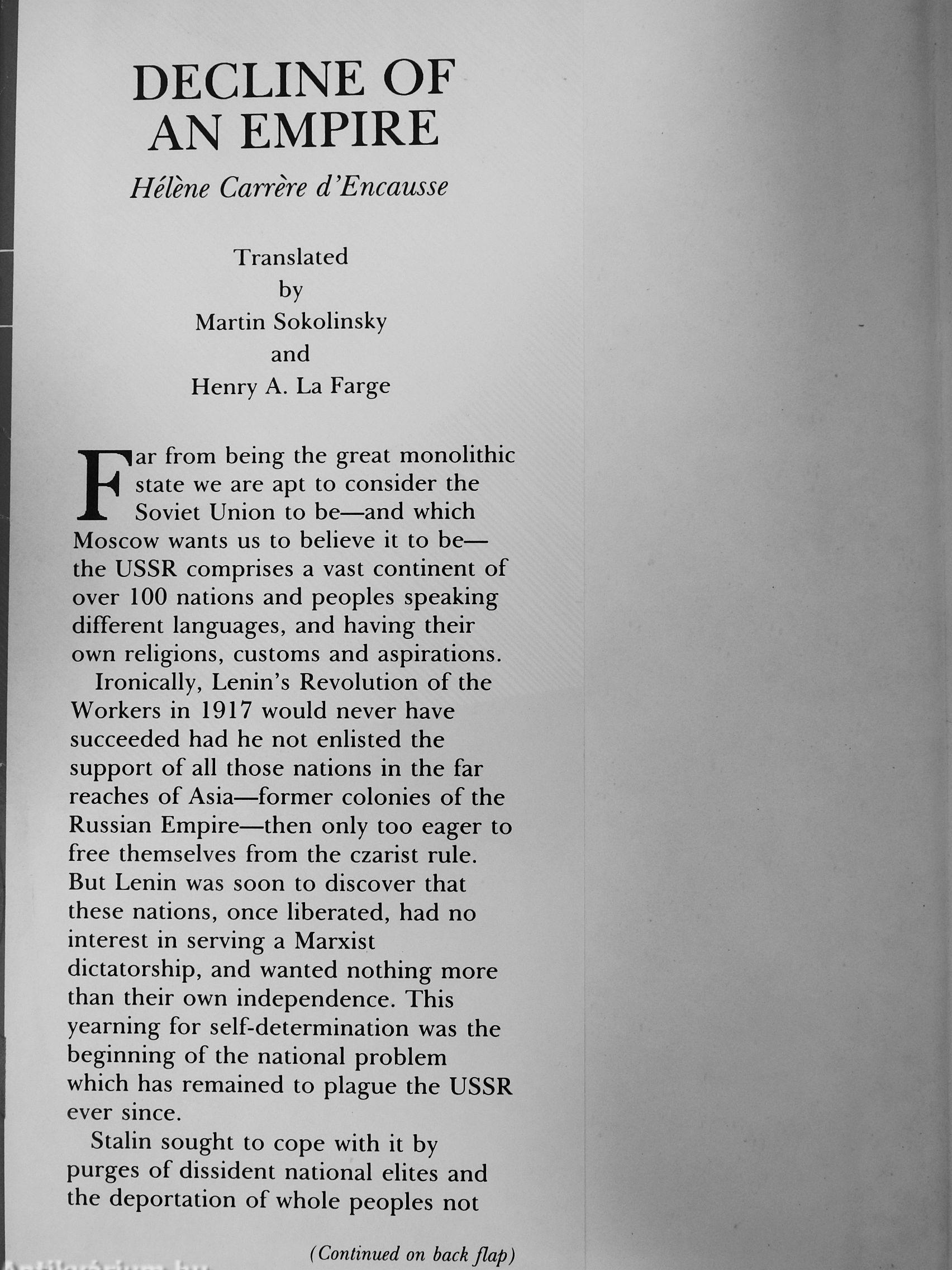
Előszó
Tovább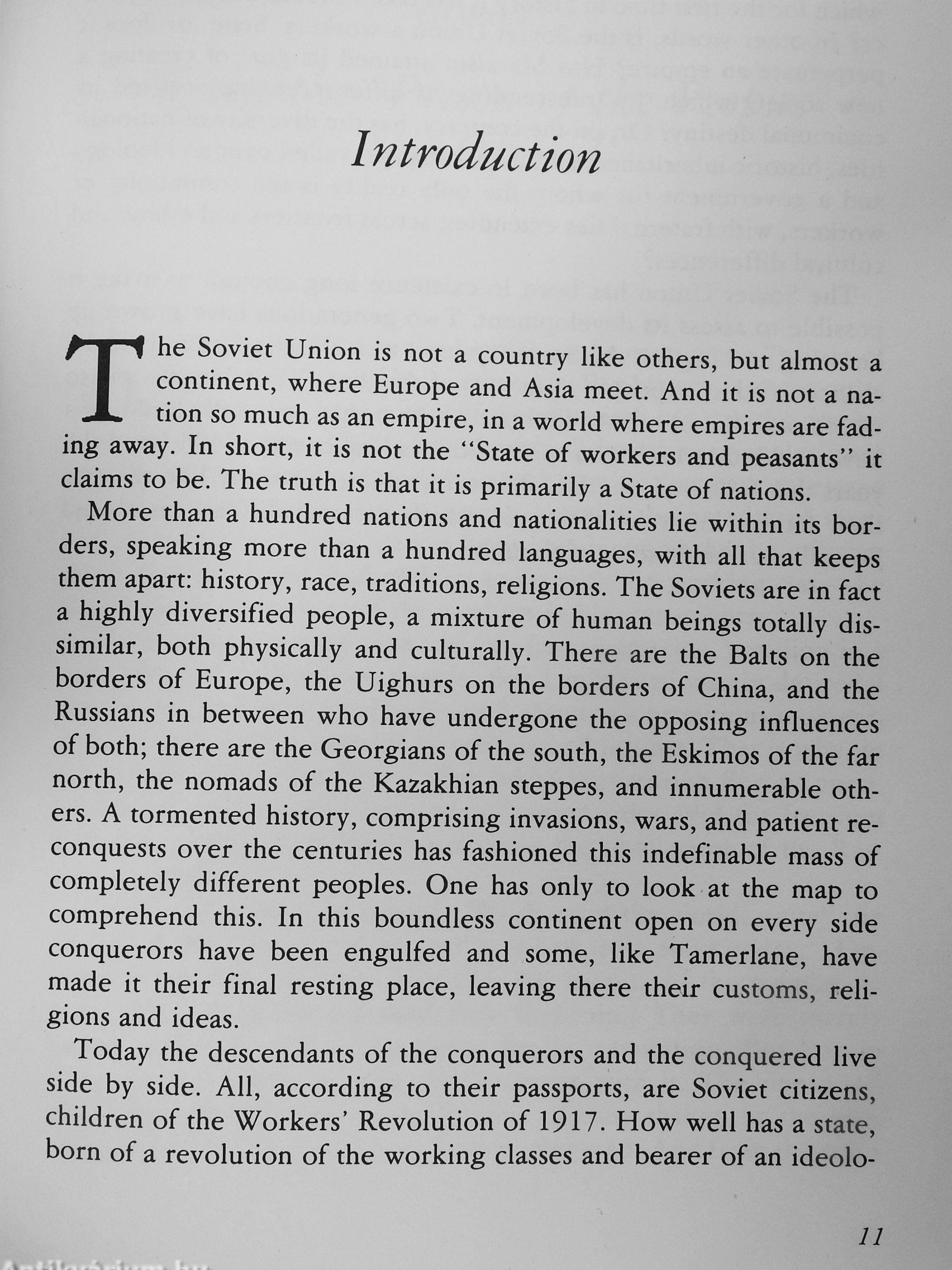
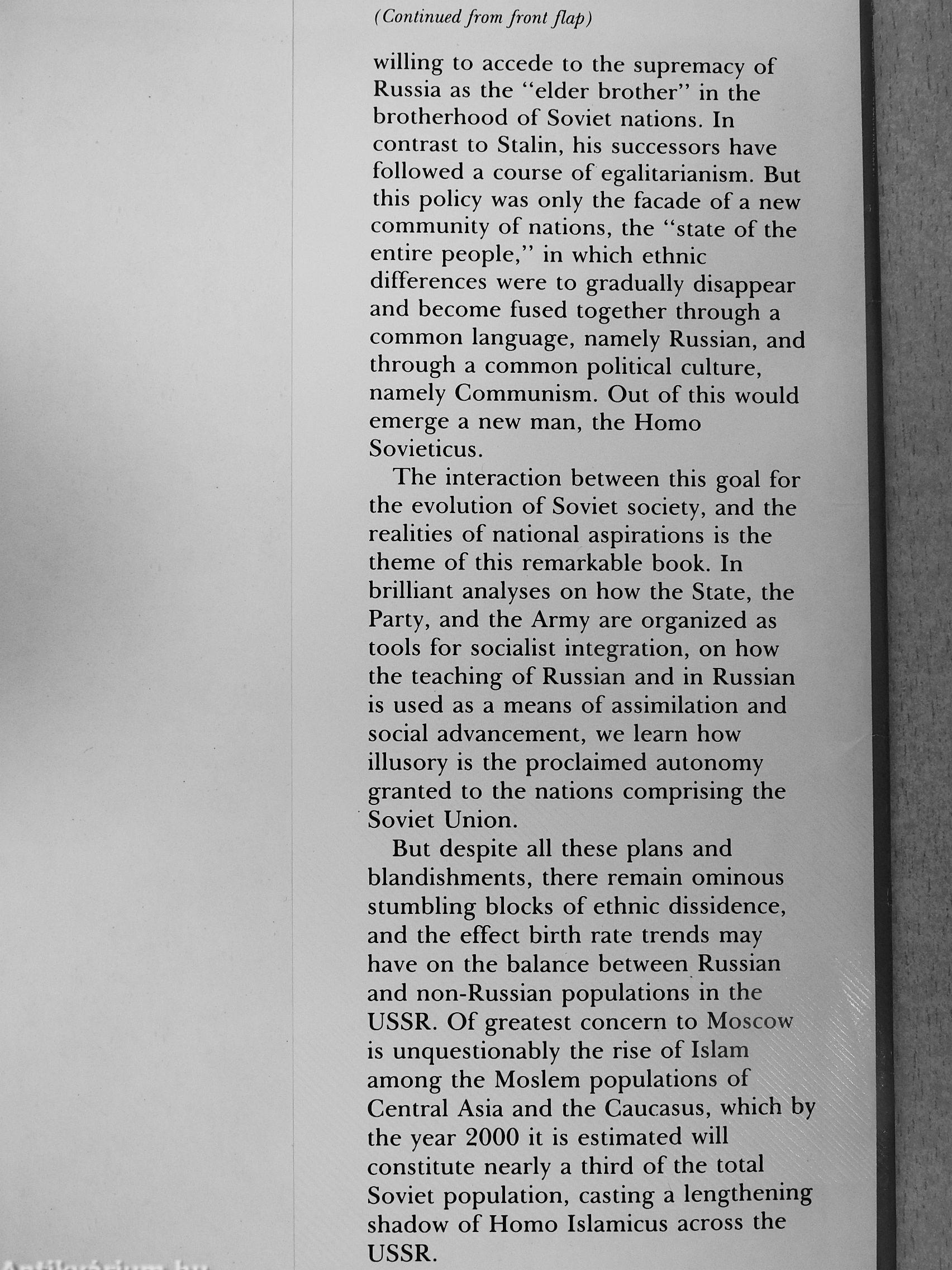
Fülszöveg
DECLINE OF AN EMPIRE
Hélene Carrere d'EncaiLSse
Translated by
Martin Sokolinsky and
Henry A. La Farge
F
lar from being the great monolithic state we are apt to consider the Soviet Union to be—and which
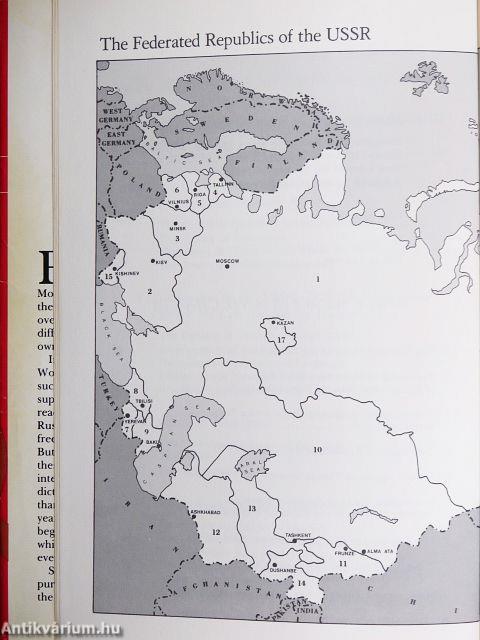
Moscow wants us to believe it to be— the USSR comprises a vast continent of over 100 nations and peoples speaking different languages, and having their own religions, customs and aspirations.
Ironically, Lenin's Revolution of the Workers in 1917 would never have succeeded had he not enUsted the support of all those nations in the far reaches of Asia—former colonies of the Russian Empire—then only too eager to free themselves from the czarist rule. But Lenin was soon to discover that these nations, once liberated, had no interest in serving a Marxist dictatorship, and wanted nothing more than their own independence. This yearning for self-determination was the beginning of the national problem which has remained to plague the USSR ever since.
Stalin sought to cope with it by... Tovább
Fülszöveg
DECLINE OF AN EMPIRE
Hélene Carrere d'EncaiLSse
Translated by
Martin Sokolinsky and
Henry A. La Farge
F
lar from being the great monolithic state we are apt to consider the Soviet Union to be—and which
Moscow wants us to believe it to be— the USSR comprises a vast continent of over 100 nations and peoples speaking different languages, and having their own religions, customs and aspirations.
Ironically, Lenin's Revolution of the Workers in 1917 would never have succeeded had he not enUsted the support of all those nations in the far reaches of Asia—former colonies of the Russian Empire—then only too eager to free themselves from the czarist rule. But Lenin was soon to discover that these nations, once liberated, had no interest in serving a Marxist dictatorship, and wanted nothing more than their own independence. This yearning for self-determination was the beginning of the national problem which has remained to plague the USSR ever since.
Stalin sought to cope with it by purges of dissident national elites and the deportation of whole peoples not
(Continued on back flap)
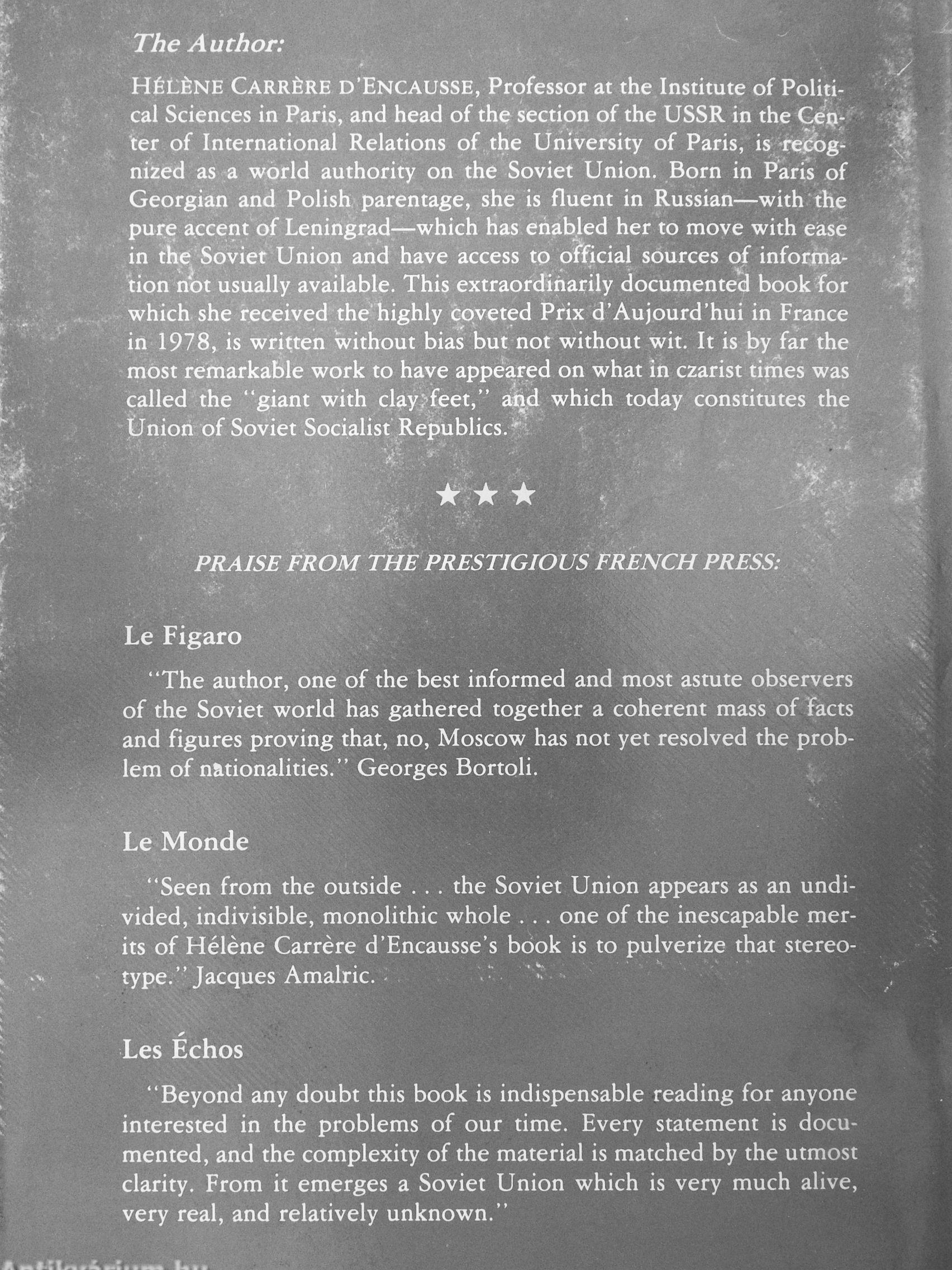
(Continued from front flap)
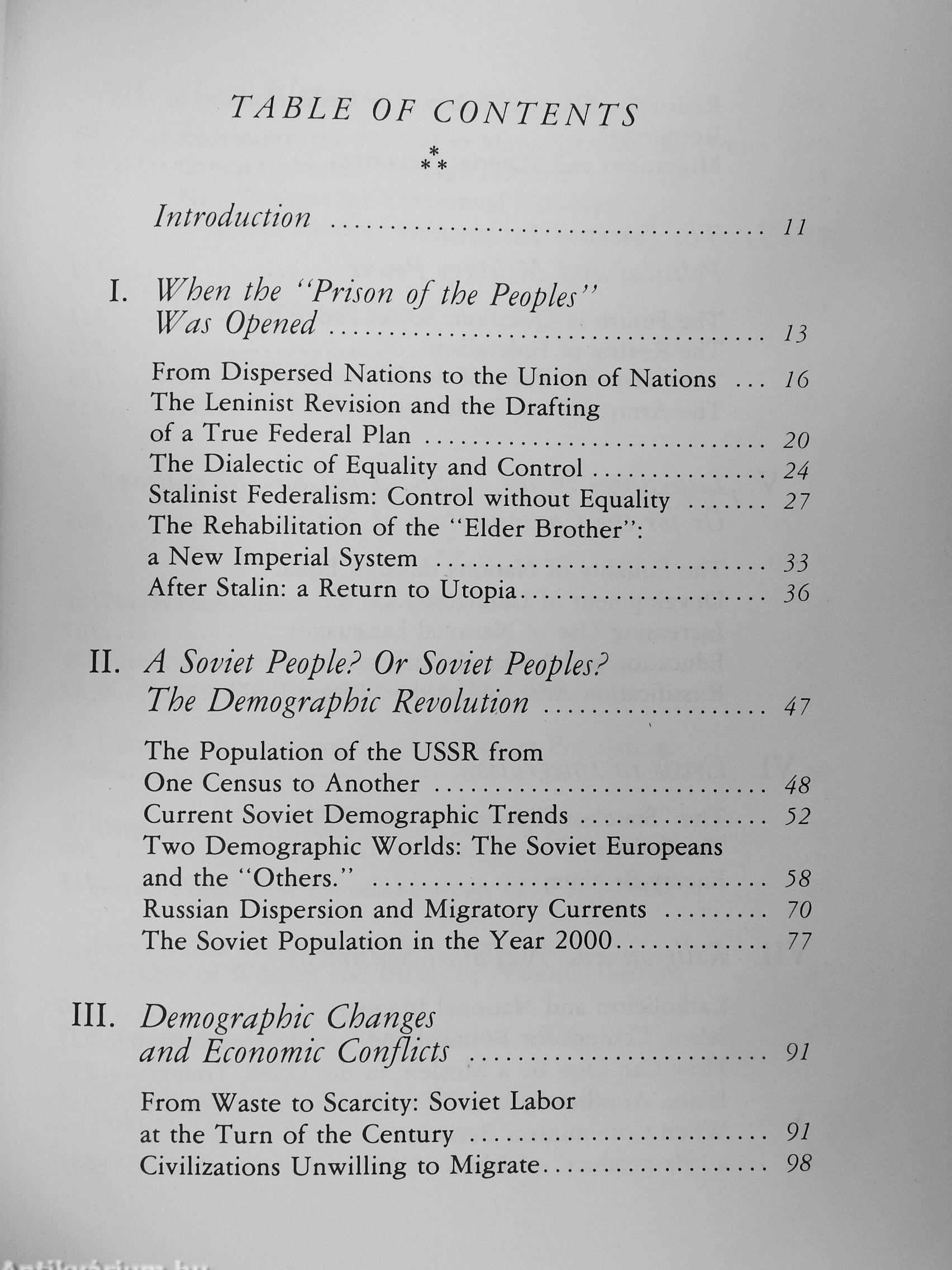
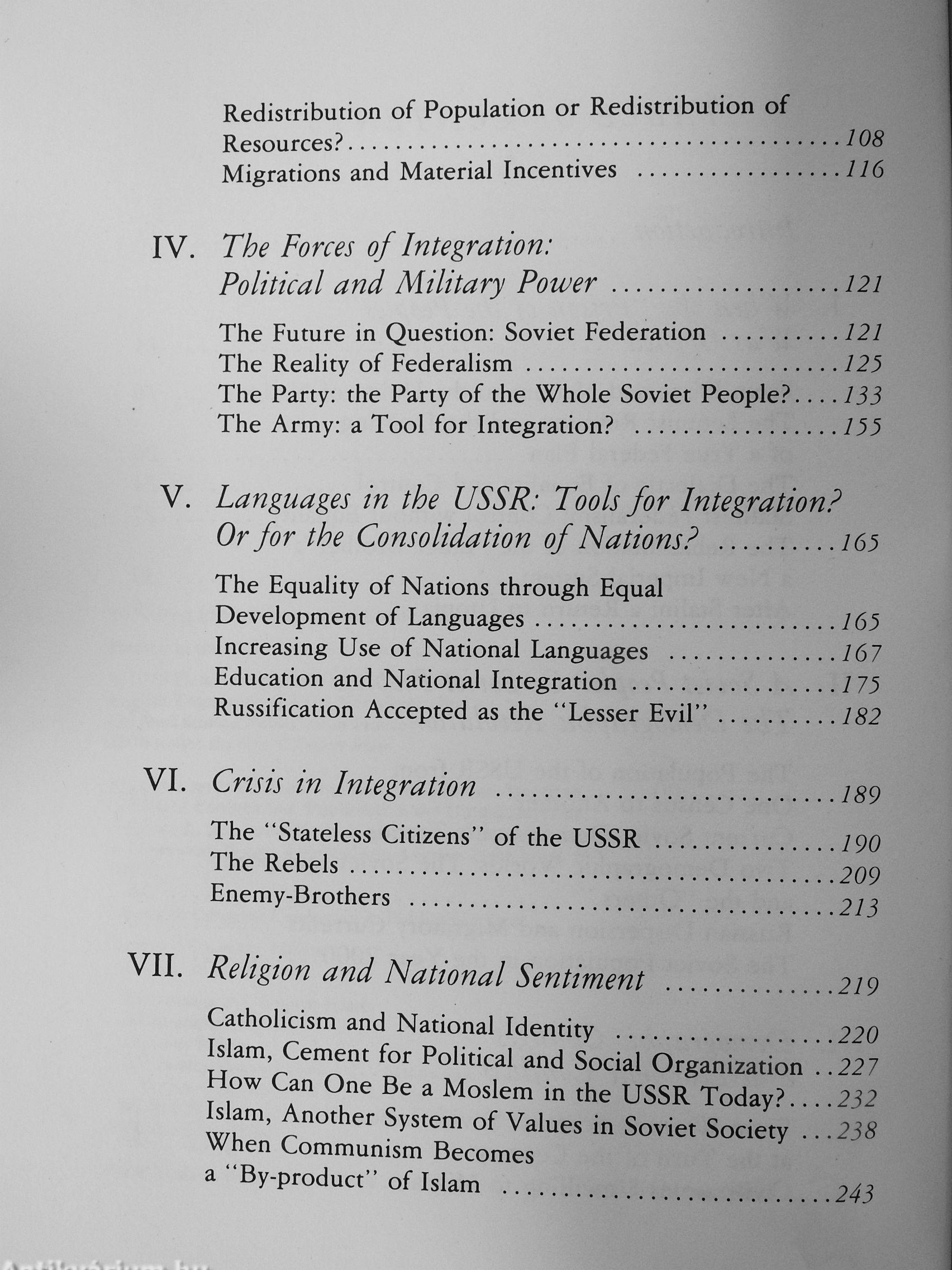
willing to accede to the supremacy of Russia as the "elder brother" in the brotherhood of Soviet nations. In contrast to Stalin, his successors have followed a course of egalitarianism. But this policy was only the facade of a new community of nations, the "state of the entire people," in which ethnic differences were to gradually disappear and become fused together through a common language, namely Russian, and through a common political culture, namely Communism. Out of this would emerge a new man, the Homo Sovieticus.
The interaction between this goal for the evolution of Soviet society, and the realities of national aspirations is the theme of this remarkable book. In brilliant analyses on how the State, the Party, and the Army are organized as tools for socialist integration, on how the teaching of Russian and in Russian is used as a means of assimilation and social advancement, we learn how illusory is the proclaimed autonomy granted to the nations comprising the Soviet Union.
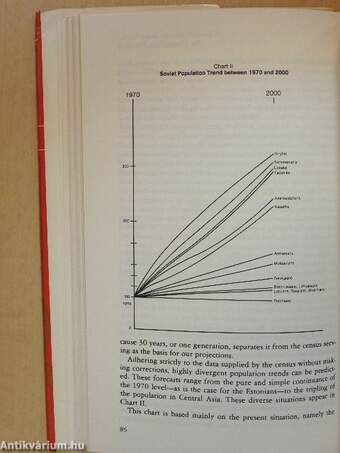
But despite all these plans and blandishments, there remain ominous stumbling blocks of ethnic dissidence, and the effect birth rate trends may have on the balance between Russian and non-Russian populations in the USSR. Of greatest concern to MoscowtJ is unquestionably the rise of Islam among the Moslem populations of Central Asia and the Caucasus, which by the year 2000 it is estimated will constitute nearly a third of the total Soviet population, casting a lengthening shadow of Homo Islamicus across the USSR.
The Author:
Hélene Carrere d'Encausse, Professor at the Institute of Political Sciences in Paris, and head of the section of the USSR in the Cep-ter of International Relations of the University of Paris, is reibg-nized as a world authority on the Soviet Union. Born in Paris of Georgian and Polish parentage, she is fluent in Russian—with the pure accent of Leningrad—which has enabled her to move with ease in the Soviet Union and have access to official sources of information not usually available. This extraordinarily documentecl book for which she received the highly coveted Prix d'Aujourd'hui in France in 1978, is written without bias but not without wit. It is by far the most remarkable work to have appeared on what in czarist times was called the "giant with clay'feet," aiid which today constitutes the Union of Soviet Socialist Republics.' '
PRAISE FROM THE PRESTIGIOUS FRENCH PRESS:
Le Figaro
"The author, one of the best informed and most astute observers of the Soviet world has gathered together a coherent mass of facts and figures proving that, no, Moscow has not yet resolved the problem of nationalities." Georges Bortoli.
Le Monde
"Seen from the outside the Soviet Union appears as an undivided, indivisible, monolithic whole . . . one of the inescapable merits of Hélene Carrere d'Encausse's book is to pulverize that stereotype." Jacques Amalric. -
Les Échos
"Beyond any doubt this book is indispensable reading for anyone interested in the problems of our time. Every statement is documented, and the complexity of the material is matched by the utmost clarity. From it emerges a Soviet Union which is very much alive, very real, and relatively unknown." Vissza
Témakörök
- Idegennyelv > Idegennyelvű könyvek > Angol > Történelem > Európa története > Egyéb
- Történelem > Idegennyelvű > Angol
- Történelem > Politika > Belpolitika > Kisebbségi kérdés
- Történelem > Kontinensek szerint > Európa, európai országok története > Kelet-Európa > Oroszország, Szovjetúnió
- Történelem > Legújabb kor > A hidegháború kora (1946-1991)
- Történelem > Monográfiák > Világtörténelem
- Történelem > Politika > Ideológiák > Nacionalizmus
Héléne Carrére d'Encausse
Héléne Carrére d'Encausse műveinek az Antikvarium.hu-n kapható vagy előjegyezhető listáját itt tekintheti meg: Héléne Carrére d'Encausse könyvek, művekMegvásárolható példányok
Állapotfotók
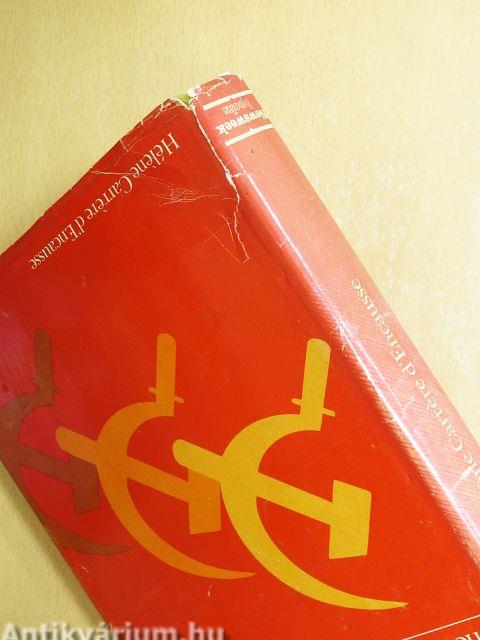
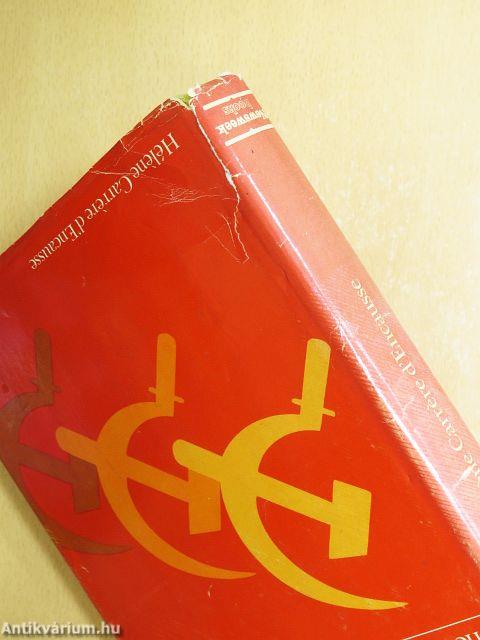
A védőborító szakadozott, elszíneződött.
Állapot:
Jó
4.440 ,-Ft
22
pont kapható
Kosárba
 Folytatás Microsoft-tal