
1.159.655
kiadvánnyal nyújtjuk Magyarország legnagyobb antikvár könyv-kínálatát

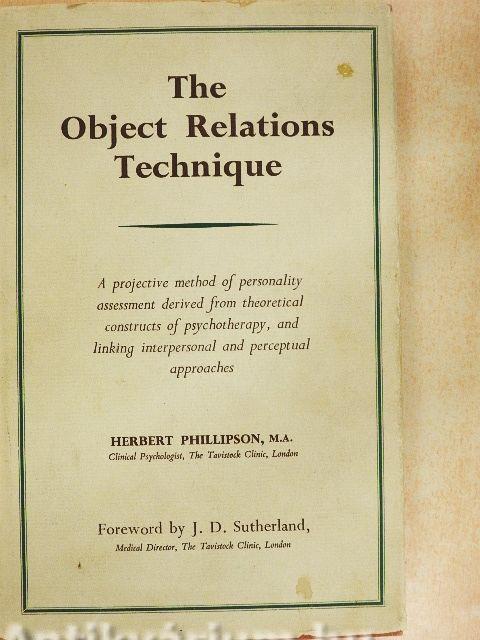
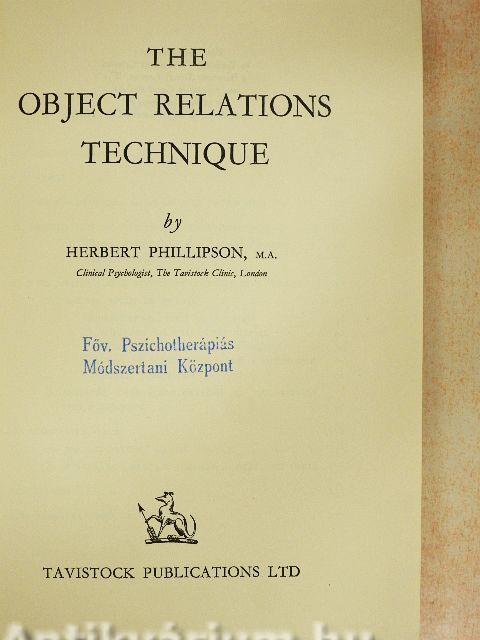
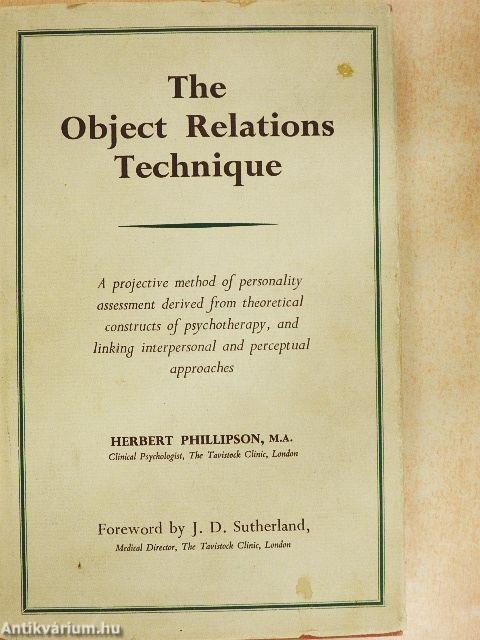
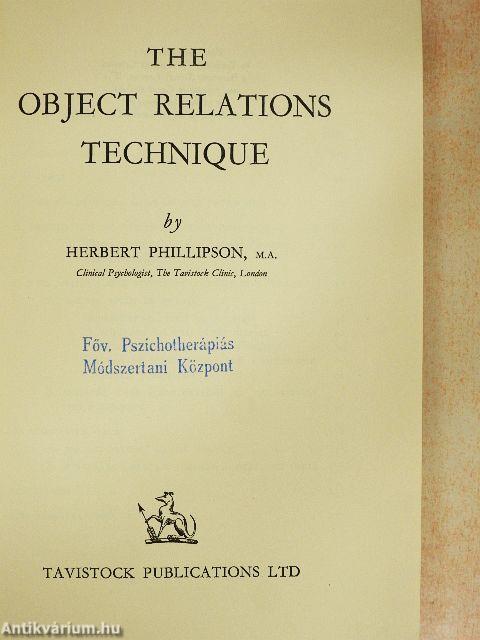
The Object Relations Technique
A projective method of personality assessment derived from theoretical constructs of psychotherapy, and linking interpersonal and perceptual approaches
London
| Kiadó: | Tavistock Publications Limited |
|---|---|
| Kiadás helye: | London |
| Kiadás éve: | |
| Kötés típusa: | Varrott keménykötés |
| Oldalszám: | 224 oldal |
| Sorozatcím: | |
| Kötetszám: | |
| Nyelv: | Angol |
| Méret: | 22 cm x 14 cm |
| ISBN: | |
Értesítőt kérek a kiadóról
A beállítást mentettük,
naponta értesítjük a beérkező friss
kiadványokról
naponta értesítjük a beérkező friss
kiadványokról
A beállítást mentettük,
naponta értesítjük a beérkező friss
kiadványokról
naponta értesítjük a beérkező friss
kiadványokról
Előszó
Tovább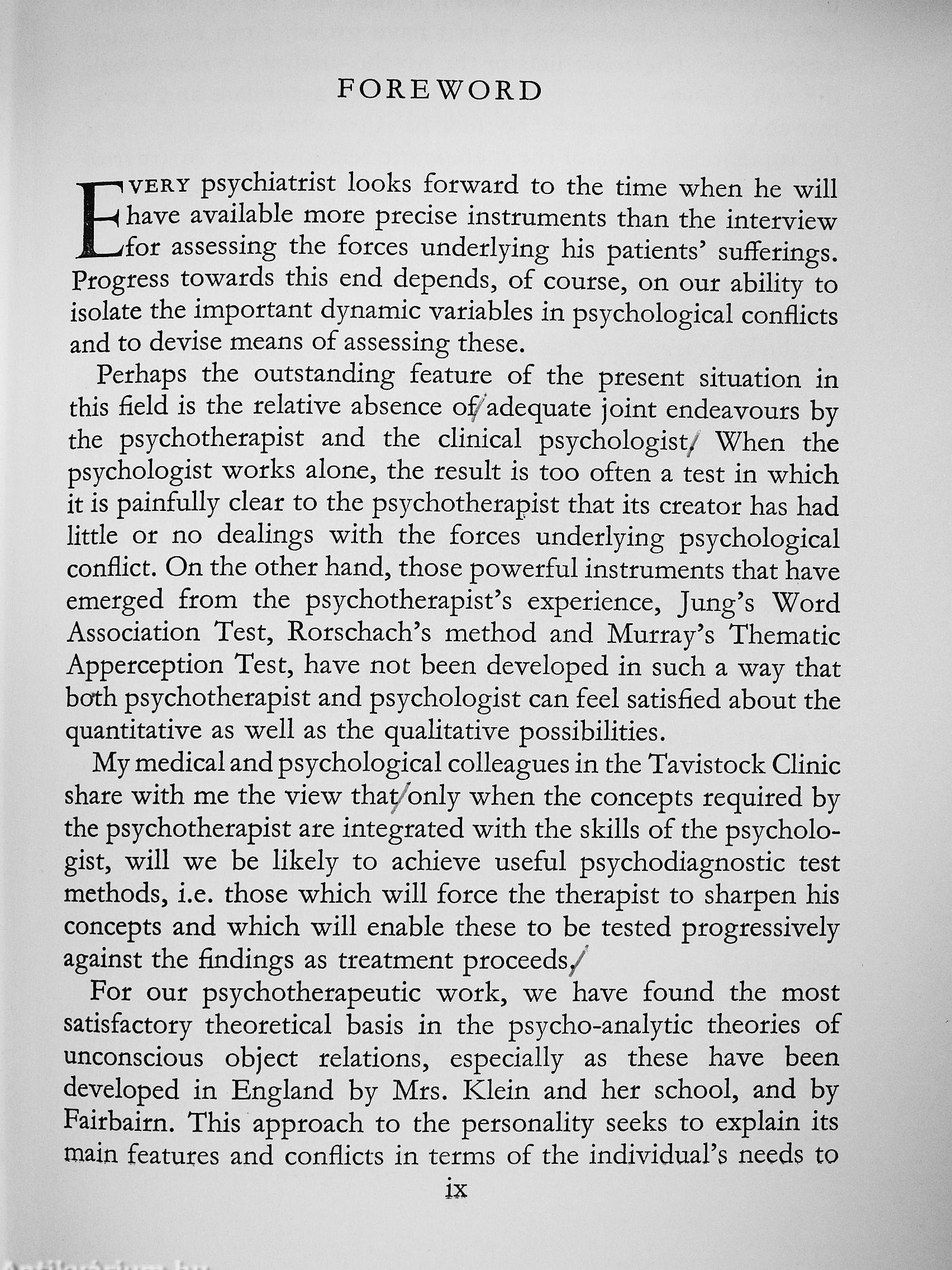
Fülszöveg
h i I i ¦
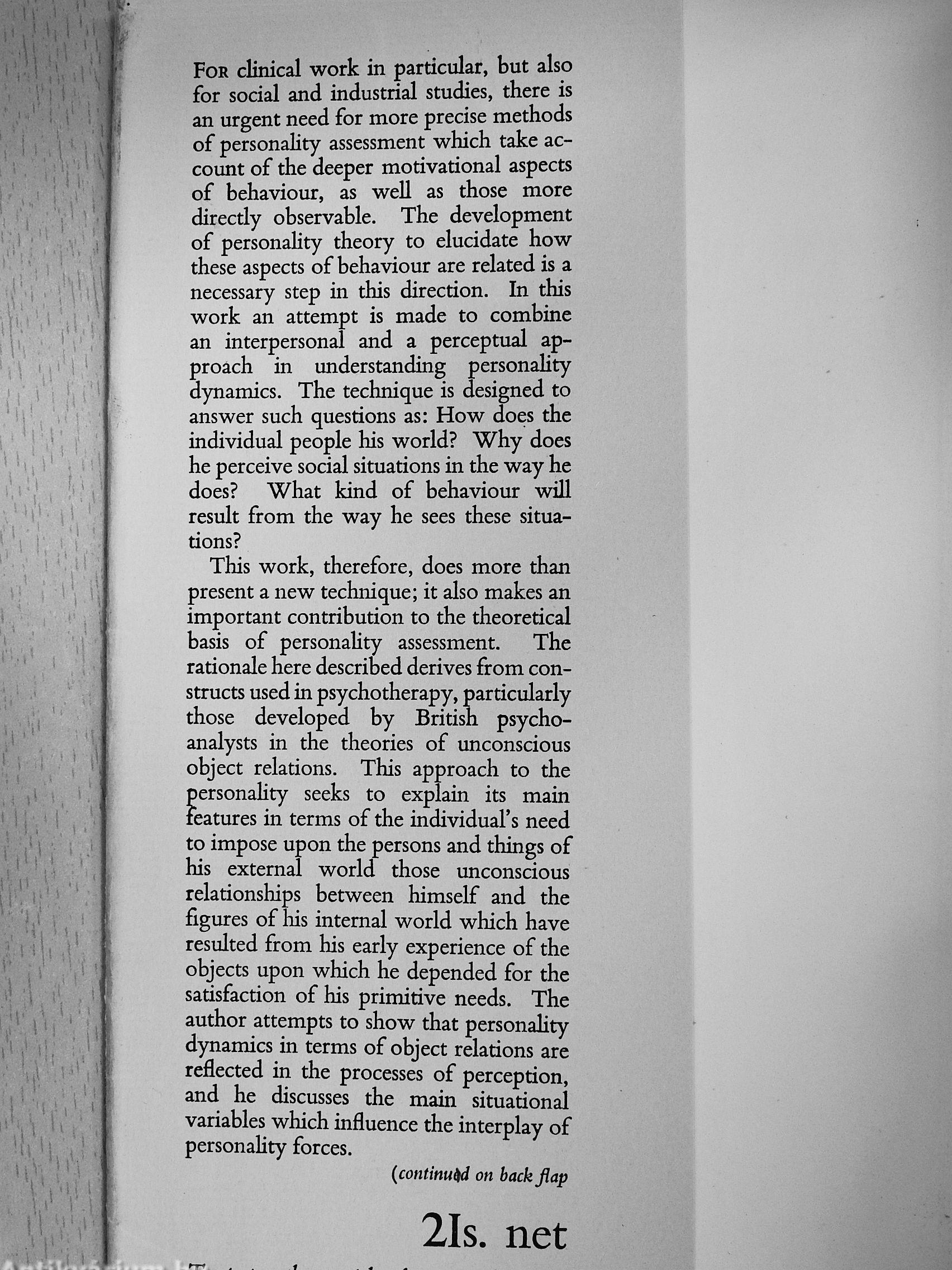
For clinical work in particular, but also for social and industrial studies, there is an urgent need for more precise methods of personality assessment which take account of the deeper motivational aspects of behaviour, as well as those more direcdy observable. The development of personality theory to elucidate how these aspects of behaviour are related is a necessary step in this direction. In this work an attempt is made to combine an interpersonal and a perceptual approach in understanding personality dynamics. The technique is designed to answer such questions as: How does the individual people his world? Why does he perceive social situations in the way he does? What kind of behaviour will result from the way he sees these situations?
This work, therefore, does more than present a new technique; it also makes an important contribution to the theoretical basis of personality assessment. The rationale here described derives from constructs used in psychotherapy,... Tovább
Fülszöveg
h i I i ¦
For clinical work in particular, but also for social and industrial studies, there is an urgent need for more precise methods of personality assessment which take account of the deeper motivational aspects of behaviour, as well as those more direcdy observable. The development of personality theory to elucidate how these aspects of behaviour are related is a necessary step in this direction. In this work an attempt is made to combine an interpersonal and a perceptual approach in understanding personality dynamics. The technique is designed to answer such questions as: How does the individual people his world? Why does he perceive social situations in the way he does? What kind of behaviour will result from the way he sees these situations?
This work, therefore, does more than present a new technique; it also makes an important contribution to the theoretical basis of personality assessment. The rationale here described derives from constructs used in psychotherapy, particularly those developed by British psychoanalysts in the theories of unconscious object relations. This approach to the personality seeks to explain its main features in terms of the individual's need to impose upon the persons and things of his external world those unconscious relationships between himself and the figures of lis internal world which have resulted from his early experience of the objects upon which he depended for the satisfaction of his primitive needs. The author attempts to show that personality dynamics in terms of object relations are reflected in the processes of perception, and he discusses the main situational variables which influence the interplay of personality forces.
{continued on back flap
2Is. net
{continued from front flap
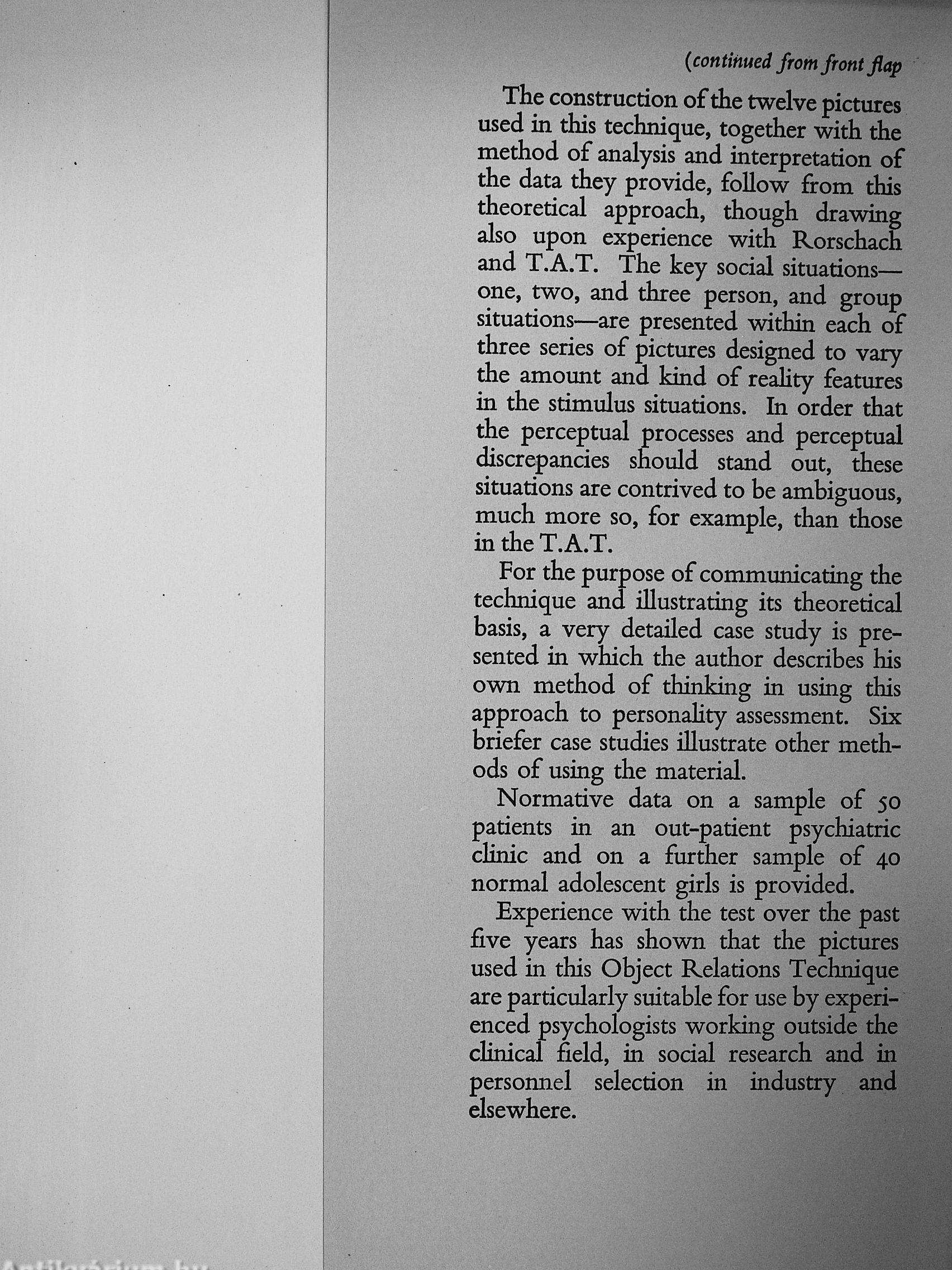
The construction of the twelve pictures used in this technique, together with the method of analysis and interpretation of the data they provide, follow from this theoretical approach, though drawing also upon experience with Rorschach and T.A.T. The key social situations— one, two, and three person, and group situations—are presented within each of three series of pictures designed to vary the amount and kind of reality features in the stimulus situations. In order that the perceptual processes and perceptual discrepancies should stand out, these situations are contrived to be ambiguous, much more so, for example, than those in the T.A.T.
For the purpose of communicating the technique and illustrating its theoretical basis, a very detailed case study is presented in which the author describes his own method of thinking in using this approach to personality assessment. Six briefer case studies illustrate other methods of using the material.
Normative data on a sample of 50 patients in an out-patient psychiatric clinic and on a further sample of 40 normal adolescent girls is provided.
Experience with the test over the past five years has shown that the pictures used in this Object Relations Technique are particularly suitable for use by experienced psychologists working outside the clinical field, in social research and in personnel selection in industry and elsewhere.
THE
MENTAL HOSPITAL
ALFRED H. STANTON, M.D., and MORRIS S. SCHWARTZ, Ph.D.
35s. net
In this major study of one of the great problem areas of society, two scientists - one a psychiatrist, the other a sociologist - examine the inner workings of a leading mental hospital.
Based upon three years of action research, the book presents detailed findings on every aspect of hospital life. The authors analyse the ways in which existing practice affects the behaviour and recovery of patients, and probe the complex functiordng of the mental institution as a social unit. For the first time, the interaction of doctors, nurses, aides, and patients is vividly documented by facts, figures and verbatim material taken from case reports, behaviour notes, administrative records, and staff conferences.
The authors show that, regardless of the individual patient's history, at least some phase of his iUness is affected by the functioning of the hospital as a social unit. They reject the conventional view of the patient as an unrelated "object" of institutional efforts, and replace it with a new emphasis on the interpersonal environment of the hospital as a key factor in recovery. The time when the patient is not in actual therapy -"the other twenty-three hours of the day" - assumes major importance in their recommendations for the revision of current hospital practice.
TAVISTOCK PUBLICATIONS LIMITED 2 Beaumont St., London, W.i Vissza
Herbert Phillipson
Herbert Phillipson műveinek az Antikvarium.hu-n kapható vagy előjegyezhető listáját itt tekintheti meg: Herbert Phillipson könyvek, művekMegvásárolható példányok
Nincs megvásárolható példány
A könyv összes megrendelhető példánya elfogyott. Ha kívánja, előjegyezheti a könyvet, és amint a könyv egy újabb példánya elérhető lesz, értesítjük.
 Folytatás Microsoft-tal