
1.150.261
kiadvánnyal nyújtjuk Magyarország legnagyobb antikvár könyv-kínálatát

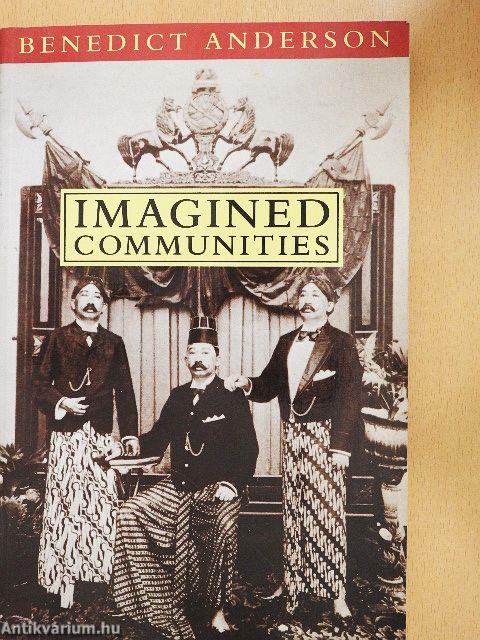
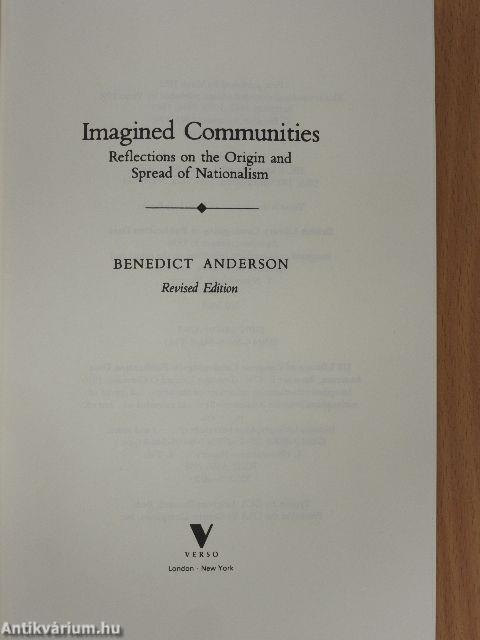
Imagined Communities
Reflections on the Origin and Spread of Nationalism
London
| Kiadó: | Verso |
|---|---|
| Kiadás helye: | London |
| Kiadás éve: | |
| Kötés típusa: | Ragasztott papírkötés |
| Oldalszám: | 224 oldal |
| Sorozatcím: | |
| Kötetszám: | |
| Nyelv: | Angol |
| Méret: | 23 cm x 16 cm |
| ISBN: | 0-86091-546-8 |
Értesítőt kérek a kiadóról
A beállítást mentettük,
naponta értesítjük a beérkező friss
kiadványokról
naponta értesítjük a beérkező friss
kiadványokról
A beállítást mentettük,
naponta értesítjük a beérkező friss
kiadványokról
naponta értesítjük a beérkező friss
kiadványokról
Előszó
Tovább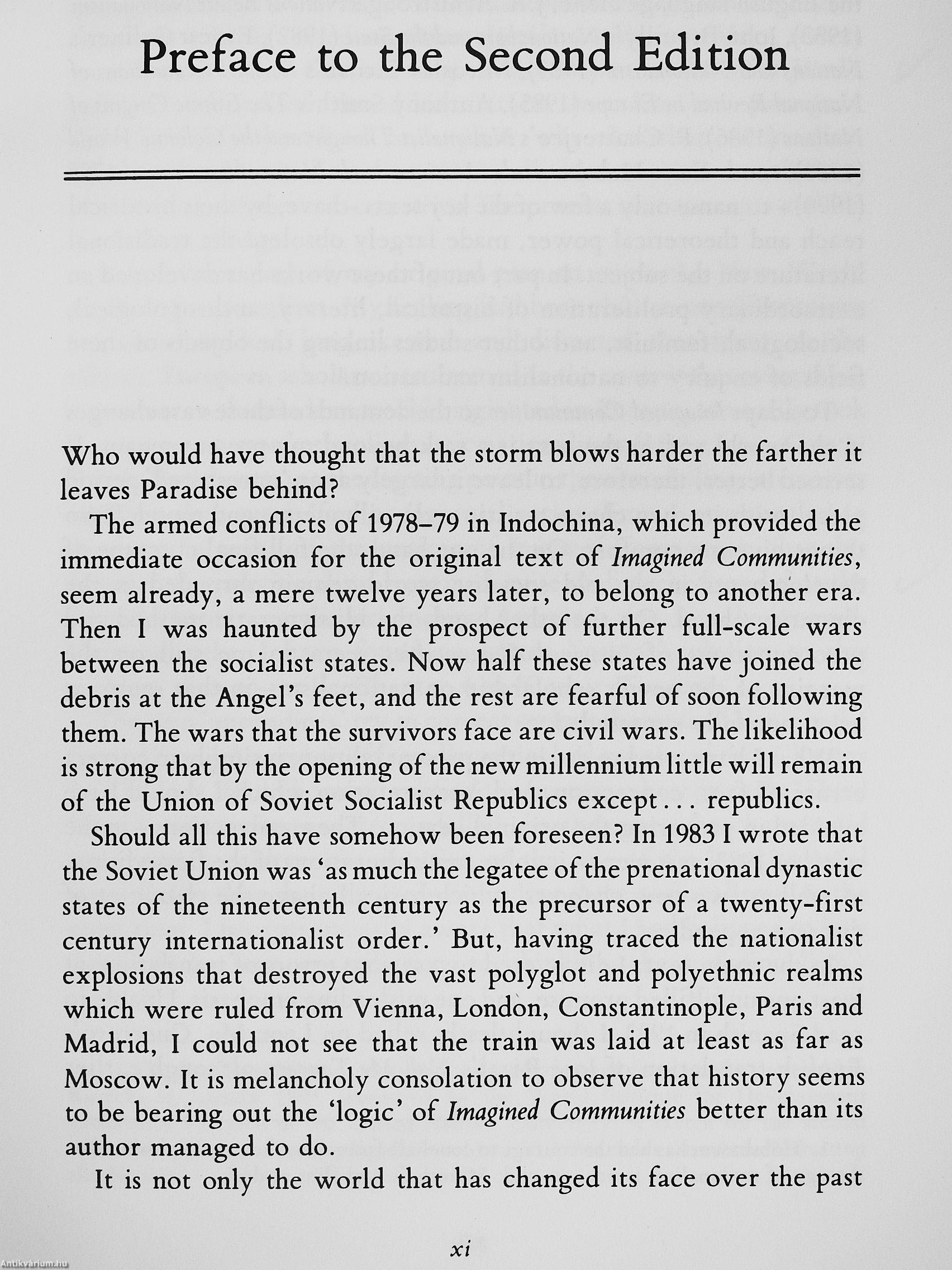
Fülszöveg
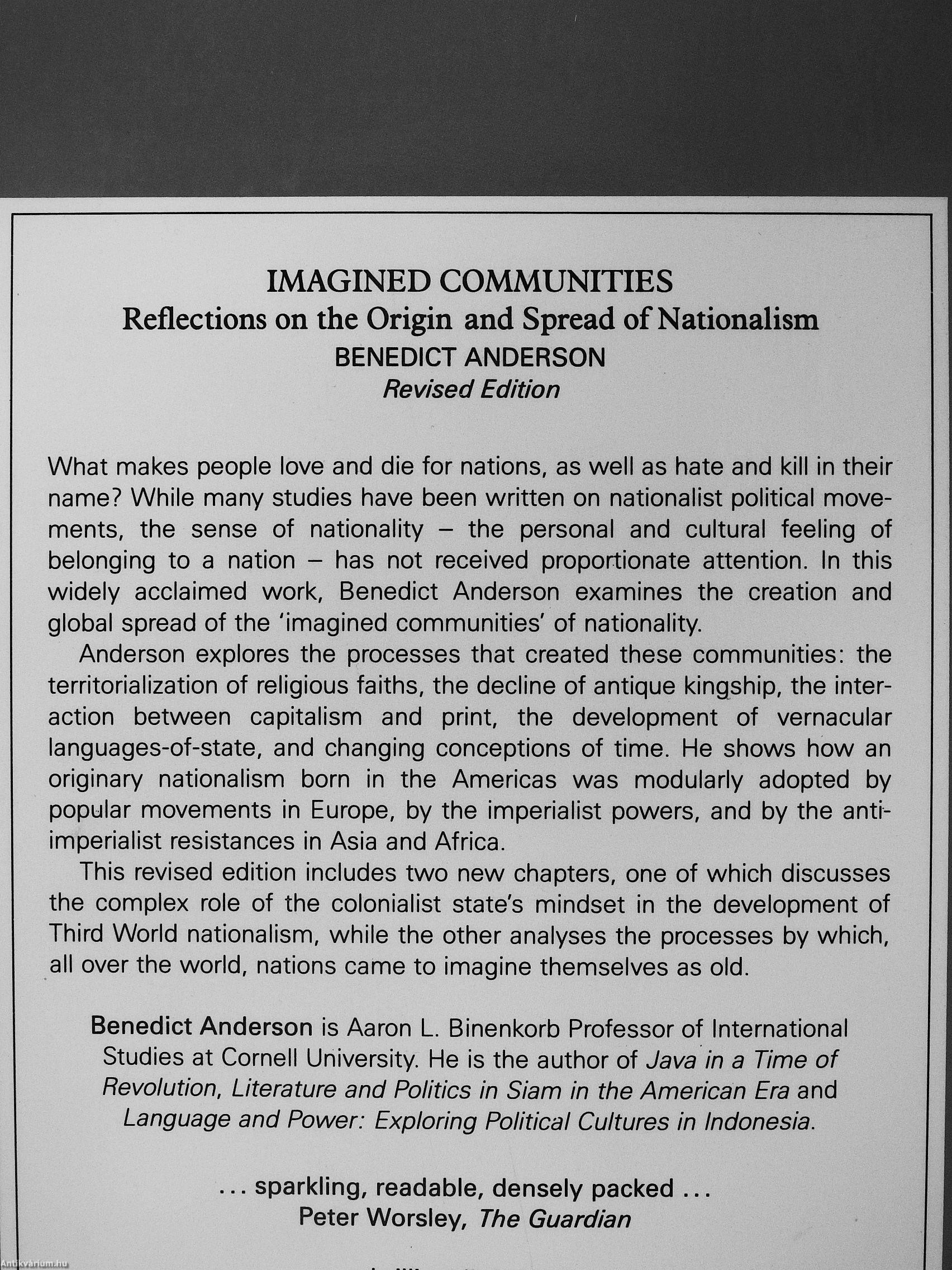
IMAGINED COMMUNITIES Reflections on the Origin and Spread of Nationalism BENEDICT ANDERSON Revised Edition
What makes people love and die for nations, as well as hate and kill in their name? While many studies have been written on nationalist political movements, the sense of nationality - the personal and cultural feeling of belonging to a nation - has not received proportionate attention. In this widely acclaimed work, Benedict Anderson examines the creation and global spread of the 'imagined communities' of nationality.
Anderson explores the processes that created these communities: the territorialization of religious faiths, the decline of antique kingship, the interaction between capitalism and print, the development of vernacular languages-of-state, and changing conceptions of time. He shows how an originary nationalism born in the Americas was modularly adopted by popular movements in Europe, by the imperialist powers, and by the anti-imperialist resistances in Asia and... Tovább
Fülszöveg
IMAGINED COMMUNITIES Reflections on the Origin and Spread of Nationalism BENEDICT ANDERSON Revised Edition
What makes people love and die for nations, as well as hate and kill in their name? While many studies have been written on nationalist political movements, the sense of nationality - the personal and cultural feeling of belonging to a nation - has not received proportionate attention. In this widely acclaimed work, Benedict Anderson examines the creation and global spread of the 'imagined communities' of nationality.
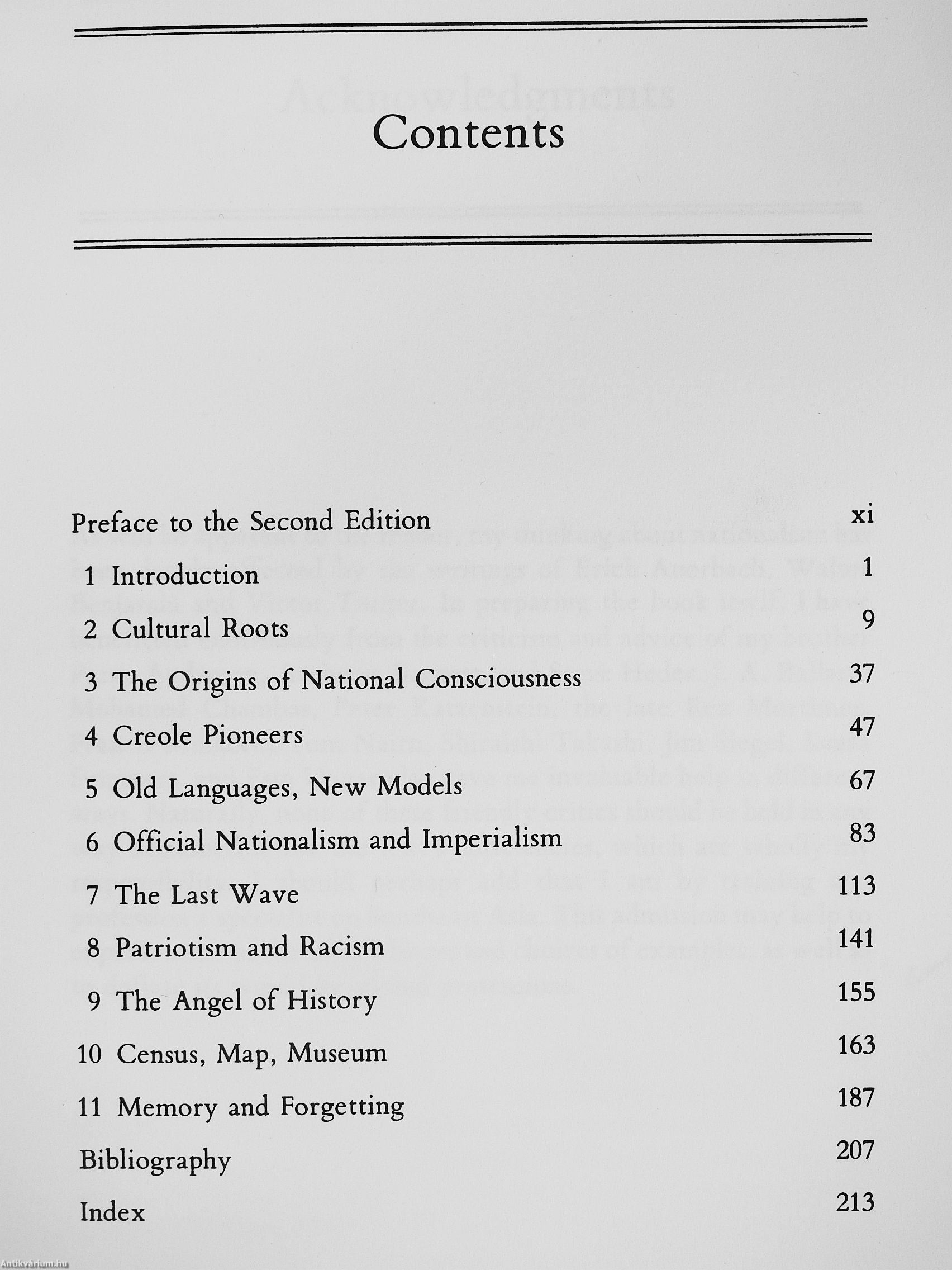
Anderson explores the processes that created these communities: the territorialization of religious faiths, the decline of antique kingship, the interaction between capitalism and print, the development of vernacular languages-of-state, and changing conceptions of time. He shows how an originary nationalism born in the Americas was modularly adopted by popular movements in Europe, by the imperialist powers, and by the anti-imperialist resistances in Asia and Africa.
This revised edition includes two new chapters, one of which discusses the complex role of the colonialist state's mindset in the development of Third World nationalism, while the other analyses the processes by which, all over the world, nations came to imagine themselves as old.
Benedict Anderson is Aaron L. Binenkorb Professor of International Studies at Cornell University. He is the author of Java in a Time of Revolution, Literature and Politics in Siam in the American Era and Language and Power: Exploring Political Cultures in Indonesia.
sparkling, readable, densely packed
Peter Worsley, The Guardian Vissza
Témakörök
- Történelem > Társadalomelmélet
- Szociológia > Politikai szociológia
- Idegennyelv > Idegennyelvű könyvek > Angol > Szociológia > Politikai szociológia
- Idegennyelv > Idegennyelvű könyvek > Angol > Történelem > Egyéb
- Filozófia > Témaköre szerint > Tanulmányok, esszék
- Idegennyelv > Idegennyelvű könyvek > Angol > Filozófia > Témaköre szerint > Tanulmányok, esszék
- Történelem > Idegennyelvű > Angol
- Filozófia > Témaköre szerint > Társadalomfilozófia > Egyéb
- Idegennyelv > Idegennyelvű könyvek > Angol > Filozófia > Témaköre szerint > Társadalomfilozófia > Egyéb
- Történelem > Politika > Ideológiák > Nacionalizmus
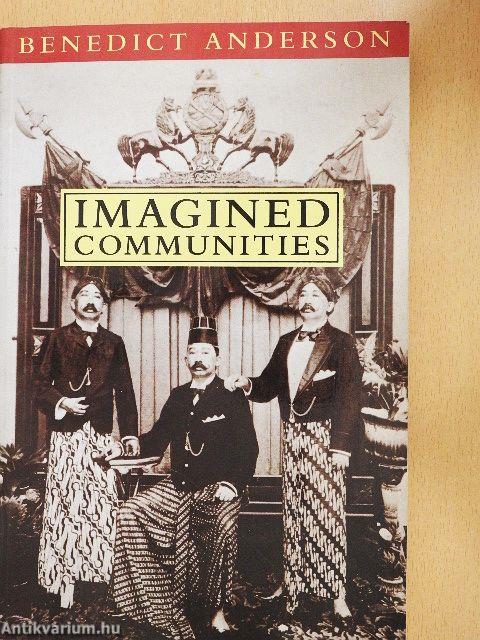
Benedict Anderson
Benedict Anderson műveinek az Antikvarium.hu-n kapható vagy előjegyezhető listáját itt tekintheti meg: Benedict Anderson könyvek, művekMegvásárolható példányok
Nincs megvásárolható példány
A könyv összes megrendelhető példánya elfogyott. Ha kívánja, előjegyezheti a könyvet, és amint a könyv egy újabb példánya elérhető lesz, értesítjük.
 Folytatás Microsoft-tal