
1.137.528
kiadvánnyal nyújtjuk Magyarország legnagyobb antikvár könyv-kínálatát

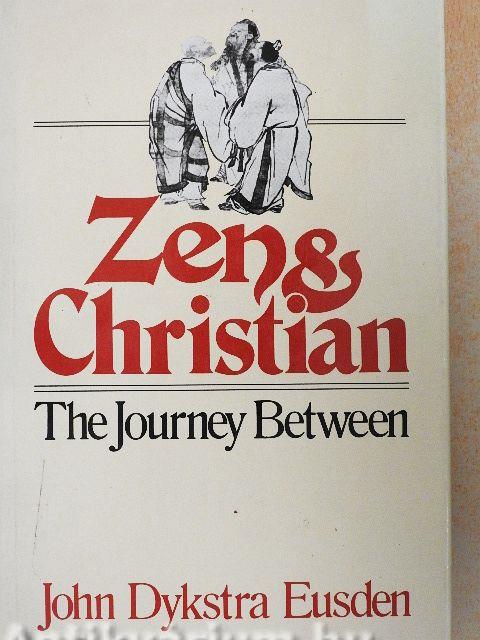
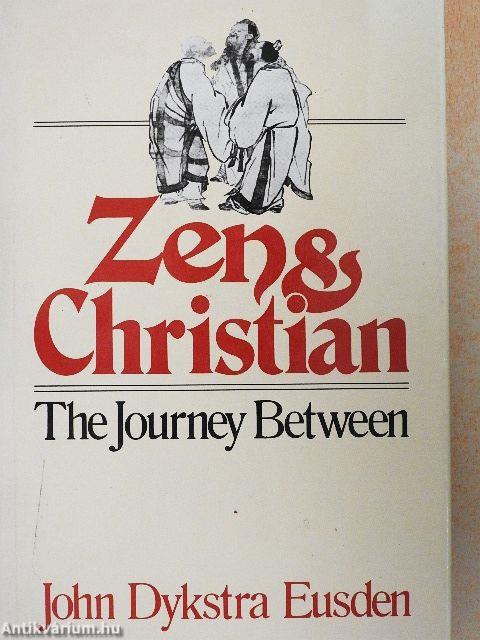
Zen and Christian
The Journey Between
New York
| Kiadó: | Crossroad |
|---|---|
| Kiadás helye: | New York |
| Kiadás éve: | |
| Kötés típusa: | Ragasztott kemény kötés |
| Oldalszám: | 189 oldal |
| Sorozatcím: | |
| Kötetszám: | |
| Nyelv: | Angol |
| Méret: | 21 cm x 14 cm |
| ISBN: | 0-8245-0099-7 |
| Megjegyzés: | Fekete-fehér fotókkal. |
Értesítőt kérek a kiadóról
A beállítást mentettük,
naponta értesítjük a beérkező friss
kiadványokról
naponta értesítjük a beérkező friss
kiadványokról
A beállítást mentettük,
naponta értesítjük a beérkező friss
kiadványokról
naponta értesítjük a beérkező friss
kiadványokról
Előszó
Tovább
Fülszöveg
Christian
The Joum^ Between
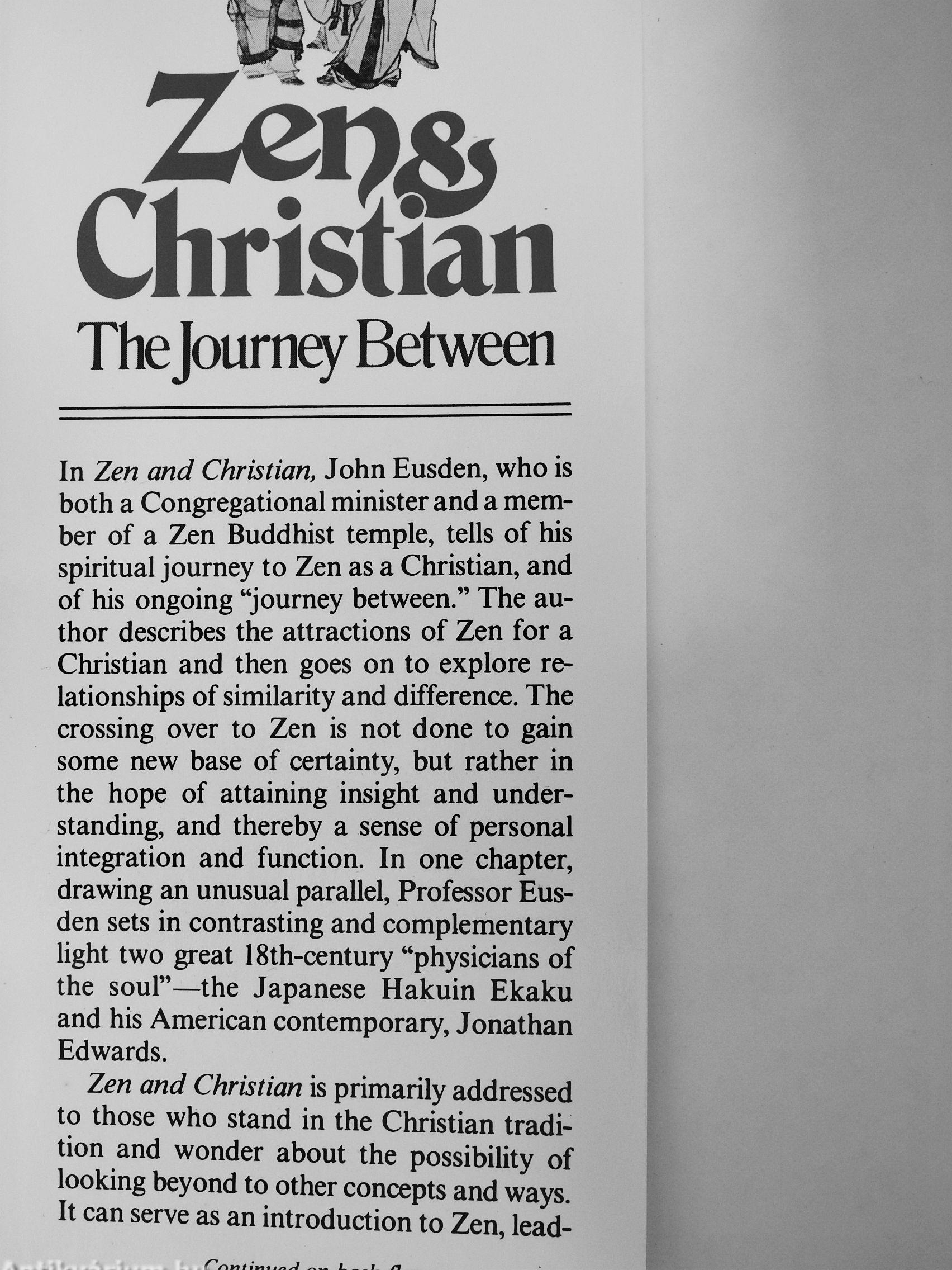
In Zen and Christian, John Eusden, who is both a Congregational minister and a member of a Zen Buddhist temple, tells of his spiritual journey to Zen as a Christian, and of his ongoing "journey between." The author describes the attractions of Zen for a Christian and then goes on to explore relationships of similarity and difference. The crossing over to Zen is not done to gain some new base of certainty, but rather in the hope of attaining insight and understanding, and thereby a sense of personal integration and function. In one chapter, drawing an unusual parallel, Professor Eusden sets in contrasting and complementary light two great 18th-century "physicians of the soul"—the Japanese Hakuin Ekaku and his American contemporary, Jonathan Edwards.
Zen and Christian is primarily addressed to those who stand in the Christian tradition and wonder about the possibility of looking beyond to other concepts and ways. It can serve as an introduction to Zen,... Tovább
Fülszöveg
Christian
The Joum^ Between
In Zen and Christian, John Eusden, who is both a Congregational minister and a member of a Zen Buddhist temple, tells of his spiritual journey to Zen as a Christian, and of his ongoing "journey between." The author describes the attractions of Zen for a Christian and then goes on to explore relationships of similarity and difference. The crossing over to Zen is not done to gain some new base of certainty, but rather in the hope of attaining insight and understanding, and thereby a sense of personal integration and function. In one chapter, drawing an unusual parallel, Professor Eusden sets in contrasting and complementary light two great 18th-century "physicians of the soul"—the Japanese Hakuin Ekaku and his American contemporary, Jonathan Edwards.
Zen and Christian is primarily addressed to those who stand in the Christian tradition and wonder about the possibility of looking beyond to other concepts and ways. It can serve as an introduction to Zen, lead-
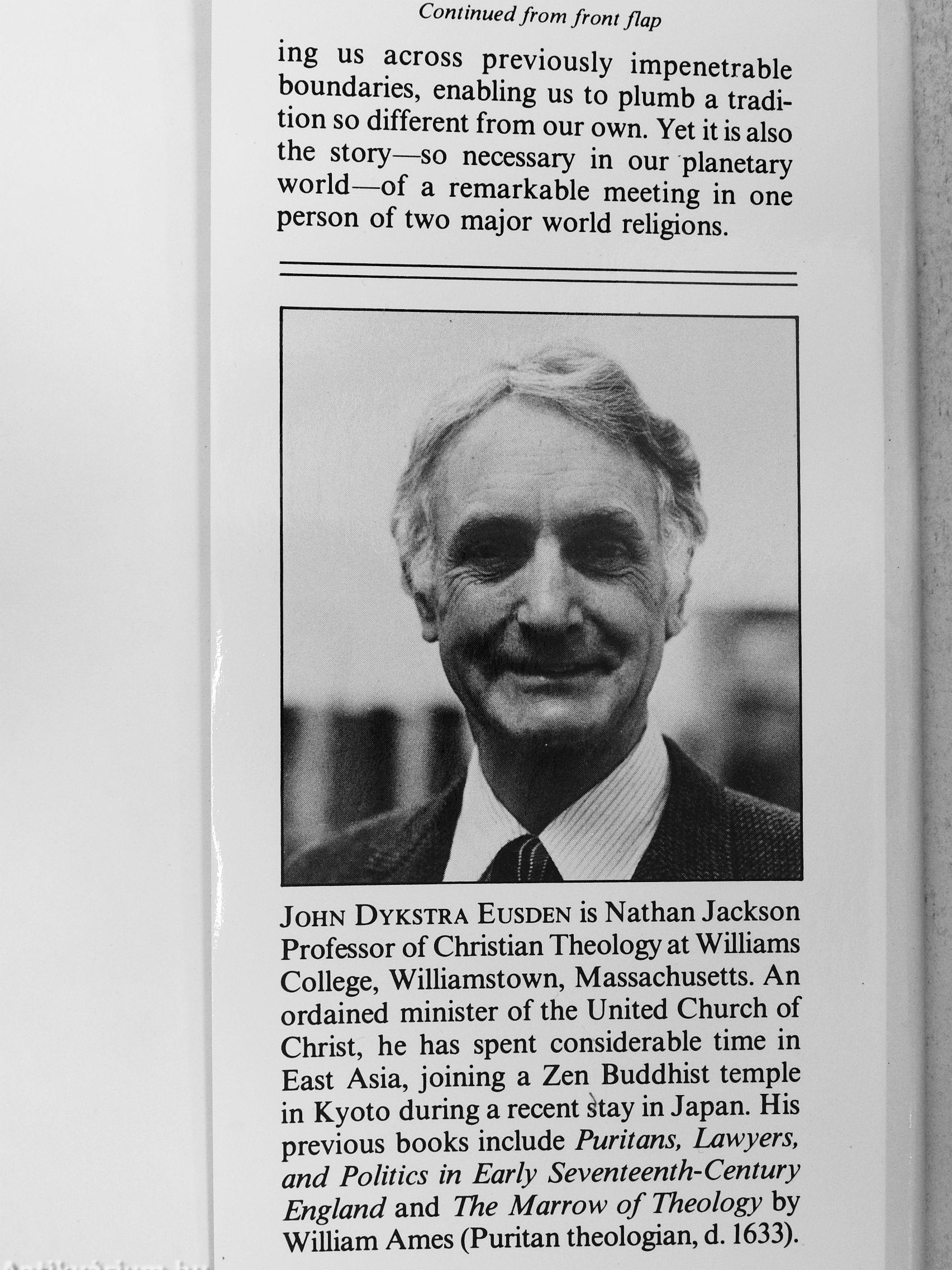
Continued from front flap
ing us across previously impenetrable boundaries, enabling us to plumb a tradition so different from our own. Yet it is also the story—so necessary in our planetary world—of a remarkable meeting in one person of two major world religions.
John Dykstra Eusden is Nathan Jackson Professor of Christian Theology at Williams College, Williamstown, Massachusetts. An ordained minister of the United Church of Christ, he has spent considerable time in East Asia, joining a Zen Buddhist temple in Kyoto during a recent ^tay in Japan. His previous books include Puritans, Lawyers, and Politics in Early Seventeenth-Century England and The Marrow of Theology by William Ames (Puritan theologian, d. 1633).
Christian
The Journe)^ Between
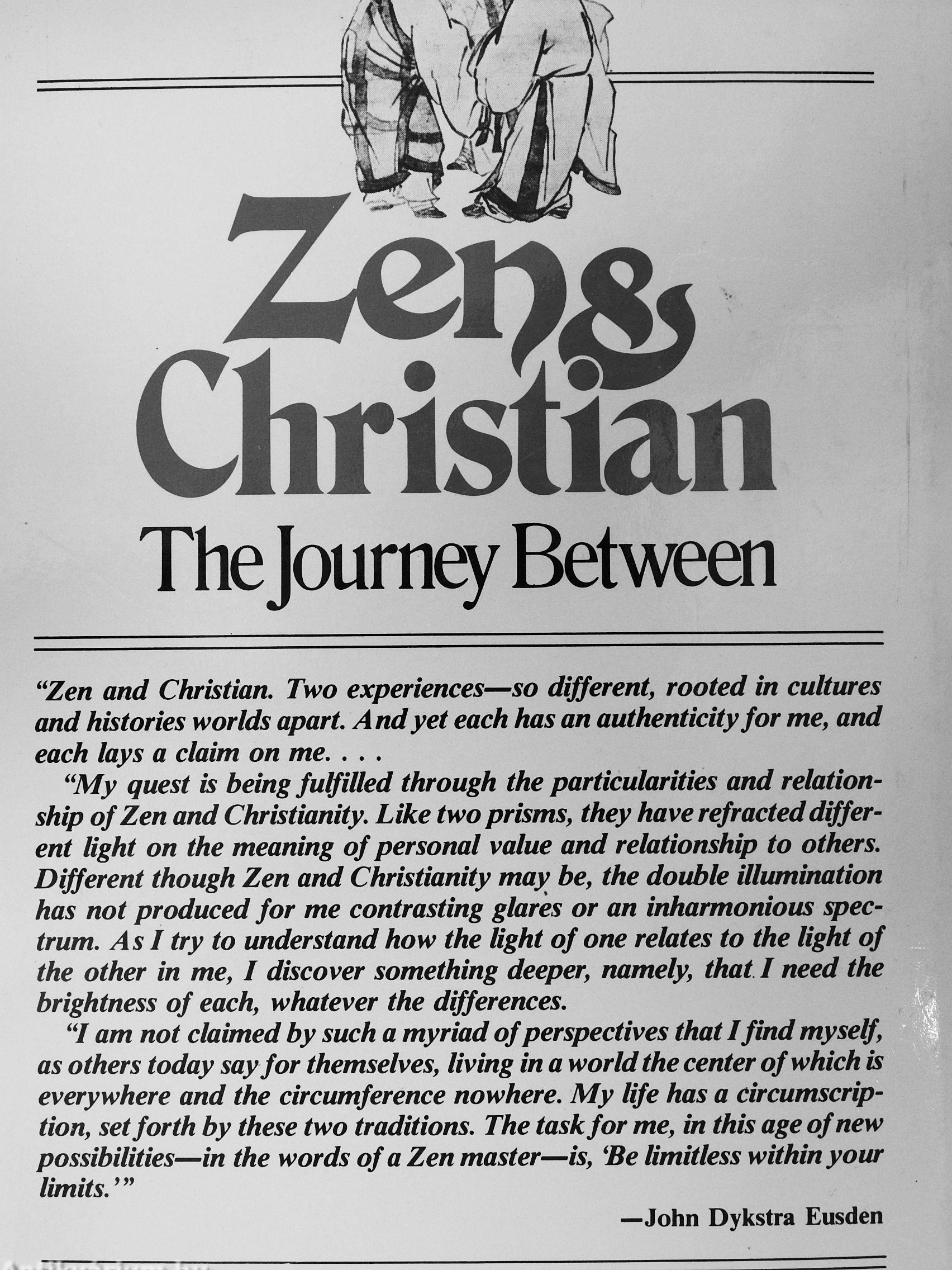
"Zen and Christian. Two experiences—so different, rooted in cultures and histories worlds apart. And yet each has an authenticity for me, and each lays a claim on me. . . .
"My quest is being fulfilled through the particularities and relationship of Zen and Christianity. Like two prisms, they have refracted different light on the meaning of personal value and relationship to others. Different though Zen and Christianity may be, the double illumination has not produced for me contrasting glares or an inharmonious spectrum. As! try to understand how the light of one relates to the light of the other in me, I discover something deeper, namely, that I need the brightness of each, whatever the differences.
"I am not claimed by such a myriad of perspectives that / find myself, as others today say for themselves, living in a world the center of which is everywhere and the circumference nowhere. My life has a circumscription, set forth by these two traditions. The task for me, in this age of new possibilities—in the words of a Zen master—is, 'Be limitless within your limits.'"
—John Dykstra Eusden Vissza
Témakörök
John Dykstra Eusden
John Dykstra Eusden műveinek az Antikvarium.hu-n kapható vagy előjegyezhető listáját itt tekintheti meg: John Dykstra Eusden könyvek, művekMegvásárolható példányok
Állapotfotók
Jó állapotú példány.
Állapot:
Jó
8.980 ,-Ft
45
pont kapható
Kosárba
 Folytatás Microsoft-tal