Fülszöveg
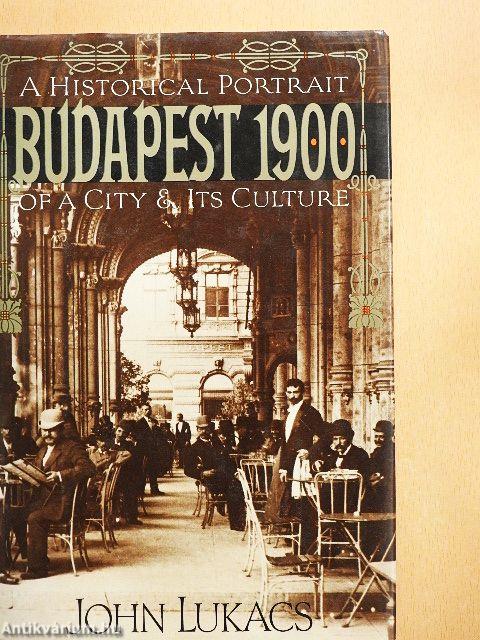
John Lukacs, distinguished historian and native of Budapest, offers nBudapeft 1900 a rich and eloquent portrait of one of the great European cities at the height of its powers.
Budapest, like Paris and Vienna, expe-rienced a remarkable exfoliation at the end of the nineteenth century. In terms of population growth, material expansion, and cultural exuberance, it was among the foremost metropolitan centers of the world, the cradle of such talents as Bartók, Kodály, Krúdy, Ady, Molnár, Koestler, Szilárd, and von Neumann, among others.
John Lukacs provides a cultural and historical portrait of the city—its sights, sounds, and inhabitants; the artistic and material culture; its class dynamics; the essential role played by its Jewish population—and a historical perspective that describes the ascendance of the city and its decline into the maelstrom of the twentieth century.
Intimate and engaging, Budapedt 1900 captures the glory of a city at the turn of the century poised at the...
Tovább
Fülszöveg
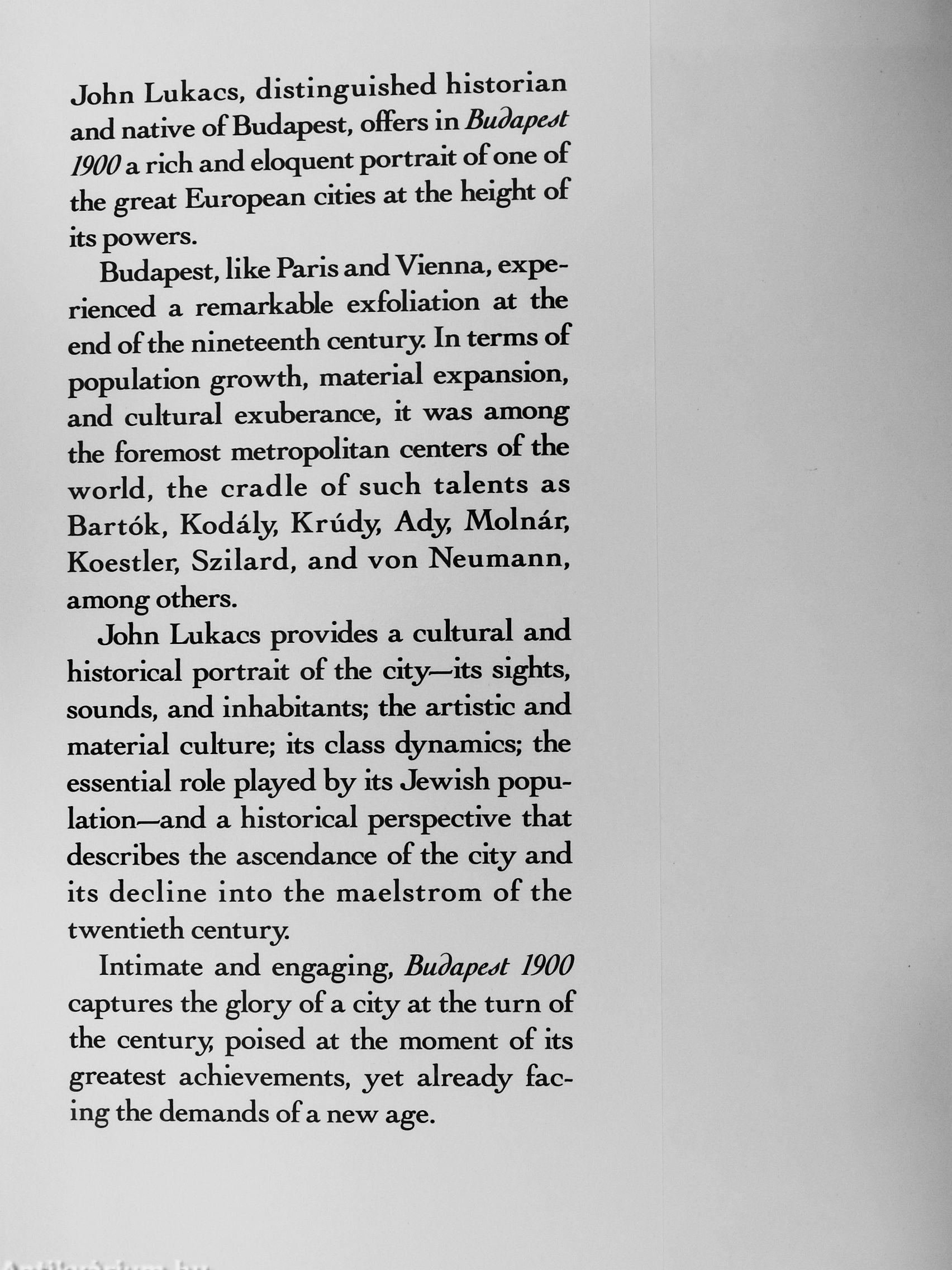
John Lukacs, distinguished historian and native of Budapest, offers nBudapeft 1900 a rich and eloquent portrait of one of the great European cities at the height of its powers.
Budapest, like Paris and Vienna, expe-rienced a remarkable exfoliation at the end of the nineteenth century. In terms of population growth, material expansion, and cultural exuberance, it was among the foremost metropolitan centers of the world, the cradle of such talents as Bartók, Kodály, Krúdy, Ady, Molnár, Koestler, Szilárd, and von Neumann, among others.
John Lukacs provides a cultural and historical portrait of the city—its sights, sounds, and inhabitants; the artistic and material culture; its class dynamics; the essential role played by its Jewish population—and a historical perspective that describes the ascendance of the city and its decline into the maelstrom of the twentieth century.
Intimate and engaging, Budapedt 1900 captures the glory of a city at the turn of the century poised at the moment of its greatest achievements, yet already facing the demands of a new age.
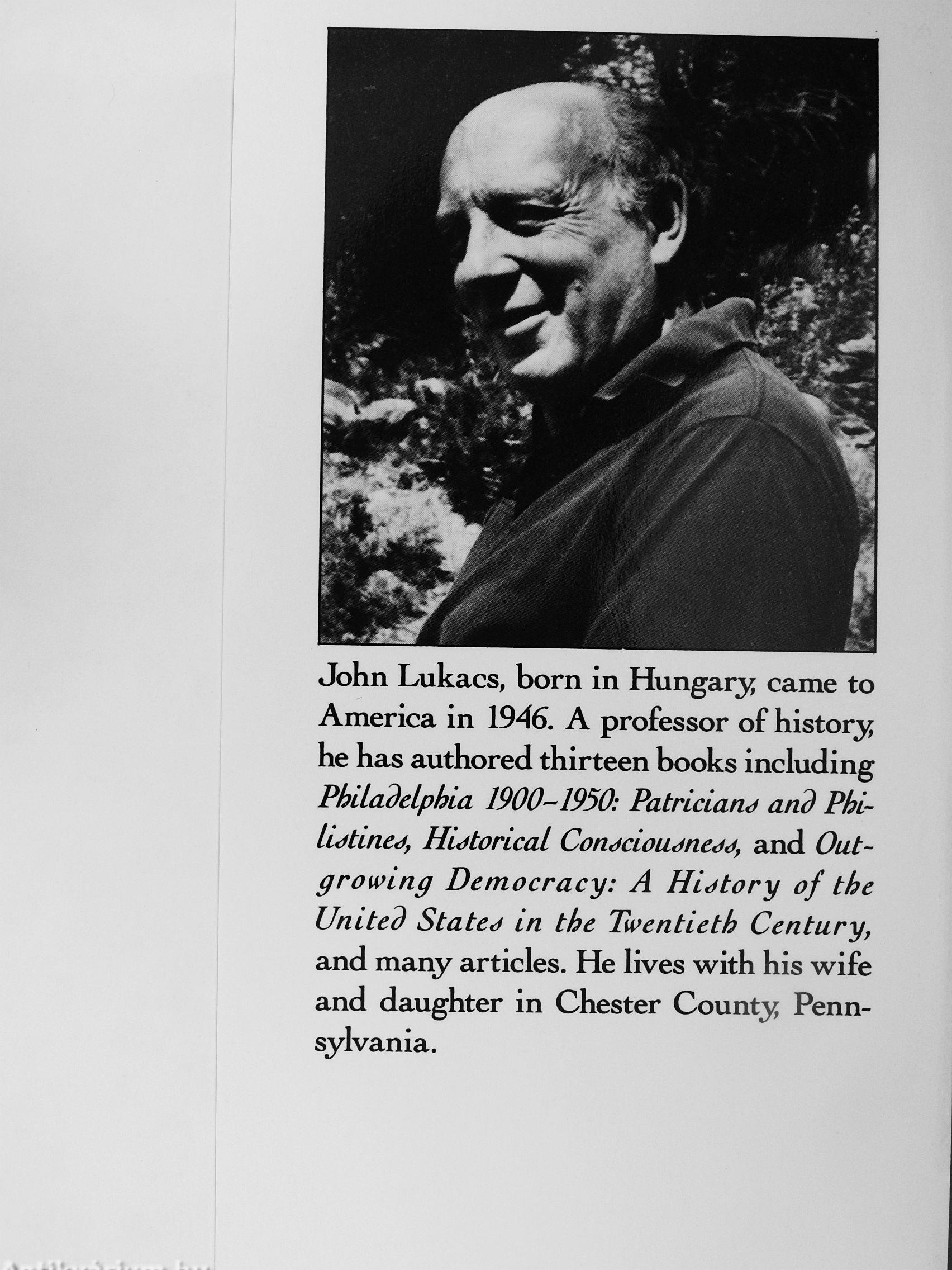
John Lukacs, born in Hungar^i came to America in 1946. A professor of histor^i he has authored thirteen books including Philadelphia MO-BSO: Patricians and Philistine*), Historical Consciousness, and Outgrowing Democracy: A History of the United States in the Twentieth Century, and many articles. He lives with his wife and daughter in Chester County Pennsylvania.
W-/ ---
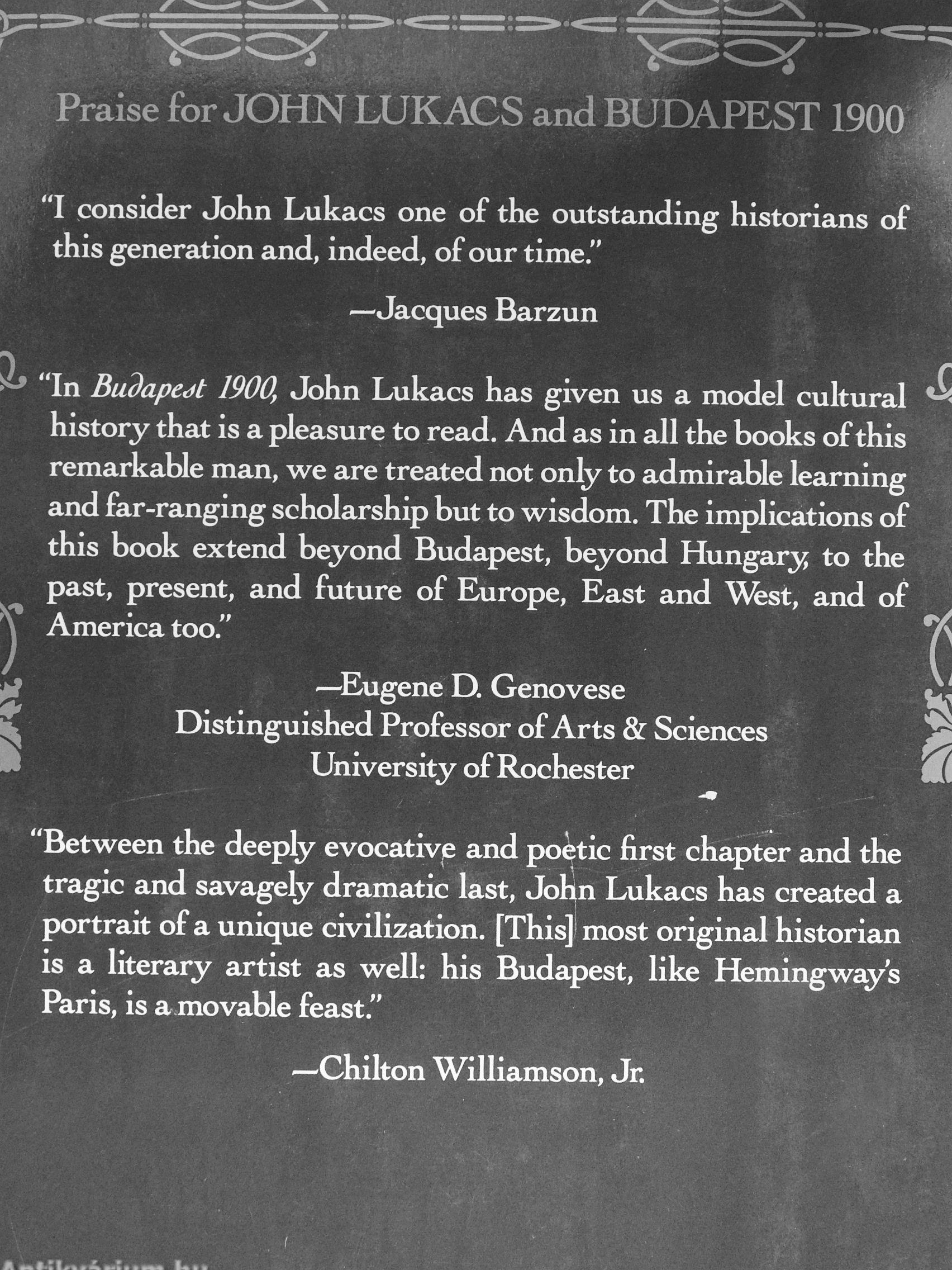
Praise for JOHN LUKACS and BUDAPEST 1900
"I consider John Lukacs one of the outstanding historians of this generation and, indeed, of our time."
—Jacques Barzun %
"In Budapest 1900, John Lukacs has given us a model cultural history that is a pleasure to read. And as in all the books of this remarkable man, we are treated not only to admirable learning and far-ranging scholarship but to wisdom. The implications of this book extend beyond Budapest, beyond Hungary to the past, present, and future of Europe, East and West, and of America too."
—Eugene D. Genovese ,
^^ Distinguished Professor of Arts & Sciences Universitv of Rochester
Between the deeply evocative and poetic first chapter and the tragic and savagely dramatic last, John Lukacs has created a portrait of a unique civilization. [This] most original historian is a literary artist as well: his Budapest, like Hemingways Paris, is a movable feast."
—Chilton Williamson. Jr.
Vissza 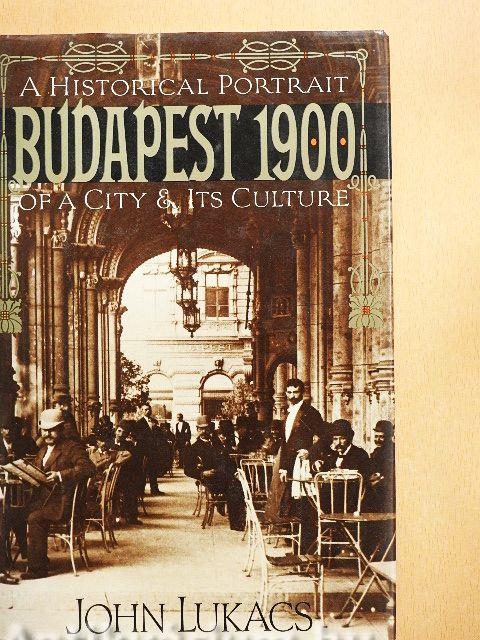



 Folytatás Microsoft-tal