
1.119.699
kiadvánnyal nyújtjuk Magyarország legnagyobb antikvár könyv-kínálatát

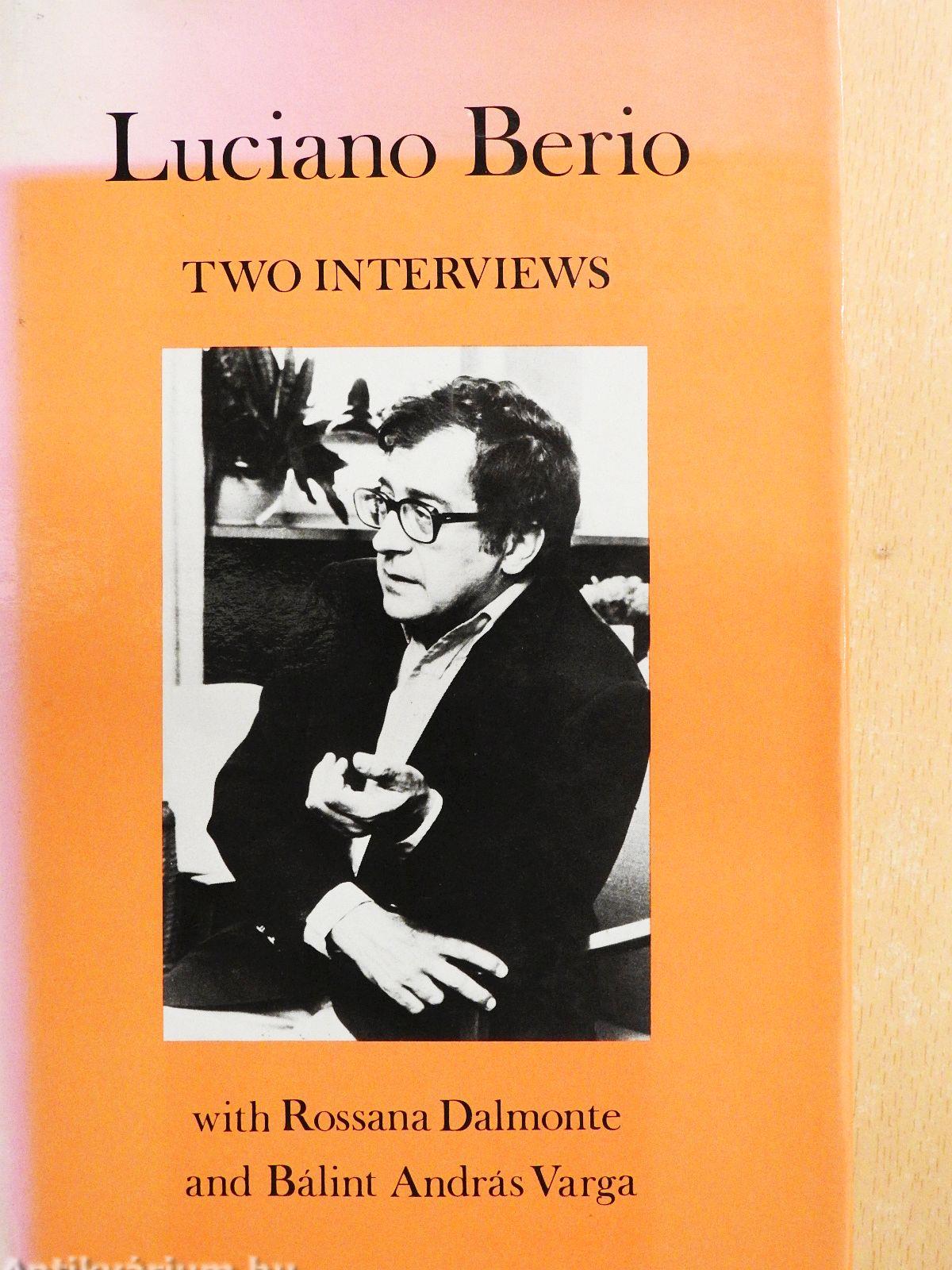
Two interviews with Rossana Dalmonte and Bálint András Varga (dedikált példány)
London/New York
| Kiadó: | Marion Boyars |
|---|---|
| Kiadás helye: | London/New York |
| Kiadás éve: | |
| Kötés típusa: | Ragasztott kemény kötés |
| Oldalszám: | 192 oldal |
| Sorozatcím: | |
| Kötetszám: | |
| Nyelv: | Angol |
| Méret: | 22 cm x 14 cm |
| ISBN: | 0-7145-2829-3 |
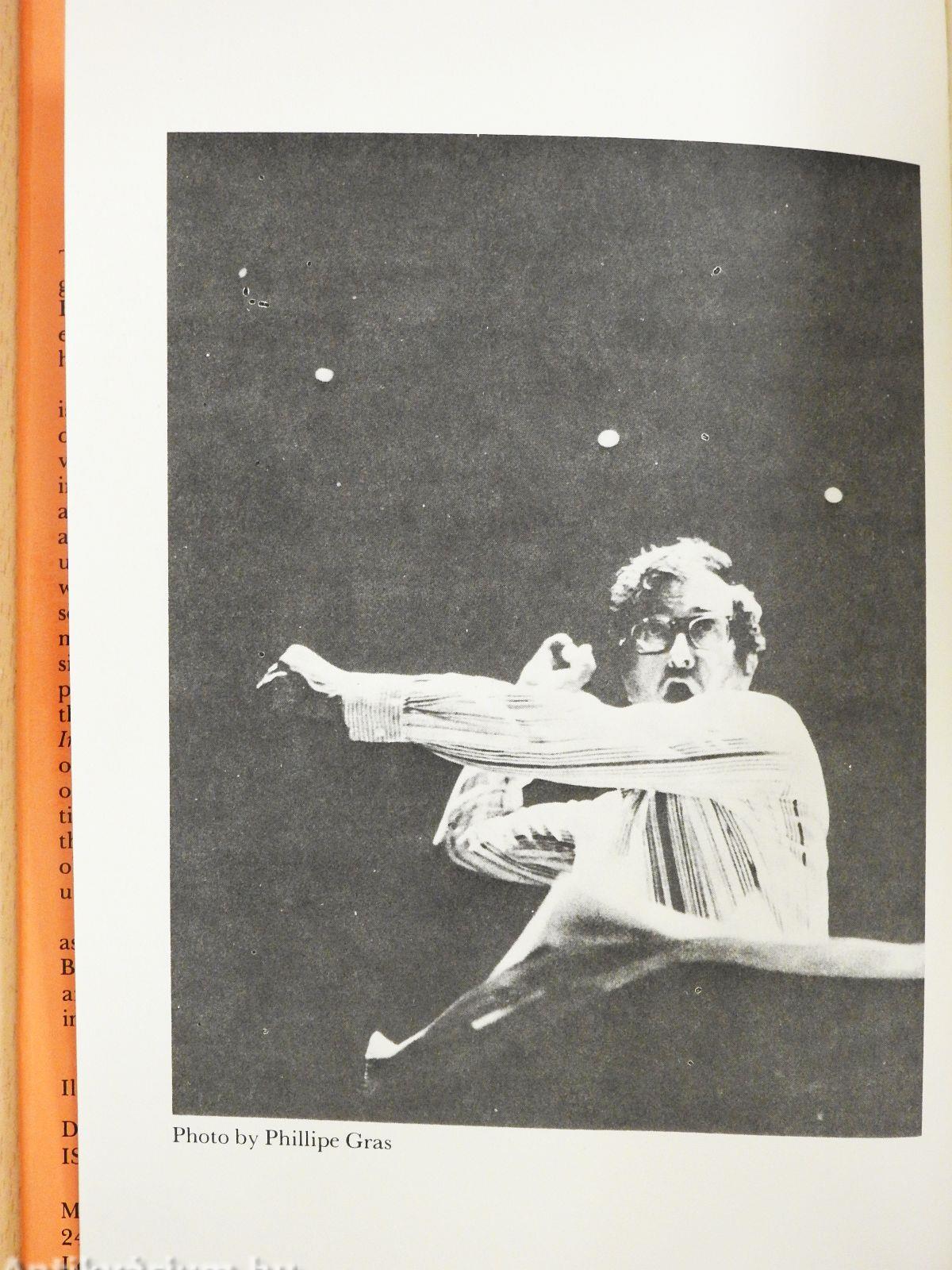
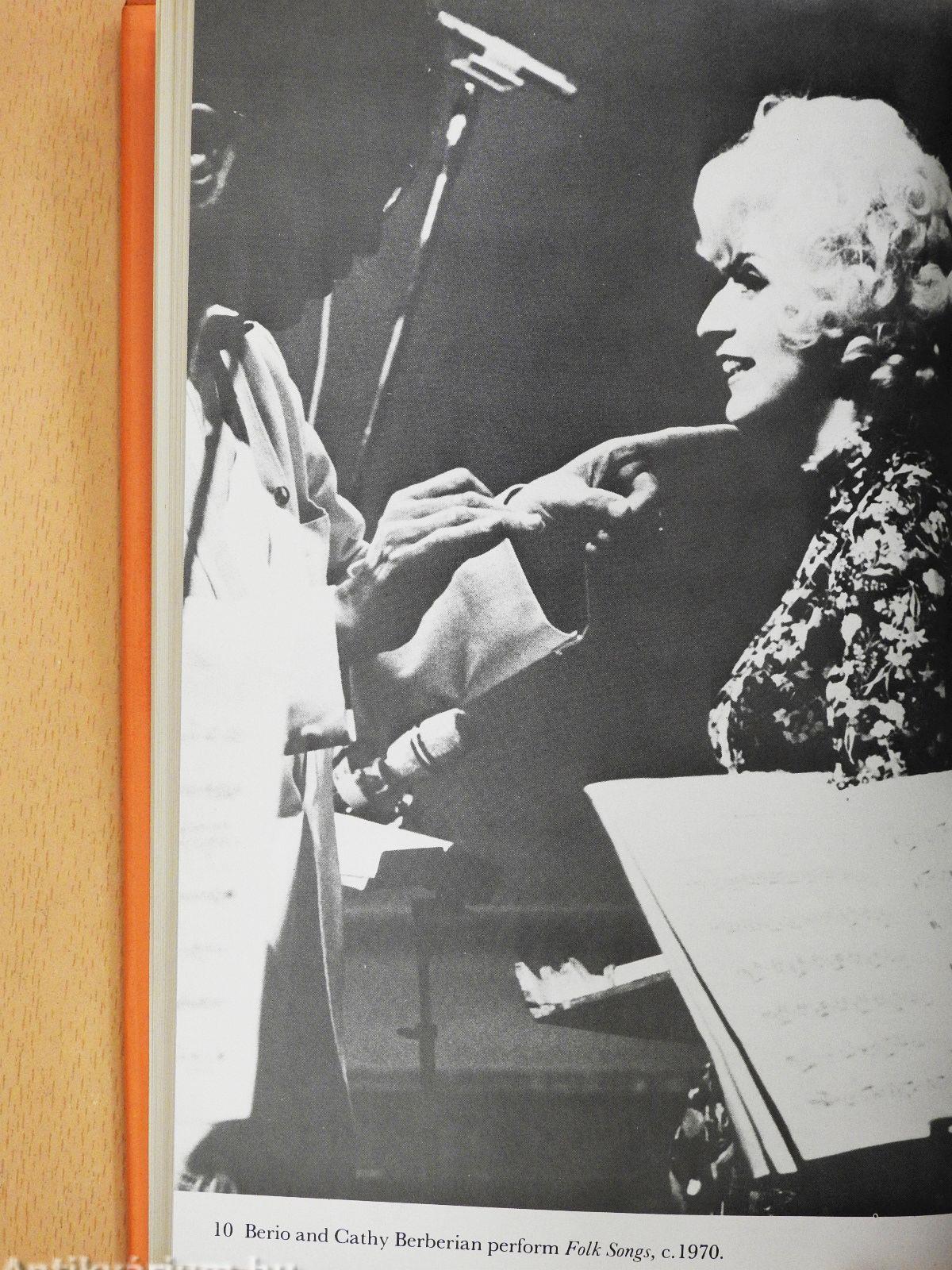
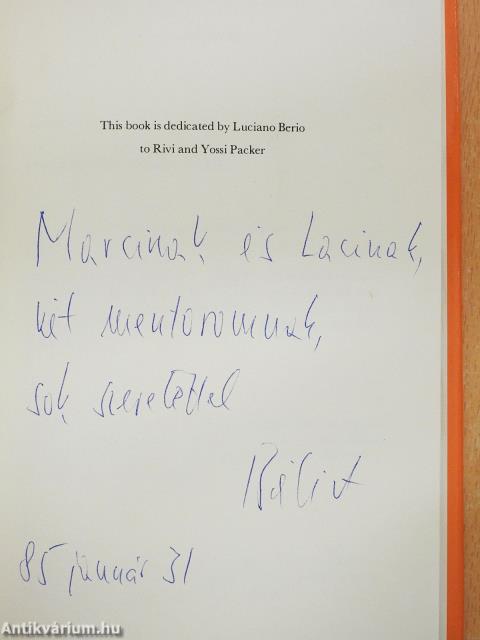
| Megjegyzés: | Varga Bálint András író által dedikált példány. Fekete-fehér fotókkal. |
Értesítőt kérek a kiadóról
A beállítást mentettük,
naponta értesítjük a beérkező friss
kiadványokról
naponta értesítjük a beérkező friss
kiadványokról
A beállítást mentettük,
naponta értesítjük a beérkező friss
kiadványokról
naponta értesítjük a beérkező friss
kiadványokról
Előszó
Tovább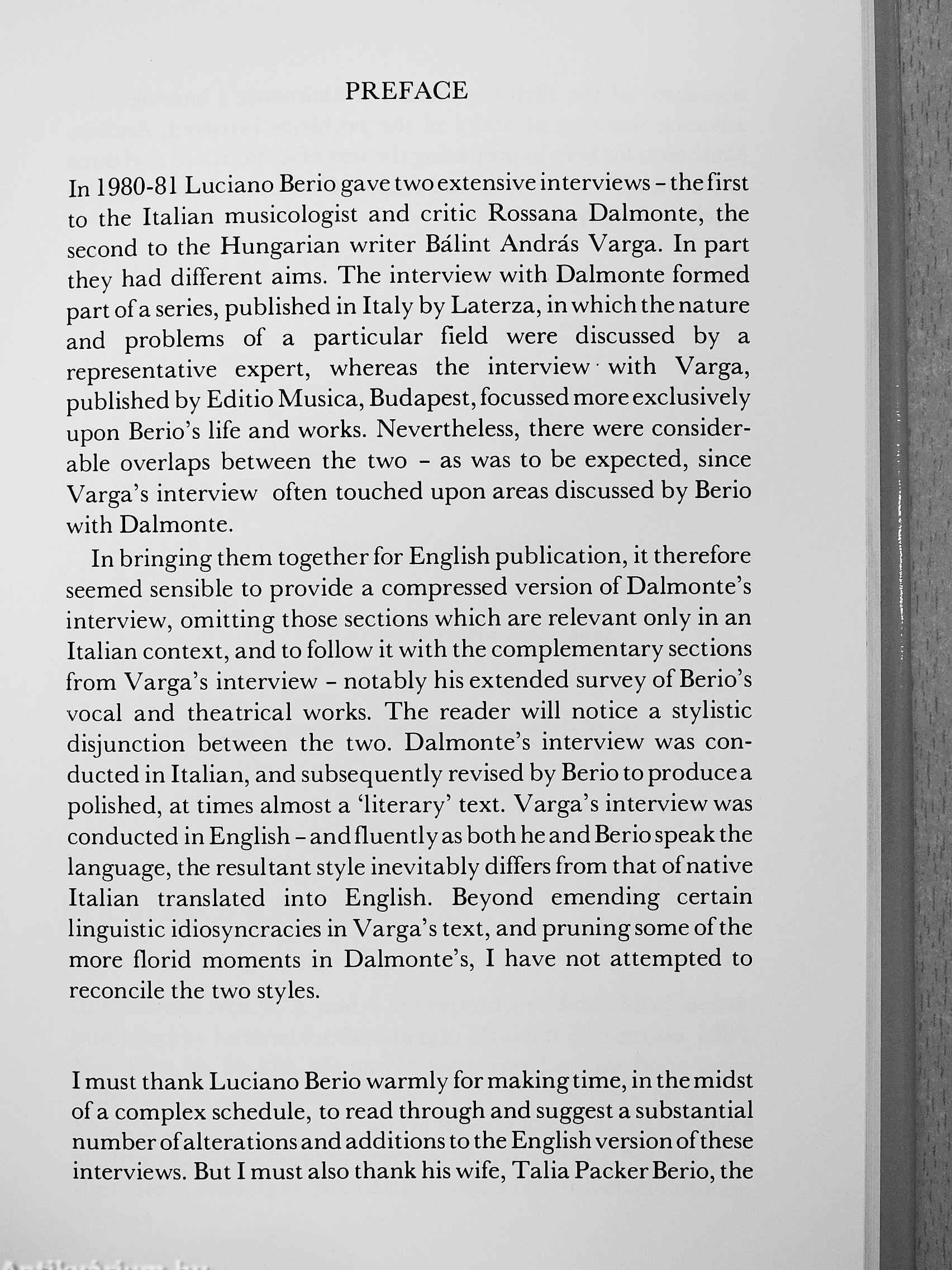
Fülszöveg
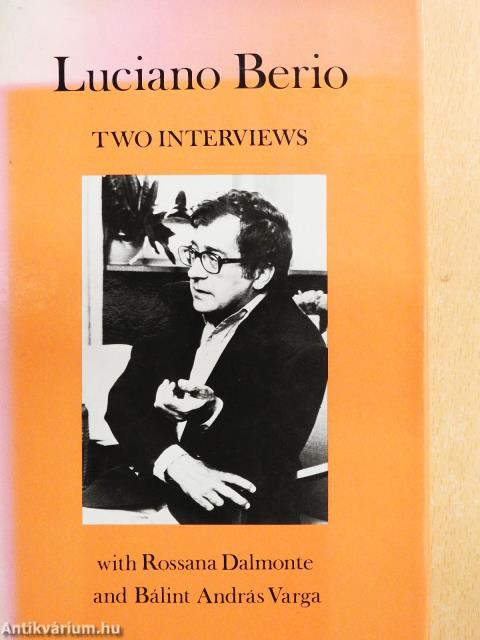
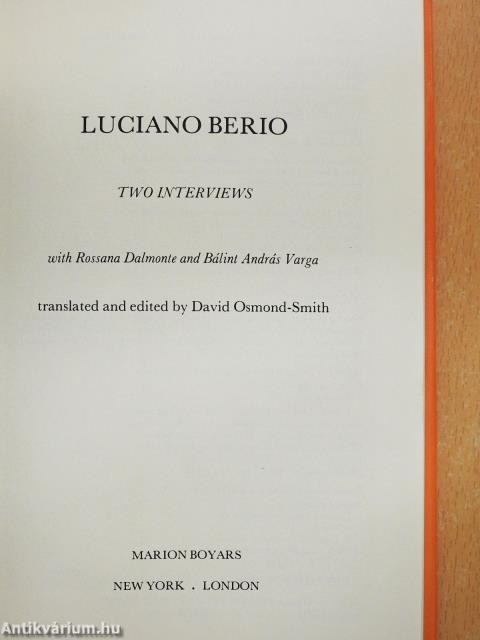
LUCIANO BERIO:
TWO INTERVIEWS
with Rossana Dalmonte and Bálint András Varga
Edited, translated and introduced by David Osmond-Smith
This volume provides two sets of interviews given by the celebrated Italian composer. Berio's answers have been meticulously edited and worked over by the composer himself for this edition.
In answer to Dalmonte's question "What is music?" Berio first of all considers the difficulties composers have had in finding verbal language adequate to their musical insights. He notes an upsurge of discourses about music since the nineteenth century and relates this to the changing and ambiguous status of musicians in the modern world. On the other hand, Berio opposes sociological accounts of contemporary music on the grounds that they reduce musical experience to the known, and in this process music itself tends to disappear from them. In a discussion of Theodor Adorno's Introduction to the Sociology of Music he honours the Frankfurt School Marxist as "one... Tovább
Fülszöveg
LUCIANO BERIO:
TWO INTERVIEWS
with Rossana Dalmonte and Bálint András Varga
Edited, translated and introduced by David Osmond-Smith
This volume provides two sets of interviews given by the celebrated Italian composer. Berio's answers have been meticulously edited and worked over by the composer himself for this edition.
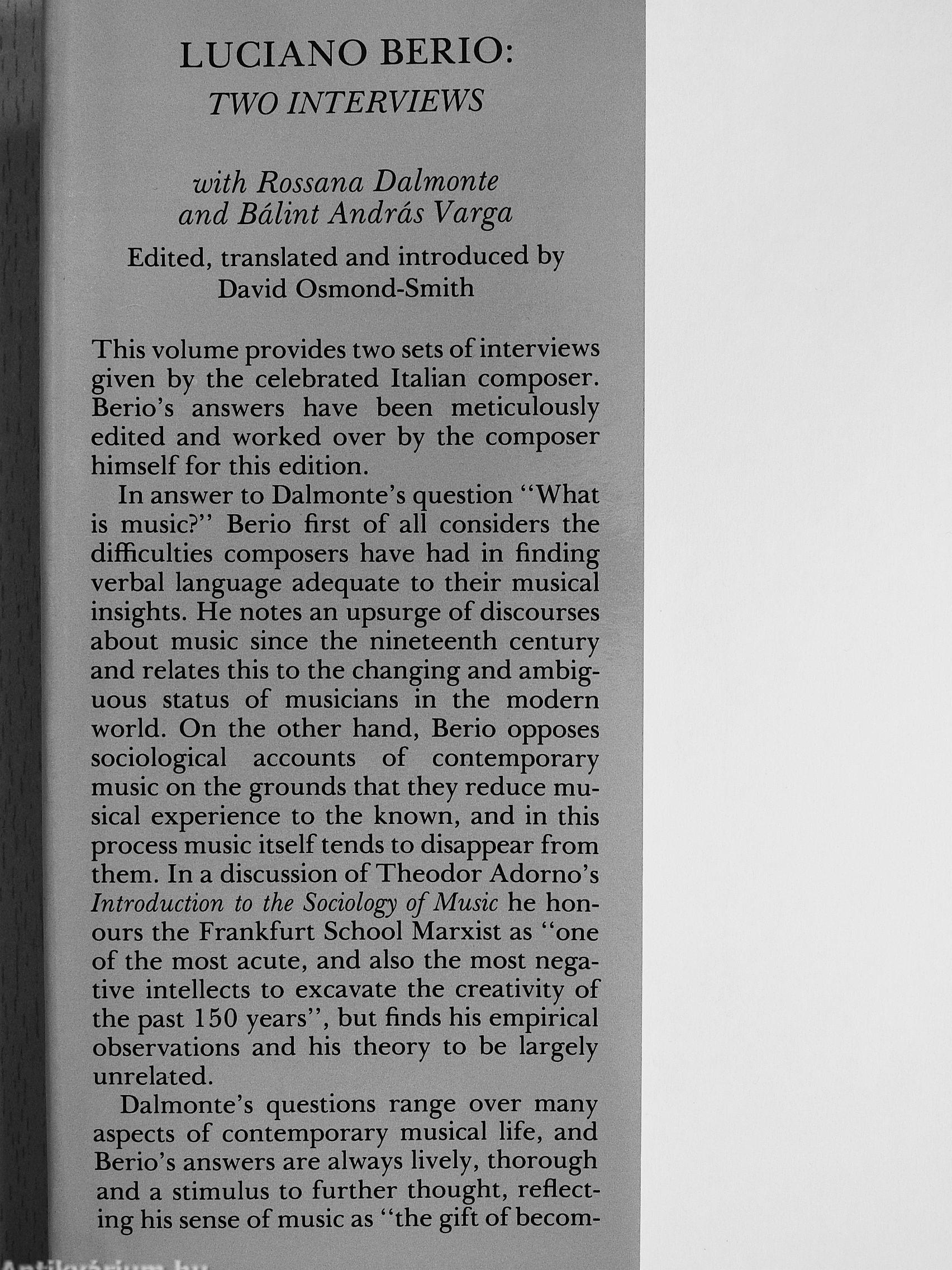
In answer to Dalmonte's question "What is music?" Berio first of all considers the difficulties composers have had in finding verbal language adequate to their musical insights. He notes an upsurge of discourses about music since the nineteenth century and relates this to the changing and ambiguous status of musicians in the modern world. On the other hand, Berio opposes sociological accounts of contemporary music on the grounds that they reduce musical experience to the known, and in this process music itself tends to disappear from them. In a discussion of Theodor Adorno's Introduction to the Sociology of Music he honours the Frankfurt School Marxist as "one of the most acute, and also the most negative intellects to excavate the creativity of the past 150 years", but finds his empirical observations and his theory to be largely unrelated.
Dalmonte's questions range over many aspects of contemporary musical life, and Berio's answers are always lively, thorough and a stimulus to further thought, reflecting his sense of music as "the gift of becom-
iüíi
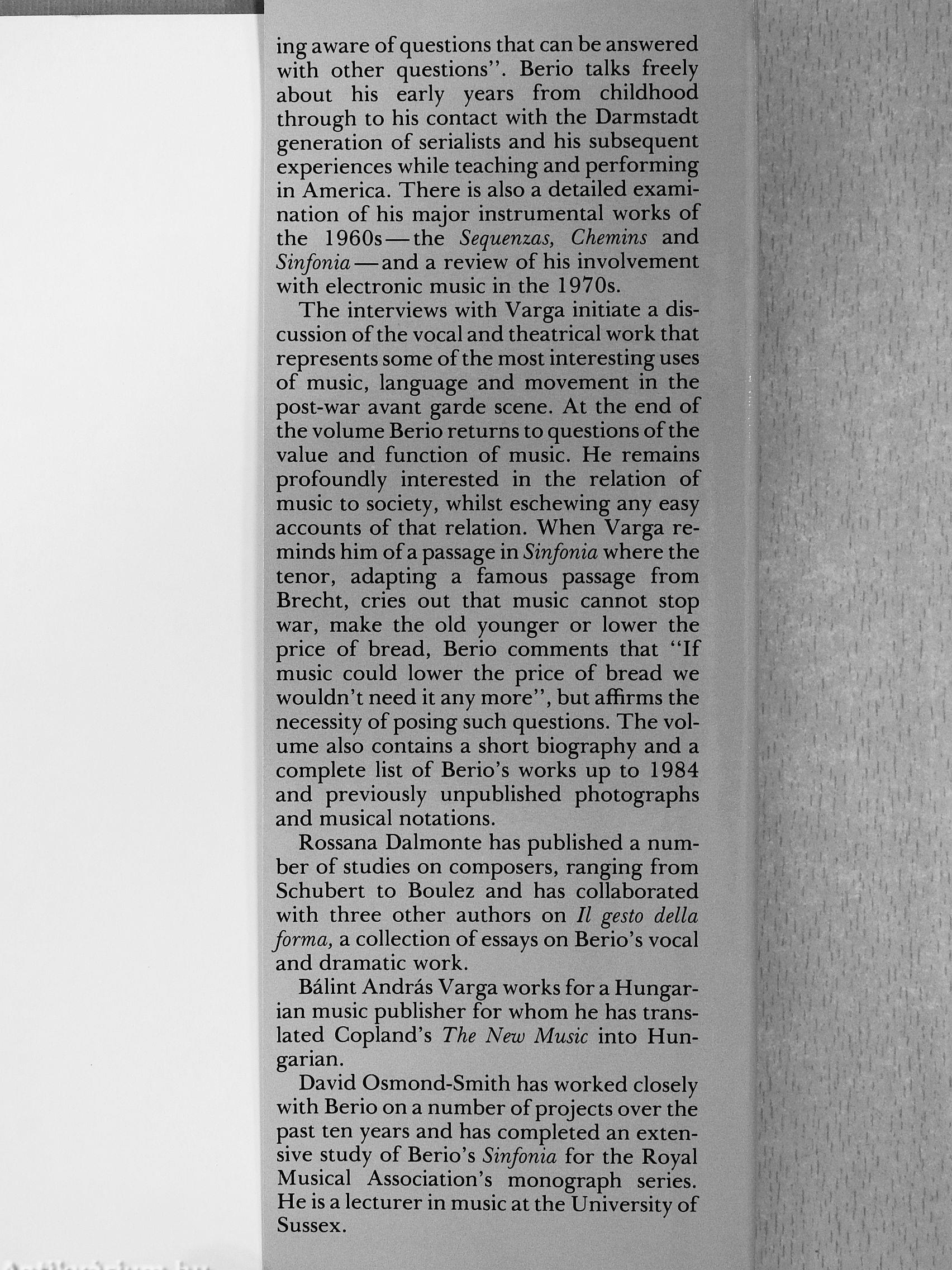
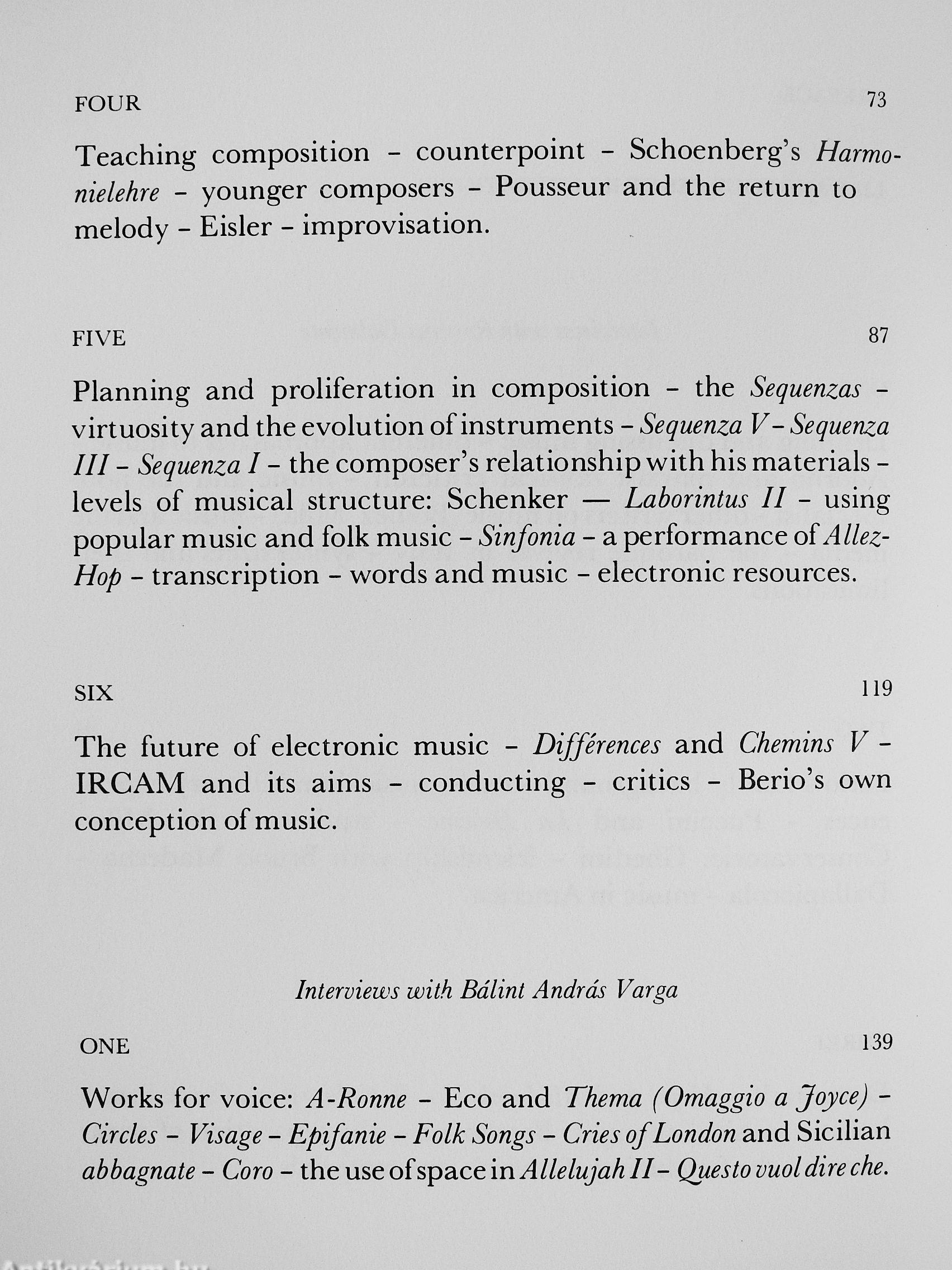
ing aware of questions that can be answered with other questions". Berio talks freely about his early years from childhood through to his contact with the Darmstadt generation of serialists and his subsequent experiences while teaching and performing in America. There is also a detailed examination of his major instrumental works of the 1960s — the Sequenzas, Chemins and Sinfonia—and a review of his involvement with electronic music in the 1970s.
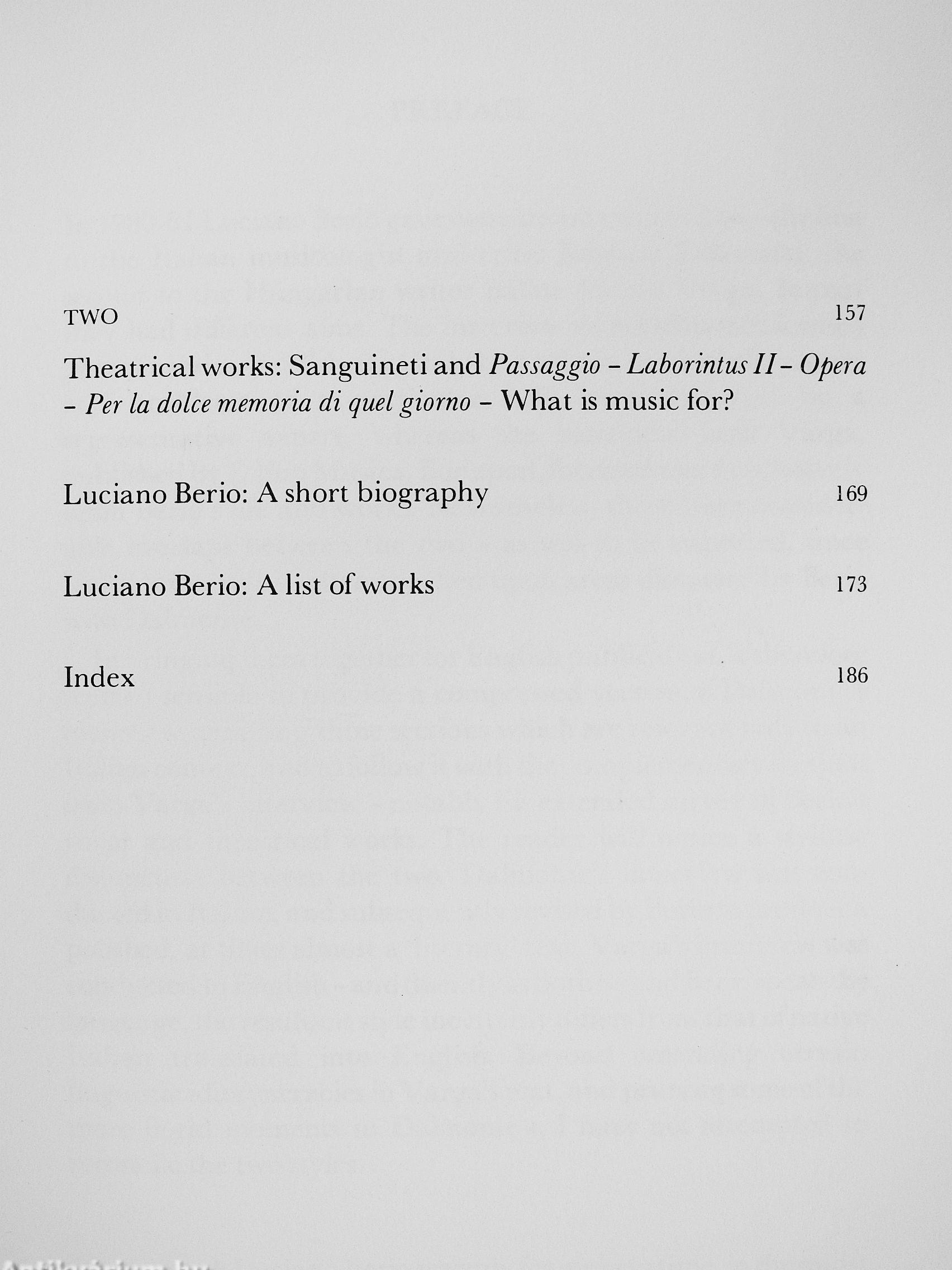
The interviews with Varga initiate a discussion of the vocal and theatrical work that represents some of the most interesting uses of music, language and movement in the post-war avant garde scene. At the end of the volume Berio returns to questions of the value and function of music. He remains profoundly interested in the relation of music to society, whilst eschewing any easy accounts of that relation. When Varga reminds him of a passage in Sinfonia where the tenor, adapting a famous passage from Brecht, cries out that music cannot stop war, make the old younger or lower the price of bread, Berio comments that "If music could lower the price of bread we wouldn't need it any more", but affirms the necessity of posing such questions. The volume also contains a short biography and a complete list of Berio's works up to 1984 and previously unpublished photographs and musical notations.
Rossana Dalmonte has published a number of studies on composers, ranging from Schubert to Boulez and has collaborated with three other authors on II gesto della forma, a collection of essays on Berio's vocal and dramatic work.
Bálint András Varga works for a Hungarian music publisher for whom he has translated Copland's The New Music into Hungarian.
David Osmond-Smith has worked closely with Berio on a number of projects over the past ten years and has completed an extensive study of Berio's Sinfonia for the Royal Musical Association's monograph series. He is a lecturer in music at the University of Sussex. Vissza
Témakörök
- Szépirodalom > Riportok, interjúk
- Idegennyelv > Idegennyelvű könyvek > Angol > Művészetek > Zene
- Idegennyelv > Idegennyelvű könyvek > Angol > Szépirodalom > Riportok, interjúk
- Művészetek > Zene > Komolyzene > Zenetörténet > Külföldi
- Művészetek > Zene > Komolyzene > Idegen nyelv > Angol
- Művészetek > Zene > Komolyzene > Korszakok > XX. század > Külföldi > Zeneszerzők
- Dedikált, aláírt kiadványok > Idegennyelv > Egyéb kapcsolódó személy által > Dedikált kötetek
- Idegennyelv > Dedikált, aláírt kötetek > Egyéb kapcsolódó személy által > Dedikált kötetek
- Dedikált, aláírt kiadványok > Művészetek > Zene > Egyéb kapcsolódó személy által > Dedikált kötetek
- Művészetek > Dedikált, aláírt kötetek > Egyéb kapcsolódó személy által > Dedikált kötetek
- Szépirodalom > Dedikált, aláírt kötetek > Egyéb kapcsolódó személy által > Dedikált kötetek
- Dedikált, aláírt kiadványok > Szépirodalom > Egyéb > Egyéb kapcsolódó személy által > Dedikált kötetek
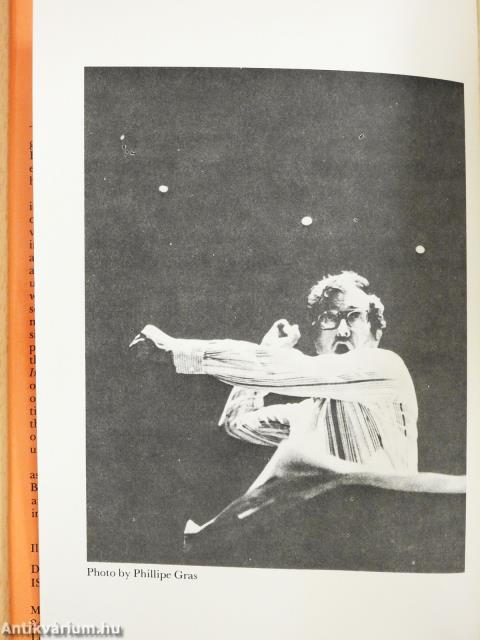
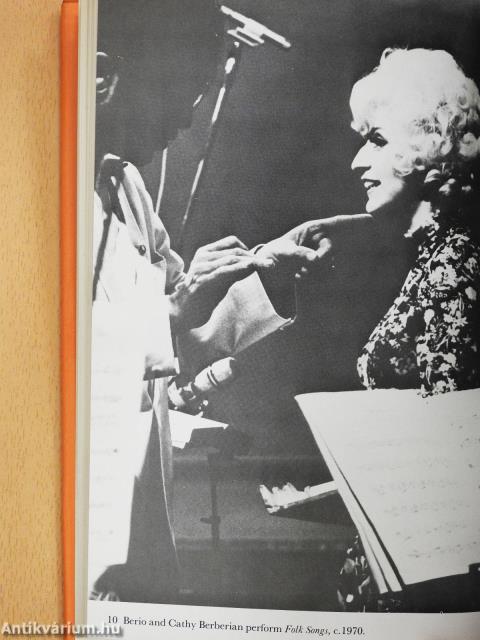
Luciano Berio
Luciano Berio műveinek az Antikvarium.hu-n kapható vagy előjegyezhető listáját itt tekintheti meg: Luciano Berio könyvek, művekMegvásárolható példányok
Állapotfotók
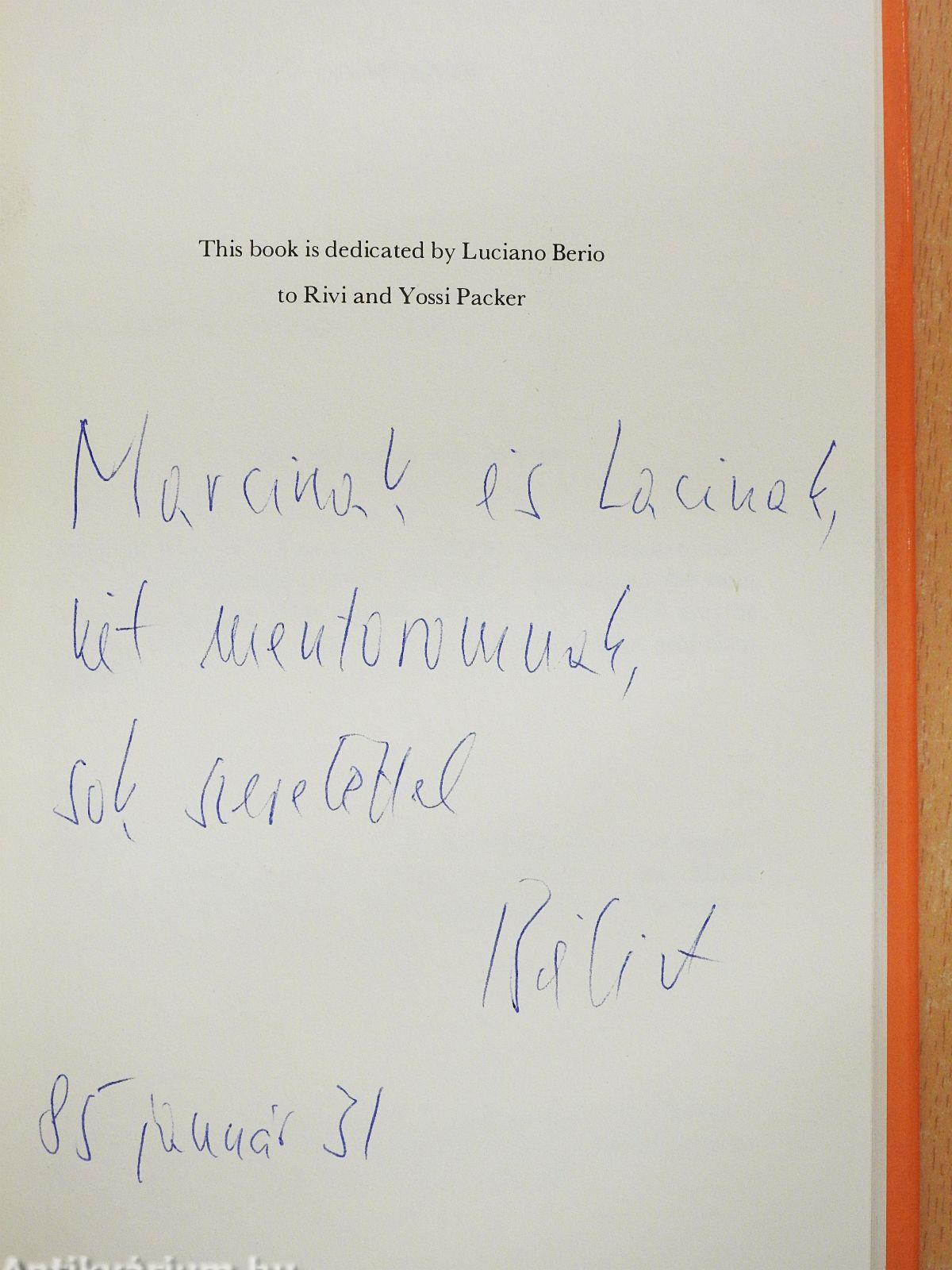
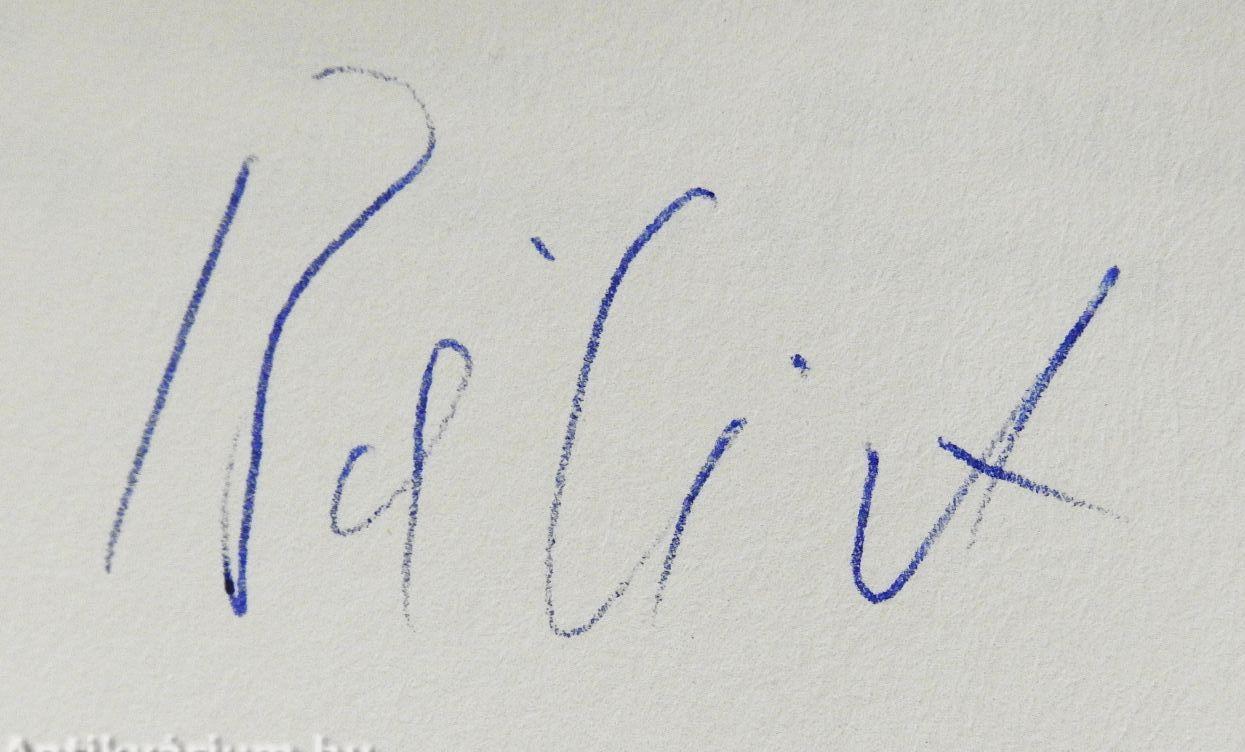
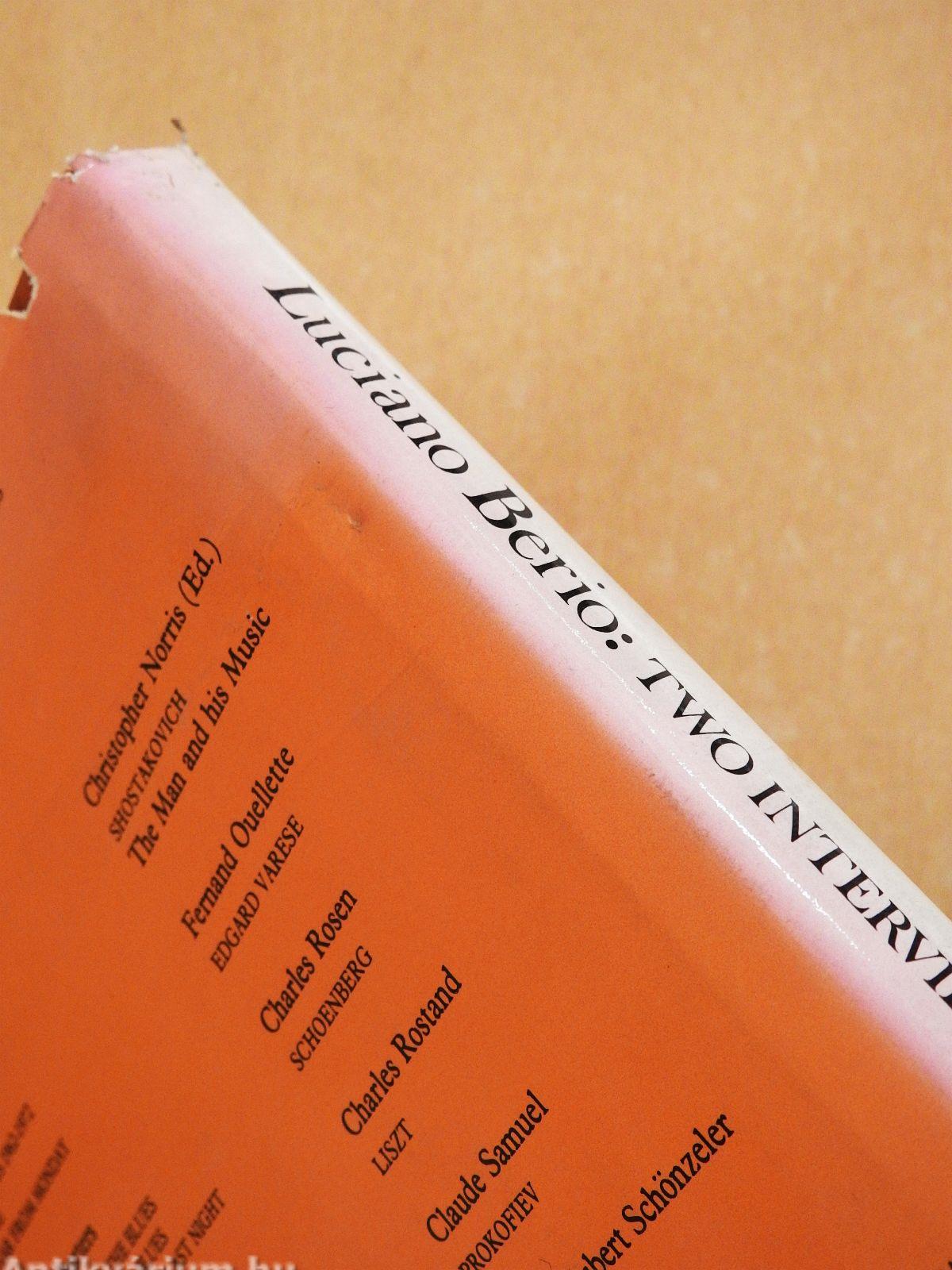



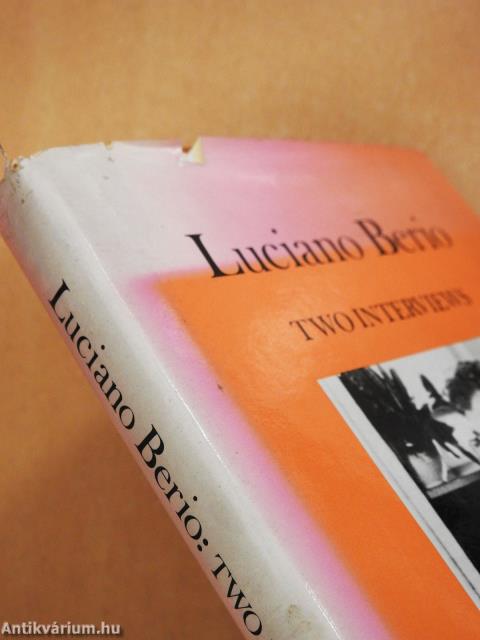

A védőborító elszíneződött, szakadozott.
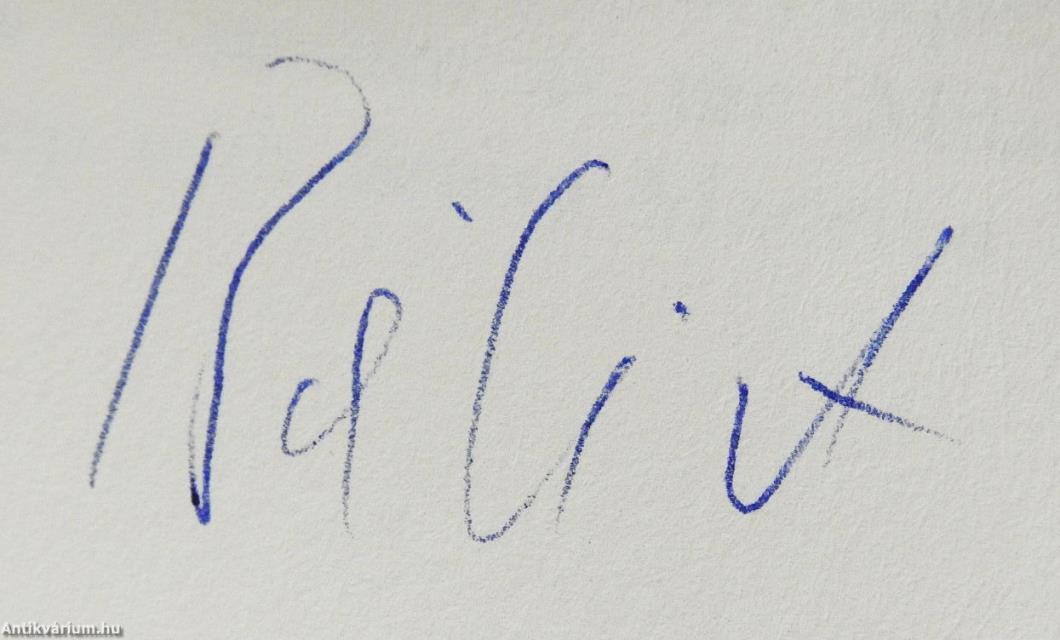
Az egyik lapon az író, Varga Bálint András névre szóló dedikációja látható.
Állapot:
Jó
9.400 ,-Ft
47
pont kapható
Kosárba
 Folytatás Microsoft-tal