
1.136.728
kiadvánnyal nyújtjuk Magyarország legnagyobb antikvár könyv-kínálatát

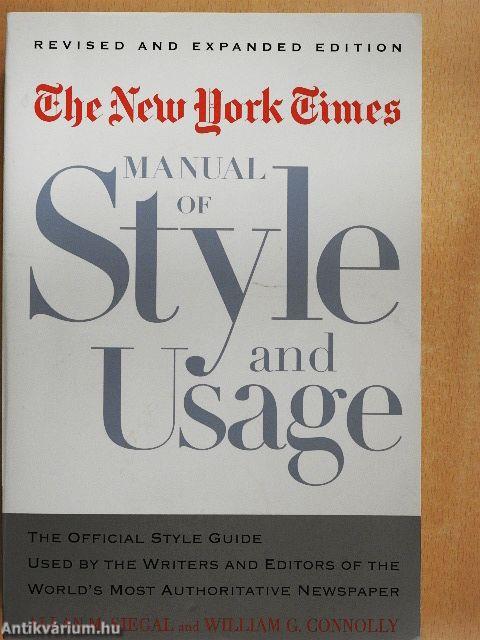
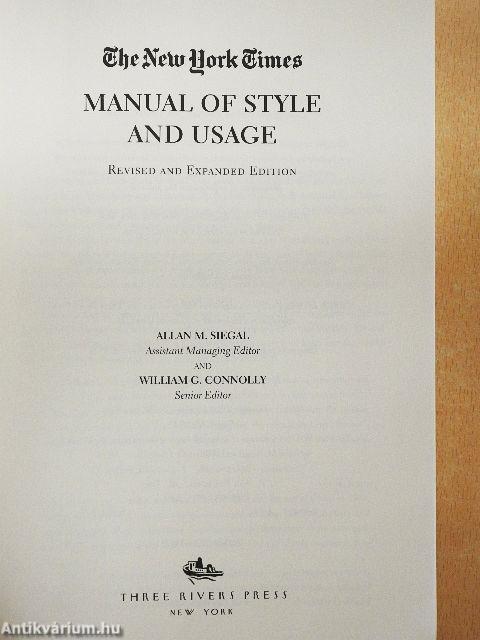
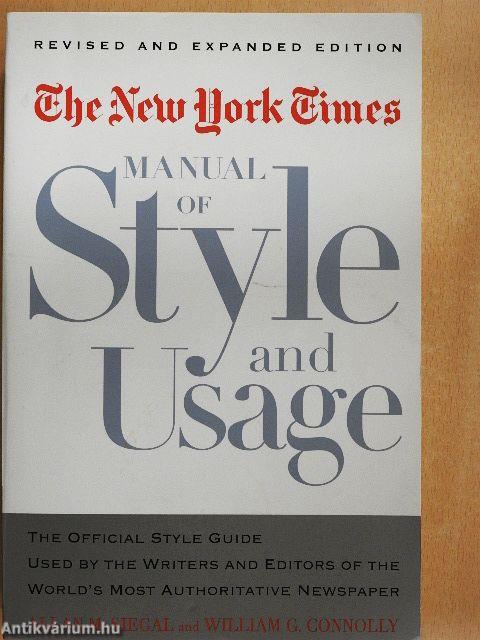
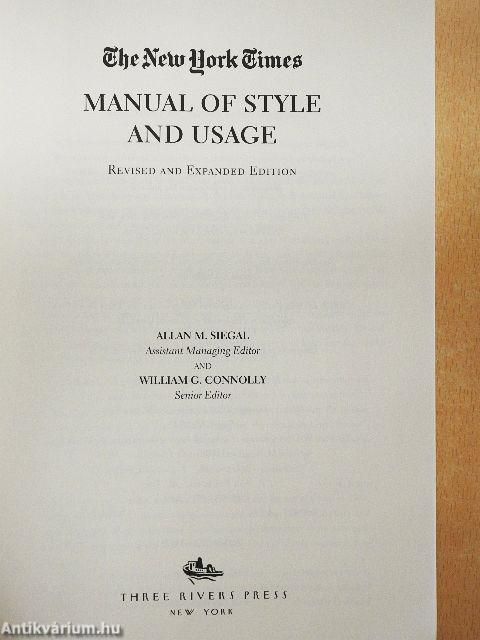
Manual of Style and Usage
The Official Style Guide Used by the Writers and Editors of the World's Most Authoritative Newspaper
New York
| Kiadó: | The New York Times-Three Rivers Press |
|---|---|
| Kiadás helye: | New York |
| Kiadás éve: | |
| Kötés típusa: | Ragasztott papírkötés |
| Oldalszám: | 368 oldal |
| Sorozatcím: | |
| Kötetszám: | |
| Nyelv: | Angol |
| Méret: | 23 cm x 13 cm |
| ISBN: | 0-8129-6389-X |
| Megjegyzés: | Fekete-fehér fotókkal. |
Értesítőt kérek a kiadóról
A beállítást mentettük,
naponta értesítjük a beérkező friss
kiadványokról
naponta értesítjük a beérkező friss
kiadványokról
A beállítást mentettük,
naponta értesítjük a beérkező friss
kiadványokról
naponta értesítjük a beérkező friss
kiadványokról
Előszó
Tovább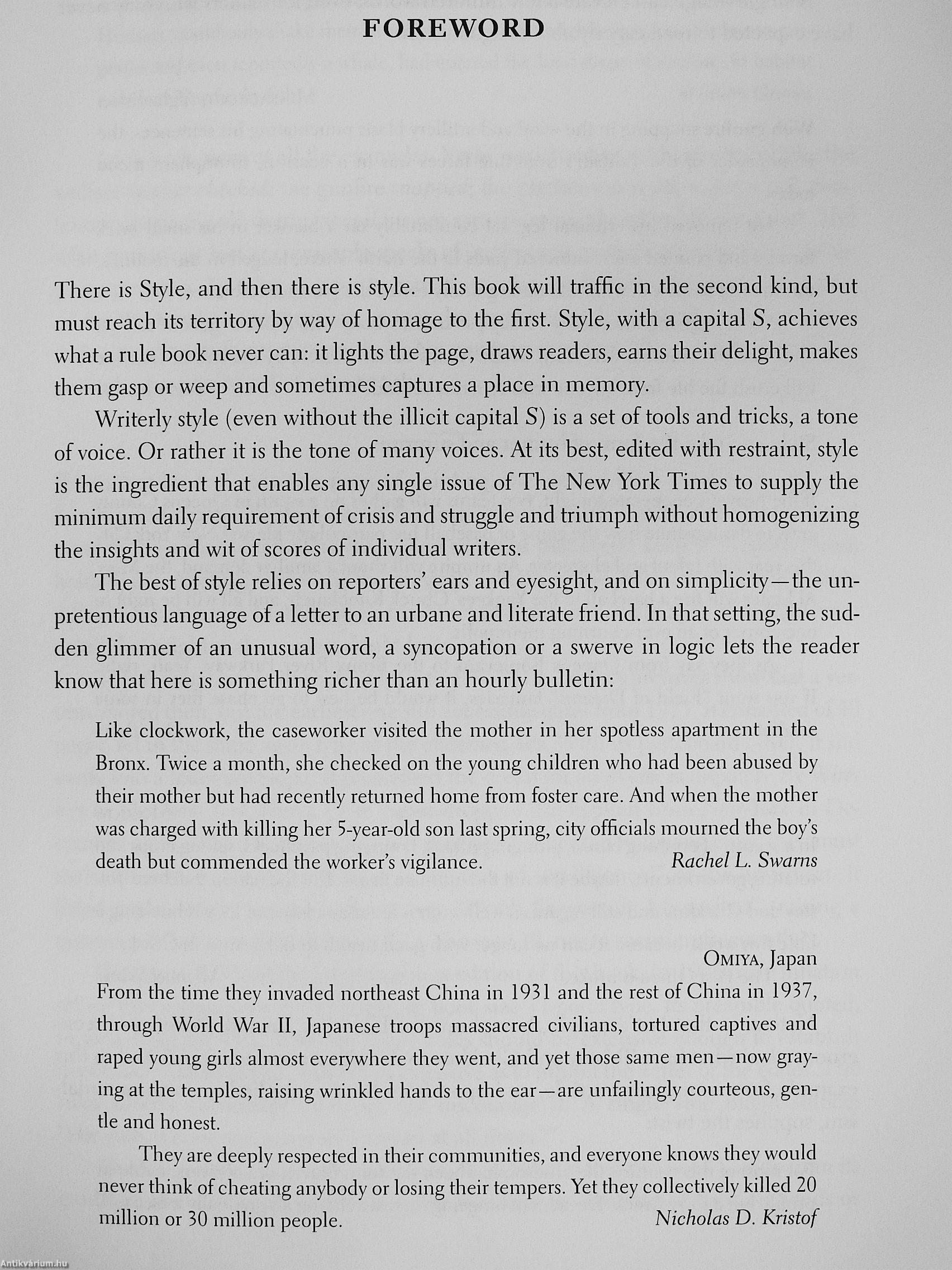
Fülszöveg
$15.00/REFERENCE
(CANADA: $23.00)
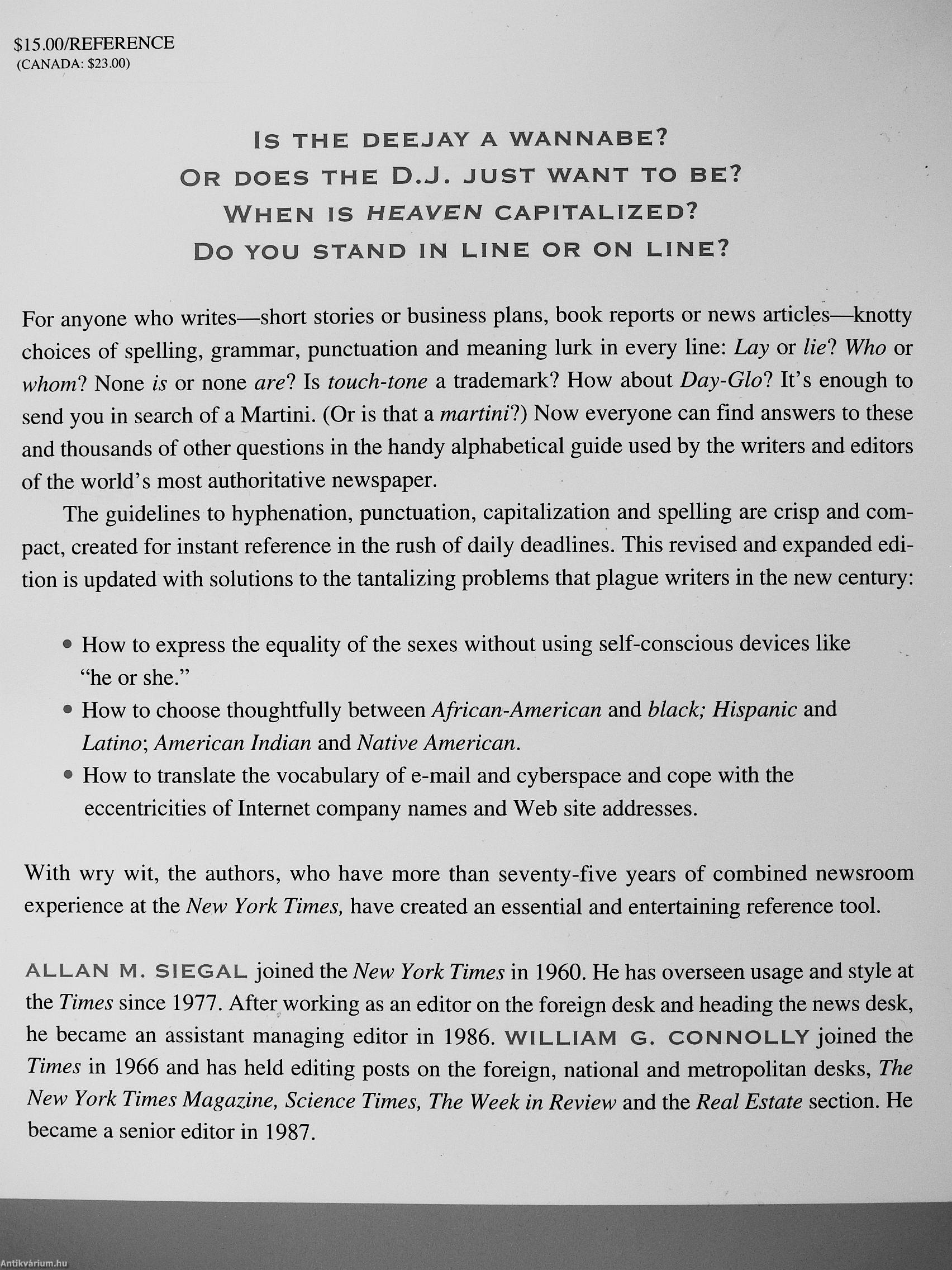
Is THE DEEJAY A WANNABE? OR DOES THE D.J. JUST WANT TO BE? WHEN IS HEAVEN CAPITALIZED? DO YOU STAND IN LINE OR ON LINE?
For anyone who writes—short stories or business plans, book reports or news articles—knotty choices of spelling, grammar, punctuation and meaning lurk in every line: Lay or liel Who or whoml None is or none arel Is touch-tone a trademark? How about Day-Glol It's enough to send you in search of a Martini. (Or is that a martinil) Now everyone can find answers to these and thousands of other questions in the handy alphabetical guide used by the writers and editors of the world's most authoritative newspaper.
The guidelines to hyphenation, punctuation, capitalization and spelling are crisp and compact, created for instant reference in the rush of daily deadlines. This revised and expanded edition is updated with solutions to the tantalizing problems that plague writers in the new century:
• How to express the equality of the... Tovább
Fülszöveg
$15.00/REFERENCE
(CANADA: $23.00)
Is THE DEEJAY A WANNABE? OR DOES THE D.J. JUST WANT TO BE? WHEN IS HEAVEN CAPITALIZED? DO YOU STAND IN LINE OR ON LINE?
For anyone who writes—short stories or business plans, book reports or news articles—knotty choices of spelling, grammar, punctuation and meaning lurk in every line: Lay or liel Who or whoml None is or none arel Is touch-tone a trademark? How about Day-Glol It's enough to send you in search of a Martini. (Or is that a martinil) Now everyone can find answers to these and thousands of other questions in the handy alphabetical guide used by the writers and editors of the world's most authoritative newspaper.
The guidelines to hyphenation, punctuation, capitalization and spelling are crisp and compact, created for instant reference in the rush of daily deadlines. This revised and expanded edition is updated with solutions to the tantalizing problems that plague writers in the new century:
• How to express the equality of the sexes without using self-conscious devices like "he or she."
• How to choose thoughtfully between African-American and black; Hispanic and Latino, American Indian and Native American.
• How to translate the vocabulary of e-mail and cyberspace and cope with the eccentricities of Internet company names and Web site addresses.
With wry wit, the authors, who have more than seventy-five years of combined newsroom experience at the New York Times, have created an essential and entertaining reference tool.
ALLAN M. SI EGAL joined the New York Times in 1960. He has overseen usage and style at the Times since 1977. After working as an editor on the foreign desk and heading the news desk, he became an assistant managing editor in 1986. WILLIAM G. CONNOLLY joined the Times in 1966 and has held editing posts on the foreign, national and metropolitan desks, The New York Times Magazine, Science Times, The Week in Review and the Real Estate section. He became a senior editor in 1987. Vissza
Témakörök
- Művészetek > Rádió-TV-újságírás
- Idegennyelv > Idegennyelvű könyvek > Angol > Művészetek > Egyéb
- Idegennyelv > Idegennyelvű könyvek > Angol > Irodalomtörténet
- Idegennyelv > Idegennyelvű könyvek > Angol > Nyelvészet
- Nyelvészet > Kommunikáció > Írás > Egyéb
- Nyelvészet > Nyelvművelés > Stilisztika > Egyéb
- Irodalomtörténet > Irodalomelmélet > Egyéb
- Idegennyelv > Idegennyelvű könyvek > Angol
Megvásárolható példányok
Állapotfotók
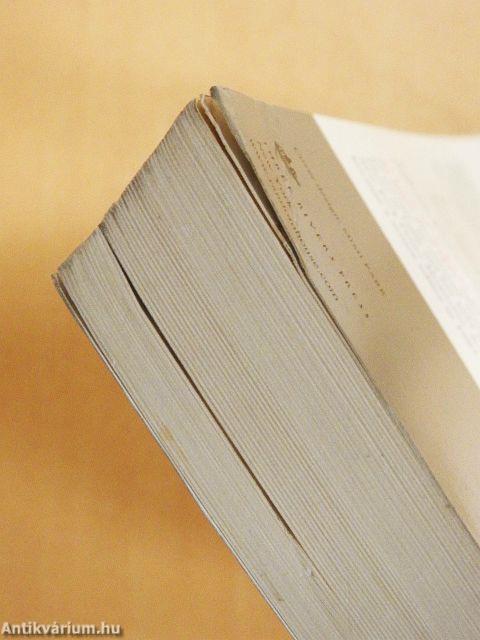
A lapélek foltosak.
Állapot:
Jó
2.940 ,-Ft
15
pont kapható
Kosárba
 Folytatás Microsoft-tal