
1.120.123
kiadvánnyal nyújtjuk Magyarország legnagyobb antikvár könyv-kínálatát

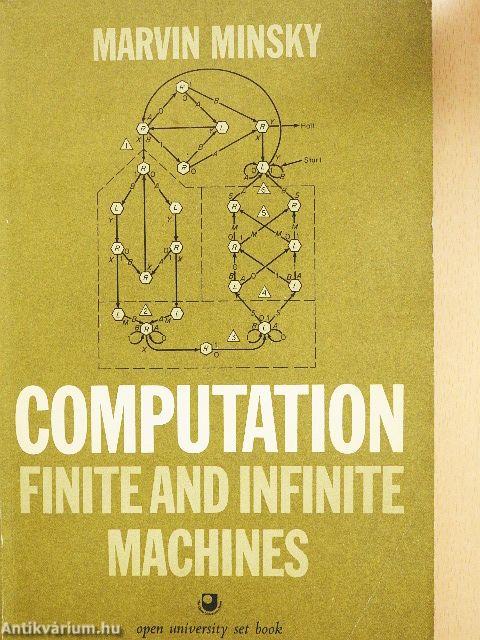
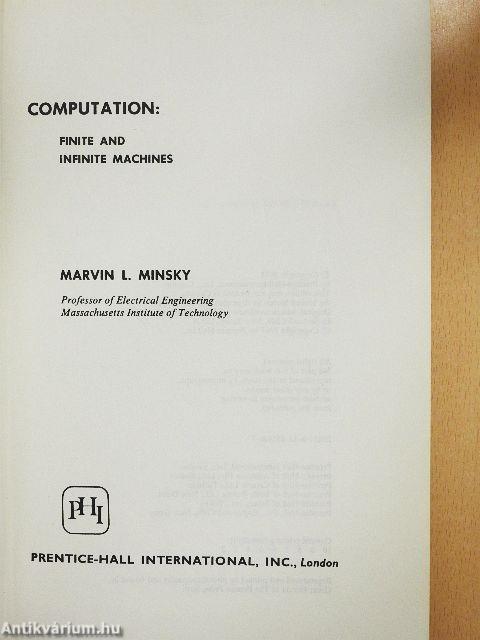
Computation: Finite and Infinite Machines
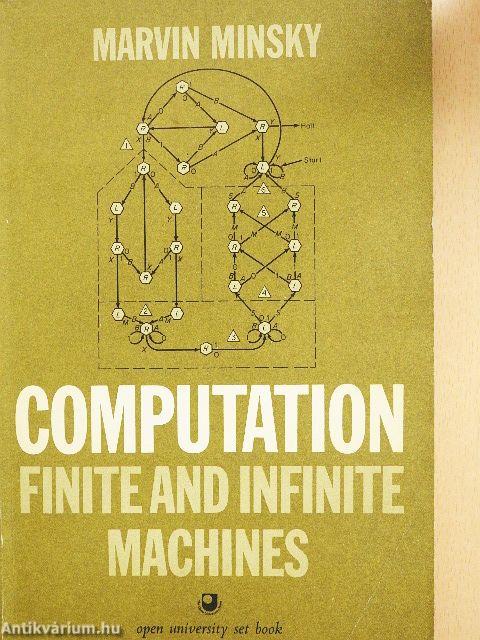
London
| Kiadó: | Prentice-Hall International, Inc. |
|---|---|
| Kiadás helye: | London |
| Kiadás éve: | |
| Kötés típusa: | Ragasztott papírkötés |
| Oldalszám: | 317 oldal |
| Sorozatcím: | Open University Set Book |
| Kötetszám: | |
| Nyelv: | Angol |
| Méret: | 23 cm x 15 cm |
| ISBN: | 0-13-165449-7 |
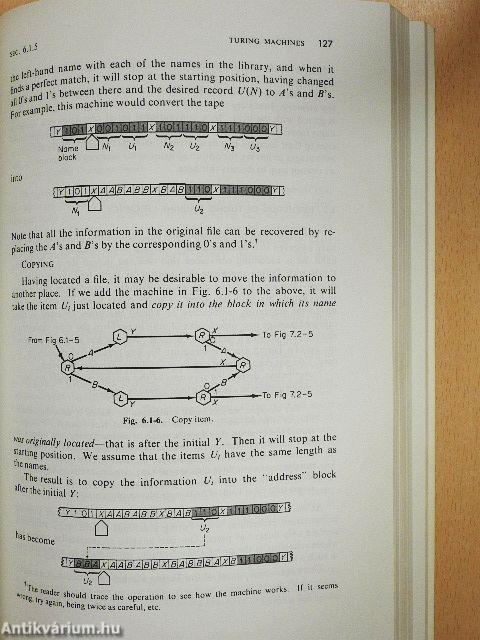
| Megjegyzés: | Fekete-fehér ábrákkal. |
Értesítőt kérek a kiadóról
Értesítőt kérek a sorozatról
A beállítást mentettük,
naponta értesítjük a beérkező friss
kiadványokról
naponta értesítjük a beérkező friss
kiadványokról
A beállítást mentettük,
naponta értesítjük a beérkező friss
kiadványokról
naponta értesítjük a beérkező friss
kiadványokról
Előszó
Tovább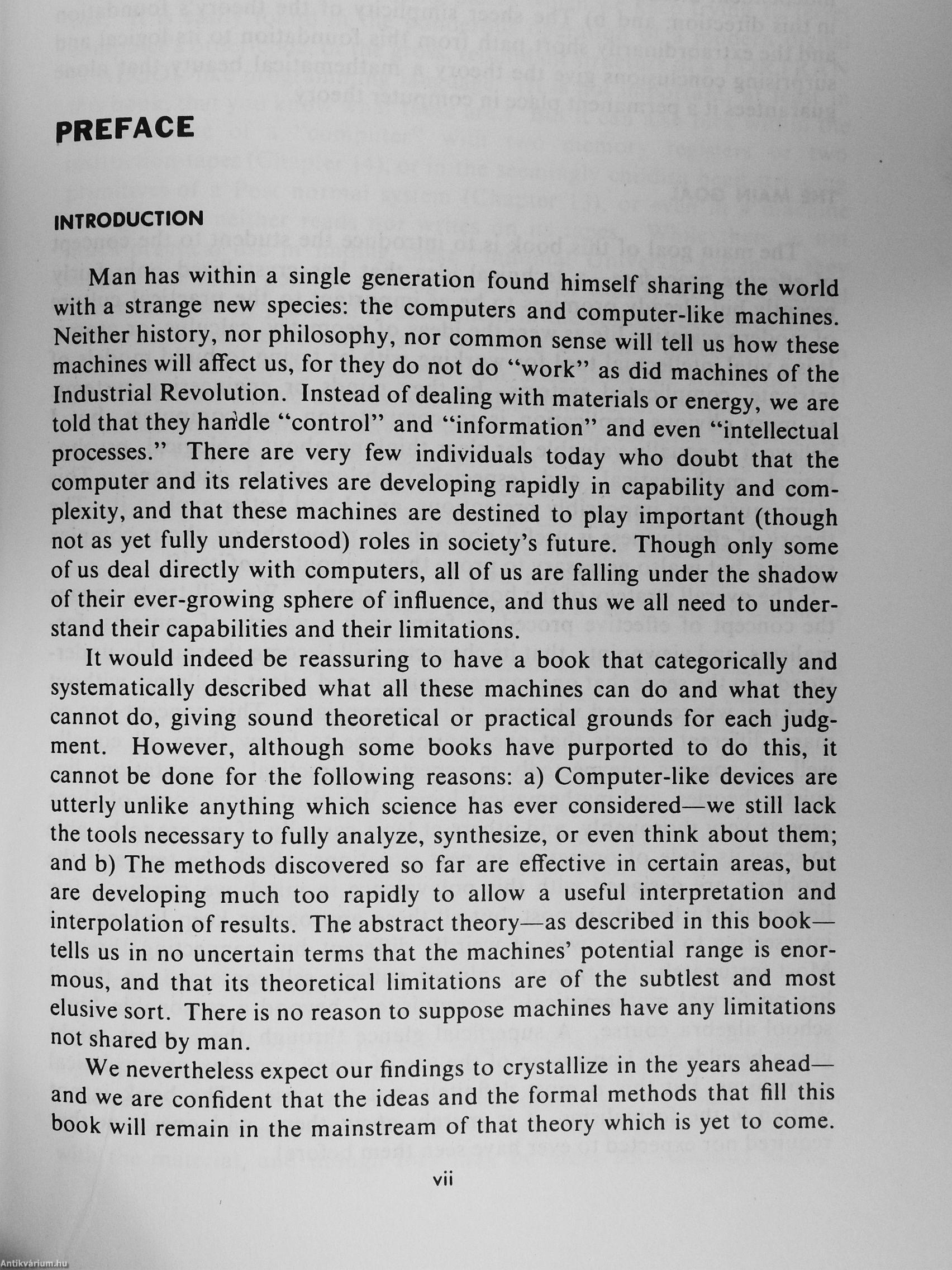
Fülszöveg
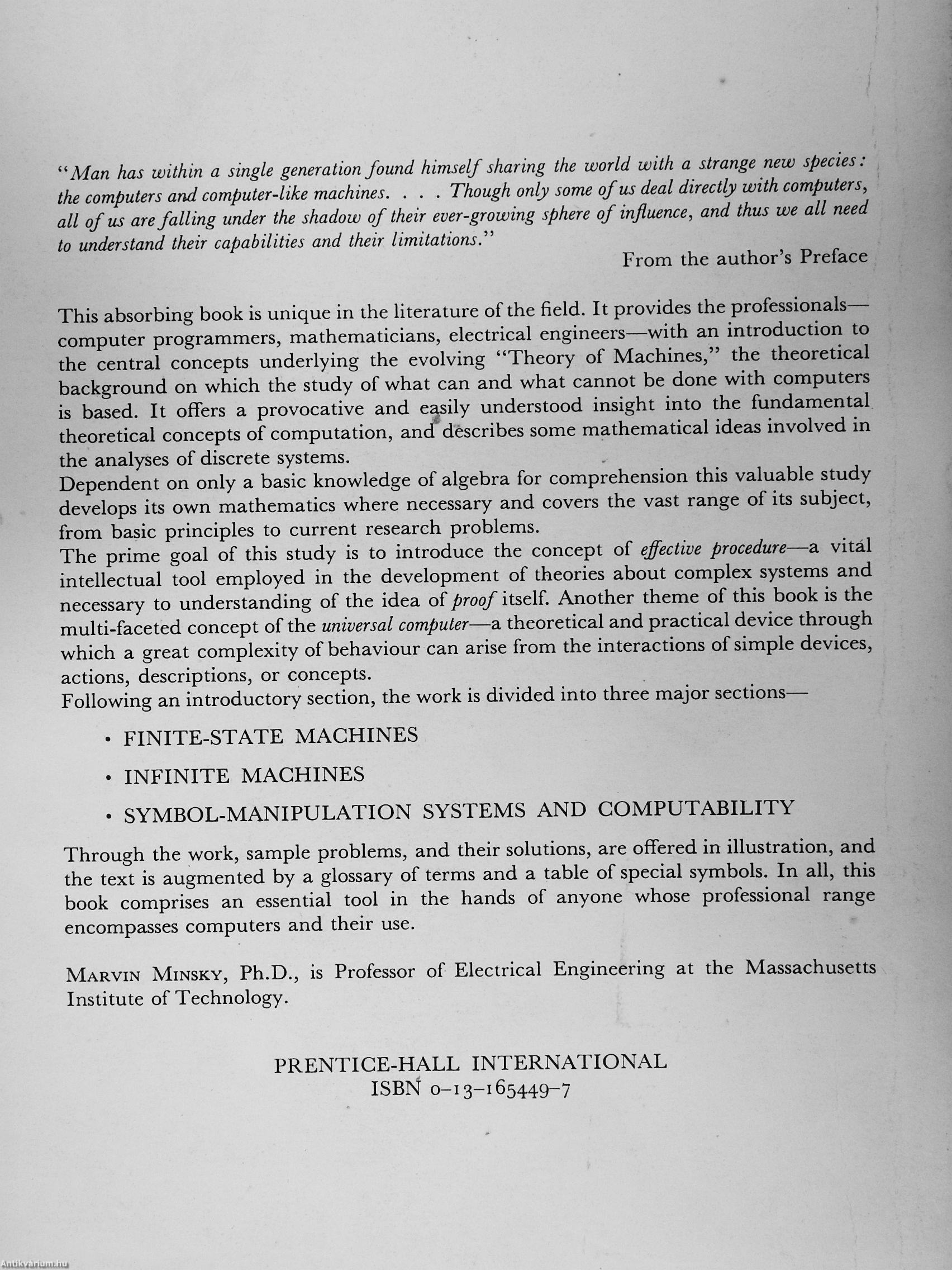
"Man has within a single generation found himself sharing the world with a strange new species: the computers and computer-like machines. . . . Though only some of us deal directly with computers, all of us are falling under the shadow of their ever-growing sphere of influence, and thus we all need to understand their capabilities and their limitations."
From the author's Preface
This absorbing book is unique in the literature of the field. It provides the professionals— computer programmers, mathematicians, electrical engineers—with an introduction to the central concepts underlying the evolving "Theory of Machines," the theoretical background on which the study of what can and what cannot be done with computers is based. It ofTers a provocative and e^ily understood insight into the fundamental theoretical concepts of computation, and describes some mathematical ideas involved in the analyses of discrete systems.
Dependent on only a basic knowledge of algebra for comprehension... Tovább
Fülszöveg
"Man has within a single generation found himself sharing the world with a strange new species: the computers and computer-like machines. . . . Though only some of us deal directly with computers, all of us are falling under the shadow of their ever-growing sphere of influence, and thus we all need to understand their capabilities and their limitations."
From the author's Preface
This absorbing book is unique in the literature of the field. It provides the professionals— computer programmers, mathematicians, electrical engineers—with an introduction to the central concepts underlying the evolving "Theory of Machines," the theoretical background on which the study of what can and what cannot be done with computers is based. It ofTers a provocative and e^ily understood insight into the fundamental theoretical concepts of computation, and describes some mathematical ideas involved in the analyses of discrete systems.
Dependent on only a basic knowledge of algebra for comprehension this valuable study develops its own mathematics where necessary and covers the vast range of its subject, from basic principles to current research problems.
The prime goal of this study is to introduce the concept of effective procedure—a vital intellectual tool employed in the development of theories about complex systems and necessary to understanding of the idea of proof itself. Another theme of this book is the multi-faceted concept of the universal computer—a theoretical and practical device through which a great complexity of behaviour can arise from the interactions of simple devices, actions, descriptions, or concepts.
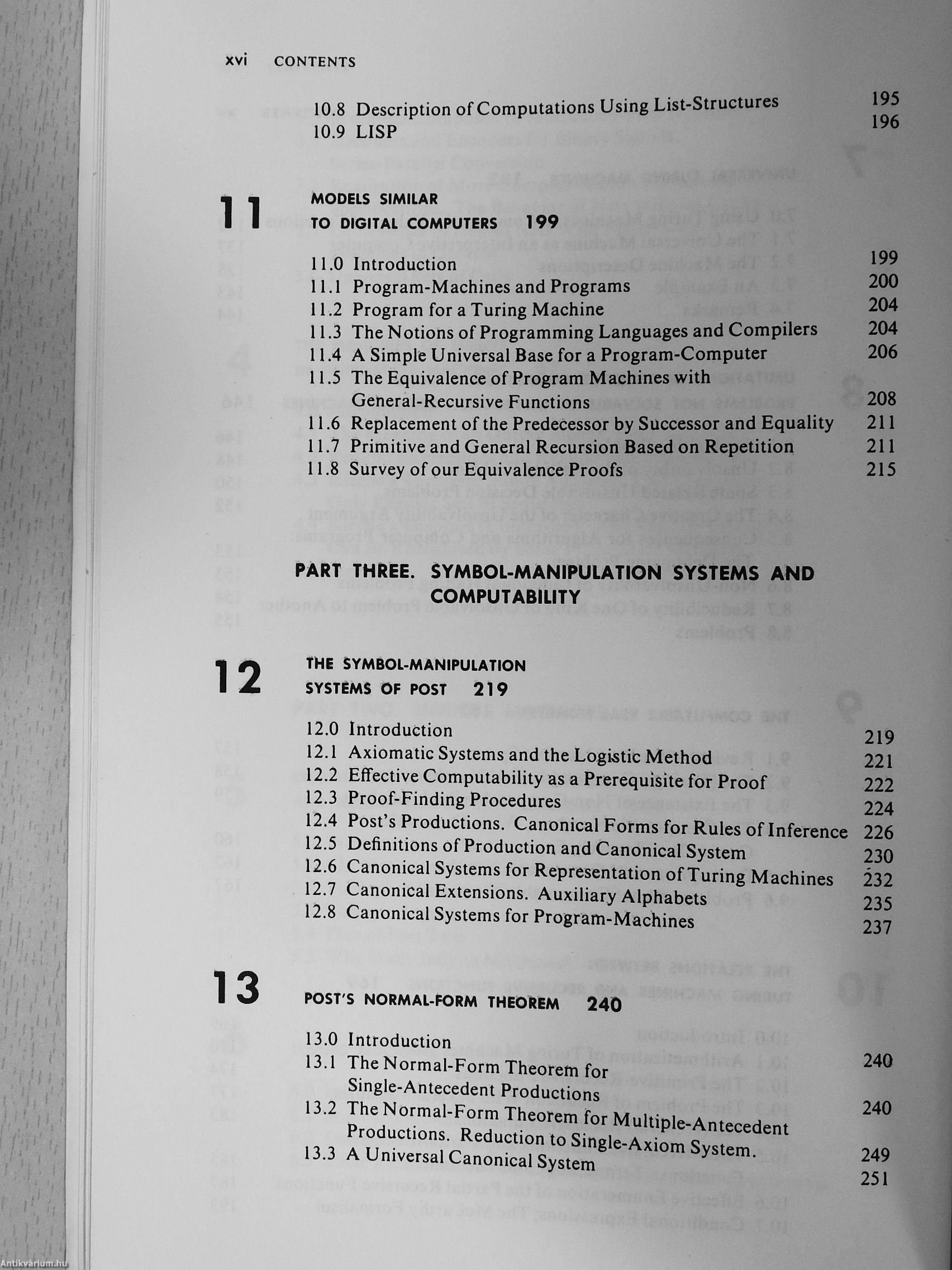
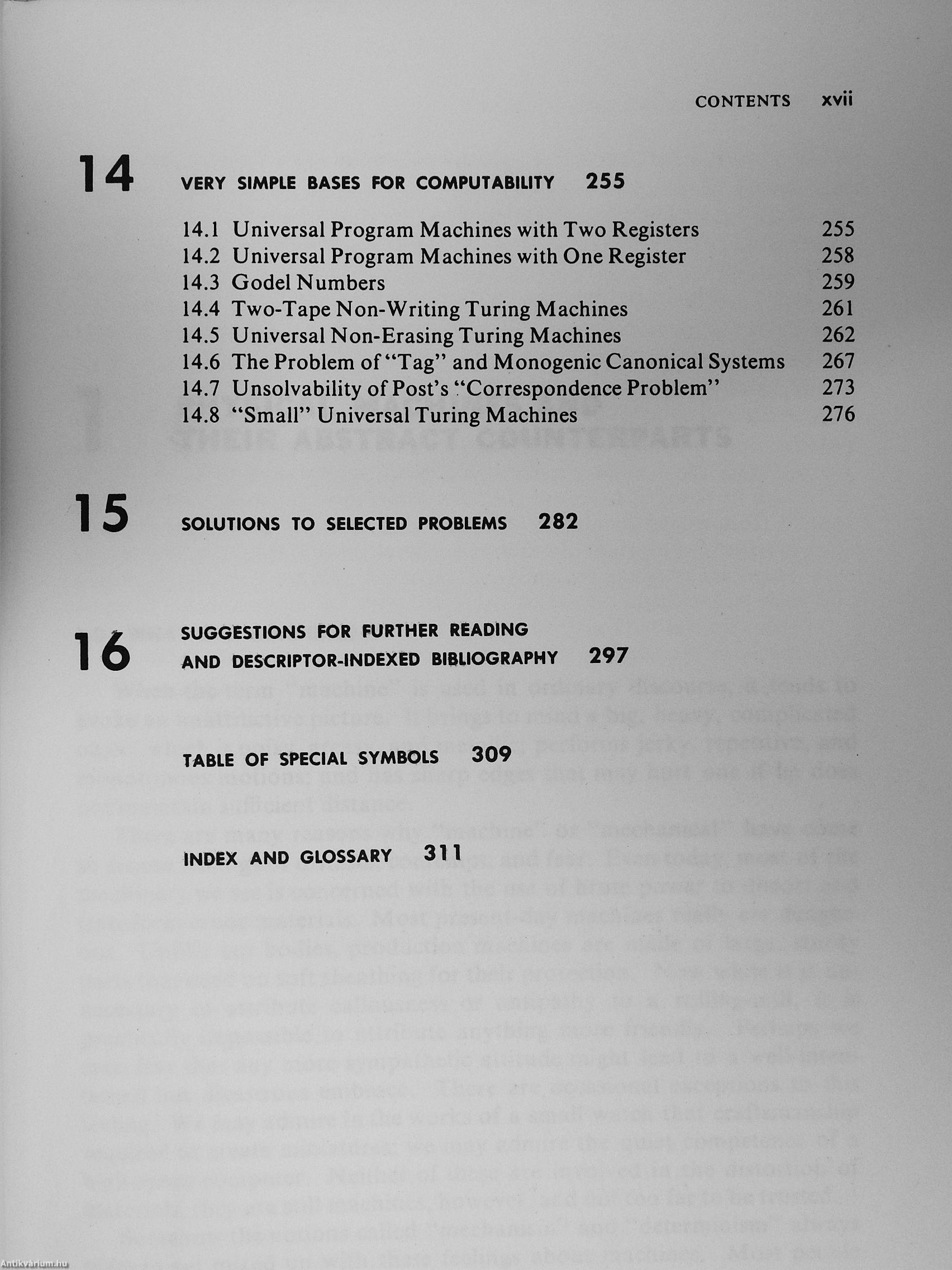
Following an introductory section, the work is divided into three major sections—
• FINITE-STATE MACHINES
• INFINITE MACHINES
• SYMBOL-MANIPULATION SYSTEMS AND COMPUTABILITY
Through the work, sample problems, and their solutions, are offered in illustration, and the text is augmented by a glossary of terms and a table of special symbols. In all, this book comprises an essential tool in the hands of anyone whose professional range encompasses computers and their use.
Marvin Minsky, Ph.D., is Professor of Electrical Engineering at the Massachusetts Institute of Technology.
PRENTICE-HALL INTERNATIONAL ISBN 0-13-165449-7 Vissza
Témakörök
- Idegennyelv > Idegennyelvű könyvek > Angol > Műszaki
- Idegennyelv > Idegennyelvű könyvek > Angol > Természettudományok > Matematika
- Műszaki > Informatika > Számítógép > Működése
- Műszaki > Informatika > Számítógép > Programozása
- Műszaki > Technika > Kutatás, fejlesztés
- Természettudomány > Matematika > Idegennyelvű
- Természettudomány > Matematika > Társtudományok > Számítástechnika
- Műszaki > Idegennyelv > Angol
Megvásárolható példányok
Állapotfotók
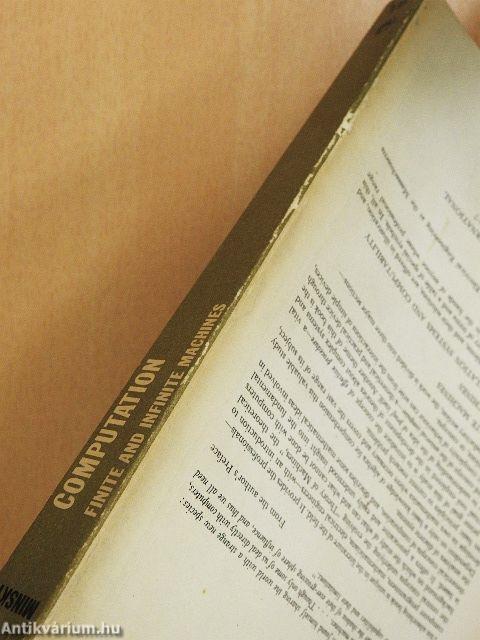
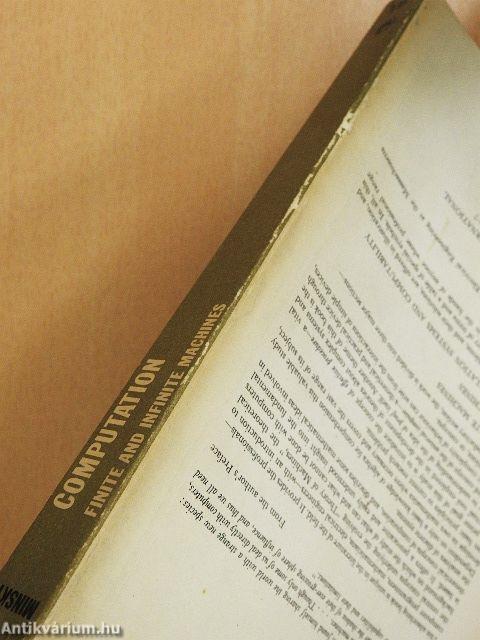
A borító egyik sarka megtört. A gerinc kopott.
Állapot:
Jó
38.000 ,-Ft
190
pont kapható
Kosárba
 Folytatás Microsoft-tal