Fülszöveg
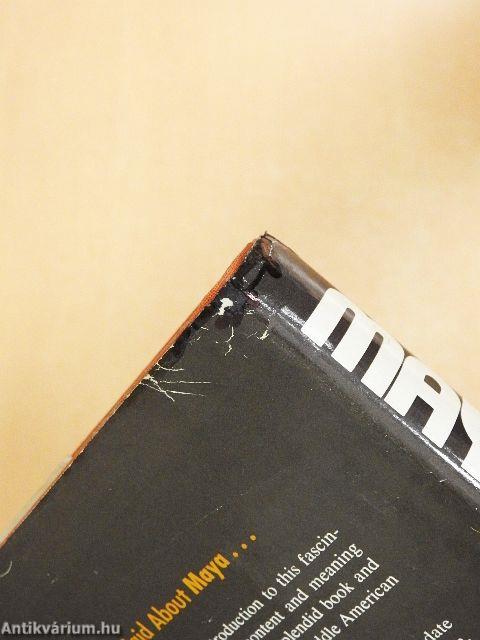
what the Critics Have Said About Maya
, "The genera] reader can find no better introduction to this fasciiv-ating subject . . . an unexcelled synthesis of the content and mesning : of the massive panorama of ancient America. . . . A splendid book and deserves wide reading."—Robert Wauchope, Director, Middle Amcrfean Research Institute at Tulane University, Saturday Review. >,
"Mr. Gallenkamp . . . has written a careful and most up-to late : account of the Maya and the successive stages of our knowledge ot them. His is indeed a book for both laymen and specialists,"-7^yril ConnoWy, London Sunday Times. - y-
". . . An engrossing reconstruction of the baffling history of the Maya and a splendid account of the archaeological efforts of the past century to make such a reconstruction possible."—r/je Reporter. :
"The adventures of such men as John !Stephens and Edward Thompson make exciting reading, while no less interesting is the description of the development and achievements...
Tovább
Fülszöveg
what the Critics Have Said About Maya
, "The genera] reader can find no better introduction to this fasciiv-ating subject . . . an unexcelled synthesis of the content and mesning : of the massive panorama of ancient America. . . . A splendid book and deserves wide reading."—Robert Wauchope, Director, Middle Amcrfean Research Institute at Tulane University, Saturday Review. >,
"Mr. Gallenkamp . . . has written a careful and most up-to late : account of the Maya and the successive stages of our knowledge ot them. His is indeed a book for both laymen and specialists,"-7^yril ConnoWy, London Sunday Times. - y-
". . . An engrossing reconstruction of the baffling history of the Maya and a splendid account of the archaeological efforts of the past century to make such a reconstruction possible."—r/je Reporter. :
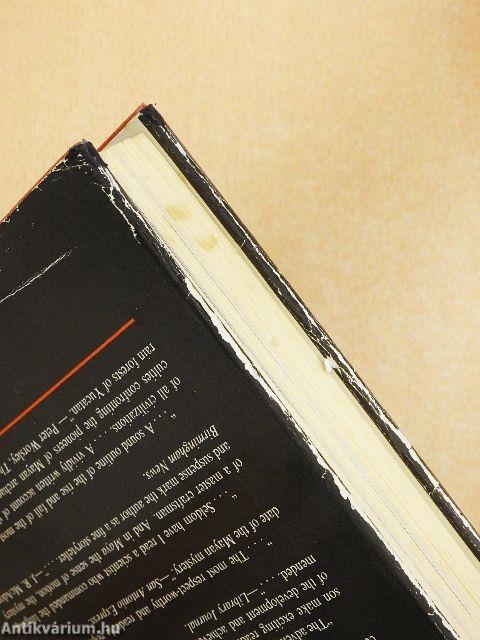
"The adventures of such men as John !Stephens and Edward Thompson make exciting reading, while no less interesting is the description of the development and achievements of the Maya. Highly recommended. . . ."—Library Journal. _ ,
". . . The most respect-worthy and readable popular recountal to date of the Mayan mystery."—San Antonio Express. .
". . . Seldom have I read a scientist who commanded the language ; of a master craftsman. And in Maya the sense of motion, the mystery • and suspense mark the author as a fine storyteller, i ."—J. R. McAdory, Birmingham News. ^ '
. . A sound outline of the rise and fall of the most extraordinary of all civilizations. . A vividly written account of the immense difficulties confronting the pioneers of Mayan archaeology in the tropical , rain forests of Yucatan."— Peter Worsley, The Manchester Guardian. .
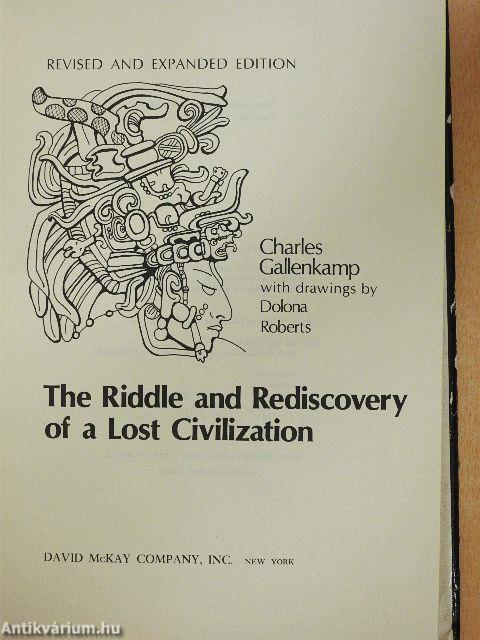
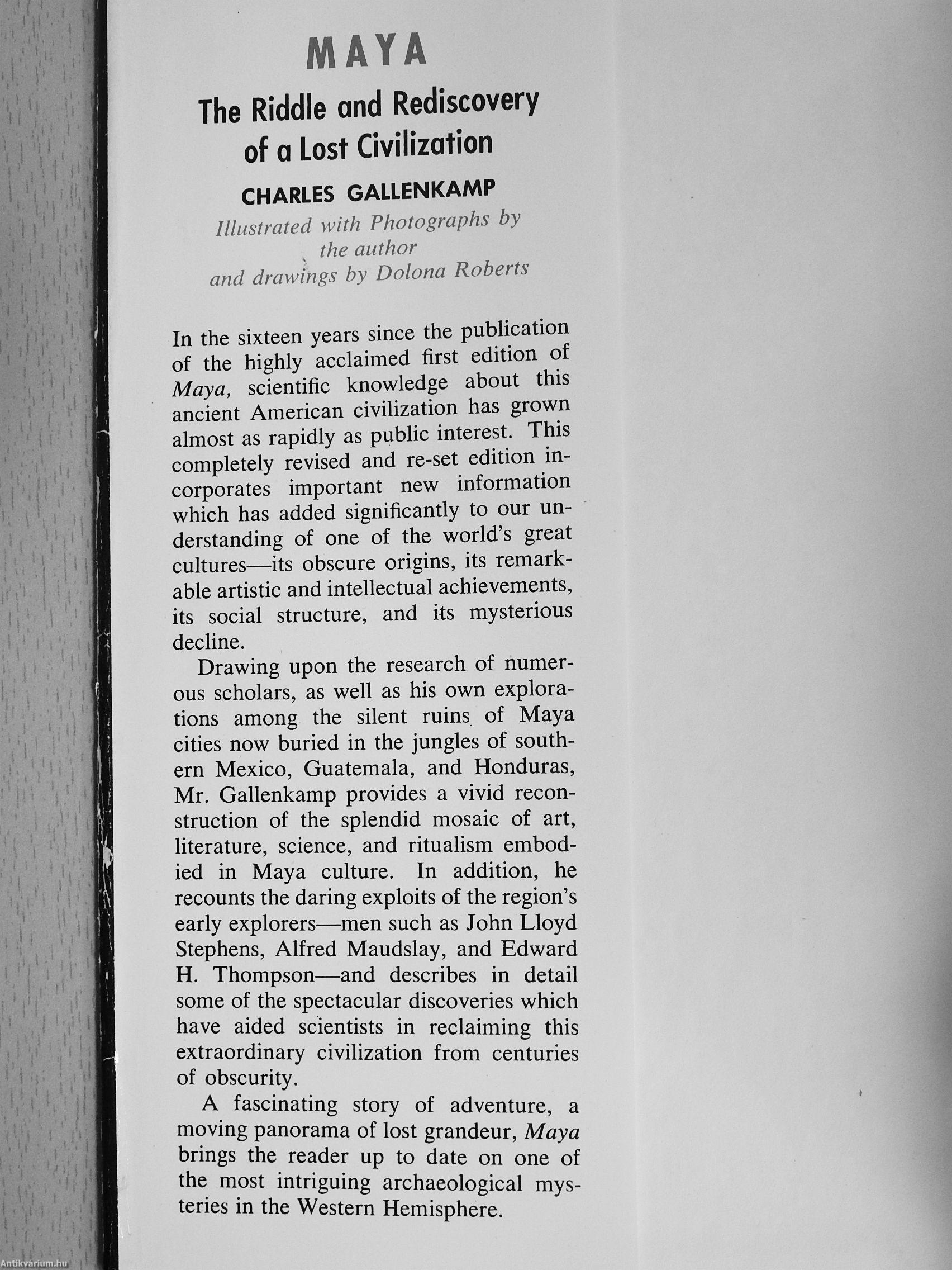
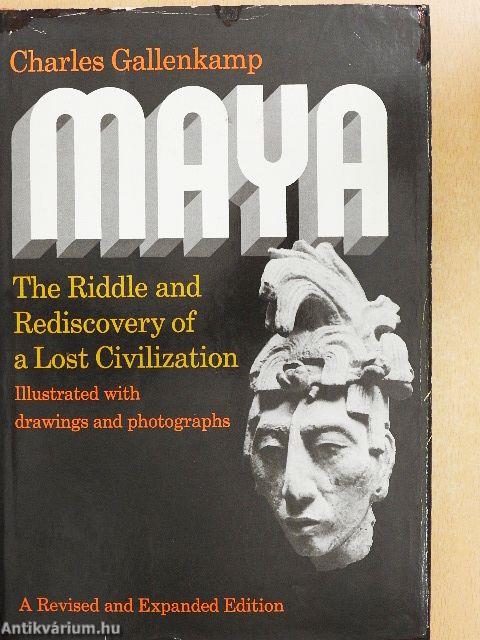
MAYA
The Riddle and Rediscovery of a Lost Civilization
CHARLES GALLENKAMP Illustrated with Photographs by
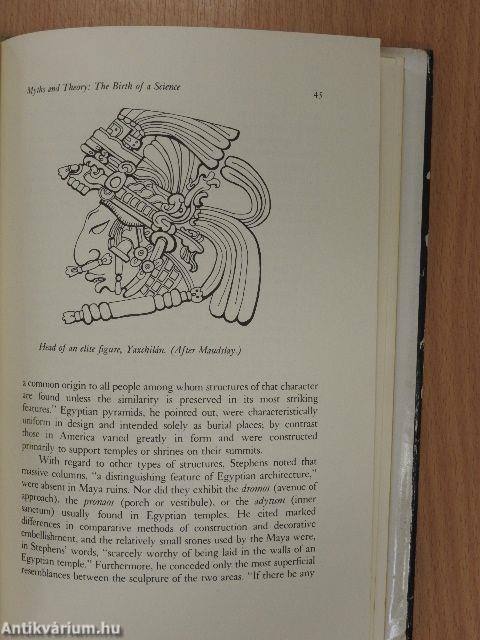
the author and drawings by Dolona Roberts
In the sixteen years since the pubHcation of the highly acclaimed first edition of Maya, scientific knowledp about this ancient American civilization has grown almost as rapidly as public interest. This completely revised and re-set edition incorporates important new information which has added significantly to our understanding of one of the world's great cultures—its obscure origins, its remarkable artistic and intellectual achievements, its social structure, and its mysterious dechne.
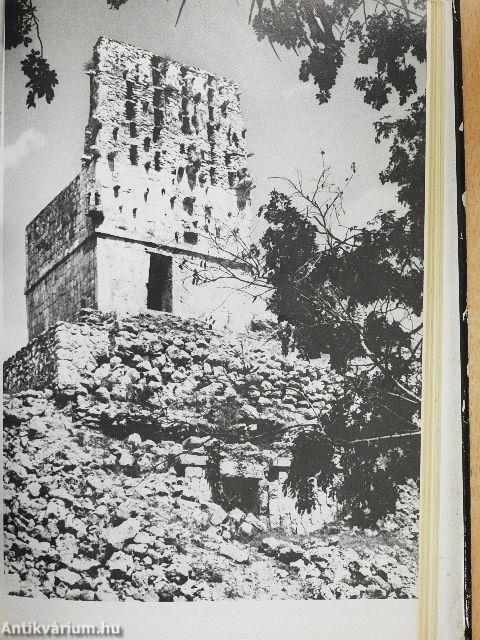
Drawing upon the research of numerous scholars, as well as his own explorations among the silent ruins of Maya cities now buried in the jungles of southern Mexico, Guatemala, and Honduras, Mr. Gallenkamp provides a vivid reconstruction of the splendid mosaic of art, literature, science, and ritualism embodied in Maya culture. In addition, he recounts the daring exploits of the region's early explorers—men such as John Lloyd Stephens, Alfred Maudslay, and Edward H. Thompson—and describes in detail some of the spectacular discoveries which have aided scientists in reclaiming this extraordinary civilization from centuries of obscurity.
A fascinating story of adventure, a moving panorama of lost grandeur, Maya brings the reader up to date on one of the most intriguing archaeological mysteries in the Western Hemisphere.
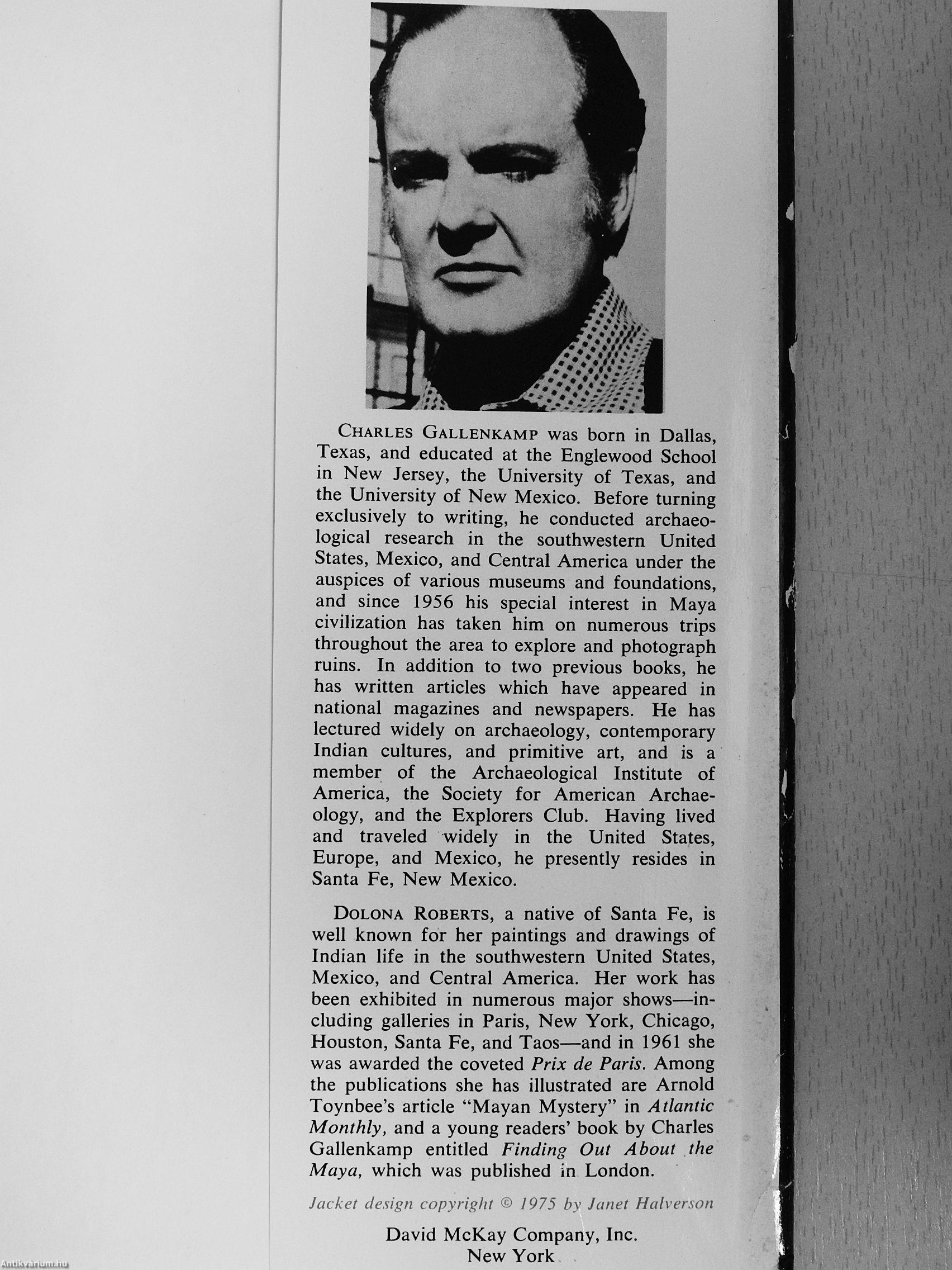
Charles Gallenkamp was born in Dallas, Texas, and educated at the Englewood School in New Jersey, the University of Texas, and the University of New Mexico, Before turning exclusively to writing, he conducted archaeological research in the southwestern United States, Mexico, and Central America under the auspices of various museums and foundations, and since 1956 his special interest in Maya civilization has taken him on numerous trips throughout the area to explore and photograph ruins. In addition to two previous books, he has written articles which have appeared in national magazines and newspapers. He has lectured widely on archaeology, contemporary Indian cultures, and primitive art, and is a member of the Archaeological Institute of America, the Society for American Archaeology, and the Explorers Club. Having lived and traveled widely in the United States, Europe, and Mexico, he presently resides in Santa Fe, New Mexico.
Dolona Roberts, a native of Santa Fe, is well known for her paintings and drawings of Indian life in the southwestern United States, Mexico, and Central America. Her work has been exhibited in numerous major shows—including galleries in Paris, New York, Chicago, Houston, Santa Fe, and Taos—and in 1961 she was awarded the coveted Prix de Paris. Among the publications she has illustrated are Arnold Toynbee's article "Mayan Mystery" in Atlantic Monthly, and a young readers' book by Charles Gallenkamp entitled Finding Out About the Maya, which was published in London.
Jacket design copyright © !975 by Janet Halverson
David McKay Company, Inc.
New York
Vissza 




 Folytatás Microsoft-tal