Fülszöveg
Electronics
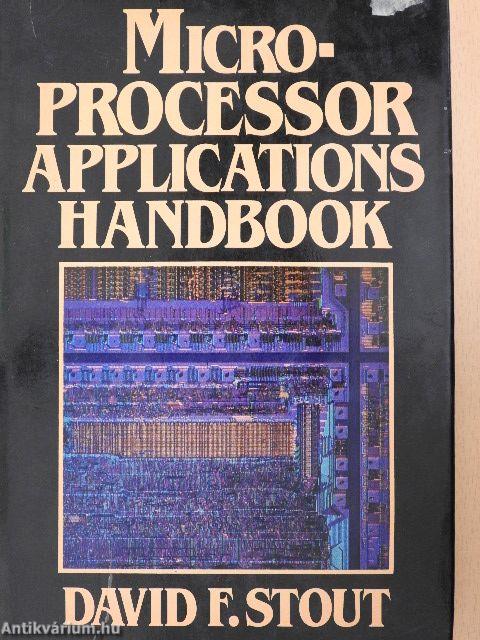
MICROPROCESSOR APPLICATIONS HANDBOOK
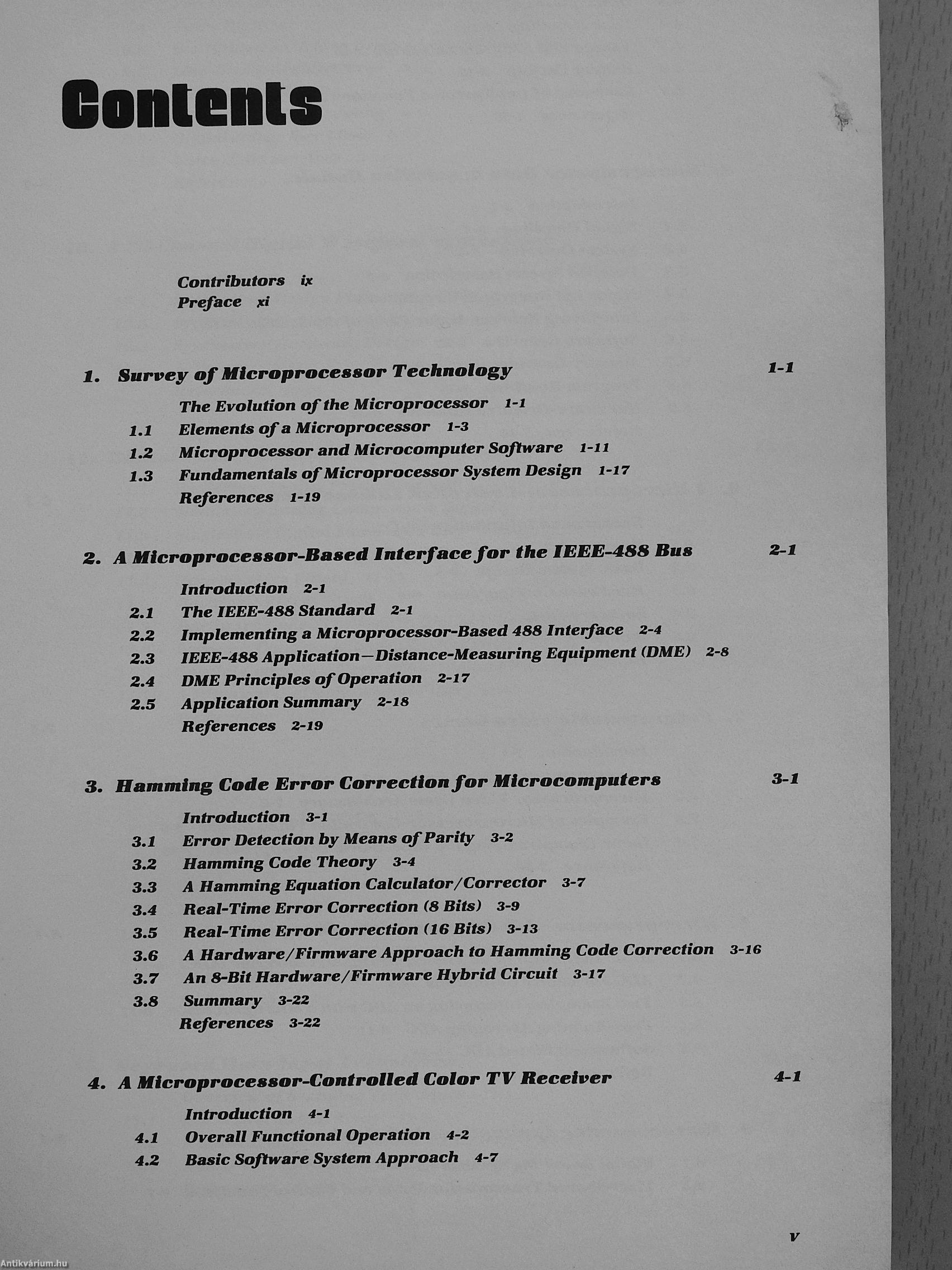
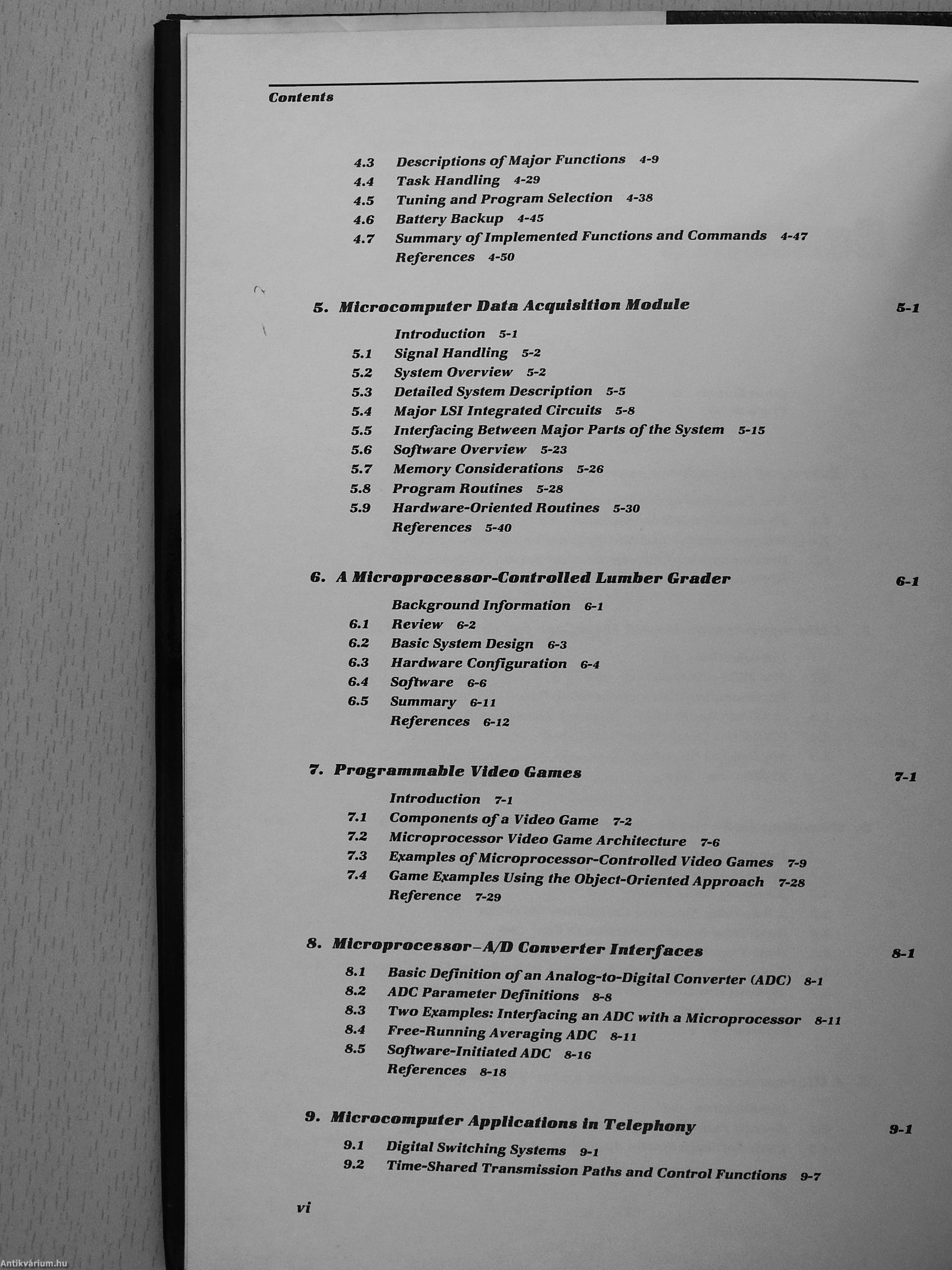
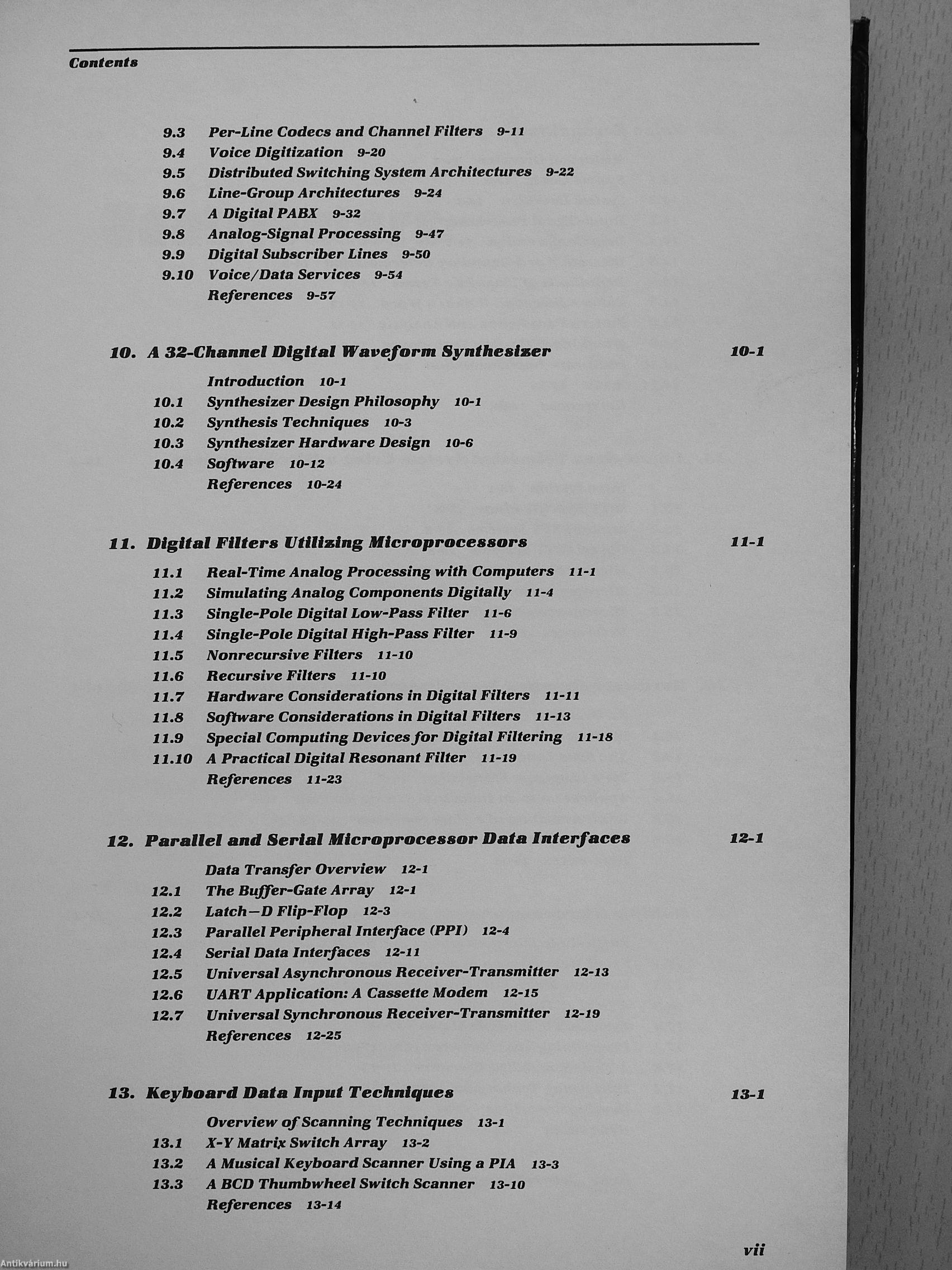
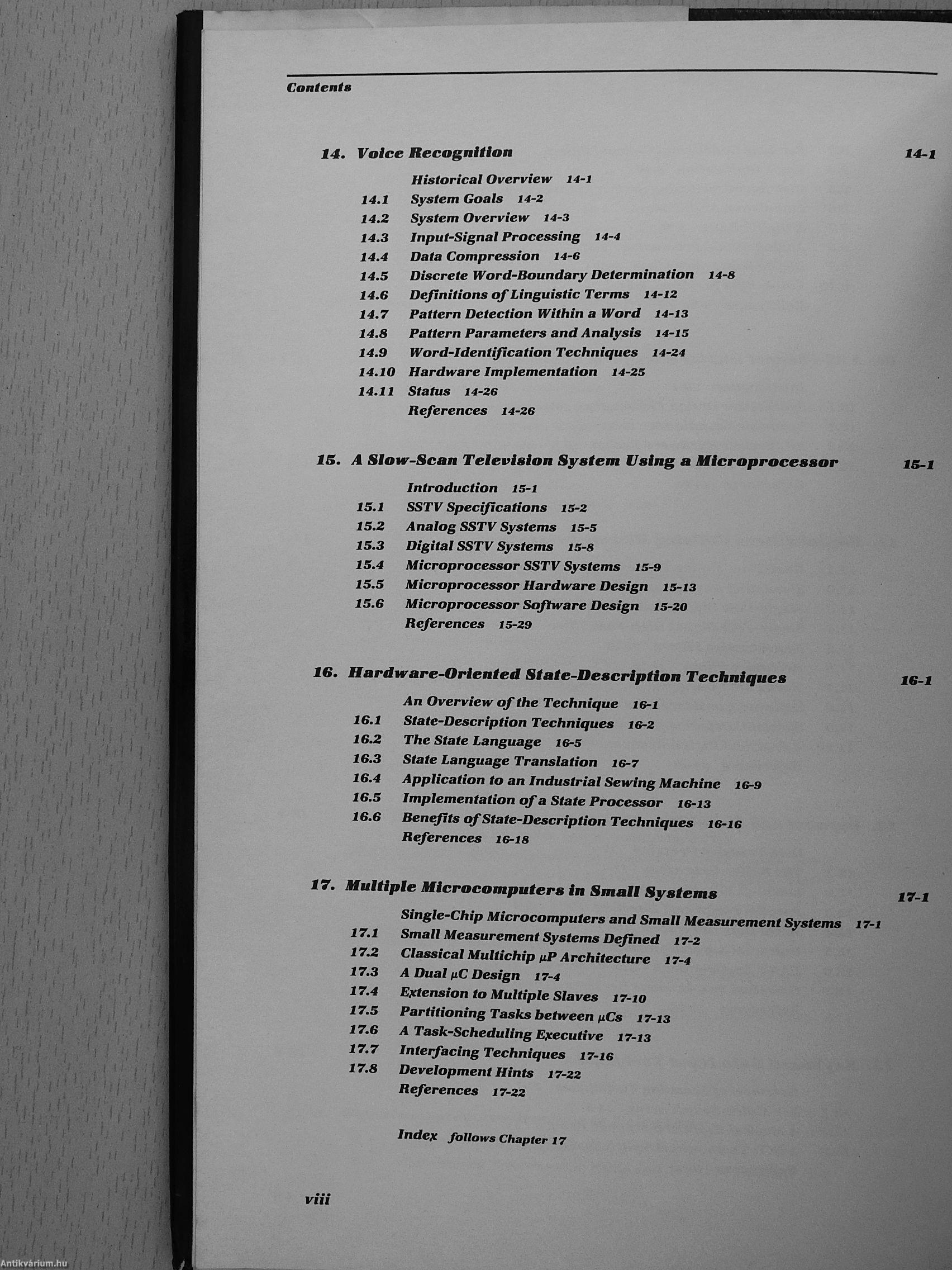
jiist a sampling of the many practical applications that you'll find in this easy-to-use reference
Microcomputer applications in telephony, including space division, time division, codec devices, digital \ PABX design, voice digitization, and line group architectures ; :
i> Hamming code error correction for microcomputers, including hardware and software implementation in 8-and 16-bit systems prone to random single-bit errors
V Keyboard data input techniques for X-Y array, BCD thumbwheel, and musicai keyboards
I/' A microcomputer-based interface for the IEEE-488 bus i-
Parallel and serial microprocessor data interfaces, ^ including buffers, latches, flip-flops, and parallel LSI ' ¦ devices . ;r --
Multiple microcomputers in small measurement ~ systems- /
Microprocessor-A/D converter interfaces, including dual slope, auto zero, charge balancing, and successive Approximation A/D converters.
Programmable video games,...
Tovább
Fülszöveg
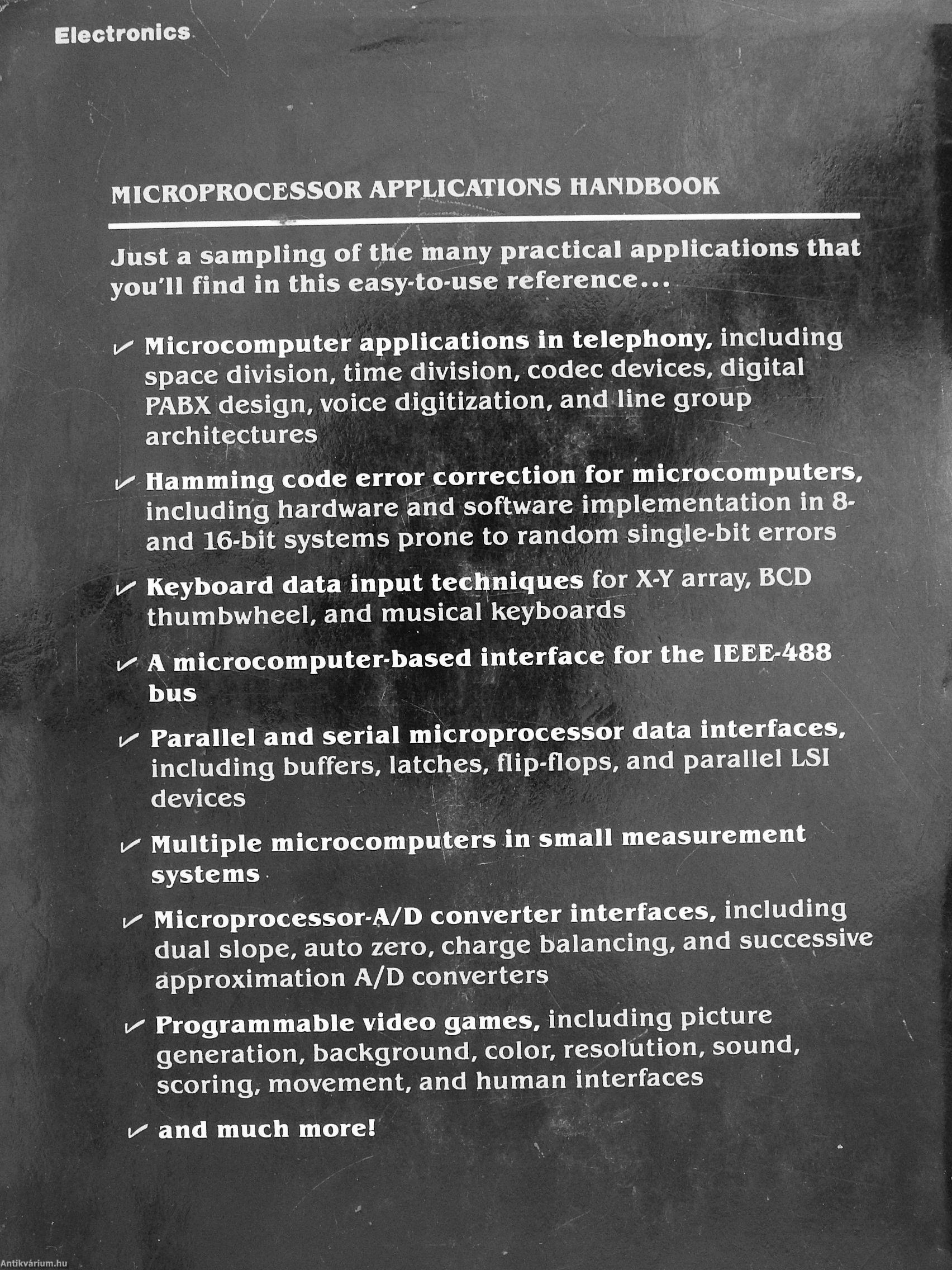
Electronics
MICROPROCESSOR APPLICATIONS HANDBOOK
jiist a sampling of the many practical applications that you'll find in this easy-to-use reference
Microcomputer applications in telephony, including space division, time division, codec devices, digital \ PABX design, voice digitization, and line group architectures ; :
i> Hamming code error correction for microcomputers, including hardware and software implementation in 8-and 16-bit systems prone to random single-bit errors
V Keyboard data input techniques for X-Y array, BCD thumbwheel, and musicai keyboards
I/' A microcomputer-based interface for the IEEE-488 bus i-
Parallel and serial microprocessor data interfaces, ^ including buffers, latches, flip-flops, and parallel LSI ' ¦ devices . ;r --
Multiple microcomputers in small measurement ~ systems- /
Microprocessor-A/D converter interfaces, including dual slope, auto zero, charge balancing, and successive Approximation A/D converters.
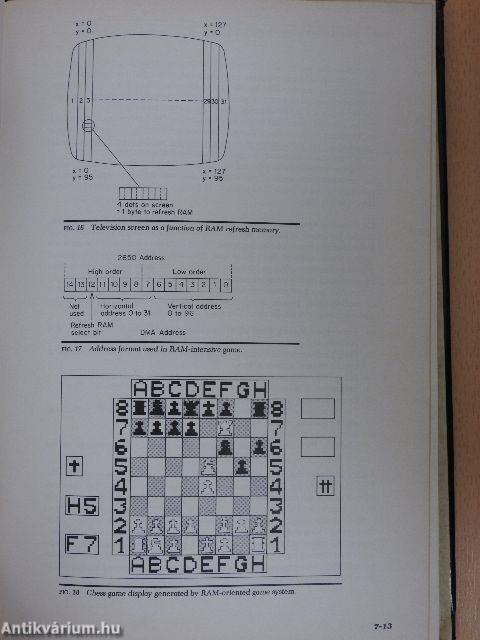
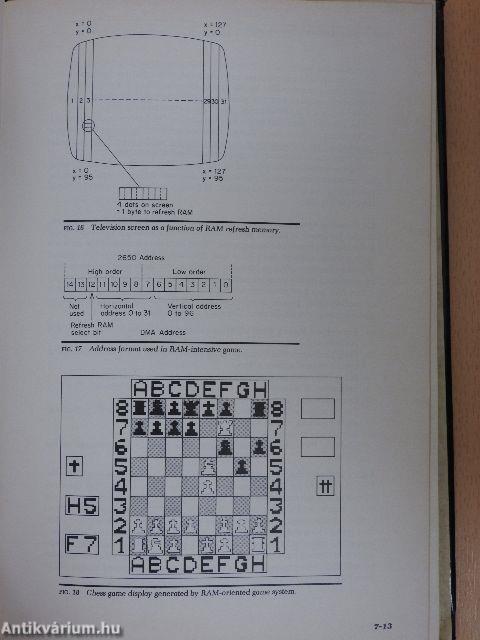
Programmable video games, including picture generation, background, color, resolution, sound, scoring, movement, and human interfaces .
ix and much morel r
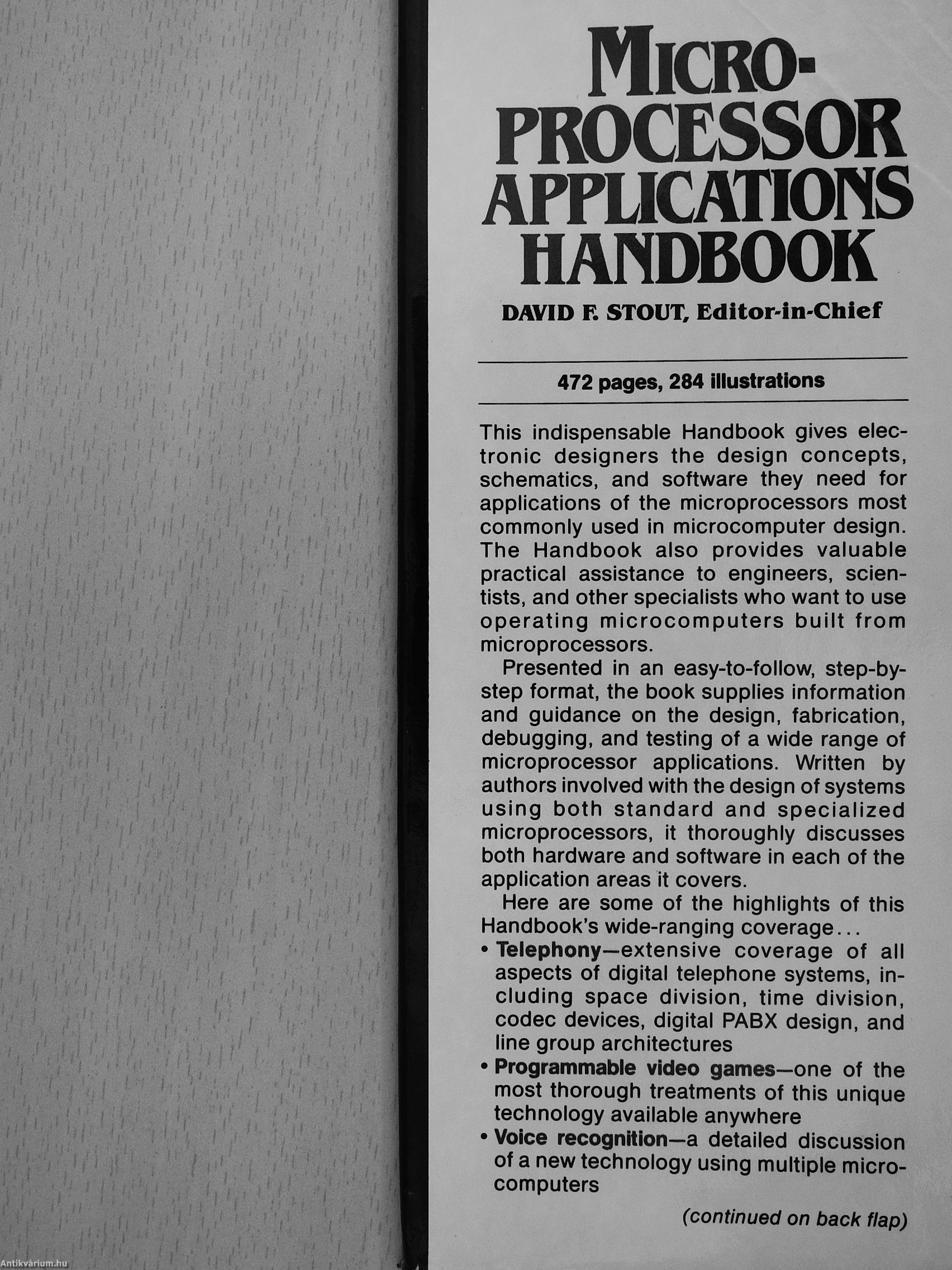
Microprocessor
APPUCAnONS HANDBOOK
DAVID F. STOUT, Editor-ln-Chicf
472 pages, 284 illustrations
This indispensable Handbook gives electronic designers the design concepts, schematics, and software they need for applications of the microprocessors most commonly used in microcomputer design. The Handbook also provides valuable practical assistance to engineers, scientists, and other specialists who want to use operating microcomputers built from microprocessors.
Presented in an easy-to-follow, step-by-step format, the book supplies information and guidance on the design, fabrication, debugging, and testing of a wide range of microprocessor applications. Written by authors involved with the design of systems using both standard and specialized microprocessors, it thoroughly discusses both hardware and software in each of the application areas it covers.
Here are some of the highlights of this Handbook's wide-ranging coverage
• Telephony—extensive coverage of all aspects of digital telephone systems, including space division, time division, codec devices, digital PABX design, and line group architectures
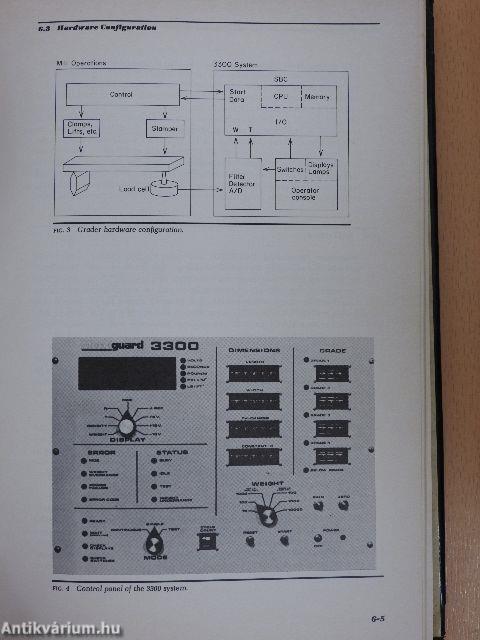
• Programmable video games—one of the most thorough treatments of this unique technology available anywhere
• Voice recognition-a detailed discussion of a new technology using multiple microcomputers
(continued on back flap)
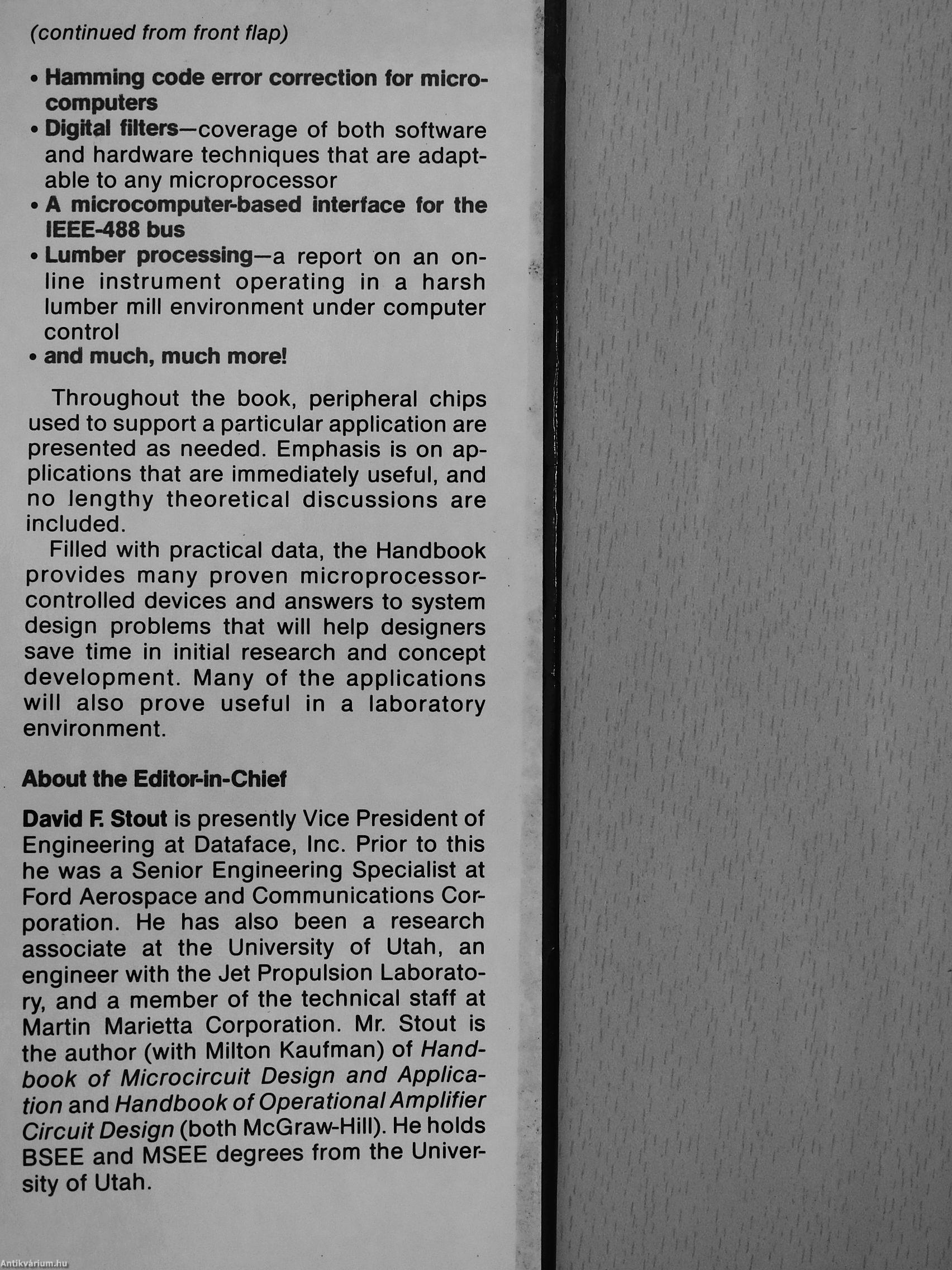
(continued from front flap)
• Hamming code error correction for microcomputers
. Digital filters-coverage of both software and hardware techniques that are adaptable to any microprocessor
• A microcomputer-based interface for the IEEE-488 bus
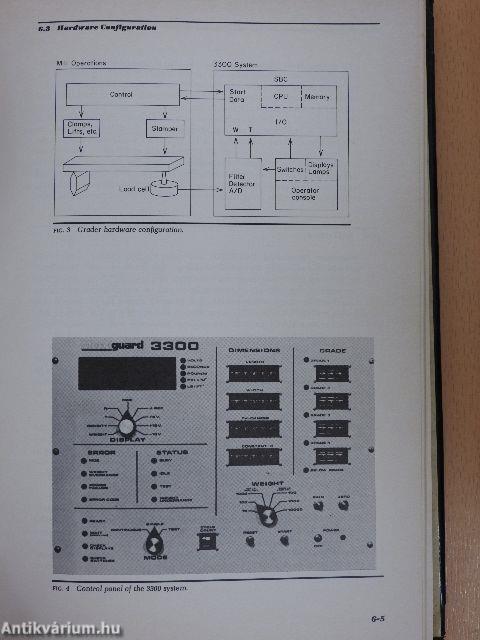
• Lumber processing-a report on an online instrument operating in a harsh lumber mill environment under computer control
• and much, much more!
Throughout the book, peripheral chips used to support a particular application are presented as needed. Emphasis is on applications that are immediately useful, and no lengthy theoretical discussions are included.
Filled with practical data, the Handbook provides many proven microprocessor-controlled devices and answers to system design problems that will help designers save time in initial research and concept development. Many of the applications will also prove useful in a laboratory environment.
About the Editor-in-Chief
David F. Stout is presently Vice President of Engineering at Dataface, Inc. Prior to this he was a Senior Engineering Specialist at Ford Aerospace and Communications Corporation. He has also been a research associate at the University of Utah, an engineer with the Jet Propulsion Laboratory, and a member of the technical staff at Martin Marietta Corporation. Mr Stout is the author (with Milton Kaufman) of Handbook of Microcircuit Design and Application and Handbook of Operational Amplifier Circuit Design (both McGraw-Hill). He holds BSEE and MSEE degrees from the University of Utah.
Vissza 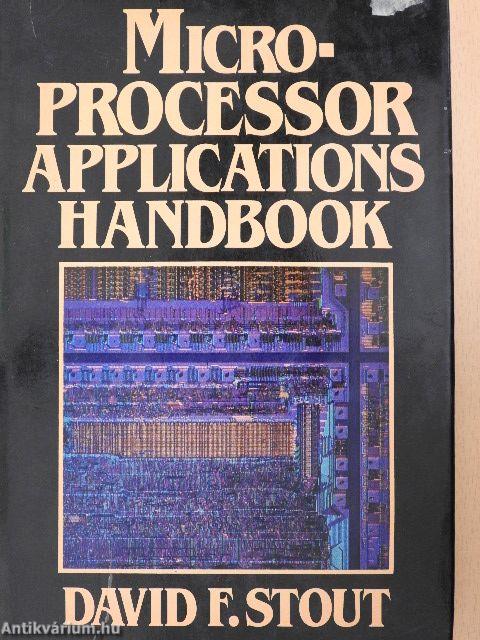


 Folytatás Microsoft-tal