Fülszöveg
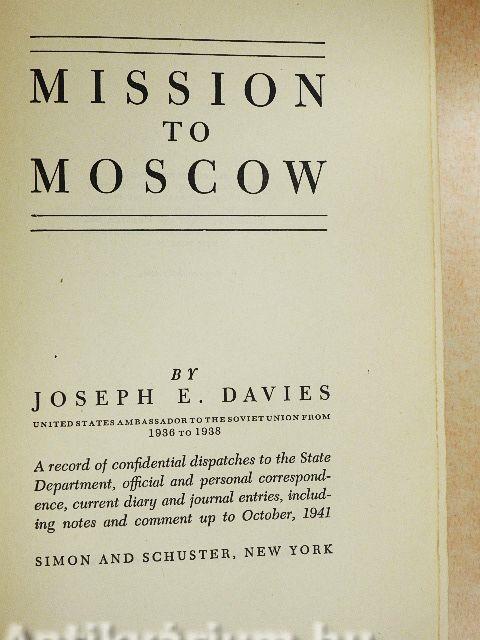
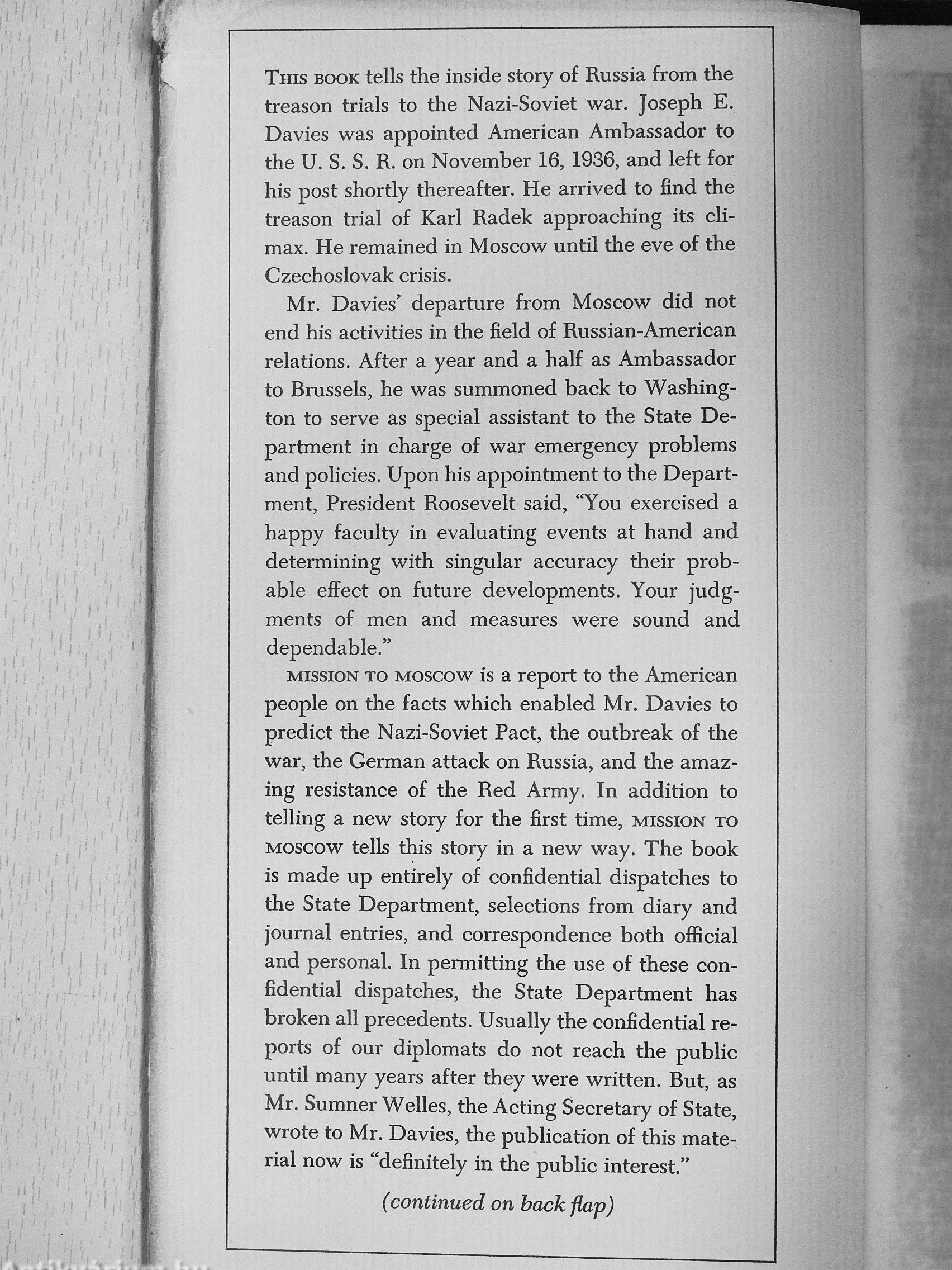
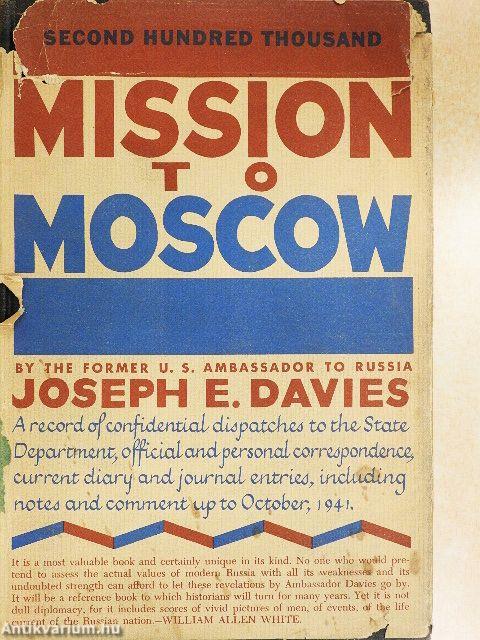
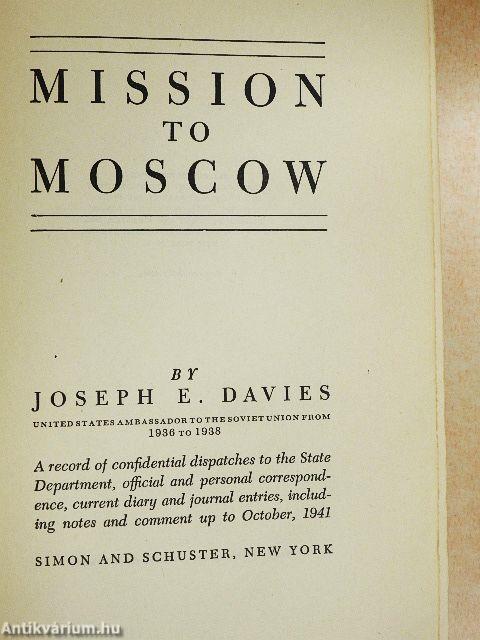
This book tells the inside story of Russia from the treason trials to the Nazi-Soviet war. Joseph E. Davies was appointed American Ambassador to the U. S. S. R. on November 16, 1936, and left for his post shortly thereafter. He arrived to find the treason trial of Karl Radek approaching its climax. He remained in Moscow until the eve of the Czechoslovak crisis.
Mr. Davies' departure from Moscow did not end his activities in the field of Russian-American relations. After a year and a half as Ambassador to Brussels, he was summoned back to Washington to serve as special assistant to the State Department in charge of war emergency problems and policies. Upon his appointment to the Department, President Roosevelt said, "You exercised a happy faculty in evaluating events at hand and determining with singular accuracy their probable effect on future developments. Your judgments of men and measures were sound and dependable."
mission to moscow is a report to the American people on...
Tovább
Fülszöveg
This book tells the inside story of Russia from the treason trials to the Nazi-Soviet war. Joseph E. Davies was appointed American Ambassador to the U. S. S. R. on November 16, 1936, and left for his post shortly thereafter. He arrived to find the treason trial of Karl Radek approaching its climax. He remained in Moscow until the eve of the Czechoslovak crisis.
Mr. Davies' departure from Moscow did not end his activities in the field of Russian-American relations. After a year and a half as Ambassador to Brussels, he was summoned back to Washington to serve as special assistant to the State Department in charge of war emergency problems and policies. Upon his appointment to the Department, President Roosevelt said, "You exercised a happy faculty in evaluating events at hand and determining with singular accuracy their probable effect on future developments. Your judgments of men and measures were sound and dependable."
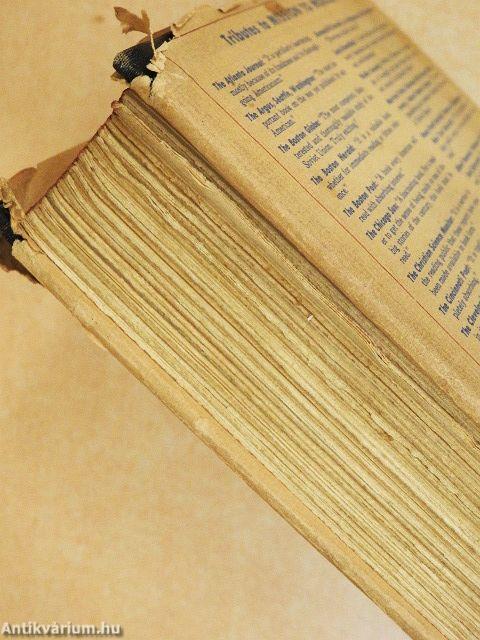
mission to moscow is a report to the American people on the facts which enabled Mr. Davies to predict the Nazi-Soviet Pact, the outbreak of the war, the German attack on Russia, and the amazing resistance of the Red Army. In addition to telling a new story for the first time, mission to moscow tells this story in a new way. The book is made up entirely of confidential dispatches to the State Department, selections from diary and journal entries, and correspondence both official and personal. In permitting the use of these confidential dispatches, the State Department has broken all precedents. Usually the confidential reports of our diplomats do not reach the public until many years after they were written. But, as Mr. Sumner Welles, the Acting Secretary of State, wrote to Mr. Davies, the pubhcation of this material now is "definitely in the public interest."
(continued on back flap)
(continued from front flap)
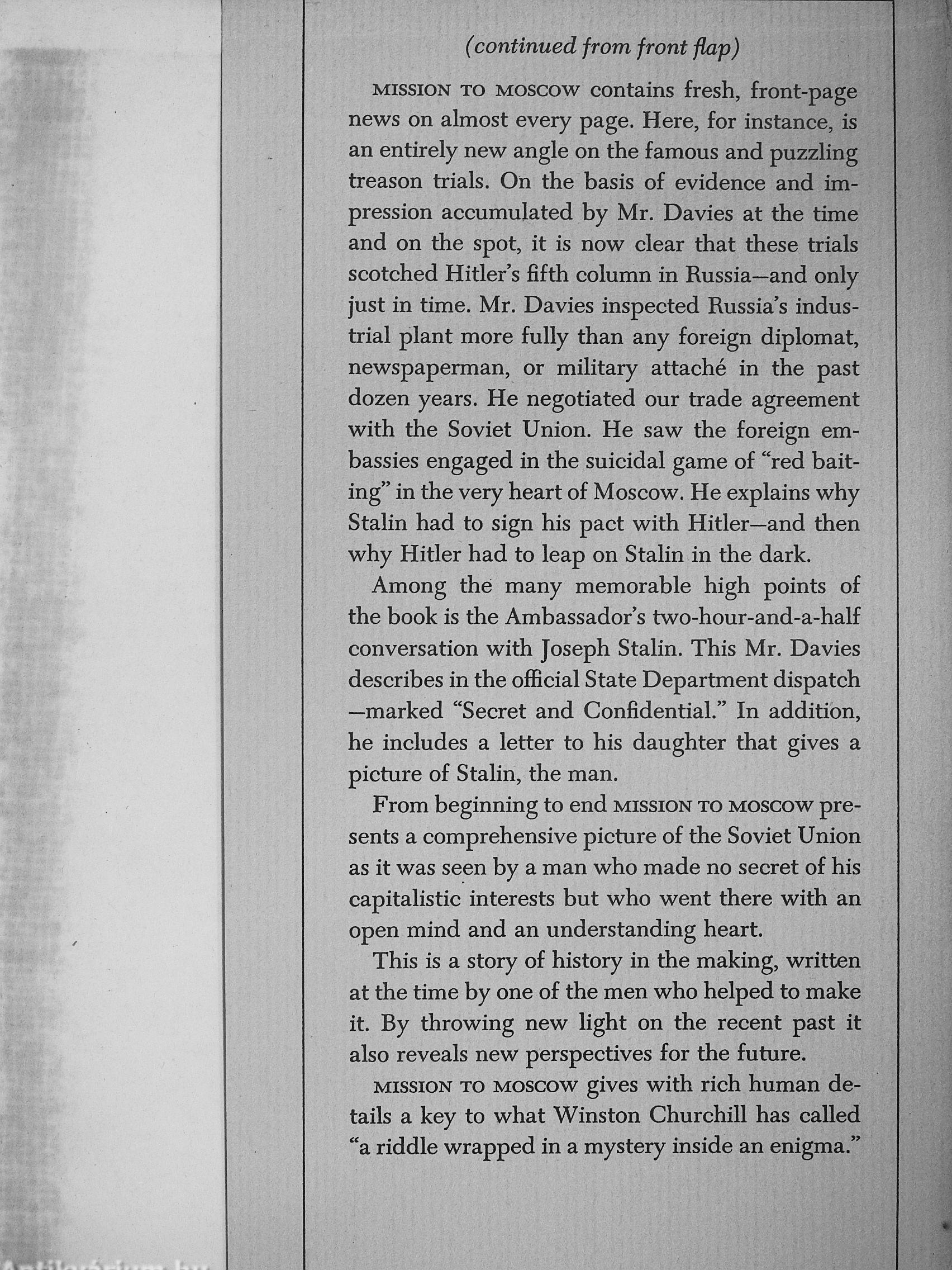
MISSION TO MOSCOW Contains fresh, front-page news on almost every page. Here, for instance, is an entirely new angle on the famous and puzzling treason trials. On the basis of evidence and impression accumulated by Mr. Davies at the time and on the spot, it is now clear that these trials scotched Hitler's fifth column in Russia—and only just in time. Mr. Davies inspected Russia's industrial plant more fully than any foreign diplomat, newspaperman, or military attaché in the past dozen years. He negotiated our trade agreement with the Soviet Union. He saw the foreign embassies engaged in the suicidal game of "red baiting" in the very heart of Moscow. He explains why Stalin had to sign his pact with Hitler—and then why Hitler had to leap on Stalin in the dark.
Among the many memorable high points of the book is the Ambassador's two-hour-and-a-half conversation with Joseph Stalin. This Mr. Davies describes in the official State Department dispatch —marked "Secret and Confidential." In addition, he includes a letter to his daughter that gives a picture of Stalin, the man.
From beginning to end mission to Moscow presents a comprehensive picture of the Soviet Union as it was seen by a man who made no secret of his capitalistic interests but who went there with an open mind and an understanding heart.
This is a story of history in the making, written at the time by one of the men who helped to make it. By throwing new light on the recent past it also reveals new perspectives for the future.
MISSION TO MOSCOW gives with rich human details a key to what Winston Churchill has called "a riddle wrapped in a mystery inside an enigma."
Vissza 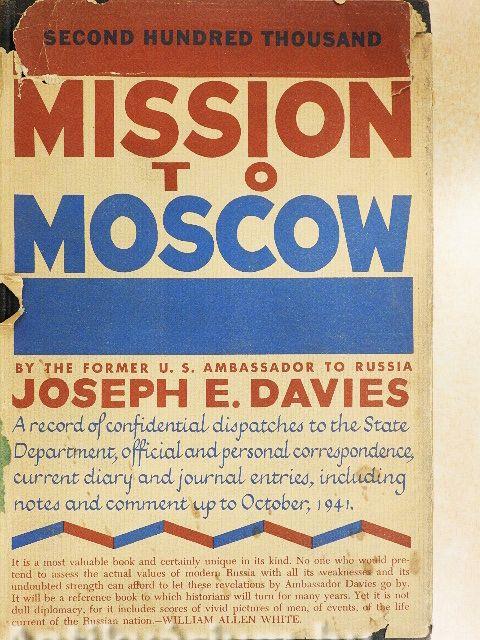




 Folytatás Microsoft-tal