Fülszöveg
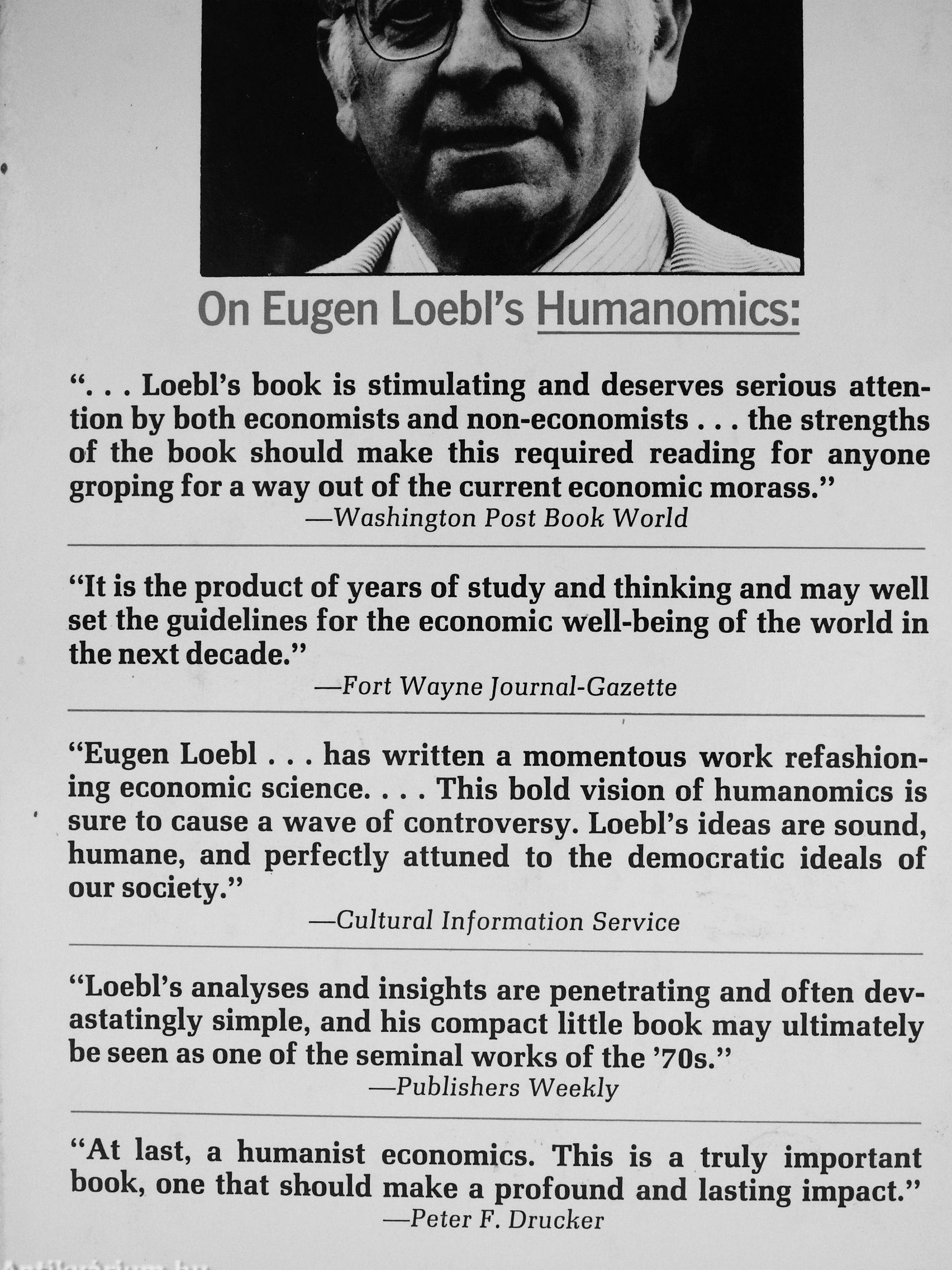
On Eugen Loebl's Humanomics:
. . Loebl's book is stimulating and deserves serious attention by both economists and non-economists the strengths of the book should make this required reading for anyone groping for a way out of the current economic morass." —Washington Post Book World
"It is the product of years of study and thinking and may well set the guidelines for the economic well-being of the world in the next decade."
—Fort Wayne Journal-Gazette
"Eugen Loebl . . . has written a momentous work refashioning economic science. . . . This bold vision of humanomics is sure to cause a wave of controversy. Loebl's ideas are sound, humane, and perfectly attuned to the democratic ideals of our society."
—Cultural Information Service
"Loebl's analyses and insights are penetrating and often dev-astatingly simple, and his compact little book may ultimately be seen as one of the seminal works of the '70s."
—Publishers Weekly
"At last, a humanist economics. This is a truly...
Tovább
Fülszöveg
On Eugen Loebl's Humanomics:
. . Loebl's book is stimulating and deserves serious attention by both economists and non-economists the strengths of the book should make this required reading for anyone groping for a way out of the current economic morass." —Washington Post Book World
"It is the product of years of study and thinking and may well set the guidelines for the economic well-being of the world in the next decade."
—Fort Wayne Journal-Gazette
"Eugen Loebl . . . has written a momentous work refashioning economic science. . . . This bold vision of humanomics is sure to cause a wave of controversy. Loebl's ideas are sound, humane, and perfectly attuned to the democratic ideals of our society."
—Cultural Information Service
"Loebl's analyses and insights are penetrating and often dev-astatingly simple, and his compact little book may ultimately be seen as one of the seminal works of the '70s."
—Publishers Weekly
"At last, a humanist economics. This is a truly important book, one that should make a profound and lasting impact." —Peter F. Drucker
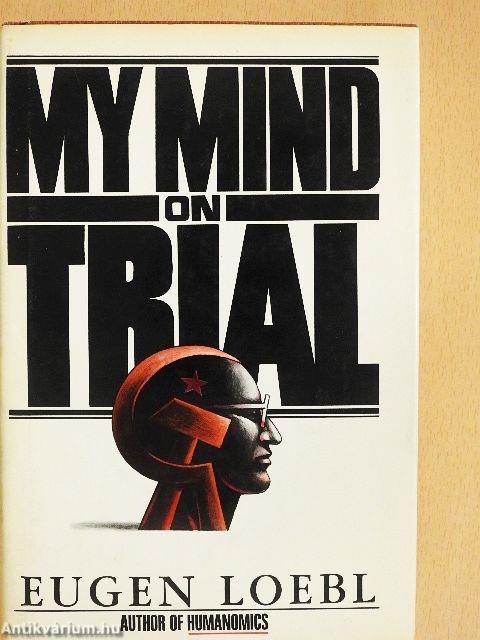
F.TTGRN LOEBL
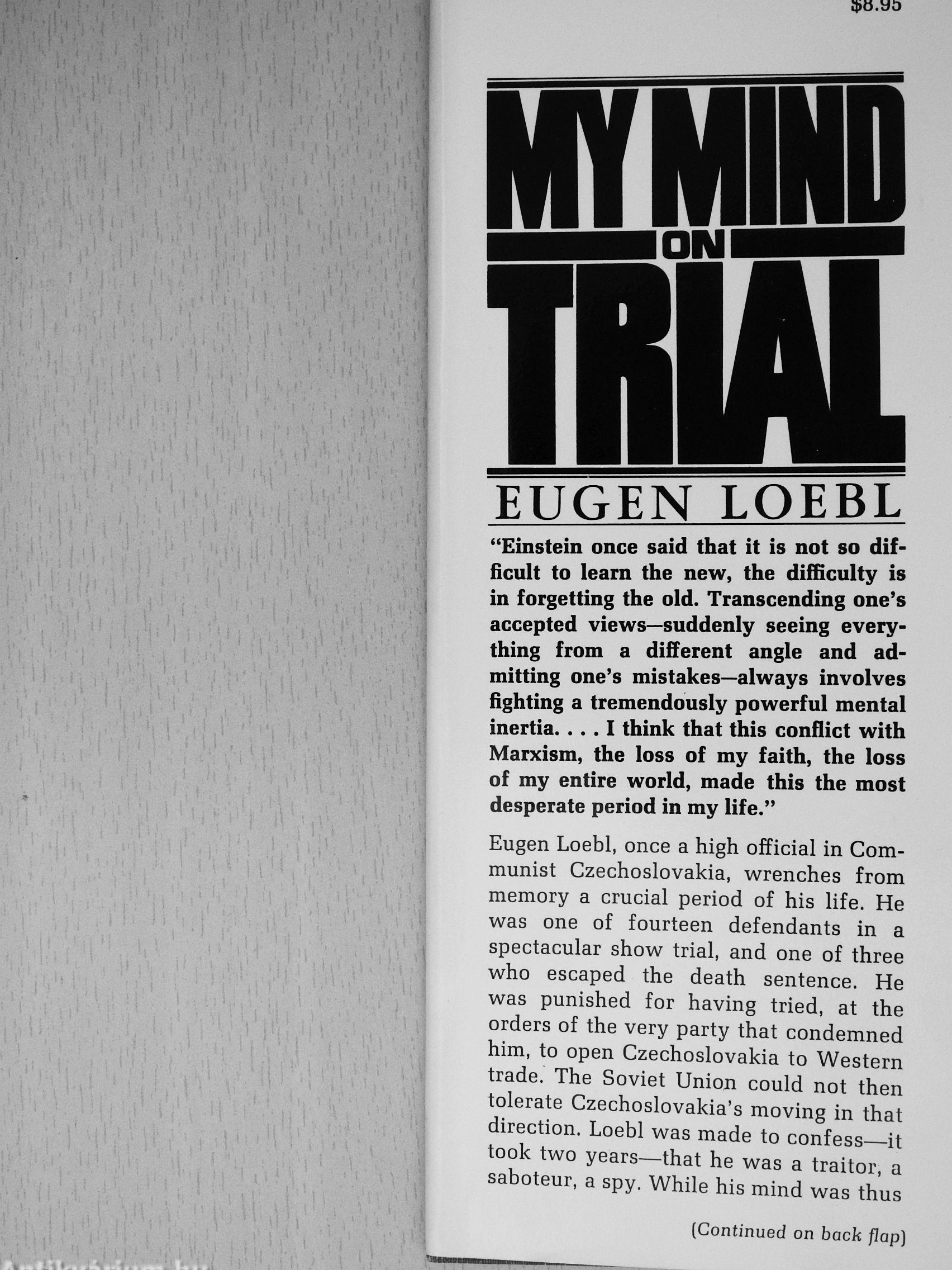
"Einstein once said that it is not so difficult to learn the new, the difficulty is in forgetting the old. Transcending one's accepted views—suddenly seeing everything from a different angle and admitting one's mistakes—always involves fighting a tremendously powerful mental inertia I think that this conflict with Marxism, the loss of my faith, the loss of my entire world, made this the most desperate period in my life."
Eugen Loebl, once a high official in Communist Czechoslovakia, wrenches from memory a crucial period of his life. He was one of fourteen defendants in a spectacular show trial, and one of three who escaped the death sentence. He was punished for having tried, at the orders of the very party that condemned him, to open Czechoslovakia to Western trade. The Soviet Union could not then tolerate Czechoslovakia's moving in that direction. Loebl was made to confess—it took two years—that he was a traitor a saboteur, a spy. While his mind was thus
(Continued on back flap)
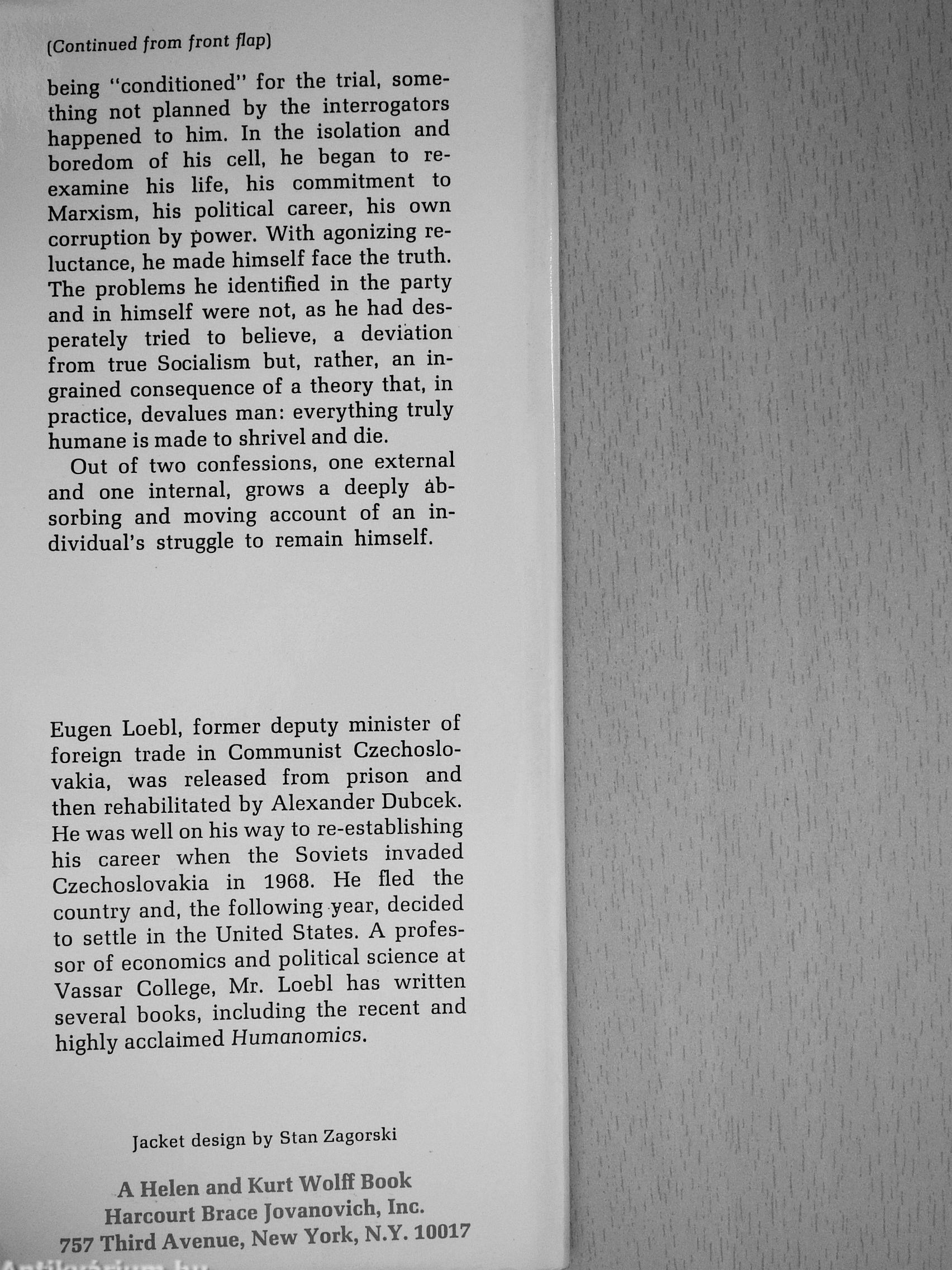
(Continued from front flap]
being "conditioned" for the trial, something not planned by the interrogators happened to him. In the isolation and boredom of his cell, he began to reexamine his life, his commitment to Marxism, his political career, his own corruption by power. With agonizing reluctance, he made himself face the truth. The problems he identified in the party and in himself were not, as he had desperately tried to believe, a deviation from true Socialism but, rather, an ingrained consequence of a theory that, in practice, devalues man: everything truly humane is made to shrivel and die.
Out of two confessions, one external and one internal, grows a deeply absorbing and moving account of an individual's struggle to remain himself.
Eugen Loebl, former deputy minister of foreign trade in Communist Czechoslovakia, was released from prison and then rehabilitated by Alexander Dubcek. He was well on his way to re-establishing his career when the Soviets invaded Czechoslovakia in 1968. He fled the country and, the following year, decided to settle in the United States. A professor of economics and political science at Vassar College, Mr. Loebl has written several books, including the recent and highly acclaimed Humanomics.
Jacket design by Stan Zagorski
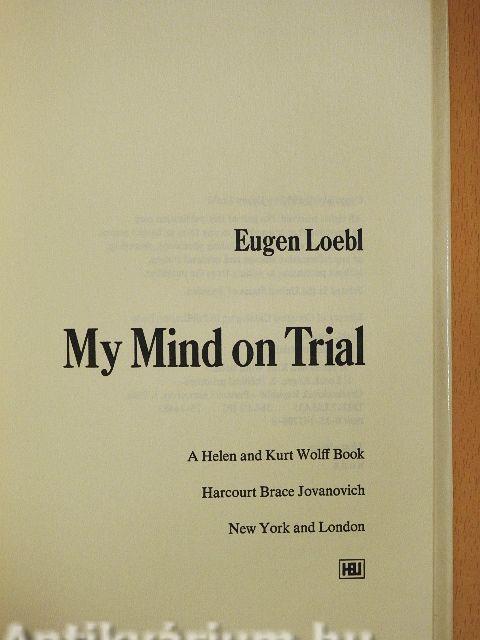
A Helen and Kurt Wolff Book Harcourt Brace Jovanovich, Inc. 757 Third Avenue, New York, N.Y. 10017
Vissza 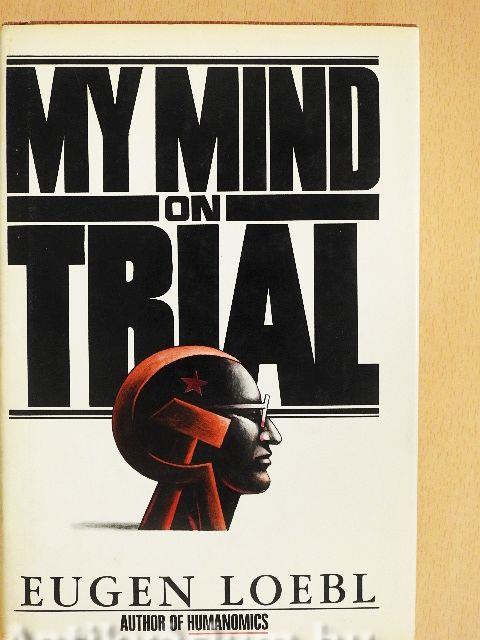


 Folytatás Microsoft-tal