
1.148.032
kiadvánnyal nyújtjuk Magyarország legnagyobb antikvár könyv-kínálatát

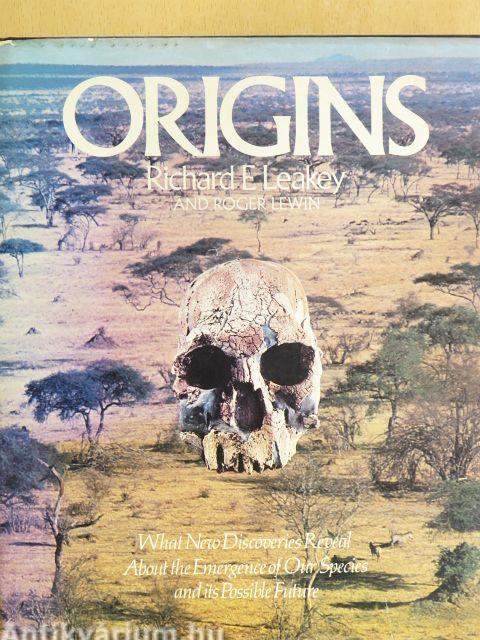
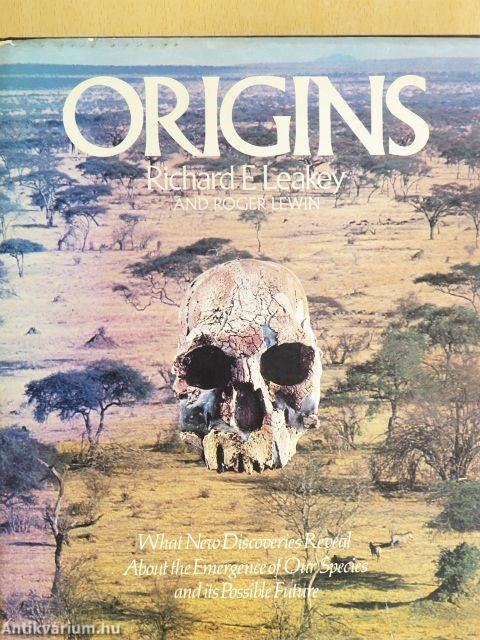
Origins
What New Discoveries Reveal About the Emergence of Our Species and its Possible Future
London
| Kiadó: | Macdonald and Jane's Publishers Limited |
|---|---|
| Kiadás helye: | London |
| Kiadás éve: | |
| Kötés típusa: | Vászon |
| Oldalszám: | 264 oldal |
| Sorozatcím: | |
| Kötetszám: | |
| Nyelv: | Angol |
| Méret: | 25 cm x 21 cm |
| ISBN: | 0-354-04162-2 |
| Megjegyzés: | Színes és fekete-fehér fotókkal, illusztrációkkal. |
Értesítőt kérek a kiadóról
A beállítást mentettük,
naponta értesítjük a beérkező friss
kiadványokról
naponta értesítjük a beérkező friss
kiadványokról
A beállítást mentettük,
naponta értesítjük a beérkező friss
kiadványokról
naponta értesítjük a beérkező friss
kiadványokról
Előszó
Tovább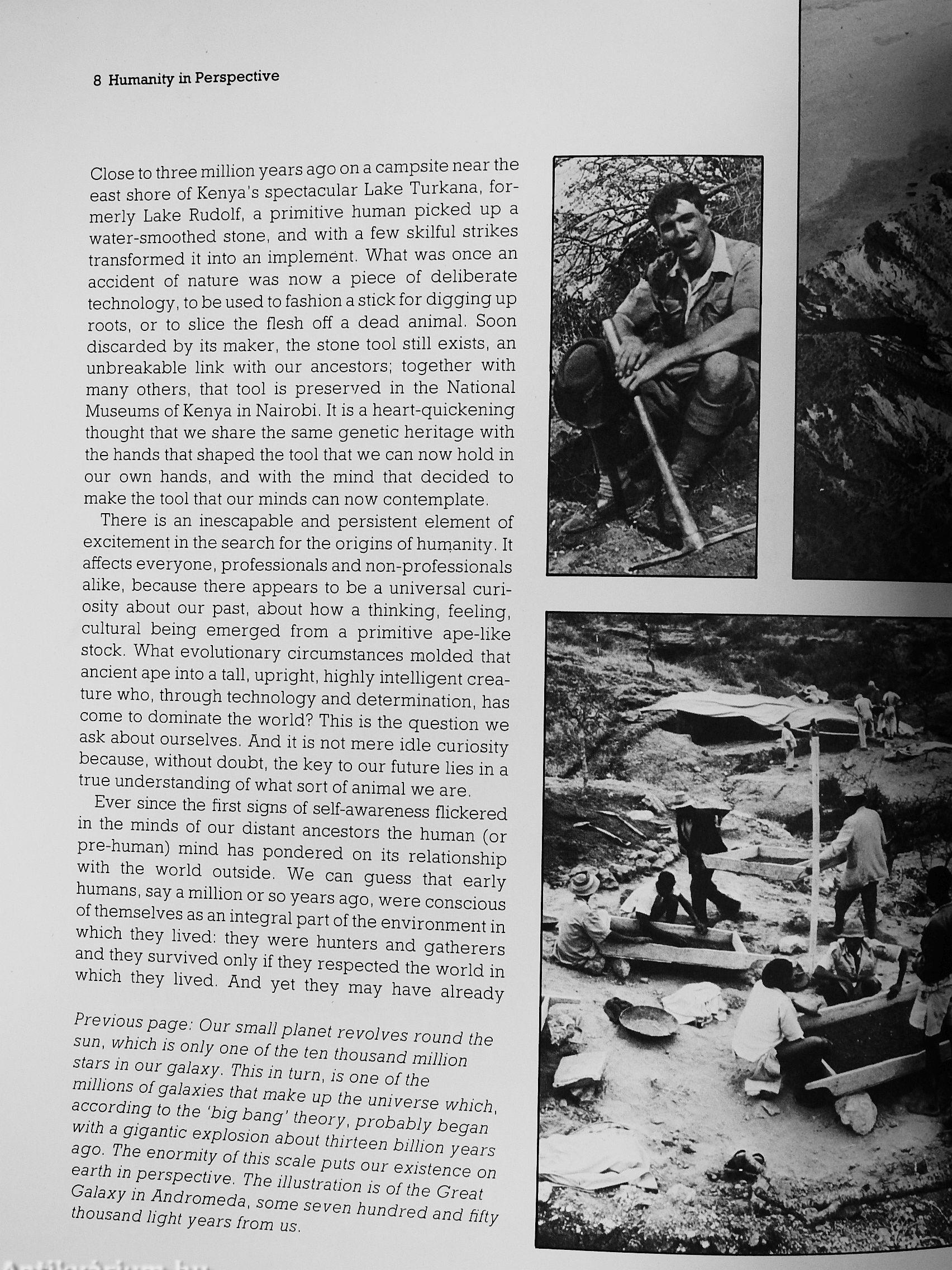
Fülszöveg
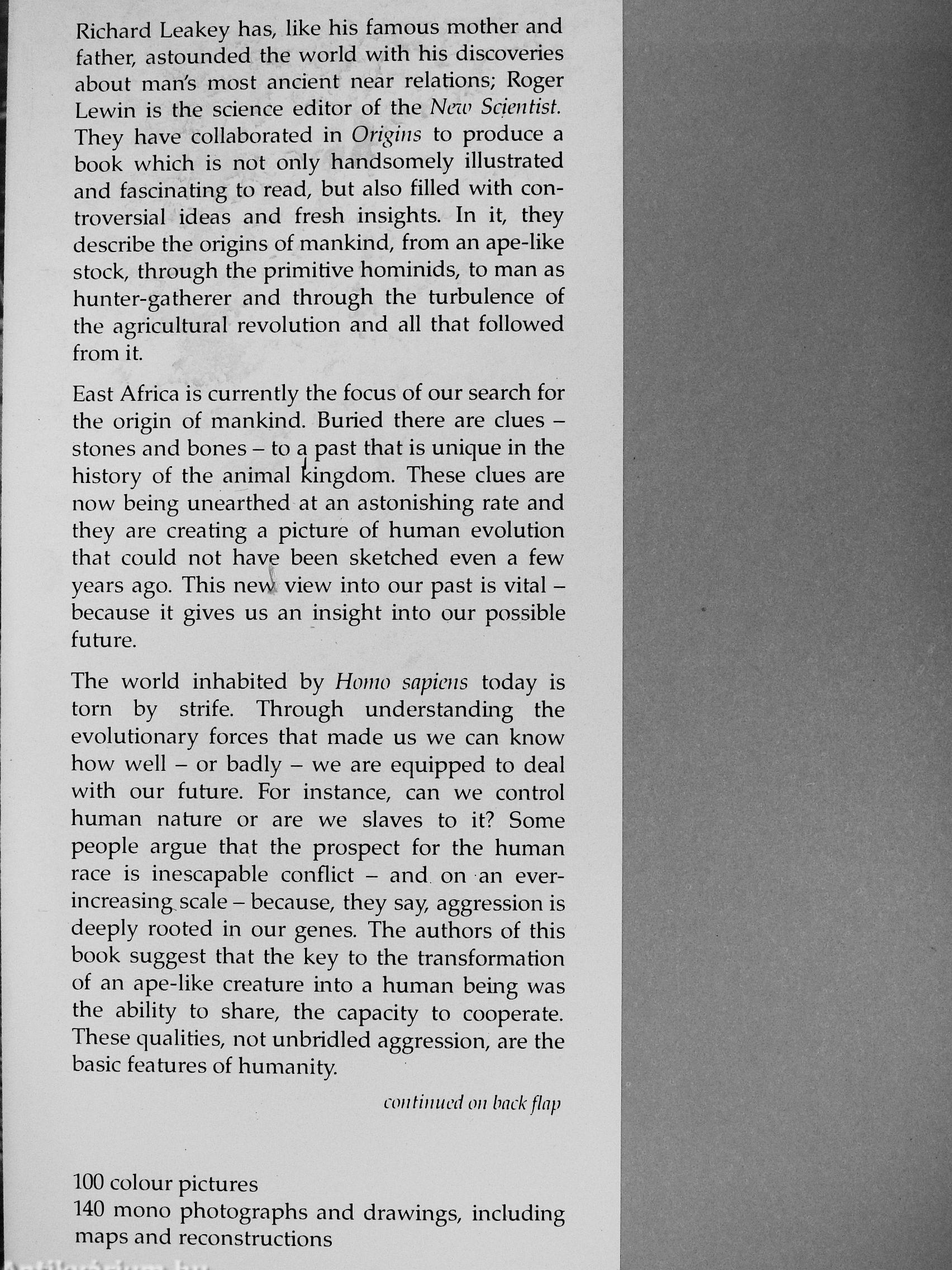
Richard Leakey has, like his famous mother and father, astounded the world with his discoveries about man's most ancient near reladons; Roger Lewin is the science editor of the M'ic Scientist. They have collaborated in Origins to produce a book which is not only handsomely illustrated and fascinating to read, but also filled with controversial ideas and fresh insights. In it, they describe the origins of mankind, from an ape-like stock, through the primitive hominids, to man as hunter-gatherer and through the turbulence of the agricultural revolution and all that followed from it.
East Africa is currently the focus of our search for the origin of mankind. Buried there are clues -stones and bones - to a past that is unique in the history of the animal kingdom. These clues are now being unearthed at an astonishing rate and they are creating a picture of human evolution that could not have been sketched even a few years ago. This nev^ view into our past is vital -because it gives us... Tovább
Fülszöveg
Richard Leakey has, like his famous mother and father, astounded the world with his discoveries about man's most ancient near reladons; Roger Lewin is the science editor of the M'ic Scientist. They have collaborated in Origins to produce a book which is not only handsomely illustrated and fascinating to read, but also filled with controversial ideas and fresh insights. In it, they describe the origins of mankind, from an ape-like stock, through the primitive hominids, to man as hunter-gatherer and through the turbulence of the agricultural revolution and all that followed from it.
East Africa is currently the focus of our search for the origin of mankind. Buried there are clues -stones and bones - to a past that is unique in the history of the animal kingdom. These clues are now being unearthed at an astonishing rate and they are creating a picture of human evolution that could not have been sketched even a few years ago. This nev^ view into our past is vital -because it gives us an insight into our possible future.
The world inhabited by Homo sapiens today is torn by strife. Through understanding the evolutionary forces that made us we can know how well - or badly - we are equipped to deal with our future. For instance, can we control human nature or are we slaves to it? Some people argue that the prospect for the human race is inescapable conflict - and on an ever-increasing scale - because, they say aggression is deeply rooted in our genes. The authors of this book suggest that the key to the transformadon of an ape-like creature into a human being was the ability to share, the capacity to cooperate. These qualities, not unbridled aggression, are the basic features of humanity.
continued on hack flap
100 colour pictures
140 mono photographs and drawings, including maps and reconstructions
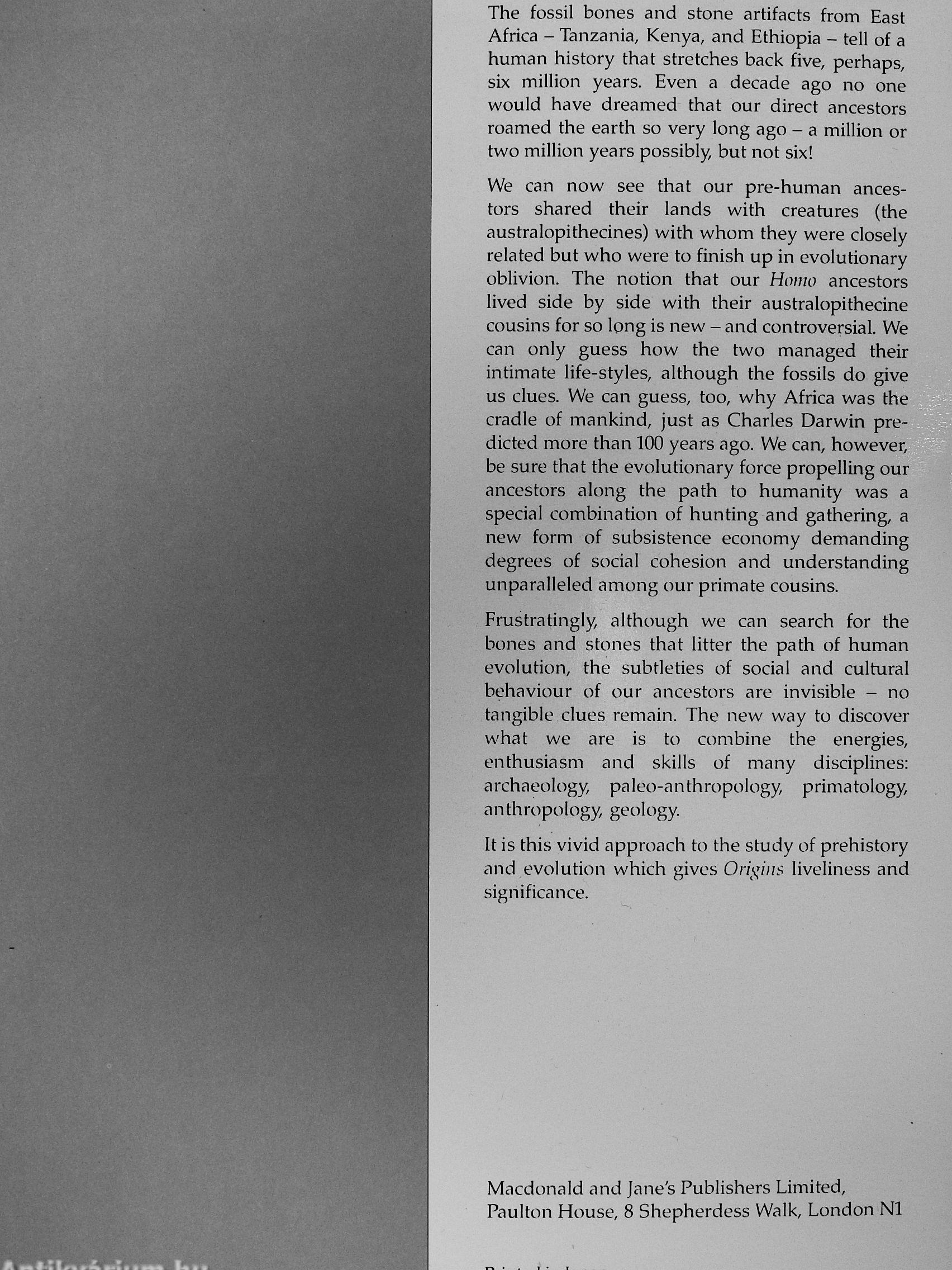
The fossil bones and stone artifacts from East Africa - Tanzania, Kenya, and Ethiopia - tell of a human history that stretches bacl< five, perhaps, six million years. Even a decade ago no one would have dreamed that our direct ancestors roamed the earth so very long ago - a million or two million years possibly, but not six!
We can now see that our pre-human ancestors shared their lands with creatures (the australopithecines) with whom they were closely related but who were to finish up in evolutionary oblivion. The notion that our Homo ancestors lived side by side with their australopifhecine cousins for so long is new - and controversial. We can only guess how the two managed their intimate life-styles, although the fossils do give us clues. We can guess, too, why Africa was the cradle of manlcind, just as Charles Darwin predicted more than 100 years ago. We can, however, be sure that the evolutionary force propelling our ancestors along the path to humanity was a special combination of hunting and gathering, a new form of subsistence economy demanding degrees of social cohesion and understanding unparalleled among our primate cousins.
Frustratingly, although we can search for the bones and stones that litter the path of human evolution, the subtleties of social and culhiral behaviour of our ancestors are invisible - no tangible clues remain. The new way to discover what we are is to combine the energies, enthusiasm and skills of many disciplines: archaeology, paleo-anthropology, primatology, anthropology, geology.
It is this vivid approach to the study of prehistory and evolution which gives Origins liveliness and significance.
Macdonald and Jane's Publishers Limited, Paulton House, 8 Shepherdess Walk, London N1 Vissza
Témakörök
- Történelem > Őskor
- Idegennyelv > Idegennyelvű könyvek > Angol > Természettudományok > Biológia
- Idegennyelv > Idegennyelvű könyvek > Angol > Művelődéstörténet
- Idegennyelv > Idegennyelvű könyvek > Angol > Történelem > Egyéb
- Művelődéstörténet > Civilizációtörténet > Egyéb
- Művelődéstörténet > Kultúra > Kultúrantropológia
- Természettudomány > Biológia > Fajfejlődés > Az ember > Története
- Természettudomány > Biológia > Fajfejlődés > Idegennyelvű
- Történelem > Idegennyelvű > Angol
- Régészet > Általános régészet, antropológia > Ősrégészet
- Idegennyelv > Idegennyelvű könyvek > Angol > Régészet > Általános régészet, antropológia > Ősrégészet
- Történelem > Régészet > Általános régészet, antropológia > Ősrégészet
Megvásárolható példányok
Nincs megvásárolható példány
A könyv összes megrendelhető példánya elfogyott. Ha kívánja, előjegyezheti a könyvet, és amint a könyv egy újabb példánya elérhető lesz, értesítjük.
 Folytatás Microsoft-tal