
1.152.407
kiadvánnyal nyújtjuk Magyarország legnagyobb antikvár könyv-kínálatát

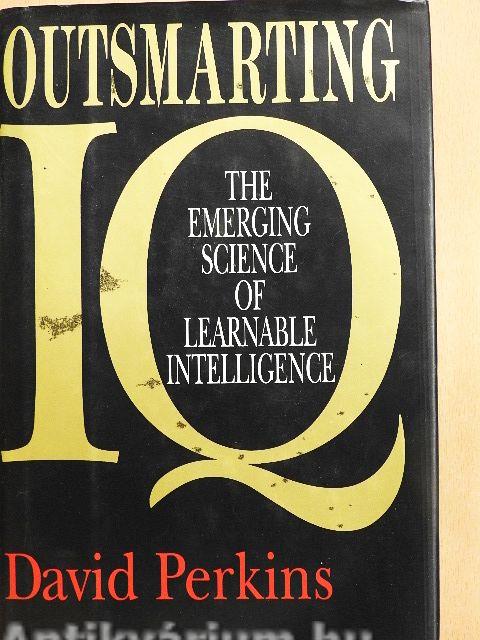
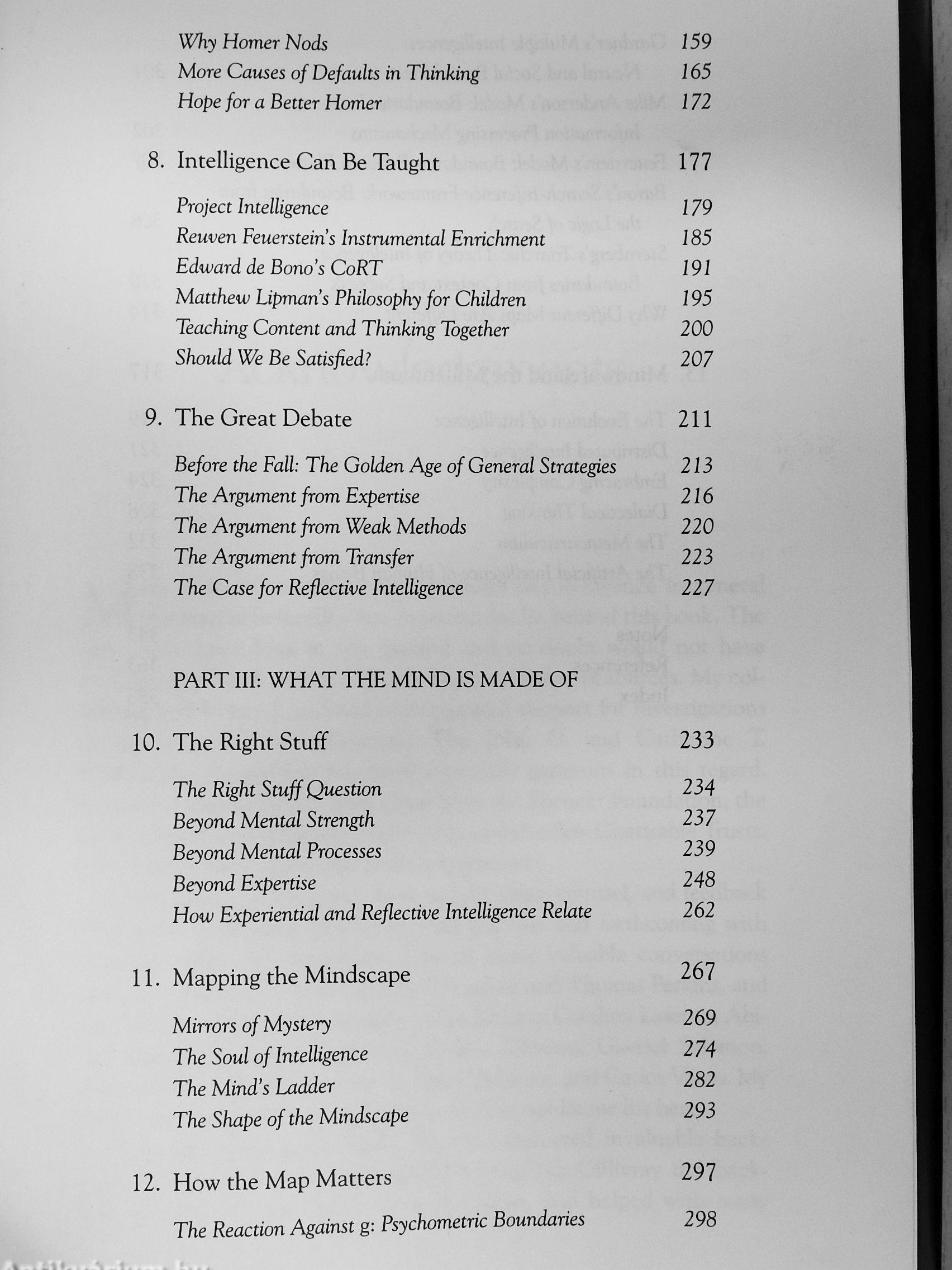
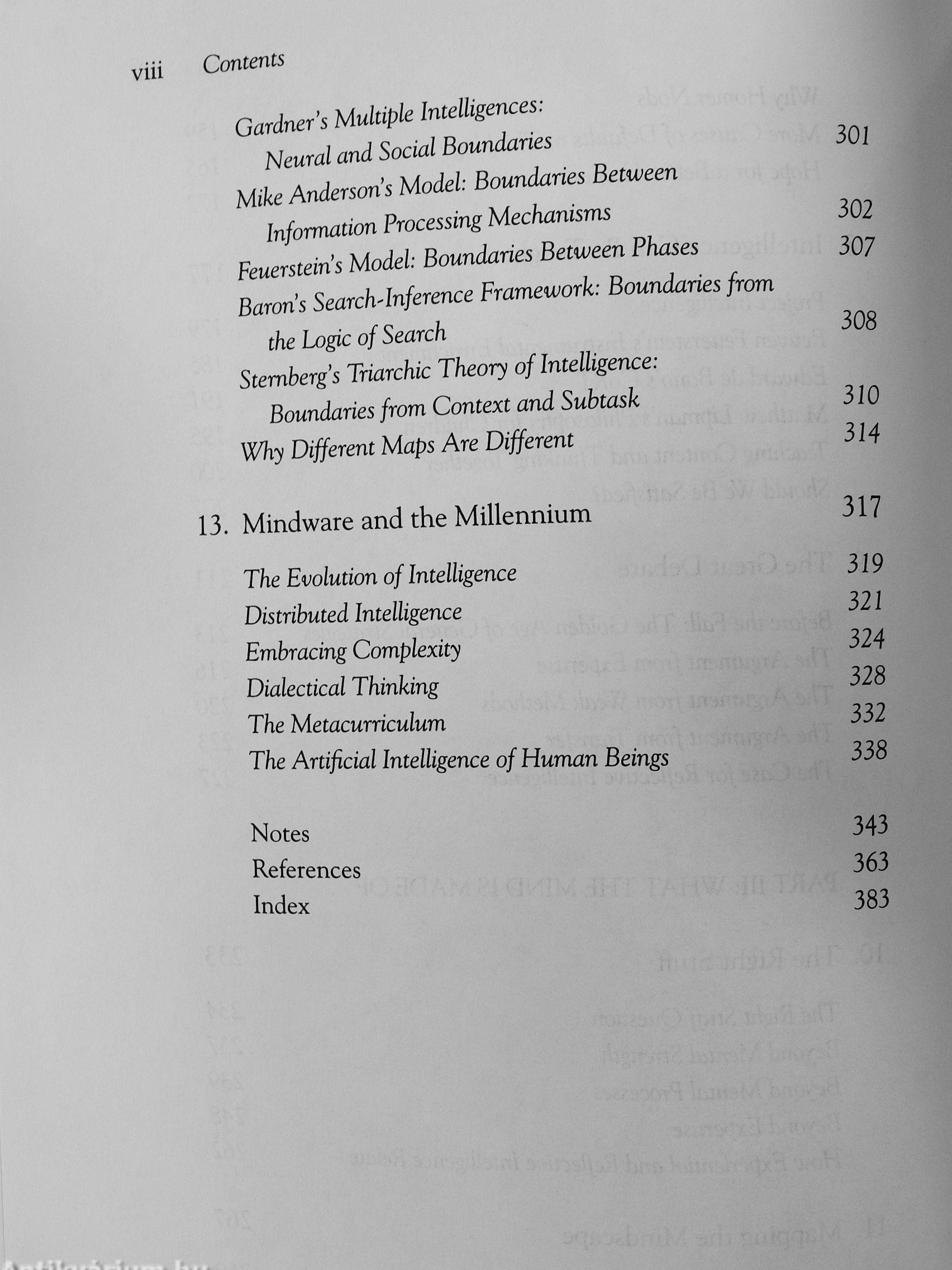
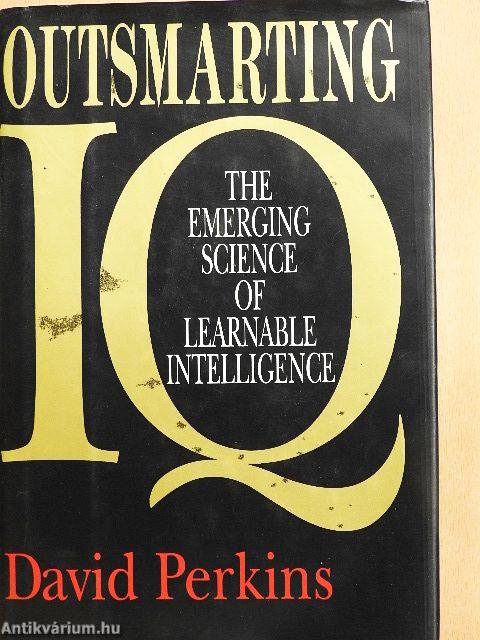
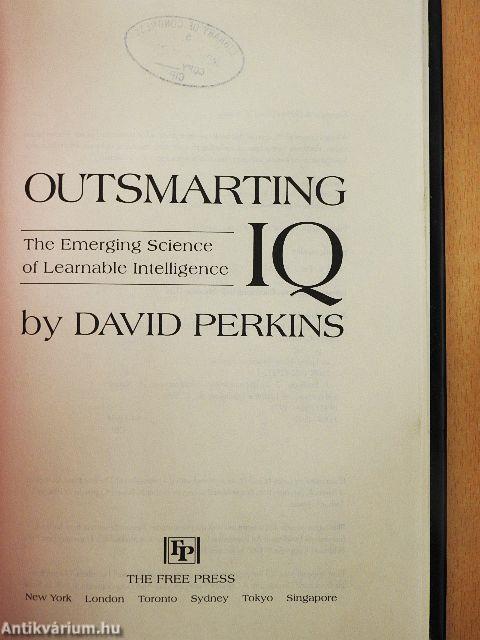
Outsmarting IQ
The Emerging Science of Learnable Intelligence
New York
| Kiadó: | The Free Press |
|---|---|
| Kiadás helye: | New York |
| Kiadás éve: | |
| Kötés típusa: | Félvászon |
| Oldalszám: | 390 oldal |
| Sorozatcím: | |
| Kötetszám: | |
| Nyelv: | Angol |
| Méret: | 24 cm x 16 cm |
| ISBN: | 0-02-925212-1 |
Értesítőt kérek a kiadóról
A beállítást mentettük,
naponta értesítjük a beérkező friss
kiadványokról
naponta értesítjük a beérkező friss
kiadványokról
A beállítást mentettük,
naponta értesítjük a beérkező friss
kiadványokról
naponta értesítjük a beérkező friss
kiadványokról
Előszó
Tovább
Fülszöveg
Since the turn of the century, the idea that intellectual capacity is fixed has been gener-aUy accepted. But increasingly, psychologists, educators, and others have come to challenge this premise. Owismariingr/Q reveals how earlier discoveries about IQ, together with recent research, show that intelligence is not geneticaUy fixed. Intelligence can be taught.
David Perkins, renowned for his research on thinking, learning, and education, identifies three distinct kinds of intelligence: the fixed neurological intelligence linked to IQ tests; the specialized knowledge and experience that individuals acquire over time; and reflective intelligence, the ability to become aware of one's mental habits and transcend limited patterns of thinking. Although all of these forms of intelligence function simultaneously, it is reflective intelligence, Perkins shows, that affords the best opportunity to amplify human intellect. This is the kind of intelligence that helps us to make wise personal... Tovább
Fülszöveg
Since the turn of the century, the idea that intellectual capacity is fixed has been gener-aUy accepted. But increasingly, psychologists, educators, and others have come to challenge this premise. Owismariingr/Q reveals how earlier discoveries about IQ, together with recent research, show that intelligence is not geneticaUy fixed. Intelligence can be taught.
David Perkins, renowned for his research on thinking, learning, and education, identifies three distinct kinds of intelligence: the fixed neurological intelligence linked to IQ tests; the specialized knowledge and experience that individuals acquire over time; and reflective intelligence, the ability to become aware of one's mental habits and transcend limited patterns of thinking. Although all of these forms of intelligence function simultaneously, it is reflective intelligence, Perkins shows, that affords the best opportunity to amplify human intellect. This is the kind of intelligence that helps us to make wise personal decisions, solve challenging technical problems, find creative ideas, and learn complex topics in mathematics, the sciences, management, and other areas. It is the kind of intelligence most needed in an increasingly competitive and complicated world.
Using his own pathbreaking research at Harvard and a rich array of other sources, Perkins paints a compelling picture of the skills and attitudes underlying learnabie intelligence. He identifies typical pitfalls in thinking, such as hasty judgement, ignoring multiple perspectives, and neglecting evidence. He reveals the underlying mechanisms of intelligent behavior. And he explores new frontiers in the development of intelligence in education, business, and other settings.
This book will be of interest to people who have a personal or professional stake in increasing their inteUectual skills, to those M^io look toward better education and a more thoughtful society, and not least to those who foUow today's heated debates about the nature of intelligence.
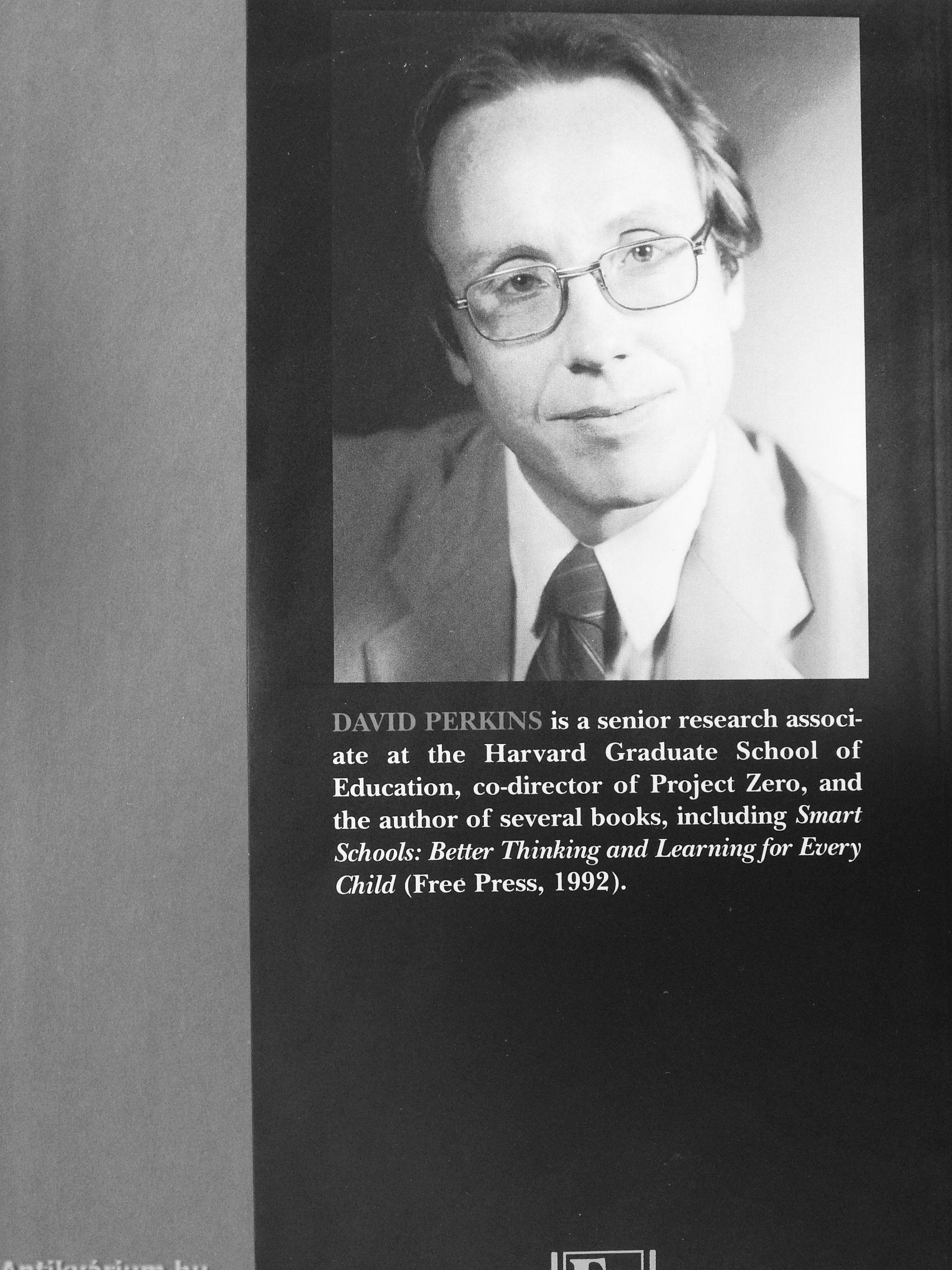
DAVID PERKINS is a senior research associate at the Harvard Graduate School of Education, co-director of Project Zero, and the author of several books, including Smart Schools: Better Thinking and Learning for Every Child (Free Press, 1992).
JFiS—IL
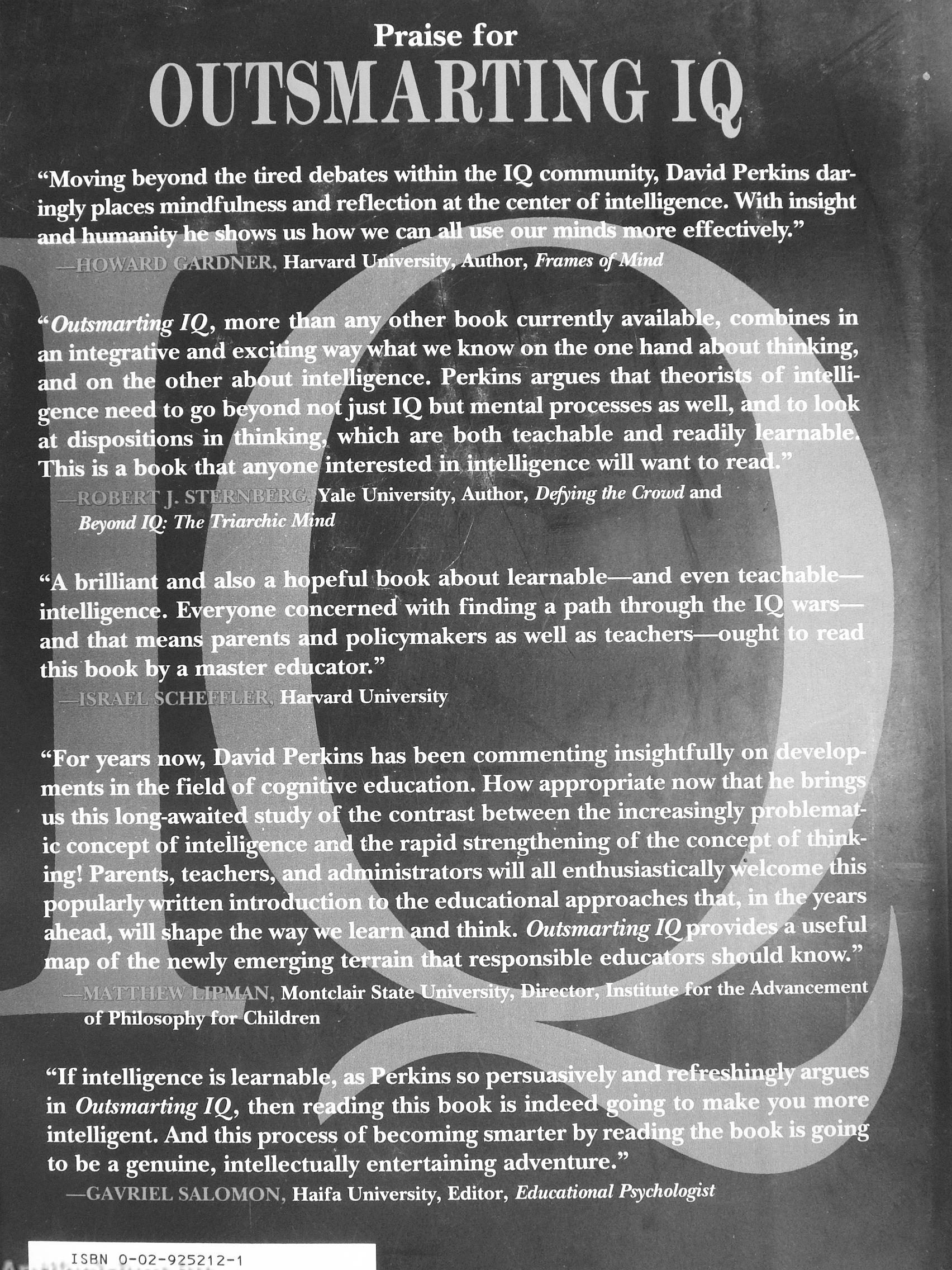
Praise for
OUTSMARTING IQ
"Moving beyond the tired debates within the IQ community, David Perkins daringly places mindfulness and reflection at the center of intelligence. With insist ^Wd h^wm^fiityj^j^jows us how we caxiall^fl^ljl^^pMare effectively.'' —HOWARD^tRl)NER, Harvard ---
"Outsinarúng IQ, more than My ^ther book currently av^^^^^^^únes in an integrative and exciting way what we know on the one hand ahmt thudking, and on thi; other about intelligence. I'erkins argues that theorislM^fr^ioBtelli-gence nei^ to go b^%tnd n^ just IQ but mental processes as well, at dispositions in iKinking^ which are. both teachable and readily Wniafalk This is a book that anyon^interested in ii|^lligence will want to read^-t —KUBKI» J. L !vv ^ Yale University, Author, D^ng tíie Crowd and iBSHn
BeyoiM^: The friardiic Bgnd j ^Ej^^^A
"Á brilliaat and alsó a hí|pefvd book about leamable—and even intelligence. Everyone cdncernedTwith finding a path through the IQ wars-^J and that means parents and policymakers as well as teachers—ought jto g^BdJ this book hy a master educator." 0
—ISRA*E;I|^CHEM^R Hapard University ' S'^IISH
"tor years now, David Perkins has been commenting insightfully on ffevelop-» nitents in thfe field of cogmüve education. How appropriate now that he brings U9 this long-awaited study of the contrast between the increasingly ^roblem^-ie Concept of intelligence amU the rapid strengthening of the concej^t of tfaink^ itig! Parei^, teachers, jmd administrators will all enthusiastically ^jnéí^me this popularly ^tten introduction ^ the educational approaches that, in years ahead, will%hape the way leaeft^and think. Outsmarting IQprtriides a usefulí-map of the newly emerging tepijj^^üat responsible edu^ptcasusheuld know." i M^^^^^^w^^tBMAN. Montclair KilllliftlTi the Advancement M
"If intelligence is learnabl(«BP^kins so pers^lR^^uR4«Leeshin$^fi^ues in Outsmarting IQ, then ro^ng this book is indeed^going to make you more»' intelligent. And this process of becoming smarter by readi|)L^e book ^ ga^g to be a genuine, intellectually entertaining adventure."
—GAVRIEL SALOMON, Haifa University, Editor, Educatimud Psydiologist Vissza
Témakörök
David Perkins
David Perkins műveinek az Antikvarium.hu-n kapható vagy előjegyezhető listáját itt tekintheti meg: David Perkins könyvek, művekMegvásárolható példányok
Állapotfotók
Könyvtári könyv volt.
Állapot:
Közepes
3.840 Ft
3.070 ,-Ft 20
15
pont kapható
Kosárba
 Folytatás Microsoft-tal