
1.125.992
kiadvánnyal nyújtjuk Magyarország legnagyobb antikvár könyv-kínálatát

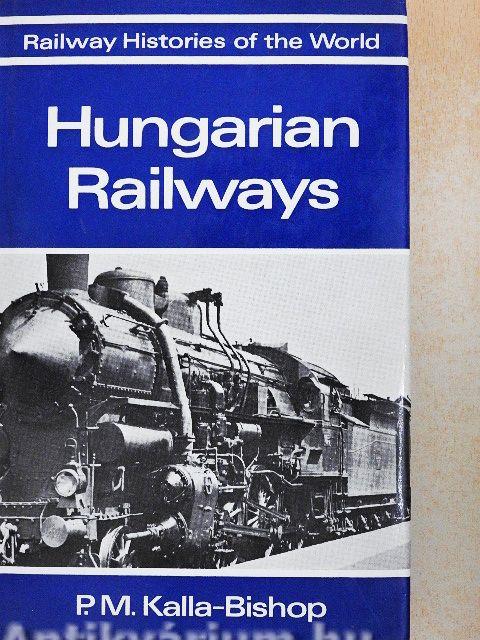
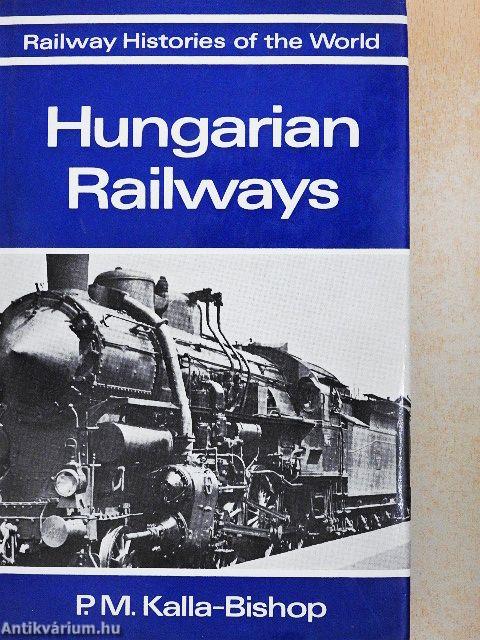
Hungarian Railways
Newton Abbot
| Kiadó: | David and Charles |
|---|---|
| Kiadás helye: | Newton Abbot |
| Kiadás éve: | |
| Kötés típusa: | Varrott keménykötés |
| Oldalszám: | 198 oldal |
| Sorozatcím: | Railway Histories of the World |
| Kötetszám: | |
| Nyelv: | Angol |
| Méret: | 22 cm x 14 cm |
| ISBN: | |
| Megjegyzés: | Fekete-fehér fotókkal. |
Értesítőt kérek a kiadóról
Értesítőt kérek a sorozatról
A beállítást mentettük,
naponta értesítjük a beérkező friss
kiadványokról
naponta értesítjük a beérkező friss
kiadványokról
A beállítást mentettük,
naponta értesítjük a beérkező friss
kiadványokról
naponta értesítjük a beérkező friss
kiadványokról
Előszó
Tovább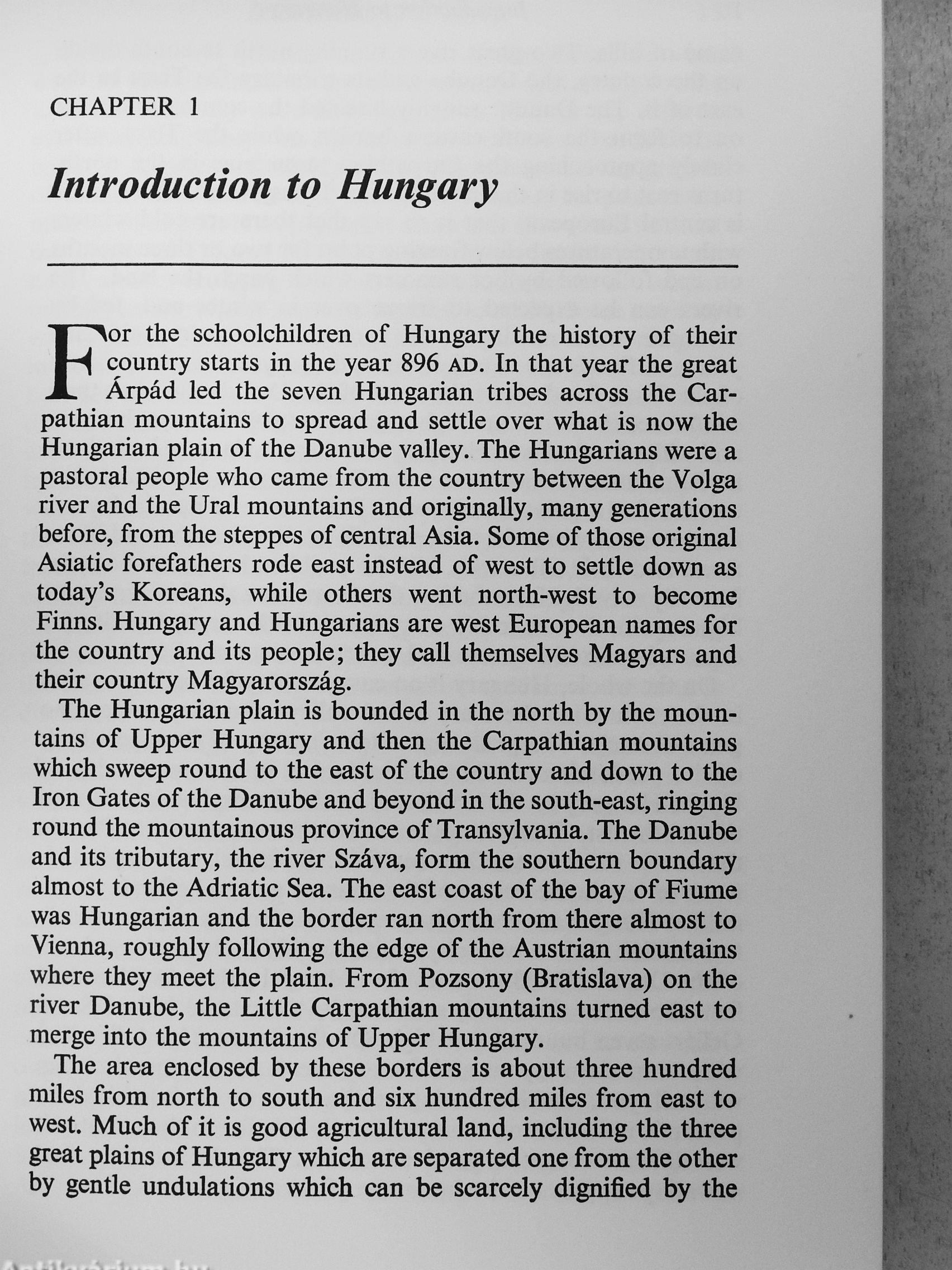
Fülszöveg
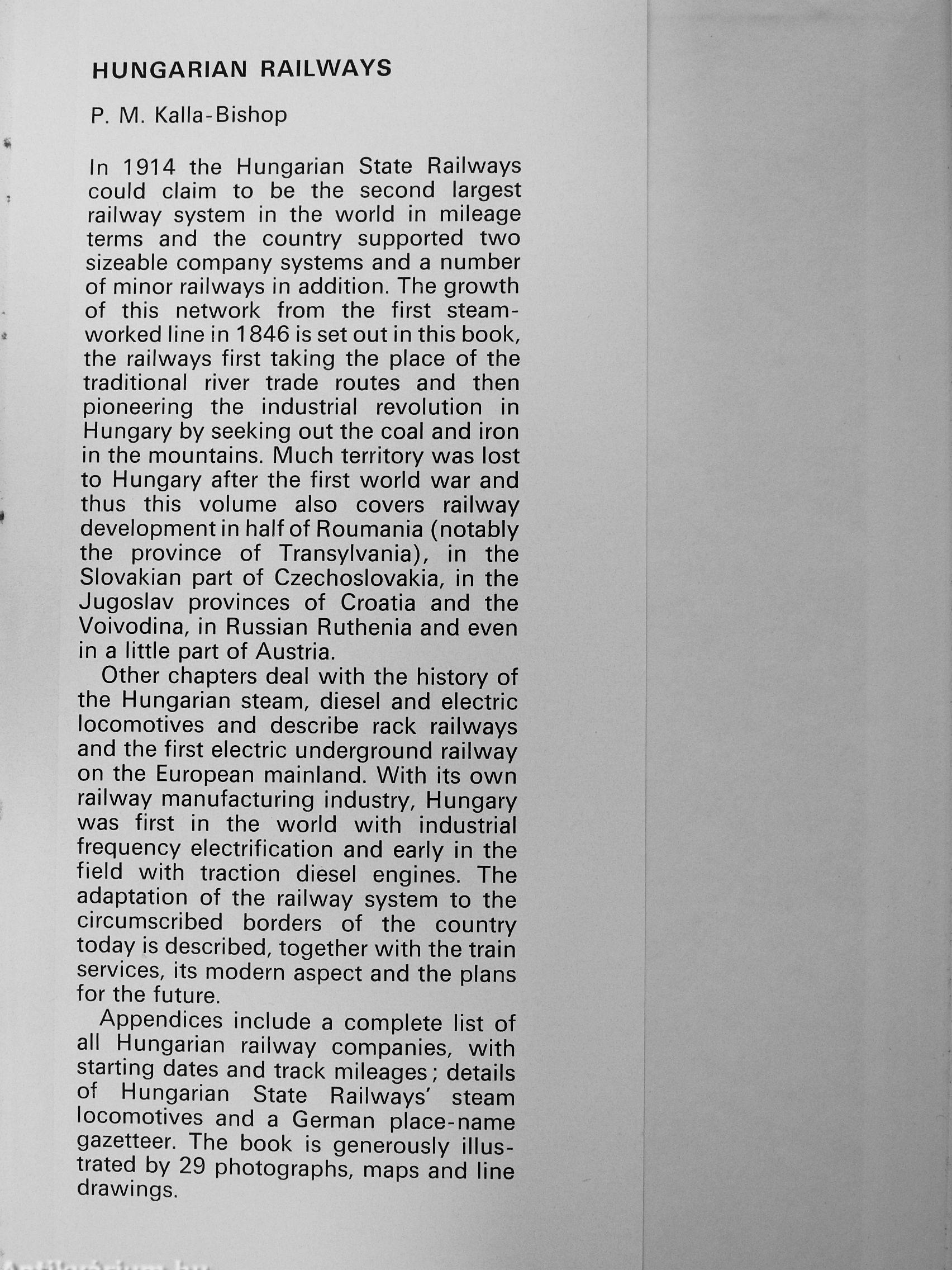
HUNGARIAN RAILWAYS P. M. Kalla-Bishop
In 1914 the Hungarian State Railways could claim to be the second largest railway system in the world in mileage terms and the country supported two sizeable company systems and a number of minor railways in addition. The growth of this networi< from the first steam-wori<ed line in 1846 is set out in this book, the railways first taking the place of the traditional river trade routes and then pioneering the industrial revolution in Hungary by seeking out the coal and iron in the mountains. iVluch territory was lost to Hungary after the first world war and thus this volume also covers railway development in half of Roumania (notably the province of Transylvania), in the Slovakian part of Czechoslovakia, in the Jugoslav provinces of Croatia and the Voivodina, in Russian Ruthenia and even in a little part of Austria.
Other chapters deal with the history of the Hungarian steam, diesel and electric locomotives and describe rack railways and the... Tovább
Fülszöveg
HUNGARIAN RAILWAYS P. M. Kalla-Bishop
In 1914 the Hungarian State Railways could claim to be the second largest railway system in the world in mileage terms and the country supported two sizeable company systems and a number of minor railways in addition. The growth of this networi< from the first steam-wori<ed line in 1846 is set out in this book, the railways first taking the place of the traditional river trade routes and then pioneering the industrial revolution in Hungary by seeking out the coal and iron in the mountains. iVluch territory was lost to Hungary after the first world war and thus this volume also covers railway development in half of Roumania (notably the province of Transylvania), in the Slovakian part of Czechoslovakia, in the Jugoslav provinces of Croatia and the Voivodina, in Russian Ruthenia and even in a little part of Austria.
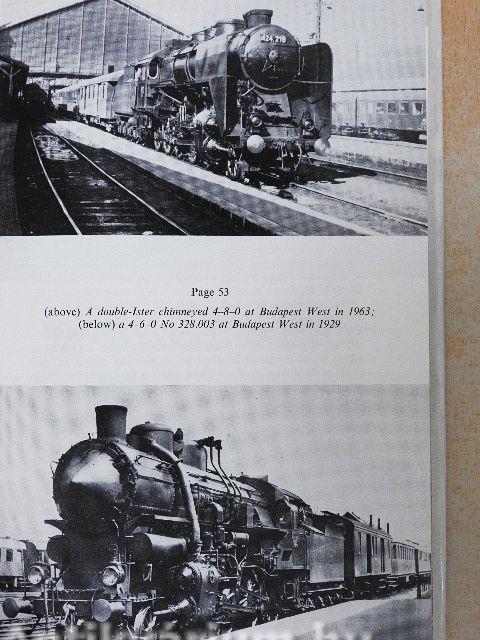
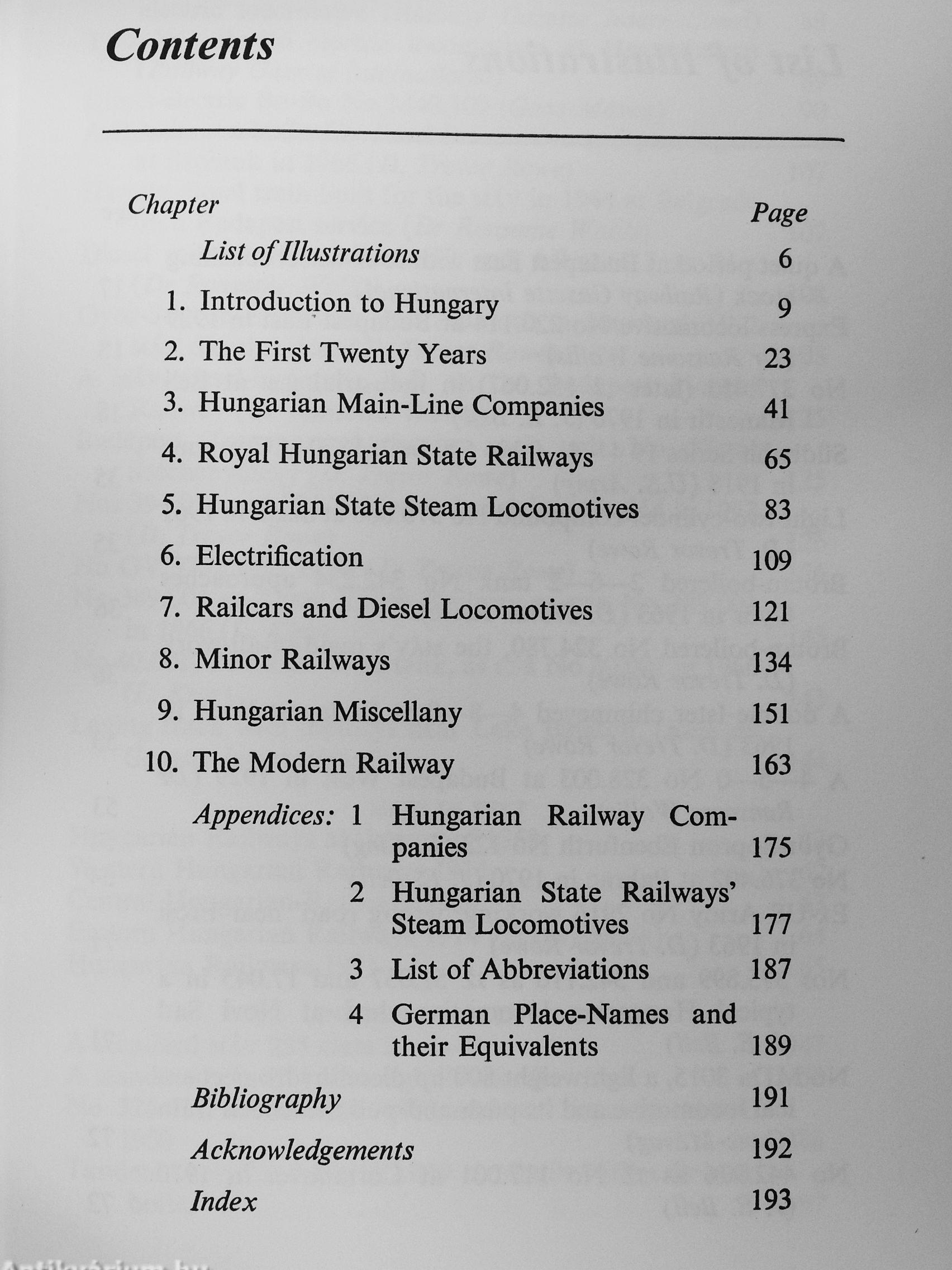
Other chapters deal with the history of the Hungarian steam, diesel and electric locomotives and describe rack railways and the first electric underground railway on the European mainland. With its own railway manufacturing industry, Hungary was first in the world with industrial frequency electrification and early in the field with traction diesel engines. The adaptation of the railway system to the circumscribed borders of the country today is described, together with the train services, its modern aspect and the plans for the future.
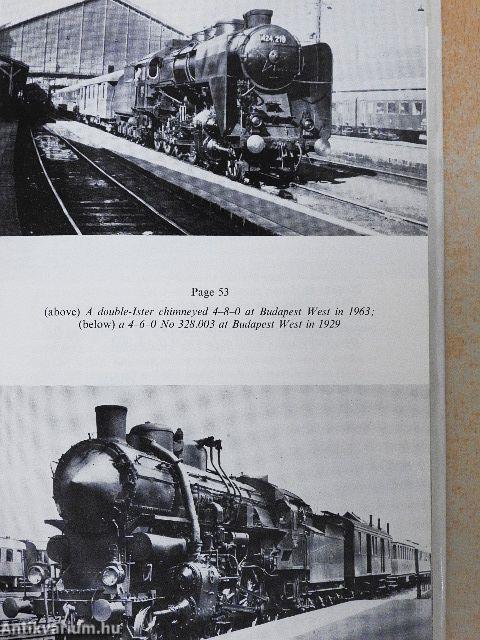
Appendices include a complete list of all Hungarian railway companies, with starting dates and track mileages; details of Hungarian State Railways' steam locomotives and a German place-name gazetteer. The book is generously illustrated by 29 photographs, maps and line drawings.
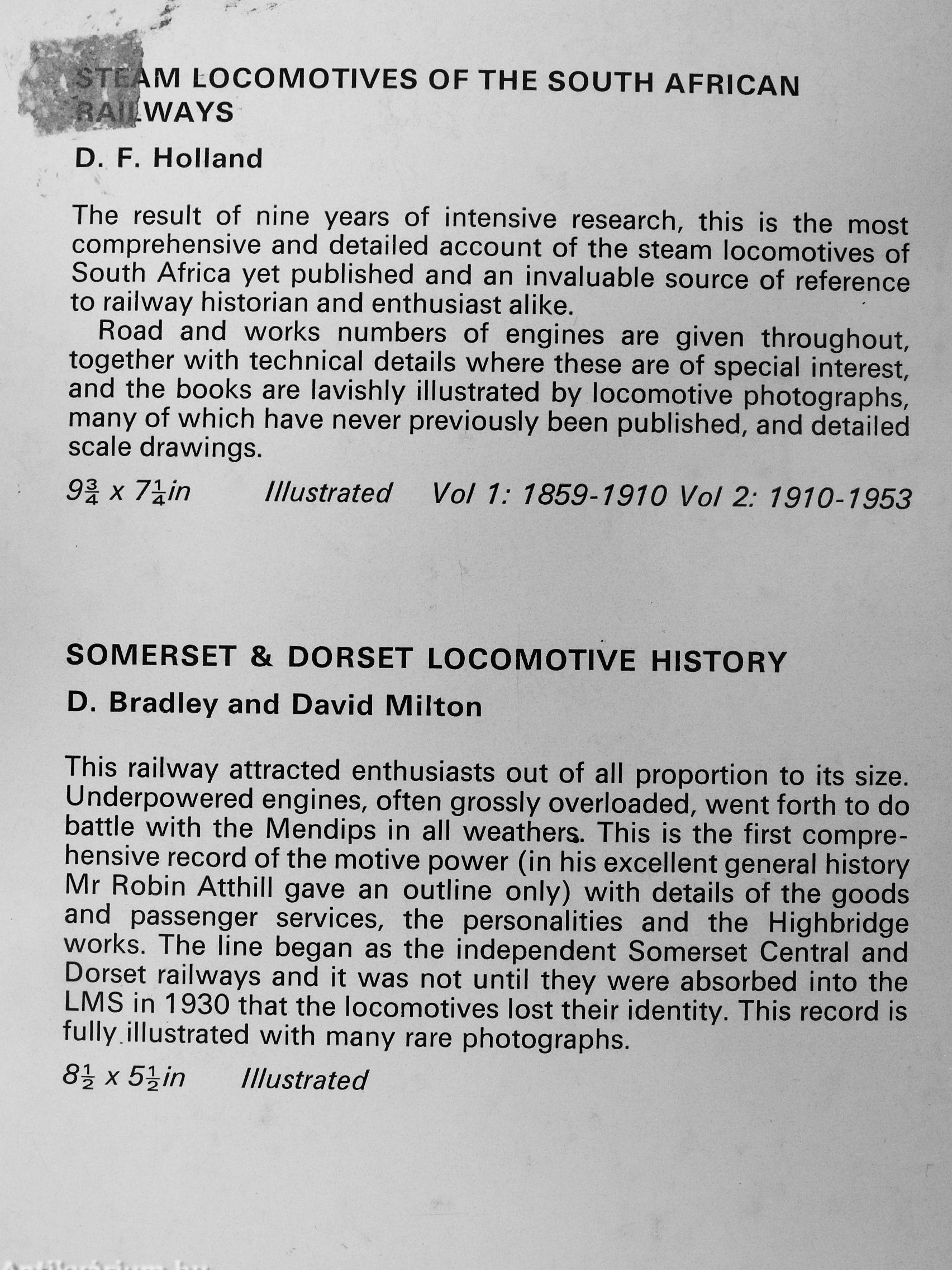
it^M LOCOMOTIVES OF THE SOUTH AFRICAN
[ways
D. F. Holland
The result of nine years of intensive research, this is the most comprehensive and detailed account of the steam locomotives of South Africa yet published and an invaluable source of reference to railway historian and enthusiast alike.
Road and works numbers of engines are given throughout, together with technical details where these are of special interest, and the books are lavishly illustrated by locomotive photographs, many of which have never previously been published, and detailed scale drawings.
9i X 7^in Illustrated Vol 1: 1859-1910 Vol 2: 1910-1953
SOMERSET & DORSET LOCOMOTIVE HISTORY D. Bradley and David Milton
This railway attracted enthusiasts out of all proportion to its size. Underpowered engines, often grossly overloaded, went forth to do battle with the Mendips in all weathers. This is the first comprehensive record of the motive power (in his excellent general history Mr Robin Atthill gave an outline only) with details of the goods and passenger services, the personalities and the Highbridge works. The line began as the independent Somerset Central and Dorset railways and it was not until they were absorbed into the LMS in 1930 that the locomotives lost their identity. This record is fully illustrated with many rare photographs.
Si X 5^in Illustrated Vissza
Témakörök
P. M. Kalla-Bishop
P. M. Kalla-Bishop műveinek az Antikvarium.hu-n kapható vagy előjegyezhető listáját itt tekintheti meg: P. M. Kalla-Bishop könyvek, művekMegvásárolható példányok
Nincs megvásárolható példány
A könyv összes megrendelhető példánya elfogyott. Ha kívánja, előjegyezheti a könyvet, és amint a könyv egy újabb példánya elérhető lesz, értesítjük.
 Folytatás Microsoft-tal