Fülszöveg
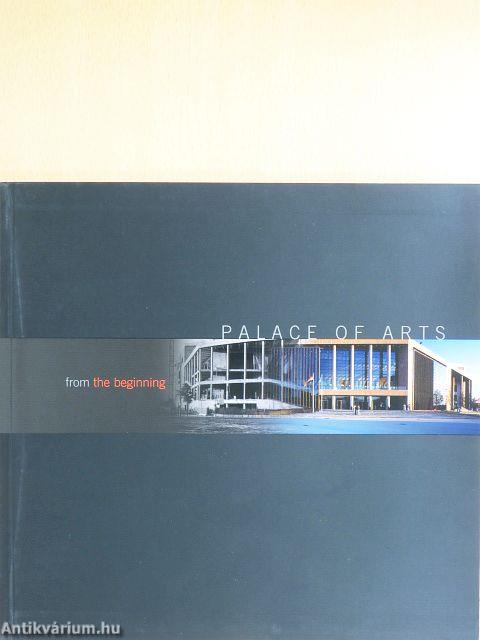
"The Palace of Arts is a unique cultural development for tomorrow and for today, where tradition and avant-garde interact productively in every branch of the arts.
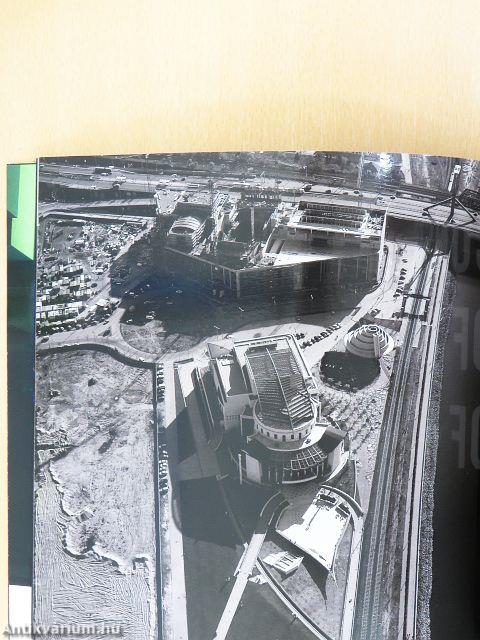
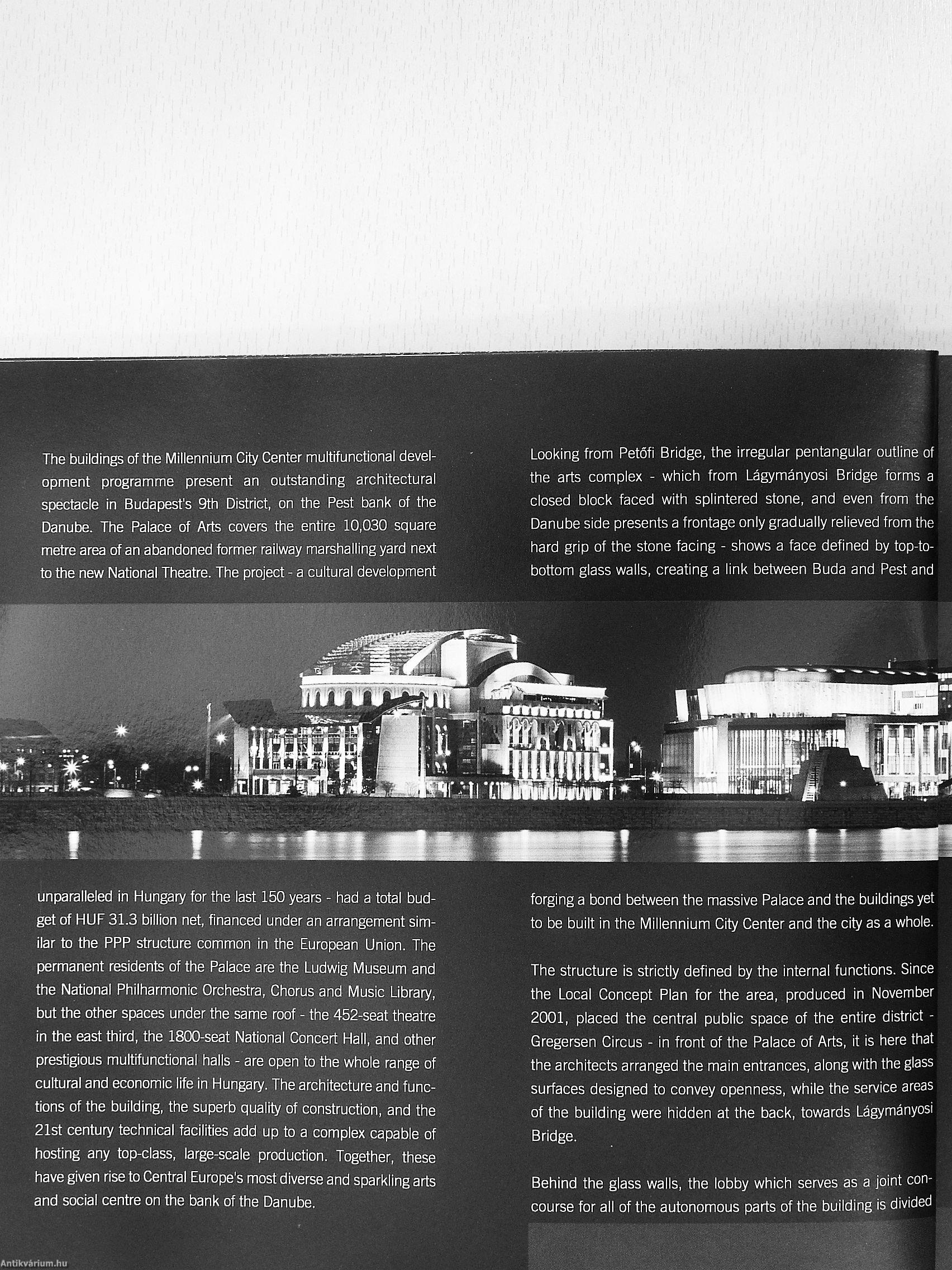
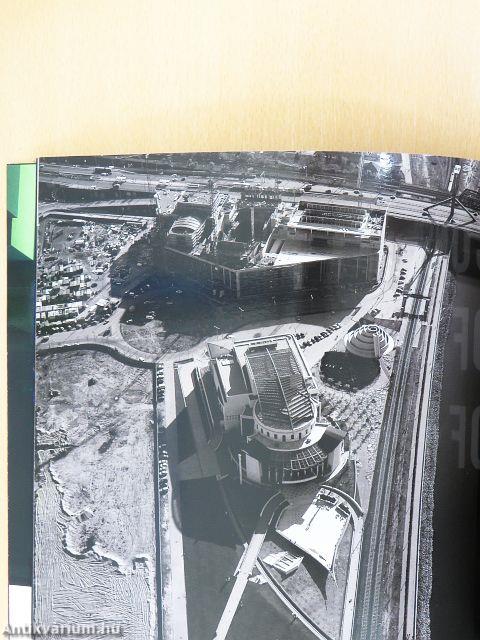
Now that we are members of the European Union, we have an obligation, in addition to preserving our cultural identity and values, to create opportunity and facilities for creative artistic work, to turn art works into public property and to disseminate them. This is the philosophy behind what is undoubtedly Hungary's most significant development for arts in the last hundred years. Opened on 14 March 2005, the Palace of Arts, built through effective cooperation between the private and public sectors, is a place worthy of Hungarian music, fine art, theatre, dance and architecture, and joins the establishments of similar significance in the Millennium City Center.
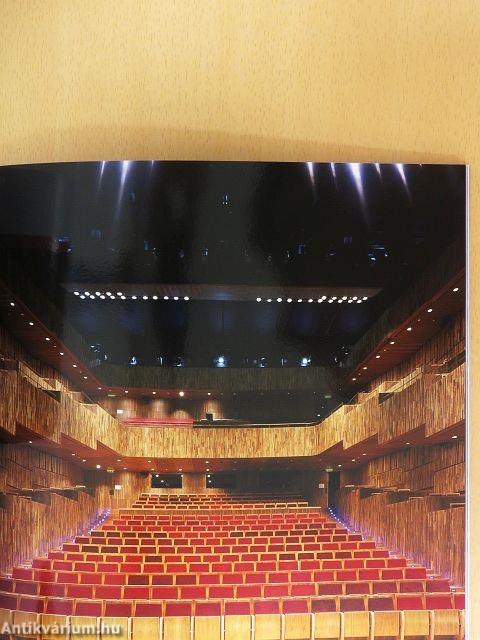
The National Concert Hall, the Ludwig Museum and the Festival Theatre form a magnificent example of fusion of traditional cultural values and modern demands."...
Tovább
Fülszöveg
"The Palace of Arts is a unique cultural development for tomorrow and for today, where tradition and avant-garde interact productively in every branch of the arts.
Now that we are members of the European Union, we have an obligation, in addition to preserving our cultural identity and values, to create opportunity and facilities for creative artistic work, to turn art works into public property and to disseminate them. This is the philosophy behind what is undoubtedly Hungary's most significant development for arts in the last hundred years. Opened on 14 March 2005, the Palace of Arts, built through effective cooperation between the private and public sectors, is a place worthy of Hungarian music, fine art, theatre, dance and architecture, and joins the establishments of similar significance in the Millennium City Center.
The National Concert Hall, the Ludwig Museum and the Festival Theatre form a magnificent example of fusion of traditional cultural values and modern demands."
The corporate empire of Sándor Demján and Peter Münk and their developments is an unbroken success story. They have been responsible for the finance, operation, marketing and sales of several major landmark real estate projects, including such epochal developments as the Bank Center, the WestEnd City Center, the Polus City Center in Bratislava, and the Palace of Arts in the Millennium City Center. These have generated what amount to new city centres and cultural- meeting points. Demján developments, with their breathtaking dimensions and architecture, the combination of office building and retail functions, grand hotels, concert hails and theatres, museums and residential buildings, become integral parts of their host cities even in the construction phase. Implemented in world record time, from an independent logistical base, supported by sophisticated marketing and PR work, these developments have always been the centre of public attention. With his constant and serious attention to universal values and the messages of arts, science, sport and the world of children, Demján fundamentally creates human-centred spaces. The fundamental approach of Demján-controlled companies stems from the realization of the ability to influence their environment, and from: the determination to use that ability to serve shoppers, tenants and visitors In a refined, secure and well-tended milieu.
Vissza 



 Folytatás Microsoft-tal